Leave A Message
If you are interested in our products and want to know more details,please leave a message here,we will reply you as soon as we can.



Dairy and Milk Processing Industry Wastewater Treatment Solution
Dairy and Milk Processing Industry Wastewater Treatment Solution
Dairy wastewater is a high-strength organic effluent that can cause severe environmental pollution if not treated properly. The core treatment strategy is a combination of physical separation + biological degradation + advanced purification, along with resource recovery, to ultimately achieve compliant discharge or even water reuse.
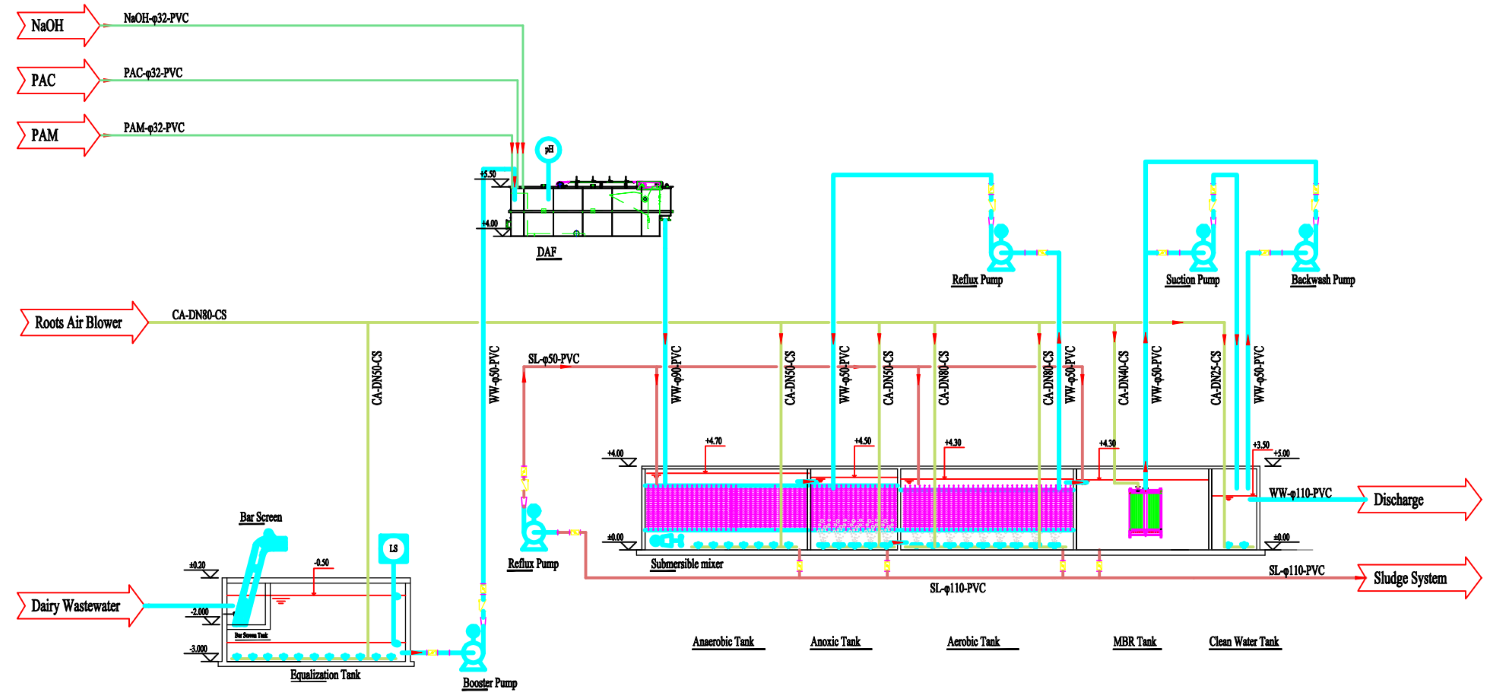
Below is a typical process flow for dairy wastewater treatment, providing a clear overview of the steps.
Characteristics of Dairy Wastewater: Why Is It Challenging?
Dairy wastewater primarily comes from equipment cleaning, pipeline flushing, floor washing, and cooling processes. Its distinct characteristics include:
High Organic Load: Rich in lactose, proteins, and fats, resulting in extremely high Chemical Oxygen Demand (COD) and Biochemical Oxygen Demand (BOD). Direct discharge rapidly depletes oxygen in receiving waters.
Significant Fluctuations: Flow rate and pollutant concentrations vary greatly depending on production type (e.g., cheese, yogurt) and cleaning cycles (CIP).
High Oil & Grease Content: Especially in wastewater from cheese and butter production. Fats can clog pipes and inhibit biological treatment.
Abundant Nutrients: Contains high levels of nitrogen and phosphorus, which can cause eutrophication in natural water bodies.
1⃣ Pre-treatment: Clearing the Path for Biology
This stage removes large solids, grit, and a portion of fats/oils to create favorable conditions for subsequent biological steps.
Physical Separation: Bar screens and fine screens (e.g., 1 mm mesh) remove debris like plastic and packaging. Grit chambers remove sand and heavy particles.
Flow & Load Equalization: An equalization tank balances fluctuations in flow and organic load, reducing shock loads on downstream processes.
Oil/Grease & Solids Removal: Dissolved Air Flotation (DAF) or grease traps efficiently separate fats, oils, and suspended solids.
2⃣ Secondary Treatment (Biological): The Core Purification
This is the heart of the treatment process, where microorganisms degrade soluble organic matter.
Anaerobic Biological Treatment:
Technologies: Upflow Anaerobic Sludge Blanket (UASB), Anaerobic Baffled Reactor (ABR), etc.
Function: Breaks down complex organic molecules into simpler compounds and produces biogas (mainly methane) for energy recovery. COD removal efficiency: 78–99%.
Aerobic Biological Treatment:
Technologies: Contact oxidation, Sequencing Batch Reactor (SBR), Membrane Bioreactor (MBR), etc.
Function: Further degrades residual organics from anaerobic effluent and effectively removes ammonia nitrogen. COD removal efficiency can exceed 98%.
3⃣ Advanced Treatment & Reuse: Achieving High Standards & Circularity
The membrane bioreactor or MBR is based on the conventional wastewater process, but the separation of micro-organisms is performed by filtration with membranes. Containerized crossflow MBR system for the offshore industry treating sewage from a living quarter barge. Moving bed biofilm reactor (MBBR) offers an economical solution for wastewater treatment if the “bulk” of the pollution load must be disposed of (as means of cost reduction) or if applicable discharge regulations are not as strict.
Our Advantages & Services:
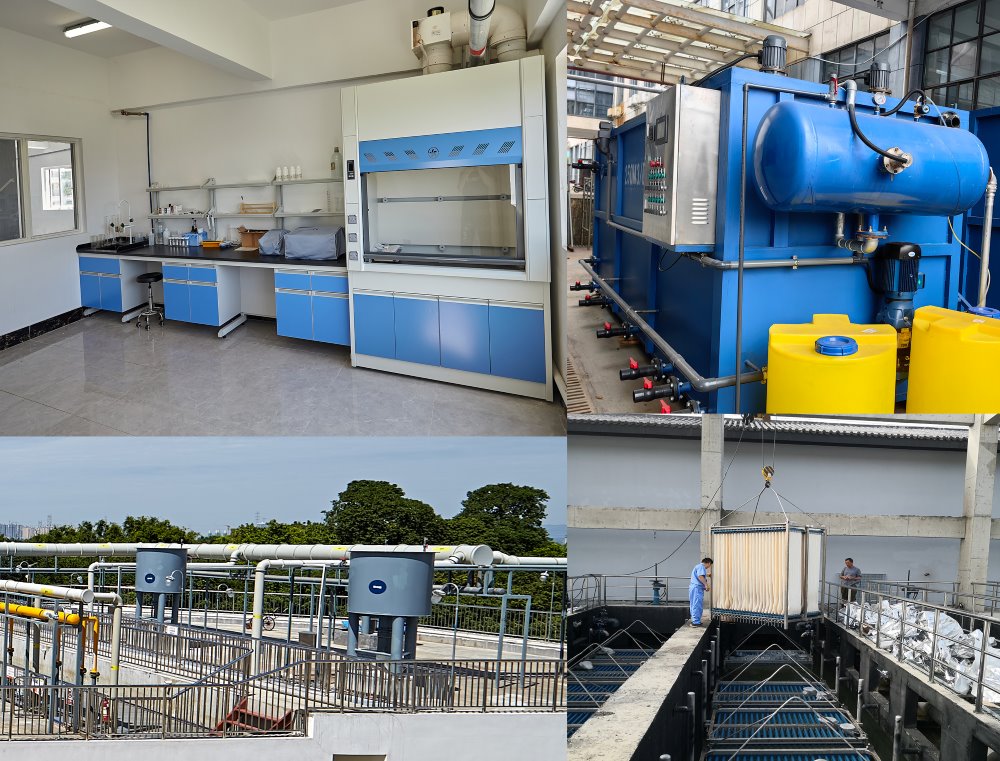
* 10 Years custom waste water treatment MBR System ((Membrane Bioreactor) designing experiences
* Standard designs according your application, requirement and budget. Minimum pumping energy required, thus energy saves
* Designing for sewage treatment or reclaimed water reuse
* Good quality and stable output water
* Fully automatic control system