Leave A Message
If you are interested in our products and want to know more details,please leave a message here,we will reply you as soon as we can.



Oily Grease Wastewater in refinery industry methods
Oil Refinery or Oily Food Wastewater treatment process
Oil refineries or oily food wastewater require complex processes to treat their inffluents. The goal is to reduce pollutant loads to the levels required by law, or to reuse the treated water within the industry itself, as service water or even as process water.
A wastewater treatment plant for an oil refinery typically consists of several stages:
Refinery Wastewater——Oil Separator tank——Equalization Tank——DAF System (Oil removing)———Anaerobic Tank——Anoxic Tank I——Aerobic Tank I——Anoxic Tank II——Aerobic Tank II ——MBR Tank——Clean Water Tank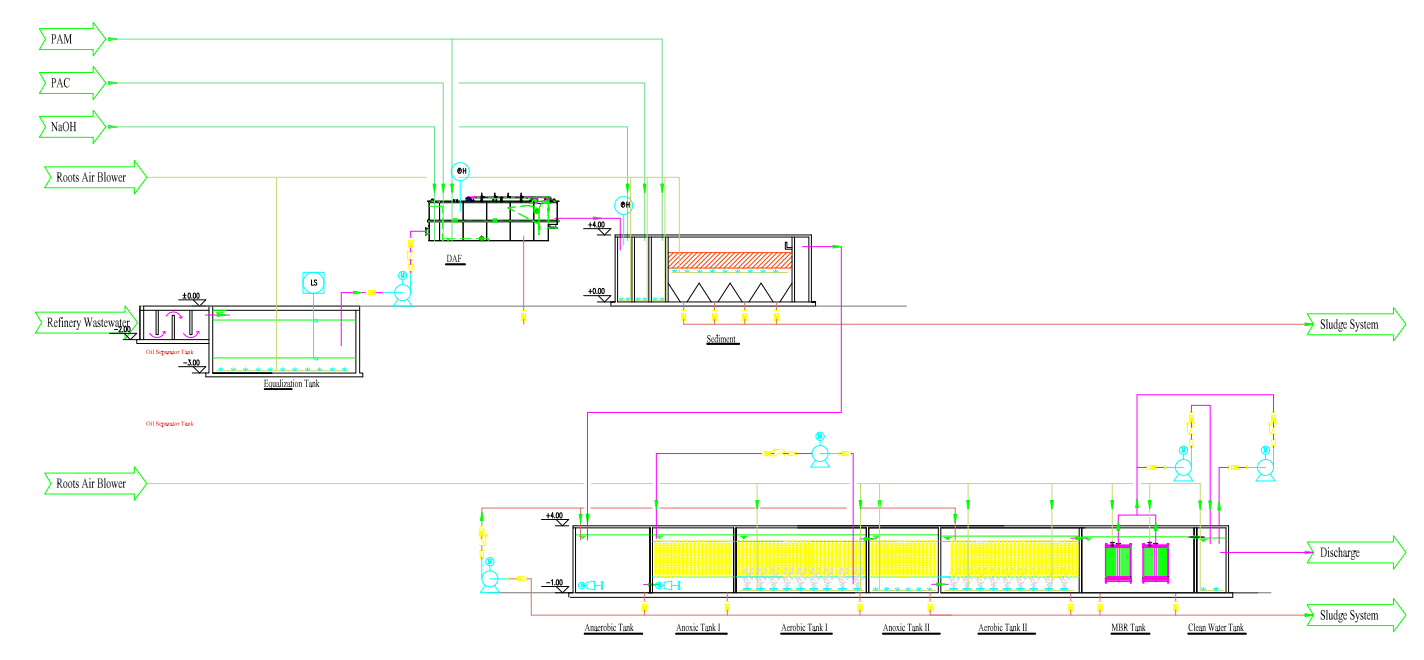
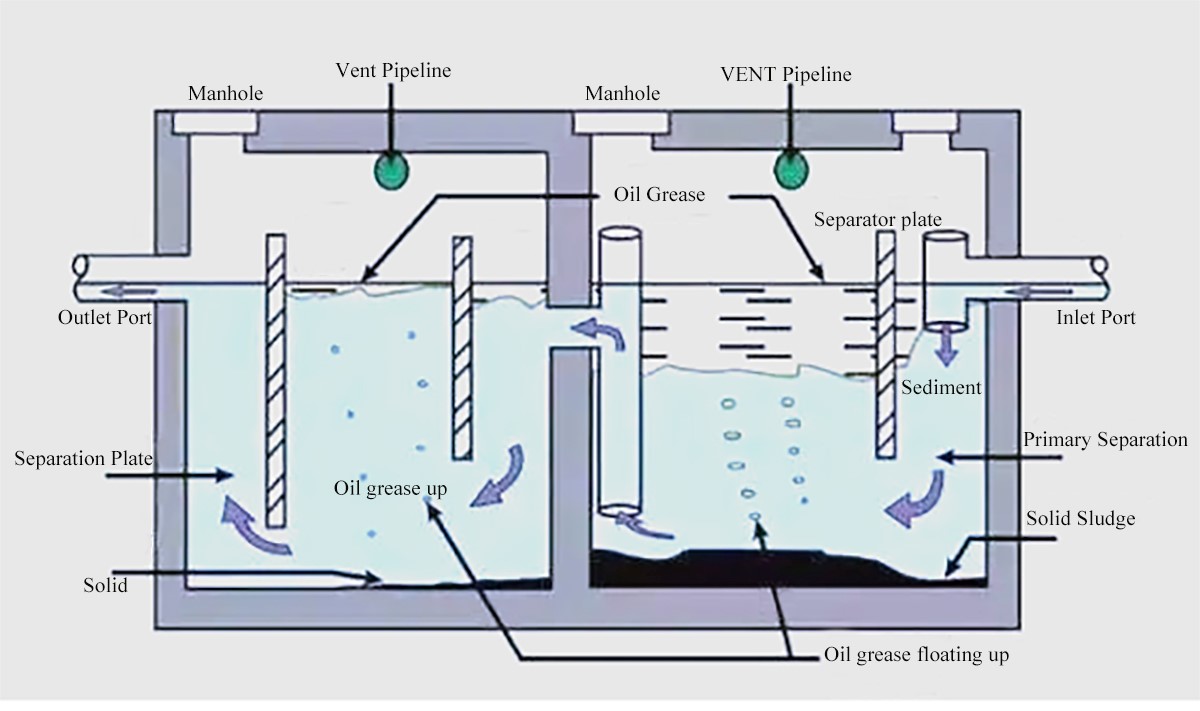
Preliminary treatment: In this phase, solids and oversized wastewater residues such as rocks, gravel and large pieces of equipment are removed from the wastewater. Bar Screens, desanders and sedimentation tanks are often used for this Purpose, Oil refinery process, we will design 6 Stages Oil Separator tanks as gurantee floated oil removed.
We will choose the process as: Refinery Wastewater——6 Stages Oil Separator tank——Equalization Tank—— DAF System (Oil removing)
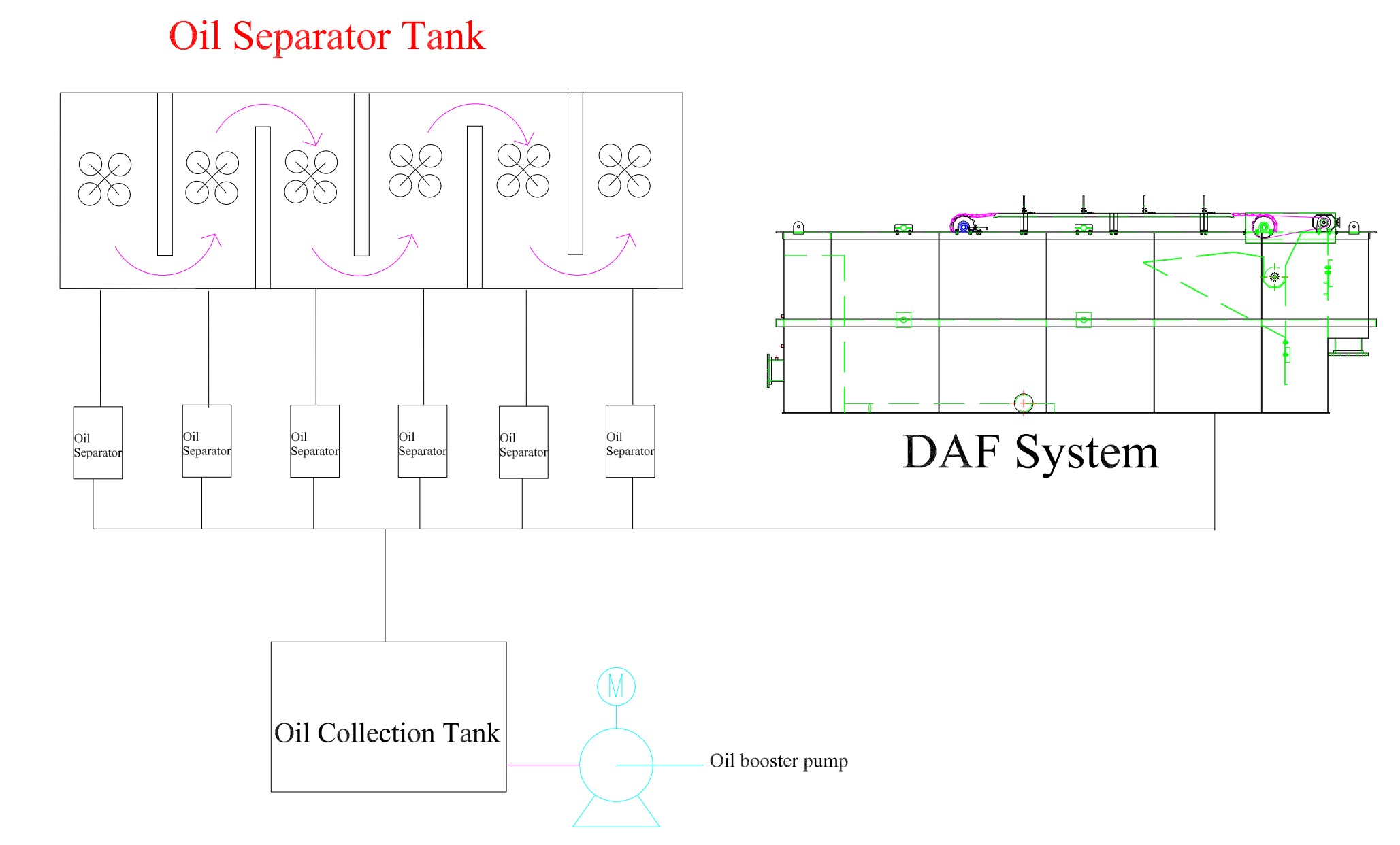
The oil Separation Tank is very important
l Rapid Automatically Oil Separator Device for automatic running.
1. Auto collection oil grease, float type oil skimmer
2. Self-priming pump system
3. High efficiency separation 90%, swirl and butterfly coalescence disc group processing and separation.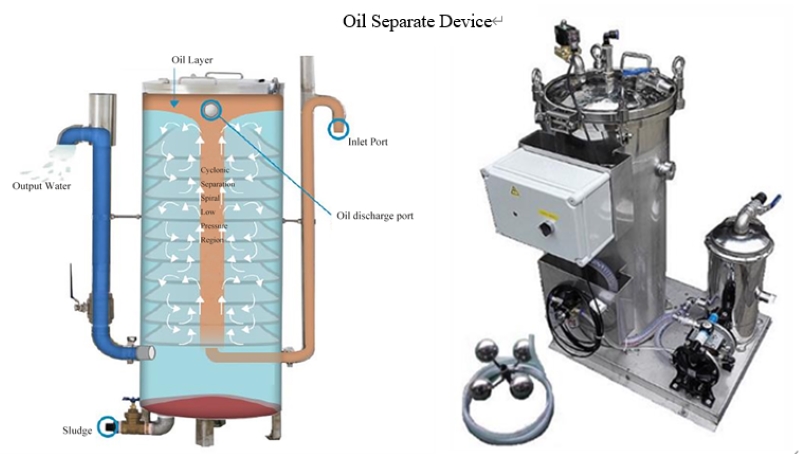
Primary treatment: this phase consists of removing suspended solids and part of the organic matter from the wastewater. For this purpose, dissolved air flotation (DAF) systems, or two stages DAF System applied, where the solids float to the surface to be separated as sludge, are usually used. Dissolved air flotation (DAF) is essential for the separation of suspended solids (TSS), oils, and grease, more information please contact with us.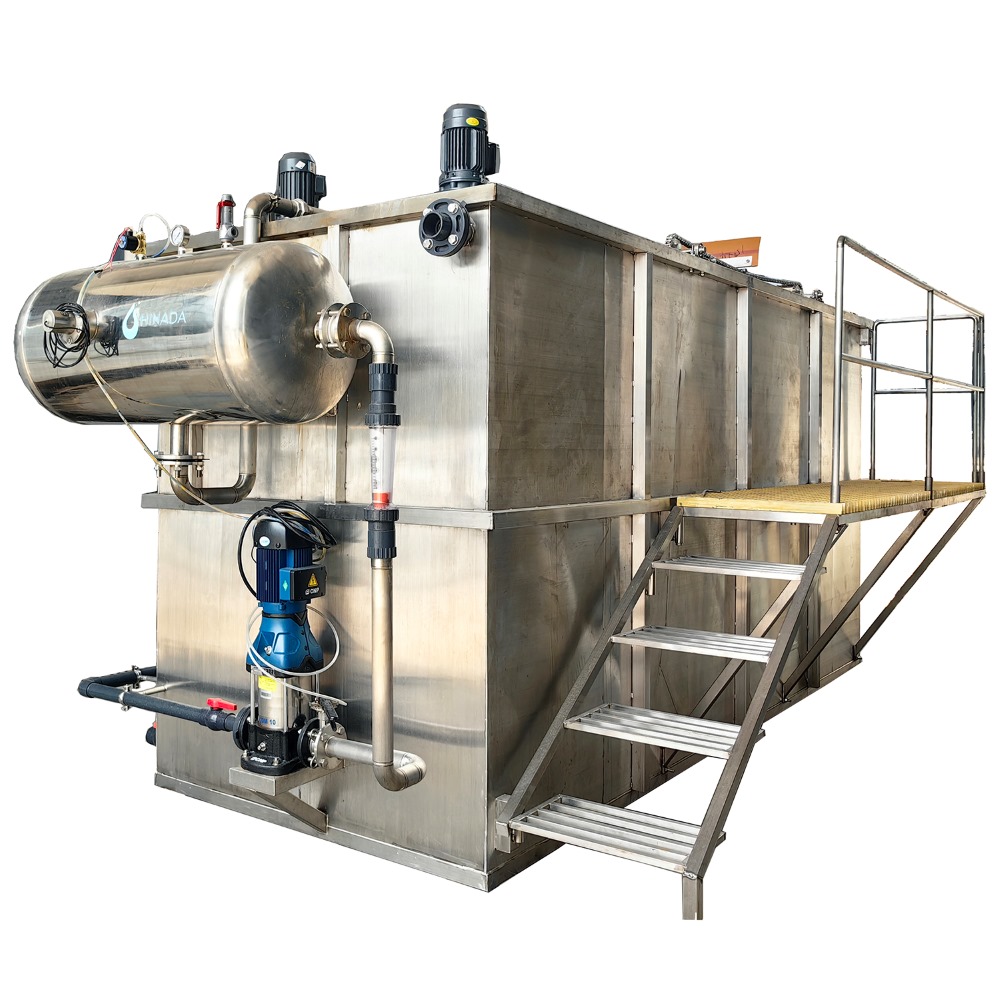
Further treatment : consists of removing dissolved organic matter and other pollutants from wastewater. Biological treatment processes, such as activated sludge, and MBR systems together which use microorganisms to break down pollutants, are generally used for this recycling or meeting enviroment discharge standards purpose.