Case Study MBR Membrane Replacement for Photoresist Novel Sensitive Fine Chemicals Project
Case Study MBR Membrane Replacement for Photoresist Novel Sensitive Fine Chemicals Project
September 04, 2026
Project Background Hunan Jinziyu New Material Technology Co., Ltd. was established in June 2021 and is located in Shuikoushan Industrial Park, Changning City, Hengyang, Hunan Province. It is a national high-tech enterprise jointly founded by Hunan Jinhua Technology Group and the returned overseas Chinese Ph.D. team led by Dr. Shi Aibin. Photoresist, as a strategic emerging material, is a critical material for manufacturing fine electronic circuit patterns and is one of the most technologically demanding fine chemical products. The wastewater generated during its production is complex, containing photoresist residues, organic solvents, other refractory organics, and acid/alkaline substances, making treatment extremely challenging. To ensure environmental compliance and achieve green production, Jinziyu New Material set high standards for its wastewater treatment system.
2. Project Requirements and Challenges After the photoresist project went into production, the wastewater treatment system adopted the MBR (Membrane Bioreactor) process as the core of biochemical treatment. With a microfiltration pore size of 0.1–0.4 μm, the MBR membrane effectively retains macromolecular organics and suspended solids, keeping activated sludge completely within the reactor and thoroughly solving solid-liquid separation issues. However, photoresist production wastewater presents the following distinct characteristics, which pose severe challenges to the MBR membrane system: High concentration of organic pollutants: The wastewater contains high concentrations of COD from photoresist residues and developing solutions, making biodegradation difficult. Complex composition and shock load: With multiple organic solvents and fine chemical residues, the water quality fluctuates greatly, demanding high shock-load resistance from the membrane system. High membrane fouling risk: Macromolecular organics and colloids in the wastewater easily adhere to the membrane surface, causing pore clogging and fouling, leading to flux decline and increased transmembrane pressure. After a period of operation, the original MBR membrane modules, having long treated high-concentration and high-viscosity photoresist wastewater, suffered from significant flux decline, increased cleaning frequency, and unstable effluent quality.
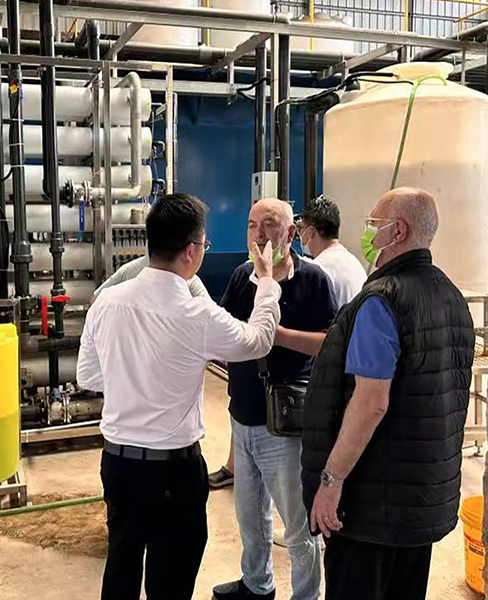
3. Solution In response to the actual conditions of Jinziyu’s photoresist project wastewater treatment system, Hinada assembled a professional technical team to conduct on‑site assessment and formulated and implemented a targeted MBR membrane replacement plan. 3.1 System Design and Membrane Selection Hinada technical team selected compatible PVDF (polyvinylidene fluoride) hollow fiber MBR membrane modules that fit the existing membrane frame dimensions at the Jinziyu site. PVDF material offers excellent chemical resistance and mechanical strength, capable of withstanding the complex chemical composition in photoresist wastewater to ensure long‑term stable operation. 3.2 Installation Implementation New membrane installation: The selected PVDF hollow fiber MBR membrane modules were precisely installed onto the original frames. System commissioning: After installation, water flow testing, air tightness checks, and operational parameter adjustments were performed to ensure that the new membrane system achieved the designed treatment capacity. 3.3 Operation and Maintenance Hinada provided comprehensive technical support and after‑sales guidance, including daily operation and maintenance protocols, as well as standard procedures for on‑line and off‑line chemical cleaning. Regular cleaning effectively removes fouling from the membrane surface and extends the service life of the modules. 4. Implementation Results After the MBR membrane replacement, the performance of Jinziyu’s photoresist project wastewater treatment system improved significantly: Stable effluent quality: With the physical barrier of the MBR membrane, activated sludge was completely retained in the reactor, resulting in near‑zero effluent SS and stable compliance of key indicators such as COD. Enhanced shock‑load resistance: The superior material and structural design of the new modules better accommodated the fluctuating water quality of photoresist wastewater, leading to more reliable and stable operation. Optimized O&M costs: The cleaning interval was extended, and maintenance frequency reduced, effectively decreasing downtime and operational expenses.
5. Project Significance This case represents a successful application of MBR membrane technology in treating wastewater from the production of novel photosensitive fine chemicals for photoresists. The successful implementation fully demonstrates the technical advantages of Hinada PVDF hollow fiber MBR membrane modules in treating high‑strength, high‑difficulty fine chemical wastewater.