Prepared by: Hinada Water Treatment Tech Co., Ltd.
Application: Municipal Wastewater Treatment
Design Capacity: 100 m³/day
Project Overview
Hinada is developing a compact wastewater treatment solution for a 100 m³/day municipal sewage treatment project in Canada.
The project is intended to treat municipal sewage collected through a municipal wastewater system. The proposed solution focuses on reliable biological treatment, advanced membrane filtration, treated water disinfection, automated operation, and sludge management.
Considering the project's capacity and space requirements, a modular containerized design with Membrane Bioreactor (MBR) technology is being considered. The final process configuration and equipment selection will be determined based on influent wastewater characteristics, treated water requirements, site conditions, and applicable Canadian regulations.
1. Advanced Municipal Wastewater Treatment with MBR Technology
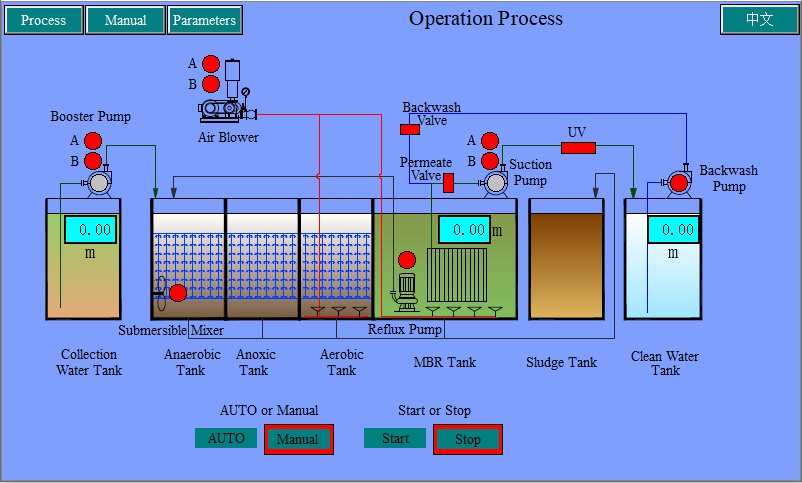
The proposed treatment system combines biological treatment and membrane filtration to achieve stable effluent quality within a compact footprint.
Biological Treatment
The biological treatment process uses anaerobic and aerobic treatment stages, depending on the required pollutant removal and nutrient control. These stages help reduce organic pollutants and, where required, nitrogen and phosphorus.
MBR Membrane Filtration
The MBR system integrates biological treatment with submerged PVDF hollow-fiber membrane filtration. It separates activated sludge from treated water and eliminates the need for a conventional secondary clarifier.
Key advantages include:
-
High-quality treated effluent with low suspended solids.
-
Compact system layout and reduced footprint.
-
Stable solid-liquid separation.
-
Flexible operation under varying wastewater loads.
The biological process, membrane area, and operating parameters, including MLSS and membrane flux, will be confirmed during detailed engineering.
Disinfection and Water Reuse
UV disinfection can be incorporated after membrane filtration to further reduce microorganisms. Depending on the intended reuse application, additional treatment may be required to meet the relevant water quality standards.
Containerized Design
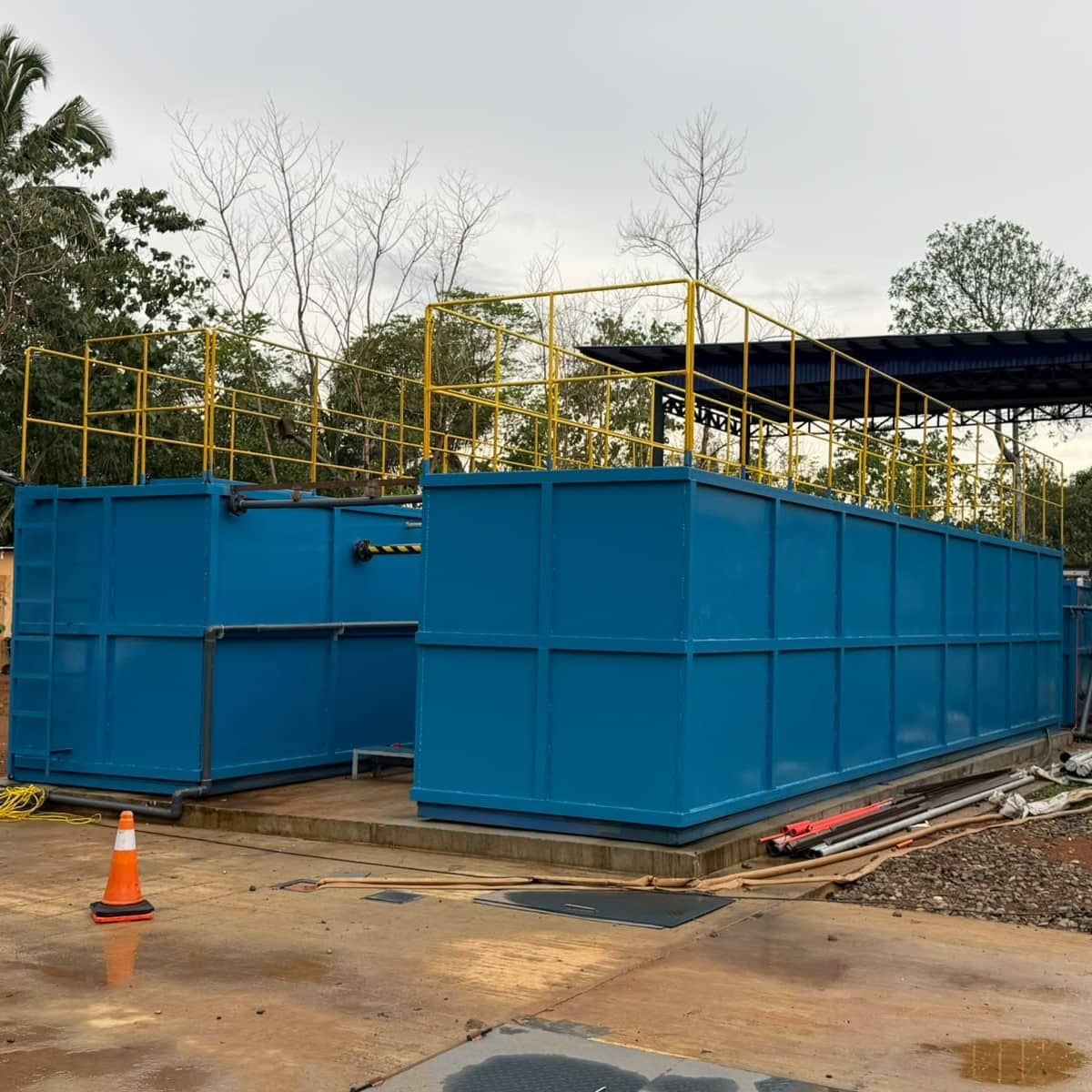
The treatment equipment can be integrated into a modular containerized structure, helping simplify transportation, installation, and on-site assembly. This design is suitable for projects with limited installation space or where a prefabricated treatment solution is preferred.
2. Full Automation and Intelligent Control
The system is designed to support automated operation and centralized process monitoring through a PLC-based control system.
The proposed control configuration may include:
-
PLC Control: Automatic operation of pumps, blowers, valves, dosing equipment, and other process units.
-
SCADA and HMI: Centralized system monitoring, operating status display, and parameter adjustment.
-
Online Monitoring: Monitoring of key parameters such as flow rate, pH, dissolved oxygen (DO), and turbidity.
-
Automatic Process Control: Equipment sequencing, process adjustment, alarms, and fault detection.
-
Remote Monitoring: Secure remote access, operating data records, and optional IoT-based monitoring and analysis.
The final instrumentation and automation scope will be selected according to the project's operational requirements.
3. Sludge Treatment and Resource Recovery
Sludge management is an important part of municipal wastewater treatment, particularly when the project requires responsible handling and potential resource recovery.
The proposed sludge treatment scope may include:
Sludge Thickening and Dewatering
Excess biological sludge can be collected, thickened, and dewatered to reduce its volume and facilitate transportation and further treatment.
Sludge Stabilization
Appropriate stabilization methods can be evaluated to reduce organic matter and pathogens before final disposal or beneficial use.
Composting or Anaerobic Digestion
Depending on sludge characteristics, project scale, and local requirements, aerobic composting or anaerobic digestion may be considered as additional treatment options.
Biosolids and Organic Soil Amendment
The production of biosolids-based soil amendments or organic fertilizer may be evaluated. However, the final use of treated sludge depends on testing results, contaminant levels, pathogen reduction, and applicable Canadian approval requirements.
Treated sludge, stabilized biosolids, composted material, and finished fertilizer are different product categories and should not be considered equivalent.
4. Canadian Regulatory Requirements
For a wastewater treatment project in Canada, regulatory requirements must be evaluated according to the project location and intended discharge or reuse purpose.
Key considerations include:
-
Effluent Discharge: Applicable federal, provincial, territorial, and municipal wastewater discharge requirements.
-
Water Reuse: Required water quality standards based on the intended reuse application.
-
Biosolids Management: Applicable requirements for sludge treatment, pathogen reduction, contaminant testing, transportation, and final disposal or beneficial use.
-
Local Approvals: Relevant permits, environmental assessments, and operating approvals.
The final treatment design and sludge management plan should be reviewed against the requirements of the specific Canadian province or territory and local authority.
5. Technical Design and Scope of Supply
Hinada can provide technical support and equipment supply for the proposed 100 m³/day municipal wastewater treatment project.
The project scope can be developed to include:
5.1 Process Design
-
Preliminary process flow diagram (PFD).
-
Wastewater treatment process selection.
-
Hydraulic and process design parameters.
5.2 Equipment and Infrastructure
-
MBR membrane modules and supporting equipment.
-
Biological treatment tanks and process equipment.
-
Pumps, blowers, dosing systems, and disinfection equipment.
-
Containerized or modular system integration.
5.3 Sludge Treatment and Performance
-
Sludge production estimation.
-
Thickening and dewatering equipment selection.
-
Evaluation of sludge stabilization and resource recovery options.
5.4 Control and Instrumentation
-
PLC control panel and HMI.
-
SCADA integration, where required.
-
Online monitoring instruments and alarm functions.
5.5 Installation and Lifecycle Support
-
Equipment installation and commissioning guidance.
-
Technical documentation and operation manuals.
-
Operator training and maintenance recommendations.
-
Spare parts and after-sales technical support.
Energy consumption, sludge production, equipment configuration, and annual operating costs will be estimated based on the confirmed process design and project conditions.
Conclusion
For this 100 m³/day municipal wastewater treatment project in Canada, Hinada proposes evaluating a compact containerized MBR solution that integrates biological treatment, membrane filtration, disinfection, intelligent control, and sludge management.
The final technical proposal will depend on the influent wastewater analysis, required effluent standards, site conditions, sludge disposal or reuse requirements, and applicable local regulations. This approach helps ensure that the selected system meets the project's treatment objectives while considering long-term operation and maintenance.