Drinking Water Treatment System for Groundwater: Process, Technologies and Selection Guide
Learn how a drinking water treatment system treats groundwater. Explore common contaminants, treatment processes, UF, RO, filtration, and system selection.
Groundwater from wells and boreholes may look clean, but its appearance does not always mean it is safe for drinking. Depending on local soil and geological conditions, groundwater may contain excessive iron, manganese, hardness, fluoride, nitrate, arsenic, or microorganisms.
For communities, commercial buildings, and facilities relying on well water, a suitable drinking water treatment system is essential to improve water quality and meet the required drinking-water standards.
However, different groundwater sources require different treatment processes. The right system depends on raw water quality, daily water demand, and the required treated-water quality.
What Is a Drinking Water Treatment System for Groundwater?
A drinking water treatment system combines different treatment processes to remove or reduce contaminants from groundwater before it is supplied for drinking.
Depending on water quality, the system may include:
-
Sand or multimedia filtration for suspended solids.
-
Iron and manganese removal for dissolved metals.
-
Water softening for calcium and magnesium hardness.
-
Activated carbon filtration for certain organic compounds, taste, and odor.
-
Ultrafiltration (UF) for fine particles and microorganisms.
-
Reverse osmosis (RO) for dissolved salts and selected contaminants.
-
UV or chlorination for disinfection.
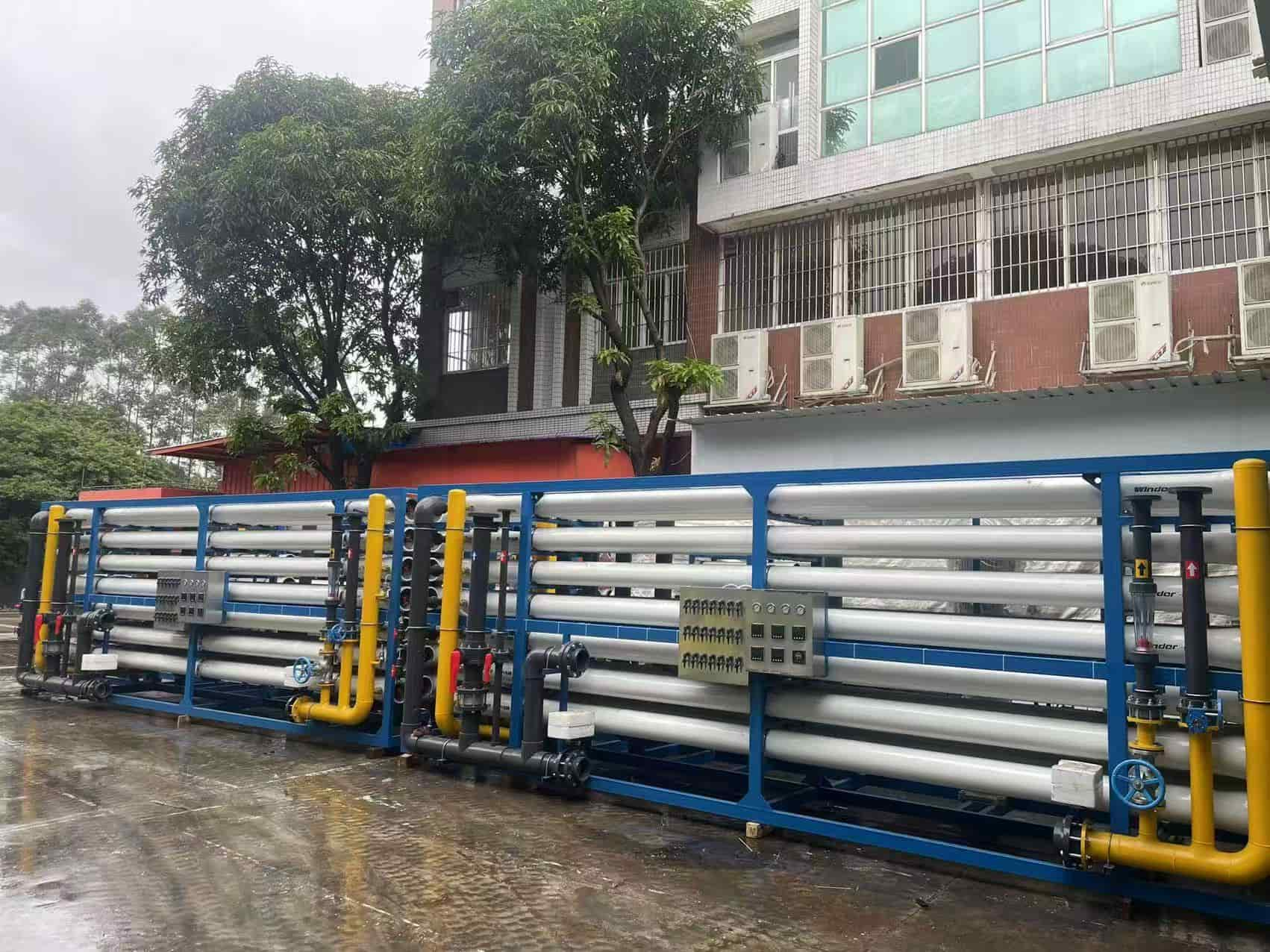
Not every groundwater source needs all these treatment stages. Laboratory water analysis should always be the starting point for system selection.
Why Does Groundwater Need Treatment Before Drinking?
Groundwater naturally collects minerals and other substances as it passes through soil and rock formations. Agricultural activities, industrial discharge, wastewater, and poorly protected wells can also affect its quality.
Common groundwater problems include:
-
Iron and Manganese: Excessive concentrations may cause reddish-brown or dark stains, deposits, and water-quality problems.
-
Hardness: Calcium and magnesium can cause scale buildup in pipes, heaters, and other equipment.
-
Fluoride, Nitrate, and Arsenic: These dissolved contaminants may exceed applicable drinking-water limits and require specific removal technologies.
-
Suspended Solids: Sand, silt, and other particles can affect water clarity and downstream equipment.
-
Microorganisms: Bacteria and other microbes may enter groundwater through damaged wells, flooding, or nearby contamination.
Since some contaminants cannot be identified by appearance, laboratory testing is important before choosing a groundwater treatment system.
How Does a Groundwater Drinking Water Treatment System Work?
A typical groundwater treatment plant may follow this process:
Groundwater Intake → Pretreatment → Filtration → Advanced Treatment → Disinfection → Treated Water Storage
Each stage serves a different purpose:
1. Groundwater Intake
Raw water is pumped from a well or borehole into the treatment plant. Important parameters such as pH, TDS, hardness, iron, manganese, turbidity, and microbial quality should be tested.
2. Pretreatment
Depending on the raw water quality, pretreatment may include screening, aeration, oxidation, or chemical conditioning. For example, oxidation can help convert dissolved iron into particles that can be removed through filtration.
3. Filtration
Sand or multimedia filters remove suspended solids and sediment. Additional filtration may be required for iron and manganese removal.
4. Advanced Treatment
The treatment process is selected according to the identified contaminants. Water softeners reduce hardness, UF membranes remove fine particles and microorganisms, while RO membranes reduce dissolved salts and selected contaminants.
5. Disinfection
UV or chlorination is used to control microorganisms. Chlorination can also provide residual protection in a properly designed water distribution system.
6. Treated Water Storage
After treatment and disinfection, the water is transferred to a storage tank or distribution network.
Key Technologies for Groundwater Treatment
Different technologies address different water-quality problems. The following table provides a quick reference.
| Treatment Technology |
Main Function |
Typical Application |
| Sand/Media Filtration |
Removes suspended particles |
Sediment and turbidity |
| Activated Carbon |
Reduces certain organic compounds and improves taste and odor |
Taste and odor concerns |
| Iron & Manganese Removal |
Reduces dissolved metals |
High iron and manganese |
| Water Softening |
Reduces calcium and magnesium |
Hard groundwater |
| Ultrafiltration (UF) |
Removes fine particles and microorganisms |
Suspended solids and microbial control |
| Reverse Osmosis (RO) |
Reduces dissolved salts and selected contaminants |
High TDS groundwater |
| UV/Chlorination |
Controls microorganisms |
Disinfection |
Ultrafiltration (UF): UF systems use hollow-fiber membranes to provide a physical barrier for suspended solids, colloids, and many microorganisms. They are useful when groundwater requires fine filtration and microbial control. However, UF does not remove dissolved salts.
Reverse Osmosis (RO): RO uses pressure to push water through a semipermeable membrane, reducing dissolved salts and selected contaminants. It is suitable for groundwater with high TDS or specific dissolved contaminants.
An important point: Not every groundwater source requires RO. If the main problems are iron, hardness, or suspended solids, other treatment technologies may be more appropriate and economical.
How to Choose the Right Groundwater Treatment System
Selecting a suitable well water treatment system involves more than choosing individual filters or membranes. Consider the following factors:
-
Raw Water Quality: Obtain a laboratory analysis to identify contaminants and their concentrations.
-
Daily Water Demand: Determine the required capacity and peak flow rate to size pumps, filters, membranes, and storage tanks.
-
Required Water Quality: Identify the applicable drinking-water standards and the intended use of treated water.
-
Operating Costs: Consider electricity consumption, chemical usage, filter replacement, and membrane maintenance.
-
Installation Conditions: Evaluate available space, equipment layout, and maintenance accessibility.
A properly designed system should balance water quality, treatment efficiency, operating costs, and maintenance requirements.
Example: Groundwater Treatment for a Small Community
Consider a small community that uses a borewell as its drinking-water source. Residents notice reddish stains around sinks and plumbing fixtures. Laboratory testing identifies high iron, high hardness, and microbial contamination.
A possible treatment process could be:
Groundwater → Iron Removal → Water Softening → Filtration → Disinfection → Drinking Water Storage
Each stage addresses a specific water-quality problem. If another groundwater source contains excessive fluoride, nitrate, or dissolved salts, its treatment process may require different technologies.
This is why water analysis should guide the final system design rather than relying on a standard equipment configuration.
Frequently Asked Questions
1. What is the best drinking water treatment system for well water?
There is no single solution for every well. The treatment process depends on raw water quality and may include filtration, iron removal, softening, UF, RO, and disinfection.
2. Does groundwater always need RO treatment?
No. RO is mainly considered when groundwater contains high TDS, dissolved salts, or specific contaminants requiring membrane separation.
3. How do you remove iron from groundwater?
Iron is commonly removed through oxidation followed by filtration. The appropriate process depends on iron concentration, pH, and water chemistry.
4. How do you disinfect groundwater for drinking?
UV disinfection and chlorination are common methods. UV inactivates microorganisms, while chlorination can provide residual protection in a properly managed distribution system.
5. How much does a groundwater treatment system cost?
The cost depends on raw water quality, treatment capacity, equipment configuration, and installation requirements. A water-quality report and daily water demand are needed for an accurate quotation.
Conclusion
Groundwater treatment requires a process designed around the actual water quality. Whether the main challenge is iron, manganese, hardness, suspended solids, dissolved salts, or microbial contamination, selecting the right treatment technologies is essential.
Hinada Water Treatment provides water treatment equipment and customized solutions, including filtration systems, UF systems, and RO systems.
If you are planning a groundwater drinking water treatment project, share your raw water analysis, required daily capacity, and target water quality with our team. We can help evaluate a suitable treatment process based on your project requirements.