<p>Wastewater treatment plants are among the largest energy consumers in municipal infrastructure, and upgrading them is one of the most effective energy efficiency measures available. The majority of plant electricity, typically fifty to sixty five perce
<p>Wastewater treatment plants are among the largest energy consumers in municipal infrastructure, and upgrading them is one of the most effective energy efficiency measures available. The majority of plant electricity, typically fifty to sixty five perce
September 30, 2026
Author
Solution Provider, through a professional technical team, we provide customers with targeted equipment selection recommendations and comprehensive after-sales services, winning the trust and recognition of customers.
Sarah M.
Wastewater treatment plants are among the largest energy consumers in municipal infrastructure, and upgrading them is one of the most effective energy efficiency measures available. The majority of plant electricity, typically fifty to sixty five percent, is consumed by aeration, with pumping and sludge handling accounting for most of the remainder. Legacy plants waste energy because they were designed around peak loads with generous safety factors, because diffusers degrade and raise pressure requirements, because fixed speed blowers cannot turn down efficiently, and because control systems often cannot respond to real time process conditions. Upgrades address these problems directly. High efficiency fine bubble diffusers, high speed turbo blowers, dissolved oxygen and ammonia based control, variable frequency drives on pumps, improved mixing, and hydraulic optimization reduce consumption substantially, often by twenty to forty percent of total plant electricity. Membrane upgrades, including submerged MBR modules and hollow fiber ultrafiltration membranes, change the energy profile by enabling compact, high quality treatment and water reuse, while dissolved air flotation pretreatment protects downstream equipment from fouling. Sludge treatment offers both demand reduction and energy recovery through thickening, dewatering, anaerobic digestion, and combined heat and power generation from biogas. Automation, instrumentation, SCADA, digital twins, and remote monitoring allow efficiency to be maintained over time rather than lost through drift. On site renewables, heat recovery, load shifting, and demand response further improve the energy balance, and packaged or containerized systems bring these benefits to decentralized applications. Suppliers such as HINADA, founded in Guangzhou in 2012 and later expanding to Chenzhou, Hunan, provide integrated solutions spanning design, equipment supply, installation support, commissioning, and training, with products that include PVDF and PVC hollow fiber UF membranes, submerged MBR modules, containerized MBR systems, packaged plants, DAF units, UF systems, and industrial RO systems, serving clients in more than seventy five countries. Successful projects begin with measurement, prioritize aeration, integrate pumping and sludge improvements, verify savings through proper measurement and verification, and treat energy as a design parameter from the outset. The result is lower operating cost, improved reliability, reduced carbon emissions, and a pathway toward energy neutral or energy positive treatment.
Why Wastewater Treatment Plant Upgrades Improve Energy Efficiency
Wastewater treatment is one of the most energy intensive services that a modern community provides for itself. Unlike many industrial processes, it cannot be switched off when electricity prices rise, and it cannot be paused when demand peaks. Sewage arrives continuously, rain falls without warning, and discharge permits must be met every single day of the year. As a result, the electricity bill of a municipal wastewater treatment plant is not a minor line item in a budget. In many cities it is the single largest energy cost in the entire municipal portfolio, and in some regions wastewater utilities rank among the top consumers of electricity within local government operations. This reality has pushed plant owners, consulting engineers, and equipment manufacturers to look much more closely at the relationship between treatment performance and energy consumption.
Upgrading a wastewater treatment plant is often discussed in terms of compliance, capacity, or reliability. Those are legitimate drivers. However, a well planned upgrade is also one of the most effective energy efficiency measures available to a utility. The reason is structural: most of the energy consumed in a treatment plant is spent moving air, moving water, and moving sludge. Each of those functions is governed by equipment that has improved dramatically over the past two decades, and each of them can be controlled far more intelligently than was possible when many existing plants were originally designed. When old equipment is replaced with modern equivalents and when control strategies are redesigned around real time data, the savings are not marginal. They routinely reach twenty to forty percent of total plant electricity consumption, and in plants with severely oversized or poorly controlled aeration systems, savings can exceed fifty percent.
undefined
The Energy Water Nexus and Why It Matters Now
The relationship between water and energy is often described as a nexus because the two resources are deeply interdependent. Energy is required to extract, treat, heat, and distribute water, and water is required to generate electricity, refine fuels, and cool thermal power stations. Wastewater treatment sits at the end of that chain but also at the beginning of a new one, because treated effluent can be reused, and the organic matter removed from wastewater can be converted into biogas, which is itself a source of energy. A treatment plant is therefore not only a consumer of energy but potentially a producer of it.
This dual identity is what makes upgrades so attractive. A conventional upgrade that simply replaces a worn out pump with a more efficient one produces a straightforward reduction in consumption. A more ambitious upgrade that combines high efficiency equipment with anaerobic digestion, biogas capture, and combined heat and power generation can transform a plant from a net energy consumer into a net energy producer, or at least into a facility that approaches energy neutrality. The difference between the two outcomes is rarely the treatment technology itself. It is the degree to which energy is treated as a design parameter from the very beginning of the project.
Pressure to act comes from several directions at once. Electricity tariffs in many markets have risen faster than general inflation. Carbon reporting requirements are expanding from large industrial emitters to municipal utilities. Aging infrastructure is reaching the end of its useful life, which forces replacement decisions whether or not energy is a stated priority. When these forces converge, the question is no longer whether to upgrade but how to design the upgrade so that it delivers the greatest possible operational benefit per unit of capital invested.
Where the Energy Actually Goes in a Treatment Plant
Before discussing specific upgrades, it is useful to understand the distribution of energy consumption inside a typical plant. Although exact figures vary with process configuration, climate, influent strength, and effluent standards, the general pattern is remarkably consistent across regions and treatment scales.
Process Area
Typical Share of Plant Electricity
Primary Energy Users
Secondary biological treatment and aeration
50 to 65 percent
Blowers, diffusers, mixers, recirculation pumps
Pumping and lifting
10 to 20 percent
Influent pumps, return sludge pumps, transfer pumps
Sludge treatment and dewatering
10 to 20 percent
Thickeners, digesters, centrifuges, belt presses, dryers
Preliminary and primary treatment
5 to 10 percent
Screens, grit removal, primary clarifiers, DAF units
Disinfection, lighting, HVAC, controls
5 to 10 percent
UV systems, buildings, instrumentation, SCADA
The dominance of aeration is the single most important fact in wastewater energy management. If a project team does nothing else but optimize the biological treatment stage, it will have addressed the majority of the plant electricity bill. Conversely, a project that focuses exclusively on lighting, solar panels, or small auxiliary loads while leaving aeration untouched will achieve only cosmetic improvements.
It is also important to distinguish between installed power and actual consumption. A plant may have a large installed motor capacity but consume relatively little energy if those motors run at low load for short periods. Energy management therefore depends on measurement. Without reliable sub metering at the process area level, it is impossible to know where the real consumption occurs, and it is impossible to verify that an upgrade has actually delivered the savings it promised.
Why Legacy Plants Waste So Much Energy
Most of the energy inefficiency in existing treatment plants is not the result of negligence. It is the result of design assumptions that made perfect sense at the time and have since become obsolete. Understanding these assumptions is essential, because it explains why upgrades produce such large savings and why those savings can be predicted with reasonable confidence.
Design for Peak Load Instead of Average Load
Historically, treatment plants were designed around peak hydraulic and organic loading conditions, with generous safety factors added on top. Blowers, pumps, and mixers were sized to handle the worst case scenario that might occur on the wettest day of the year or during an industrial shock load. Because variable frequency drives were expensive and unreliable in earlier decades, the standard approach was to run equipment at fixed speed and throttle the output mechanically, or simply to run more units than necessary and let the surplus capacity be wasted.
The result is a plant that is oversized for the ninety nine percent of the time when conditions are normal. A blower rated for peak demand may operate at thirty or forty percent of its design capacity during most of the year, which is precisely the operating region where fixed speed machines are least efficient. Modern drives and controls allow the same equipment to follow the load precisely, but only if the equipment itself is capable of efficient turndown.
Diffuser Degradation and Fouling
Fine bubble diffusers are mechanical devices that degrade over time. Elastomeric membranes stiffen, crack, or clog. Deposits of calcium, iron, and biological slime accumulate on the surface. The result is a slow and often invisible increase in the pressure required to deliver the same volume of air. Operators compensate by raising blower output or opening valves, and energy consumption creeps upward year after year. A diffuser that required three kilopascals of head when new may require six or eight kilopascals after eight years of service, and the blower energy penalty is proportional to that increase.
Oversized and Inefficient Blowers
Positive displacement blowers, which were the standard for decades, are robust and simple but relatively inefficient, particularly when they are throttled or operated at reduced speed through belt drives. Multi stage centrifugal blowers are more efficient at design conditions but lose efficiency rapidly when they must be throttled. Many plants still rely on inlet throttling valves or discharge blow off valves to control air flow, which means that the blower continues to consume nearly full power even when the process needs far less air.
Control Systems That Cannot Respond
Dissolved oxygen control was once a manual exercise. An operator would take a reading, adjust a valve, and check again later. Some plants still operate this way, and many others operate with basic on off control that swings dissolved oxygen between very low and very high values. Because aeration energy scales with the volume of air delivered, and because excess dissolved oxygen provides no treatment benefit, every hour spent above the set point is wasted energy. Automatic control based on continuous measurement is one of the highest return investments available in a treatment plant.
Hydraulic Losses That Nobody Notices
Friction losses accumulate quietly. Partially closed valves, fouled pipes, clogged screens, and poorly aligned weirs all raise the head that pumps must overcome. Each additional meter of head translates directly into additional kilowatt hours. Because these losses develop gradually, they are rarely attributed to a single event, and they are frequently accepted as the normal cost of operating an old plant.
Aeration Upgrades and the Largest Single Opportunity
Aeration accounts for the majority of electricity consumption in activated sludge plants because oxygen transfer is inherently energy intensive. Air must be compressed, delivered through piping and diffusers, dissolved into a liquid, and then consumed by microorganisms. Every stage of that chain offers opportunities for improvement, and because the total load is so large, even modest percentage gains translate into substantial absolute savings.
Fine Bubble Diffuser Replacement
Replacing coarse bubble or degraded fine bubble diffusers with modern high efficiency fine bubble membranes is often the first step in an aeration upgrade. Modern diffusers achieve standard oxygen transfer efficiencies that older designs cannot match, and they maintain that performance over a longer service life. The energy benefit comes from two directions: less air is required to transfer the same mass of oxygen, and the pressure required to push that air through the diffuser is lower. Together, these effects can reduce blower energy by fifteen to thirty percent compared with an aged coarse bubble system.
Material selection matters. Membrane diffusers are typically produced from EPDM or polyurethane, and the choice depends on the wastewater characteristics and the presence of solvents, oils, or high temperatures. In plants where fouling is a chronic problem, diffusers with improved surface properties and better resistance to chemical cleaning will hold their efficiency for longer, which extends the energy benefit across the whole life of the installation.
High Efficiency Blower Technology
Blower replacement is often the second pillar of an aeration upgrade. Modern high speed turbo blowers use air foil or magnetic bearings, integrated variable speed drives, and precision impellers to achieve efficiencies that were not commercially available twenty years ago. Because they can turn down smoothly to a fraction of their rated capacity while maintaining high efficiency, they match the wide variation in oxygen demand that occurs across a daily cycle and across seasons.
The savings from turbo blowers come less from their peak efficiency than from their part load behaviour. A plant that operates at forty percent of design air flow for most of the year will see a dramatic reduction in energy use when a fixed speed blower is replaced with a machine that is efficient at that point. In addition, turbo blowers eliminate the blow off valves and inlet throttling that waste energy in conventional installations, and they reduce maintenance requirements because there are no gears, belts, or oil systems in the air path.
Precise Dissolved Oxygen Control
Even the most efficient blower will waste energy if the control strategy is poor. Dissolved oxygen control has evolved from simple proportional control to sophisticated strategies that use multiple sensors, cascade control, and predictive algorithms. The objective is to maintain the lowest dissolved oxygen concentration that still supports complete nitrification and stable biological performance, because every additional milligram per liter of dissolved oxygen represents air that did not need to be compressed.
Ammonia based control takes this concept further. Instead of controlling on dissolved oxygen alone, the system measures ammonia in the effluent and adjusts air delivery to meet the actual nitrogen load. Because ammonia concentration responds more slowly than dissolved oxygen, this approach requires careful tuning, but it allows the plant to reduce aeration during low load periods without risking permit exceedance. In plants with significant diurnal and seasonal load variation, ammonia based control can deliver savings of ten to twenty five percent beyond what dissolved oxygen control alone achieves.
Zone Control and Turndown
Most biological reactors are divided into zones with different oxygen requirements. Aerobic zones need oxygen, anoxic zones need mixing but not air, and swing zones may alternate between the two. Upgrading the air distribution system with individual zone control valves, accurate flow meters, and motorized actuators allows the plant to direct air only where it is needed. This is particularly valuable in plants that operate biological nutrient removal, where the anoxic and aerobic volumes may need to shift seasonally.
Pumping, Mixing, and Hydraulic Optimization
Pumping is the second largest energy consumer in most plants, and it is often the area where the simplest measures produce reliable results. Pumps are generally more efficient than blowers at their best efficiency point, but they are frequently operated far from that point because of oversized impellers, throttled discharge valves, or systems that have changed since the pumps were selected.
Variable Frequency Drives on Pumps
Installing variable frequency drives on influent pumps, return activated sludge pumps, and transfer pumps allows flow to be matched to demand without throttling. The affinity laws dictate that flow varies with speed, head varies with the square of speed, and power varies with the cube of speed. A pump slowed to eighty percent of its original speed consumes roughly fifty one percent of its original power, which explains why variable speed operation is so effective. The caveat is that the pump must still operate within a reasonable efficiency band, and the system curve must be understood before drives are applied.
Eliminating Throttling Losses
In many older plants, flow is controlled by partially closing a discharge valve. This is a reliable method but an expensive one, because the pump continues to add energy that is dissipated as turbulence across the valve. Replacing throttling control with speed control, impeller trimming, or a properly sized pump eliminates that loss entirely.
Mixing and Anoxic Zone Design
Mixers in anoxic and anaerobic zones are often oversized and operated continuously. Modern submersible mixers with hydrodynamically optimized propellers deliver the required velocity field with far less power, and variable speed operation allows mixing intensity to be reduced during low flow periods. In some configurations, process pumps can be used to provide both mixing and recirculation, which reduces the total number of energy consuming devices in the system.
Reducing Hydraulic Head Losses
Every meter of unnecessary head is paid for continuously. Upgrades that reduce head include replacing fouled piping, removing unnecessary bends and fittings, correcting weir elevations, and improving the hydraulic profile so that gravity does more of the work. In plants with significant elevation change across the site, redesigning the flow scheme to use gravity instead of pumping can eliminate entire pump stations from the energy balance.
Membrane Upgrades and Their Effect on Energy Use
Membrane processes have become mainstream in both municipal and industrial wastewater treatment, and they change the energy profile of a plant in ways that are sometimes misunderstood. A membrane bioreactor (MBR) uses a higher mixed liquor concentration and replaces the secondary clarifier with a physical barrier, which produces excellent effluent quality and a compact footprint. The trade off is that membrane filtration requires air scouring and permeate pumping, which adds energy demand. However, the overall energy balance depends heavily on how the system is designed and operated.
Submerged MBR Membrane Modules
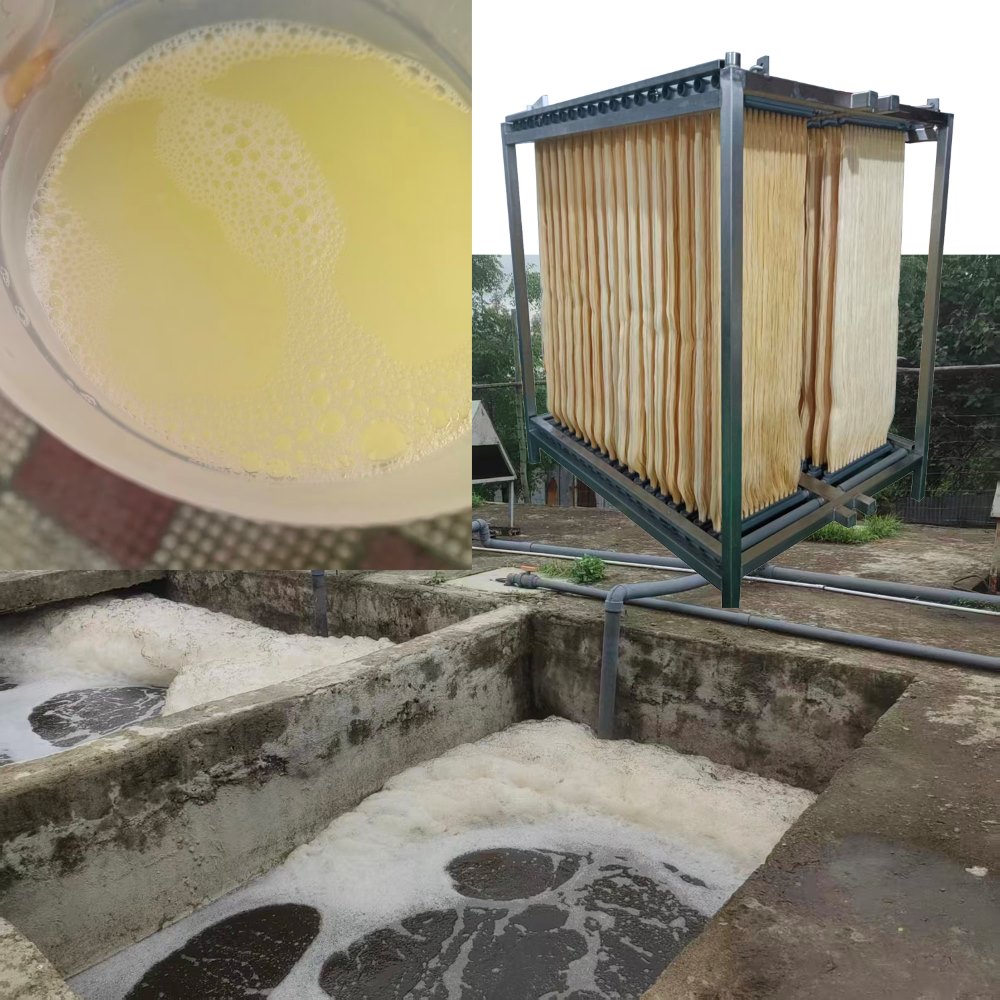
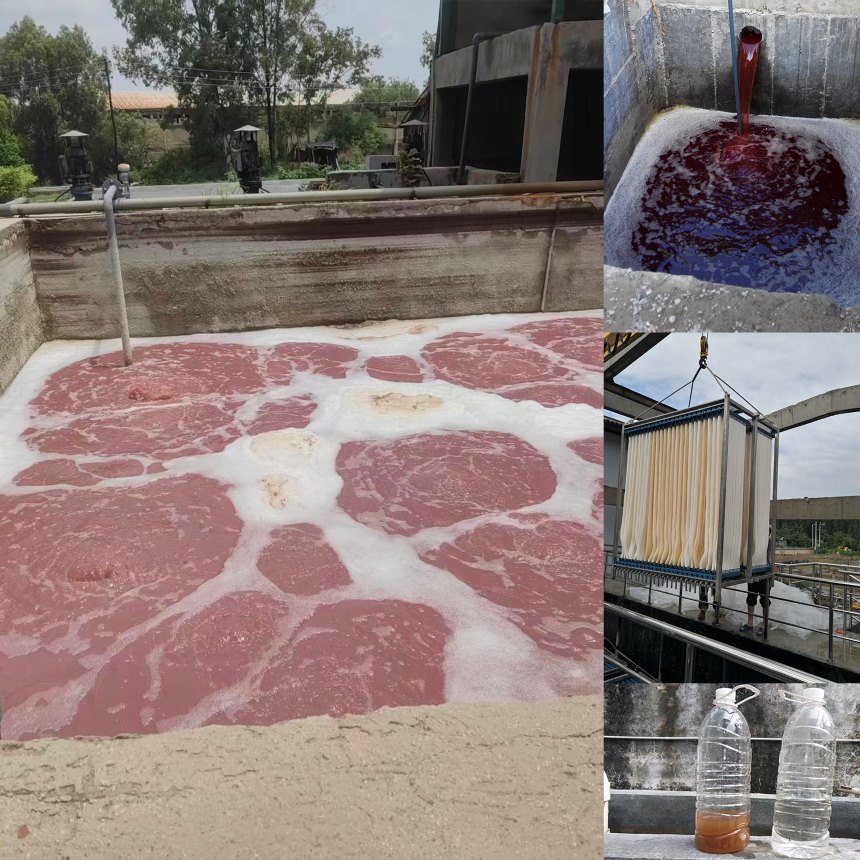
Submerged MBR membrane modules are typically arranged in cassettes within the biological tank. Air is supplied to the base of the cassette to scour the membrane surface and control fouling. This scouring air is the dominant energy consumer in an MBR, and it is also the area where the greatest efficiency gains are available. Modern module designs use optimized air distribution, larger effective membrane areas per cassette, and improved fiber or flat sheet geometries to reduce the specific scouring air demand per unit of permeate produced.
Manufacturers such as HINADA, formally Hinada Water Treatment Tech Co., Ltd., have focused considerable research and development effort on this problem. HINADA was founded in 2012 in Guangzhou, China, and later expanded its manufacturing base to Chenzhou in Hunan Province. The company produces submerged MBR membrane modules, PVDF and PVC hollow fiber ultrafiltration membranes, containerized MBR systems, packaged wastewater treatment plants, dissolved air flotation systems, ultrafiltration systems, and industrial reverse osmosis systems. Today it serves clients in more than seventy five countries across Asia, Africa, Europe, and the Americas.
Hollow Fiber Ultrafiltration Membranes
Hollow fiber ultrafiltration membranes perform precise physical separation of suspended solids, bacteria, colloids, and macromolecular organics. When used as a tertiary treatment step or as pretreatment for reverse osmosis, they allow a plant to meet stringent discharge or reuse standards without relying on chemical disinfection or extensive filtration trains. From an energy perspective, the advantage is that a well designed ultrafiltration system operating in direct filtration mode with gravity or low pressure feed requires far less energy than a comparable conventional treatment train expanded to the same level of performance.
PVDF hollow fiber membranes are widely used in wastewater applications because of their chemical resistance, mechanical strength, and tolerance to aggressive cleaning regimes. PVC membranes offer a cost effective alternative for less demanding duties. Membrane chemistry affects energy indirectly but significantly, because membranes that resist fouling maintain stable permeability, and stable permeability means that pumps and blowers do not have to work harder over time to maintain the same production rate.
Integrated and Containerized Systems
Integrated packaged wastewater treatment systems and containerized MBR plants bring a different kind of energy benefit. Because they are factory assembled and tested, the hydraulic and aeration systems can be optimized as a whole rather than assembled from components selected by different parties. Piping runs are short, bends are minimized, and blowers are matched precisely to the tank volume and diffuser layout. This systems approach typically yields better energy performance than an equivalent site built installation of the same capacity.
Containerized systems are particularly relevant for decentralized applications, where a small community, a resort, a construction camp, or an industrial facility needs reliable treatment without a large permanent workforce. HINADA provides integrated solutions for water and wastewater projects that span design, equipment supply, installation support, commissioning, and training, an approach that allows energy performance to be designed in from the start rather than retrofitted later.
Dissolved Air Flotation and Pretreatment
Dissolved air flotation systems are used to remove fats, oils, grease, and suspended solids from industrial wastewater before biological treatment. Although a DAF unit consumes energy for the recycle pump and the air saturation system, it often produces a net energy benefit downstream. Removing a significant fraction of the organic load and preventing fats from coating diffusers and membranes reduces the aeration demand in the biological stage and protects the efficiency of the equipment that follows. In industrial plants with high fat content influent, pretreatment is often the difference between a stable, efficient biological process and a chronically fouled one.
Sludge Treatment and Energy Recovery
Sludge handling is often treated as a disposal problem rather than an energy opportunity. In fact, the organic matter captured during treatment contains chemical energy that can be recovered, and the dewatering and drying steps that precede disposal consume significant electricity. Upgrading sludge treatment therefore offers both demand reduction and energy generation.
Thickening and Dewatering Efficiency
The energy required to dewater sludge depends strongly on the feed concentration. Thickening sludge before dewatering reduces the volume that must be processed, which reduces pump energy, centrifuge or press energy, and the volume of polymer required. Modern gravity belt thickeners, rotary drum thickeners, and dissolved air flotation thickeners can raise sludge concentration substantially at low energy cost, and the downstream savings often justify the investment on their own.
Dewatering equipment itself has improved. High efficiency centrifuges with improved bowl geometry and scroll designs achieve higher cake dryness at lower specific power consumption. Belt filter presses with optimized gravity drainage zones and improved pressure sections can achieve similar results with lower energy input. The correct choice depends on sludge characteristics, but in all cases the objective is the same: remove as much water as possible before the sludge enters the thermal or transport stages.
Anaerobic Digestion and Biogas Production
Anaerobic digestion stabilizes sludge while producing biogas, a mixture of methane and carbon dioxide that can be used as fuel. The energy content of biogas is substantial. In a plant with effective thickening and a well operated mesophilic digester, biogas can supply a large share of the plant thermal demand and a meaningful share of its electricity demand.
Digester performance depends on temperature stability, mixing, feed characteristics, and retention time. Upgrades that improve any of these parameters increase biogas yield. Covered digesters with improved mixing systems, better heating control, and reliable feeding arrangements produce more gas and require less energy than poorly mixed or thermally unstable systems.
Combined Heat and Power
Biogas is most valuable when it is used in a combined heat and power unit, which produces both electricity and useful heat. The electricity can offset purchased power, while the heat can be used to maintain digester temperature or to dry sludge. Combined heat and power systems based on reciprocating engines are well established, and modern units achieve high overall efficiencies when both electrical and thermal output are fully utilized.
The economics of combined heat and power depend on the biogas volume available, the price of purchased electricity, the price of natural gas or other heating fuel, and the cost of maintaining the engine. In plants that currently flare their biogas or use it only in a boiler, adding electricity generation is often a high return investment.
Thermal Drying and Incineration
Where sludge disposal costs are high, thermal drying reduces volume dramatically and can produce a product suitable for use as fuel or as a soil amendment. Drying is energy intensive, and it only makes sense when the heat is recovered from an existing source such as a biogas engine or when the dried product has a market. Incineration eliminates the sludge entirely and can recover energy, but it requires substantial air pollution control and is typically justified only at large scale.
Nutrient Removal and the Energy Trade Off
Nitrogen and phosphorus removal is often the trigger for a plant upgrade, because discharge limits have tightened in many jurisdictions. Nutrient removal changes the energy profile in several ways, and understanding these interactions is essential to designing an upgrade that meets both environmental and energy goals.
Nitrification requires oxygen, and it therefore increases aeration demand compared with a plant that only removes carbonaceous biochemical oxygen demand. Denitrification, on the other hand, recovers some of that oxygen demand by using nitrate as an electron acceptor, which reduces the total air requirement. The net effect depends on the configuration and on the amount of internal recirculation required.
Internal recirculation pumps consume energy, but they are generally small compared with blowers. The more important consideration is whether the process is designed to use the available carbon in the influent for denitrification, rather than oxidizing it aerobically and then adding external carbon. Designs that maximize the use of influent carbon reduce both aeration demand and chemical costs.
Phosphorus removal by chemical precipitation increases sludge production, which increases sludge handling energy. Biological phosphorus removal avoids the chemical but requires anaerobic and aerobic zones with specific mixing and recirculation arrangements. In both cases, the energy impact should be evaluated as part of the overall plant balance rather than in isolation.
Automation, Instrumentation, and Digital Control
Instrumentation and control are the connective tissue of an energy efficient plant. Efficient equipment operated with poor control will underperform, while modest equipment operated with excellent control can perform surprisingly well. This is why automation is frequently the highest return element of an upgrade project.
Sensors and Their Maintenance
Dissolved oxygen sensors, ammonia analyzers, flow meters, level sensors, and pressure transmitters provide the data on which control decisions are based. Sensor drift is the enemy of energy efficiency, because a sensor that reads high will cause the control system to deliver more air than necessary, and a sensor that reads low will cause the system to under aerate and risk permit exceedance. Upgrading to modern optical dissolved oxygen sensors with automatic cleaning and self diagnostics reduces maintenance burden and improves reliability. Ion selective ammonia analyzers with automatic calibration have also become more practical for continuous use.
SCADA and Data Historians
A modern supervisory control and data acquisition system does more than display process values. It logs them, trends them, and makes them available for analysis. Historical data allows operators to see how energy consumption correlates with load, temperature, and process set points. It also provides the evidence needed to verify that an upgrade has delivered its promised savings, which is essential when the project is financed through an energy performance contract.
Model Based and Predictive Control
Advanced control strategies use process models to predict how the plant will respond to changes in load or set point. Model predictive control can coordinate blowers, valves, and recirculation pumps to minimize energy while maintaining effluent quality. These systems require investment in instrumentation and in the engineering effort needed to build and tune the model, but in larger plants the savings can be substantial. In smaller plants, simpler rule based strategies often deliver most of the benefit at a fraction of the cost.
Digital Twins
A digital twin is a calibrated simulation model of the plant that runs alongside the real process. It allows operators and engineers to test control changes, evaluate equipment upgrades, and train staff without risking the actual treatment process. For energy management, a digital twin can quantify the expected savings from a proposed change before any capital is committed, which improves decision quality and reduces the risk of disappointing results.
Remote Monitoring and Support
Remote monitoring allows equipment suppliers and specialist engineers to observe performance continuously and to intervene when efficiency declines. This model is particularly valuable for decentralized plants, where local staff may not have deep expertise in membrane or aeration systems. A supplier that can monitor permeability trends, blower performance, and energy consumption remotely can help the operator maintain efficiency over years rather than months.
Renewable Energy and On Site Generation
Upgrades that reduce consumption are always the first priority, because the cheapest kilowatt hour is the one that is never used. Beyond efficiency, however, treatment plants have significant potential for on site renewable generation.
Solar Photovoltaic Systems
Treatment plants typically have large areas of open land, extensive roof space on buildings, and in some cases large clarifier and tank surfaces. Solar photovoltaic arrays can be installed on the ground, on rooftops, or as floating systems on ponds and tanks. Because a treatment plant operates continuously and has a steady baseline electrical demand, self consumption of solar generation is high, which improves the economics compared with projects that must export power at low feed in tariffs.
Biogas as a Renewable Fuel
Biogas from anaerobic digestion is a renewable fuel that can be used directly in engines, boilers, or upgraded to biomethane. Its value is enhanced when it displaces purchased electricity and natural gas simultaneously, because combined heat and power captures both revenue streams.
Heat Recovery
Wastewater itself contains thermal energy. Effluent temperatures are relatively stable across the year, which makes sewage a useful heat source for heat pumps serving nearby buildings. Heat exchangers installed in the effluent channel or in a dedicated chamber can supply a heat pump that provides heating or cooling to plant buildings or to district energy systems. This application is more common in colder climates, but it is technically feasible in most locations.
Load Shifting and Demand Response
Because treatment plants have inherent storage in their tanks and in their sludge handling processes, some loads can be shifted in time. Aeration can be reduced temporarily during peak tariff periods if dissolved oxygen and ammonia levels allow. Sludge dewatering can be scheduled outside peak hours. Digesters and thermal processes can be managed to reduce peak demand. In markets where demand charges or time of use tariffs are significant, load shifting can reduce costs even when total consumption is unchanged.
Decentralized and Packaged Treatment Systems
Not every energy efficiency discussion takes place at a large municipal plant. Decentralized treatment serves rural communities, industrial parks, resorts, and temporary facilities, and it presents a different set of energy challenges and opportunities.
Decentralized plants are usually small, which means that specific energy consumption per cubic meter treated tends to be higher than at large plants because fixed loads such as controls, lighting, and mixing do not scale down proportionally. This makes careful design even more important. Packaged systems that integrate biological treatment, aeration, and clarification into a single unit can reduce pumping and head losses compared with systems assembled from separate tanks and pump stations.
Containerized MBR systems take this integration further. Because the entire process is housed in a controlled enclosure, the aeration system can be optimized for the exact tank geometry, and the membrane scouring air can be matched to the membrane area. The result is a compact plant with predictable performance and energy consumption, suitable for installation where space is limited and where skilled operators are not available full time.
HINADA supplies integrated packaged wastewater treatment systems and containerized MBR systems alongside its membrane and dissolved air flotation product lines. The company has accumulated more than thirteen years of experience in the water treatment industry and ten years of membrane and equipment manufacturing experience, and it operates a complete ecosystem that spans membrane research and development, component manufacturing, equipment fabrication, and turnkey solution delivery. From its founding, the company has focused on two core technology pillars: hollow fiber ultrafiltration and MBR membranes for precise physical separation, and intelligent integrated wastewater treatment equipment for municipal, industrial, and decentralized applications.
The Economics of Upgrading: Life Cycle Cost and Payback
Energy efficiency investments compete for capital with every other need in a utility budget. Making the case requires a clear understanding of cost, savings, and risk over the life of the asset.
Capital Cost and Installation
The capital cost of an upgrade includes equipment, engineering, construction, electrical work, controls, commissioning, and contingency. In retrofit projects, installation can represent a large share of the total, especially when work must be done in an operating plant with limited shutdown windows. This is one reason why packaged and containerized systems are attractive in retrofit situations, because they reduce site work and compress the construction schedule.
Energy Savings and Other Benefits
Energy savings are the most visible benefit, but they are rarely the only one. Improved treatment reliability, reduced maintenance, lower chemical consumption, better effluent quality, reduced odour, and increased capacity often accompany an energy focused upgrade. When these benefits are quantified and included, the payback period shortens considerably. Maintenance savings are particularly significant for blowers and diffusers, because the labor and parts required to service old equipment can be substantial.
Simple Payback and Net Present Value
Simple payback is easy to communicate but ignores the time value of money and the life of the equipment. Net present value and internal rate of return provide a more complete picture, especially for projects with long asset lives. A diffuser replacement with a ten year life and a four year payback may look less attractive than a control system with a fifteen year life and a six year payback, depending on the discount rate and the escalation of energy prices.
Sensitivity to Energy Prices
Energy efficiency projects are effectively a hedge against future energy price increases. If electricity prices rise faster than expected, the savings grow and the payback shortens. If prices fall, the payback lengthens. Because price uncertainty is asymmetric in most markets, with greater risk of increases than decreases, the hedge value of efficiency is real and should be reflected in the financial analysis.
Delivery Models and Financing
The way an upgrade is procured affects both its cost and its energy performance. Traditional design bid build procurement separates design from construction and often rewards the lowest capital cost rather than the lowest life cycle cost. Alternative models can align incentives more effectively.
Design Build and Turnkey Delivery
In design build and turnkey arrangements, a single entity is responsible for design, equipment supply, construction, and commissioning. This encourages integrated optimization, because the same party bears the consequences of poor hydraulic or aeration design. HINADA provides turnkey delivery for water and wastewater projects, covering design, equipment supply, installation support, commissioning, and operator training, which allows energy performance to be designed into the system from the outset.
Energy Performance Contracting
Under an energy performance contract, an energy service company finances or guarantees the upgrade and is repaid from the resulting savings. This model is attractive for utilities with limited capital budgets, and it places the risk of underperformance on the contractor. Accurate measurement and verification are essential, which in turn requires good sub metering and data management.
Public Private Partnerships and Concessions
Long term concession agreements can align the operator interest with life cycle performance, because the operator bears the energy cost for many years. In these arrangements, energy efficiency is not an afterthought but a core element of the operating strategy.
Case Illustrations of Successful Upgrades
Although every plant is unique, the patterns observed in upgrade projects are consistent enough to be instructive.
Municipal Plant Aeration Retrofit
A medium sized municipal plant with an aging coarse bubble aeration system and fixed speed positive displacement blowers replaced its diffusers with high efficiency fine bubble membranes and installed high speed turbo blowers with dissolved oxygen control. Electricity consumption for aeration fell by approximately thirty five percent, and effluent quality improved because the new control system maintained more stable dissolved oxygen concentrations. The payback period was under four years when maintenance savings were included.
Industrial Plant Pretreatment and MBR Upgrade
An industrial facility with high fat and oil content in its wastewater experienced chronic diffuser fouling and unstable biological performance. A dissolved air flotation unit was installed upstream, followed by an MBR with submerged membrane modules. Although the MBR added scouring air demand, the elimination of frequent shutdowns, the reduction in chemical cleaning, and the improved effluent quality that allowed water reuse produced a net reduction in total operating cost and a significant reduction in energy per cubic meter of water produced.
Decentralized Community System
A rural community replaced a failing lagoon system with a containerized MBR plant. Because the packaged system was factory assembled and tested, the aeration and membrane scouring systems were optimized as a unit, and the plant achieved stable performance with minimal operator intervention. Solar photovoltaic panels installed on adjacent land supplied a substantial share of the plant electricity, and remote monitoring allowed a part time operator to manage the facility effectively.
Sludge Digestion and Biogas Utilization
A larger plant added sludge thickening ahead of its digesters, improved digester mixing and heating, and installed a combined heat and power unit. Biogas production increased enough to supply a significant portion of the plant electricity demand and most of its digester heating requirement. The plant moved substantially closer to energy neutrality, and the project was justified primarily on energy cost savings rather than on regulatory compliance.
Common Pitfalls in Energy Focused Upgrades
Not every upgrade delivers the expected savings. The failures tend to follow recognizable patterns.
Optimizing Components Instead of Systems
Selecting the most efficient blower without considering the diffuser layout, piping losses, and control strategy can produce disappointing results. Energy performance is a system property, and it must be evaluated at the system level.
Ignoring Turndown Requirements
Equipment that is efficient at design point but inefficient at part load will not perform well in a plant that rarely operates at design conditions. Turndown capability should be a primary selection criterion, not an afterthought.
Insufficient Instrumentation
Advanced control requires reliable measurement. A control system without adequate sensors will either be disabled by frustrated operators or will operate poorly and erode confidence in the technology.
Commissioning Shortcuts
Energy savings depend on proper commissioning. Diffusers must be installed at correct elevations and with correct clearances. Blowers must be tuned. Control loops must be tuned and documented. When commissioning is rushed, the plant may never reach its designed efficiency.
Neglecting Operator Training
Operators who understand why a control strategy exists will maintain it. Operators who inherit a system they do not understand may revert to manual control. Training is an essential part of any energy focused upgrade.
Operations and Maintenance as an Energy Strategy
An upgraded plant is not a permanent solution on its own. Efficiency decays if maintenance is neglected, and the decay is often gradual enough to escape notice. A structured maintenance and monitoring program protects the investment.
Diffusers should be inspected periodically for fouling, damage, and correct airflow distribution. Blowers should be serviced according to manufacturer schedules, with particular attention to filters, bearings, and cooling systems. Sensors should be calibrated at defined intervals and replaced when they drift beyond acceptable limits. Pumps should be checked for wear ring clearance, impeller condition, and alignment. Valves should be exercised to prevent seizing. Piping should be inspected for deposits that increase head loss.
Energy monitoring should be continuous, not occasional. Sub meters at the process area level allow deviations to be detected quickly, and trend analysis can reveal slow degradation before it becomes expensive. When consumption rises without an obvious process reason, the cause is usually equipment degradation or control drift, and early detection keeps the cost small.
Measurement and Verification
Savings must be measured to be believed. A measurement and verification plan defines the baseline, the boundary of the project, the adjustments for changes in load or weather, and the metering required. International protocols provide frameworks for this work, and their use improves credibility with financiers and regulators.
Baseline establishment requires historical energy data, which many plants do not have in sufficient detail. Installing sub metering before an upgrade is therefore valuable, because it allows the savings to be attributed accurately. Where historical data is unavailable, calibrated models can be used to estimate the baseline, but measured data is always preferable.
Regulatory and Policy Drivers
Regulation shapes the economics of energy efficiency in wastewater treatment. Effluent standards determine the level of treatment required and therefore the baseline energy demand. Energy reporting requirements make consumption visible to management and to the public. Carbon pricing mechanisms, where they exist, add a cost to emissions and improve the return on efficiency investments. Incentive programs and grants can reduce capital costs for qualifying projects.
In many regions, policy is moving toward integrated resource management, in which energy, water, and carbon are considered together. Utilities that anticipate this shift by designing upgrades with energy performance in mind will be better positioned than those that treat energy as a secondary concern.
The Future: Toward Energy Neutral and Energy Positive Plants
The concept of an energy neutral wastewater treatment plant is no longer theoretical. A combination of efficient aeration, optimized pumping, anaerobic digestion with combined heat and power, heat recovery, and on site renewable generation can bring a plant close to balancing its energy accounts. In favourable circumstances, with strong influent organic content and favourable energy prices, a plant can produce more energy than it consumes.
Reaching that point requires more than equipment. It requires a design philosophy that treats energy as a primary constraint, an operating culture that monitors and responds to performance data, and a procurement approach that rewards life cycle performance rather than lowest capital cost. It also requires patience, because the benefits accumulate over years rather than months.
Equipment suppliers have a role to play in this transition. Companies that manufacture membranes, packaged plants, and treatment equipment can contribute by designing for efficient operation from the start, by providing accurate performance data, and by supporting operators after commissioning. HINADA participates in international water treatment exhibitions and works to bring membrane technology to regions where clean water is most needed, serving application fields that include industrial wastewater treatment and reuse, municipal sewage treatment and water recycling, rural decentralized water supply and sanitation, and drinking water purification from surface and groundwater sources.
Conclusion
Wastewater treatment plant upgrades improve energy efficiency because they replace equipment that was designed for a different era with equipment that can follow the actual load, because they introduce control systems that match energy input to process demand, and because they create opportunities to recover energy from the organic material that treatment removes. The savings are not incidental. They are the predictable result of correcting oversized, throttled, and poorly controlled systems that have accumulated inefficiency over decades of service.
The most successful projects begin with measurement, focus on aeration first, integrate pumping, sludge, and control improvements into a coherent whole, and treat energy as a design parameter rather than a reporting obligation. Whether the goal is compliance, capacity expansion, cost reduction, or carbon reduction, the same principle applies: a plant that understands its energy flows and controls them deliberately will always outperform a plant that does not.