Reverse Osmosis Water Treatment Plant: Process & Cost
Reverse Osmosis Water Treatment Plant: Process & Cost
November 11, 2026
Author
Solution Provider, through a professional technical team, we provide customers with targeted equipment selection recommendations and comprehensive after-sales services, winning the trust and recognition of customers.
Sarah M.
Reverse Osmosis Water Treatment Plant: Process, System and Cost Guide
Water quality is essential for industrial production. High levels of dissolved salts, minerals, and other impurities can cause scaling in pipes, boilers, and production equipment, increasing maintenance costs and affecting product quality.
A reverse osmosis water treatment plantprovides an effective solution by removing most dissolved salts and impurities from water. But how does an RO plant work? What equipment does it include, and what affects its cost?
This guide covers the working process, main components, applications, and key factors to consider when choosing an industrial RO system.
What Is a Reverse Osmosis Water Treatment Plant?
A reverse osmosis (RO) water treatment plant is a water purification system that uses semi-permeable membranes to separate dissolved salts, minerals, and other impurities from water.
Under pressure, water passes through the RO membrane, while most dissolved salts and other rejected substances are separated and discharged as concentrated reject water.
An RO system can effectively reduce:
Dissolved salts and minerals (TDS)
Hardness-causing ions, such as calcium and magnesium
Heavy metals and certain inorganic contaminants
Many bacteria and viruses
Some organic compounds and other impurities
What Types of Water Can an RO Plant Treat?
Depending on the system design and pre-treatment requirements, RO plants can treat:
Well water and groundwater
Municipal and tap water
River and lake water
Brackish water
Seawater (using specialized SWRO systems)
The appropriate system depends on raw water quality and the required treated-water standard.
How Does Reverse Osmosis Work?
The reverse osmosis process uses pressure to push water through a semi-permeable membrane, separating purified water from most dissolved salts and impurities.
Basic RO Process:
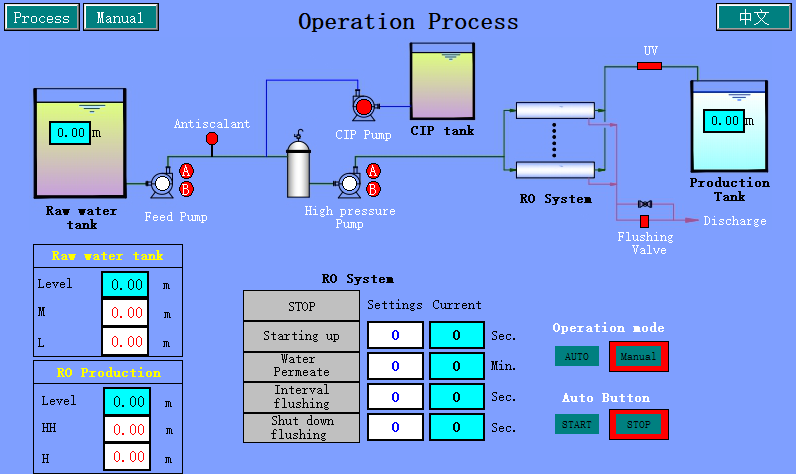
Raw Water → Pre-treatment → High-Pressure Pump → RO Membrane → Treated Water + Reject Water
The main treatment steps include:
Raw Water Supply: Water enters the system from wells, storage tanks, municipal pipelines, or other sources.
Pre-treatment: Sand filters, activated carbon filters, water softeners, or cartridge filters remove suspended solids and substances that may damage or foul the RO membrane.
High-Pressure Pump: Increases water pressure to overcome osmotic pressure and push water through the membrane.
RO Membrane Filtration: Separates water from most dissolved salts and other rejected substances.
Water Collection: Purified water is collected for industrial or commercial use, while concentrated reject water is discharged.
Effective pre-treatment is essential for reducing membrane fouling and scaling, maintaining stable water production, and extending membrane service life.
What Are the Main Components of an Industrial RO System?
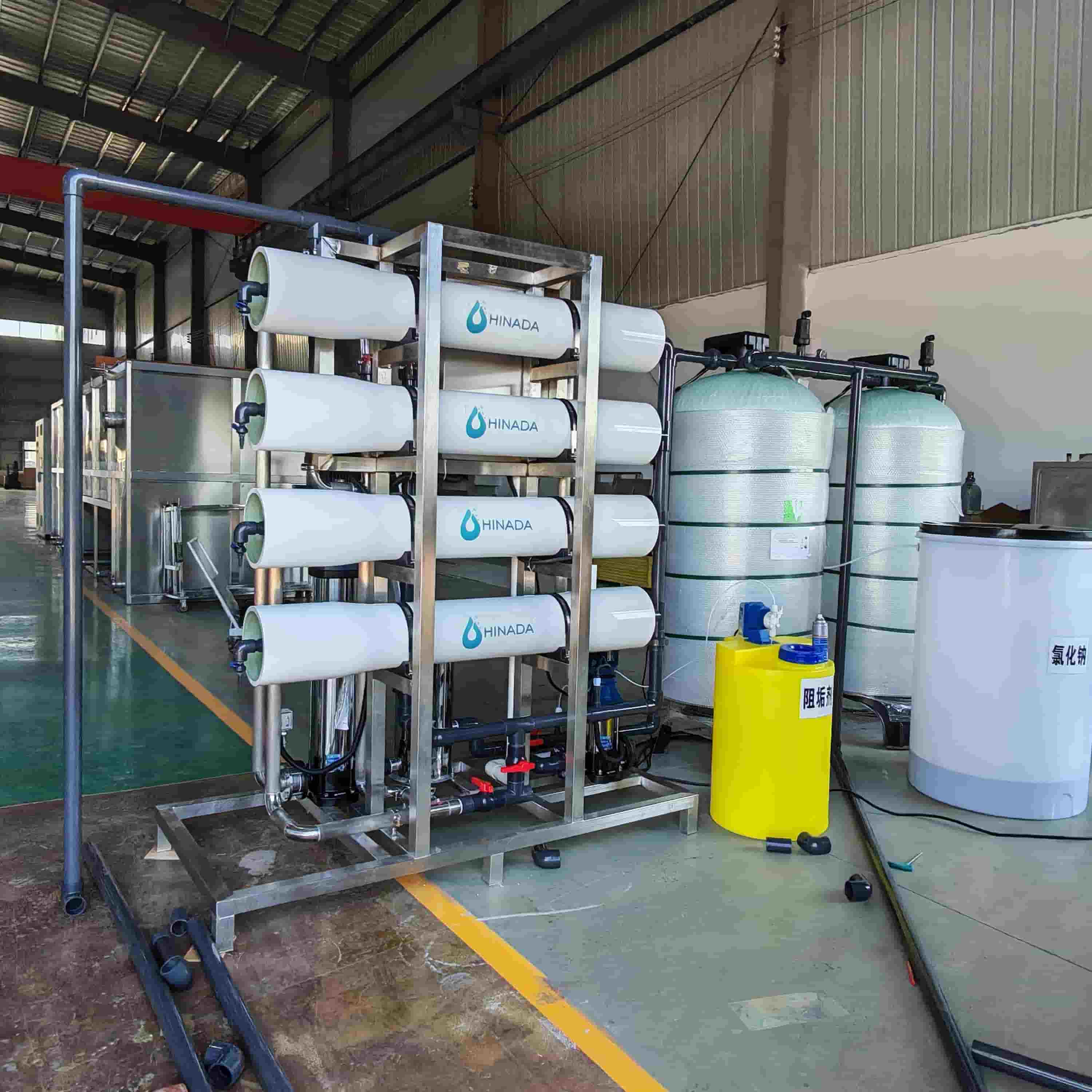
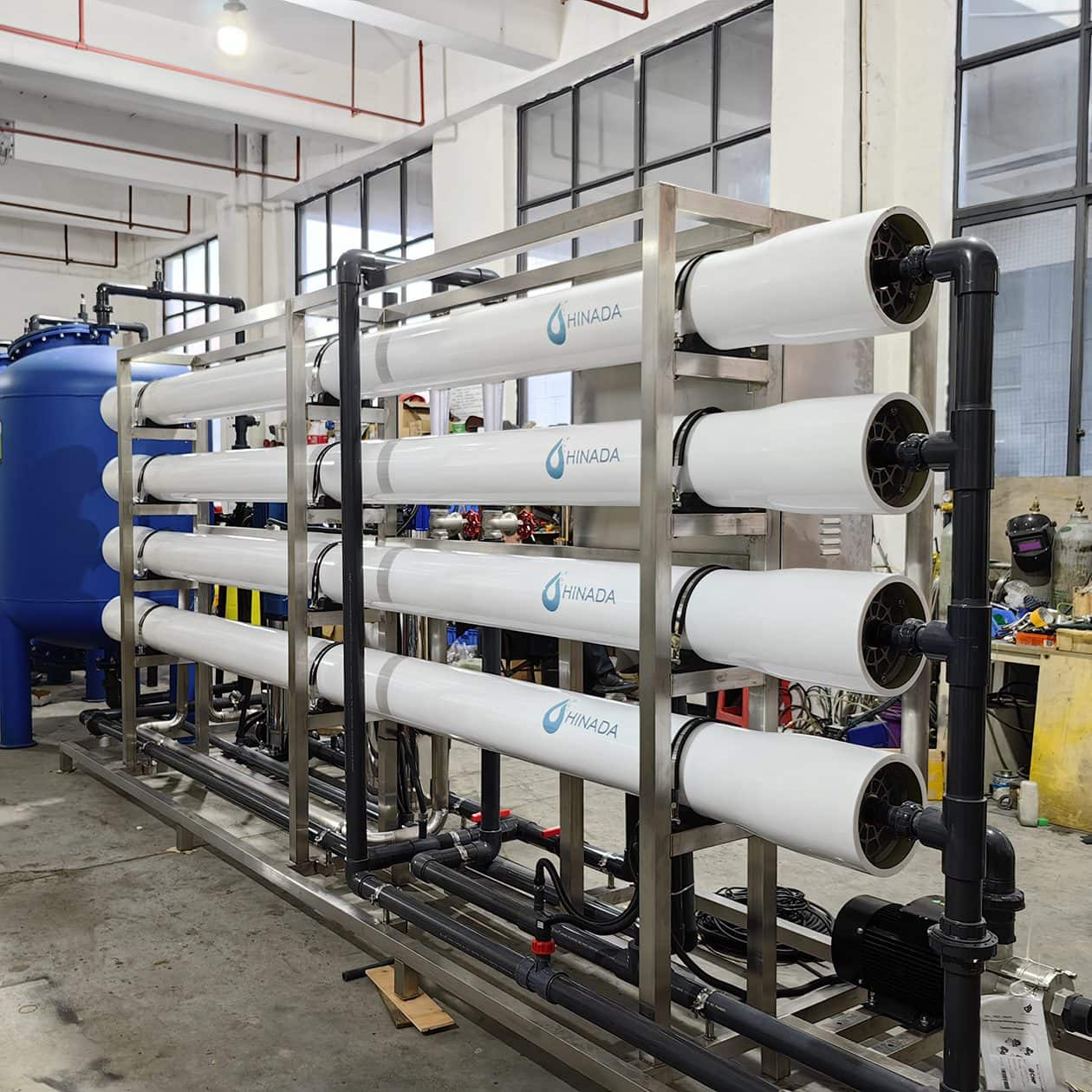
An industrial reverse osmosis system typically consists of the following equipment:
Pre-treatment equipment: Removes suspended solids, chlorine, and other substances that may affect membrane performance.
High-pressure pump: Provides the pressure required for RO filtration.
RO membrane elements: Perform the main separation process.
Pressure vessels: House and protect the RO membrane elements.
Control panel: Monitors system operation, pressure, and water flow.
Piping and valves: Control water distribution and system operation.
The actual configuration depends on feedwater quality, production capacity, and application requirements.
Where Are Reverse Osmosis Water Treatment Plants Used?
Industrial and commercial RO systems are widely used in applications requiring consistent water quality.
Common applications include:
Food and Beverage: Process water for food production, beverage manufacturing, and equipment cleaning.
Pharmaceutical Industry: Purified water production, often combined with additional treatment.
Electronics Industry: Low-conductivity water for component manufacturing and cleaning.
Power Plants and Boilers: Reducing dissolved salts and minerals in boiler feedwater.
Hotels and Commercial Buildings: Purified water for drinking water and general use.
Water Recycling: Treating pre-treated wastewater or process water for reuse.
For applications requiring higher water purity, RO systems can be combined with UF, EDI, UV disinfection, or other treatment technologies.
How Much Does a Reverse Osmosis Water Treatment Plant Cost?
The cost of an RO water treatment plant depends on several factors. There is no fixed price because different projects have different water quality and production requirements.
The main factors affecting RO plant cost include:
Treatment Capacity: A system producing 1,000 LPH generally requires a different equipment configuration from one producing 10,000 LPH.
Raw Water Quality: High TDS, hardness, iron, or turbidity may require additional pre-treatment equipment.
Membrane Selection: Membrane type, quantity, performance, and brand affect equipment and replacement costs.
System Configuration: Additional filters, chemical dosing systems, UV sterilizers, EDI units, and automation can increase the overall investment.
When comparing quotations, consider not only the initial equipment price but also energy consumption, membrane replacement, and maintenance costs.
How to Choose the Right Industrial RO System?
Selecting the right RO water treatment system requires understanding both the raw water conditions and the final water requirements.
Before purchasing, consider the following:
Test your raw water: Obtain a water analysis report, including TDS, hardness, iron, and turbidity.
Determine production capacity: Confirm daily water demand and required hourly output.
Define water quality requirements: Different industries have different requirements for conductivity, TDS, and other water quality parameters.
Evaluate long-term operation: Consider energy consumption, membrane replacement, maintenance, and automation.
A properly designed RO system should match your actual application rather than simply offering the largest treatment capacity.
Looking for an Industrial RO Water Treatment Solution?
Every water source has different characteristics, and every application has specific treatment requirements.
Hinada provides industrial RO systems and customized water treatment solutions for different industrial and commercial applications.
Whether you need a standalone RO unit, an integrated UF + RO system, or an RO + EDI water purification solution, our team can help evaluate your requirements and recommend a suitable configuration.
Contact Hinada to discuss your water treatment project.