Solution Provider, through a professional technical team, we provide customers with targeted equipment selection recommendations and comprehensive after-sales services, winning the trust and recognition of customers.
Sarah M.
What’s the essentially 3 operations of MBR System
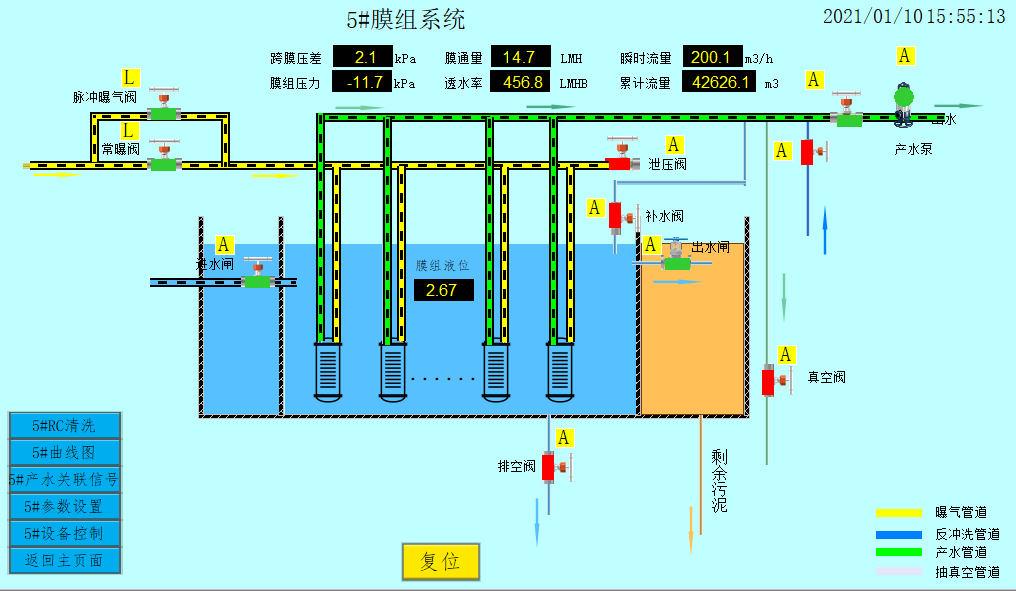
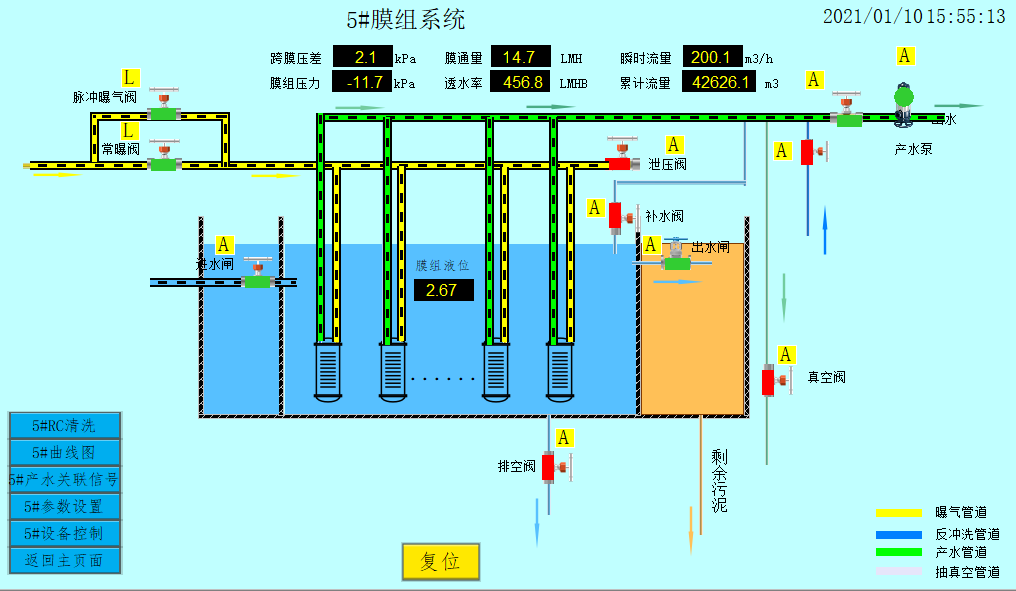
MBR System Operating Parameters
There are essentially 3 main operations of a membrane bioreactor (MBR) system during wastewater treatment. They are as follows:
Membrane permeability daily maintenance
Microbiology maintenance and proper operation
Membrane filtration and sludge transfer
Of these, maintaining membrane permeability is one of the most significant factors affecting the overall performance and stable operation of an MBR wastewater treatment plant.
Operation
Purpose
Key Indicator
Biological treatment
Degrade pollutants
MLSS, DO, SRT
Membrane filtration
Produce treated water
Flux, TMP
Aeration/scouring
Supply O₂ + control fouling
Air flow, DO
Backwash/cleaning
Restore permeability
TMP recovery, permeability
Membrane Premeability Daily Maintenance
The daily maintenance of MBR membrane permeability includes the following:
a) MBR cleaning: Both physical cleaning, such as relaxation and clean-water backwash, and membrane air scouring are important for maintaining membrane performance. For example, a relaxation time can be designed as 7 minutes of working and 1 minute of relaxation. During air scouring, coarse bubbles rise along the membrane surface and create shear force to remove accumulated sludge and foulants, helping keep the MBR membrane clean.
b) Chemical cleaning – CEB (Chemically Enhanced Backwash):** Backwashing with chemical dosing through the pipeline helps remove foulants that cannot be effectively removed by physical cleaning alone.
c) Chemical cleaning – CIP (Clean-In-Place): CIP is a recovery cleaning procedure for the MBR membrane modules. The membranes are cleaned in the tank using chemicals and aeration to help restore membrane permeability.
Microbiology Maintenance and Proper Operation
Biological treatment, or biodegradation, is an essential part of MBR wastewater treatment. Maintaining healthy activated sludge growth in the biological system is very important for stable operation.
The activated sludge in the bioreactor consumes organic matter, nitrogen, and phosphorus. This is the “bioreactor” half of an MBR system. Proper MLSS, DO, SRT, and nutrient balance should be maintained so that the microorganisms can perform their treatment functions effectively.
For typical MBR operation, the MLSS can be maintained at around 6000–8000 mg/L, with DO generally around 1.5–3 mg/L, together with appropriate SRT and nutrient balance.
The MBR membrane modules physically separate treated water from biomass and suspended solids, replacing the secondary clarifier used in a conventional activated sludge plant. This process is driven by a suction pump or gravity head, and its performance is mainly tracked by TMP (transmembrane pressure) and flux.
Discharging sludge from the MBR tank is a routine but critical operation. Unlike conventional systems, MBR systems operate at relatively high MLSS concentrations, so sludge must be periodically wasted to maintain the appropriate biomass concentration and help prevent membrane fouling.
If the MLSS increases above approximately 8000 mg/L, the membrane can become more susceptible to fouling and clogging, making proper sludge management important for stable MBR operation.
Hinadais ready to discuss your wastewater treatment needs, MBR membrane selection, system design, or maintenance requirements. Our technical team is here to help. Contact us to discuss your application.