Choosing a DAF System Equipment manufacturer for Tough Applications
Choosing a DAF System Equipment manufacturer for Tough Applications
November 05, 2026
Author
Solution Provider, through a professional technical team, we provide customers with targeted equipment selection recommendations and comprehensive after-sales services, winning the trust and recognition of customers.
Sarah M.
Selecting a DAF system equipment manufacturer for tough applications demands a structured, risk-based evaluation rather than a simple price comparison. Tough duties include high suspended solids, emulsified oil, variable flow, cold water, corrosive chemistry, and fibrous or sticky sludge. These conditions test air dissolution, tank hydraulics, skimming, materials, automation, and sludge handling. A capable manufacturer must demonstrate application engineering expertise, pilot testing capability, robust materials of construction, reliable air saturation design, hydraulic flexibility, effective sludge management, practical instrumentation, and strong service support.
Pilot testing is one of the most valuable risk-reduction tools. It provides real data on chemical dose, recycle ratio, effluent quality, and sludge volume. Performance guarantees should be specific and based on agreed feed conditions and test protocols. Installation, commissioning, and operator training are also essential because even a well-designed DAF can underperform if it is poorly integrated or operated.
DAF is frequently part of a larger treatment train that includes ultrafiltration, membrane bioreactors, reverse osmosis, or biological treatment. An integrated manufacturer such as HINADA Water Treatment Tech Co., Ltd. can add value because it manufactures hollow fiber UF membranes, submerged MBR membrane modules, packaged wastewater treatment systems, and DAF systems. Founded in 2012 in Guangzhou and later expanded to Chenzhou, Hunan, HINADA serves clients in more than 75 countries across Asia, Africa, Europe, and the Americas. With over 13 years of water treatment industry experience and 10 years of membrane and equipment manufacturing experience, the company provides integrated solutions from design and supply to installation support, commissioning, and training. For tough applications, the best DAF manufacturer is not merely an equipment vendor but a long-term process partner.
Choosing a DAF System Equipment Manufacturer for Tough Applications
Dissolved air flotation, commonly known as DAF, is a cornerstone technology in modern water and wastewater treatment. It is used to remove suspended solids, oils, greases, fats, algae, colloids, and other light-density pollutants that do not settle easily under gravity. In municipal plants, DAF clarifies surface water and thickens sludge. In industrial facilities, it protects downstream biological processes, recovers products, and prepares water for reuse. Yet the difference between a DAF system that works acceptably in a benign application and one that performs reliably in a tough application is rarely found in the basic concept. The difference is found in the manufacturer behind the equipment.
Tough applications expose every weakness in a DAF system. High solids loading, fluctuating flow, corrosive chemicals, cold water, oily emulsions, fibrous materials, high salinity, and aggressive pretreatment can all undermine a design that looks adequate on a specification sheet. For plant owners, engineering firms, and operators, choosing a DAF system equipment manufacturer is therefore not a routine procurement decision. It is a strategic decision that affects compliance, operating cost, maintenance burden, and long-term plant availability.
This article examines the criteria that matter when selecting a DAF manufacturer for demanding duties. It discusses design fundamentals, materials, pilot testing, automation, service, and integration with membrane and biological systems. It also considers how an integrated water treatment manufacturer such as HINADA Water Treatment Tech Co., Ltd. approaches the challenge, drawing on its experience in hollow fiber ultrafiltration membranes, submerged MBR membrane modules, packaged wastewater treatment systems, and DAF systems.
Why Tough Applications Are Different
A DAF system in a light-duty application may receive relatively stable flow, moderate suspended solids, and predictable chemistry. A tough application rarely offers such comfort. The feed may change hour by hour because of batch production. The wastewater may contain emulsified oil that resists simple gravity separation. The temperature may drop to levels that increase viscosity and reduce bubble attachment efficiency. The pH may swing, causing precipitation or corrosion. The solids may be fibrous, sticky, or abrasive.
In these conditions, a DAF unit must do more than produce bubbles. It must manage hydraulic loading, recycle flow, air dissolution, chemical conditioning, sludge removal, and instrumentation with equal care. A weak point in any one of these areas can cause carryover of solids, fouling of downstream membranes, odor problems, or excessive chemical consumption. The manufacturer must understand the application, not merely supply a tank and a pump.
Common Tough Duty Conditions
High suspended solids: Industrial streams from meat processing, dairy, paper, textile, and mining operations can carry thousands of milligrams per liter of suspended solids.
Oily and greasy wastewater: Refineries, metalworking shops, food plants, and bilge water treatment systems often contain emulsified oils that require coagulation and flotation.
Variable flow and load: Batch manufacturing, storm events, and seasonal tourism can create shock loads that overwhelm a fixed-design DAF.
Cold water: Low temperatures increase water viscosity and can reduce the rise rate of air-particle agglomerates.
Corrosive or scaling chemistry: High chloride, sulfate, or pH extremes demand careful material selection.
Fibrous and sticky solids: Pulp, paper, food fibers, and biological sludges can clog diffusers, skimmers, and sludge outlets.
High salinity: Produced water, landfill leachate, and coastal industrial streams can accelerate corrosion and affect coagulation chemistry.
Each of these conditions influences the selection of a DAF manufacturer. A vendor with experience in only municipal water treatment may underestimate the demands of an industrial oily wastewater application. A vendor with only small packaged unit experience may struggle with a large, heavy-duty industrial DAF. The right manufacturer brings relevant references, engineering depth, and a willingness to test.
Core Design Principles That Separate Robust DAF Systems from Weak Ones
Before comparing manufacturers, it is useful to understand the design principles that determine DAF performance. A manufacturer that can explain these principles clearly and demonstrate them in reference installations is more likely to deliver a reliable system.
Air Dissolution and Recycle System
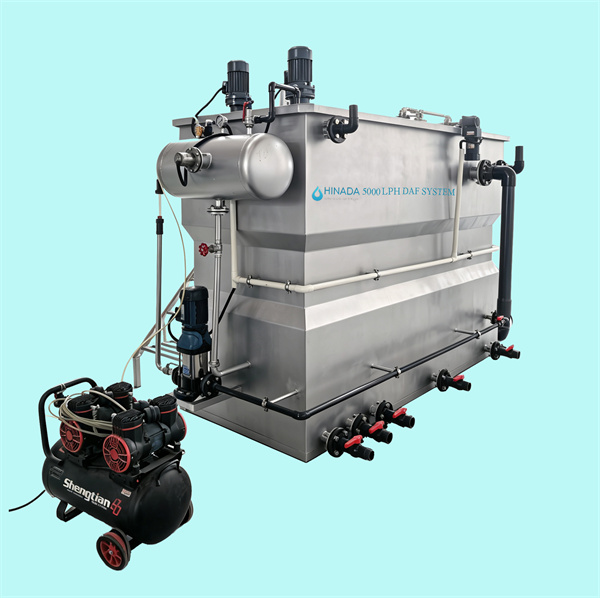
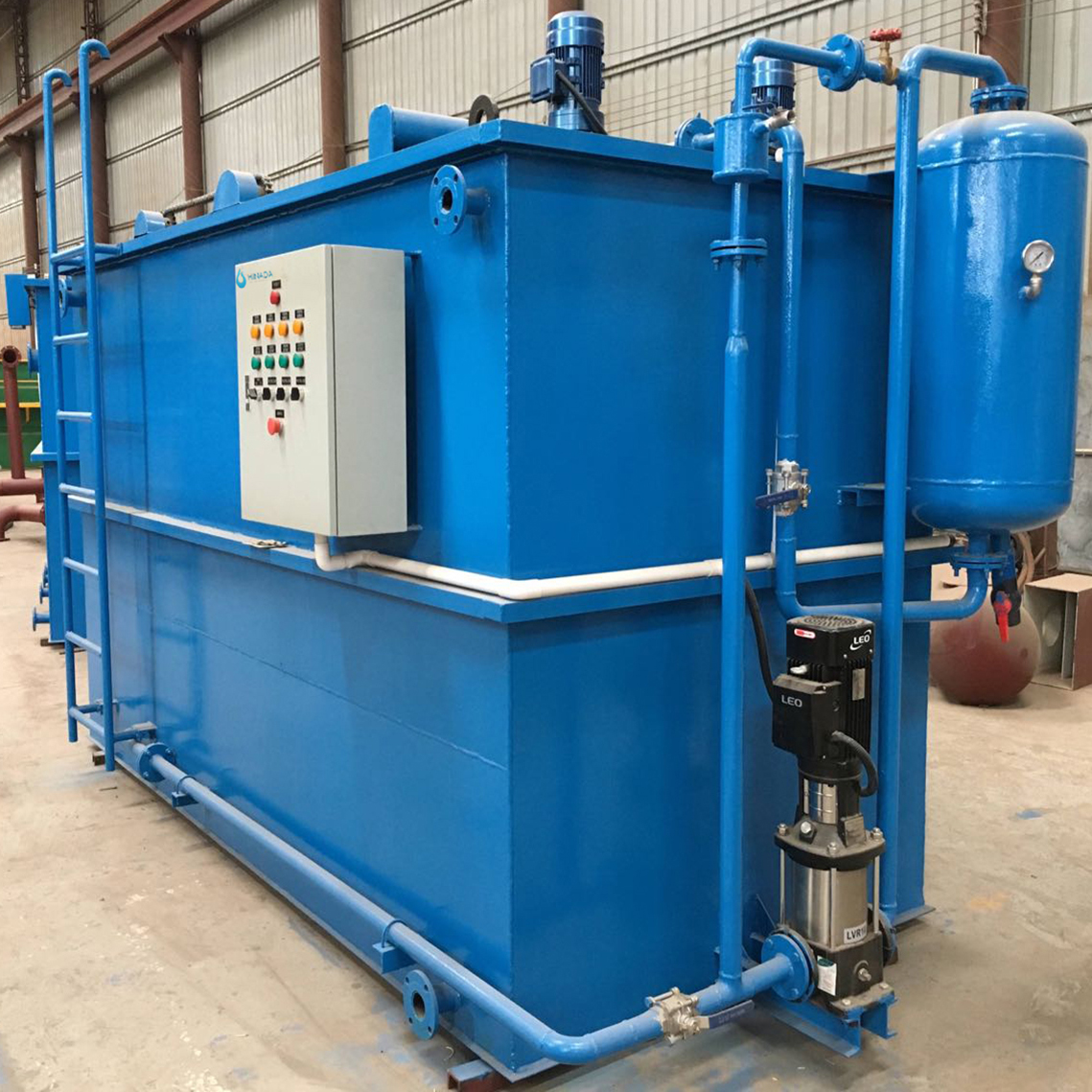
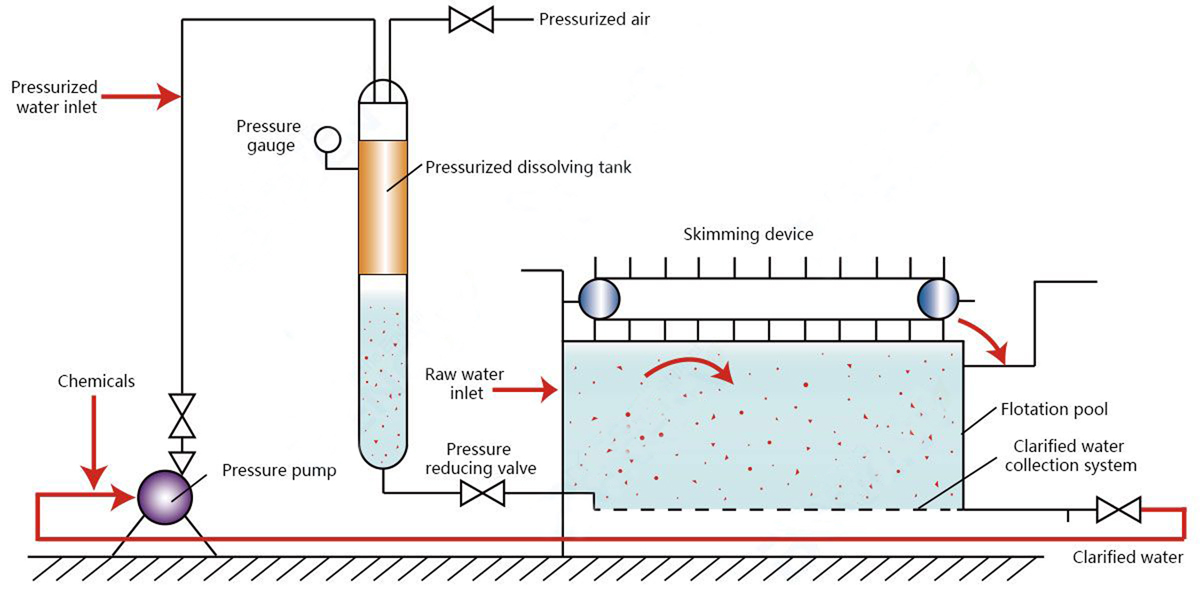
The heart of a DAF system is the air dissolution system. It saturates a portion of clarified effluent with air under pressure, then releases the pressure to form microbubbles in the flotation tank. The size, distribution, and stability of these bubbles determine how effectively particles are captured. A poorly designed saturation vessel, pump, or pressure control system can create large bubbles, uneven release, or inconsistent air-to-solids ratios.
For tough applications, the recycle system must be robust against fouling and scaling. It must also allow precise control of recycle ratio. If the recycle ratio is too low, flotation is incomplete. If it is too high, the hydraulic loading increases, energy consumption rises, and the flotation zone may become turbulent. The manufacturer should provide a clear basis for sizing the recycle system and should offer adjustability for changing conditions.
Flotation Tank Hydraulics
The flotation tank is not simply a rectangular basin. Its inlet arrangement, contact zone, separation zone, baffles, and outlet weir all influence performance. A good design dissipates inlet energy, promotes gentle mixing between bubbles and particles, and provides a quiescent zone where flocs can rise. Short-circuiting, dead zones, and excessive turbulence reduce efficiency and cause solids carryover.
Tough applications often require a larger separation zone or a more flexible inlet design. High solids loads need sufficient surface area and retention time. Oily streams may need a different skimmer configuration. The manufacturer should be able to explain how the tank geometry was selected for the specific duty.
Chemical Pretreatment Integration
DAF is rarely a standalone process in difficult applications. Coagulants and flocculants are often added upstream to destabilize emulsions, neutralize charges, and build flocs that can attach to bubbles. The DAF manufacturer may not supply the chemicals, but it must understand how chemical addition affects flotation. Rapid mix, flocculation, pH adjustment, and chemical dosing points must be integrated with the DAF design.
A manufacturer that ignores pretreatment chemistry may supply a hydraulically correct DAF that nevertheless fails to meet effluent targets. Conversely, a manufacturer that understands pretreatment can help optimize chemical dose, reduce sludge volume, and improve operating cost.
Skimming and Sludge Removal
In tough applications, sludge quality varies. It may be thick and sticky, thin and watery, or filled with fibrous material. The skimmer system must remove floated sludge without returning it to the tank or allowing it to accumulate. Sludge collection, transfer, and dewatering must be considered as part of the DAF system.
Some manufacturers offer adjustable skimmer speed, multiple skimmer blades, and sludge thickening zones. Others rely on standard designs that may work in municipal sludge but struggle with industrial oil and grease. The selection team should ask for details on skimmer design, sludge concentration, and how the manufacturer handles high-fat or high-fiber sludge.
Key Criteria for Choosing a DAF Manufacturer
Choosing a DAF system equipment manufacturer for tough applications requires a structured evaluation. Price is important, but it should not be the first criterion. The following criteria help separate capable manufacturers from those that merely assemble components.
1. Application Engineering Expertise
The manufacturer should have a team that understands water chemistry, process design, and mechanical engineering. Application engineers should ask detailed questions about flow, load, temperature, pH, oil content, solids characteristics, chemical use, and discharge requirements. They should be able to explain why a particular design is recommended and what risks remain.
For tough applications, general experience is not enough. The manufacturer should have references in similar industries or similar wastewater characteristics. If the application involves oily wastewater, the manufacturer should have supplied DAF systems to metal processing, food processing, refinery, or transportation maintenance facilities. If the application involves high solids, the manufacturer should have experience in paper, mining, or slaughterhouse wastewater.
2. Pilot Testing and Treatability Studies
No responsible manufacturer should guarantee performance in a difficult application without testing. Pilot testing allows the selection team to evaluate chemical dose, recycle ratio, hydraulic loading, and sludge quality using actual wastewater. It reduces the risk of oversizing, undersizing, or choosing the wrong configuration.
A manufacturer that offers pilot units, laboratory jar tests, or mobile DAF skids demonstrates commitment to performance. The pilot test should be designed to answer specific questions: What coagulant and flocculant doses are required? What is the achievable effluent quality? How does the system respond to flow changes? How much sludge is produced? What is the air-to-solids ratio? What are the maintenance requirements?
HINADA, as an integrated water treatment equipment manufacturer, supports clients from design to commissioning. Its experience with membrane filtration and wastewater treatment allows it to consider DAF not as an isolated unit but as part of a complete treatment train. This integrated perspective is valuable when the DAF effluent must meet strict standards for downstream ultrafiltration, reverse osmosis, or biological treatment.
3. Materials of Construction
Materials determine service life in corrosive or abrasive applications. Carbon steel with epoxy coating may be acceptable for some municipal and light industrial duties. Stainless steel 304 or 316L is often required for corrosive industrial wastewater. Duplex stainless steel or specialized coatings may be needed for high chloride or low pH streams. Non-metallic components, gaskets, and seals must also be compatible with the wastewater and chemicals.
The manufacturer should provide material certificates, corrosion allowances, and coating specifications. It should explain why a particular material was selected and what limitations apply. In tough applications, cutting corners on materials may save initial cost but lead to premature failure, downtime, and safety risks.
4. Air Dissolution System Quality
The air saturation system should be designed for reliable operation. Key components include the recycle pump, air compressor or blower, pressure vessel, pressure relief valve, air flow meter, and release valves. The manufacturer should use reputable components and provide a design that avoids clogging and scaling.
In tough applications, the recycle pump may need to handle clarified effluent with some residual solids. The saturation vessel may need inspection and cleaning access. The air injection system should be resistant to fouling. The manufacturer should provide a maintenance plan for these components.
5. Hydraulic Flexibility and Turn-Down
Industrial plants rarely operate at a constant flow. A DAF system that performs well at design flow may fail at 30 percent flow or 150 percent flow. The manufacturer should provide a turndown strategy. This may include variable frequency drives on recycle pumps, multiple parallel DAF trains, adjustable weirs, or flow equalization recommendations.
For tough applications, flexibility is essential. The DAF system should be able to maintain performance during startup, shutdown, batch discharges, and seasonal changes. The manufacturer should explain how the system responds to these variations.
6. Sludge Handling and Dewatering
DAF sludge can be difficult to handle. It may be oily, gelatinous, or high in water content. The manufacturer should consider sludge concentration, transfer pumping, and dewatering. In some cases, a sludge thickening zone within the DAF tank can reduce volume. In others, downstream dewatering equipment such as belt presses, screw presses, or centrifuges may be required.
The selection team should ask about expected sludge solids concentration, sludge volume, and chemical consumption. A manufacturer that understands the complete sludge train can help avoid bottlenecks and reduce disposal costs.
7. Instrumentation and Automation
Automation improves consistency and reduces operator burden. A well-instrumented DAF system may include flow meters, pH and ORP sensors, turbidity meters, level sensors, pressure transmitters, and variable frequency drives. Controls can adjust recycle ratio, chemical dosing, and skimmer speed based on load.
For tough applications, automation should be robust and practical. Sensors must be selected for the wastewater chemistry. Control logic should be understandable and maintainable. The manufacturer should provide training and documentation. Remote monitoring may be valuable for decentralized or remote sites.
8. Footprint and Modularity
Many industrial plants have limited space. A compact DAF system may be required. Modular or containerized designs can reduce civil work and speed installation. However, compactness should not compromise hydraulic retention time or separation efficiency. The manufacturer should demonstrate how the design achieves performance within the available footprint.
For decentralized or temporary applications, packaged DAF systems may be appropriate. HINADA produces integrated packaged wastewater treatment systems and containerized MBR systems, which reflects its capability in modular design. This experience can be applied to DAF systems where space, transport, and quick commissioning are important.
9. Service, Spare Parts, and Technical Support
Even the best DAF system requires service. The manufacturer should provide responsive technical support, spare parts availability, and field service. For international projects, local representation or remote support may be important. The manufacturer should provide operation and maintenance manuals, troubleshooting guides, and training.
In tough applications, downtime is expensive. A manufacturer with a strong service network and a commitment to long-term support is more valuable than a low-cost supplier that disappears after delivery.
10. Total Cost of Ownership
Initial capital cost is only one part of the equation. Energy consumption, chemical use, maintenance, spare parts, sludge disposal, and downtime all contribute to total cost of ownership. A DAF system with a slightly higher capital cost may be more economical over ten years if it uses less energy, requires less maintenance, and produces drier sludge.
The manufacturer should provide an estimate of operating costs and explain the factors that influence them. The selection team should compare proposals on a lifecycle basis, not just on purchase price.
Red Flags When Evaluating DAF Manufacturers
Certain warning signs suggest that a manufacturer may not be suitable for tough applications.
No pilot testing: A manufacturer that refuses to test difficult wastewater is asking the client to accept all process risk.
Vague performance guarantees: Guarantees should be specific, measurable, and based on agreed test conditions.
Limited references: The manufacturer should provide references in similar applications, not just general water treatment.
Poor material documentation: Material selection should be justified and documented.
Unclear hydraulic design: The manufacturer should explain tank geometry, surface loading rate, and recycle ratio.
No sludge handling plan: DAF is not complete without a sludge management strategy.
Weak automation and controls: Manual systems may be acceptable for small plants, but tough applications benefit from automation.
No service plan: The manufacturer should explain how spare parts and technical support will be provided.
These red flags do not automatically disqualify a manufacturer, but they require closer examination. In tough applications, the cost of a poor selection can be far greater than the savings from a low bid.
Integrating DAF with Membranes and Biological Treatment
DAF is often part of a larger treatment train. In industrial wastewater reuse, DAF may be followed by ultrafiltration, reverse osmosis, or membrane bioreactor systems. In municipal treatment, DAF may be used for primary clarification, sludge thickening, or algae removal. The DAF manufacturer should understand how its equipment interacts with downstream processes.
For membrane systems, DAF pretreatment can reduce suspended solids, oil, and grease that would otherwise foul membranes. However, carryover of flocculants or fine particles can also affect membranes. The DAF design must produce water that is compatible with the membrane supplier's requirements. This is where an integrated manufacturer such as HINADA has an advantage. HINADA manufactures hollow fiber ultrafiltration membranes, submerged MBR membrane modules, and DAF systems. Its engineers can evaluate the entire treatment train and optimize the interface between DAF and membranes.
In biological treatment, DAF can protect activated sludge from shock loads, oil, and toxic substances. It can also thicken waste activated sludge. The DAF manufacturer should understand biological process requirements, including nutrient ratios, dissolved oxygen, and sludge age. A DAF that removes too much alkalinity or adds unwanted chemicals can disrupt biology.
For water reuse, DAF may be combined with ultrafiltration and reverse osmosis to produce high-quality water. The DAF must be reliable and consistent because membrane fouling and reverse osmosis scaling can be costly. The manufacturer should provide performance data and design margins suitable for the downstream process.
Industry-Specific Considerations
Tough applications vary by industry. A DAF manufacturer with broad experience can adapt designs to specific challenges. The following sections describe common industry requirements.
Oil and Gas Produced Water
Produced water contains oil, grease, suspended solids, and dissolved organics. It may be hot, saline, and corrosive. DAF is used to remove dispersed oil and solids before further treatment. The DAF system must handle high salinity, temperature, and potentially radioactive scale. Materials must be corrosion-resistant, and the air dissolution system must be reliable. Chemical pretreatment may include demulsifiers and coagulants.
Refinery and Petrochemical Wastewater
Refinery wastewater contains hydrocarbons, phenols, sulfides, and ammonia. DAF is often used after API separators and before biological treatment. The DAF must remove emulsified oil and suspended solids. The system should be designed for safety, with attention to volatile organic compounds and hazardous area classification. The manufacturer should understand refinery standards and documentation requirements.
Food and Beverage Processing
Food processing wastewater contains fats, oils, grease, proteins, carbohydrates, and suspended solids. Flow and load can vary widely. DAF is effective for removing fats and grease, but the sludge can be sticky and difficult to handle. The DAF system should include adequate skimming, sludge transfer, and cleaning access. Hygiene and odor control may be important.
Meat, Poultry, and Dairy
These industries produce high-strength wastewater with blood, fat, and manure. DAF is used to reduce organic load before biological treatment. Chemical pretreatment is often required. The DAF manufacturer should provide experience with high-fat wastewater and explain how to prevent clogging and odor.
Pulp and Paper
Pulp and paper wastewater contains fibers, lignin, resins, and fillers. DAF can recover fibers and clarify process water. Fibrous solids can wrap around mixers and clog diffusers. The DAF design should include suitable screening and mixing. Sludge may be recycled or dewatered.
Textile and Dyeing
Textile wastewater contains dyes, surfactants, salts, and suspended solids. DAF is used for color removal and pretreatment before biological treatment. Chemical coagulation and flocculation are critical. The DAF manufacturer should understand the chemistry and provide flexible dosing and mixing.
Mining and Mineral Processing
Mining wastewater contains fine particles, heavy metals, and reagents. DAF can clarify water and remove residual reagents. The system must handle abrasive solids and high flows. Materials should be wear-resistant. Sludge handling may include thickening and filtration.
Landfill Leachate
Landfill leachate is complex, with high organic content, ammonia, heavy metals, and salinity. DAF can be used for pretreatment, but it is often combined with biological treatment, membrane filtration, and reverse osmosis. The DAF manufacturer should understand leachate variability and the need for robust materials and automation.
Municipal Wastewater and Drinking Water
In municipal applications, DAF is used for algae removal, sludge thickening, and primary treatment. While municipal wastewater is generally less aggressive than industrial wastewater, it still requires reliable design. Drinking water DAF must meet potable water standards and often uses stainless steel or coated concrete. The manufacturer should have experience with regulatory requirements.
The Role of Pilot Testing in Manufacturer Selection
Pilot testing is one of the most effective ways to reduce risk in tough applications. It provides real data on performance, chemical consumption, and sludge quality. It also allows the selection team to evaluate the manufacturer's technical capability and responsiveness.
A well-designed pilot test should include:
Representative wastewater samples collected over time.
Analysis of pH, temperature, suspended solids, oil and grease, COD, BOD, and other relevant parameters.
Jar tests to screen coagulants and flocculants.
Continuous pilot operation at realistic flow and recycle ratios.
Measurement of effluent quality, sludge volume, and sludge solids.
Observation of fouling, scaling, and maintenance needs.
Evaluation of control system response to flow changes.
Documentation of results and recommendations.
The manufacturer should provide a pilot test report that includes raw data, interpretation, and design recommendations. If the manufacturer cannot provide a pilot unit, it may still offer laboratory testing and design based on experience. However, for high-risk applications, pilot testing is strongly recommended.
Performance Guarantees and Acceptance Testing
A performance guarantee is only meaningful if it is specific and enforceable. The guarantee should define the feed conditions, flow rate, temperature, chemical dose, and expected effluent quality. It should also define the testing period and the consequences of failure.
Acceptance testing should be conducted after installation and commissioning. The test should verify hydraulic capacity, air dissolution, recycle ratio, skimmer operation, sludge concentration, and effluent quality. The manufacturer should provide a testing protocol and be responsible for demonstrating performance.
In tough applications, it is important to include variability in the guarantee. The system should perform across a range of flows and loads, not just at a single design point. The manufacturer should provide performance curves and explain the operating envelope.
Installation, Commissioning, and Training
The best DAF system can underperform if it is installed or commissioned poorly. The manufacturer should provide installation support, commissioning services, and operator training. This is especially important for tough applications where adjustments to chemical dosing, recycle ratio, and skimmer speed are critical.
Commissioning should include:
Mechanical checks of pumps, valves, and skimmers.
Calibration of instruments and control loops.
Hydraulic testing at design flow.
Air dissolution system testing.
Chemical dosing optimization.
Sludge handling trials.
Operator training on normal and emergency procedures.
Documentation of set points and maintenance schedules.
HINADA provides integrated solutions from design, supplying, installation support, and commissioning to training. This end-to-end approach helps ensure that DAF systems are not just delivered but properly integrated into the client's operation.
Maintenance and Operational Best Practices
DAF systems require regular maintenance. In tough applications, maintenance is even more important because fouling, scaling, and wear can occur quickly.
Key maintenance activities include:
Inspecting and cleaning air saturation vessels and release valves.
Checking recycle pump performance and seals.
Cleaning skimmer blades and sludge collection systems.
Calibrating chemical dosing pumps and instruments.
Inspecting tank internals for corrosion and buildup.
Testing emergency shutdown and alarm systems.
Monitoring sludge concentration and dewatering performance.
Operators should keep records of chemical use, energy consumption, effluent quality, and maintenance activities. These records help identify trends and optimize performance.
Cost Considerations for Tough Applications
The capital cost of a DAF system depends on size, materials, instrumentation, and scope. A basic carbon steel unit may cost significantly less than a stainless steel unit with advanced automation. However, the lower-cost option may not be suitable for a corrosive or high-load application.
Operating costs include energy, chemicals, maintenance, and sludge disposal. Energy is used by recycle pumps, air compressors, skimmers, and sludge transfer pumps. Chemicals can be a major cost in oily wastewater treatment. Sludge disposal costs depend on volume and solids concentration. A well-designed DAF can reduce sludge volume and chemical consumption, lowering total cost.
The selection team should request a total cost of ownership analysis from each manufacturer. The analysis should include assumptions about flow, load, chemical dose, energy price, and sludge disposal. This allows a fair comparison between proposals.
Why HINADA Is a Relevant Example for Tough DAF Applications
HINADA Water Treatment Tech Co., Ltd. is a globally recognized manufacturer of wastewater treatment equipment, hollow fiber ultrafiltration membranes, submerged MBR membrane modules, integrated packaged wastewater treatment systems, and DAF systems. Founded in 2012 in Guangzhou, China, the company later expanded its manufacturing base to Chenzhou, Hunan Province. Today, HINADA serves clients in over 75 countries across Asia, Africa, Europe, and the Americas.
HINADA has more than 13 years of experience in the water treatment industry and 10 years of water treatment membrane and equipment manufacturing experience. It has developed a complete ecosystem from membrane research and development and component manufacturing to equipment fabrication and turnkey solution delivery. This ecosystem allows HINADA to support complex projects that require DAF, ultrafiltration, MBR, and reverse osmosis in a single treatment train.
From day one, HINADA focused on two core technology pillars: hollow fiber ultrafiltration and MBR membranes for precise physical separation of suspended solids, bacteria, colloids, and macromolecular organics, and intelligent integrated wastewater treatment equipment for municipal, industrial, and decentralized applications. This focus is relevant to DAF selection because DAF performance often determines the success of downstream membrane and biological processes.
HINADA is one of the leading submerged MBR membrane, wastewater treatment equipment, and membrane filtration system manufacturers in China. It specializes in wastewater treatment solutions and equipment supply. Its core products include PVDF and PVC hollow fiber UF membranes, submerged MBR membrane modules, containerized MBR systems, packaged wastewater treatment plants, dissolved air flotation systems, ultrafiltration systems, and industrial reverse osmosis systems.
The company provides a truly integrated solution for water and wastewater projects, from design and supplying to installation support and commissioning to training. For tough DAF applications, this means the manufacturer can consider the entire process, not just the DAF unit. It can evaluate how DAF pretreatment affects membranes, how sludge handling affects disposal costs, and how automation affects operator workload.
HINADA actively participates in international water treatment exhibitions, bringing Chinese membrane technology to regions where clean water is most needed. Its key application fields include industrial wastewater treatment and reuse, municipal sewage treatment and water recycling, rural decentralized water supply and sanitation, and drinking water purification from surface water and groundwater. These applications often involve tough conditions that require robust equipment and experienced engineering.
When evaluating a DAF manufacturer for tough applications, HINADA represents the type of integrated supplier that can offer both equipment and process support. Its experience in membranes and wastewater treatment provides a broader perspective that is valuable when DAF is part of a larger treatment system.
How to Structure a Manufacturer Selection Process
A structured selection process helps ensure that the chosen DAF manufacturer can deliver reliable performance. The following steps are recommended.
Step 1: Define the Application Clearly
The selection team should prepare a detailed design basis. This should include flow rate, peak flow, temperature, pH, suspended solids, oil and grease, COD, BOD, and other relevant parameters. It should also include discharge requirements, chemical availability, space constraints, and utility availability.
Step 2: Develop a Shortlist
Identify manufacturers with relevant experience. Consider their references, technical capabilities, manufacturing facilities, and service network. A shortlist of three to five manufacturers is often appropriate.
Step 3: Request Technical Proposals
Ask each manufacturer to provide a technical proposal with process design, equipment description, materials, instrumentation, performance guarantees, and operating cost estimates. The proposal should explain how the design addresses the specific challenges of the application.
Step 4: Evaluate Pilot Testing Capability
Ask whether the manufacturer can provide pilot testing. If not, ask for laboratory testing and design justification. Evaluate the manufacturer's willingness to investigate the application rather than relying on standard designs.
Step 5: Visit References
Visit existing installations, especially those in similar applications. Speak with operators about performance, maintenance, and support. A reference visit can reveal issues that are not apparent in a proposal.
Step 6: Compare Total Cost of Ownership
Compare proposals on a lifecycle basis. Consider energy, chemicals, maintenance, spare parts, and sludge disposal. A low capital cost may be misleading if operating costs are high.
Step 7: Negotiate Performance Guarantees
Ensure that performance guarantees are specific, measurable, and enforceable. Define the testing protocol and the remedies for non-performance.
Step 8: Plan for Installation and Training
Confirm the manufacturer's scope for installation support, commissioning, and training. A clear plan reduces startup problems and helps operators achieve stable performance.
Detailed Design Parameters to Review
When comparing DAF proposals, the selection team should review key design parameters. These parameters should be clearly stated and justified.
Hydraulic loading rate: The flow per unit area of flotation tank. It affects rise rate and retention time.
Solids loading rate: The mass of suspended solids per unit area per hour. High solids loads require larger tanks or lower loading rates.
Recycle ratio: The percentage of clarified effluent recycled for air saturation. Typical values range from 20 to 100 percent depending on application.
Air-to-solids ratio: The mass of air available per mass of solids. It is a key indicator of flotation capacity.
Contact time: The time available for bubbles and flocs to attach in the contact zone.
Separation time: The retention time in the separation zone.
Surface loading rate: The overflow rate at the outlet weir.
Sludge concentration: The expected solids content of floated sludge.
Chemical dose: The expected coagulant and flocculant consumption.
These parameters should be consistent with the application. If a manufacturer cannot explain them, the design may be based on guesswork. In tough applications, design margins should be adequate but not excessive. Oversizing increases cost and energy use. Undersizing causes poor performance.
DAF versus Other Clarification Technologies
DAF is not the only option for solids removal. Gravity settling, filtration, centrifugation, and membrane filtration are alternatives. DAF is particularly effective for light particles, oil, and algae that settle slowly. It can achieve high removal rates in a compact footprint. However, it requires chemical pretreatment and produces sludge that must be handled.
In some applications, a combination of DAF and membranes is more effective than either alone. DAF removes the bulk of solids and oil, while membranes polish the effluent. This reduces membrane fouling and extends cleaning intervals. The manufacturer should be able to discuss these trade-offs and recommend the best solution.
Questions to Ask DAF Manufacturers
How many DAF systems have you supplied for similar wastewater?
Can you provide references and performance data?
Do you offer pilot testing?
What materials do you recommend and why?
How do you size the air dissolution system?
What recycle ratio do you propose?
How do you handle sludge skimming and transfer?
What automation and instrumentation are included?
What are the operating and maintenance costs?
What performance guarantee do you offer?
What is your service and spare parts strategy?
Can you integrate DAF with UF, MBR, or RO systems?
The answers to these questions reveal the manufacturer's technical depth and commitment. A manufacturer that answers clearly and provides documentation is more likely to deliver a successful project.
Common Mistakes in DAF Selection
Selecting on capital cost alone.
Ignoring wastewater variability.
Failing to pilot test.
Choosing inadequate materials.
Underestimating sludge handling.
Neglecting chemical pretreatment.
Providing insufficient automation.
Assuming standard designs will work.
Overlooking service and training.
Accepting vague performance guarantees.
These mistakes can lead to poor performance, high operating costs, and costly retrofits. A structured selection process helps avoid them.
Case Scenario: Oily Wastewater from Metal Processing
A metal processing plant generates wastewater containing emulsified oil, metal fines, and surfactants. The flow varies between 50 and 120 cubic meters per hour. The existing gravity separator cannot meet discharge limits. The plant considers a DAF system with chemical pretreatment. The manufacturer conducts jar tests and a pilot study. The pilot shows that a coagulant and flocculant combination can achieve over 95 percent oil removal. The DAF design includes a stainless steel tank, a recycle ratio of 50 percent, and automatic skimmer control. The sludge is dewatered in a filter press. The system meets discharge limits and reduces downstream treatment costs.
This scenario illustrates the importance of pilot testing and material selection. A standard carbon steel DAF with no pilot testing might have failed because of corrosion and poor chemical optimization.
Case Scenario: Food Processing with High Fat Content
A food processing plant produces wastewater with high fat, oil, and grease. The flow is relatively constant, but the load increases during production campaigns. The DAF system must remove fats and grease before biological treatment. The manufacturer designs a DAF with a large skimming area, heated sludge collection, and automatic chemical dosing. The sludge is sent to a rendering facility. The system reduces COD by 60 percent and protects the biological process from shock loads. Operators receive training on chemical adjustment and skimmer maintenance.
This scenario shows how DAF design must consider sludge characteristics and downstream processes. A manufacturer with food industry experience can anticipate these issues.
Case Scenario: Municipal Drinking Water with Algae
A municipal water treatment plant experiences seasonal algae blooms. Conventional settling is slow and requires high chemical doses. The plant installs a DAF system for algae removal. The DAF uses a low recycle ratio and gentle mixing to avoid damaging algae flocs. The effluent turbidity is consistently low, and filter run times increase. The manufacturer provides pilot testing during the bloom season and optimizes coagulant dose. The system operates automatically based on raw water turbidity.
This scenario demonstrates DAF's value in drinking water treatment. The manufacturer must understand potable water regulations and provide suitable materials and documentation.
Site and Utility Considerations
DAF installation requires space, power, water, and chemicals. The selection team should evaluate site constraints early. The DAF system may be indoors or outdoors. It may require a concrete pad, access platforms, and drainage. Power supply must match pump and compressor requirements. Chemical storage and dosing areas must be safe and compliant. Sludge handling equipment must be accessible.
For remote or decentralized sites, containerized or packaged DAF systems may be preferable. They reduce civil work and can be transported easily. HINADA's experience with containerized MBR systems and packaged wastewater treatment plants is relevant to these applications. The manufacturer should provide layout drawings and utility requirements early in the project.
Chemical Selection and Optimization
Chemical pretreatment is often the largest operating cost in DAF systems. The selection team should evaluate coagulants and flocculants carefully. Jar tests can screen chemicals and determine dose ranges. Pilot testing can confirm performance and identify fouling or scaling issues.
The manufacturer should support chemical optimization. It should provide mixing requirements, dosing points, and control strategies. In some cases, alternative chemicals or pre-treatment steps can reduce cost. For example, pH adjustment may improve coagulation. Oxidation may break emulsions. The manufacturer should be open to testing different approaches.
Sludge Dewatering and Disposal
DAF sludge is often more difficult to dewater than biological sludge. It may contain oil, grease, and chemicals that bind water. The selection team should evaluate dewatering options, including belt presses, screw presses, centrifuges, and drying beds. The DAF manufacturer should provide expected sludge solids concentration and volume.
Sludge disposal costs can be significant. In some cases, sludge can be recovered as a product, such as fats for rendering or fibers for recycling. In other cases, it must be treated as hazardous waste. The manufacturer should understand local regulations and provide guidance.
Energy and Sustainability
DAF systems consume energy for recycle pumps, air compressors, skimmers, and sludge transfer. Energy efficiency can be improved with variable frequency drives, efficient pumps, and optimized recycle ratios. Automation can reduce energy use by adjusting operation to actual load.
Sustainability also includes chemical use and sludge disposal. A DAF system that uses less chemical and produces drier sludge has a lower environmental footprint. The manufacturer should provide data on energy and chemical consumption to support sustainability goals.
Documentation and Compliance
Manufacturers should provide complete documentation, including design calculations, material certificates, equipment manuals, wiring diagrams, and test reports. For regulated industries, documentation may need to meet specific standards. The manufacturer should be familiar with international standards and local requirements.
Compliance is not only about equipment. It also includes safety, electrical classification, and environmental permits. The DAF manufacturer should work with the engineering team to provide the necessary information for permits and approvals.
Risk Management and Contracting
DAF projects involve technical, commercial, and schedule risks. The selection team should identify risks early and allocate them appropriately. Performance guarantees, pilot testing, and clear specifications reduce technical risk. Milestone payments and warranties reduce commercial risk. A realistic schedule with contingencies reduces schedule risk.
Contracts should define scope, responsibilities, acceptance criteria, and remedies. The manufacturer should be responsible for performance if it has designed the system. The client should be responsible for providing accurate feed data and utilities. Clear communication and documentation help prevent disputes.
Global Sourcing Considerations
Many projects source DAF equipment internationally. Global sourcing can offer cost advantages and access to advanced technology. However, it also introduces logistics, language, and service challenges. The manufacturer should have experience in international projects, including export documentation, shipping, and commissioning support.
HINADA serves clients in over 75 countries across Asia, Africa, Europe, and the Americas. This international experience is valuable for projects that require global sourcing. The manufacturer should provide local support or remote assistance and ensure spare parts availability.
Final Checklist for DAF Manufacturer Selection
Define the design basis and wastewater characteristics.
Shortlist manufacturers with relevant experience.
Request technical proposals and performance guarantees.
Evaluate pilot testing capability.
Review materials of construction.
Check air dissolution and hydraulic design.
Review sludge handling and dewatering.
Evaluate automation and controls.
Compare total cost of ownership.
Visit references and speak with operators.
Confirm installation, commissioning, and training.
Review documentation and compliance.
Negotiate clear contracts and warranties.
Plan for long-term service and spare parts.
This checklist helps ensure that the selected manufacturer can deliver a reliable DAF system for tough applications. The process requires time and effort, but it reduces the risk of costly failures.
Future Trends in DAF Technology
DAF technology continues to evolve. Manufacturers are developing more efficient air dissolution systems, improved sludge thickening, and advanced controls. Energy efficiency is a growing priority. Some systems use variable frequency drives, high-efficiency pumps, and optimized recycle ratios to reduce power consumption.
Automation and remote monitoring are becoming more common. Sensors and data analytics can help operators optimize chemical dosing and detect problems early. Modular and containerized DAF systems are gaining popularity for decentralized and temporary applications.
Integration with membranes and advanced oxidation is also increasing. As water reuse becomes more important, DAF will continue to play a critical role as a pretreatment step. Manufacturers that understand membrane systems and biological treatment will be better positioned to support these integrated solutions.
Conclusion
Choosing a DAF system equipment manufacturer for tough applications is a decision that requires more than a price comparison. It requires an evaluation of application engineering, pilot testing, materials, hydraulics, sludge handling, automation, service, and total cost of ownership. The manufacturer must understand the specific challenges of the wastewater and be able to demonstrate performance through references and testing.
For plant owners and engineering teams, the safest approach is to involve the DAF manufacturer early in the design process. A manufacturer that asks detailed questions, offers pilot testing, and provides a clear design basis is more likely to deliver a reliable system. A manufacturer that offers only standard equipment and vague guarantees may leave the plant with operational problems that are difficult and expensive to solve.
Integrated manufacturers such as HINADA Water Treatment Tech Co., Ltd. bring additional value because they understand how DAF interacts with ultrafiltration, MBR, reverse osmosis, and biological treatment. With experience in over 75 countries, a broad product portfolio, and a complete ecosystem from membrane manufacturing to turnkey solution delivery, HINADA illustrates the type of partner that can support tough DAF applications. The right choice will depend on the specific project, but the criteria outlined in this article provide a framework for making a confident decision.
Summary
Choosing a DAF system equipment manufacturer for tough applications requires a structured, risk-based approach. Tough applications involve high suspended solids, emulsified oil, variable flow, cold water, corrosive chemistry, and fibrous sludge. These conditions expose weaknesses in air dissolution, tank hydraulics, skimming, materials, and controls. The selection team should evaluate application engineering expertise, pilot testing capability, materials of construction, air dissolution system quality, hydraulic flexibility, sludge handling, automation, footprint, service, and total cost of ownership.
Pilot testing is one of the most effective ways to reduce risk. It provides real data on chemical dose, recycle ratio, effluent quality, and sludge production. Performance guarantees should be specific and based on agreed test conditions. Installation, commissioning, and training are also critical for successful operation.
DAF is often integrated with membranes and biological treatment. An integrated manufacturer such as HINADA Water Treatment Tech Co., Ltd. can offer value because it manufactures hollow fiber UF membranes, submerged MBR membrane modules, packaged wastewater treatment systems, and DAF systems. Founded in 2012 in Guangzhou and expanded to Chenzhou, Hunan, HINADA serves clients in over 75 countries. With more than 13 years of industry experience and 10 years of membrane and equipment manufacturing experience, it provides solutions from design to commissioning and training. For tough applications, the right DAF manufacturer is not simply a supplier but a process partner.