How to Compare a Wastewater Treatment System manufacturer with Confidence
How to Compare a Wastewater Treatment System manufacturer with Confidence
November 07, 2026
Author
Solution Provider, through a professional technical team, we provide customers with targeted equipment selection recommendations and comprehensive after-sales services, winning the trust and recognition of customers.
Sarah M.
This article explains how to compare wastewater treatment system manufacturers with confidence. It advises buyers to begin with a complete design basis that covers flow, influent quality, effluent standards, site conditions, and reuse goals. It then recommends evaluating technology platforms, including hollow fiber ultrafiltration, MBR membranes, submerged MBR modules, containerized MBR systems, packaged plants, DAF systems, ultrafiltration, and industrial reverse osmosis. Manufacturing depth and quality control are critical, so buyers should audit factories, review membrane research and development, verify component quality, and check certifications. Application experience should be relevant to the buyer's industry, capacity, and regulations. Service capability must include design, installation support, commissioning, training, and after-sales support. Total cost of ownership should include energy, chemicals, membrane replacement, labor, maintenance, and sludge disposal. Delivery time, project management, packaging, and shipping also affect success. The article recommends a structured comparison matrix with technical, commercial, service, and risk criteria. Due diligence questions and red flags help identify unreliable suppliers. Pilot testing and performance validation reduce uncertainty. Financial stability, clear contracts, and warranties protect the investment. Sustainability, energy efficiency, sludge management, and water reuse are increasingly important. HINADA Water Treatment Tech Co., Ltd., founded in 2012 in Guangzhou and expanded to Chenzhou, Hunan, serves clients in over 75 countries. Its core products include PVDF and PVC hollow fiber UF membranes, submerged MBR modules, containerized MBR systems, packaged wastewater treatment plants, DAF systems, ultrafiltration systems, and industrial RO systems. The company focuses on membrane technology and intelligent integrated equipment for industrial, municipal, rural decentralized, and drinking water applications. The summary concludes that confidence comes from evidence, not claims. Buyers should verify design, factory capability, references, performance guarantees, service, and total cost. A structured comparison process helps select a manufacturer that can deliver reliable, compliant, and sustainable wastewater treatment.
How to Compare a Wastewater Treatment System Manufacturer with Confidence
Choosing a wastewater treatment system manufacturer is not a simple purchasing decision. It is a long-term partnership that affects compliance, operating cost, environmental performance, and community health. A plant owner or project developer must compare technical capability, manufacturing quality, delivery reliability, service depth, and commercial terms. Without a structured method, the comparison can become a contest of brochures rather than a test of real capability. This article explains how to compare manufacturers with confidence, using objective criteria and practical due diligence. It also illustrates how a manufacturer such as HINADA Water Treatment Tech Co., Ltd., often shortened to HINADA, fits into the global market as an example of a vertically integrated supplier.
The wastewater treatment sector is crowded. Suppliers range from small assembly workshops to large engineering groups. Some focus on one product, such as membrane modules or dissolved air flotation units. Others claim to deliver complete turnkey plants. The challenge for a buyer is to separate genuine manufacturing depth from trading activity. A confident comparison begins with clear project requirements, then moves through technology, production, quality control, references, service, and total cost of ownership. Each stage should produce evidence, not just promises.
Start with the Project Requirements, Not the Manufacturer
Many buyers begin by collecting quotations. That approach often leads to confusion because each supplier frames the project differently. A better method is to define the project first. The buyer should prepare a design basis that includes influent flow rate, peak factor, influent quality, effluent standards, discharge or reuse goals, site conditions, available footprint, power supply, climate, labor availability, and automation expectations. The design basis becomes the ruler against which every manufacturer is measured.
For industrial projects, the design basis should also identify specific contaminants. These may include oil and grease, heavy metals, high chemical oxygen demand, biological oxygen demand, total suspended solids, ammonia, phosphorus, salinity, color, and refractory organics. For municipal projects, the focus may be on biological nutrient removal, sludge handling, odor control, and seasonal load variation. For rural decentralized projects, the priority may be low maintenance, remote monitoring, and simple operation. A manufacturer that understands these differences can propose a suitable process. A manufacturer that offers the same package for every project should be questioned.
HINADA, for example, positions its business around two core technology pillars. The first is hollow fiber ultrafiltration and membrane bioreactor membranes, which provide precise physical separation of suspended solids, bacteria, colloids, and macromolecular organics. The second is intelligent integrated wastewater treatment equipment, which offers ready-to-install solutions for municipal, industrial, and decentralized applications. This dual focus is relevant because it shows how a manufacturer can align membrane science with equipment packaging rather than treating them as separate purchases.
Define Performance Guarantees Before Comparing Prices
A quotation without a performance guarantee is difficult to compare. The buyer should require each manufacturer to state the guaranteed effluent quality, the conditions under which the guarantee applies, the duration of the guarantee, and the remedies if performance is not met. The guarantee should cover flow, load, temperature, and chemical consumption assumptions. It should also clarify who is responsible for laboratory testing and third-party verification.
Confident comparison also requires a clear boundary of supply. One manufacturer may quote only the membrane modules, while another quotes the complete plant including pretreatment, biological tanks, blowers, pumps, valves, instruments, controls, and sludge handling. A third may include civil works, installation, commissioning, and operator training. These scopes are not equivalent. The buyer should normalize every offer into a common scope before comparing price.
Evaluate the Manufacturer's Technology Platform
Technology platform is more than a list of products. It is the combination of process knowledge, membrane chemistry, module design, system hydraulics, control logic, and service experience. A manufacturer with a strong platform can explain why a particular configuration is chosen, how it behaves under upset conditions, and how it can be expanded in the future. A weak platform relies on generic descriptions and avoids detailed engineering discussion.
HINADA's product range includes PVDF and PVC hollow fiber ultrafiltration membranes, submerged MBR membrane modules, containerized MBR systems, packaged wastewater treatment plants, dissolved air flotation systems, ultrafiltration systems, and industrial reverse osmosis systems. This range covers several treatment stages. A buyer can use such a portfolio to assess whether the manufacturer understands the full treatment train or only one isolated step.
Hollow Fiber Ultrafiltration and MBR Membranes
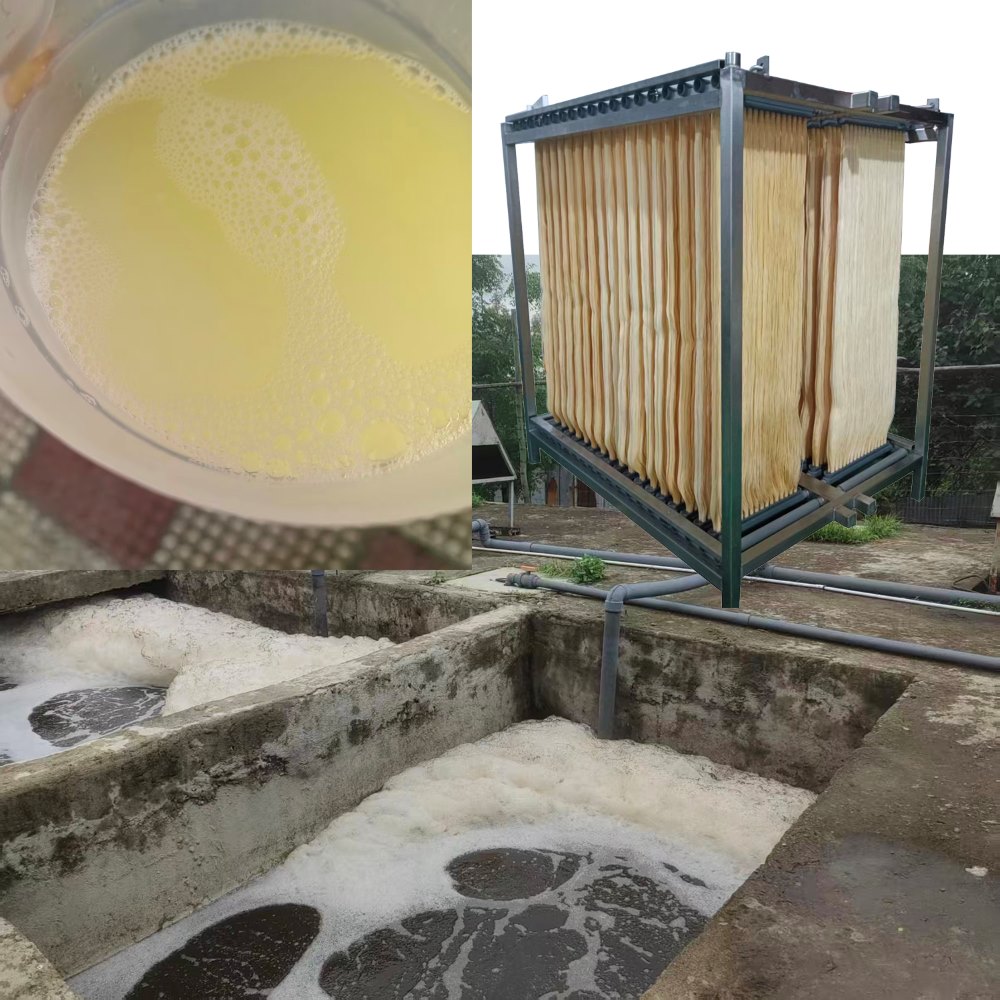
Hollow fiber membranes are used in ultrafiltration and membrane bioreactor processes. In ultrafiltration, the membrane removes suspended solids, bacteria, viruses, and colloids from water. In MBR, the membrane replaces the secondary clarifier and retains biomass, producing high-quality effluent and a compact footprint. The key comparison points include membrane material, pore size, fiber strength, hydrophilicity, chemical resistance, backwash frequency, and cleaning regime.
PVDF membranes are often chosen for their chemical resistance and mechanical strength. PVC membranes may be selected for cost-sensitive applications where the operating conditions are moderate. A manufacturer should provide evidence of membrane life, flux rates, and cleaning validation. HINADA's focus on hollow fiber ultrafiltration and MBR membranes suggests that membrane performance is central to its engineering approach. For a buyer, this matters because membrane replacement is a major long-term cost.
Submerged MBR Membrane Modules
Submerged MBR modules are immersed directly in the biological tank. They operate under vacuum or low pressure and are scoured by aeration to control fouling. Comparing submerged MBR modules requires attention to packing density, aeration demand, module geometry, and ease of maintenance. A module that saves space but consumes excessive air may have a higher total cost. A module that is easy to clean but has low packing density may require a larger tank.
HINADA manufactures submerged MBR membrane modules as part of its core product line. This is significant because submerged MBR is often the heart of a compact wastewater treatment system. A manufacturer that produces both the membrane and the module can control more of the quality chain than a company that buys modules from third parties. That vertical integration can improve consistency and traceability.
Containerized MBR Systems and Packaged Plants
Containerized MBR systems and packaged wastewater treatment plants are pre-engineered and prefabricated. They are shipped as modules or containers and assembled on site. These systems are popular for decentralized treatment, temporary camps, remote communities, and industrial facilities with limited space. The main comparison factors are treatment capacity, effluent quality, footprint, shipping dimensions, insulation, freeze protection, and ease of expansion.
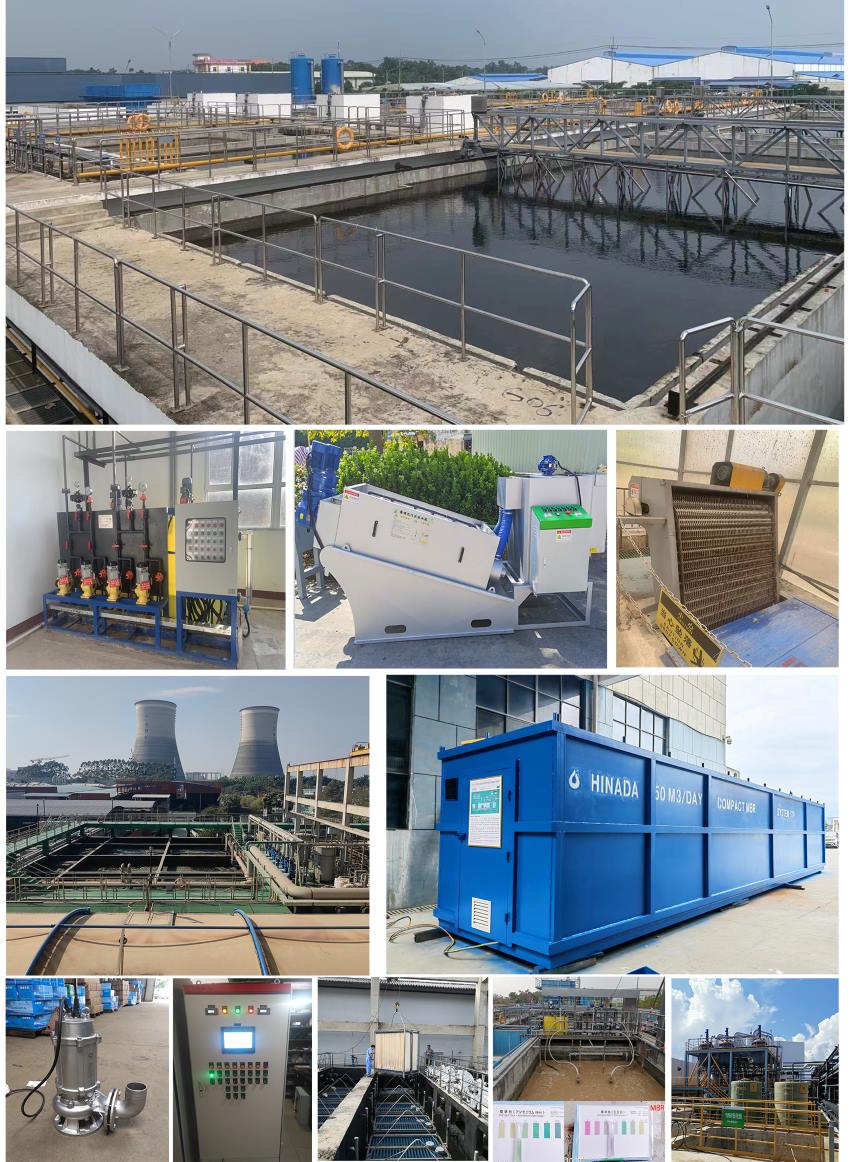
HINADA offers containerized MBR systems and packaged wastewater treatment plants. For a buyer, these products can reduce civil construction, shorten installation time, and simplify permitting. However, the buyer should verify that the package is truly integrated. Some suppliers place individual components inside a container without proper process design. A genuine packaged plant should include balanced hydraulic design, accessible maintenance points, and a control system that protects the membranes and biological process.
Dissolved Air Flotation Systems
Dissolved air flotation, or DAF, is used to remove oil, grease, suspended solids, and other light particles. DAF systems are common in industrial pretreatment, food processing, paper mills, and municipal sludge thickening. When comparing DAF manufacturers, the buyer should examine the air dissolution system, recycle ratio, surface loading rate, sludge removal mechanism, and chemical dosing strategy.
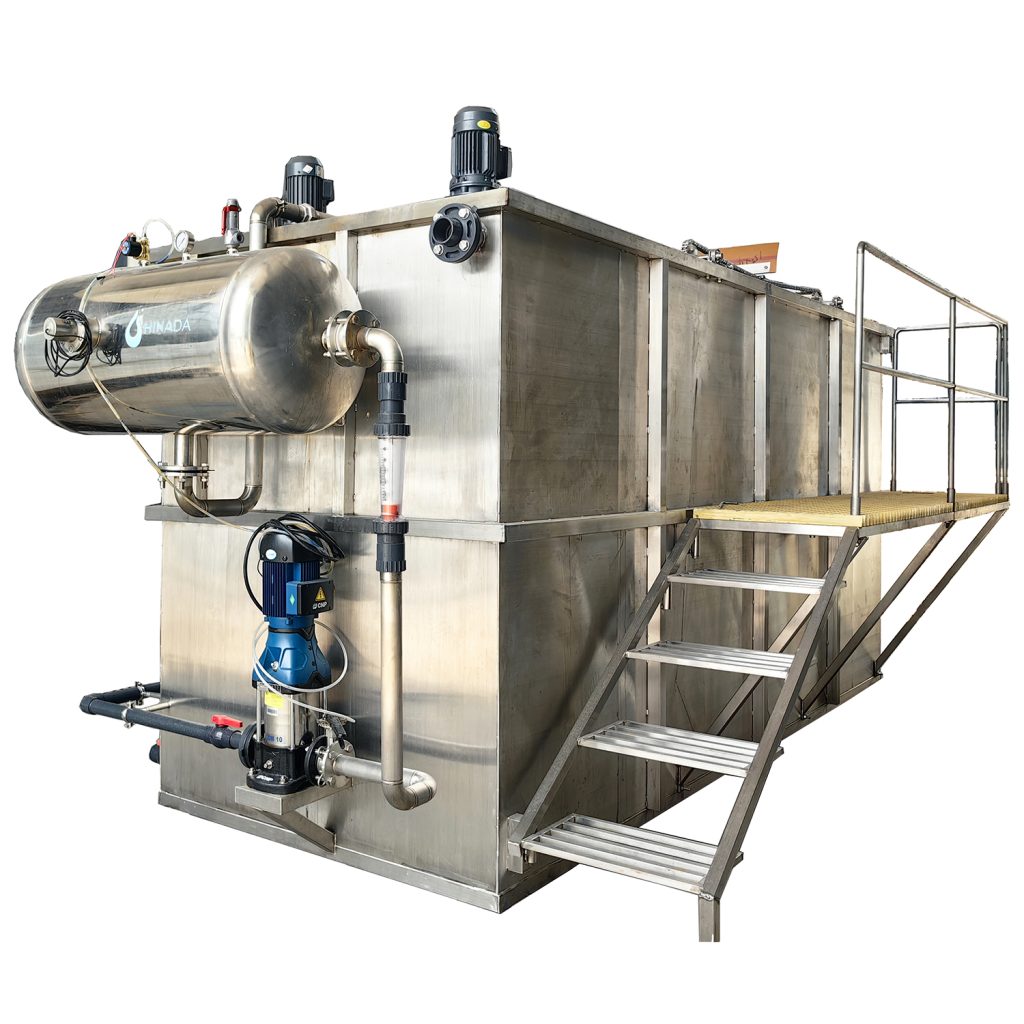
HINADA produces DAF systems as part of its wastewater treatment equipment portfolio. A DAF unit is often the first line of defense for industrial wastewater. If it performs poorly, downstream biological and membrane processes suffer. A manufacturer that understands DAF and membrane processes together can design a more robust treatment train. This systems thinking is a key indicator of engineering maturity.
Ultrafiltration and Industrial Reverse Osmosis Systems
Ultrafiltration systems are used for drinking water purification, surface water treatment, groundwater treatment, and industrial water reuse. Industrial reverse osmosis systems are used for desalination, demineralization, and advanced reuse. These systems require careful pretreatment, chemical conditioning, and energy optimization. Comparing manufacturers in this segment requires attention to membrane selection, pump efficiency, recovery rate, and concentrate management.
HINADA offers ultrafiltration systems and industrial reverse osmosis systems. This means the company can serve projects that move from wastewater treatment to water reuse. Reuse is increasingly important because it reduces freshwater withdrawal and discharge volume. A manufacturer that can integrate biological treatment, ultrafiltration, and reverse osmosis can support a circular water strategy.
Examine Manufacturing Depth and Quality Control
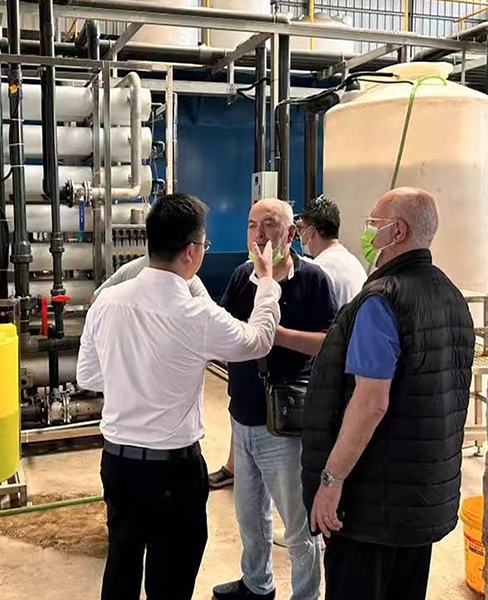
A manufacturer's factory is the best evidence of its capability. The buyer should request factory photographs, production flow charts, equipment lists, and quality control procedures. If possible, an audit or video tour should be arranged. The goal is to confirm that the manufacturer actually produces the core components and does not simply assemble imported parts.
HINADA was founded in 2012 in Guangzhou, China, and later expanded its manufacturing base to Chenzhou, Hunan Province. This history shows a progression from a commercial and engineering presence in Guangzhou to a larger manufacturing footprint in Hunan. For a buyer, geographic expansion can indicate growing capacity and investment in production infrastructure. It also provides an opportunity to audit two locations if needed.
Membrane R and D and Component Manufacturing
Membrane manufacturing is a specialized field. It requires polymer formulation, spinning equipment, coagulation baths, washing, drying, potting, and testing. A manufacturer that controls these steps can adjust membrane properties for different applications. A manufacturer that only buys finished membranes has less flexibility and may face longer lead times during supply disruptions.
HINADA describes a complete ecosystem from membrane research and development and component manufacturing to equipment fabrication and turnkey solution delivery. This ecosystem is important because it links laboratory work to production and field performance. A buyer can ask how membrane formulations are tested, how quality is controlled, and how field data is fed back into product improvement. The answers reveal whether the ecosystem is real or simply a marketing phrase.
Equipment Fabrication and Assembly
Equipment fabrication includes cutting, welding, machining, surface treatment, piping, electrical wiring, and skid assembly. Quality control should cover material certificates, dimensional checks, pressure tests, leak tests, electrical safety tests, and functional tests. The buyer should ask whether testing is done at the factory and whether a factory acceptance test can be witnessed.
For integrated systems, factory testing is especially valuable. It is better to find and fix problems at the factory than on site. A manufacturer with a mature fabrication process will have documented test reports and a clear punch list procedure. HINADA's integrated packaged systems and containerized MBR systems are examples of products that benefit from factory assembly and testing before shipment.
Supply Chain and Component Quality
Even a vertically integrated manufacturer relies on suppliers for pumps, blowers, valves, instruments, and controls. The buyer should ask which brands are used and whether alternatives are available. Premium components can increase capital cost but reduce downtime and energy consumption. The buyer should also ask about spare parts availability and lead times.
A confident comparison includes a review of the manufacturer's supply chain resilience. Questions should cover inventory management, dual sourcing, and contingency planning. If a critical component is imported, the buyer should understand customs, shipping, and warranty support. If the manufacturer uses its own membranes and modules, that reduces some supply chain risk but does not eliminate it.
Review Certifications, Standards, and Compliance
Certifications are not a substitute for engineering judgment, but they provide a baseline of quality management and product safety. Common certifications include ISO 9001 for quality management, ISO 14001 for environmental management, and ISO 45001 for occupational health and safety. Product certifications may include CE marking for the European Economic Area, UL or ETL for North America, and local electrical and pressure vessel approvals.
The buyer should verify the scope of each certificate. A certificate for a trading company may not cover a manufacturing site. A certificate for one product may not cover the entire system. The buyer should request certificates with clear legal entity names, addresses, and validity dates. If a manufacturer claims compliance with a standard, the buyer should ask for the test reports and the issuing laboratory.
Discharge Standards and Local Regulations
Wastewater treatment systems must meet local discharge or reuse standards. These standards vary by country, region, and industry. The manufacturer should demonstrate experience with the relevant regulations. The buyer should not assume that a system designed for one jurisdiction will automatically comply in another. Differences in temperature, salinity, and sewer ordinances can change the design.
HINADA serves clients in more than 75 countries across Asia, Africa, Europe, and the Americas. This global exposure suggests experience with diverse regulatory environments. However, the buyer should still verify project-specific compliance. A manufacturer that has worked in many countries may have a broader perspective, but the final design must be validated for the actual site.
Safety and Environmental Compliance
Wastewater treatment plants involve confined spaces, electrical equipment, rotating machinery, chemicals, and biological hazards. The manufacturer should provide safety documentation, risk assessments, and operating procedures. Environmental compliance includes odor control, noise control, sludge management, and chemical storage. These factors affect community acceptance and long-term operating permits.
During comparison, the buyer should ask how the manufacturer handles safety in design. Are guardrails, emergency stops, gas detection, and ventilation included. Are chemical dosing areas bunded. Is there a plan for sludge disposal. A manufacturer that treats safety as an afterthought may create costly problems later.
Assess Application Experience and References
Experience is valuable when it is relevant. A manufacturer may have hundreds of installations, but if they are all in a different industry or climate, the relevance is limited. The buyer should ask for references in the same application, capacity range, and regulatory environment. If possible, the buyer should visit a reference site or speak with the operator.
HINADA's key application fields include industrial wastewater treatment and reuse, municipal sewage treatment and water recycling, rural decentralized water supply and sanitation, and drinking water purification from surface water or groundwater. This breadth is useful because it shows the manufacturer can adapt to different project types. The buyer should still ask for specific references within the relevant field.
Industrial Wastewater Treatment and Reuse
Industrial wastewater is often complex. It may contain heavy metals, oils, solvents, dyes, pharmaceuticals, or food processing waste. Treatment may require physical, chemical, and biological processes in series. A manufacturer with industrial experience should understand variability, shock loads, and pretreatment requirements. The buyer should ask about similar factories, influent characteristics, and effluent results.
HINADA's portfolio includes DAF systems, MBR systems, ultrafiltration, and reverse osmosis. These technologies are often combined for industrial reuse. For example, DAF may remove oil and grease, biological treatment may reduce organic load, MBR may polish the effluent, and reverse osmosis may produce reusable water. A manufacturer that can supply multiple stages can simplify procurement and integration.
Municipal Sewage Treatment and Water Recycling
Municipal projects prioritize reliability, energy efficiency, and nutrient removal. They often require long design life, low maintenance, and compliance with strict discharge limits. The buyer should compare manufacturers on their ability to handle peak flows, stormwater infiltration, and seasonal temperature changes. References from municipal utilities are especially valuable.
HINADA serves municipal sewage treatment and water recycling projects. Its submerged MBR modules and integrated packaged systems can be used for new plants or upgrades. For a municipality, the comparison should include lifecycle cost, sludge production, odor control, and operator training. A manufacturer that understands public procurement and long-term service can be a stronger partner.
Rural Decentralized Water Supply and Sanitation
Rural and decentralized projects have unique constraints. They may lack skilled operators, reliable power, and extensive maintenance infrastructure. Systems must be robust, simple, and remotely monitored. Packaged plants and containerized MBR systems are often suitable because they are prefabricated and easy to install.
HINADA's integrated packaged wastewater treatment systems are designed for decentralized applications. The buyer should ask about automation level, remote diagnostics, and spare parts logistics. A system that works well in a city may fail in a remote village if it requires daily chemical adjustments or specialized maintenance. Simplicity is a feature, not a compromise.
Drinking Water Purification
Drinking water purification from surface water or groundwater requires reliable removal of pathogens, turbidity, and dissolved contaminants. Ultrafiltration is effective for particulate and microbial removal. Reverse osmosis may be needed for salinity or specific ions. The buyer should compare manufacturers on membrane integrity testing, disinfection strategy, and regulatory approval.
HINADA offers ultrafiltration systems and industrial reverse osmosis systems. For drinking water projects, the manufacturer should provide evidence of safe operation and water quality testing. The buyer should also consider residual disposal and energy consumption. A confident comparison includes a review of the full water cycle, not just the treatment unit.
Compare Service, Support, and Turnkey Delivery
Service capability is often the difference between a successful project and a problematic one. A manufacturer may have excellent equipment but poor installation support. The buyer should evaluate the manufacturer's ability to provide design, engineering, installation supervision, commissioning, training, and after-sales service. The scope should be clearly defined in the contract.
HINADA provides a truly integrated solution to water and wastewater projects, from designation, supplying, installation support, and commissioning to training. This type of end-to-end service can reduce coordination risk. However, the buyer should still verify the location and experience of the service team. If the manufacturer relies on local partners, the buyer should assess those partners as well.
Design and Engineering Support
Design support includes process design, mechanical design, electrical and control design, and civil interface drawings. The manufacturer should provide mass balances, piping and instrumentation diagrams, equipment layouts, and utility requirements. The buyer should check whether the design is customized or simply a standard template. A good manufacturer will ask detailed questions and challenge assumptions.
HINADA's engineering approach is based on membrane technology and integrated equipment. The buyer can ask how the company selects membrane flux, tank volumes, aeration rates, and chemical cleaning protocols. The answers should be supported by calculations and experience. If the manufacturer cannot explain the design basis, the buyer should be cautious.
Installation Support and Commissioning
Installation support may range from remote advice to full site supervision. Commissioning includes mechanical checks, electrical checks, water testing, biological seeding, performance testing, and operator training. The buyer should ask how many days of supervision are included, what travel and accommodation costs are covered, and what happens if the plant does not meet performance targets.
HINADA's turnkey solution delivery includes installation support and commissioning. This is important for complex systems such as MBR and reverse osmosis. A membrane system can be damaged by poor commissioning. A biological system can fail if seeding and acclimation are rushed. A manufacturer with commissioning experience can protect the investment.
Training and Documentation
Training should cover normal operation, emergency procedures, maintenance, laboratory testing, and troubleshooting. Documentation should include operation and maintenance manuals, spare parts lists, wiring diagrams, and as-built drawings. The buyer should require documentation in the local language if needed. Training should be practical and site-specific.
HINADA provides training as part of its integrated solution. The buyer should ask who delivers the training, how long it lasts, and whether follow-up training is available. Good training reduces operator errors and extends equipment life. It also improves safety and compliance.
After-Sales Service and Spare Parts
After-sales service includes warranty support, remote troubleshooting, preventive maintenance, and spare parts supply. The buyer should ask about response times, service fees, and the availability of critical spares. Membrane replacement is a major consideration for UF and MBR systems. The buyer should understand the expected membrane life and the cost of replacement.
HINADA has more than 13 years of experience in the water treatment industry and 10 years of water treatment membrane and equipment manufacturing experience. This longevity suggests a track record that can be checked. The buyer should ask for customer references, warranty terms, and spare parts inventory. A manufacturer that has been in business for over a decade is more likely to support the product over its full life.
Calculate Total Cost of Ownership, Not Just Capital Cost
Capital cost is visible and easy to compare. Operating cost is hidden and often larger over the life of the plant. Total cost of ownership includes energy, chemicals, membrane replacement, labor, maintenance, sludge disposal, and downtime. A cheaper plant may consume more energy or require more frequent membrane cleaning. A more expensive plant may have lower operating costs and longer equipment life.
The buyer should request an operating cost estimate from each manufacturer. The estimate should include assumptions about power price, chemical prices, labor rates, and load factors. If a manufacturer cannot provide an estimate, the buyer should create a common model and ask each supplier to fill in the data. This approach normalizes the comparison.
Energy Consumption
Energy is often the largest operating cost in wastewater treatment. Aeration, pumping, and mixing consume significant power. Membrane systems also require air scouring and permeate pumps. The buyer should compare specific energy consumption in kilowatt-hours per cubic meter. High-efficiency blowers, variable frequency drives, and advanced control can reduce energy use.
HINADA's intelligent integrated wastewater treatment equipment may include energy-saving features. The buyer should ask for details. Does the control system adjust aeration based on load. Are pumps selected for high efficiency. Is there energy recovery. These questions help separate marketing claims from engineering reality.
Chemical Consumption
Chemicals are used for coagulation, flocculation, pH adjustment, membrane cleaning, and disinfection. The buyer should compare chemical dosing rates and costs. Some membranes require more frequent cleaning than others. Some processes produce more sludge, which increases disposal costs. A manufacturer should provide a chemical consumption estimate based on similar projects.
HINADA's membrane focus means chemical cleaning is a key design consideration. The buyer should ask about cleaning frequency, cleaning chemicals, and neutralization. The manufacturer should explain how it protects membranes from fouling and scaling. A well-designed system reduces chemical use and extends membrane life.
Membrane Replacement
Membrane replacement is a periodic cost that can be significant. The buyer should ask for the expected membrane life under the project conditions. The life depends on influent quality, pretreatment, cleaning, and operating pressure. A manufacturer that offers both membranes and modules can provide replacement pricing and technical support. The buyer should also consider whether replacement modules are standardized or proprietary.
HINADA manufactures PVDF and PVC hollow fiber ultrafiltration membranes and submerged MBR modules. This vertical integration can be an advantage for replacement planning. The buyer should ask for a membrane replacement schedule and a commitment on future pricing. A long-term service agreement may be beneficial.
Labor and Maintenance
Labor requirements depend on automation level, plant size, and local labor costs. A highly automated plant may require fewer operators but more skilled maintenance technicians. A simple plant may require more routine labor but less specialized knowledge. The buyer should compare staffing plans and maintenance schedules.
HINADA's packaged and containerized systems are often designed for reduced operator attention. The buyer should ask about remote monitoring, alarm management, and preventive maintenance. A manufacturer that provides clear maintenance procedures can reduce downtime and labor cost.
Evaluate Delivery Time, Shipping, and Project Management
Delivery time is critical for projects with tight schedules. The buyer should ask for a production schedule, shipping plan, and installation timeline. Factors that affect delivery include raw material availability, factory capacity, customization, and transportation. A manufacturer with a large backlog may quote longer lead times. A manufacturer with limited capacity may promise unrealistic dates.
HINADA has manufacturing bases in Guangzhou and Chenzhou, Hunan Province. This dual-location setup may provide flexibility. The buyer should ask which factory will produce the equipment and how shipping will be arranged. For international projects, the buyer should consider port selection, customs clearance, and inland transport.
Project Management and Communication
Project management includes scheduling, documentation, quality control, and communication. The buyer should ask for a dedicated project manager and a clear reporting structure. Regular progress meetings, photo updates, and inspection reports can reduce surprises. Language and time zone differences should be addressed early.
HINADA serves clients in more than 75 countries. This international experience suggests familiarity with export documentation, shipping, and cross-cultural communication. The buyer should still confirm the project manager's availability and the escalation path for issues. Good communication is as important as good equipment.
Packaging and Transportation
Packaging must protect equipment during transport. Membranes are sensitive to drying, freezing, and physical damage. Electrical panels require moisture protection. Large tanks may need special shipping frames. The buyer should ask about packaging standards, shock indicators, and insurance. For containerized systems, the buyer should confirm that the container is designed for transport and operation.
HINADA's containerized MBR systems and packaged plants are designed for shipping. The buyer should ask about lifting points, foundation requirements, and connection details. A well-designed package reduces site work and installation time. A poorly designed package can cause delays and extra costs.
Use a Structured Comparison Matrix
A structured comparison matrix helps the buyer evaluate manufacturers objectively. The matrix should include technical, commercial, service, and risk criteria. Each criterion should be weighted according to project priorities. The buyer should score each manufacturer based on evidence, not impressions. The matrix should be updated as new information becomes available.
Criteria may include process fit, membrane quality, equipment quality, automation, energy efficiency, chemical consumption, footprint, delivery time, warranty, service response, training, spare parts, references, certifications, and price. The buyer should also include financial stability and legal compliance. A manufacturer that is financially weak may struggle to support the plant over its life.
Technical Criteria
Technical criteria should cover the treatment process, equipment specifications, and performance guarantees. The buyer should verify that the proposed process can handle the design basis. The buyer should also check for redundancy, turndown capability, and future expansion. A plant that cannot handle low-flow or high-load conditions may fail in practice.
HINADA's product portfolio covers membranes, MBR, DAF, UF, and RO. This breadth allows the buyer to evaluate the full treatment train. The buyer should ask for a process flow diagram and a mass balance. The manufacturer should explain how each unit contributes to the final effluent quality.
Commercial Criteria
Commercial criteria include price, payment terms, currency, taxes, shipping, insurance, and warranty. The buyer should compare total cost, not just equipment price. Payment terms should be linked to milestones such as design approval, factory testing, shipment, installation, and performance acceptance. A manufacturer that demands large advance payments may present higher risk.
HINADA's global experience means it likely works with different payment terms. The buyer should negotiate terms that protect both parties. A letter of credit, performance bond, or retention may be appropriate for large projects. The buyer should also clarify ownership of intellectual property and design documents.
Service Criteria
Service criteria include installation support, commissioning, training, warranty, and after-sales response. The buyer should ask for service level agreements with response times and escalation procedures. The buyer should also check the availability of local service partners. If the manufacturer is far away, local support is essential.
HINADA provides installation support, commissioning, and training. The buyer should ask how these services are delivered and who bears the cost. A clear service plan reduces downtime and protects the investment. The buyer should also ask for a spare parts recommendation and a preventive maintenance schedule.
Risk Criteria
Risk criteria include financial stability, legal disputes, safety record, and supply chain risk. The buyer should conduct due diligence on the manufacturer's ownership, management, and reputation. Online research, reference calls, and site visits can reveal issues. The buyer should also consider political, currency, and logistics risks for international projects.
HINADA was founded in 2012 and has expanded its manufacturing base. This history can be verified through business registries and customer references. The buyer should ask for audited financial statements if the project is large. A manufacturer with a strong balance sheet is more likely to honor warranties and provide long-term support.
Ask the Right Due Diligence Questions
Due diligence questions should be open-ended and specific. The buyer should listen for detailed answers and avoid accepting vague claims. The following questions can help compare manufacturers with confidence.
What is the exact scope of supply and what is excluded.
What are the guaranteed effluent quality and the conditions for the guarantee.
Who manufactures the membranes and modules.
What is the expected membrane life and replacement cost.
What is the specific energy consumption in kilowatt-hours per cubic meter.
What chemicals are required and at what dose.
What is the estimated sludge production and disposal method.
How many similar projects have been completed in the last five years.
Can the buyer visit a reference site or speak with an operator.
What certifications apply to the manufacturing site and products.
What is the delivery time and what factors could delay it.
What installation and commissioning services are included.
What training is provided and in what language.
What is the warranty period and what does it cover.
What is the spare parts lead time for critical components.
What is the after-sales response time and escalation path.
What is the total cost of ownership over ten years.
What happens if the plant does not meet performance targets.
These questions should be asked to every shortlisted manufacturer. The answers should be documented and compared. If a manufacturer avoids a question or provides inconsistent information, the buyer should investigate further. Transparency is a positive sign. Defensiveness is a warning sign.
Red Flags in Manufacturer Comparison
Certain red flags suggest that a manufacturer may not be a reliable partner. The buyer should be cautious if a manufacturer cannot provide a process flow diagram or mass balance. If the manufacturer claims to manufacture membranes but cannot explain the production process, the claim may be false. If the price is significantly lower than others, the buyer should check for missing scope or lower-quality components.
Other red flags include no references, no certifications, no factory address, and no service plan. A manufacturer that pressures the buyer to sign quickly may be hiding weaknesses. A manufacturer that refuses a factory audit or performance guarantee should be avoided. A manufacturer that uses aggressive sales tactics without engineering substance is unlikely to deliver a successful project.
Unrealistic Performance Claims
Wastewater treatment is governed by physics and biology. No manufacturer can guarantee perfect performance under all conditions. If a manufacturer promises extremely low energy consumption, zero sludge, or maintenance-free operation, the buyer should be skeptical. Real systems require maintenance, monitoring, and occasional repairs. A manufacturer that acknowledges these realities is more trustworthy.
HINADA's approach focuses on membrane technology and integrated equipment. The buyer should expect realistic performance data and clear operating conditions. A confident comparison requires the buyer to challenge exaggerated claims and ask for evidence.
Hidden Costs and Scope Gaps
Hidden costs can appear after the contract is signed. These may include civil works, power supply, chemical dosing, sludge handling, spare parts, and training. The buyer should review the scope of supply line by line. If something is not explicitly included, it may be excluded. The buyer should ask for a written clarification of any ambiguous item.
HINADA's integrated solution covers design, supply, installation support, commissioning, and training. Even with an integrated scope, the buyer should confirm what is included. For example, are civil works included. Are local permits included. Is sludge dewatering included. Clear scope definition prevents disputes.
Consider the Manufacturer's Global Perspective
Global experience can be an advantage because it exposes a manufacturer to different climates, regulations, and operating practices. A manufacturer that has worked in Asia, Africa, Europe, and the Americas has likely encountered a wide range of challenges. This experience can lead to more robust designs and better troubleshooting.
HINADA serves clients in more than 75 countries across Asia, Africa, Europe, and the Americas. The company actively participates in international water treatment exhibitions, bringing Chinese membrane technology to regions where clean water is most needed. This global perspective is relevant for buyers who need a manufacturer that can adapt to local conditions.
Local Support and Global Standards
Global experience must be paired with local support. The buyer should ask how the manufacturer provides service in the project country. Does it have a local office, distributor, or service partner. Are spare parts stored locally. Can technicians travel quickly. A manufacturer with global reach but no local presence may struggle to provide timely support.
HINADA's international project experience suggests it has systems for remote support and spare parts logistics. The buyer should verify these capabilities during due diligence. A video call with a service manager or a review of past project communications can provide insight.
Cultural and Language Considerations
Cultural and language differences can affect communication. The buyer should confirm that the manufacturer can provide documentation and training in a language the operators understand. English is common in international projects, but local language support may be necessary for daily operations. The buyer should also consider time zone differences for emergency support.
HINADA works with clients around the world, so it likely has experience with English-language project documentation. The buyer should request sample documents and training materials. Clear communication reduces misunderstandings and improves project outcomes.
Evaluate Financial and Contractual Stability
Financial stability is important for long-term support. A manufacturer that is undercapitalized may not be able to honor warranties or supply spare parts. The buyer should ask for financial references, bank letters, or audited statements. For large projects, a performance bond can protect the buyer.
HINADA has been in the water treatment industry for more than 13 years and has 10 years of membrane and equipment manufacturing experience. This longevity suggests a stable business. However, the buyer should still perform standard financial due diligence. A company that has survived multiple market cycles is more likely to be reliable.
Contract Terms and Warranties
Contract terms should be clear and balanced. The buyer should review payment milestones, delivery terms, warranty, liability, and dispute resolution. The warranty should cover defects in materials and workmanship. It should also cover performance if the manufacturer provided the process design. The buyer should understand what is excluded from the warranty.
HINADA's warranty terms should be reviewed in detail. The buyer should ask about membrane warranty, equipment warranty, and service warranty. A longer warranty may indicate confidence in the product. A very short warranty may indicate risk.
Intellectual Property and Confidentiality
Intellectual property can be a concern when sharing process data and design information. The buyer should have a confidentiality agreement in place before sharing sensitive information. The contract should clarify ownership of custom designs and any licenses. The buyer should also ensure that the manufacturer has the right to use any third-party technology.
HINADA's membrane and equipment technology is likely proprietary. The buyer should respect intellectual property while ensuring it has the right to operate and maintain the plant. The contract should include as-built drawings and operating manuals.
Use Pilot Testing and Performance Validation
For complex or high-risk projects, pilot testing can reduce uncertainty. A pilot test uses a small-scale system to evaluate treatment performance, membrane fouling, chemical consumption, and operating stability. The results can be used to validate the design and select the best manufacturer. Pilot testing is especially valuable for industrial wastewater and membrane systems.
HINADA's membrane and MBR expertise makes pilot testing a natural part of project development. The buyer should ask whether the manufacturer can provide a pilot unit, how long the test will run, and what parameters will be monitored. The cost of a pilot test is often small compared to the risk of a failed full-scale plant.
Performance Validation at Full Scale
Full-scale performance validation should be included in the contract. The buyer and manufacturer should agree on test procedures, sampling methods, laboratory accreditation, and acceptance criteria. The test should cover flow, load, effluent quality, energy consumption, and chemical consumption. If the plant does not meet the criteria, the manufacturer should correct the issue at its own cost.
HINADA's integrated solution includes commissioning and training. The buyer should extend this to performance validation. A clear acceptance protocol protects both parties and ensures that the plant is ready for operation.
Continuous Monitoring and Optimization
After acceptance, continuous monitoring can optimize performance. Sensors for flow, pressure, turbidity, dissolved oxygen, and conductivity can provide real-time data. Remote monitoring can alert operators to problems before they cause downtime. Data analytics can identify trends and optimize energy and chemical use.
HINADA's intelligent integrated equipment may include monitoring and control features. The buyer should ask about data logging, alarm notifications, and remote access. A smart system can reduce operating costs and improve reliability.
Compare Manufacturers on Sustainability and Environmental Impact
Sustainability is increasingly important in wastewater treatment. The buyer should compare manufacturers on energy efficiency, chemical reduction, sludge minimization, and water reuse. A system that recovers resources or produces renewable energy may have a higher capital cost but a lower environmental footprint.
HINADA's focus on water reuse and membrane technology aligns with sustainability goals. Ultrafiltration and reverse osmosis can produce high-quality water for reuse. MBR can reduce footprint and improve effluent quality. DAF can recover oils and suspended solids. These technologies support a circular economy approach.
Energy Efficiency and Carbon Footprint
Energy efficiency reduces both operating cost and carbon emissions. The buyer should compare specific energy consumption and consider renewable energy options. High-efficiency motors, blowers, and pumps can significantly reduce power use. The manufacturer should provide energy calculations and guarantees.
HINADA's equipment may include energy-saving features. The buyer should ask for details and compare across suppliers. A manufacturer that can demonstrate lower energy use has a competitive advantage.
Sludge Management and Resource Recovery
Sludge management is a major cost and environmental issue. The buyer should compare sludge production rates and disposal options. Some processes produce less sludge than others. Resource recovery, such as biogas or phosphorus, can offset costs. The manufacturer should provide a sludge management plan.
HINADA's treatment trains may include sludge thickening or dewatering. The buyer should ask how sludge is handled and whether energy recovery is possible. A holistic approach to sludge reduces environmental impact and operating cost.
Water Reuse and Circular Economy
Water reuse is a key sustainability strategy. Treated wastewater can be reused for irrigation, cooling, toilet flushing, or industrial processes. Reuse reduces freshwater withdrawal and discharge volume. The buyer should compare manufacturers on their ability to design for reuse and meet relevant water quality standards.
HINADA's ultrafiltration and reverse osmosis systems are well suited for reuse applications. The buyer should ask for references in reuse projects and water quality data. A manufacturer with reuse experience can help the buyer achieve sustainability goals.
Putting It All Together: A Confident Comparison Process
Comparing wastewater treatment system manufacturers with confidence requires a systematic process. The buyer should start with a clear design basis, then evaluate technology, manufacturing, quality control, certifications, experience, service, total cost, delivery, and risk. A structured comparison matrix and due diligence questions help normalize the offers. Pilot testing and performance guarantees reduce uncertainty. Contract terms and financial stability protect the investment.
HINADA Water Treatment Tech Co., Ltd. serves as an example of a manufacturer that combines membrane research and development, component manufacturing, equipment fabrication, and turnkey solution delivery. Founded in 2012 in Guangzhou, China, and later expanded to Chenzhou, Hunan Province, HINADA serves clients in more than 75 countries. Its core products include PVDF and PVC hollow fiber UF membranes, submerged MBR membrane modules, containerized MBR systems, packaged wastewater treatment plants, DAF systems, ultrafiltration systems, and industrial reverse osmosis systems. The company focuses on two core technology pillars: hollow fiber ultrafiltration and MBR membranes for precise physical separation, and intelligent integrated wastewater treatment equipment for municipal, industrial, and decentralized applications.
For a buyer, the lesson is not that one manufacturer is always better. The lesson is that confidence comes from evidence. A manufacturer that can explain its design, show its factory, provide references, guarantee performance, and support the plant over its life is a stronger partner. A manufacturer that relies on vague claims and low prices is a risk. By following a structured comparison process, the buyer can select a wastewater treatment system manufacturer with confidence and achieve long-term operational success.
Final Recommendations for Buyers
Before issuing a purchase order, the buyer should confirm the following. The design basis is complete and agreed. The scope of supply is clear and written. The performance guarantee is specific and enforceable. The manufacturer has proven experience in the relevant application. The factory has been audited or verified. The certifications are valid and cover the supplied products. The service plan includes installation, commissioning, training, and after-sales support. The total cost of ownership has been calculated. The contract includes clear payment, warranty, and dispute resolution terms. The spare parts plan is adequate. The project schedule is realistic. The manufacturer is financially stable. The buyer has a contingency plan for delays or performance issues.
These steps may seem extensive, but they are proportional to the investment. A wastewater treatment plant is a critical infrastructure asset. It must operate reliably for decades. Choosing the right manufacturer is one of the most important decisions in the project. With careful comparison, the buyer can avoid costly mistakes and build a plant that protects the environment, meets regulations, and serves the community.
In a global market with many suppliers, manufacturers such as HINADA demonstrate how Chinese membrane technology and integrated equipment can serve projects around the world. The key for buyer