DAF System Equipment Maintenance Tips for Peak Performance
DAF System Equipment Maintenance Tips for Peak Performance
September 30, 2026
Author
Solution Provider, through a professional technical team, we provide customers with targeted equipment selection recommendations and comprehensive after-sales services, winning the trust and recognition of customers.
Sarah M.
HINADA Water Treatment Tech Co., Ltd. is a globally recognized manufacturer of wastewater treatment equipment, hollow fiber UF membranes, submerged MBR modules, integrated packaged systems, and DAF systems. This article provides comprehensive maintenance tips for dissolved air flotation systems to achieve peak performance. It explains DAF fundamentals and why preventive maintenance is critical. Daily tasks include visual inspection, pump checks, chemical dosing verification, skimmer observation, and logging. Weekly tasks cover cleaning air saturation components, lubricating mechanical equipment, inspecting valves and instruments, and checking tank internals. Monthly tasks include pressure vessel inspection, pump and compressor maintenance, chemical dosing calibration, and sludge system checks. Quarterly and annual tasks involve internal tank cleaning, valve and instrument overhauls, pressure vessel certification, and performance testing. The article details maintenance of the air dissolution system, recycle pump, air compressor, pressure vessel, relief valve, influent and chemical systems, flocculation chamber, DAF tank, skimmer, sludge collection, effluent weirs, pumps, valves, pipes, instrumentation, control panels, PLC, SCADA, and sensors. It offers troubleshooting for poor effluent, thin float, clogged nozzles, cavitation, relief valve issues, sludge pump problems, corrosion, and odor. It emphasizes water chemistry, chemical optimization, spare parts management, operator training, safety, documentation, KPIs, energy efficiency, and cost optimization. HINADA support and solutions are highlighted, including its founding in 2012 in Guangzhou, expansion to Chenzhou, service in over 75 countries, 13 years of industry experience, 10 years of manufacturing experience, and complete ecosystem from membrane R&D to turnkey delivery. The conclusion stresses a culture of maintenance for reliable DAF performance, lower costs, and regulatory compliance.
DAF System Equipment Maintenance Tips for Peak Performance
Dissolved air flotation systems are among the most effective technologies for removing suspended solids, oils, grease, and other contaminants from industrial and municipal wastewater. A well-designed DAF unit can achieve high removal efficiencies, but its long-term performance depends heavily on disciplined maintenance. For plant managers, operators, and maintenance teams, the difference between a DAF system that runs at peak performance and one that struggles with carryover, clogging, and inconsistent effluent quality often comes down to routine care, accurate troubleshooting, and a culture of preventive maintenance.
HINADA Water Treatment Tech Co., Ltd., known as HINADA, is a globally recognized manufacturer of wastewater treatment equipment, hollow fiber ultrafiltration membranes, submerged MBR membrane modules, integrated packaged wastewater treatment systems, and DAF systems. Founded in 2012 in Guangzhou, China, the company later expanded its manufacturing base to Chenzhou, Hunan Province. Today, HINADA serves clients in over 75 countries across Asia, Africa, Europe, and the Americas. Its experience in designing, supplying, and commissioning water and wastewater systems provides valuable insight into how DAF equipment should be maintained for reliable, efficient operation.
This blog-style article presents a comprehensive set of DAF system equipment maintenance tips. It covers daily, weekly, monthly, quarterly, and annual tasks, as well as troubleshooting strategies, spare parts planning, operator training, and performance optimization. The guidance is written for third-person audiences, including facility owners, consulting engineers, operations supervisors, and maintenance technicians. By following these recommendations, a DAF system can deliver stable separation performance, lower operating costs, and a longer service life.
undefined
Understanding DAF System Fundamentals for Maintenance Planning
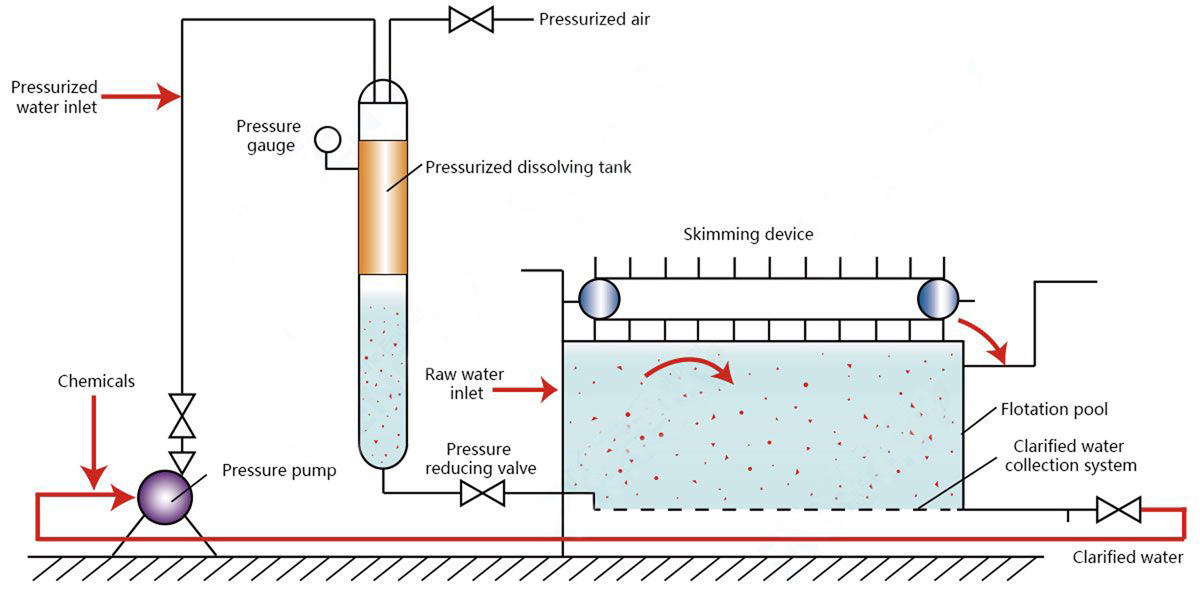
Before maintenance tasks can be scheduled effectively, the basic operation of a DAF system must be understood. In a typical DAF unit, wastewater enters a coagulation or flocculation chamber where chemicals are added to destabilize suspended particles and form flocs. A portion of the clarified effluent is recycled and saturated with air under pressure in a pressure vessel, often called the air saturation tank. When this pressurized recycle stream is released into the DAF tank through specialized nozzles or valves, the pressure drops rapidly, and dissolved air forms millions of micro-bubbles. These bubbles attach to flocs, oils, and suspended solids, causing them to float to the surface. A skimmer then removes the float sludge, while clarified water exits through effluent weirs.
Each component in this process has a maintenance profile. The air saturation system requires clean air, correct pressure, and proper water quality. The recycle pump must deliver stable flow without cavitation. The chemical dosing system must maintain accurate concentrations and mixing energy. The flocculation chamber needs gentle but sufficient agitation. The DAF tank needs proper surface loading, baffle integrity, and skimmer alignment. The sludge collection system must remove float without pulling excessive water. The effluent weirs must be level to avoid short-circuiting. The control system must read sensors correctly and adjust valves, pumps, and chemical dosing in real time.
HINADA designs DAF systems as part of a broader portfolio that includes PVDF and PVC hollow fiber UF membranes, submerged MBR membrane modules, containerized MBR systems, packaged wastewater treatment plants, ultrafiltration systems, and industrial reverse osmosis systems. This integrated approach means HINADA understands how DAF performance interacts with downstream membrane filtration and biological treatment. For example, poor DAF maintenance can allow excessive suspended solids or oil to reach UF or MBR membranes, increasing fouling and cleaning frequency. Therefore, DAF maintenance is not an isolated task; it protects the entire treatment train.
Key DAF Components That Require Regular Attention
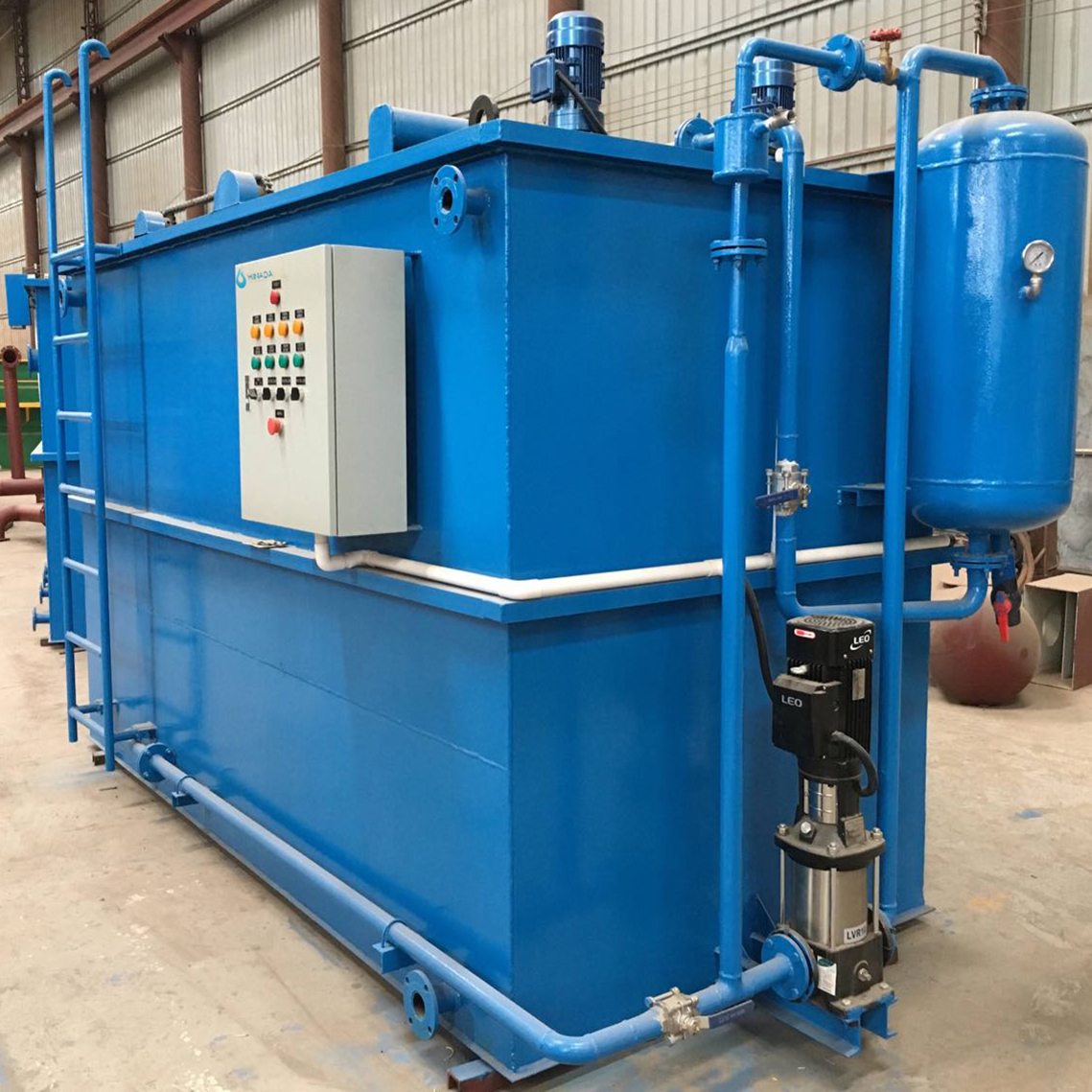
Air saturation tank and pressure vessel: Must maintain design pressure and air-to-water ratio.
Recycle pump: Provides pressurized recycle water and must avoid cavitation and wear.
Air compressor or blower: Supplies air for dissolution and must deliver clean, dry, oil-free air.
Pressure relief valve: Protects the vessel from overpressure and must be tested regularly.
Chemical dosing pumps and mixers: Must deliver accurate coagulant and flocculant doses.
Flocculation chamber agitator: Requires correct speed and impeller condition.
DAF tank internals: Baffles, inlet distributor, and surface skimmer must remain aligned.
Skimmer and sludge scraper: Must remove float sludge without excessive water carryover.
Sludge pump: Must handle thickened sludge without clogging or excessive wear.
Effluent weirs and discharge pipes: Must be level and free of obstructions.
Instrumentation and control panel: Requires calibration, cleaning, and software checks.
Maintenance planning should begin with a detailed equipment register, manufacturer manuals, and a schedule that assigns responsibilities. HINADA provides installation support, commissioning, and training as part of its truly integrated solution to water and wastewater projects. This support helps operators understand the specific maintenance needs of each DAF unit, from designation and supplying to installation support, commissioning, and training.
Why Peak Performance Depends on Preventive Maintenance
DAF systems are subject to continuous hydraulic, chemical, and mechanical stress. Suspended solids, oils, grease, and chemical flocs can accumulate on surfaces. Pumps experience wear. Valves lose calibration. Sensors drift. Without preventive maintenance, small issues become major failures. A partially clogged air injection nozzle, for example, can reduce bubble formation and cause poor flotation. A worn skimmer blade can leave a layer of sludge on the tank surface, leading to odor, corrosion, and effluent violations. A drifting pH sensor can cause incorrect coagulant dosing, wasting chemicals and producing poor floc structure.
Preventive maintenance delivers several benefits. It improves effluent quality by maintaining consistent separation. It reduces energy consumption because pumps and compressors operate at design efficiency. It extends equipment life by preventing corrosion, cavitation, and mechanical wear. It lowers chemical costs by keeping dosing systems accurate. It reduces unplanned downtime and emergency repair costs. It also supports regulatory compliance and protects downstream equipment such as UF membranes, MBR modules, and RO systems.
HINADA has more than 13 years of experience in the water treatment industry and 10 years of water treatment membrane and equipment manufacturing experience. The company has built a complete ecosystem from membrane research and development and component manufacturing to equipment fabrication and turnkey solution delivery. This experience shows that DAF maintenance is most effective when it is planned, documented, and measured. A preventive maintenance program should include checklists, work orders, spare parts inventory, operator training, and performance indicators. When these elements are in place, DAF systems can operate at peak performance for many years.
The Cost of Reactive Maintenance
Reactive maintenance, sometimes called run-to-failure maintenance, is expensive. Emergency repairs often require overtime labor, expedited parts shipping, and temporary treatment solutions. Production may be interrupted. Effluent quality may exceed discharge limits, leading to fines or penalties. In extreme cases, a DAF failure can overload downstream biological treatment or membrane systems, causing weeks of recovery work. By contrast, preventive maintenance is predictable and cost-effective. A small investment in routine inspections and parts replacement prevents large failures.
For example, a recycle pump that is allowed to cavitate may suffer impeller erosion, bearing failure, and seal damage. Replacing the pump or rebuilding it can cost thousands of dollars, plus downtime. Checking suction strainers, pressure gauges, and vibration weekly can detect cavitation early. Similarly, a pressure relief valve that is never tested may fail to open during an overpressure event, creating a safety hazard. Annual testing and calibration are simple tasks that protect people and equipment.
Daily Maintenance Tips for DAF System Operators
Daily maintenance is the foundation of DAF reliability. Operators should perform a visual and functional inspection at the start of each shift. The goal is to identify abnormal conditions before they affect performance. Daily tasks should be recorded in a logbook or computerized maintenance management system. HINADA recommends that operators follow the manufacturer manual and site-specific standard operating procedures, but the following tips provide a practical baseline.
Visual Inspection of the DAF Tank and Surroundings
Operators should check the DAF tank surface for uniform bubble distribution. A healthy DAF system produces a blanket of fine white bubbles across the flotation zone. If bubbles are large, uneven, or absent in certain areas, nozzles may be clogged or air saturation may be insufficient. The float sludge layer should be consistent in thickness and color. Dark, thick, or patchy float may indicate poor flocculation, low air-to-solids ratio, or inadequate skimming. Clear water should be visible in the effluent zone, with no visible flocs or oil sheen. Any carryover should be investigated immediately.
Operators should also inspect for leaks, spills, and unusual odors. Water leaks around pumps, valves, and flanges can indicate worn gaskets or loose connections. Chemical leaks require immediate attention and proper safety procedures. Odors may indicate septic conditions, excessive sludge accumulation, or insufficient aeration in upstream processes. HINADA emphasizes that daily observations are valuable data. A small change in bubble pattern or float quality can be the first sign of a developing problem.
Check Pumps, Compressors, and Motors
Listen to pumps and compressors for unusual noises. Cavitation sounds like gravel or marbles moving through the pump. Squealing may indicate bearing failure. Vibrating equipment may have misalignment or worn couplings. Check motor temperatures by touch or infrared thermometer if available. Excessive heat can indicate overload, poor ventilation, or lubrication failure. Verify that cooling fans are working and that ventilation openings are clean. Check for oil or water leaks around seals and gaskets.
Record suction and discharge pressures for the recycle pump and air compressor. Compare readings to normal operating values. A gradual increase in discharge pressure may indicate a clogged nozzle or pipe. A decrease in suction pressure may indicate a clogged strainer or closed valve. Check amperage draw if a meter is available. High amperage may indicate mechanical binding or excessive load. Low amperage may indicate cavitation or air entrainment. These simple checks can prevent costly failures.
Verify Chemical Dosing and Mixing
Check chemical tanks for adequate levels. Confirm that dosing pumps are running and that stroke or speed settings match the current flow and water quality. Inspect dosing lines for leaks, crystallization, or blockages. Verify that mixers are operating and that flocculation chambers have gentle rolling motion, not violent splashing. Excessive mixing can shear flocs, while insufficient mixing can prevent proper coagulation. Adjust as needed based on jar tests or operator experience.
Measure pH, if required, and compare to the setpoint. Coagulation and flocculation are highly pH-dependent. A drifting pH reading can cause poor floc formation and increased chemical consumption. If pH adjustment is part of the process, check acid or caustic dosing systems for accuracy. HINADA notes that chemical optimization is an ongoing task. Daily attention to dosing and mixing helps maintain stable DAF performance.
Inspect Skimmer and Sludge Removal
Observe the skimmer operation. The skimmer blade or flight should travel smoothly and remove float sludge without pushing water into the sludge trough. Check the sludge trough for proper drainage. If sludge is thick and not flowing, the sludge pump may be clogged or the trough may be blocked. If sludge is thin and watery, the skimmer may be removing too much water, or the float layer may be too thin. Adjust skimmer speed or sludge pump timing as needed.
Check sludge pump operation. Listen for unusual noises and verify discharge pressure. If the pump is a progressive cavity or diaphragm type, check for pulsation or loss of prime. Inspect sludge discharge lines for leaks or blockages. Record sludge volume or pump run time. A sudden increase in sludge volume may indicate process upset, while a decrease may indicate poor flotation. These trends are useful for troubleshooting.
Daily Log and Communication
At the end of each shift, operators should record all readings, observations, and actions taken. The log should include flow rate, pH, temperature, recycle pressure, air pressure, chemical doses, sludge volume, and effluent quality. Any abnormal condition should be reported to the maintenance team and the next shift. HINADA recommends daily communication between operations and maintenance. This ensures that small issues are addressed before they become major repairs.
Weekly Maintenance Checklist for DAF Systems
Weekly maintenance builds on daily inspections. It includes cleaning, lubrication, calibration checks, and minor adjustments. The following tasks should be performed by trained personnel using appropriate personal protective equipment.
Clean Air Saturation System Components
Inspect and clean air filters, strainers, and coalescing filters. Dirty air filters can reduce compressor efficiency and allow oil or particles into the air saturation tank. Clean or replace filter elements according to manufacturer recommendations. Check the air receiver for condensate and drain it manually if an automatic drain is not installed. Moisture in the air system can cause corrosion and reduce air dissolution efficiency.
Inspect air injection nozzles or release valves in the DAF tank. Remove any debris, scale, or biological growth. Clogged nozzles are a common cause of poor bubble formation. If nozzles are removable, clean them with a soft brush and appropriate cleaning solution. Do not use sharp tools that may damage the nozzle orifice. After cleaning, verify that all nozzles are installed correctly and that bubble patterns are uniform.
Check and Lubricate Mechanical Equipment
Lubricate pump bearings, motor bearings, and skimmer drive chains according to the manufacturer schedule. Use the correct lubricant type and quantity. Over-lubrication can cause overheating, while under-lubrication can cause wear. Check gearbox oil levels and top up if needed. Inspect drive belts and couplings for wear, tension, and alignment. Replace worn belts and couplings promptly.
Check the flocculation chamber agitator. Verify that the impeller is secure and that there is no excessive vibration. Lubricate the agitator gearbox if required. Inspect the mixer blades for corrosion or buildup. Clean if necessary. Ensure that the agitator speed is appropriate for the current flow and chemical program. HINADA notes that proper mixing energy is critical for floc formation and DAF performance.
Inspect Valves, Gauges, and Instruments
Check all valves for proper position and operation. Exercise valves that are rarely used to prevent seizing. Inspect valve stems for leaks and packing condition. Check pressure gauges for accuracy by comparing with a calibrated test gauge. Replace damaged or foggy gauges. Check level switches, flow meters, and pH sensors for cleanliness and response. Clean sensor probes according to manufacturer instructions. Verify that readings match grab samples or portable meters.
Check the pressure relief valve on the air saturation tank. Verify that it is not leaking and that the lever moves freely. Do not disassemble the valve unless trained and authorized. If the valve is due for testing, follow site procedures. A faulty relief valve is a safety hazard and must be repaired or replaced immediately.
Inspect DAF Tank Internals and Effluent Weirs
Inspect the DAF tank for accumulation of solids on the bottom. Some DAF designs have a bottom scraper or sludge collection system. If solids accumulate, check the bottom scraper and sludge withdrawal. Clean the tank if necessary during a planned shutdown. Inspect baffles for damage or displacement. Baffles are critical for maintaining proper flow patterns and preventing short-circuiting.
Check effluent weirs for levelness and cleanliness. Adjust weir plates if they are not level. A level weir ensures uniform effluent collection and prevents localized high flow that can pull flocs over the weir. Clean algae, debris, or chemical deposits from weir surfaces. Inspect the effluent channel for obstructions. Verify that the effluent flow meter, if installed, is reading correctly.
Monthly Maintenance Tasks for DAF Equipment
Monthly maintenance includes more detailed inspections, performance tests, and preventive replacements. These tasks help identify wear before it causes failure.
Air Saturation Tank and Pressure Vessel Inspection
Inspect the air saturation tank for corrosion, pitting, and leaks. Check the internal distribution piping if accessible. Verify that the water level in the saturation tank is correct. Some systems use a level control valve to maintain a specific water level. If the level is too low, air may not dissolve properly. If the level is too high, water may carry over into the air line. Adjust the level control as needed.
Test the air saturation efficiency. This can be done by measuring dissolved oxygen or by observing bubble formation. If the saturation efficiency is low, check the air compressor, pressure, and water flow. Clean or replace the air diffuser if present. Inspect the pressure vessel for internal corrosion. If the vessel has a protective lining, check for cracks or blisters. HINADA recommends that pressure vessels be inspected by qualified personnel in accordance with local regulations.
Pump and Compressor Maintenance
Check pump and compressor oil levels and condition. Change oil if it is discolored, contaminated, or beyond the recommended service interval. Inspect air filters and replace if necessary. Check compressor valves, belts, and pulleys. Measure vibration and temperature if equipment is available. Compare readings to baseline values. Increasing vibration may indicate bearing wear, misalignment, or imbalance. Schedule corrective maintenance before failure occurs.
Inspect pump mechanical seals for leaks. A small drip may be normal for some seal types, but excessive leakage requires attention. Check pump alignment and coupling condition. Verify that the pump operates within its design curve. If the pump is oversized or operated at low flow, it may suffer recirculation and cavitation. Adjust valves or install a variable frequency drive if appropriate. HINADA provides installation support and commissioning services that include pump performance verification.
Chemical Dosing System Maintenance
Calibrate chemical dosing pumps monthly. Use a graduated cylinder and stopwatch to measure actual output. Compare to the setpoint and adjust calibration. Check dosing pump diaphragms, valves, and seals for wear. Replace worn parts according to the manufacturer schedule. Clean chemical tanks and lines to prevent buildup. Inspect chemical mixers for proper operation. Verify that chemical concentrations are correct by titrating or using a handheld meter.
Review chemical consumption trends. A sudden increase in coagulant or flocculant usage may indicate a change in influent quality, a dosing error, or a mixing problem. Adjust the chemical program based on jar tests. HINADA notes that chemical optimization is essential for DAF performance and cost control. Monthly reviews help maintain the correct balance between chemical dose and separation efficiency.
Skimmer, Scraper, and Sludge System Inspection
Inspect skimmer blades, flights, chains, and sprockets for wear. Check chain tension and lubrication. Replace worn or broken components. Verify that the skimmer travel speed is correct. If the skimmer is hydraulically driven, check hydraulic oil level, pressure, and filter condition. Inspect hydraulic hoses for leaks and abrasion.
Check the sludge scraper or collection system. If the DAF unit has a bottom scraper, verify that it moves smoothly and does not bind. Inspect sludge pump impellers, rotors, and stators for wear. Check sludge discharge valves for proper operation. Measure sludge dry solids content if possible. A sudden drop in sludge concentration may indicate excessive water carryover. Adjust skimmer speed, sludge pump timing, or chemical dose as needed.
Quarterly and Semi-Annual DAF Maintenance
Quarterly and semi-annual maintenance tasks are more comprehensive. They often require partial shutdowns or additional labor. Planning is essential to minimize production impact.
Internal Tank Inspection and Cleaning
Drain the DAF tank and inspect internal surfaces. Look for corrosion, scaling, and biological growth. Clean walls, baffles, and floor. Remove any accumulated sludge or debris. Inspect protective coatings and repair damaged areas. Check all welds for cracks or corrosion. Inspect inlet and outlet connections for leaks or blockages.
Inspect the air injection nozzles and piping. Remove and clean nozzles. Check for wear or enlargement of nozzle orifices. Replace nozzles if they are worn or damaged. Inspect the air manifold for corrosion and leaks. Verify that all nozzles are aligned and at the correct depth. HINADA recommends that internal inspections be performed by trained personnel with confined space entry procedures if required.
Valve and Instrument Overhaul
Exercise and service all major valves. Replace worn seats, seals, and packing. Calibrate pressure, level, flow, and pH instruments. Use certified calibration equipment and document results. Check control valves for proper stroke and response. Inspect actuators for air leaks or electrical faults. Verify that emergency shutdown systems function correctly.
Inspect the control panel for loose wiring, overheating, and dust accumulation. Clean panels with a vacuum or dry cloth. Do not use compressed air, which can push dust into contacts. Check terminal connections and tighten if necessary. Inspect PLC modules, relays, and power supplies. Replace any components showing signs of wear. Back up PLC and SCADA programs. HINADA emphasizes that control system reliability is critical for DAF performance.
Pump and Compressor Overhaul
Perform a detailed inspection of the recycle pump, sludge pump, and chemical dosing pumps. Check impeller wear, clearance, and balance. Inspect bearings and seals. Replace worn parts. Check motor insulation resistance and coupling alignment. For air compressors, inspect valves, pistons, cylinders, and coolers. Replace air filters, oil filters, and separators. Check safety valves and pressure switches.
Measure performance after overhaul. Compare flow, pressure, and power consumption to baseline data. If performance has degraded, investigate further. HINADA provides spare parts and technical support for DAF systems and other water treatment equipment. A complete ecosystem from membrane research and development and component manufacturing to equipment fabrication and turnkey solution delivery means HINADA can support maintenance across the treatment train.
Annual DAF System Overhaul and Long-Term Reliability
Annual maintenance is the most intensive. It typically involves a full shutdown, detailed inspections, and replacement of wear parts. It is also an opportunity to assess system capacity and plan upgrades.
Pressure Vessel Inspection and Certification
Inspect the air saturation pressure vessel internally and externally. Check for corrosion, cracks, and wall thickness. If required by local regulations, have the vessel inspected and certified by an authorized inspector. Replace the pressure relief valve or have it tested and certified. Inspect all pressure gauges and replace if accuracy is questionable. Check the vessel supports and foundation for corrosion or settlement.
Inspect the air compressor and air receiver. Clean the receiver interior and check for corrosion. Test the safety valve. Replace the automatic drain valve if it is not functioning. Check the air dryer and filters. Moisture and oil in the air system can cause serious problems in the air saturation tank and nozzles. HINADA recommends maintaining clean, dry, oil-free air for DAF systems.
Full Mechanical and Electrical Inspection
Inspect all mechanical equipment: pumps, motors, gearboxes, mixers, skimmers, scrapers, and valves. Replace worn bearings, seals, belts, chains, and couplings. Check alignment of all drive systems. Lubricate according to schedule. Inspect electrical panels, motor control centers, variable frequency drives, and wiring. Test motor insulation and grounding. Check emergency stops and safety interlocks. Update electrical drawings and panel schedules.
Inspect structural components: tank, supports, platforms, ladders, and handrails. Repair corrosion and repaint as needed. Check for leaks and structural cracks. Inspect walkways and guardrails for safety. HINADA notes that safety and reliability go hand in hand. A well-maintained DAF system is safer for operators and more reliable for the plant.
Performance Testing and Optimization
Conduct a full performance test after annual maintenance. Measure influent and effluent suspended solids, oil and grease, and chemical oxygen demand if relevant. Measure flow rate, recycle ratio, air-to-solids ratio, and chemical doses. Compare results to design values. If performance is below expectations, investigate and optimize. Adjust recycle flow, air pressure, chemical dose, and skimmer speed. Consider upgrading nozzles, adding variable frequency drives, or improving control logic.
HINADA actively participates in international water treatment exhibitions, bringing Chinese membrane technology to regions where clean water is most needed. The company's key application fields include industrial wastewater treatment and reuse, municipal sewage treatment and water recycling, rural decentralized water supply and sanitation, and drinking water purification from surface water and groundwater. DAF systems often play a critical role in these applications, especially for industrial wastewater with high oil and grease content.
Maintaining the Air Dissolution and Saturation System
The air dissolution and saturation system is the heart of a DAF unit. If it fails, flotation efficiency drops immediately. Maintenance must focus on air quality, water quality, pressure, and flow.
Air Quality and Compressor Maintenance
Air compressors should be maintained according to the manufacturer schedule. This includes oil changes, filter replacements, belt tension checks, and valve inspections. The air intake should be located in a clean, cool area. If the intake is near dust, chemicals, or exhaust, the compressor will pull contaminants into the system. Install a pre-filter if necessary. Check the air dryer and condensate traps. Moisture in the air system can cause corrosion and reduce air dissolution. Oil carryover can clog nozzles and contaminate the DAF tank.
Test air pressure and flow regularly. The air compressor must deliver enough air at the correct pressure to saturate the recycle water. If pressure is too low, air dissolution is incomplete. If pressure is too high, it may waste energy and stress the system. Use a pressure gauge and flow meter to verify performance. HINADA recommends keeping a log of air pressure, temperature, and compressor run time.
Air Saturation Tank Water Level and Pressure
Maintain the correct water level in the air saturation tank. If the level is too low, the residence time for air dissolution is reduced. If the level is too high, water may enter the air line. Check the level control valve and level sensor. Calibrate the level transmitter. Inspect the internal piping for leaks or blockages. Clean the tank if there is scale or biological growth.
Check the operating pressure of the saturation tank. It should match the design pressure. If pressure fluctuates, check the pressure control valve, relief valve, and compressor. A faulty relief valve can cause pressure loss and poor air dissolution. A clogged pressure control valve can cause overpressure and safety risks. Test and maintain these valves regularly.
Recycle Water Quality and Nozzle Maintenance
The recycle water should be clarified effluent, free of suspended solids and oil. If the recycle water is dirty, it can clog nozzles and reduce air dissolution. Check the recycle water source and any filters or strainers. Clean or replace filter elements. Inspect nozzles for scale, debris, or wear. Clean nozzles with a soft brush and appropriate cleaning solution. Do not use wire brushes or sharp tools that can damage the orifice.
Verify that all nozzles are producing a uniform white water pattern. If some nozzles are not working, the DAF tank will have dead zones and poor flotation. Replace damaged nozzles. Check nozzle alignment and depth. HINADA designs DAF systems with serviceable nozzles and provides spare parts to minimize downtime.
Maintaining the Recycle Pump and Air Compressor
The recycle pump and air compressor are the primary energy consumers in a DAF system. Their maintenance directly affects performance and operating cost.
Recycle Pump Maintenance
Check the pump suction strainer daily or weekly. Clean it to prevent cavitation and flow restriction. Monitor suction and discharge pressure. A drop in suction pressure may indicate a clogged strainer, closed valve, or low water level. A rise in discharge pressure may indicate a clogged nozzle or pipe. Check pump vibration and temperature. Excessive vibration may indicate bearing wear, misalignment, or cavitation. Excessive temperature may indicate lubrication failure or overload.
Inspect mechanical seals for leaks. Replace if leaking excessively. Check coupling alignment and condition. Lubricate bearings according to schedule. If the pump is equipped with a variable frequency drive, check the drive parameters and cooling. Ensure that the pump operates within its design curve. Avoid running the pump at deadhead or at very low flow for extended periods. HINADA provides pump performance data and commissioning support to ensure proper operation.
Air Compressor Maintenance
Check oil level and condition. Change oil and oil filters at recommended intervals. Inspect air filters and replace when dirty. Check belt tension and condition. Inspect valves for carbon buildup or wear. Clean or replace as needed. Check the air receiver for condensate and drain regularly. Test the pressure switch and safety valve. Check the compressor for unusual noise or vibration.
If the compressor is oil-free, check the piston rings and cylinders for wear. If the compressor is oil-lubricated, check the oil separator and coalescing filter. Oil carryover can contaminate the air saturation tank and DAF tank. Use only manufacturer-approved lubricants. HINADA notes that clean, dry, oil-free air is essential for reliable DAF operation.
Pressure Vessel, Relief Valve, and Air Control Maintenance
The pressure vessel and relief valve are safety-critical components. They must be maintained and tested according to local codes and manufacturer instructions.
Pressure Vessel Inspection
Inspect the pressure vessel for corrosion, pitting, and cracks. Check the external coating and internal lining. If the vessel has a sight glass, verify that the water level is correct. Check the vessel supports and foundation. Inspect all connections, flanges, and fittings for leaks. Replace gaskets if necessary. If the vessel is due for certification, schedule an inspection with a qualified third party.
Do not attempt to weld or modify a pressure vessel unless qualified and authorized. Pressure vessel failures can be catastrophic. HINADA recommends following all applicable regulations and using certified parts. The company provides DAF systems and support services that meet international standards.
Relief Valve Testing
Test the pressure relief valve at least annually. The valve should open at the set pressure and reseat properly. If it leaks or fails to open, replace it immediately. Do not plug or disable a relief valve. Keep a spare relief valve in inventory. Record the test date, set pressure, and result. HINADA includes pressure relief valves in its DAF system design and provides replacement parts.
Air Control Valves and Regulators
Check air control valves and regulators for proper operation. Clean or replace if they are sticking or leaking. Verify that the air pressure setpoint is correct. Check the air flow meter if installed. Adjust the air flow to maintain the design air-to-solids ratio. HINADA notes that precise air control improves flotation efficiency and reduces energy waste.
Influent, Chemical Dosing, and Coagulation System Maintenance
The influent and chemical dosing systems determine how well solids are conditioned for flotation. Maintenance must ensure accurate flow measurement, chemical dosing, and mixing.
Influent Pump and Flow Meter Maintenance
Check influent pumps for proper operation. Monitor flow rate, pressure, and vibration. Clean suction strainers. Inspect impellers for wear or blockage. Calibrate flow meters regularly. A flow meter error can cause incorrect chemical dosing. Verify that the influent flow is stable and within design range. If flow varies significantly, consider installing a flow equalization tank or using flow-paced chemical dosing.
Check influent quality. Sudden changes in pH, temperature, oil and grease, or suspended solids can upset the DAF process. Operators should collect grab samples and adjust chemical doses accordingly. HINADA emphasizes that DAF performance is closely linked to upstream processes. Good pretreatment and flow control improve DAF reliability.
Chemical Dosing Pump Maintenance
Calibrate dosing pumps monthly. Check diaphragms, valves, and seals. Replace worn parts. Clean chemical tanks and lines. Inspect chemical mixers. Verify that chemical concentrations are correct. Use the correct chemicals for the application. Coagulants such as aluminum sulfate, ferric chloride, or polyaluminum chloride are common. Flocculants such as anionic or cationic polyacrylamide are also used. Each chemical has specific handling and dosing requirements.
Check dosing lines for crystallization or blockages. Flush lines with water regularly if the chemical tends to crystallize. Install filters or strainers if necessary. Use appropriate materials for chemical compatibility. HINADA provides chemical dosing systems and training as part of its integrated wastewater treatment solutions.
Coagulation and Flocculation Mixing
Inspect rapid mix and flocculation chambers. Rapid mix should provide intense mixing for coagulant dispersion. Flocculation should provide gentle mixing to promote floc growth. Check agitator speed and impeller condition. Excessive speed can shear flocs. Insufficient speed can cause poor floc formation. Adjust speed based on jar tests and visual observation.
Clean mixing chambers to prevent buildup. Inspect baffles and walls for damage. Check for short-circuiting. HINADA notes that proper mixing energy is essential for DAF performance. Maintenance teams should record mixer speed and power draw and investigate changes.
Flocculation Chamber and Mixing Equipment Maintenance
The flocculation chamber is where small particles combine into larger flocs that can be floated. Maintenance should focus on mechanical reliability and hydraulic conditions.
Agitator and Drive Maintenance
Check agitator gearboxes for oil level and leaks. Lubricate according to schedule. Inspect impellers for corrosion, erosion, or buildup. Clean or replace as needed. Check shaft alignment and coupling condition. Verify that the agitator speed is correct. If the agitator is belt-driven, check belt tension and condition. Replace worn belts. If the agitator is direct-driven, check motor bearings and seals.
Monitor vibration and temperature. Increasing vibration may indicate bearing wear or impeller imbalance. Address these issues before they cause failure. HINADA provides mixers and agitators designed for reliable operation in wastewater environments.
Chamber Cleaning and Inspection
Periodically drain and clean the flocculation chamber. Remove accumulated solids and biological growth. Inspect walls, baffles, and partitions for corrosion or damage. Repair as needed. Check inlet and outlet openings for blockages. Verify that flow patterns are correct. If short-circuiting is observed, adjust baffles or flow distribution.
Check pH and chemical addition points. Ensure that chemicals are added at the correct locations and mixed properly. HINADA recommends that chemical addition points be designed for good dispersion and that they be maintained to prevent clogging.
DAF Tank, Skimmer, and Sludge Collection Maintenance
The DAF tank and sludge collection system are where separation occurs. Maintenance must ensure proper flow, skimming, and sludge removal.
Tank Internals and Baffles
Inspect tank walls, floor, and baffles for corrosion, scaling, and damage. Clean as needed. Check baffle positions and seals. Baffles direct flow and prevent short-circuiting. If a baffle is damaged or displaced, flow patterns change, and performance suffers. Repair or replace baffles promptly.
Check the inlet distributor. It should distribute flow evenly across the tank. Clean any blockages. Verify that the inlet velocity is not too high, which can disturb the float layer. HINADA designs DAF tanks with hydraulic considerations to optimize flotation.
Skimmer and Scraper Maintenance
Inspect skimmer blades, flights, chains, cables, and sprockets. Replace worn parts. Check chain tension and alignment. Lubricate chains and bearings. Verify that the skimmer travels the full length of the tank and returns properly. Check limit switches and proximity sensors. Clean sensors if dirty. Adjust skimmer speed based on float thickness and sludge volume.
If the skimmer is hydraulic, check hydraulic oil level, pressure, and filter. Inspect hoses and cylinders for leaks. If the skimmer is pneumatic, check air pressure and valves. HINADA provides skimmer systems and spare parts for DAF equipment.
Sludge Collection and Discharge
Check sludge troughs and pipes for blockages. Clean as needed. Inspect sludge pumps for wear and proper operation. Check impellers, rotors, stators, and seals. Replace worn parts. Verify that sludge discharge valves open and close properly. Check sludge flow meters if installed. Measure sludge dry solids content to optimize skimming and pumping.
Adjust sludge pump run time to match sludge production. If the pump runs too long, it may pump excessive water and reduce sludge concentration. If it runs too little, sludge may accumulate and cause odor or carryover. HINADA recommends using a timer or level control to optimize sludge withdrawal.
Effluent Weirs, Baffles, and Discharge Quality Maintenance
The effluent system must collect clarified water evenly and prevent flocs from leaving the DAF tank.
Effluent Weir Maintenance
Check weir levelness. Use a spirit level or laser level. Adjust weir plates if necessary. A level weir ensures uniform flow and prevents localized high velocities that can pull flocs over the weir. Clean weirs and effluent channels. Remove algae, debris, and chemical deposits. Inspect weir plates for corrosion or damage. Replace if needed.
Check the effluent flow meter and control valve. Calibrate if necessary. Verify that the effluent discharge meets quality requirements. If carryover occurs, investigate upstream causes such as poor flotation, high flow, or chemical dosing issues. HINADA notes that effluent quality is the ultimate measure of DAF performance.
Baffles and Flow Control
Inspect baffles for damage, corrosion, or displacement. Baffles maintain proper flow patterns and prevent short-circuiting. Repair or replace as needed. Check the effluent baffle or weir plate for proper submergence. If the baffle is too high or too low, flow patterns may be affected. Adjust according to design.
Check for hydraulic surges. If the influent flow varies rapidly, the DAF tank may experience turbulence and poor separation. Consider flow equalization or automatic flow control. HINADA provides integrated solutions that include flow equalization and control systems.
Pumps, Valves, Pipes, and Instrumentation Maintenance
Pumps, valves, pipes, and instruments are the supporting infrastructure of a DAF system. Their reliability is essential for consistent performance.
Pump Maintenance
Maintain all pumps according to manufacturer instructions. This includes influent pumps, recycle pumps, sludge pumps, chemical dosing pumps, and transfer pumps. Check suction and discharge pressures. Monitor vibration and temperature. Lubricate bearings. Inspect seals and replace if leaking. Check impellers for wear or blockage. Verify that pumps operate within design parameters.
Use variable frequency drives where appropriate to control flow and save energy. Check drive parameters and cooling. Clean heat sinks and filters. HINADA provides pump packages and controls as part of its DAF and wastewater treatment systems.
Valve Maintenance
Exercise all valves regularly. Lubricate valve stems. Check packing and seals for leaks. Replace worn parts. Calibrate control valves and positioners. Check actuators for proper operation. Inspect check valves for proper seating. A failed check valve can cause backflow and process upset. HINADA recommends keeping critical spare valves in inventory.
Piping and Instrumentation
Inspect pipes for leaks, corrosion, and blockage. Repair or replace as needed. Check supports and hangers. Insulate pipes if necessary to prevent freezing or heat loss. Inspect instrument impulse lines for blockage. Calibrate pressure, level, flow, pH, and temperature instruments. Use certified calibration equipment. Document calibration results. HINADA provides instrumentation and control systems for DAF and other water treatment equipment.
Control Panel, PLC, SCADA, and Sensor Calibration
The control system is the brain of the DAF unit. It monitors sensors, controls pumps and valves, and adjusts chemical dosing. Maintenance must ensure reliable operation and accurate data.
Control Panel Maintenance
Inspect the control panel regularly. Clean dust and debris. Check for loose wiring, overheating, and corrosion. Tighten terminal connections. Inspect relays, contactors, and circuit breakers. Replace worn components. Check panel cooling fans and filters. Ensure that the panel door seals properly. HINADA recommends locking panels and restricting access to trained personnel.
Check power supply voltage and frequency. Install surge protection if not present. Verify that emergency stops and safety interlocks function correctly. Test alarms and indicators. Update panel labels and drawings as needed.
PLC and SCADA Maintenance
Back up PLC and SCADA programs regularly. Store backups in a secure location. Check battery backup for PLC memory. Replace batteries according to schedule. Inspect communication cables and network switches. Verify that data is being logged correctly. Check alarm history for recurring issues. HINADA emphasizes that control system data is valuable for predictive maintenance.
Update software and firmware as recommended by the manufacturer. Test new versions in a controlled environment before full deployment. Ensure cybersecurity measures are in place. Restrict remote access and use strong passwords. HINADA provides control system integration and support for its equipment.
Sensor Calibration
Calibrate pH, ORP, conductivity, turbidity, flow, level, pressure, and temperature sensors regularly. Use certified calibration standards. Follow manufacturer procedures. Document calibration date, standards used, and results. Replace sensors that cannot be calibrated. Clean sensor probes as needed. HINADA notes that accurate sensors are essential for chemical dosing and process control.
Check sensor installation locations. Sensors should be installed where they measure representative conditions. Avoid dead zones and areas with high turbulence. Use appropriate materials for chemical compatibility. HINADA provides sensors and instrumentation as part of its integrated solutions.
Common DAF Problems and Troubleshooting Guide
Even with good maintenance, DAF systems can experience problems. A systematic troubleshooting approach helps identify root causes quickly.
Poor Effluent Quality or Solids Carryover
Symptoms include visible flocs in effluent, high suspended solids, and turbidity. Possible causes include insufficient chemical dose, incorrect pH, poor flocculation, low air-to-solids ratio, clogged nozzles, high hydraulic loading, damaged baffles, or level weirs. Troubleshooting steps include checking chemical dosing and jar tests, verifying pH, inspecting nozzles, checking recycle flow and air pressure, reviewing flow rate, inspecting baffles, and adjusting skimmer speed. HINADA recommends keeping a troubleshooting log to identify recurring causes.
Poor Float Formation or Thin Float Layer
Symptoms include a thin or patchy float layer, poor sludge concentration, and high effluent solids. Possible causes include low air dissolution, low recycle flow, insufficient chemical dose, excessive mixing, or cold water temperature. Troubleshooting steps include checking air compressor and saturation tank pressure, verifying recycle flow, adjusting chemical dose, reducing mixer speed, and considering temperature effects. In cold weather, flotation can be slower, and adjustments may be needed.
Clogged Air Injection Nozzles
Symptoms include uneven bubble patterns, dead zones in the DAF tank, and reduced flotation efficiency. Possible causes include scale, debris, oil, or biological growth. Troubleshooting steps include isolating the nozzle header, depressurizing, removing and cleaning nozzles, and flushing the header. Inspect for upstream sources of debris or oil. HINADA recommends installing filters and maintaining air quality to prevent nozzle clogging.
Recycle Pump Cavitation
Symptoms include noise, vibration, reduced flow, and impeller damage. Possible causes include clogged suction strainer, low water level, closed suction valve, air entrainment, or high suction lift. Troubleshooting steps include checking strainer, verifying tank level, opening suction valve, checking for air leaks, and ensuring proper suction piping. HINADA recommends regular strainer cleaning and proper pump installation.
Pressure Relief Valve Leaking or Stuck
Symptoms include continuous air or water discharge, loss of pressure, or safety risk. Possible causes include debris on the seat, corroded spring, or incorrect set pressure. Troubleshooting steps include isolating the valve, inspecting and cleaning, testing set pressure, and replacing if damaged. Do not adjust relief valves unless trained and authorized. HINADA provides replacement valves and technical support.
Sludge Pump Clogging or Wear
Symptoms include reduced sludge flow, high pump pressure, and unusual noise. Possible causes include debris, thickened sludge, worn rotor or stator, or incorrect pump speed. Troubleshooting steps include checking for blockages, flushing the pump, inspecting rotor and stator, and adjusting pump speed or run time. HINADA recommends using progressive cavity or diaphragm pumps suitable for sludge and maintaining spare parts.
Corrosion and Scaling
Symptoms include rust, pitting, reduced flow, and equipment failure. Possible causes include aggressive water chemistry, high chloride, low pH, or inadequate coating. Troubleshooting steps include water analysis, adjusting pH, adding corrosion inhibitors if appropriate, cleaning and repainting surfaces, and replacing corroded parts. HINADA uses corrosion-resistant materials in its DAF systems and provides guidance on water chemistry.
Odor and Biological Growth
Symptoms include unpleasant odors, slime, and clogging. Possible causes include stagnant water, accumulated sludge, warm temperatures, and inadequate cleaning. Troubleshooting steps include removing sludge, cleaning tanks, improving aeration, and adjusting chemical dose. HINADA recommends regular cleaning and sludge removal to prevent odor and biological growth.
Water Chemistry and Chemical Optimization
DAF performance is closely linked to water chemistry. Maintenance teams