Questions for Every daf wastewater system supplier Before You Buy
Questions for Every daf wastewater system supplier Before You Buy
September 30, 2026
Author
Solution Provider, through a professional technical team, we provide customers with targeted equipment selection recommendations and comprehensive after-sales services, winning the trust and recognition of customers.
Sarah M.
This article provides a comprehensive set of questions that third-party buyers, plant managers, consulting engineers, and procurement teams should ask before purchasing a DAF wastewater system. It begins by explaining why DAF supplier selection is more than a price comparison and why design, materials, performance, service, and total cost of ownership matter. The article then presents dozens of detailed questions grouped into categories such as company background and manufacturing capability, DAF design and engineering, materials and construction, performance guarantees, controls and automation, energy and operating costs, maintenance and service, compliance and documentation, delivery, installation, commissioning, references and case studies, commercial terms, customization, and integration. Each question includes context on why it matters and what a good answer should include. The article also highlights red flags, provides a practical evaluation checklist, and explains how HINADA Water Treatment Tech Co., Ltd. fits into a buyer's shortlist. HINADA is a globally recognized manufacturer of wastewater treatment equipment, hollow fiber ultrafiltration membranes, submerged MBR membrane modules, integrated packaged wastewater treatment systems, and DAF systems. Founded in 2012 in Guangzhou, China, and later expanded to Chenzhou, Hunan Province, HINADA serves clients in over 75 countries. Its core products include PVDF and PVC hollow fiber UF membranes, submerged MBR modules, containerized MBR systems, packaged wastewater treatment plants, DAF systems, UF systems, and industrial RO systems. HINADA has more than 13 years of water treatment industry experience and 10 years of membrane and equipment manufacturing experience. The company provides integrated solutions from design and supply to installation support, commissioning, and training. The article concludes that asking detailed questions before purchase is the best way to reduce risk, avoid costly downtime, and ensure long-term compliance and performance. Buyers are encouraged to request pilot testing, references, performance guarantees, and total cost of ownership models. A well-chosen DAF supplier becomes a long-term partner, while a poorly chosen one becomes a source of ongoing operational problems.
Questions for Every DAF Wastewater System Supplier Before You Buy
Dissolved air flotation, or DAF, is one of those wastewater treatment technologies that looks simple on a process diagram but becomes surprisingly complex when a buyer starts comparing suppliers. A DAF system is not a commodity pump or a tank. It is a engineered separation process that depends on air saturation, recycle flow, bubble size, coagulation chemistry, surface loading rate, sludge handling, and a dozen other variables that must work together. For industrial plants, municipal utilities, food processors, oil and gas operations, and decentralized treatment projects, the DAF unit often sits at the heart of compliance and cost control. That is why the questions asked before purchase matter so much. The right supplier can deliver a system that runs for decades with predictable performance. The wrong supplier can deliver a unit that consumes too much energy, produces poor effluent, clogs frequently, and leaves the buyer with years of expensive troubleshooting. HINADA Water Treatment Tech Co., Ltd., known as HINADA, is a globally recognized manufacturer of wastewater treatment equipment, hollow fiber ultrafiltration membranes, submerged MBR membrane modules, integrated packaged wastewater treatment systems, and DAF systems. Founded in 2012 in Guangzhou, China, HINADA later expanded its manufacturing base to Chenzhou, Hunan Province. Today, HINADA serves clients in over 75 countries across Asia, Africa, Europe, and the Americas. That global footprint is useful context, but it does not replace the need for careful questioning. Every buyer should interrogate a DAF supplier on design philosophy, materials, performance guarantees, service, and total cost of ownership. This article presents a comprehensive set of questions that third-party evaluators, plant managers, consulting engineers, and procurement teams should ask before signing a DAF wastewater system contract.
Why DAF Supplier Selection Deserves More Than a Price Comparison
A DAF system removes suspended solids, oils, grease, fats, and other low-density contaminants by dissolving air into water under pressure and then releasing it in a flotation tank. The resulting microbubbles attach to particles and lift them to the surface, where a sludge blanket is skimmed away. The theory is straightforward. The practice is not. The performance of a DAF unit depends on the pretreatment chemistry, the influent characteristics, the recycle ratio, the air-to-solids ratio, the hydraulic loading rate, the solids loading rate, the geometry of the flotation cell, the design of the saturation vessel, the efficiency of the air compressor, the type of skimmer, and the sludge removal system. A supplier that treats DAF as a standard box will miss critical design details. A supplier that understands the application will ask for water analysis, flow variations, temperature, pH, oil and grease concentrations, and discharge requirements before quoting. HINADA is one of the leading submerged MBR membrane, wastewater treatment equipment, and membrane filtration system manufacturers in China, specializing in wastewater treatment solutions and equipment supply in Guangzhou since 2012. The company provides a truly integrated solution to water and wastewater projects, from design and supplying to installation support, commissioning, and training. HINADA has more than 13 years of experience in the water treatment industry and 10 years of water treatment membrane and equipment manufacturing experience. Its complete ecosystem runs from membrane research and development and component manufacturing to equipment fabrication and turnkey solution delivery. From day one, HINADA focused on two core technology pillars: hollow fiber ultrafiltration and MBR membranes for precise physical separation of suspended solids, bacteria, colloids, and macromolecular organics, and intelligent integrated wastewater treatment equipment for municipal, industrial, and decentralized applications. Those pillars matter when evaluating a DAF supplier because DAF often works alongside UF, MBR, and RO systems. A supplier that only sells DAF may not understand the full treatment train. A supplier that manufactures membranes, MBR modules, containerized MBR systems, packaged wastewater treatment plants, DAF systems, UF systems, and industrial RO systems can often provide a more coherent solution.
The First Set of Questions: Company Background and Manufacturing Capability
1. How long has the supplier been manufacturing DAF systems specifically?
Many companies claim decades of water treatment experience, but that experience may be in pumps, chemicals, or general contracting. A buyer should ask how many years the supplier has designed and fabricated DAF units as a core product. HINADA, for example, has more than 13 years in the water treatment industry and 10 years of water treatment membrane and equipment manufacturing experience. That does not mean every year was spent on DAF alone, but it does indicate a mature manufacturing base. The supplier should be able to describe its first DAF projects, the evolution of its designs, and the lessons learned. A vague answer suggests that DAF is a side offering rather than a specialty.
undefined
2. Where are the DAF systems manufactured?
The manufacturing location affects quality control, shipping cost, lead time, and spare parts availability. HINADA was founded in Guangzhou, China, and later expanded its manufacturing base to Chenzhou, Hunan Province. A buyer should ask whether the supplier owns the factory or outsources fabrication. Owned manufacturing allows better control over welding, coating, assembly, and testing. It also makes it easier to audit the production process. If the supplier uses subcontractors, the buyer should ask how those subcontractors are qualified and inspected.
3. What is the supplier's global installation base?
A DAF supplier with installations in many countries has likely encountered diverse water qualities, climates, and regulatory environments. HINADA serves clients in over 75 countries across Asia, Africa, Europe, and the Americas. That breadth can be an advantage because the supplier has seen more failure modes and more creative solutions. However, global reach is not the same as local support. The buyer should ask for references in similar industries and similar climates. A food plant in a cold climate has different needs from a textile plant in a hot, humid region.
4. Does the supplier manufacture the key components or only assemble them?
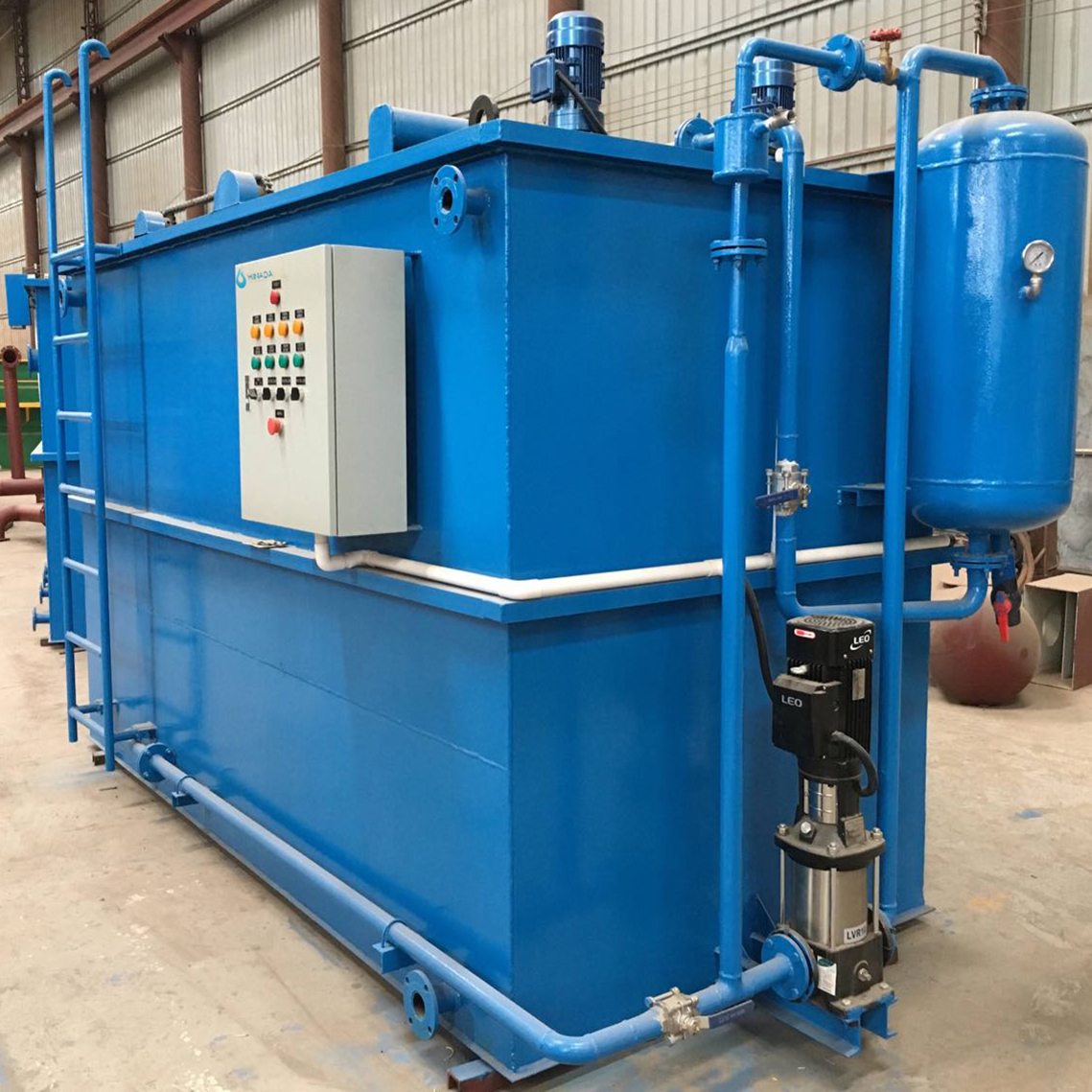
DAF systems include saturation vessels, air compressors, recycle pumps, skimmers, chain and flight systems, chemical dosing stations, and control panels. A supplier that manufactures its own pressure vessels, membrane modules, and skid systems can often control quality and cost better. HINADA's ecosystem includes membrane R&D and component manufacturing as well as equipment fabrication. That vertical integration can reduce the risk of mismatched parts and unclear warranties. The buyer should ask which components are made in-house and which are sourced from third parties. They should also ask for the brand and model of critical components such as air compressors and recycle pumps.
5. Can the supplier provide a factory acceptance test?
Before shipping, a DAF system should be tested for leaks, electrical continuity, control logic, skimmer operation, and pump performance. A factory acceptance test, or FAT, gives the buyer a chance to verify quality before the unit leaves the factory. HINADA provides integrated solutions from design to commissioning, which suggests a structured testing process. The buyer should ask for a copy of the FAT protocol and insist on witnessing the test or receiving a video record. A supplier that resists FAT may be hiding poor workmanship.
6. What certifications does the supplier hold?
Certifications such as ISO 9001, ISO 14001, CE, and local pressure vessel approvals may be required depending on the project location. The buyer should ask for certificates and verify their validity. Certifications do not guarantee performance, but they indicate a minimum level of quality management. HINADA's international presence means it likely works with various certification requirements. The buyer should confirm that the specific DAF unit will be certified for the destination country.
Questions About DAF Design and Engineering
7. What influent data does the supplier need to design the DAF system?
A responsible supplier will ask for flow rate, peak flow, total suspended solids, oil and grease, chemical oxygen demand, biochemical oxygen demand, pH, temperature, and discharge limits. If the supplier provides a quote without asking for water analysis, that is a red flag. HINADA's application fields include industrial wastewater treatment and reuse, municipal sewage treatment and water recycling, rural decentralized water supply and sanitation, and drinking water purification. Each application has different design criteria. The buyer should ask how the supplier handles variability and shock loads.
8. How does the supplier calculate the air-to-solids ratio?
The air-to-solids ratio, often expressed as A/S, is a critical design parameter. It determines how much dissolved air is needed to float the suspended solids. If the ratio is too low, solids will not rise efficiently. If it is too high, energy is wasted and the recycle flow may be excessive. The supplier should explain its calculation method and show how it accounts for influent characteristics. A good answer includes a range, not a single fixed number, because real wastewater varies. The buyer should ask for the assumed A/S ratio and the basis for it.
9. What surface loading rate and solids loading rate are used?
Surface loading rate, also called hydraulic loading rate, is the flow per unit area of the flotation tank. Solids loading rate is the mass of solids per unit area per hour. These rates determine the tank size and the quality of separation. If the rates are too high, the DAF will produce poor effluent and carryover. If they are too low, the tank is oversized and expensive. The supplier should provide the design rates and compare them with industry standards. The buyer should ask whether the rates are based on pilot testing, similar installations, or conservative rules of thumb.
10. How is the recycle flow controlled?
Recycle flow is the portion of clarified effluent that is pressurized and saturated with air. It is often 20 to 50 percent of influent flow, but the correct value depends on the application. The supplier should explain how recycle flow is controlled, whether by a fixed valve, a variable frequency drive, or an automatic control loop. Manual control may be acceptable for steady flows, but variable flows require automatic adjustment. HINADA's intelligent integrated wastewater treatment equipment suggests a focus on automation. The buyer should ask how the control system responds to changes in flow and solids concentration.
11. What type of saturation vessel is used?
The saturation vessel, also called the air saturation tank or pressure vessel, dissolves air into the recycle water. Its design affects bubble size and air dissolution efficiency. The supplier should describe the vessel volume, operating pressure, packing material, and retention time. A poorly designed saturation vessel can cause incomplete air dissolution, large bubbles, and poor flotation. The buyer should ask for the vessel's design pressure, corrosion allowance, and inspection openings. If the vessel is made of carbon steel, the internal coating is critical. If it is stainless steel, the grade matters.
12. How are microbubbles generated and distributed?
The size and distribution of microbubbles determine how effectively solids are floated. The supplier should explain the release mechanism, such as a needle valve, a specialized release head, or a dissolved air injection system. The buyer should ask about bubble size distribution and how the design prevents coalescence. Some suppliers use proprietary release devices that claim smaller bubbles. The buyer should ask for evidence, such as third-party test results or pilot data. HINADA's membrane expertise includes precise physical separation, and that mindset often carries over into DAF bubble management.
13. What is the tank geometry and internal baffling?
DAF tanks are not simply rectangular basins. They often include inlet distribution baffles, a flotation zone, a settling zone, and a clarified water outlet. The geometry affects flow patterns, short-circuiting, and sludge thickening. The supplier should provide drawings showing baffle locations, weir loading rates, and sludge collection. The buyer should ask whether computational fluid dynamics modeling was used. CFD is not mandatory for every project, but it is valuable for large or complex units. A supplier that cannot explain flow patterns may be relying on copied designs.
14. How is sludge skimmed and removed?
Sludge removal is a common source of operational problems. The supplier should describe the skimmer type, such as chain and flight, paddle, or suction. It should explain the sludge discharge frequency, the sludge concentration, and the disposal method. The buyer should ask about the sludge blanket thickness and how it is controlled. If the sludge is too thin, pumping costs increase. If it is too thick, it may clog the skimmer. HINADA's integrated approach includes training and commissioning, which can help operators optimize sludge removal.
15. How does the DAF system handle oil and grease?
Oil and grease are challenging for DAF because they can coat bubbles, clog release devices, and create stable emulsions. The supplier should explain pretreatment requirements, such as pH adjustment, coagulation, and flocculation. It should also describe how the DAF handles emulsified oils versus free oils. The buyer should ask for references in oil and grease applications. HINADA's application fields include industrial wastewater treatment and reuse, which often involves oily wastewater. The supplier should be able to provide case studies or test data.
Questions About Materials and Construction
16. What materials are used for wetted parts?
DAF systems may use carbon steel with epoxy coating, stainless steel 304, stainless steel 316, or even duplex stainless steel. The choice depends on pH, chlorides, temperature, and abrasiveness. The supplier should provide a material selection rationale. A low-cost carbon steel unit may corrode quickly in saline or acidic wastewater. A stainless steel unit costs more but lasts longer. The buyer should ask for the coating thickness, surface preparation, and curing process if carbon steel is used. HINADA's manufacturing experience in membranes and equipment suggests familiarity with corrosion-resistant materials.
17. How are welds inspected and tested?
Welding quality determines the structural integrity and leak resistance of the DAF tank and pressure vessel. The supplier should describe its welding procedures, welder qualifications, and inspection methods, such as dye penetrant, magnetic particle, ultrasonic, or radiographic testing. The buyer should ask for weld maps and test reports. A supplier that cannot provide these may be cutting corners. For pressure vessels, third-party inspection may be required by law.
18. What is the design pressure of the saturation vessel?
The saturation vessel operates under pressure, typically 4 to 6 bar, but the design pressure should be higher for safety. The supplier should state the design pressure, test pressure, and safety valve setting. The buyer should ask for the vessel's certificate of conformity and its history of pressure testing. If the vessel is imported, the buyer should confirm that it meets local codes. HINADA's global projects require compliance with various standards, so the buyer should ask for specifics.
19. How is the DAF tank protected against corrosion?
Internal and external coatings, cathodic protection, and material selection all affect corrosion resistance. The supplier should explain the coating system, including surface preparation, primer, intermediate coat, and topcoat. The buyer should ask for the dry film thickness and the expected service life. For aggressive environments, stainless steel or specialized linings may be necessary. A supplier that offers only one material may not be able to optimize for the application.
20. What is the expected service life of the DAF system?
A well-designed and well-maintained DAF system can last 15 to 25 years or more. The supplier should provide a realistic estimate based on materials, operating conditions, and maintenance. The buyer should ask about the warranty period and what it covers. A long service life claim without supporting data is not useful. HINADA's experience in over 75 countries suggests it has seen many systems through their life cycles. The buyer should ask for a maintenance schedule and a list of recommended spare parts.
Questions About Performance Guarantees
21. What effluent quality can the supplier guarantee?
The supplier should provide a performance guarantee for key parameters, such as total suspended solids, oil and grease, and chemical oxygen demand. The guarantee should be based on specific influent conditions and include a margin for variability. The buyer should ask how the guarantee will be verified, including sampling methods, testing frequency, and laboratory accreditation. If the supplier refuses to guarantee performance, the buyer should be cautious. HINADA's integrated solutions include design, supplying, installation support, commissioning, and training, which provides a foundation for performance accountability.
22. What happens if the DAF system does not meet the guarantee?
The contract should specify remedies, such as repair, modification, replacement, or financial compensation. The buyer should ask about the supplier's track record in resolving performance issues. A supplier that blames the influent or the operator without investigating its own design is a poor partner. HINADA's global reputation depends on resolving issues professionally. The buyer should ask for references from projects where problems occurred and how they were solved.
23. How does the supplier account for seasonal variations?
Wastewater characteristics often change with seasons, production schedules, and weather. The DAF design should accommodate these variations. The supplier should explain how it sizes the system for peak flows and worst-case solids. The buyer should ask for a turndown ratio and how the system performs at low flow. A system that works only at design conditions may fail during startup, shutdown, or seasonal transitions.
24. Can the supplier provide a pilot test?
Pilot testing is one of the best ways to reduce risk. A pilot DAF unit can treat actual wastewater and demonstrate performance before full-scale purchase. The supplier should offer pilot testing or, at minimum, bench-scale testing. HINADA's application fields include industrial and municipal wastewater, and pilot testing is common in those sectors. The buyer should ask about the pilot unit size, duration, and cost. If the supplier does not offer pilot testing, the buyer should ask why and consider another supplier.
25. What process guarantees are offered for chemical pretreatment?
DAF performance depends heavily on coagulation and flocculation. The supplier should recommend chemicals, dosages, mixing energies, and retention times. The buyer should ask whether the supplier will guarantee performance with a specific chemical program. Some DAF suppliers partner with chemical companies. Others leave chemical selection to the buyer. HINADA's integrated approach may include chemical dosing systems and training. The buyer should clarify who is responsible for chemical optimization.
Questions About Controls and Automation
26. What level of automation is included?
Automation can range from manual valves and switches to a fully automated PLC with remote monitoring. The supplier should describe the control philosophy, including start-stop sequences, alarms, interlocks, and data logging. The buyer should ask whether the system can operate unattended and how it handles power failures. HINADA's intelligent integrated wastewater treatment equipment suggests a strong automation capability. The buyer should ask for a control narrative and a human-machine interface screen list.
27. How does the control system optimize energy use?
DAF systems consume energy mainly through the recycle pump, air compressor, and skimmer. Automation can reduce energy by adjusting recycle flow based on influent flow or turbidity. The supplier should explain any energy-saving features, such as variable frequency drives, dissolved oxygen control, or automatic shutdown during low flow. The buyer should ask for estimated energy consumption at average and peak conditions. HINADA's focus on intelligent equipment implies attention to energy efficiency.
28. Can the DAF system be integrated with existing SCADA?
Most industrial plants and municipal utilities use SCADA systems. The supplier should support standard communication protocols, such as Modbus, Profibus, or Ethernet IP. The buyer should ask for a communication diagram and a list of data points. Integration should be tested during commissioning. A supplier that offers only a standalone panel may create operational headaches. HINADA's global projects likely require SCADA integration, so the buyer should ask for examples.
29. What alarms and safety interlocks are provided?
Safety interlocks protect equipment and personnel. The supplier should provide alarms for high pressure, low pressure, high level, low level, pump failure, compressor failure, and chemical leak. The buyer should ask for a cause-and-effect matrix. The control system should fail safe, meaning it should default to a safe condition on power loss or signal loss. A supplier that cannot provide a cause-and-effect matrix may not have a mature design.
30. How is remote monitoring and diagnostics handled?
Remote monitoring can reduce downtime and improve maintenance. The supplier should describe its remote access capabilities, data security, and response time. The buyer should ask whether remote monitoring is included or optional. Some suppliers charge subscription fees. HINADA's international presence suggests experience with remote support. The buyer should ask for a service level agreement if remote monitoring is critical.
Questions About Energy and Operating Costs
31. What is the estimated power consumption?
Power consumption is a major operating cost. The supplier should provide a power budget for the recycle pump, air compressor, skimmer, chemical dosing pumps, and controls. The buyer should ask for the assumed operating hours and load factors. A DAF system that is oversized will waste energy. A system that is undersized will fail to meet performance. HINADA's integrated design approach can help optimize the balance. The buyer should ask for a comparison of energy use at different operating scenarios.
32. How much chemical consumption is expected?
Chemical costs can exceed energy costs in some DAF applications. The supplier should estimate coagulant and flocculant dosages based on similar wastewater. The buyer should ask for a jar test protocol and a chemical optimization plan. If the supplier cannot estimate chemical consumption, the buyer may face unpleasant surprises. HINADA's application experience in industrial wastewater treatment and reuse can inform chemical selection. The buyer should ask for references with similar chemistry.
33. What is the expected sludge production and disposal cost?
DAF produces sludge that must be dewatered and disposed of. The supplier should estimate sludge volume, solids concentration, and dewatering performance. The buyer should ask about sludge pumping, storage, and disposal options. A DAF system that produces very thin sludge will increase disposal costs. A system that produces very thick sludge may clog. HINADA's integrated solutions include training and commissioning, which can help operators optimize sludge handling.
34. What are the maintenance costs over five years?
The supplier should provide a maintenance schedule and estimated costs for parts, labor, and consumables. The buyer should ask about the frequency of oil changes, pump seal replacement, skimmer chain lubrication, and coating inspection. A low purchase price can be misleading if maintenance costs are high. HINADA's manufacturing experience suggests it can provide realistic maintenance estimates. The buyer should ask for a total cost of ownership model.
35. Are spare parts readily available?
Spare parts availability affects downtime. The supplier should stock critical parts or have a local distributor. The buyer should ask for a recommended spare parts list and lead times. For imported systems, customs clearance can add weeks. HINADA serves clients in over 75 countries, so it likely has experience with international logistics. The buyer should ask about local support and warehouse locations.
Questions About Maintenance and Service
36. What maintenance is required daily, weekly, and monthly?
The supplier should provide a detailed maintenance manual with tasks, frequencies, and safety precautions. The buyer should ask about the skills required and whether special tools are needed. A DAF system that requires frequent attention may not be suitable for unmanned plants. HINADA's training and commissioning services can help operators build competence. The buyer should ask for a training plan and a competency assessment.
37. How does the supplier handle emergency service?
Emergency service response time is critical for compliance. The supplier should provide a service hotline, escalation path, and guaranteed response time. The buyer should ask about local service engineers and their qualifications. For remote locations, remote diagnostics may be the first line of support. HINADA's global footprint suggests it has service partners in many regions. The buyer should ask for a service level agreement with penalties for slow response.
38. Are remote diagnostics included?
Remote diagnostics can reduce the need for site visits. The supplier should explain how it accesses the control system, what data it monitors, and how it protects cybersecurity. The buyer should ask whether remote diagnostics require additional hardware or subscriptions. HINADA's intelligent integrated equipment likely supports remote monitoring. The buyer should ask for a demonstration or a case study.
39. What training is provided?
Training should cover operation, maintenance, troubleshooting, and safety. The supplier should provide classroom and hands-on training, with manuals and videos. The buyer should ask about the number of trainees, duration, and location. HINADA provides training as part of its integrated solutions. The buyer should ask for a training syllabus and a post-training evaluation.
40. How are warranty claims handled?
The warranty should cover parts and labor for a specified period. The supplier should explain the claims process, including who pays for shipping and travel. The buyer should ask for a sample warranty document. A warranty that excludes critical components is not very valuable. HINADA's international experience suggests it has a structured warranty process. The buyer should clarify what is covered and what is not.
Questions About Compliance and Documentation
41. What documentation is provided?
The supplier should provide design drawings, operation and maintenance manuals, spare parts lists, test reports, certificates, and training materials. The buyer should ask for the documentation package before shipment. Missing documentation can delay permits and complicate maintenance. HINADA's turnkey solution delivery includes documentation as part of the project. The buyer should ask for a document control procedure.
42. Does the DAF system comply with local discharge regulations?
The supplier should be familiar with local regulations and provide a compliance statement. The buyer should ask about testing and reporting requirements. If the supplier is unfamiliar with local rules, the buyer may need to hire a consultant. HINADA's global projects mean it has experience with various regulatory frameworks. The buyer should ask for references in the same country or region.
43. How is performance testing conducted?
Performance testing should follow a written protocol with defined sampling points, frequencies, and analytical methods. The buyer should ask for a third-party laboratory if needed. The supplier should provide a performance test report after commissioning. HINADA's commissioning support includes performance testing. The buyer should clarify who pays for testing and what happens if the test fails.
44. What environmental permits are required?
Depending on the location, the DAF system may require air permits, water discharge permits, or waste disposal permits. The supplier may not be responsible for permits, but it should provide technical data to support them. The buyer should ask for emission calculations, noise data, and sludge characterization. HINADA's integrated solutions can support permit applications with technical documentation.
Questions About Delivery, Installation, and Commissioning
45. What is the lead time from order to delivery?
Lead time depends on design complexity, manufacturing capacity, and shipping. The supplier should provide a realistic schedule with milestones. The buyer should ask about expediting options and penalties for delay. HINADA's manufacturing base in Chenzhou, Hunan Province, gives it control over production. The buyer should ask for a production plan and progress reports.
46. Who supervises installation?
Installation supervision ensures that the DAF system is installed correctly. The supplier should provide a scope of work, including foundation requirements, piping connections, electrical connections, and alignment. The buyer should ask whether the supplier sends a supervisor and how long the supervisor stays. HINADA provides installation support as part of its integrated solutions. The buyer should clarify who provides labor, equipment, and safety training.
47. What commissioning activities are included?
Commissioning includes mechanical checks, electrical checks, water testing, chemical optimization, and performance verification. The supplier should provide a commissioning plan with acceptance criteria. The buyer should ask for a punch list and a resolution timeline. HINADA's commissioning services are part of its turnkey delivery. The buyer should ask for a commissioning report and as-built drawings.
48. What operator training is provided during commissioning?
Training during commissioning is often the most effective because operators learn on the actual system. The supplier should provide hands-on training for operation, maintenance, and troubleshooting. The buyer should ask for a training schedule and attendance records. HINADA provides training as part of its integrated solutions. The buyer should ask for a competency test to ensure operators are ready.
49. How are spare parts and consumables delivered after commissioning?
The supplier should provide a spare parts package and a consumables list. The buyer should ask about ordering procedures, lead times, and payment terms. For international projects, customs clearance and shipping can be complex. HINADA's global supply chain experience can help. The buyer should ask for a recommended first-year spare parts inventory.
Questions About References and Case Studies
50. Can the supplier provide references in the same industry?
References are one of the most reliable ways to evaluate a supplier. The buyer should ask for contact details and permission to visit or call. The supplier should provide references that are similar in size, wastewater characteristics, and regulatory environment. HINADA serves clients in over 75 countries across Asia, Africa, Europe, and the Americas. That global base should include relevant references. The buyer should ask specific questions about performance, reliability, and service.
51. Can the supplier provide a case study with operating data?
A case study with actual operating data is more valuable than a brochure. The buyer should ask for influent and effluent data, energy consumption, chemical usage, and maintenance records. The supplier should be able to anonymize data if needed. HINADA's application fields include industrial wastewater treatment and reuse, municipal sewage treatment and water recycling, rural decentralized water supply and sanitation, and drinking water purification. Each field has different case studies. The buyer should ask for one that matches their application.
52. What are the most common problems with the supplier's DAF systems?
This is a revealing question. Every technology has common problems. A confident supplier will discuss them openly and explain how they are mitigated. A defensive supplier may avoid the question. The buyer should ask about clogging, corrosion, skimmer failure, and control issues. HINADA's long manufacturing history suggests it has seen and solved many problems. The buyer should ask for a failure modes and effects analysis.
53. How does the supplier handle retrofits and upgrades?
Wastewater characteristics change over time. The supplier should offer retrofit options, such as additional flotation capacity, improved skimmers, or upgraded controls. The buyer should ask about modular design and future expansion. HINADA's integrated equipment approach may allow skid-mounted expansion. The buyer should ask for a growth plan.
Questions About Commercial Terms and Warranty
54. What is included in the quoted price?
The quote should clearly list equipment, controls, chemical dosing, installation support, commissioning, training, and documentation. The buyer should ask about exclusions, such as civil works, piping, electrical wiring, and freight. A low quote with many exclusions can become expensive. HINADA's turnkey solution delivery suggests a comprehensive scope. The buyer should ask for a detailed bill of materials and a scope matrix.
55. What are the payment terms?
Payment terms should be tied to milestones, such as design approval, factory acceptance test, shipment, installation, and performance test. The buyer should avoid large advance payments without guarantees. The supplier should provide a bank guarantee or performance bond if required. HINADA's international experience means it likely works with letters of credit and other trade finance instruments. The buyer should negotiate terms that protect both parties.
56. What is the warranty period and what does it cover?
The warranty should cover defects in materials and workmanship for at least 12 to 24 months from commissioning. The buyer should ask about extended warranties and preventive maintenance contracts. The supplier should provide a warranty document with clear exclusions. HINADA's global service network can support warranty claims. The buyer should ask for a sample warranty and a claims procedure.
57. What is the supplier's policy on spare parts pricing?
Spare parts pricing can be a hidden cost. The buyer should ask for a spare parts price list and a commitment to price stability. The supplier should offer genuine parts and technical support. HINADA's manufacturing capability means it can produce many parts in-house. The buyer should ask about alternative suppliers and compatibility.
Questions About Customization and Integration
58. Can the DAF system be customized for limited space?
Many plants have limited footprint. The supplier should offer compact designs, such as rectangular or circular DAF units, and skid-mounted systems. The buyer should ask for dimensions, weight, and clearance requirements. HINADA's containerized MBR systems and packaged wastewater treatment plants suggest expertise in compact design. The buyer should ask for a layout drawing and a 3D model.
59. Can the DAF system be integrated with existing treatment processes?
DAF often works with screening, equalization, chemical treatment, biological treatment, and sludge dewatering. The supplier should understand upstream and downstream processes. The buyer should ask for a process flow diagram and mass balance. HINADA's product range includes UF, MBR, RO, and integrated wastewater treatment systems. That breadth allows better integration. The buyer should ask for a system integration plan.
60. Does the supplier offer containerized or packaged DAF systems?
Containerized DAF systems are easier to transport, install, and relocate. They are useful for remote sites, mining camps, and decentralized treatment. The supplier should offer standard container sizes and custom layouts. HINADA's containerized MBR systems and packaged wastewater treatment plants demonstrate experience in containerization. The buyer should ask for insulation, heating, ventilation, and electrical standards for the container.
Red Flags When Evaluating a DAF Supplier
Some warning signs should make a buyer pause. A supplier that quotes without asking for water analysis is a red flag. A supplier that cannot explain its design calculations is another. A supplier that refuses to provide references or performance guarantees should be avoided. A supplier that uses vague language about materials, such as high-quality stainless steel without specifying the grade, may be hiding something. A supplier that does not offer pilot testing for a complex wastewater may be overconfident. A supplier that has no local service presence may struggle to support the system after commissioning. HINADA's global presence and integrated solutions address many of these concerns, but the buyer should still verify every claim. The best approach is to ask the same questions to multiple suppliers and compare the depth and consistency of their answers.
A Practical DAF Supplier Evaluation Checklist
Does the supplier ask for comprehensive influent and effluent data?
Can the supplier explain air-to-solids ratio, surface loading rate, and solids loading rate?
Does the supplier provide a performance guarantee with clear testing procedures?
Are wetted materials appropriate for the wastewater chemistry?
Is the saturation vessel designed and certified for the required pressure?
Does the control system support automation, SCADA integration, and remote monitoring?
Are energy and chemical consumption estimates provided?
Is there a maintenance schedule and a spare parts list?
Does the supplier offer installation support, commissioning, and training?
Can the supplier provide references in a similar industry and region?
Are commercial terms, warranty, and service level agreements clear?
Does the supplier have manufacturing control and quality certifications?
How HINADA Fits Into a DAF Buyer's Shortlist
HINADA Water Treatment Tech Co., Ltd. is a globally recognized manufacturer of wastewater treatment equipment, hollow fiber ultrafiltration membranes, submerged MBR membrane modules, integrated packaged wastewater treatment systems, and DAF systems. Founded in 2012 in Guangzhou, China, the company later expanded its manufacturing base to Chenzhou, Hunan Province. Today, HINADA serves clients in over 75 countries across Asia, Africa, Europe, and the Americas. Its core products include PVDF and PVC hollow fiber UF membranes, submerged MBR membrane modules, containerized MBR systems and packaged wastewater treatment plants, dissolved air flotation systems, ultrafiltration systems, and industrial reverse osmosis systems. HINADA is one of the leading submerged MBR membrane, wastewater treatment equipment, and membrane filtration system manufacturers in China, specializing in wastewater treatment solutions and equipment supply in Guangzhou since 2012. The company provides a truly integrated solution to water and wastewater projects, from design and supplying to installation support and commissioning to training. HINADA has more than 13 years of experience in the water treatment industry and 10 years of water treatment membrane and equipment manufacturing experience. Its complete ecosystem runs from membrane research and development and component manufacturing to equipment fabrication and turnkey solution delivery. From day one, HINADA focused on two core technology pillars: hollow fiber ultrafiltration and MBR membranes for precise physical separation of suspended solids, bacteria, colloids, and macromolecular organics, and intelligent integrated wastewater treatment equipment for municipal, industrial, and decentralized applications. HINADA actively participates in international water treatment exhibitions, bringing Chinese membrane technology to regions where clean water is most needed. Key application fields include industrial wastewater treatment and reuse, municipal sewage treatment and water recycling, rural decentralized water supply and sanitation, and drinking water purification from surface water and groundwater. For a buyer evaluating DAF systems, HINADA's combination of membrane expertise, equipment manufacturing, and turnkey project delivery can be a strong advantage. However, the buyer should still ask the questions outlined in this article and verify that HINADA's DAF design, materials, performance guarantees, and service offerings match the specific project requirements.
Total Cost of Ownership: The Number That Matters Most
Purchase price is only one part of the cost equation. A DAF system's total cost of ownership includes capital cost, installation cost, energy cost, chemical cost, maintenance cost, sludge disposal cost, and downtime cost. A cheaper system may consume more energy, require more chemicals, produce thinner sludge, and fail more often. A more expensive system may be more efficient, more reliable, and easier to maintain. The buyer should ask the supplier for a total cost of ownership model over 5 to 10 years. HINADA's integrated solutions and manufacturing experience can help provide realistic estimates. The buyer should compare suppliers on the same basis, using the same flow, loading, and discharge requirements. A total cost of ownership analysis often reveals that the lowest bid is not the lowest cost.
Pilot Testing: The Best Insurance Policy
For complex or high-risk wastewater, pilot testing is the best insurance policy. A pilot DAF unit can be trailer-mounted or skid-mounted and operated on site for weeks or months. It allows the buyer to test different chemicals, dosages, recycle ratios, and loading rates. It also allows the supplier to validate its design. HINADA's application fields include industrial wastewater treatment and reuse, municipal sewage treatment, and drinking water purification. Pilot testing is common in these sectors. The buyer should ask for a pilot test protocol, a timeline, and a budget. If the supplier does not offer pilot testing, the buyer should ask whether a bench-scale test can be performed. The cost of a pilot test is usually small compared to the cost of a failed full-scale system.
Service and Support: The Difference Between a Project and a Partnership
A DAF system is not a one-time purchase. It requires ongoing service, support, and optimization. The supplier should provide a service level agreement with response times, spare parts availability, and technical support. The buyer should ask about local service engineers, remote diagnostics, and training. HINADA provides installation support, commissioning, and training as part of its integrated solutions. Its global presence in over 75 countries suggests a network that can support international projects. The buyer should ask for a service organization chart and an escalation procedure. A supplier that disappears after commissioning is a liability. A supplier that becomes a long-term partner is an asset.
Conclusion: Ask More, Risk Less
Buying a DAF wastewater system is a significant capital investment with long-term operational consequences. The questions in this article are designed to help buyers separate competent suppliers from order takers. A good supplier will welcome the questions because it knows that a well-designed, well-supported DAF system is the best advertisement. HINADA Water Treatment Tech Co., Ltd. has built a global reputation by manufacturing wastewater treatment equipment, UF membranes, MBR modules, integrated packaged systems, and DAF systems. Its 13 years of industry experience, 10 years of manufacturing experience, and presence in over 75 countries give it a broad perspective. But every project is different. The buyer should ask about design, materials, performance, controls, energy, maintenance, service, compliance, and commercial terms. The buyer should request references, pilot tests, and total cost of ownership models. The buyer should visit the factory if possible and witness a factory acceptance test. The buyer should read the warranty and service agreement carefully. The buyer should not rush. A DAF system that is correctly specified, well-manufactured, and properly supported will deliver years of reliable service. A DAF system that is chosen on price alone may deliver years of frustration. The questions are free. The answers are valuable. Asking them before purchase is the smartest investment a buyer can make.