How Does a Reverse Osmosis System Work? | Industrial RO Guide
Nov 10, 2026
How Does a Reverse Osmosis System Work? A Complete Guide
Learn how a reverse osmosis system works, including pre-treatment, high-pressure pumps, RO membranes, and the main components of an industrial RO water treatment plant.
Reverse osmosis (RO) is a widely used water purification technology for removing dissolved salts, minerals, and other impurities from water. It is commonly applied in industrial water treatment, drinking water production, and process water preparation.
But how does an industrial reverse osmosis system actually work? What happens to the water before it passes through the RO membrane, and what equipment is needed to keep the system running efficiently?
Understanding the RO water treatment process can help you choose the right equipment and maintain consistent water quality.
1. How Does Reverse Osmosis Work?
Reverse osmosis works by applying pressure to force water through a semi-permeable membrane. The membrane allows water molecules to pass through while rejecting most dissolved salts, minerals, and other contaminants.
A typical reverse osmosis water treatment process follows these steps:
Raw Water → Pre-treatment → High-pressure Pump → RO Membrane → Permeate Water + Concentrate Water
Step 1: Raw Water Supply
Raw water enters the RO system from a well, storage tank, municipal supply, or industrial water source.
Its quality can vary depending on the source. It may contain suspended solids, hardness, chlorine, dissolved salts, and other impurities. These characteristics need to be evaluated before selecting the appropriate RO system.
Step 2: Pre-treatment Protects the RO Membrane
Pre-treatment is an important part of any reverse osmosis water treatment plant. Its main purpose is to remove substances that may cause membrane fouling, scaling, or damage.
Depending on the raw water quality, pre-treatment may include:
Sediment filtration: Removes sand, rust, dirt, and suspended particles
Activated carbon filtration: Reduces chlorine and certain organic compounds that may damage chlorine-sensitive RO membranes.
Water softening: Reduces calcium and magnesium hardness to help prevent scale formation.
Cartridge filtration: Provides additional particle protection before water enters the RO membrane.
The exact pre-treatment configuration depends on the feed water analysis and the required treated-water quality.
Step 3: High-pressure Pump Creates the Required Pressure
After pre-treatment, water enters the high-pressure pump.
The pump increases water pressure to overcome the natural osmotic pressure and push water through the RO membrane. The required operating pressure depends on feed water salinity, membrane specifications, temperature, and system design.
Proper pressure control is essential for maintaining stable water production and system performance.
Step 4: RO Membrane Separates Water from Dissolved Impurities
The RO membrane is the core component of the system.
Under pressure, water passes through the semi-permeable membrane, while most dissolved salts, hardness ions, and other rejected substances remain in the concentrate stream.
This separation process produces purified water with a significantly lower dissolved-solids concentration.
Step 5: Two Water Streams Are Produced
After passing through the RO membrane, the feed water is separated into two streams:
Permeate (Product Water): The purified water collected for storage or further treatment, depending on the final water quality requirements.
Concentrate (Reject Water): The remaining water containing concentrated salts and rejected impurities, which is discharged or managed according to the system design.
The recovery rate determines how much feed water is converted into product water.
2. What Equipment Makes Up an Industrial RO System?
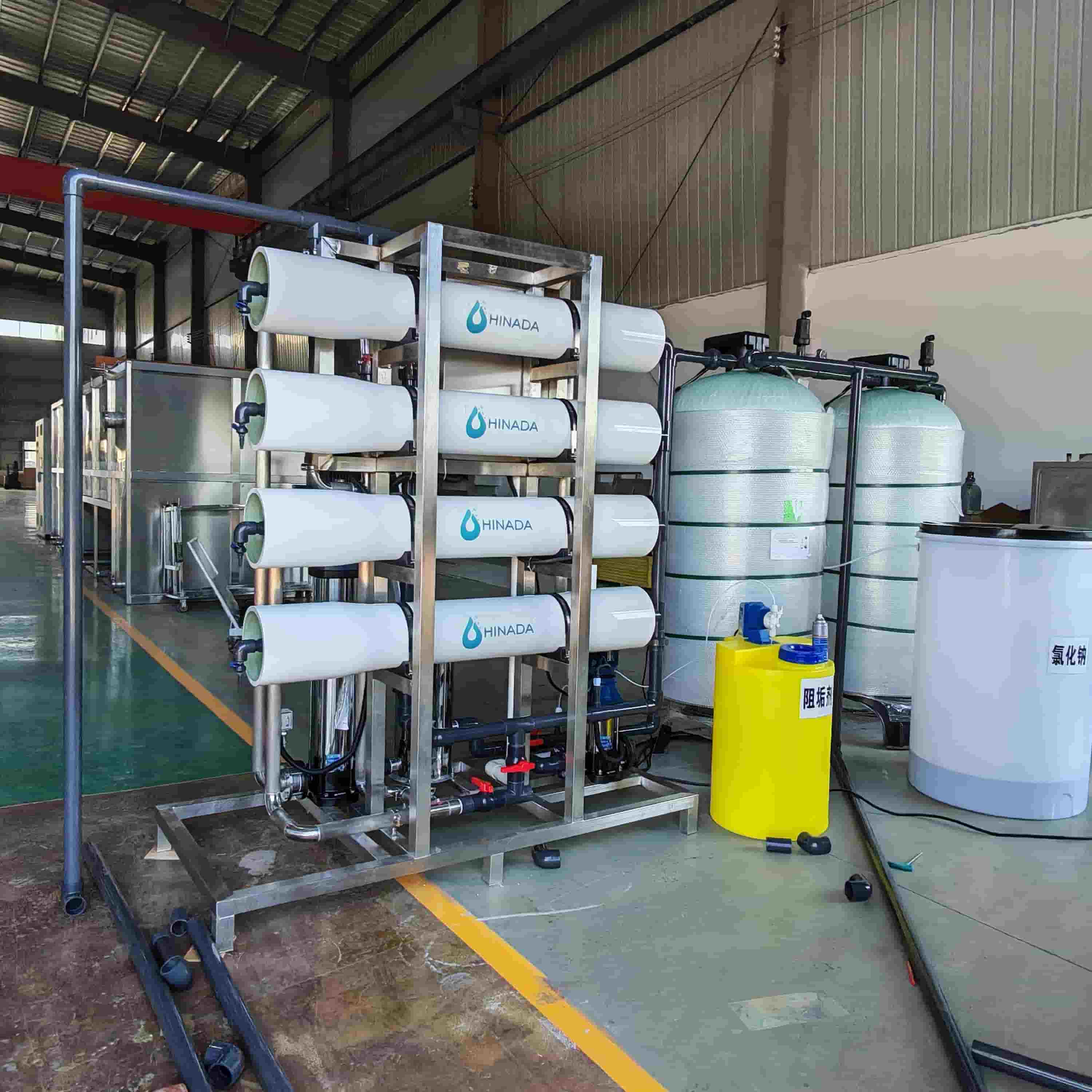
An industrial reverse osmosis system is more than just an RO membrane. It consists of several components working together to ensure stable operation, reliable water quality, and membrane protection.
The main components typically include:
Feed Water Pump: Supplies raw water to the treatment system at the required flow rate and pressure.
Pre-treatment Filters: Remove suspended solids, chlorine, hardness, and other substances that may affect membrane performance.
High-pressure Pump: Provides the pressure required for the reverse osmosis process.
RO Membrane Elements: Perform the main separation process by allowing water to pass through while rejecting most dissolved salts and impurities.
Pressure Vessels (Membrane Housings): Hold the RO membrane elements and withstand the operating pressure.
Flow Meters and Pressure Gauges: Monitor water flow and operating pressure to help operators assess system performance.
Control Panel: Manages system operation and monitors important parameters, such as pressure, flow, and operating status.
Water Storage Tank: Stores the permeate water for subsequent use or further treatment.
The configuration and capacity of each component should be selected according to the feed water quality, required production capacity, and final water application.
3. Why Is Pre-treatment Important for RO System Performance?
Pre-treatment directly affects the operating performance and service life of RO membranes.
Without suitable pre-treatment, suspended solids can accumulate on the membrane surface, hardness minerals may form scale, and residual chlorine can damage chlorine-sensitive membrane materials.
These problems may lead to:
Increased membrane fouling and scaling.
Higher operating pressure and energy consumption.
Reduced permeate flow and water production.
More frequent chemical cleaning and maintenance.
Shorter membrane service life.
For this reason, a proper feed water analysis and pre-treatment design should always be considered before installing an industrial RO system.
4. Choosing the Right Reverse Osmosis Water Treatment System
Not every water source requires the same RO system configuration. The selection should be based on several factors:
Raw water source and water quality analysis.
Required permeate capacity (m³/day).
Required treated-water quality and application.
Operating pressure and expected recovery rate.
Available installation space and operating conditions.
For industrial applications, a properly designed RO water treatment plant can help provide a stable supply of purified water for manufacturing, boiler feed water, process water, and other applications.
At Hinada, we provide industrial reverse osmosis systems and customized water treatment solutions based on different water quality conditions and customer requirements.
If you are planning an RO water treatment project, sharing your raw water analysis, required capacity, and application will help determine a suitable system configuration.
Read More