Choosing a Wastewater Treatment System factory for Long-Term Support
Choosing a Wastewater Treatment System factory for Long-Term Support
September 30, 2026
Author
Solution Provider, through a professional technical team, we provide customers with targeted equipment selection recommendations and comprehensive after-sales services, winning the trust and recognition of customers.
Sarah M.
This article explores how to choose a wastewater treatment system factory for long-term support, emphasizing that the true cost of a treatment plant extends far beyond initial procurement. It explains why short-term purchasing decisions often create hidden costs, including incompatible spare parts, incomplete documentation, operator errors, and costly downtime. Long-term support is defined through design continuity, spare parts availability, membrane replacement programs, commissioning, training, and remote diagnostics. The article outlines practical assessment criteria, such as vertical integration, membrane R&D, global project references, and lifecycle service agreements. It also discusses total cost of ownership, scalability, compliance, sustainability, and common pitfalls. HINADA Water Treatment Tech Co., Ltd. is presented as an illustrative example. Founded in 2012 in Guangzhou, China, and later expanding to Chenzhou, Hunan Province, HINADA manufactures hollow fiber UF membranes, submerged MBR modules, containerized MBR systems, packaged wastewater treatment plants, DAF systems, UF systems, and industrial RO systems. The company serves clients in over 75 countries and has more than 13 years of water treatment experience, including 10 years of membrane and equipment manufacturing. Its two core technology pillars are hollow fiber ultrafiltration (UF/MBR) membranes and intelligent integrated wastewater treatment equipment. HINADA provides integrated solutions from design and supply to installation support, commissioning, and training. The article concludes that the best factory is not the cheapest but the one that remains responsive, technically competent, and committed throughout the plant's lifecycle. Project owners are encouraged to conduct thorough due diligence, verify references, review training and spare parts plans, and build a partnership that lasts for decades.
Choosing a Wastewater Treatment System factory for Long-Term Support
For many project owners, the selection of a wastewater treatment system factory is treated as a procurement event rather than a long-term partnership. The initial quotation, delivery schedule, and headline technology specifications often dominate the decision. Yet the true cost of a wastewater treatment plant is not measured only at commissioning. It is measured over ten, fifteen, or twenty years of operation, maintenance, membrane replacement, process optimization, and regulatory change. A factory that can provide long-term support becomes an extension of the owner's engineering and operations team. A factory that cannot becomes a source of risk.
This article examines how to choose a wastewater treatment system factory for long-term support. It considers technical depth, manufacturing integration, service infrastructure, spare parts availability, training, documentation, and the ability to adapt as regulations and production demands evolve. It also uses HINADA Water Treatment Tech Co., Ltd. (HINADA) as an illustrative example of a manufacturer that has built its business around long-term support rather than one-off equipment sales.
HINADA is a globally recognized manufacturer of wastewater treatment equipment, hollow fiber ultrafiltration (UF) membranes, submerged MBR membrane modules, integrated packaged wastewater treatment systems, and DAF systems. Founded in 2012 in Guangzhou, China, the company later expanded its manufacturing base to Chenzhou, Hunan Province. Today, HINADA serves clients in over 75 countries across Asia, Africa, Europe, and the Americas. That geographic reach is not merely a sales achievement; it is a support network that must function across languages, time zones, and regulatory environments.
undefined
Why Long-Term Support Defines the True Value of a Wastewater Treatment Factory
Wastewater treatment is not a static discipline. Influent characteristics change, discharge standards tighten, energy prices fluctuate, and production processes are modified. A factory that only delivers equipment and disappears after commissioning leaves the owner to solve every future problem alone. In contrast, a factory that offers long-term support can help the owner anticipate changes, source compatible components, and optimize performance without costly trial and error.
Long-term support includes far more than a warranty card. It includes access to original spare parts, membrane replacement programs, process engineering advice, remote diagnostics, operator training, and upgrades that extend the life of the plant. It also includes documentation that remains accurate and usable years after the project is handed over. When a factory treats support as a core product, the owner gains predictability and lower total cost of ownership.
The alternative is a fragmented supply chain. A pump fails, and the owner must find a compatible replacement. A membrane module reaches the end of its life, and the original supplier no longer produces that model. A control system requires a software update, but the integrator has moved on. Each of these events introduces downtime, emergency procurement costs, and operational uncertainty. Choosing a factory with long-term support capabilities is therefore a risk-management decision, not just a purchasing decision.
The Hidden Costs of Short-Term Equipment Procurement
Short-term procurement focuses on the lowest capital cost. This approach can appear attractive during budgeting, but it often shifts costs into the future. Non-standard components may be cheaper initially but expensive to replace. Incomplete documentation may save the factory time but cost the owner weeks of reverse engineering. Limited training may reduce the factory's commissioning effort but increase operator errors and energy consumption.
Another hidden cost is compatibility. Wastewater treatment systems often combine membranes, biological processes, chemical dosing, aeration, and sludge handling. If the factory does not understand how these elements interact, the owner may face poor effluent quality, membrane fouling, or excessive chemical use. A factory with long-term support capabilities typically has cross-disciplinary engineering teams that can diagnose system-level problems rather than only component-level failures.
Downtime is perhaps the most visible hidden cost. For an industrial facility, every hour of wastewater treatment downtime can disrupt production, trigger regulatory penalties, or require expensive tanker disposal. For a municipal plant, it can lead to environmental discharge and public health risks. Long-term support reduces downtime through preventive maintenance planning, fast spare parts delivery, and remote troubleshooting that resolves issues before they become failures.
What Long-Term Support Means in Practice
Long-term support is not a vague promise. It can be defined, measured, and verified. A factory that is serious about support will have documented processes for spare parts inventory, technical assistance, warranty administration, and training. It will also have a track record of responding to emergencies and a clear escalation path for complex technical issues.
Design and Engineering Continuity
Support begins at the design stage. A factory that plans for long-term support will design systems with accessible components, standard interfaces, and sufficient redundancy. It will document design calculations, piping and instrumentation diagrams, electrical schematics, and control logic. It will also consider future capacity expansion so that the owner can add modules or membranes without rebuilding the entire plant.
Engineering continuity means that the factory retains project knowledge over time. When a question arises five years after commissioning, the factory should be able to retrieve the original design assumptions, material specifications, and commissioning data. This is difficult for trading companies that outsource engineering. It is more achievable for manufacturers that control their own design, fabrication, and membrane production.
Spare Parts and Membrane Replacement
Membranes are consumables, but their replacement cycle can be extended through proper operation and maintenance. A factory that manufactures its own hollow fiber UF membranes and MBR membrane modules can provide consistent replacement products. It can also advise on cleaning protocols, backwash intervals, and chemical compatibility. When membranes eventually need replacement, the owner can source them from the original manufacturer rather than searching for aftermarket alternatives.
Spare parts management is equally important. Pumps, valves, blowers, sensors, and control components should be selected with long-term availability in mind. A factory with global experience understands which brands and models have reliable supply chains. It can also maintain a recommended spare parts list and, in some cases, hold critical spares in regional warehouses.
Commissioning, Training, and Operational Assistance
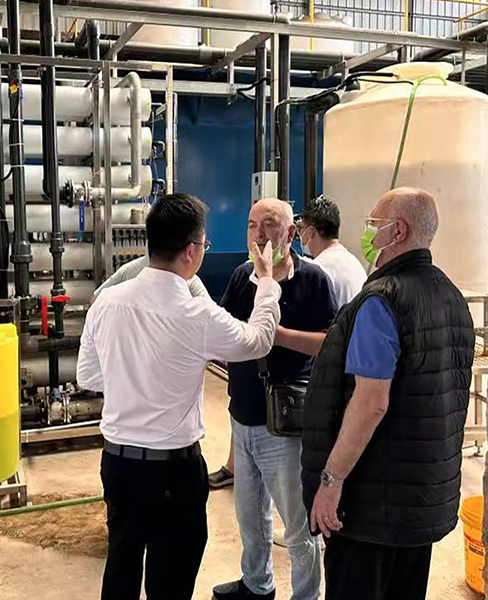
Commissioning is the bridge between construction and operation. A factory that provides long-term support will not simply start the plant and leave. It will train operators on normal operation, emergency procedures, laboratory testing, and maintenance schedules. It will also provide troubleshooting guides and contact information for technical support.
Training should be practical and repeated. Operator turnover is common, especially in decentralized or rural applications. A factory that offers refresher training, remote sessions, and updated manuals helps the owner maintain institutional knowledge. This reduces the risk of operational errors that can damage membranes or disrupt biological treatment.
Evaluating a Factory Beyond the Initial Quotation
When comparing wastewater treatment system factories, buyers should look beyond price. The following criteria help identify factories that are built for long-term support. These criteria are not limited to large multinationals; specialized manufacturers such as HINADA can also meet them when they invest in vertical integration and service infrastructure.
Manufacturing Depth and Vertical Integration
Vertical integration means that the factory controls key stages of production, from membrane casting to module assembly to equipment fabrication. This control improves quality consistency and reduces dependence on third-party suppliers. It also makes it easier to customize designs and respond to spare parts requests. HINADA, for example, has built a complete ecosystem from membrane R&D and component manufacturing to equipment fabrication and turnkey solution delivery.
A factory with manufacturing depth can often provide better lead times and more flexible customization. It can also investigate failures more effectively because it understands how its components were made. When a membrane module underperforms, the factory can trace the issue back to casting parameters, potting materials, or operating conditions rather than offering generic advice.
Membrane R&D and Component Control
Membranes are the heart of many advanced wastewater treatment systems. Hollow fiber UF and MBR membranes determine filtration performance, fouling resistance, and chemical tolerance. A factory that invests in membrane R&D can improve products over time and support older modules with compatible replacements. It can also advise on pretreatment requirements that protect membranes and extend their life.
HINADA focuses on two core technology pillars: hollow fiber ultrafiltration (UF/MBR) membranes for precise physical separation of suspended solids, bacteria, colloids, and macromolecular organics; and intelligent integrated wastewater treatment equipment for municipal, industrial, and decentralized applications. This dual focus allows the company to match membrane technology with process design and equipment automation.
Global Project Experience and References
Long-term support is tested by diversity. A factory that has served clients in over 75 countries has encountered different climates, regulations, power supplies, and labor conditions. This experience informs more robust designs and more practical support. It also means the factory is likely to have documentation in multiple languages and experience with international logistics.
References are essential. Buyers should ask for projects similar in scale, influent characteristics, and discharge requirements. They should also ask about post-commissioning support: How quickly were spare parts delivered? How were membrane replacements handled? Was remote assistance effective? A factory that can provide detailed references is more likely to be a reliable long-term partner.
Technology Pillars That Support Long-Term Performance
Long-term support is easier when the underlying technology is robust, modular, and well understood. Factories that specialize in a few core technologies can develop deeper expertise and provide more consistent support than generalists who assemble many unrelated products.
Hollow Fiber Ultrafiltration and MBR Membranes
Hollow fiber UF membranes are used for drinking water purification, industrial water treatment, and pretreatment for reverse osmosis. Submerged MBR membrane modules combine membrane filtration with biological treatment, producing high-quality effluent in a compact footprint. These technologies are central to water reuse and decentralized treatment.
A factory that manufactures PVDF and PVC hollow fiber UF membranes can control fiber strength, pore size, hydrophilicity, and chemical resistance. It can also provide guidance on operating flux, backwash frequency, and cleaning chemicals. For MBR systems, the factory can support biological process optimization, aeration design, and sludge management. This integrated knowledge reduces the risk of membrane fouling and premature replacement.
Integrated packaged wastewater treatment systems and containerized MBR systems are pre-engineered and ready to install. They are ideal for decentralized applications, temporary facilities, and projects with limited civil construction. Intelligent controls can automate aeration, dosing, filtration, and backwashing, reducing operator workload and improving consistency.
Long-term support for integrated equipment includes software updates, remote monitoring, and modular expansion. A factory that designs its own control systems can provide better diagnostics and faster troubleshooting. It can also adapt the equipment to new discharge standards by adjusting process parameters or adding treatment stages.
Core Product Portfolio and Application Fit
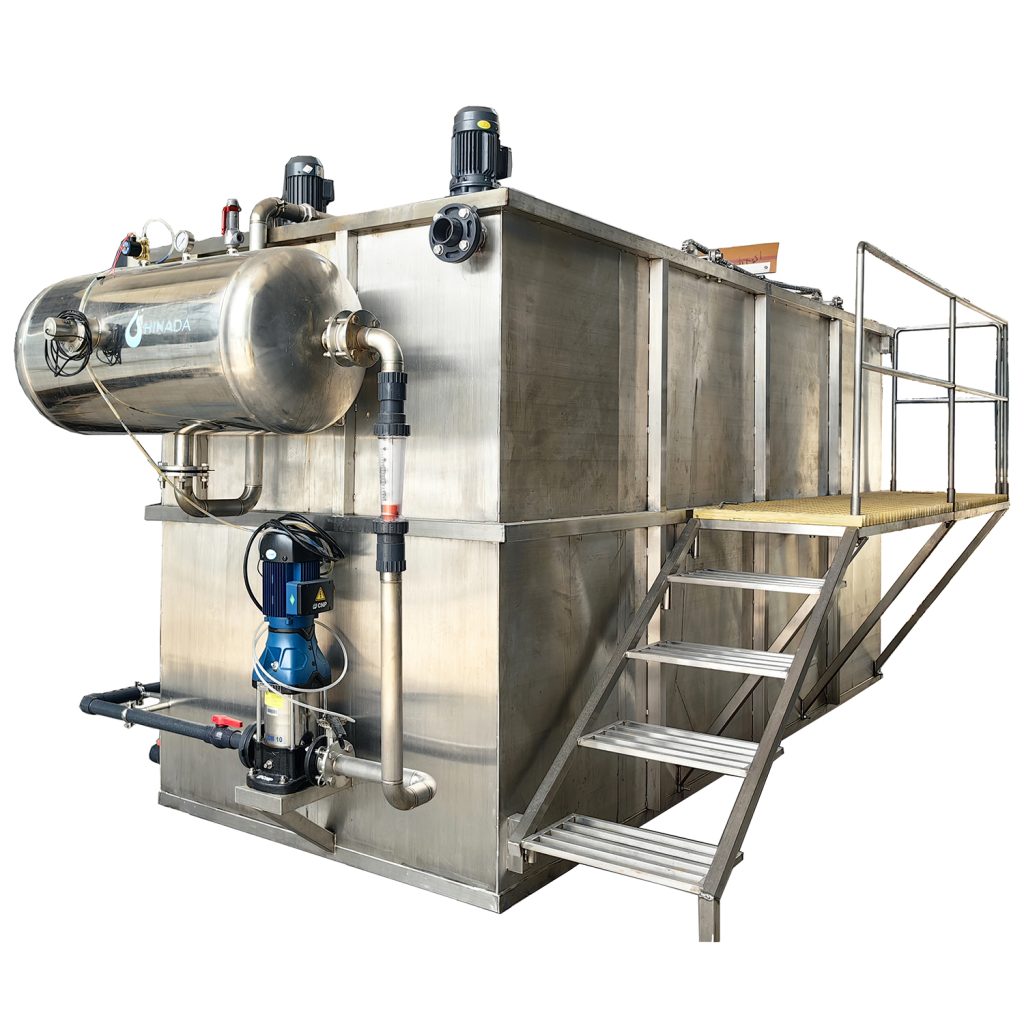
HINADA's product portfolio illustrates how a wastewater treatment factory can support multiple application fields. The company provides PVDF/PVC hollow fiber UF membranes, MBR membrane modules (submerged), containerized MBR systems and packaged wastewater treatment plants, dissolved air flotation (DAF) systems, ultrafiltration (UF) systems, and industrial reverse osmosis (RO) systems. This range allows the factory to serve as a single source for many water and wastewater needs.
PVDF/PVC hollow fiber UF membranes for robust filtration and long service life.
Submerged MBR membrane modules for compact, high-quality biological treatment.
Containerized MBR systems and packaged wastewater treatment plants for rapid deployment.
Dissolved air flotation (DAF) systems for removing fats, oils, grease, and suspended solids.
Ultrafiltration (UF) systems for pretreatment, water reuse, and drinking water production.
Industrial reverse osmosis (RO) systems for desalination and high-purity water applications.
Each product line has its own support requirements. DAF systems need chemical dosing optimization and sludge handling advice. RO systems need membrane cleaning, pretreatment monitoring, and energy management. UF systems need backwash and integrity testing. MBR systems need biological process control and membrane cleaning. A factory that understands these interactions can provide holistic support rather than isolated product support.
Application Fields Where Long-Term Support Matters Most
Different applications present different long-term support challenges. A factory that has experience across these fields can anticipate problems and design accordingly.
Industrial Wastewater Treatment and Reuse
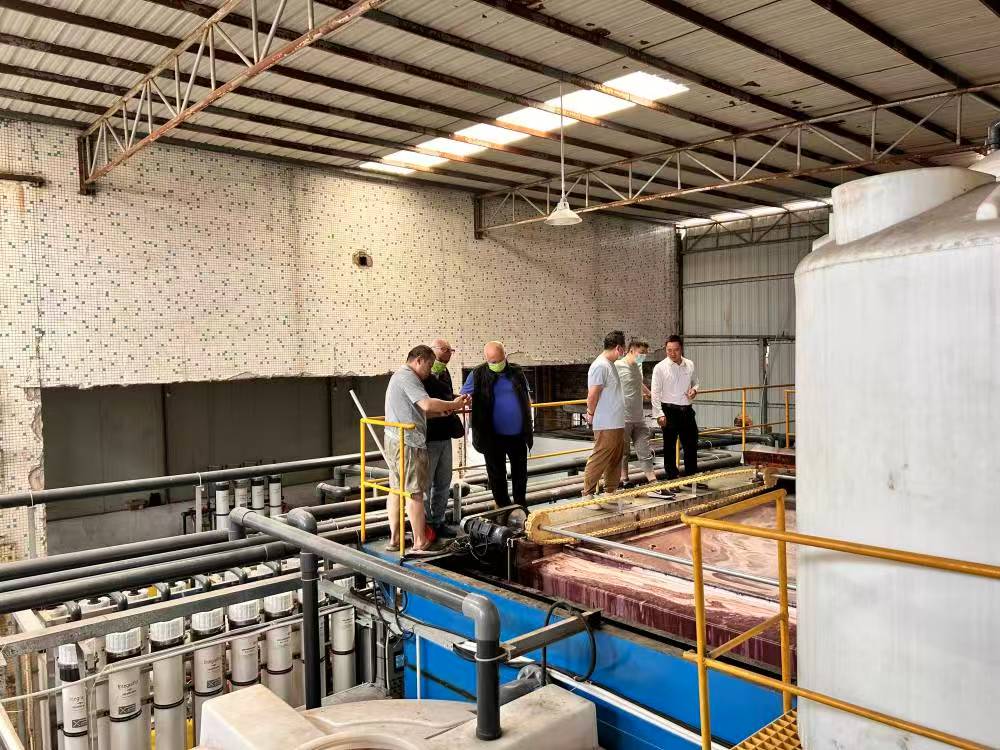
Industrial wastewater varies widely by industry. Textile, food and beverage, pharmaceutical, chemical, and automotive facilities all produce different contaminants. Long-term support in industrial applications includes treatability testing, pilot trials, process optimization, and compliance monitoring. Factories must also help owners manage changing production schedules and raw materials.
Water reuse is increasingly important for industrial facilities facing water scarcity or discharge limits. A factory that provides UF, RO, and MBR technologies can help design a reuse train that meets specific water quality requirements. It can also support ongoing membrane replacement and energy optimization, which are critical for the economic viability of reuse.
Municipal Sewage Treatment and Water Recycling
Municipal plants must meet public health and environmental standards while managing aging infrastructure and population growth. Long-term support includes capacity expansion, nutrient removal upgrades, and sludge management. Factories that provide modular MBR systems can help municipalities expand treatment capacity without acquiring large tracts of land.
Water recycling from municipal sewage is becoming more common for irrigation, industrial cooling, and groundwater recharge. This requires advanced treatment with UF and RO, plus rigorous monitoring. A factory with membrane manufacturing expertise can supply consistent products and support the complex operation of reuse systems.
Rural Decentralized Water Supply and Sanitation
Decentralized systems serve communities where centralized sewers are impractical. These systems must be robust, simple to operate, and supported by remote technical assistance. Long-term support is essential because local operators may have limited training. Factories that offer packaged and containerized systems can simplify installation and standardize maintenance.
HINADA's integrated packaged wastewater treatment systems are designed for such applications. They can be delivered as ready-to-install units, reducing construction time and cost. Long-term support includes remote monitoring, periodic site visits, and training for local technicians. This model helps ensure that decentralized systems continue to perform long after commissioning.
Drinking Water Purification
Drinking water treatment from surface water or groundwater requires reliable removal of pathogens, turbidity, and organic matter. UF membranes are widely used for this purpose. Long-term support includes membrane integrity testing, cleaning optimization, and regulatory documentation. Factories that manufacture UF membranes can provide consistent replacement modules and help utilities plan capital expenditure.
Groundwater treatment may also require removal of iron, manganese, arsenic, or salinity. A factory with RO and UF capabilities can design a multi-barrier treatment train. Support over the long term includes monitoring membrane performance, energy consumption, and water quality to ensure continued compliance.
How to Assess a Factory's Long-Term Support Capabilities
Buyers can use a structured assessment to compare factories. The following checklist covers the most important dimensions of long-term support. It can be used during supplier qualification, tendering, and contract negotiation.
Due Diligence Checklist
Does the factory manufacture its own core components, such as membranes and membrane modules?
Does it have in-house engineering for process design, electrical controls, and mechanical fabrication?
Can it provide references from projects older than five years?
Does it maintain a recommended spare parts list and offer guaranteed availability?
Does it provide commissioning, operator training, and refresher training?
Does it offer remote monitoring and diagnostics?
Are manuals, drawings, and control logic available in the owner's language?
Does it have a documented warranty and post-warranty service program?
Can it support capacity expansion or regulatory upgrades?
Does it have a global logistics and service presence?
Each question should be answered with evidence, not just assurances. For example, a factory claiming remote monitoring should demonstrate the software platform, data security measures, and response time commitments. A factory claiming spare parts availability should show inventory records or supplier agreements.
Total Cost of Ownership vs. Lowest Purchase Price
Total cost of ownership includes capital cost, energy consumption, chemical use, membrane replacement, labor, maintenance, and downtime. A lower purchase price can lead to higher operating costs if the equipment is inefficient or difficult to maintain. Long-term support directly affects total cost of ownership by reducing downtime, extending membrane life, and optimizing energy use.
Energy is often the largest operating cost in wastewater treatment. Aeration, pumping, and mixing consume significant electricity. A factory that understands process control can design systems with variable frequency drives, dissolved oxygen control, and efficient blowers. It can also provide ongoing tuning as influent loads change. These optimizations can save more than the initial price difference between a cheap system and a well-supported system.
Membrane replacement is another major cost. Membranes typically last five to ten years depending on operation. A factory that provides proper pretreatment design, cleaning protocols, and replacement planning can extend membrane life. It can also offer competitive replacement pricing because it manufactures the membranes. This reduces lifecycle cost and uncertainty.
Warranty, Service Agreements, and Lifecycle Partnerships
A strong warranty is important, but it is only the beginning. Long-term support often takes the form of a service agreement that covers preventive maintenance, spare parts, remote support, and performance monitoring. Such agreements can be customized to the owner's capabilities and risk tolerance.
Lifecycle partnerships go further. The factory becomes involved in annual performance reviews, membrane replacement planning, and upgrades. It may also help the owner secure financing or grants for system improvements. This level of partnership requires trust and transparency, which are built through consistent communication and technical competence.
HINADA's approach reflects this philosophy. The company provides truly integrated solutions to water and wastewater projects, from design, supplying, installation support, and commissioning to training. This end-to-end involvement creates continuity that is difficult to achieve when multiple vendors are involved.
Training and Knowledge Transfer
Training is a critical component of long-term support. It should cover theory and practice. Operators need to understand why a process works, not just which buttons to press. They should be able to interpret laboratory results, adjust chemical dosing, and recognize early warning signs of membrane fouling or biological upset.
Knowledge transfer should also include maintenance teams. Mechanical and electrical staff need to understand pump curves, blower maintenance, valve operation, and sensor calibration. A factory that provides detailed maintenance schedules and spare parts lists helps the owner build a reliable maintenance program.
Refresher training is equally important. Over time, staff may forget procedures or new staff may join. A factory that offers periodic training, either on-site or online, helps maintain operational excellence. It can also update training materials as technology and regulations change.
Remote Monitoring and Digital Support
Digital technologies are transforming long-term support. Remote monitoring can track flow, pressure, temperature, dissolved oxygen, turbidity, and energy consumption. This data can be used to detect anomalies, schedule maintenance, and optimize process parameters. It can also provide evidence for regulatory reporting.
A factory that offers remote monitoring can respond faster to issues. Instead of waiting for a site visit, technicians can diagnose problems from a distance. They can guide local operators through corrective actions and dispatch spare parts if needed. This reduces downtime and travel costs.
Digital support also includes online documentation, video tutorials, and troubleshooting databases. These resources empower owners to solve common problems independently. They also ensure that critical knowledge is not lost when individual engineers leave the factory or the owner's organization.
Scalability, Modularity, and Future Expansion
Wastewater treatment needs often grow over time. A factory that designs for scalability can help owners add capacity without major reconstruction. Modular MBR systems, packaged plants, and containerized units are inherently scalable. They can be expanded by adding modules or parallel treatment trains.
Scalability also applies to process upgrades. New discharge standards may require nutrient removal, disinfection, or advanced oxidation. A factory that understands its own equipment can recommend retrofit options. It can also supply additional membranes, blowers, or controls that integrate with the existing system.
Modularity simplifies maintenance and replacement. Standardized modules can be swapped out quickly, reducing downtime. They also make it easier to stock spare parts and train operators. Factories that prioritize modular design are better positioned to provide long-term support.
Compliance, Certifications, and Environmental Standards
Wastewater treatment systems must comply with local, national, and international standards. These standards change over time, becoming stricter as environmental awareness grows. A factory with long-term support capabilities monitors regulatory trends and helps owners prepare for future requirements.
Certifications such as ISO 9001 for quality management and ISO 14001 for environmental management indicate a factory's commitment to consistent processes. Product certifications for electrical safety, pressure equipment, and water contact materials are also important. Buyers should verify that certificates are current and relevant to their region.
Compliance support includes documentation for permits, performance testing, and discharge reporting. A factory that provides accurate data and technical support can make the permitting process smoother. It can also help owners demonstrate due diligence to regulators.
Sustainability and Energy Efficiency
Sustainability is increasingly central to wastewater treatment. Treatment plants can consume significant energy, but they can also recover resources such as water, nutrients, and biogas. A factory that supports sustainability will offer energy-efficient equipment and process designs.
Membrane bioreactors can produce high-quality effluent for reuse, reducing freshwater withdrawal. DAF systems can recover fats and oils for energy generation. RO systems can concentrate valuable materials for recovery. Long-term support includes helping owners optimize these resource recovery opportunities.
Energy efficiency measures include high-efficiency blowers, variable frequency drives, advanced aeration control, and membrane fouling prevention. A factory that monitors energy performance can identify savings opportunities and help owners implement them. This reduces operating costs and environmental impact simultaneously.
Common Pitfalls When Choosing a Wastewater Treatment System Factory
Several pitfalls can undermine long-term support. The first is choosing a factory based solely on the lowest bid. This often leads to cut corners in materials, instrumentation, and documentation. The second is failing to check references from older projects. A factory may perform well during commissioning but struggle with long-term support.
The third pitfall is overlooking spare parts and membrane replacement. Buyers should confirm that critical spares are available and that membrane modules will remain compatible. The fourth is inadequate training. If operators do not understand the system, performance will degrade regardless of equipment quality.
The fifth pitfall is ignoring documentation. Without accurate drawings, manuals, and control logic, future maintenance becomes difficult and expensive. The sixth is assuming that a local agent can provide the same support as the factory. Agents may change product lines or go out of business. Direct factory support is generally more reliable.
The Role of International Exhibitions and Global Presence
International water treatment exhibitions are more than marketing events. They allow factories to demonstrate technology, meet partners, and learn about regional challenges. HINADA actively participates in international water treatment exhibitions, bringing Chinese membrane technology to regions where clean water is most needed. This global engagement helps the company understand diverse requirements and improve its support services.
A global presence also means local logistics and service partnerships. Factories that serve many countries often have regional warehouses, trained service providers, and multilingual documentation. These resources reduce response times and improve the owner's experience. They also provide a network for sharing best practices across projects.
Case Study Perspective: HINADA as a Long-Term Support Partner
HINADA Water Treatment Tech Co., Ltd. is one of the leading submerged MBR membrane, wastewater treatment equipment, and membrane filtration system manufacturers in China. Since its founding in 2012, the company has specialized as a wastewater treatment solution provider and equipment supplier. Its headquarters in Guangzhou and manufacturing base in Chenzhou, Hunan Province, support a global customer base.
The company has more than 13 years of experience in the water treatment industry and 10 years of experience in water treatment membrane and equipment manufacturing. This experience is embodied in a complete ecosystem from membrane R&D and component manufacturing to equipment fabrication and turnkey solution delivery. For buyers seeking long-term support, this vertical integration reduces reliance on third parties and improves consistency.
HINADA's two core technology pillars are hollow fiber ultrafiltration (UF/MBR) membranes and intelligent integrated wastewater treatment equipment. The first pillar provides precise physical separation of suspended solids, bacteria, colloids, and macromolecular organics. The second pillar delivers ready-to-install solutions for municipal, industrial, and decentralized applications. Together, they address a wide range of treatment challenges.
Application fields include industrial wastewater treatment and reuse, municipal sewage treatment and water recycling, rural decentralized water supply and sanitation, and drinking water purification from surface water or groundwater. Each field benefits from long-term support that includes design assistance, spare parts, training, and process optimization.
HINADA's integrated approach to water and wastewater projects covers design, supplying, installation support, commissioning, and training. This end-to-end service model creates a continuous relationship with the owner. It also ensures that lessons learned in operation are fed back into design and manufacturing. This feedback loop is a hallmark of a factory that is built for long-term support.
Future Trends in Wastewater Treatment Factory Support
Several trends will shape long-term support in the coming years. Digitalization will continue to expand, with more sensors, cloud platforms, and artificial intelligence used for predictive maintenance and process optimization. Factories that invest in digital infrastructure will be better able to support remote and decentralized plants.
Resource recovery will become more important. Wastewater will be seen as a source of water, energy, and nutrients. Factories that can design and support recovery systems will help owners turn treatment costs into value. Membrane technology will play a central role in these systems.
Modular and containerized solutions will grow, especially for rural and emergency applications. These systems require strong remote support and standardized maintenance. Factories that offer packaged plants with integrated controls will have an advantage.
Regulations will continue to tighten, particularly for nutrients, micropollutants, and PFAS. Factories that monitor regulatory developments and invest in advanced treatment research will help owners stay compliant. Long-term support will increasingly include regulatory advisory services.
Finally, sustainability and carbon footprint will influence procurement decisions. Factories that can document energy savings, chemical reduction, and membrane longevity will be preferred. Long-term support will be measured not only by uptime but also by environmental performance.
Conclusion: Building a Partnership That Lasts
Choosing a wastewater treatment system factory for long-term support is a strategic decision. It requires looking beyond the initial quotation and evaluating the factory's technical depth, manufacturing integration, service infrastructure, and commitment to the owner's success over decades. The right factory will provide more than equipment; it will provide knowledge, spare parts, training, and continuous improvement.
Factories such as HINADA demonstrate that long-term support can be built into a business model. By controlling membrane R&D, component manufacturing, equipment fabrication, and turnkey delivery, HINADA can offer consistent support across the lifecycle of a wastewater treatment plant. Its global experience and participation in international exhibitions further strengthen its ability to serve diverse markets.
For project owners, the message is clear: ask the hard questions about long-term support. Request references, verify spare parts plans, review training programs, and understand the factory's digital capabilities. The effort invested in due diligence will pay dividends for years to come. A wastewater treatment plant is a long-term asset, and it deserves a long-term partner.
Ultimately, the best factory is not the one with the lowest price or the flashiest brochure. It is the one that remains responsive, technically competent, and committed when the plant is operating, when regulations change, and when components need replacement. That is the true test of long-term support, and it should be the foundation of every wastewater treatment system procurement decision.