Common Commercial Sewage Treatment Issues and Practical Fixes
Common Commercial Sewage Treatment Issues and Practical Fixes
September 30, 2026
Author
Solution Provider, through a professional technical team, we provide customers with targeted equipment selection recommendations and comprehensive after-sales services, winning the trust and recognition of customers.
Sarah M.
Commercial sewage treatment systems face unique pressures: variable flows, high-strength waste, limited space, and operators who often have multiple responsibilities. Common issues include hydraulic overloading, fats, oils, and grease, solids and grit accumulation, nutrient removal challenges, membrane fouling, poor aeration, sludge bulking and foaming, odor and corrosion, high energy consumption, inconsistent effluent quality, aging equipment, and skill gaps. Each issue can cause compliance failures, higher costs, and community complaints.
Practical fixes begin with source control and pretreatment. Grease traps, fine screens, grit removal, dissolved air flotation, and flow equalization protect downstream processes. Biological treatment requires balanced nutrients, precise dissolved oxygen control, and regular monitoring. Membrane bioreactors and ultrafiltration membranes provide a robust barrier, producing high-quality effluent and enabling water reuse. Automation, remote monitoring, preventive maintenance, and operator training improve reliability and reduce risk.
HINADA Water Treatment Tech Co., Ltd. supports commercial and municipal clients with hollow fiber UF membranes, submerged MBR modules, containerized MBR systems, packaged wastewater treatment plants, DAF systems, UF systems, and industrial RO systems. Founded in 2012 in Guangzhou, China, and expanded to Chenzhou, Hunan Province, HINADA serves over 75 countries. The company offers a complete ecosystem from membrane research and component manufacturing to equipment fabrication and turnkey delivery. Its two core pillars are hollow fiber ultrafiltration and MBR membranes, and intelligent integrated wastewater treatment equipment. With more than 13 years of industry experience and 10 years of membrane and equipment manufacturing, HINADA helps clients overcome common sewage treatment issues through practical design, commissioning support, training, and reliable technology.
Common Commercial Sewage Treatment Issues and Practical Fixes
Commercial sewage treatment is a critical infrastructure service for hotels, shopping centers, office complexes, hospitals, food processors, industrial parks, residential communities, and mixed-use developments. Unlike municipal plants that often benefit from stable flow and dedicated engineering teams, commercial systems face shifting loads, space constraints, budget pressure, and the need to protect public health and local waterways. When these systems underperform, the consequences range from odor complaints and regulatory fines to costly shutdowns and reputational damage. This article examines the most common commercial sewage treatment issues and offers practical, field-tested fixes. It also explores how modern equipment and membrane technology can reduce risk, improve compliance, and lower lifecycle costs.
Why Commercial Sewage Treatment Is Different
Commercial sewage treatment must handle wastewater that varies dramatically in quality and quantity. A restaurant may discharge high levels of fats, oils, and grease (FOG), while a hospital may contribute pharmaceuticals and disinfectants. A shopping mall may see peak flows during weekends and holidays, and an industrial park may receive a mix of domestic sewage and pre-treated process water. These variations create hydraulic and organic shock loads that can destabilize biological treatment, clog membranes, and produce inconsistent effluent.
undefined
Many commercial facilities also operate under limited space. They may need to fit treatment into a basement, parking structure, rooftop, or small service yard. This makes compact, modular, and packaged systems attractive. At the same time, commercial operators often lack full-time wastewater specialists. The system must therefore be robust, automated, and easy to monitor. Practical fixes must address not only treatment chemistry and biology but also operability, maintenance, and lifecycle support.
Issue One: Hydraulic Overloading and Flow Variation
Hydraulic overloading occurs when the volume of wastewater entering the plant exceeds its design capacity or when flow arrives faster than the system can process it. In commercial settings, this can happen during morning and evening peaks, special events, seasonal tourism, or unexpected discharges from cleaning operations. The results include short hydraulic retention time (HRT), washout of biomass, poor settling, and carryover of solids into downstream processes.
Practical Fixes for Hydraulic Overloading
Flow equalization: Install an equalization tank to buffer peak flows and feed the biological system at a steady rate. This simple step often improves performance more than any chemical addition.
Flow measurement and control: Use flow meters, level sensors, and variable-frequency drives (VFDs) to match pumping rates to actual demand.
Inlet screening and grit removal: Protect downstream equipment from rags, plastics, and grit that can cause blockages and pump wear.
Modular expansion: Choose packaged or containerized treatment units that can be added in parallel as the facility grows.
Peak flow bypass with treatment: If full biological treatment during extreme peaks is not feasible, route excess flow to a holding tank and return it gradually.
HINADA Water Treatment Tech Co., Ltd., a manufacturer founded in Guangzhou, China, in 2012 and later expanded to Chenzhou, Hunan Province, designs integrated packaged wastewater treatment systems that help commercial sites manage variable flows. The company serves clients in more than 75 countries across Asia, Africa, Europe, and the Americas. Its equipment is built around the idea that decentralized and commercial treatment must be ready to install, simple to operate, and adaptable to changing loads.
Issue Two: Fats, Oils, and Grease (FOG)
FOG is one of the most persistent problems in commercial sewage treatment, especially for restaurants, food courts, hotels, and catering facilities. When grease enters the sewer or treatment plant, it can coat pipes, reduce oxygen transfer, clog pumps, and form hard deposits. In biological systems, FOG can cause filamentous bulking, foaming, and a decline in sludge settleability. In membrane systems, it accelerates fouling and increases cleaning frequency.
Practical Fixes for FOG
Source control: Require grease traps or interceptors at each food service establishment and enforce regular pumping and maintenance.
Proper pretreatment: Use dissolved air flotation (DAF) or advanced grease removal before biological treatment. DAF systems are particularly effective at removing emulsified oils and suspended solids.
Biological augmentation: Add lipase-producing microorganisms or select for a robust biomass community that can degrade fats over time.
Regular cleaning: Schedule line flushing, interceptor service, and wet well cleaning to prevent accumulation.
Operator training: Kitchen staff and facility managers should understand what should never be poured down the drain.
HINADA manufactures dissolved air flotation systems that help commercial and industrial clients remove FOG, suspended solids, and other contaminants before they reach membranes or biological tanks. The company also produces hollow fiber ultrafiltration (UF) membranes and submerged MBR membrane modules that can tolerate challenging wastewater when pretreatment is correctly designed.
Issue Three: Solids and Grit Accumulation
Solids and grit are abrasive and bulky. If they are not removed early, they settle in channels, tanks, and digesters, reducing effective volume and increasing maintenance. Grit can destroy pump impellers, while rags and fibrous materials can wrap around mixers, aerators, and membrane modules. In commercial facilities, inadequate screening is a frequent root cause of downstream failures.
Practical Fixes for Solids and Grit
Fine screening: Install mechanical screens with appropriate bar spacing or perforations. Fine screens protect membranes and improve biological performance.
Grit removal: Use aerated grit chambers, vortex grit separators, or compact grit classifiers depending on space and flow.
Regular desludging: Do not allow sludge blankets to become too deep. Schedule wasting based on mixed liquor suspended solids (MLSS) and sludge volume index (SVI).
Inspection ports: Provide easy access to channels, pumps, and tanks so operators can identify accumulation before it becomes a crisis.
Pretreatment audits: Review upstream processes to identify sources of fibrous or abrasive waste.
HINADA integrated packaged wastewater treatment systems are often supplied with pretreatment components such as screens and equalization tanks. The company emphasizes a complete ecosystem from membrane research and component manufacturing to equipment fabrication and turnkey solution delivery. This approach helps ensure that solids removal, biological treatment, and membrane separation work together rather than as isolated steps.
Issue Four: Nutrient Removal and Discharge Limits
Many commercial sewage treatment plants must meet limits for nitrogen and phosphorus. Nitrogen in the form of ammonia can be toxic to aquatic life and can create oxygen demand in receiving waters. Phosphorus can cause eutrophication. Biological nutrient removal (BNR) requires carefully controlled conditions, including aerobic, anoxic, and anaerobic zones. In commercial systems, fluctuating flow and load make stable nutrient removal difficult.
Practical Fixes for Nutrient Removal
Design for flexibility: Use a treatment train with separate aerobic and anoxic zones, and provide recycle lines for internal nitrate recirculation.
Control dissolved oxygen (DO): Maintain precise DO setpoints in aerobic zones to support nitrification without wasting energy.
Carbon dosing: Add a supplemental carbon source when the influent carbon-to-nitrogen ratio is too low for denitrification.
Chemical phosphorus removal: Use metal salts such as alum or ferric chloride, or consider biological phosphorus removal where conditions allow.
Monitoring and modeling: Use online analyzers for ammonia, nitrate, and phosphate to adjust operation in real time.
HINADA membrane bioreactor (MBR) modules and integrated MBR systems can provide a high-quality effluent with excellent nutrient removal when paired with the right biological configuration. Because MBR systems retain biomass more effectively than conventional settling tanks, they can support longer solids retention times and more specialized microbial populations. This is especially valuable for commercial sites that need to meet strict discharge or reuse standards.
Issue Five: Membrane Fouling in MBR and UF Systems
Membrane fouling is a common challenge in advanced commercial sewage treatment. Fouling occurs when particles, colloids, organic matter, and microorganisms accumulate on or within the membrane. It increases transmembrane pressure, reduces permeability, and raises energy and cleaning costs. In severe cases, fouling can lead to irreversible damage and premature membrane replacement.
Practical Fixes for Membrane Fouling
Pretreatment optimization: Remove FOG, grit, and large solids before the membrane tank. Fine screening is essential.
Proper aeration: Maintain adequate scouring air to keep solids suspended and reduce cake formation on submerged membranes.
Chemical cleaning protocols: Use maintenance cleans and recovery cleans with appropriate chemicals. Avoid excessive cleaning that can degrade membranes.
Flux control: Operate below critical flux and avoid sudden flow increases that can compact foulants.
Membrane selection: Choose membranes with strong chemical resistance and mechanical durability. PVDF hollow fiber membranes are often preferred for challenging wastewater.
HINADA produces PVDF and PVC hollow fiber UF membranes, as well as submerged MBR membrane modules. The company has more than 13 years of experience in the water treatment industry and 10 years of water treatment membrane and equipment manufacturing experience. Its membrane research and component manufacturing capabilities allow it to tailor membrane systems for municipal, industrial, and decentralized applications.
Issue Six: Poor Aeration and Dissolved Oxygen Control
Aeration is the heart of aerobic biological treatment. It provides oxygen for microorganisms and keeps biomass mixed. When aeration is insufficient, DO drops, nitrification stops, and filamentous bacteria may proliferate. When aeration is excessive, energy costs rise and floc structure can be damaged. Commercial plants often struggle with aeration because blowers are sized for peak conditions but operated at constant speed.
Practical Fixes for Aeration
DO-based blower control: Use DO sensors and VFDs to adjust blower output automatically.
Diffuser maintenance: Replace clogged or damaged diffusers and clean air headers regularly.
Zone control: Separate aeration zones and control each zone independently to match biological demand.
Efficient blowers: Consider high-speed turbo blowers or screw blowers for lower energy consumption.
Mixers in anoxic zones: Use low-speed mixers instead of aeration to maintain anoxic conditions for denitrification.
HINADA intelligent integrated wastewater treatment equipment is designed to simplify aeration control. The company focuses on two core technology pillars: hollow fiber ultrafiltration and MBR membranes for precise physical separation, and intelligent integrated wastewater treatment equipment for municipal, industrial, and decentralized applications. This combination supports reliable performance with reduced operator intervention.
Issue Seven: Sludge Bulking and Foaming
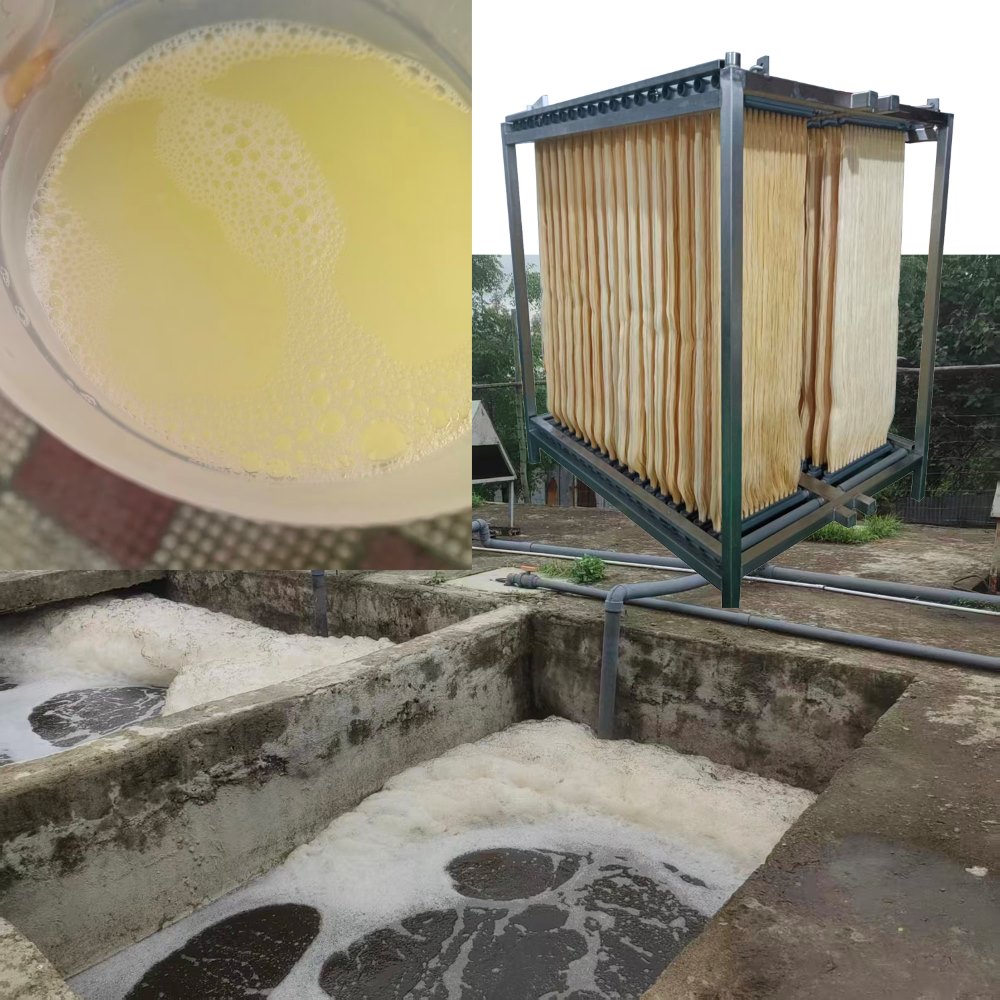
Sludge bulking occurs when filamentous bacteria or poor floc formation causes sludge to settle slowly. Foaming occurs when surfactants, FOG, or specific microorganisms create stable foam on aeration tanks. Both problems reduce treatment capacity and can cause solids to escape in the effluent. In commercial plants, bulking and foaming are often linked to nutrient imbalance, low DO, high FOG, or sudden load changes.
Practical Fixes for Bulking and Foaming
Identify the cause: Use microscopic examination to determine whether filaments, zoogloeal bulking, or foaming organisms are present.
Adjust nutrients: Ensure a proper carbon-to-nitrogen-to-phosphorus ratio. Add nutrients if the influent is deficient.
Control DO: Avoid low DO in aerobic zones, which favors many filamentous bacteria.
Selective wasting: Remove foam and bulking sludge through controlled wasting and, if necessary, chlorination or polymer addition.
Reduce FOG and surfactants: Strengthen pretreatment and source control.
HINADA DAF systems can help remove FOG and surfactants before they reach the biological tank, reducing the risk of foaming. For sites with severe bulking, MBR systems offer an advantage because separation occurs by membrane filtration rather than gravity settling. This means that poor sludge settleability does not directly cause solids carryover, although it still affects overall process health.
Issue Eight: Odor and Corrosion
Odor is one of the most common complaints associated with commercial sewage treatment. Hydrogen sulfide, ammonia, and volatile organic compounds can create unpleasant smells and lead to community opposition. Hydrogen sulfide also corrodes concrete, metal, and electrical equipment. In enclosed spaces, it can pose a safety risk to operators.
Practical Fixes for Odor and Corrosion
Cover and ventilate: Cover tanks and use odor control systems such as biofilters, activated carbon, or chemical scrubbers.
Prevent septic conditions: Avoid long retention times in collection systems and wet wells. Add aeration or chemicals where needed.
Corrosion-resistant materials: Use stainless steel, fiberglass, or coated concrete in areas exposed to sulfide.
Regular cleaning: Remove accumulated sludge and grease that generate odors.
Good housekeeping: Keep screens, grit bins, and sludge handling areas clean and well-drained.
HINADA integrated packaged wastewater treatment systems are often installed in commercial and decentralized locations where odor control is important. The company designs equipment with enclosed or covered process units and supports clients with commissioning and training to ensure proper operation.
Issue Nine: High Energy Consumption
Energy is a major operating cost in commercial sewage treatment. Aeration, pumping, mixing, and membrane scouring can consume significant electricity. Many plants are designed with oversized equipment and operated without fine-tuning, leading to unnecessary waste. Rising energy prices make efficiency a priority for facility managers.
Practical Fixes for Energy Efficiency
Right-size equipment: Avoid oversized blowers and pumps. Use modular units that can be staged.
VFDs and controls: Install variable-frequency drives on blowers, pumps, and mixers.
DO control: Maintain the lowest DO that reliably supports nitrification and biological treatment.
High-efficiency motors: Use premium-efficiency motors and proper power factor correction.
Energy monitoring: Track kWh per cubic meter and set targets for continuous improvement.
Membrane optimization: Optimize scouring air and filtration cycles to reduce energy use in MBR and UF systems.
HINADA intelligent integrated wastewater treatment equipment is designed with energy efficiency in mind. The company provides complete solutions from design and equipment supply to installation support, commissioning, and training. This turnkey approach helps commercial clients avoid common mistakes such as mismatched components and inefficient control strategies.
Issue Ten: Inconsistent Effluent Quality and Compliance
Inconsistent effluent quality is a serious risk. It can lead to regulatory penalties, public health concerns, and loss of water reuse opportunities. Causes include shock loads, inadequate monitoring, poor maintenance, and insufficient operator training. Commercial facilities often lack the laboratory support and technical expertise of larger municipal plants.
Practical Fixes for Compliance
Online monitoring: Install sensors for pH, turbidity, DO, ammonia, and flow. Use alarms and data logging.
Grab and composite sampling: Follow a regular sampling schedule and test for key parameters.
Standard operating procedures: Document startup, shutdown, cleaning, and emergency procedures.
Preventive maintenance: Create a maintenance calendar for pumps, blowers, membranes, and sensors.
Contingency planning: Provide holding tanks or bypass options to contain off-spec effluent.
Expert support: Partner with a qualified water treatment provider for audits and troubleshooting.
HINADA serves clients in over 75 countries and participates in international water treatment exhibitions. The company brings Chinese membrane technology to regions where clean water is most needed. Its application fields include industrial wastewater treatment and reuse, municipal sewage treatment and water recycling, rural decentralized water supply and sanitation, and drinking water purification from surface water and groundwater.
Issue Eleven: Aging Equipment and Deferred Maintenance
Commercial sewage treatment plants often suffer from deferred maintenance. Pumps, blowers, valves, and membranes are replaced only when they fail. This reactive approach increases downtime, safety risks, and emergency repair costs. Aging equipment also becomes less efficient and harder to source parts for.
Practical Fixes for Aging Infrastructure
Asset register: List all critical equipment, installation dates, expected life, and maintenance history.
Condition assessment: Inspect tanks, pipes, coatings, and electrical systems for corrosion and wear.
Critical spares: Keep essential spare parts on site, including membranes, diffusers, sensors, and pump seals.
Upgrade planning: Replace inefficient or unreliable equipment with modern, modular alternatives.
Retrofit with membranes: Convert conventional tanks to MBR or add UF polishing to improve capacity and quality without expanding footprint.
HINADA has more than 13 years of experience in the water treatment industry and 10 years of membrane and equipment manufacturing experience. The company manufactures hollow fiber UF membranes, submerged MBR modules, containerized MBR systems, packaged wastewater treatment plants, DAF systems, UF systems, and industrial reverse osmosis (RO) systems. This broad portfolio allows it to support both new installations and retrofits.
Issue Twelve: Operator Skill and Monitoring Gaps
Even the best-designed commercial sewage treatment system can fail if it is not operated correctly. Many facilities assign wastewater duties to staff who have other responsibilities. Without proper training, operators may not understand biological indicators, membrane cleaning, or chemical dosing. Monitoring gaps can allow small problems to become major failures.
Practical Fixes for Operator Skill and Monitoring
Training programs: Provide hands-on training for daily checks, sampling, and emergency response.
Simple dashboards: Use control systems that present clear status and alarms rather than complex data.
Remote monitoring: Enable remote access for troubleshooting and performance tracking.
Standard checklists: Create daily, weekly, and monthly checklists for critical tasks.
Knowledge retention: Document procedures and cross-train multiple staff members.
HINADA provides training as part of its turnkey solution delivery. The company supports clients from designation and supplying to installation support and commissioning. This helps ensure that commercial operators understand how to maintain performance and respond to upsets.
Practical Fixes That Work Across Multiple Issues
While each commercial sewage treatment issue has specific solutions, several overarching strategies improve resilience across the board. These include source control, pretreatment, equalization, robust biological design, membrane technology, automation, and preventive maintenance. The most successful projects combine these elements rather than relying on a single fix.
Source Control and Pretreatment
Source control reduces the load entering the plant. Grease traps, chemical neutralization, and waste minimization at the source can dramatically improve treatment stability. Pretreatment such as screening, grit removal, DAF, and equalization protects downstream processes and extends equipment life.
Biological Process Optimization
Biological treatment requires a balanced environment. Nutrients, DO, pH, temperature, and solids retention time must be managed together. Regular microscopic examination and sludge testing help operators understand the health of the biomass. When conventional treatment is unstable, MBR technology can provide a more robust barrier.
Membrane Technology and MBR
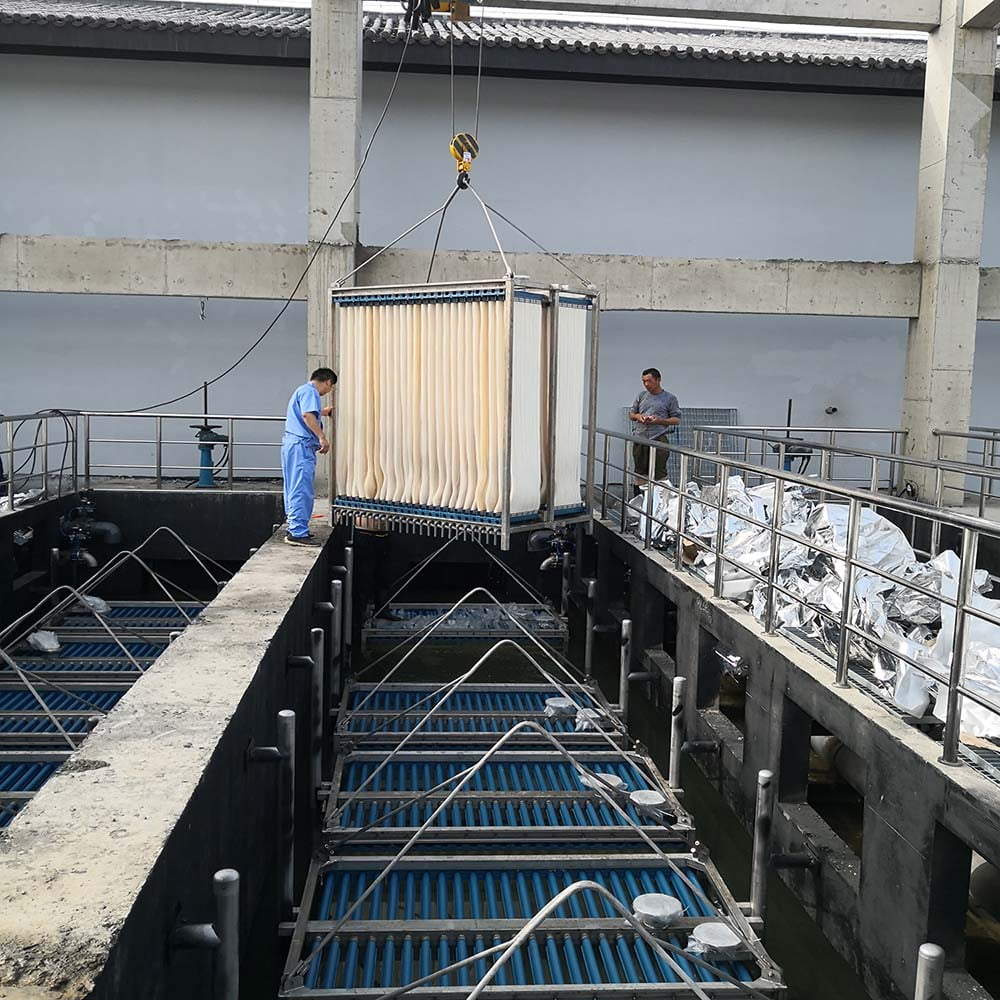
Membrane bioreactors combine biological treatment with membrane separation. They produce high-quality effluent, reduce footprint, and retain biomass effectively. Submerged MBR membrane modules are particularly suitable for commercial and municipal applications because they are compact and can be integrated into existing tanks. Hollow fiber UF membranes are also used for drinking water purification, wastewater reuse, and industrial process water.
HINADA focuses on hollow fiber ultrafiltration and MBR membranes as one of its two core technology pillars. The company manufactures PVDF and PVC hollow fiber UF membranes and submerged MBR membrane modules. These products are designed for precise physical separation of suspended solids, bacteria, colloids, and macromolecular organics.
Automation and Remote Support
Automation reduces the burden on operators and improves consistency. Programmable logic controllers, human-machine interfaces, and remote telemetry allow plants to run with minimal supervision. Alarms can alert staff to pump failures, high levels, or membrane pressure issues before they cause violations.
Preventive Maintenance and Spare Parts
Preventive maintenance is cheaper than emergency repair. A simple schedule for cleaning, lubrication, calibration, and replacement can prevent most failures. Keeping critical spares on hand reduces downtime and ensures that repairs can be completed quickly.
How HINADA Supports Commercial Sewage Treatment
HINADA Water Treatment Tech Co., Ltd. is a globally recognized manufacturer of wastewater treatment equipment, hollow fiber ultrafiltration membranes, submerged MBR membrane modules, integrated packaged wastewater treatment systems, and DAF systems. Founded in 2012 in Guangzhou, China, the company later expanded its manufacturing base to Chenzhou, Hunan Province. Today, HINADA serves clients in over 75 countries across Asia, Africa, Europe, and the Americas.
The company is one of the leading submerged MBR membrane, wastewater treatment equipment, and membrane filtration system manufacturers in China. It specializes as a wastewater treatment solution provider and equipment supplier. HINADA offers a truly integrated solution for water and wastewater projects, from design and supplying to installation support, commissioning, and training.
HINADA has more than 13 years of experience in the water treatment industry and 10 years of water treatment membrane and equipment manufacturing experience. It has built a complete ecosystem from membrane research and development and component manufacturing to equipment fabrication and turnkey solution delivery. This ecosystem allows the company to control quality, optimize performance, and respond quickly to client needs.
From day one, HINADA focused on two core technology pillars. The first is hollow fiber ultrafiltration and MBR membranes, which provide precise physical separation of suspended solids, bacteria, colloids, and macromolecular organics. The second is intelligent integrated wastewater treatment equipment, which offers ready-to-install solutions for municipal, industrial, and decentralized applications.
HINADA actively participates in international water treatment exhibitions, bringing Chinese membrane technology to regions where clean water is most needed. Key application fields include industrial wastewater treatment and reuse, municipal sewage treatment and water recycling, rural decentralized water supply and sanitation, and drinking water purification from surface water and groundwater.
Designing for Commercial Reality
Commercial sewage treatment design must consider real-world constraints. Space is often limited, so compact systems are essential. Noise and odor must be controlled, especially in populated areas. Maintenance must be simple enough for available staff. Energy and chemical costs must be predictable. The system should also be scalable so that future expansion does not require a complete rebuild.
Packaged and containerized systems address many of these needs. They are factory-built, tested, and delivered as modules. Installation is faster, quality is more consistent, and expansion is easier. Containerized MBR systems are particularly useful for temporary or remote applications, while integrated packaged wastewater treatment plants suit hotels, resorts, residential communities, and commercial complexes.
Key Design Questions
What are the peak and average flows, and how do they vary by season or event?
What are the influent characteristics, including COD, BOD, TSS, nitrogen, phosphorus, FOG, and pH?
What effluent quality is required for discharge or reuse?
How much space is available, and what are the access constraints?
What level of operator skill and monitoring is realistic?
What are the energy, chemical, and maintenance budgets?
Are there opportunities for water reuse, such as irrigation, toilet flushing, or cooling tower makeup?
Commissioning and Performance Testing
Commissioning is a critical phase that is often rushed. Proper commissioning includes mechanical checks, electrical testing, control loop tuning, biological seeding, membrane conditioning, and performance testing. It also includes training for operators and documentation of baseline performance. Without commissioning, even a well-designed plant may fail to meet expectations.
Performance testing should verify flow, effluent quality, energy consumption, and chemical usage. It should also test response to upset conditions, such as power failure, high flow, or loss of aeration. A clear punch list and follow-up support help ensure that issues are resolved before the contractor leaves the site.
Case Examples and Lessons Learned
Commercial projects around the world illustrate common patterns. A resort with high seasonal flow may struggle with hydraulic overload unless equalization and modular treatment are used. A food processing facility may need DAF pretreatment to remove FOG before MBR treatment. A hospital may require disinfection and strict monitoring to protect public health. A residential community may benefit from a packaged MBR system that produces reuse-quality water for irrigation.
In each case, the most successful solutions combine source control, robust pretreatment, flexible biological treatment, and reliable membrane separation. They also include training, preventive maintenance, and remote support. The lesson is that commercial sewage treatment is not just a piece of equipment. It is a system that must be designed, operated, and maintained as a whole.
Future Trends in Commercial Sewage Treatment
Several trends are shaping the future of commercial sewage treatment. Decentralized treatment is growing because it avoids long sewers and enables water reuse close to the point of generation. Membrane technology continues to improve in durability, permeability, and chemical resistance. Automation and remote monitoring are becoming standard. Energy efficiency and carbon footprint are increasingly important. Water reuse is moving from a nice-to-have to a regulatory and business requirement in many regions.
HINADA is positioned within these trends through its focus on membrane technology and integrated equipment. The company continues to develop hollow fiber UF and MBR membranes, as well as intelligent packaged systems that are ready to install and easy to operate. Its participation in international exhibitions reflects a commitment to sharing knowledge and expanding access to clean water technology.
Conclusion
Common commercial sewage treatment issues include hydraulic overloading, FOG, solids and grit, nutrient removal, membrane fouling, poor aeration, sludge bulking, odor, energy consumption, inconsistent effluent, aging equipment, and operator skill gaps. These problems are interconnected. A fix that addresses only one symptom may fail if the root cause remains. Practical solutions include equalization, source control, pretreatment, biological optimization, membrane technology, automation, preventive maintenance, and training.
For commercial facilities, the goal is not only compliance but also reliability, efficiency, and public confidence. A well-designed system protects the environment, reduces operating costs, and supports water reuse. Partnering with an experienced manufacturer and solution provider can make the difference between a plant that struggles and one that performs consistently.
HINADA Water Treatment Tech Co., Ltd. brings more than a decade of experience in membranes and equipment to commercial and municipal projects. With a complete ecosystem from membrane research to turnkey delivery, the company supports clients in over 75 countries. Its hollow fiber UF membranes, submerged MBR modules, containerized MBR systems, packaged wastewater treatment plants, DAF systems, UF systems, and RO systems address a wide range of treatment needs. By combining robust technology with practical support, HINADA helps commercial sewage treatment plants overcome common issues and achieve lasting performance.
About HINADA: HINADA Water Treatment Tech Co., Ltd. is a globally recognized manufacturer of wastewater treatment equipment, hollow fiber ultrafiltration membranes, submerged MBR membrane modules, integrated packaged wastewater treatment systems, and DAF systems. Founded in 2012 in Guangzhou, China, and later expanded to Chenzhou, Hunan Province, the company serves clients in over 75 countries. HINADA provides integrated solutions from design, supplying, installation support, and commissioning to training. Its core technology pillars are hollow fiber ultrafiltration and MBR membranes, and intelligent integrated wastewater treatment equipment.