Common daf wastewater system Issues and Practical Solutions
Common daf wastewater system Issues and Practical Solutions
September 30, 2026
Author
Solution Provider, through a professional technical team, we provide customers with targeted equipment selection recommendations and comprehensive after-sales services, winning the trust and recognition of customers.
Sarah M.
Dissolved air flotation systems are essential for removing suspended solids, oils, and grease from wastewater, but they often suffer from operational problems that reduce efficiency and increase costs. This article examines common DAF issues, including poor TSS and FOG removal, inadequate air dissolution, incorrect recycle ratios, chemical coagulation failures, pH fluctuations, plugged nozzles, poor skimming, short circuiting, foaming, corrosion, instrumentation gaps, high energy consumption, start-up challenges, retrofit needs, and regulatory compliance pressures. For each issue, the article offers practical solutions such as optimized jar testing, correct pH control, proper recycle flow, routine cleaning, improved sludge handling, automation, corrosion-resistant materials, and operator training. HINADA Water Treatment Tech Co., Ltd., a global manufacturer founded in 2012, provides DAF systems, hollow fiber UF membranes, submerged MBR modules, containerized MBR systems, packaged wastewater treatment plants, and industrial RO systems. With experience in over 75 countries, HINADA supports industrial wastewater treatment and reuse, municipal sewage treatment, rural decentralized sanitation, and drinking water purification. The article emphasizes that reliable DAF performance depends on a systematic approach that integrates chemistry, hydraulics, maintenance, and monitoring. By applying the practical solutions outlined, operators can improve effluent quality, reduce operating costs, and meet increasingly strict discharge regulations.
Common DAF Wastewater System Issues and Practical Solutions
Dissolved air flotation (DAF) systems are widely used in municipal and industrial wastewater treatment because they can remove suspended solids, fats, oils, grease, algae, and other low-density contaminants that settle poorly. Despite their proven value, DAF units often experience operational problems that reduce performance, increase chemical consumption, and create compliance risk. HINADA Water Treatment Tech Co., Ltd., a globally recognized manufacturer of wastewater treatment equipment, hollow fiber ultrafiltration membranes, submerged MBR membrane modules, integrated packaged wastewater treatment systems, and DAF systems, has observed many of these issues across its installations in more than 75 countries. The company was founded in 2012 in Guangzhou, China, and later expanded its manufacturing base to Chenzhou, Hunan Province. Its experience with membrane filtration, biological treatment, and physical-chemical separation provides a useful lens for diagnosing common DAF problems and applying practical solutions.
Understanding the Role of DAF in Wastewater Treatment
DAF is a physical separation process that uses microscopic air bubbles to attach to suspended particles and float them to the surface. The resulting sludge blanket is then removed by a skimming mechanism. In industrial settings, DAF is often used for pretreatment before biological treatment, for polishing after biological treatment, or for sludge thickening. In municipal applications, it can be used for primary treatment, algae removal, and phosphorus precipitation. HINADA has supplied DAF systems for food processing, slaughterhouse, dairy, textile, paper, chemical, and municipal projects, and the company has learned that successful DAF operation depends on careful design, chemistry, and maintenance.
Core DAF Components
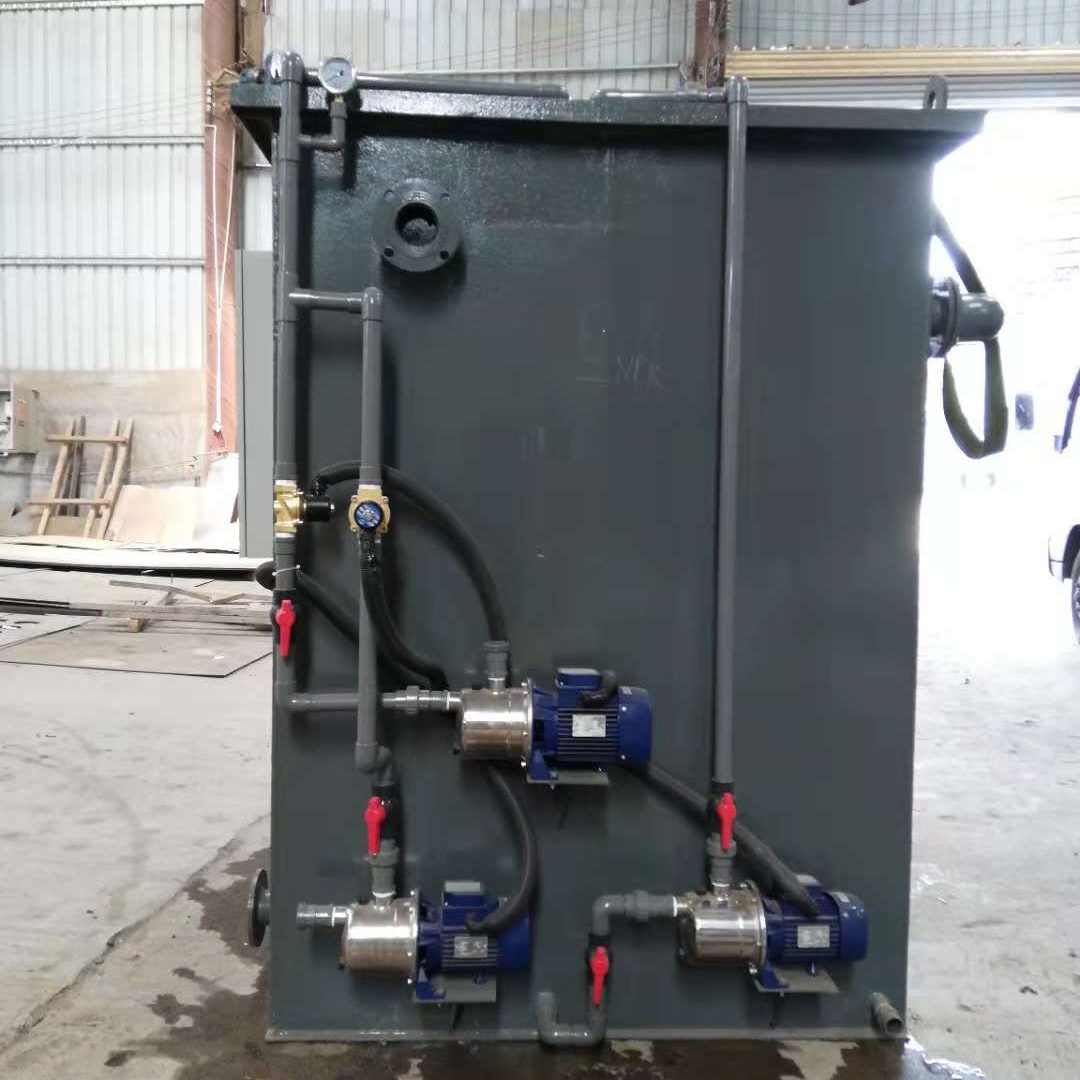
A typical DAF unit includes a coagulation and flocculation chamber, a dissolved air saturation vessel, a recycle pump, an air compressor, a pressure release valve, a flotation tank, a surface skimmer, and a sludge collection system. Each component can contribute to performance issues if not properly sized, operated, or maintained. HINADA designs its DAF systems with modular components so that operators can isolate and troubleshoot individual stages without shutting down the entire treatment train.
Where DAF Fits in a Modern Treatment Train
DAF is rarely a standalone solution. It is often combined with screening, equalization, chemical dosing, biological treatment, membrane filtration, and reverse osmosis. HINADA provides a complete ecosystem from membrane research and development to component manufacturing, equipment fabrication, and turnkey solution delivery. This integrated approach allows the company to evaluate whether a DAF issue is caused by the DAF unit itself or by upstream or downstream conditions. For example, a DAF that performs poorly may be receiving wastewater with fluctuating pH, high oil content, or insufficient coagulation time.
undefined
Issue 1: Poor Removal of Total Suspended Solids, Fats, Oils, and Grease
One of the most common complaints about DAF systems is that the effluent still contains visible suspended solids, oil, or grease. The flotation tank may produce a thin, broken sludge blanket, or the skimmed sludge may contain too much water. When TSS, FOG, and COD removal are below expectations, operators often blame the DAF unit, but the root cause may be upstream chemistry, hydraulic loading, or mechanical wear.
Symptoms
Cloudy or turbid DAF effluent
Visible oil sheen on the effluent surface
Thin or patchy float blanket
High COD or BOD in the DAF effluent
Frequent carryover of solids into downstream processes
Common Causes
Poor removal can result from incorrect coagulant or flocculant selection, insufficient mixing energy, wrong pH, inadequate reaction time, hydraulic overload, short circuiting, damaged skimmer blades, or a recycle ratio that is too low. In some cases, the wastewater contains emulsified oils that require chemical demulsification before DAF can work effectively. HINADA engineers often begin troubleshooting by reviewing jar test results, flow rates, and chemical dosing records.
Practical Solutions
Perform jar tests with the actual wastewater to optimize coagulant type and dose.
Adjust pH to the optimal range for the selected coagulant, often between 6.0 and 7.5 for aluminum or iron salts.
Increase flocculation time and gentle mixing to allow floc growth without breaking.
Verify that the recycle ratio is within the design range, typically 20 to 40 percent for many industrial applications.
Inspect and clean the saturation vessel, nozzles, and release valves.
Check for short circuiting by using dye tests and baffle inspections.
Install a pre-treatment equalization tank to dampen flow and load shocks.
Consider adding a chemical demulsifier for emulsified oil streams.
HINADA often recommends a pilot test when wastewater characteristics are highly variable. A pilot DAF unit can confirm chemical doses, recycle ratio, and hydraulic retention time before full-scale adjustments are made.
Issue 2: Inadequate Air Dissolution and Poor Whitewater Quality
The heart of any DAF system is the dissolved air saturation vessel, often called the whitewater generator. If air does not dissolve properly, the system cannot produce enough microbubbles to float solids. Poor whitewater quality is a frequent cause of poor DAF performance.
Symptoms
Large bubbles instead of a milky white cloud
Low pressure in the saturation vessel
Air pockets in the recycle line
Reduced float blanket thickness
High dissolved oxygen in the recycle water but poor flotation
Common Causes
Inadequate air dissolution can be caused by a faulty air compressor, a clogged air line, a worn pressure release valve, a saturation vessel that is too small, insufficient recycle flow, or incorrect operating pressure. In some cases, the saturation vessel is operated at a pressure below the design value, which reduces air solubility. HINADA has seen installations where the air compressor was undersized or the pressure gauge was inaccurate, leading operators to believe the system was operating correctly when it was not.
Practical Solutions
Verify saturation vessel pressure, typically 4 to 6 bar depending on design.
Clean or replace clogged air lines, check valves, and nozzles.
Confirm that the air compressor matches the design air requirement.
Inspect the pressure release valve for wear or obstruction.
Measure recycle flow with a calibrated flow meter.
Check for air locks in the recycle pump and piping.
Use a dissolved air test kit to confirm whitewater quality.
Consider upgrading to a high-efficiency saturation system if the existing unit is undersized.
HINADA designs its DAF systems with accessible saturation vessels and pressure gauges to simplify routine checks. The company also provides commissioning support and operator training to ensure that whitewater quality is maintained after start-up.
Issue 3: Incorrect Recycle Ratio and Hydraulic Loading
The recycle ratio is the volume of clarified effluent that is recycled through the saturation vessel relative to the influent flow. If the recycle ratio is too low, there are not enough bubbles to float solids. If it is too high, the flotation tank may be hydraulically overloaded, and the float blanket may become unstable.
Symptoms
Excessive turbulence in the flotation tank
Thin float blanket or sludge carryover
High energy consumption
Poor solids capture
Frequent need to adjust chemical dosing
Common Causes
Incorrect recycle ratio can result from a miscalibrated flow meter, a worn recycle pump, a partially closed valve, or a design that did not account for peak flows. Hydraulic overload can also occur when upstream processes discharge more flow than the DAF was designed to handle. HINADA recommends that operators record influent flow, recycle flow, and effluent flow daily to detect deviations.
Practical Solutions
Calibrate flow meters regularly.
Adjust the recycle valve to maintain the design ratio.
Repair or replace worn recycle pumps.
Install a flow equalization tank to reduce peak hydraulic loads.
Use variable frequency drives on recycle pumps to match actual flow.
Review the original design basis and compare it with current operating conditions.
Consider a larger flotation tank if sustained hydraulic overload is unavoidable.
HINADA provides integrated packaged wastewater treatment systems that combine equalization, DAF, and biological treatment in a single containerized or skid-mounted unit. These systems are designed to handle variable flows more effectively than standalone DAF units.
Issue 4: Chemical Coagulation and Flocculation Problems
Chemical dosing is one of the most common sources of DAF instability. Coagulants such as polyaluminum chloride, aluminum sulfate, ferric chloride, and ferrous sulfate are used to neutralize particle charges. Flocculants such as anionic or cationic polyacrylamides are used to bridge particles into larger flocs. If the chemistry is wrong, DAF cannot perform.
Symptoms
Pin flocs that do not float
Excessive chemical consumption
Sludge that is too watery or too viscous
pH excursions
Foaming in the flotation tank
Corrosion of downstream equipment
Common Causes
Chemical problems can arise from outdated jar tests, changes in wastewater composition, incorrect dilution of polymers, poor mixing, dosing pump failure, or incompatible chemicals. HINADA has observed that many DAF issues are actually chemical issues. For example, a polymer that worked well for one production batch may fail when the factory changes raw materials or cleaning agents.
Practical Solutions
Conduct jar tests at least monthly and whenever the wastewater changes.
Use the correct coagulant and flocculant for the specific contaminants.
Prepare polymer solutions at the recommended concentration and age them properly.
Ensure adequate rapid mix for coagulant and gentle mix for flocculant.
Calibrate chemical dosing pumps regularly.
Monitor pH and adjust with acid or alkali as needed.
Avoid over-dosing, which can restabilize particles or create excess sludge.
Consider using a streaming current detector or online zeta potential analyzer for precise control.
HINADA supplies DAF systems with chemical dosing packages that include mixers, dosing pumps, and control panels. The company also offers training on jar testing and chemical optimization.
Issue 5: pH and Alkalinity Fluctuations
pH is a critical parameter for coagulation and flotation. Each coagulant has an optimal pH range. Aluminum-based coagulants work best at pH 5.5 to 7.0, while iron-based coagulants work best at pH 5.0 to 8.0. If pH fluctuates outside these ranges, floc formation is poor, and DAF performance suffers.
Symptoms
Poor floc formation
High residual coagulant in effluent
Corrosion or scaling
Ineffective oil removal
Unstable float blanket
Common Causes
pH fluctuations can be caused by industrial discharges, cleaning chemicals, rainfall infiltration, or inadequate neutralization upstream. In some cases, the wastewater has low alkalinity, so small acid or base additions cause large pH swings. HINADA recommends online pH monitoring and automatic dosing for systems with variable wastewater.
Practical Solutions
Install online pH meters with automatic acid or alkali dosing.
Use a equalization tank to blend different waste streams.
Add alkalinity if the wastewater is poorly buffered.
Select a coagulant that is less sensitive to pH variation.
Monitor pH at multiple points: raw wastewater, after coagulant, after flocculant, and in DAF effluent.
Train operators to respond to pH alarms quickly.
HINADA integrates pH control into its DAF control panels. The company also offers turnkey solutions that include neutralization and equalization upstream of the DAF unit.
Issue 6: Plugged Nozzles, Pipes, and Release Valves
DAF systems rely on small openings to create microbubbles. Nozzles, release valves, and air injection points can become plugged with scale, debris, or biological growth. When this happens, bubble formation becomes uneven, and flotation efficiency drops.
Symptoms
Uneven bubble distribution
Large bubbles in some areas and no bubbles in others
Reduced whitewater flow
Increased pressure drop
Frequent pump cycling
Common Causes
Plugging can be caused by hard water scaling, suspended solids in the recycle line, corrosion products, or inadequate filtration. In some plants, the recycle water is not clean enough, so solids accumulate in the saturation vessel and nozzles. HINADA designs its DAF systems with accessible cleanouts and removable nozzles to simplify maintenance.
Practical Solutions
Install a cartridge or bag filter on the recycle line.
Use softened water for polymer preparation if hardness is high.
Clean nozzles and release valves on a scheduled basis.
Inspect saturation vessel internals for scale and corrosion.
Use acid cleaning for mineral scale and caustic cleaning for organic fouling.
Replace worn nozzles with the original manufacturer specifications.
Maintain a spare set of nozzles and valves for quick changeout.
HINADA provides maintenance kits and replacement parts for its DAF systems, helping operators reduce downtime.
Issue 7: Poor Sludge Skimming and Sludge Handling
The float blanket must be removed efficiently. If skimming is too slow, sludge accumulates and eventually sinks. If skimming is too fast, excess water is removed, increasing sludge volume. Sludge handling is often the most labor-intensive part of DAF operation.
Symptoms
Thick sludge layer that sinks
Watery sludge with low solids content
Frequent skimmer jams
High sludge disposal costs
Odor from sludge collection tanks
Common Causes
Poor skimming can result from incorrect skimmer speed, worn skimmer blades, improper sludge withdrawal frequency, or a sludge collection system that is undersized. In some cases, the sludge is too heavy because of excess coagulant or inorganic solids. HINADA has seen DAF systems where the skimmer was operated continuously instead of intermittently, causing excessive water carryover.
Practical Solutions
Adjust skimmer speed and frequency based on float blanket thickness.
Use variable frequency drives on skimmer motors.
Install sludge level sensors to automate skimming.
Thicken sludge in a separate sludge thickening tank if needed.
Dewater sludge with a belt press, screw press, or centrifuge.
Add sludge conditioning chemicals if dewatering is poor.
Cover sludge tanks to control odor.
Consider anaerobic digestion or composting for organic sludge.
HINADA offers integrated sludge handling solutions, including sludge thickeners and dewatering equipment, as part of its wastewater treatment equipment portfolio.
Issue 8: Hydraulic Short Circuiting and Poor Flow Distribution
Short circuiting occurs when influent flows directly to the effluent without sufficient contact with bubbles or floc. This reduces treatment time and allows solids to escape. Poor flow distribution can also create dead zones where solids settle and accumulate.
Symptoms
High effluent TSS despite good chemical dosing
Uneven float blanket
Dead zones with settled sludge
Dye tests showing rapid breakthrough
Poor COD removal
Common Causes
Short circuiting can be caused by missing or damaged baffles, improper inlet design, excessive flow velocity, or a flotation tank that is too shallow. HINADA designs DAF tanks with inlet distribution headers, baffles, and adequate depth to promote plug flow and bubble contact.
Practical Solutions
Inspect and repair baffles and inlet distributors.
Perform dye tests to identify short circuiting paths.
Reduce inlet flow velocity by increasing pipe size or adding a distribution box.
Install additional baffles to direct flow through the flotation zone.
Ensure the flotation tank has adequate depth and surface area.
Remove accumulated sludge from dead zones.
Consider computational fluid dynamics modeling for complex retrofits.
HINADA uses computational fluid dynamics modeling in the design of its DAF systems to optimize flow distribution and minimize short circuiting.
Issue 9: Foaming and Bubble Carryover
Foaming is common in DAF systems treating wastewater with surfactants, proteins, or oils. While some foam is normal, excessive foam can overflow the tank, carry solids into the effluent, and create safety hazards.
Symptoms
Foam overflowing the flotation tank
Foam in the effluent
Reduced skimming efficiency
Slip hazards on walkways
Nuisance odors
Common Causes
Foaming can be caused by surfactants, high organic loading, over-dosing of flocculant, inadequate defoaming, or excessive air injection. In some cases, the foam is stabilized by fine solids or oil. HINADA recommends a combination of chemical and mechanical foam control.
Practical Solutions
Use a defoamer or antifoam agent at the correct dose.
Reduce air injection if it is excessive.
Adjust chemical dosing to avoid excess polymer.
Install foam spray bars or mechanical foam breakers.
Provide adequate freeboard in the flotation tank.
Remove foam with a dedicated foam skimmer.
Investigate upstream processes for surfactant sources.
HINADA can supply foam control systems as part of its DAF packages, including spray bars and automated defoamer dosing.
Issue 10: Corrosion, Abrasion, and Material Failure
DAF systems handle water, chemicals, and air, creating a corrosive environment. Carbon steel tanks can rust, stainless steel can pit, and non-metallic components can degrade. Abrasion from sand and grit can also wear pumps and valves.
Symptoms
Rust stains and leaks
Pitting on metal surfaces
Premature pump seal failure
Valve sticking
Structural weakness
Common Causes
Corrosion can be caused by low pH, high chloride, dissolved oxygen, or incompatible chemicals. Abrasion can be caused by grit, sand, or metal particles. HINADA selects materials based on wastewater analysis and provides corrosion-resistant options such as epoxy-coated carbon steel, stainless steel 304 or 316, and FRP.
Practical Solutions
Select corrosion-resistant materials during design.
Apply protective coatings and linings.
Maintain pH within the recommended range.
Install grit removal upstream of the DAF.
Use wear-resistant pumps and valves.
Implement a preventive maintenance program.
Replace corroded components before they fail.
Use cathodic protection for large steel tanks if necessary.
HINADA manufactures DAF systems with optional stainless steel or FRP construction for aggressive wastewater.
Issue 11: Instrumentation, Control, and Automation Gaps
Many DAF systems are operated manually, which leads to inconsistent performance. Without proper instrumentation, operators cannot detect changes in flow, pH, pressure, or sludge level until problems are severe.
Symptoms
Frequent manual adjustments
Inconsistent effluent quality
High chemical consumption
Alarm fatigue
Poor data recording
Common Causes
Instrumentation gaps can result from budget constraints, lack of maintenance, or inadequate training. Some plants have sensors but do not calibrate them. HINADA recommends a minimum instrumentation package that includes flow meters, pH meters, pressure gauges, level sensors, and turbidity meters.
Practical Solutions
Install flow meters on influent, recycle, and effluent lines.
Use online pH and turbidity monitoring.
Add pressure and level transmitters to the saturation vessel and flotation tank.
Implement a PLC-based control system with data logging.
Set alarms for critical parameters.
Train operators on instrumentation calibration and troubleshooting.
Consider remote monitoring for decentralized systems.
HINADA provides intelligent integrated wastewater treatment equipment with PLC control, remote monitoring, and automated chemical dosing.
Issue 12: Energy Consumption and Operating Costs
DAF systems consume energy for recycle pumps, air compressors, skimmers, and chemical dosing. If not optimized, energy costs can be significant. High chemical consumption also drives operating costs.
Symptoms
High electricity bills
Excessive chemical usage
Frequent pump maintenance
Low return on investment
Common Causes
Energy inefficiency can result from oversized pumps, throttled valves, unnecessary recycle flow, or continuous operation during low-flow periods. Chemical over-dosing often results from poor jar testing or outdated control strategies.
Practical Solutions
Install variable frequency drives on recycle pumps and air compressors.
Optimize recycle ratio based on actual solids loading.
Use automatic chemical dosing with feedback control.
Schedule skimmer operation based on sludge blanket thickness.
Perform regular energy audits.
Replace worn pumps with high-efficiency models.
Consider solar or waste heat recovery for large installations.
HINADA designs energy-efficient DAF systems and offers upgrades for existing units.
Issue 13: Start-Up and Commissioning Challenges
Even a well-designed DAF system can fail if it is not commissioned properly. Start-up issues include incorrect chemical dosing, improper valve settings, and inadequate operator training.
Symptoms
Poor performance from day one
Frequent alarms
Confusion about operating procedures
Premature equipment failure
Common Causes
Commissioning challenges often arise from a lack of communication between the designer, contractor, and operator. In some cases, the DAF is started before upstream processes are stable. HINADA provides commissioning support, installation support, and training as part of its turnkey solutions.
Practical Solutions
Develop a detailed commissioning plan.
Verify all equipment installations and electrical connections.
Conduct jar tests with actual wastewater during start-up.
Train operators on normal operation, troubleshooting, and safety.
Monitor performance closely for the first month.
Keep a log of all adjustments and chemical doses.
Provide a written operation and maintenance manual.
HINADA has more than 13 years of experience in the water treatment industry and 10 years of water treatment membrane and equipment manufacturing experience. The company provides truly integrated solutions from design, supply, installation support, and commissioning to training.
Issue 14: Retrofitting and Upgrading Existing DAF Systems
Many existing DAF systems were designed for different wastewater characteristics or flow rates. Retrofitting can improve performance without replacing the entire unit.
Symptoms
Inability to meet new discharge limits
Increased flow from plant expansion
Frequent breakdowns
High maintenance costs
Common Causes
Retrofit needs often arise from changes in production, stricter regulations, or aging equipment. HINADA has helped clients upgrade DAF systems with new saturation vessels, improved skimmers, automated controls, and corrosion-resistant materials.
Practical Solutions
Conduct a performance audit of the existing DAF.
Identify bottlenecks in air dissolution, flocculation, and skimming.
Replace undersized components with higher-capacity models.
Add automation and instrumentation.
Install a larger flotation tank if hydraulic capacity is insufficient.
Consider combining DAF with membrane filtration for higher quality effluent.
Use modular upgrades to minimize downtime.
HINADA offers DAF system upgrades and integrated packaged wastewater treatment systems that combine DAF with MBR or UF membranes.
Issue 15: Regulatory Compliance and Effluent Quality
Regulations for TSS, FOG, COD, BOD, and nutrients are becoming stricter. A DAF system that once met limits may no longer be sufficient. Compliance failures can result in fines, shutdowns, or reputational damage.
Symptoms
Effluent parameters above permit limits
Frequent sampling failures
Regulatory warnings
Community complaints about odor or discharge
Common Causes
Compliance issues can arise from inadequate treatment, variable wastewater, or lack of monitoring. HINADA recommends a treatment train approach that combines DAF with biological treatment, membrane filtration, and reverse osmosis when necessary.
Practical Solutions
Review discharge permits and identify all regulated parameters.
Install online monitoring for critical parameters.
Optimize DAF chemistry and hydraulics.
Add downstream filtration such as ultrafiltration or reverse osmosis.
Implement a water reuse program to reduce discharge volume.
Keep detailed records for regulatory reporting.
Work with an experienced equipment supplier to design a compliant treatment train.
HINADA provides ultrafiltration systems, industrial reverse osmosis systems, and submerged MBR membrane modules that can be integrated with DAF for advanced treatment and reuse.
How HINADA Approaches DAF Reliability
HINADA Water Treatment Tech Co., Ltd. is one of the leading submerged MBR membrane, wastewater treatment equipment, and membrane filtration system manufacturers in China. Since its founding in 2012, the company has specialized in wastewater treatment solutions and equipment supply. Its core technology pillars are hollow fiber ultrafiltration membranes for precise physical separation and intelligent integrated wastewater treatment equipment for municipal, industrial, and decentralized applications.
HINADA serves clients in over 75 countries across Asia, Africa, Europe, and the Americas. Its product portfolio includes PVDF and PVC hollow fiber UF membranes, submerged MBR membrane modules, containerized MBR systems, packaged wastewater treatment plants, DAF systems, ultrafiltration systems, and industrial reverse osmosis systems. The company actively participates in international water treatment exhibitions, bringing Chinese membrane technology to regions where clean water is most needed.
Key application fields for HINADA include industrial wastewater treatment and reuse, municipal sewage treatment and water recycling, rural decentralized water supply and sanitation, and drinking water purification from surface water and groundwater. By combining DAF with membrane and biological processes, HINADA helps clients achieve reliable compliance and water reuse.
Practical Troubleshooting Checklist for DAF Operators
Record influent flow, recycle flow, and effluent flow daily.
Check pH and adjust to the optimal coagulation range.
Perform jar tests monthly or when wastewater changes.
Verify saturation vessel pressure and whitewater quality.
Inspect nozzles, release valves, and air lines for plugging.
Measure sludge blanket thickness and adjust skimmer speed.
Monitor chemical consumption and investigate sudden changes.
Clean tanks and baffles to prevent short circuiting.
Calibrate instruments and control systems regularly.
Train operators on emergency procedures and normal operation.
Keep spare parts for critical components.
Review energy use and optimize pump operation.
Document all maintenance and process adjustments.
Conclusion
DAF systems are powerful tools for wastewater treatment, but they require careful design, operation, and maintenance. Common issues such as poor TSS removal, inadequate air dissolution, incorrect recycle ratio, chemical problems, pH fluctuations, plugging, sludge handling, short circuiting, foaming, corrosion, instrumentation gaps, high energy costs, start-up challenges, retrofit needs, and compliance pressures can all be addressed with practical solutions. HINADA Water Treatment Tech Co., Ltd. brings more than a decade of experience in membrane and equipment manufacturing to every project. The company provides a complete ecosystem from membrane research and development to component manufacturing, equipment fabrication, and turnkey solution delivery. For operators facing DAF challenges, the path forward begins with systematic troubleshooting, accurate data, and a willingness to optimize both chemistry and mechanics. With the right support and technology, DAF systems can deliver reliable, cost-effective performance for years.