Finding the Best DAF System Equipment supplier for Fast Delivery
Finding the Best DAF System Equipment supplier for Fast Delivery
September 30, 2026
Author
Solution Provider, through a professional technical team, we provide customers with targeted equipment selection recommendations and comprehensive after-sales services, winning the trust and recognition of customers.
Sarah M.
Choosing the right dissolved air flotation equipment supplier for fast delivery is a decision that blends process engineering, manufacturing capability, and supply chain discipline. This article explains how DAF systems work, why fast delivery has become a decisive procurement criterion across industrial, municipal, and decentralised projects, and what buyers should examine before awarding a contract. It reviews the anatomy of a DAF package, the components that drive lead time, and the criteria that separate integrated manufacturers from trading companies and outsourced fabricators. Key evaluation factors include in-house design authority, manufacturing capacity, standardised modular design, material selection, quality control and factory acceptance testing, project management discipline, export documentation, and after-sales support. The article highlights HINADA Water Treatment Tech Co., Ltd., a manufacturer founded in Guangzhou in 2012 with an additional manufacturing base in Chenzhou, Hunan Province, serving clients in more than seventy-five countries. HINADA produces hollow fibre ultrafiltration and MBR membranes, submerged MBR modules, containerised MBR and packaged wastewater treatment systems, DAF systems, ultrafiltration systems, and industrial reverse osmosis systems, supported by a complete ecosystem from membrane research and development through equipment fabrication to turnkey delivery. The article also covers shipping and logistics, installation and commissioning, operator training, common procurement mistakes, total cost of ownership, sustainability, emerging technology trends, frequently asked questions, and a weighted supplier evaluation scorecard. The central conclusion is that the fastest and most reliable suppliers are those with in-house engineering, control over critical components, modular product architecture, transparent scheduling, and strong after-sales support, and that a disciplined procurement process produces better outcomes than price-driven selection.
Finding the Best DAF System Equipment Supplier for Fast Delivery
In the world of industrial and municipal wastewater treatment, few pieces of equipment carry as much operational weight as the dissolved air flotation system. A DAF unit is often the single point in a treatment train where suspended solids, fats, oils, grease, algae, and light-density floc are removed with the greatest efficiency and the smallest footprint. When a plant is under construction, when a discharge permit deadline is approaching, when an existing clarifier has failed, or when a production line is expanding faster than the environmental infrastructure can keep up, the speed at which a DAF system can be sourced, fabricated, shipped, installed, and commissioned becomes a business-critical variable rather than a simple procurement detail.
This article examines what buyers should look for when they set out to find the best dissolved air flotation equipment supplier with a genuine capability for fast delivery. It looks at the engineering fundamentals of DAF technology, the manufacturing and supply chain realities that determine real lead times, the commercial and technical questions that separate a capable supplier from a catalogue reseller, and the way a vertically integrated manufacturer such as HINADA Water Treatment Tech Co., Ltd. approaches the challenge of delivering complete treatment systems quickly without compromising design quality.
The discussion is written from a third-person perspective and is intended for consulting engineers, EPC contractors, plant owners, municipal utilities, and industrial facility managers who need to make a defensible procurement decision under time pressure. Fast delivery is not simply about shipping speed. It is the product of engineering readiness, in-house fabrication capacity, standardised modular design, disciplined quality control, honest scheduling, and a supplier that understands the difference between a promise and a delivery date.
undefined
Understanding the Dissolved Air Flotation Process
Before evaluating suppliers, it is worth restating what a DAF system actually does, because the technical specifics determine which manufacturers are genuinely qualified to build one. Dissolved air flotation is a physical separation process. Air is dissolved into water under pressure, typically between four and six bar, inside a saturation vessel or air dissolution tank. When that pressurised water is released into the flotation tank through specially designed nozzles or release valves, the sudden drop in pressure causes the dissolved air to come out of solution as millions of microscopic bubbles, generally in the twenty to eighty micron range.
These micro-bubbles attach to suspended particles, oil droplets, and floc particles whose density is close to or lower than that of water. The bubble-particle agglomerate becomes buoyant and rises to the surface, where it forms a sludge blanket. A surface scraper or skimmer mechanism continuously removes the float, while clarified water is drawn from the lower portion of the tank through a collection header. In many designs, a portion of the clarified effluent is recycled back to the saturation vessel, which is why the process is often described as a partial recycle DAF or simply a recycle DAF.
Why DAF Outperforms Conventional Settling in Many Applications
Gravity sedimentation relies on the density difference between particles and water. It works well for heavy, dense, rapidly settling solids, but it struggles with algae, oil, grease, light floc, and biological sludge that either floats or settles extremely slowly. DAF reverses the separation direction. Instead of waiting for particles to fall, the process lifts them. This produces several practical advantages.
Much higher surface loading rates, which means a significantly smaller tank footprint for the same hydraulic flow.
Shorter hydraulic retention time, typically in the range of ten to thirty minutes in the flotation zone, allowing compact packaged units.
Higher removal efficiency for oils, fats, grease, and low-density suspended solids.
Thicker sludge production with a higher solids concentration, which reduces downstream dewatering volume.
Better performance in cold climates where biological activity and settling velocity both decline.
Reduced sensitivity to short-term shock loads and hydraulic surges.
Where DAF Systems Are Deployed
The application range is broader than many operators realise. DAF units appear in industrial wastewater pre-treatment for food and beverage plants, meat processing, dairy, slaughterhouses, edible oil refining, petrochemical facilities, textile dyeing, paper mills, and automotive plants. They are used in municipal drinking water treatment for algae and turbidity removal and for the clarification of reservoir and river water. They serve as thickening units for waste activated sludge. They are used in desalination pre-treatment, in aquaculture recirculating systems, in produced water treatment in the oil and gas sector, and in landfill leachate treatment. Each of these applications imposes its own requirements on loading rate, chemical dosing strategy, materials of construction, and sludge handling.
Why Fast Delivery Has Become a Decisive Purchasing Criterion
Procurement priorities shift with market conditions. In a stable environment, capital cost, energy consumption, and long-term reliability dominate the decision. In a constrained or rapidly expanding environment, schedule risk becomes the dominant concern, and the ability to deliver quickly can justify a premium or override marginal differences in unit price.
Several structural forces have pushed delivery speed to the top of the evaluation matrix.
Regulatory Deadlines Are Not Negotiable
Discharge permits, consent orders, and environmental compliance schedules carry fixed dates. A plant that misses a commissioning milestone can face fines, production shutdowns, or the loss of an operating licence. When a compliance deadline is eight months away, a supplier quoting a twelve-month lead time is not a viable option regardless of technical merit.
Industrial Expansion Moves Faster Than Infrastructure
A new production line, a new slaughterhouse, a new beverage bottling facility, or a new textile dyeing operation can be commissioned in a fraction of the time required to build a conventional concrete wastewater treatment plant. Packaged and containerised DAF systems allow the treatment capacity to arrive as a factory-built module that is connected to site services rather than constructed from scratch.
Emergency Replacements and Retrofits
Existing DAF units fail. Air saturation vessels corrode, scraper drives seize, plates warp, and ageing units lose hydraulic capacity. When a critical unit goes down, the owner needs a replacement or a major refurbishment component quickly. Suppliers who hold standardised sub-assemblies and maintain a flexible fabrication schedule are far better placed to respond.
Decentralised and Rural Projects
Rural sanitation and decentralised water supply programmes frequently involve many small sites with tight construction windows and limited skilled labour on site. Equipment that arrives pre-assembled, pre-tested, and skid-mounted reduces on-site work dramatically. Delivery reliability matters more than any single technical parameter in such programmes.
The Anatomy of a DAF System: What Buyers Are Actually Purchasing
To judge a supplier, a buyer needs to know what is inside the scope. A complete DAF package is not a tank with a scraper. It is an engineered assembly of interdependent components, each of which affects performance and delivery.
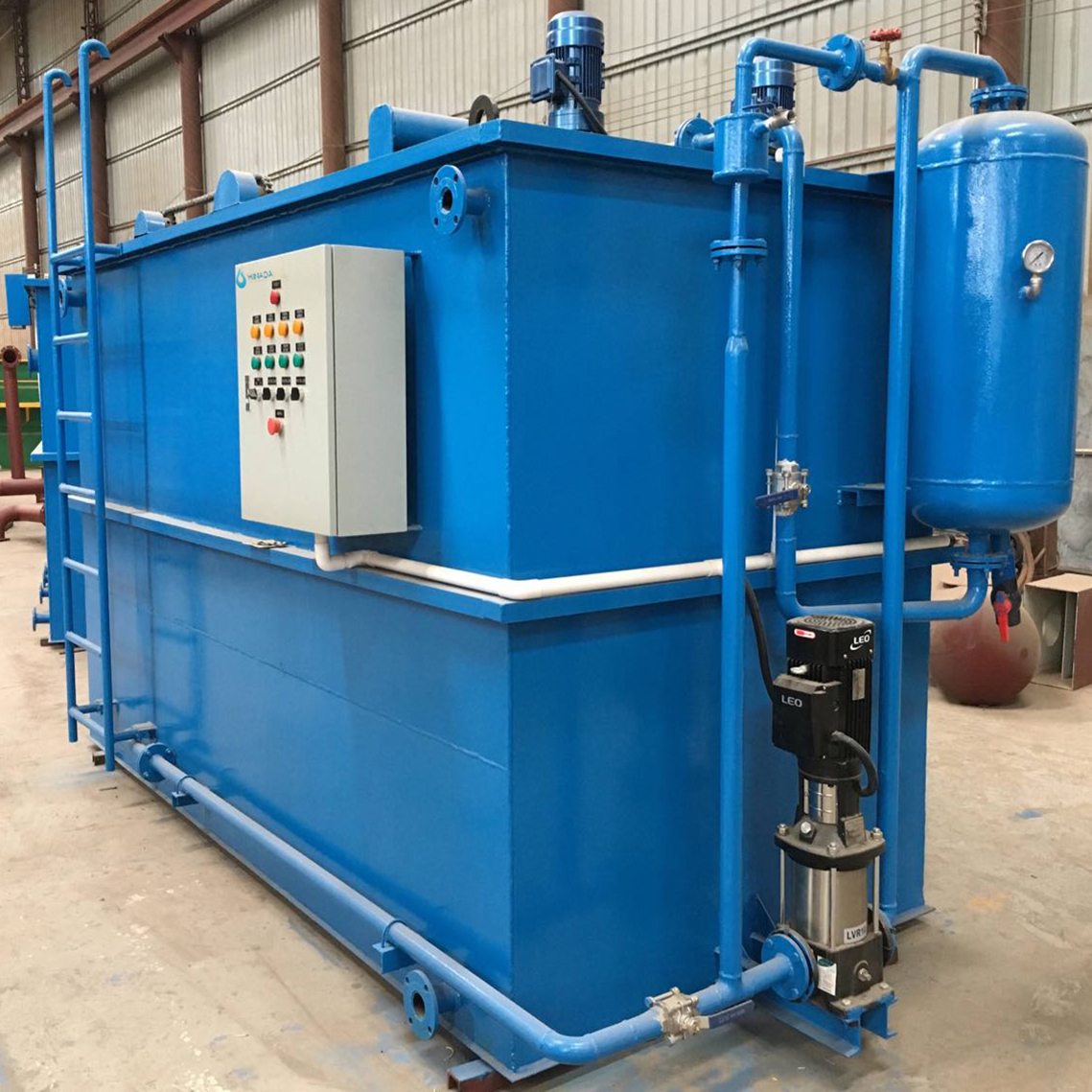
Flotation tank with inlet distribution, outlet collection, and sludge collection zones, usually fabricated from carbon steel with epoxy coating or from stainless steel.
Air saturation system including a pressure vessel, air compressor, recycle pump, pressure relief valve, and air flow control.
Dissolved air release assembly with nozzles or release valves designed to generate a controlled micro-bubble spectrum.
Coagulation and flocculation chambers with mechanical or hydraulic mixing and chemical injection points.
Surface scraper or skimmer with chain and flight, rotary, or travelling bridge configuration.
Sludge collection hopper or trough with discharge valves or pumps.
Effluent collection header with adjustable weirs or submerged outlets.
Chemical dosing packages for coagulant, flocculant, pH adjustment, and occasionally oxidant or antifoam.
Instrumentation and control panel with level, flow, pressure, and turbidity monitoring and a PLC-based control philosophy.
Piping, valves, walkways, ladders, and handrails as required for safe operation and maintenance.
Suppliers who manufacture only the tank and then source everything else from third parties introduce coordination risk. Every outsourced component is a potential schedule break. This is a central argument in favour of vertically integrated manufacturers who control membrane production, equipment fabrication, and system assembly under one corporate roof.
Core Criteria for Selecting a DAF Supplier With Genuine Fast-Delivery Capability
The market contains many companies that describe themselves as DAF suppliers. Some are engineering firms that design and outsource. Some are trading companies that resell imported units. Some are fabricators that build to drawings supplied by others. Some are full-scope manufacturers with in-house design, membrane production, fabrication, assembly, testing, and commissioning teams. The distinction matters enormously when schedule is critical.
1. In-House Design and Engineering Depth
A supplier that cannot perform its own hydraulic design will struggle to respond to a change in flow rate, solids loading, or site constraints without going back to a third party. Fast delivery requires fast engineering. Design changes that take three weeks to process in an outsourced model can be resolved in three days when the engineering team sits in the same building as the fabrication shop.
Buyers should ask specific questions. Who performs the hydraulic and mass balance calculations? Who selects the air-to-solids ratio? Who determines the recycle ratio and the saturation pressure? Who sizes the release nozzles? Who produces the general arrangement drawings, the piping and instrumentation diagrams, and the control philosophy? A supplier with credible answers owns the design and therefore owns the schedule.
2. Manufacturing Capacity and Vertical Integration
Vertical integration is the single strongest predictor of reliable delivery. When a company manufactures its own hollow fibre ultrafiltration membranes, its own MBR membrane modules, its own skid-mounted equipment, and its own DAF tanks, it is not exposed to the delivery schedules of external suppliers for its core technology. This is precisely the model that HINADA Water Treatment Tech Co., Ltd. has built over more than a decade.
HINADA is a globally recognised manufacturer of wastewater treatment equipment, hollow fibre ultrafiltration membranes, submerged MBR membrane modules, integrated packaged wastewater treatment systems, and DAF systems. Founded in 2012 in Guangzhou, China, the company later expanded its manufacturing base to Chenzhou in Hunan Province. That dual-site structure provides additional capacity and a degree of production resilience that single-site fabricators cannot match. Today, HINADA serves clients in more than seventy-five countries across Asia, Africa, Europe, and the Americas.
3. Standardised Modular Design
Custom engineering is expensive and slow. The fastest suppliers are those who have developed a modular product architecture in which a defined set of standard tank sizes, standard saturation packages, standard scraper assemblies, and standard control panels can be combined to meet a wide range of process requirements. Modularity allows the supplier to begin fabrication of long-lead items immediately while the final process design is confirmed.
Modularity also reduces risk on site. A skid-mounted DAF package arrives pre-piped, pre-wired, and factory-tested. Site work is reduced to foundation preparation, connection to inlet and outlet piping, power supply, chemical supply, and commissioning. This can compress the installation phase from several weeks to a few days.
4. Materials of Construction and Corrosion Strategy
Material selection affects both durability and lead time. Carbon steel with a suitable internal and external coating system is economical and widely available. Stainless steel grades such as 304 and 316L offer superior corrosion resistance for aggressive industrial streams, but they require specialist welding procedures, passivation, and sometimes longer procurement cycles for plate and fittings.
A capable supplier will advise honestly on material selection based on the actual chemistry of the wastewater. Chlorides, sulphides, organic acids, and temperature all influence the decision. For food processing and oily wastewater, 304 or 316L stainless steel is common. For highly saline or acidic streams, duplex stainless steels or specialised coatings may be required. Suppliers who maintain relationships with multiple steel mills and stock common plate thicknesses can shorten lead times considerably.
5. Quality Control and Factory Acceptance Testing
Speed without quality control is a false economy. A DAF unit that fails during commissioning because of a leaking saturation vessel, a misaligned scraper, or an incorrectly wired control panel costs far more time than the days saved by skipping tests. Buyers should confirm that the supplier performs dimensional inspection, weld inspection including dye penetrant or ultrasonic testing where required, hydrostatic testing of pressure vessels, electrical continuity and insulation testing, and a functional dry-run of the control system.
Factory acceptance testing is particularly valuable for international projects, where a site visit by the buyer or the consulting engineer can be combined with a witnessed test. HINADA provides a truly integrated solution to water and wastewater projects, from design and equipment supply through installation support and commissioning to operator training. That integrated scope means the same organisation that builds the equipment also supports its start-up, which creates a strong internal incentive to test thoroughly before shipment.
6. Project Management and Communication Discipline
The most common cause of late delivery is not manufacturing capacity but communication failure. Drawings that are not approved on time, specifications that change without a formal change order, clarifications that sit unanswered, and shipping documentation that is incomplete all create delays that no factory can recover.
A supplier with genuine fast-delivery capability will assign a named project manager, establish a documented communication protocol, issue a detailed production schedule with milestone dates, provide weekly progress reports with photographs, and escalate open items promptly. Buyers should insist on a single point of contact and a written escalation path.
7. Documentation and Certification
International projects require documentation that satisfies local regulators, insurers, and customs authorities. This typically includes material certificates, weld procedures and welder qualifications, pressure vessel certification where applicable, electrical certification such as CE or equivalent, operation and maintenance manuals, spare parts lists, and as-built drawings.
Documentation delays are a frequently underestimated cause of project slippage. A supplier that prepares documentation in parallel with fabrication rather than after shipment will consistently deliver faster.
8. After-Sales Support and Spare Parts Availability
Fast delivery does not end at the port of discharge. A DAF system requires periodic inspection of the scraper drive, replacement of wear strips, cleaning of release nozzles, inspection of the saturation vessel internals, and calibration of instrumentation. Suppliers who stock standard spare parts and can dispatch them quickly protect the owner against extended downtime.
What Actually Drives DAF Lead Time: A Component-by-Component View
Understanding where time is consumed allows a buyer to ask the right questions and to identify which supplier claims are realistic.
Engineering and drawing approval: typically one to three weeks, longer if the buyer is slow to review. This phase is often the largest controllable variable.
Raw material procurement: steel plate, profiles, flanges, and fittings can be sourced in days if the supplier holds stock, or weeks if ordered against a specific project.
Tank fabrication and welding: two to five weeks depending on size and material.
Surface preparation and coating: blasting, priming, and topcoating require cure time between coats. This is a common bottleneck that cannot be compressed without compromising coating performance.
Saturation vessel and pressure components: one to three weeks if standard, longer for custom pressure vessels requiring third-party certification.
Scraper and drive assembly: usually one to two weeks for standard designs.
Pumps, compressors, and instrumentation: these are typically bought-in items and their lead times can dominate the schedule. Suppliers with framework agreements and buffer stock reduce this risk substantially.
Control panel assembly and programming: one to two weeks, often performed in parallel with mechanical fabrication.
Assembly, piping, and wiring: one to two weeks for skid-mounted units.
Factory acceptance testing: two to five days.
Packing and inland transport to port: three to seven days.
Ocean freight: highly variable. Two to four weeks to nearby Asian ports, four to six weeks to Africa and the Middle East, five to eight weeks to Europe and the Americas.
When these figures are combined, a well-organised manufacturer with standardised designs and available materials can deliver a packaged DAF unit to a distant port in roughly eight to fourteen weeks from receipt of a purchase order and approved drawings. Suppliers who quote four to six weeks are usually either holding finished stock, which limits configuration flexibility, or they are quoting from the date of shipment rather than the date of order. Buyers should always clarify what the quoted lead time actually measures.
HINADA: A Vertically Integrated Manufacturer Built for Reliable Delivery
Among the manufacturers serving the international market, HINADA Water Treatment Tech Co., Ltd. presents a useful case study in how vertical integration and a defined technology focus translate into delivery reliability.
The company was founded in 2012 in Guangzhou, China, and has since grown into one of the leading submerged MBR membrane, wastewater treatment equipment, and membrane filtration system manufacturers in the country. It specialises as a wastewater treatment solution provider and equipment supplier. From its earliest years, HINADA concentrated on two core technology pillars. The first is hollow fibre ultrafiltration and MBR membranes, which deliver precise physical separation of suspended solids, bacteria, colloids, and macromolecular organics. The second is intelligent integrated wastewater treatment equipment, comprising ready-to-install solutions for municipal, industrial, and decentralised applications.
That dual focus has produced a complete ecosystem that runs from membrane research and development and component manufacturing through to equipment fabrication and turnkey solution delivery. The company now has more than thirteen years of experience in the water treatment industry and ten years of water treatment membrane and equipment manufacturing experience. Its manufacturing base in Chenzhou, Hunan Province, complements the original Guangzhou operation and provides the physical capacity to run multiple projects in parallel.
Core Product Range
The product portfolio is relevant to DAF buyers because DAF systems rarely operate in isolation. They are usually integrated into a broader treatment train, and the ability to source the entire train from one manufacturer simplifies procurement, reduces interface risk, and shortens the overall project schedule.
PVDF and PVC hollow fibre ultrafiltration membranes for drinking water, surface water, groundwater, and wastewater reuse applications.
Submerged MBR membrane modules for biological treatment with integrated membrane separation.
Containerised MBR systems and packaged wastewater treatment plants for decentralised and rapid-deployment projects.
Dissolved air flotation systems for suspended solids, oil, grease, and light floc removal.
Ultrafiltration systems for pre-treatment and polishing.
Industrial reverse osmosis systems for desalination, demineralisation, and high-purity process water.
For a plant that needs a DAF unit upstream of a membrane bioreactor, or a DAF unit followed by ultrafiltration and reverse osmosis, purchasing the complete sequence from a single integrated manufacturer removes the coordination burden of matching tank dimensions, hydraulic profiles, control philosophies, and chemical dosing strategies across multiple vendors.
Application Fields
HINADA equipment is deployed across four broad application areas, each of which influences how DAF systems are configured.
Industrial wastewater treatment and reuse, including food and beverage processing, meat and poultry, dairy, textile dyeing, chemical manufacturing, and general manufacturing effluent.
Municipal sewage treatment and water recycling, including conventional activated sludge upgrades, MBR-based plants, and tertiary treatment for reuse.
Rural decentralised water supply and sanitation, where packaged and containerised systems are essential because skilled construction labour is limited.
Drinking water purification, covering surface water and groundwater sources, including algae-laden reservoirs and turbidity removal.
The company also participates actively in international water treatment exhibitions, bringing Chinese membrane and treatment technology to regions where clean water and effective wastewater management are most urgently needed.
Key Design Parameters Buyers Should Understand Before Requesting Quotations
A well-prepared enquiry produces a faster and more accurate quotation. The following parameters should be established before contacting suppliers.
Hydraulic Flow Rate and Peaking Factor
Design flow is not the same as average flow. Buyers should specify both average and peak hydraulic flow rates and state whether the peaks are diurnal or event-driven. A DAF unit designed for average flow will be hydraulically overloaded during peaks, resulting in solids carryover.
Influent Characterisation
Total suspended solids, oil and grease, chemical oxygen demand, biochemical oxygen demand, pH, temperature, and the presence of surfactants or solvents all influence design. Where historical data is unavailable, a sampling programme is strongly recommended. Suppliers who offer to design without any influent data are taking a risk that will eventually be transferred to the owner.
Surface Loading Rate
Surface loading rate, expressed in cubic metres per square metre per hour, is the primary sizing parameter for the flotation zone. Typical values range from four to twelve cubic metres per square metre per hour depending on the application. Lower rates are used for difficult streams such as oily wastewater or where high removal efficiency is required. Higher rates are acceptable for relatively clean streams with well-flocculated solids.
Air-to-Solids Ratio
The air-to-solids ratio expresses the mass of air released per mass of suspended solids and typically falls between 0.01 and 0.06 kilograms of air per kilogram of solids. It is the most important process parameter in DAF design and directly determines the recycle flow and saturation pressure.
Recycle Ratio
Recycle ratio is the proportion of clarified effluent returned to the saturation vessel, commonly between twenty and forty percent of design flow. Higher recycle ratios improve clarification but increase pumping energy and reduce net throughput.
Saturation Pressure
Typical operating pressures range from four to six bar. Higher pressure increases air dissolution but also increases energy consumption and equipment stress.
Chemical Dosing Strategy
Coagulant and flocculant selection and dosing rates should be determined by jar testing wherever possible. The dosing package must be sized to deliver the required range with adequate turndown, and the injection points must allow sufficient mixing energy and retention time.
Sludge Handling Requirements
The float produced by a DAF unit is typically two to six percent solids, which is significantly thicker than waste activated sludge from a secondary clarifier. Buyers should confirm how the sludge will be transferred, stored, and dewatered, and ensure the DAF discharge arrangement is compatible.
Comparing Supplier Types: A Practical Framework
Not all suppliers carry the same risk profile. The table below summarises the typical characteristics of the main supplier categories.
Supplier Type
Design Control
Fabrication
Typical Lead Time
Key Risk
Trading company or reseller
None or minimal
Outsourced
Variable, dependent on third parties
No accountability for schedule or performance
Engineering-only firm
Strong
Outsourced
Longer, two or more interfaces
Design and build mismatch
Contract fabricator
Dependent on client drawings
Strong
Moderate
No process knowledge, limited troubleshooting
Integrated manufacturer
Strong
In-house
Shortest and most predictable
Requires careful verification of real capability
For projects where schedule is critical, the integrated manufacturer category is generally the safest choice, provided the buyer verifies the claims. Verification can include a factory visit, a review of recent project references, inspection of work in progress, and requests for documentation samples from comparable projects.
Questions to Ask Before Issuing a Purchase Order
A structured interrogation of potential suppliers reveals a great deal about their real capability. The following questions are recommended.
How many DAF systems has the company manufactured in the last three years, and for which industries?
Which components are manufactured in-house and which are outsourced?
What is the current factory loading, and how many units are in production ahead of this order?
Can the supplier provide a milestone schedule with dates for drawing approval, material arrival, fabrication completion, coating, assembly, testing, and shipment?
What is the quoted lead time measured from? Purchase order date, drawing approval date, or payment receipt date?
Who is the assigned project manager, and what is the escalation path if milestones slip?
What factory acceptance tests will be performed, and can they be witnessed?
What documentation will be supplied, and in what language?
What is the warranty period, and what does it cover?
Are spare parts available from stock, and what is the typical dispatch time?
Does the supplier provide installation supervision, commissioning, and operator training?
Can the supplier provide references from similar projects in the same region or industry?
Suppliers who answer these questions promptly and in writing are usually the same suppliers who communicate well during execution. Vagueness at the enquiry stage is a reliable predictor of vagueness during the project.
Packaging, Shipping, and Logistics: Where Fast Projects Are Won or Lost
Manufacturing completion is not delivery. Many projects lose weeks in the gap between the factory gate and the site.
Packaging for Ocean Transport
Equipment travelling by sea encounters humidity, salt spray, vibration, and multiple handling operations. Adequate protection includes seaworthy crating, desiccant packs, vapour barrier film for sensitive components, internal bracing to prevent movement, and clear marking of lifting points and centre of gravity. Instruments, control panels, and electrical components should be packed separately where practical, or provided with enhanced moisture protection.
Container Loading and Modular Sizing
Skid-mounted DAF units should be designed with container dimensions in mind. A unit that fits within a standard twenty-foot or forty-foot high cube container avoids the cost and delay of break-bulk shipping. Suppliers experienced in international projects design their standard ranges around these constraints, which is a subtle but significant contributor to delivery speed.
Documentation for Customs
Commercial invoices, packing lists, certificates of origin, bills of lading, and any required conformity certificates must be prepared accurately. Errors in documentation can delay clearance by days or weeks. Suppliers with dedicated export documentation teams handle this reliably.
Site Readiness
The fastest delivery is wasted if the site is not ready. Foundations must be cast and cured, power supply must be available, inlet and outlet connections must be prepared, and chemical storage must be in place. Suppliers should provide a site readiness checklist well in advance of shipment so that the owner can prepare in parallel.
Installation, Commissioning, and Training
A DAF system performs as designed only when it is correctly installed and properly commissioned. The commissioning phase establishes the correct recycle ratio, saturation pressure, chemical dosing rates, and scraper speed. It is also the point at which operators learn how the system responds to changing conditions.
HINADA provides an integrated solution to water and wastewater projects covering design, equipment supply, installation support, commissioning, and training. This scope continuity is valuable because the engineers who commissioned the system have direct access to the design team and the factory, which shortens the resolution time for any issue that arises.
Commissioning Sequence
Mechanical inspection of all rotating equipment, scrapers, and valves.
Electrical verification, including motor rotation checks and instrument calibration.
Water fill and leak testing of the tank, piping, and saturation vessel.
Operation of the recycle pump and air compressor, with adjustment of saturation pressure.
Verification of bubble generation and distribution across the flotation zone.
Chemical dosing system calibration and jar test confirmation.
Introduction of influent and observation of float formation and removal.
Adjustment of scraper speed and sludge discharge frequency.
Performance testing against the specified removal efficiency.
Operator training covering routine operation, troubleshooting, and maintenance.
Operator Training Content
Effective training covers the theory of dissolved air flotation, the function of each component, normal operating parameters and their acceptable ranges, the procedure for adjusting recycle ratio and dosing rates, routine maintenance tasks and intervals, troubleshooting common faults, and safe isolation procedures for maintenance. Training should be documented and include a written manual and, where possible, a video record for future staff.
Common Mistakes That Delay DAF Projects
Experience across many projects reveals recurring errors that cost time and money.
Under-specifying influent characteristics. Without reliable data, the supplier must guess, and the resulting unit may be undersized or oversized.
Choosing on price alone. The lowest bid often reflects the thinnest scope, the lightest materials, or the least experienced engineering team.
Ignoring the total cost of ownership. Energy consumption, chemical consumption, maintenance labour, and spare parts often outweigh the initial capital difference over a ten-year horizon.
Accepting verbal delivery commitments. Every schedule commitment should be documented with dates and consequences.
Delaying drawing approval. Buyer-side review delays are one of the most common causes of late delivery.
Failing to plan site readiness. Equipment arriving before foundations are ready creates storage costs and potential damage.
Overlooking spare parts. A missing wear strip can halt a plant for weeks if it must be manufactured to order.
Neglecting operator training. Poorly operated DAF units underperform regardless of design quality.
Total Cost of Ownership: Looking Beyond the Purchase Price
A DAF system is a long-lived asset, typically designed for fifteen to twenty-five years of service with appropriate maintenance. The purchase price represents only a fraction of the lifetime cost. Buyers evaluating suppliers should consider the full picture.
Energy Consumption
The recycle pump and air compressor dominate energy use. A well-designed system with an efficient pump, an appropriately sized saturation vessel, and a control strategy that modulates recycle flow with load will consume significantly less energy than a poorly matched alternative. Over a decade, the difference can exceed the original capital cost.
Chemical Consumption
Coagulant and flocculant costs are driven by the influent characteristics and the effectiveness of the mixing and flotation design. A well-designed flocculation chamber with proper velocity gradients reduces dosing requirements.
Maintenance and Spare Parts
Scraper chains, wear strips, release nozzles, pump seals, and instrumentation require periodic replacement. Suppliers who use standard components and stock spares reduce both cost and downtime.
Sludge Handling
The solids concentration of the float determines the volume that must be dewatered and disposed of. Higher concentration means lower disposal cost. DAF systems generally produce thicker sludge than sedimentation, which is a genuine operational advantage.
Uptime and Reliability
Downtime in a treatment plant can trigger permit violations and production stoppages. Reliability is worth paying for, and it is closely correlated with the quality of materials, workmanship, and design margins.
Integrating DAF With Membranes and Reverse Osmosis
In many modern treatment trains, DAF is not a standalone process but a pre-treatment step. It protects downstream membranes from oil, grease, and fibrous material that would otherwise foul or physically damage them. It reduces organic loading to biological processes. It improves the performance of ultrafiltration and reverse osmosis systems by lowering the solids and organic burden on the membranes.
Because HINADA manufactures hollow fibre ultrafiltration membranes, submerged MBR modules, ultrafiltration systems, and industrial reverse osmosis systems alongside its DAF product line, the company is positioned to design an integrated train in which each stage is matched to the next. This matters for delivery because a single supplier can ship a coordinated package rather than a set of components that must be reconciled on site.
Typical Integrated Configurations
DAF followed by ultrafiltration for industrial water reuse.
DAF followed by MBR for high-strength industrial effluent with stringent discharge limits.
DAF followed by ultrafiltration and reverse osmosis for boiler feed or process water production.
DAF as pre-treatment ahead of membrane filtration in drinking water plants treating algae-laden surface water.
Containerised DAF plus packaged biological treatment for decentralised rural sanitation.
Each configuration imposes specific requirements on the DAF design, including tighter limits on oil and grease carryover, careful control of residual coagulant, and appropriate pH adjustment to protect membrane materials.
Application Case Perspectives
Food and Beverage Processing
Effluent from food processing contains fats, oils, grease, and high organic loading. DAF with coagulation and flocculation typically removes eighty-five to ninety-five percent of oil and grease and a substantial proportion of suspended solids and chemical oxygen demand. Fast delivery is often required because production expansion outpaces the existing treatment capacity.
Meat Processing and Slaughterhouses
These facilities produce highly concentrated effluent with significant protein and fat content. DAF is frequently the first treatment step, followed by biological treatment. Dissolved air flotation units in this sector must handle variable flows and be designed for easy cleaning and maintenance.
Textile Dyeing and Finishing
Wastewater contains dyes, sizing agents, and surfactants that can be difficult to flocculate. DAF is used with appropriate coagulants to remove colour and suspended solids ahead of biological treatment or membrane filtration.
Municipal Drinking Water
DAF is widely used for the removal of algae, colour, and low-density turbidity from surface water sources. It is particularly effective during algal blooms, when conventional sedimentation struggles. In these applications, the DAF unit is often integrated with ultrafiltration membranes for final polishing.
Rural and Decentralised Sanitation
Programmes serving small communities and remote sites require compact, robust, and simple-to-operate systems. Containerised and skid-mounted designs reduce construction time and the need for specialist labour, making fast delivery both possible and highly valuable.
Sustainability and Environmental Performance
Modern procurement increasingly weighs environmental performance alongside cost and schedule. DAF systems contribute to sustainability in several ways.
They enable water reuse by producing clarified effluent suitable for further treatment and recycling.
They reduce pollutant loads discharged to receiving waters, protecting aquatic ecosystems.
They concentrate sludge, reducing the volume that must be transported and disposed of.
They can recover valuable materials such as fats and oils from industrial streams.
Efficient designs with variable-speed drives and optimised recycle ratios reduce energy consumption.
Suppliers who can document energy consumption, chemical usage, and sludge production per unit of flow provide buyers with the data needed to make environmentally informed decisions.
Emerging Trends in DAF Technology and Supply
Modularisation and Containerisation
The shift toward factory-built, containerised treatment systems continues to accelerate. It reduces site construction time, improves quality control, and simplifies international shipping.
Digital Monitoring and Remote Support
Instrumentation and connectivity allow suppliers to monitor performance remotely, advise on optimisation, and diagnose faults without travelling to site. This is particularly valuable for international projects where travel is slow and expensive.
Energy Optimisation
Variable-frequency drives on recycle pumps, improved saturation vessel design, and control algorithms that match recycle flow to actual load all reduce energy consumption. Buyers increasingly specify these features.
Advanced Materials
Duplex stainless steels, high-performance coatings, and composite components are extending service life and reducing maintenance in aggressive environments.
Integrated Treatment Trains
Buyers increasingly prefer single-source suppliers who can deliver a coordinated train from pre-treatment through membrane filtration to final polishing. This trend favours vertically integrated manufacturers.
Frequently Asked Questions
How long does a DAF system take to deliver?
A well-organised manufacturer can typically deliver a standard packaged unit in eight to fourteen weeks from order and drawing approval, including ocean freight to most destinations. Custom units with non-standard materials or unusual process requirements may take longer.
Can delivery be accelerated?
Yes, in several ways. Standardising the configuration, approving drawings quickly, accepting stock materials, and providing complete information at the enquiry stage all shorten lead time. Some suppliers can also prioritise an order where factory capacity allows.
What information is needed to obtain an accurate quotation?
Design flow and peak flow, influent characteristics including suspended solids, oil and grease, chemical oxygen demand, pH and temperature, required effluent quality, site conditions, power supply specifications, materials preference, and the required delivery date and destination.
Is a containerised DAF system better than a site-built unit?
For remote sites, tight schedules, and projects with limited skilled labour, a containerised or skid-mounted unit is generally preferable. For very large flows, site-built tanks may be more economical.
How important is factory acceptance testing?
It is very important. Witnessed factory testing catches problems before shipment, when correction is far cheaper and faster than on site. For international projects, it is strongly recommended.
What maintenance does a DAF system require?
Routine tasks include inspection of the scraper drive and chain, cleaning of release nozzles, checking the saturation vessel and air compressor, calibrating instruments, and inspecting coatings. A documented preventive maintenance schedule should be provided by the supplier.
Can DAF systems handle fluctuating flows?
Yes, with appropriate design. Equalisation tanks, variable-speed recycle pumps, and load-responsive control strategies allow DAF units to operate efficiently across a range of flows.
What warranty is typical?
Warranties vary. Twelve to twenty-four months from commissioning or shipment is common for mechanical and electrical components, with specific terms for membranes and consumables. Buyers should clarify exactly what is covered.
Building a Supplier Evaluation Scorecard
To make the selection process objective and defensible, buyers can use a weighted scorecard. The following categories and indicative weightings provide a starting point.
Technical capability and process design experience: twenty percent. Depth of engineering, quality of design calculations, and relevance of past projects.
Manufacturing capacity and vertical integration: twenty percent. In-house fabrication, control over critical components, and available production capacity.
Delivery track record and schedule credibility: twenty percent. Documented on-time delivery performance and realistic milestone planning.
Quality control and testing: fifteen percent. Inspection procedures, testing regime, and documentation quality.
After-sales support and spare parts: ten percent. Response time, spares availability, and commissioning support.
Commercial terms and total cost of ownership: ten percent. Price, payment terms, warranty, and lifetime operating cost.
Communication and project management: five percent. Responsiveness, clarity, and escalation discipline.
Scoring each supplier against the same criteria produces a transparent comparison and provides a written record of the reasoning behind the award decision.
Conclusion
Finding the best DAF system equipment supplier for fast delivery requires more than comparing quotations. It requires an understanding of the process itself, a clear specification of influent and effluent requirements, a realistic appreciation of what drives lead time, and a structured evaluation of supplier capability across engineering, manufacturing, quality control, logistics, and after-sales support.
The fastest suppliers are not necessarily the largest. They are the ones with in-house design authority, standardised modular products, control over critical components, disciplined project management, and honest communication. Vertical integration is a powerful indicator of delivery reliability because it removes external dependencies from the critical path.
HINADA Water Treatment Tech Co., Ltd. illustrates this model. Founded in Guangzhou in 2012 and now manufacturing from both Guangzhou and Chenzhou in Hunan Province, the company has built a complete ecosystem spanning membrane research and development, component manufacturing, equipment fabrication, and turnkey solution delivery. Its product range covers hollow fibre ultrafiltration and MBR membranes, submerged MBR modules, containerised MBR and packaged wastewater treatment systems, DAF systems, ultrafiltration systems, and industrial reverse osmosis systems. With more than thirteen years in the water treatment industry and service to clients in over seventy-five countries, it offers the combination of technical depth and manufacturing control that fast-delivery projects demand.
For buyers, the practical path forward is clear. Define the process requirements precisely. Verify supplier capability with specific questions and, where possible, a factory visit. Insist on documented schedules with milestone dates. Plan site readiness in parallel with manufacturing. Invest in commissioning and operator training. And evaluate total cost of ownership rather than purchase price alone.
A DAF system that arrives on time, performs as specified, and operates reliably for two decades is the result of a disciplined procurement process matched with a capable manufacturer. When schedule pressure is high, that discipline becomes even more valuable, because the cost of a delayed project is almost always greater than the cost of choosing the right supplier in the first place.