From Design to Delivery at an MBR Membrane Bioreactor factory
From Design to Delivery at an MBR Membrane Bioreactor factory
September 30, 2026
Author
Solution Provider, through a professional technical team, we provide customers with targeted equipment selection recommendations and comprehensive after-sales services, winning the trust and recognition of customers.
Sarah M.
<p>This article explores the complete journey from design to delivery at an MBR membrane bioreactor factory, using HINADA Water Treatment Tech Co., Ltd. as a case study. HINADA, founded in 2012 in Guangzhou and later expanded to Chenzhou, Hunan, is a globally recognized manufacturer serving over 75 countries. The article details the design phase, including wastewater analysis, process design, membrane selection, and system layout. It describes membrane manufacturing, covering hollow fiber spinning, module assembly, and quality control. Equipment fabrication is explained, with a focus on containerized MBR systems, packaged plants, DAF, and RO systems. Testing and validation, including factory acceptance testing and performance validation, are discussed. Delivery and logistics, installation support, commissioning, training, and after-sales support are also covered. Case studies illustrate applications in industrial wastewater reuse in Asia, municipal sewage treatment in Africa, and rural decentralized sanitation in Europe. The article highlights HINADA's two core technology pillars: hollow fiber ultrafiltration membranes and intelligent integrated wastewater treatment equipment. It also discusses global reach, exhibition presence, and future trends such as energy efficiency, digitalization, and sustainability. The conclusion emphasizes HINADA's role as a leading provider of integrated water treatment solutions and its readiness to meet future challenges.
From Design to Delivery at an MBR Membrane Bioreactor Factory
\n
In the rapidly evolving world of water treatment, the membrane bioreactor (MBR) has emerged as a transformative technology. It combines biological wastewater treatment with membrane filtration, producing high-quality effluent that can be reused for irrigation, industrial processes, or even potable applications after further treatment. At the heart of this technology lies the MBR membrane bioreactor factory, where engineering vision meets manufacturing precision. This article explores the complete journey from design to delivery at such a factory, using the example of HINADA Water Treatment Tech Co., Ltd., a globally recognized manufacturer based in China.
\n
HINADA Water Treatment Tech Co., Ltd., often abbreviated as HINADA, was founded in 2012 in Guangzhou, China. The company later expanded its manufacturing base to Chenzhou, Hunan Province. Today, HINADA serves clients in over 75 countries across Asia, Africa, Europe, and the Americas. Its core products include PVDF and PVC hollow fiber ultrafiltration (UF) membranes, submerged MBR membrane modules, containerized MBR systems, packaged wastewater treatment plants, dissolved air flotation (DAF) systems, ultrafiltration systems, and industrial reverse osmosis (RO) systems.
undefined
\n
HINADA is one of the leading submerged MBR membrane, wastewater treatment equipment, and membrane filtration system manufacturers in China. It specializes as a wastewater treatment solution provider and equipment supplier. The company provides a truly integrated solution for water and wastewater projects, from designation, supplying, installation support, and commissioning to training. With more than 13 years of experience in the water treatment industry and 10 years of membrane and equipment manufacturing experience, HINADA has built a complete ecosystem from membrane research and development to component manufacturing, equipment fabrication, and turnkey solution delivery.
\n
Introduction: The Role of the MBR Factory
\n
An MBR membrane bioreactor factory is not merely a production facility. It is a hub of interdisciplinary engineering, where biology, chemistry, materials science, and mechanical design converge. The factory must transform raw materials into reliable, efficient, and durable systems that can operate continuously in some of the most challenging environments on earth. From the initial client inquiry to the final commissioning report, every step is carefully orchestrated to ensure that the delivered MBR system performs as promised.
\n
The journey begins with a deep understanding of the wastewater to be treated. Municipal sewage, industrial effluent, and rural decentralized wastewater all have different characteristics. The factory must design a system that can handle varying flow rates, organic loads, nutrient concentrations, and potential toxic compounds. This requires close collaboration between process engineers, membrane specialists, and mechanical designers. At HINADA, this collaboration is embedded in the company culture, which focuses on two core technology pillars: hollow fiber ultrafiltration (UF/MBR) membranes for precise physical separation of suspended solids, bacteria, colloids, and macromolecular organics, and intelligent integrated wastewater treatment equipment for municipal, industrial, and decentralized applications.
\n
The Origins and Evolution of HINADA
\n
HINADA was founded in 2012 in Guangzhou, a bustling metropolis in southern China. The company started with a clear vision: to provide high-quality, affordable, and reliable water treatment solutions to a world facing increasing water scarcity. In the early years, HINADA focused on membrane research and development, recognizing that the membrane is the heart of any MBR system. By 2015, the company had established its first manufacturing line for hollow fiber UF membranes. The success of these membranes led to the development of submerged MBR modules, which quickly gained traction in both domestic and international markets.
\n
As demand grew, HINADA expanded its manufacturing base to Chenzhou, Hunan Province. This new facility allowed the company to increase production capacity, improve quality control, and streamline logistics. Today, HINADA operates a complete ecosystem that includes membrane R&D, component manufacturing, equipment fabrication, and turnkey solution delivery. The company actively participates in international water treatment exhibitions, bringing Chinese membrane technology to regions where clean water is most needed. Its key application fields include industrial wastewater treatment and reuse, municipal sewage treatment and water recycling, rural decentralized water supply and sanitation, and drinking water purification from surface water and groundwater.
\n
Core Products and Technology Pillars
\n
HINADA's product portfolio is built around two core technology pillars. The first pillar is hollow fiber ultrafiltration (UF/MBR) membranes. These membranes are designed for precise physical separation of suspended solids, bacteria, colloids, and macromolecular organics. The second pillar is intelligent integrated wastewater treatment equipment, which provides ready-to-install solutions for municipal, industrial, and decentralized applications. Together, these pillars enable HINADA to offer a comprehensive range of products.
\n
\n
PVDF/PVC hollow fiber UF membranes
\n
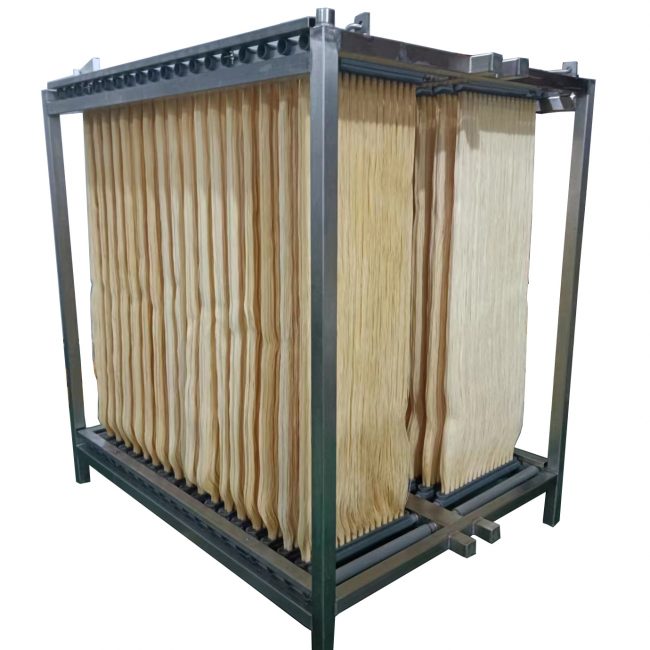
MBR membrane modules (submerged)
\n
Containerized MBR systems and packaged wastewater treatment plants
\n
Dissolved Air Flotation (DAF) systems
\n
Ultrafiltration (UF) systems
\n
Industrial Reverse Osmosis (RO) systems
\n
\n
Each product is the result of extensive research and development. The PVDF and PVC hollow fiber membranes, for example, are produced using a proprietary spinning process that ensures consistent pore size, high mechanical strength, and excellent chemical resistance. The submerged MBR modules are assembled in a controlled cleanroom environment to prevent contamination. The containerized MBR systems are pre-fabricated and pre-tested, reducing on-site installation time and cost. The DAF systems are designed to remove oils, grease, and suspended solids efficiently, while the RO systems provide high-purity water for industrial processes.
\n
Design Phase: From Client Requirements to Engineering Blueprints
\n
The design phase is the most critical part of the MBR factory journey. It begins with a detailed consultation with the client. HINADA's engineers gather data on wastewater characteristics, flow rates, discharge standards, site conditions, available space, power supply, and budget. This information is used to create a preliminary process design. The design team then selects the appropriate membrane technology, biological treatment configuration, and equipment layout.
\n
Understanding the Wastewater
\n
Every wastewater stream is unique. Municipal sewage typically contains high levels of organic matter, nitrogen, and phosphorus. Industrial wastewater may contain heavy metals, solvents, dyes, or other toxic substances. Rural decentralized wastewater often has lower flow rates but highly variable loads. HINADA's engineers perform a thorough analysis of the wastewater, including chemical oxygen demand (COD), biological oxygen demand (BOD), total suspended solids (TSS), ammonia nitrogen, total nitrogen, total phosphorus, pH, temperature, and potential inhibitors. This analysis determines the biological treatment strategy, such as aerobic, anoxic, or anaerobic processes, and the membrane flux rate.
\n
Process Design and Membrane Selection
\n
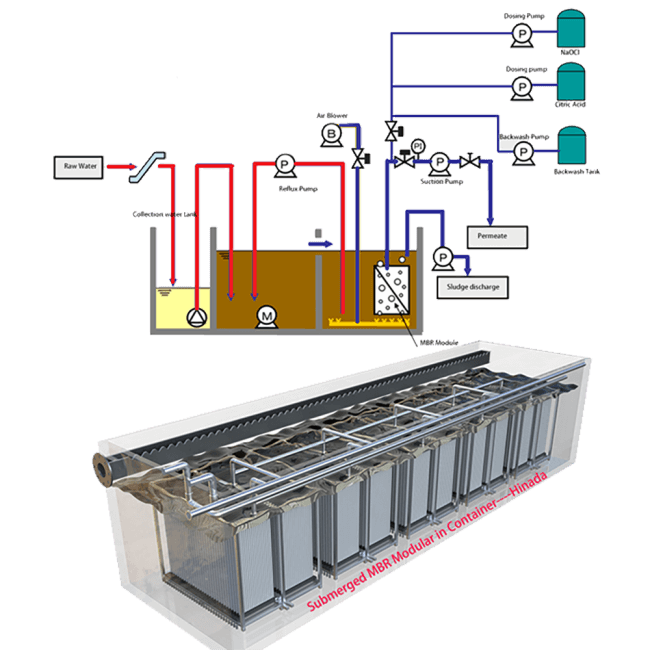
Once the wastewater characteristics are known, the process design is developed. The MBR process combines a biological reactor with a membrane filtration unit. The biological reactor degrades organic matter and nutrients, while the membrane separates the treated water from the biomass. HINADA offers both PVDF and PVC hollow fiber membranes. PVDF membranes are preferred for their high chemical resistance and mechanical strength, making them suitable for harsh industrial wastewater. PVC membranes are more cost-effective and are often used for municipal and less aggressive applications. The membrane module configuration, packing density, and aeration strategy are optimized for each project.
\n
System Layout and Integration
\n
The system layout is designed to fit the available space and to facilitate maintenance. HINADA's engineers use 3D modeling software to create a virtual replica of the entire system. This allows them to identify potential clashes, optimize piping routes, and ensure that all components are accessible. The layout also considers the integration of auxiliary equipment, such as blowers, pumps, valves, sensors, and control panels. For containerized systems, the layout is constrained by the dimensions of standard shipping containers, requiring creative engineering to maximize capacity within a small footprint.
\n
Membrane Manufacturing: The Heart of the Factory
\n
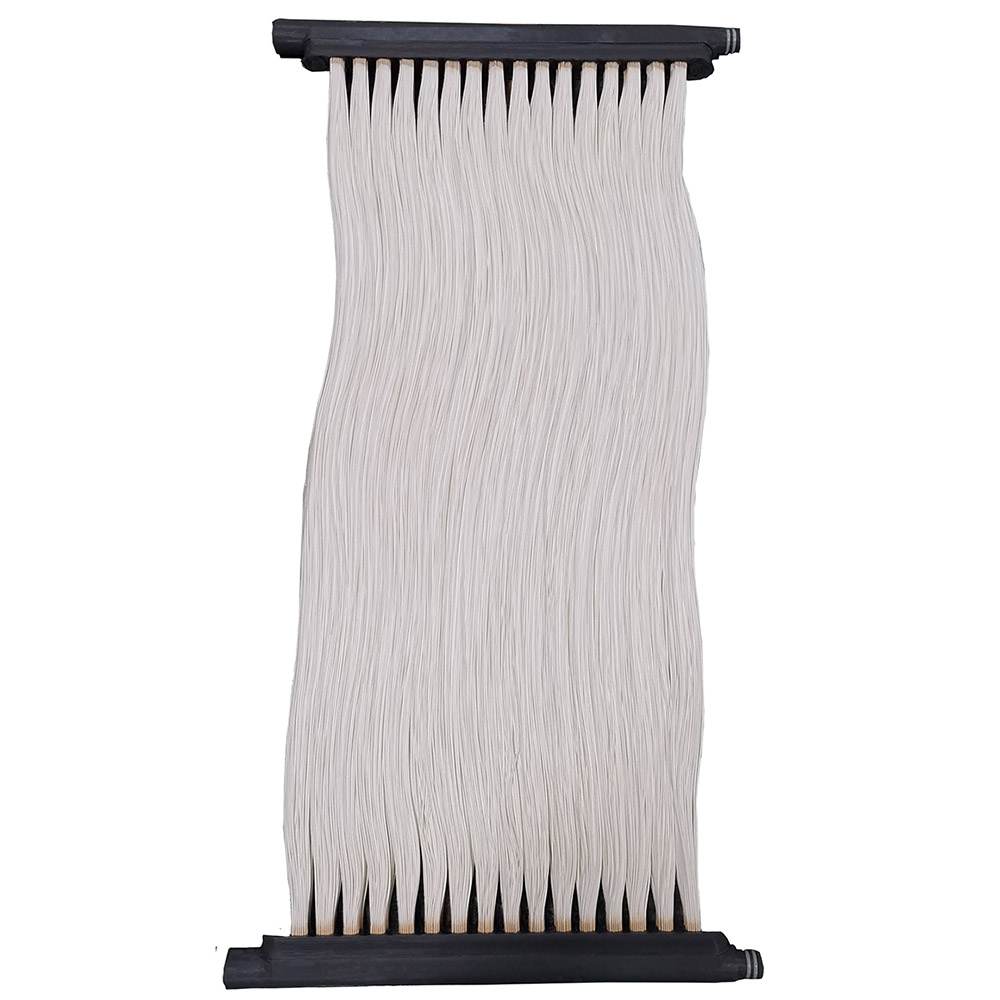
The membrane manufacturing area is the heart of the MBR factory. Here, raw polymers are transformed into hollow fiber membranes through a complex process known as phase inversion. The process begins with the preparation of a polymer solution, which is then extruded through a spinneret to form hollow fibers. The fibers are then passed through a coagulation bath, where the polymer precipitates to form a porous structure. After washing and drying, the fibers are assembled into membrane modules.
\n
Hollow Fiber Spinning
\n
The spinning process is highly sensitive to temperature, humidity, and polymer concentration. HINADA's production line is equipped with precise control systems to maintain consistent conditions. The spinneret design determines the inner and outer diameters of the fibers, as well as the pore size distribution. HINADA uses advanced spinnerets that produce fibers with a narrow pore size distribution, ensuring high filtration efficiency and low fouling tendency. The fibers are then coated with a hydrophilic layer to improve wettability and reduce protein adsorption.
\n
Module Assembly
\n
After spinning, the hollow fibers are bundled and potted into module housings. The potting process uses a special resin that seals the fibers at both ends while keeping the fiber lumens open. This is a critical step because any leak or blockage can compromise the entire module. HINADA's module assembly lines are equipped with automated potting machines that ensure precise resin injection and curing. The modules are then tested for integrity using a pressure decay test. Only modules that pass the test are approved for use.
\n
Quality Control
\n
Quality control is integrated into every stage of membrane manufacturing. HINADA's laboratory performs routine tests on raw materials, polymer solutions, and finished fibers. Tests include tensile strength, elongation, burst pressure, pore size distribution, pure water flux, and rejection rate. The modules are also subjected to accelerated aging tests to predict their lifespan. HINADA's commitment to quality has earned the company a reputation for reliability in over 75 countries.
\n
Equipment Fabrication: From Membranes to Complete Systems
\n
Once the membranes are manufactured, they are integrated into complete systems. HINADA's fabrication facility in Chenzhou is equipped with state-of-the-art machinery for cutting, welding, bending, and assembling stainless steel and plastic components. The fabrication process follows strict engineering drawings and quality standards. Every system is built to order, ensuring that it meets the specific requirements of each project.
\n
Containerized MBR Systems
\n
Containerized MBR systems are a flagship product of HINADA. These systems are pre-assembled inside standard shipping containers, complete with biological tanks, membrane modules, blowers, pumps, and control systems. The containerized design offers numerous advantages: rapid deployment, easy transportation, and minimal on-site construction. HINADA's containerized MBR systems are available in various sizes, from small units treating a few cubic meters per day to large units treating hundreds of cubic meters per day. They are ideal for decentralized applications, temporary camps, and emergency relief.
\n
Packaged Wastewater Treatment Plants
\n
Packaged wastewater treatment plants are another key offering. These plants are similar to containerized systems but are built into custom skids or enclosures. They are designed for above-ground or below-ground installation. HINADA's packaged plants use the same advanced membrane technology as larger systems, ensuring high effluent quality. They are often used for residential complexes, hotels, resorts, and small communities.
\n
DAF and RO Systems
\n
In addition to MBR systems, HINADA manufactures dissolved air flotation (DAF) systems and reverse osmosis (RO) systems. DAF systems are used for pre-treatment, removing oils, grease, and suspended solids from industrial wastewater. RO systems are used for desalination, water reuse, and high-purity water production. These systems complement HINADA's MBR offerings, allowing the company to provide complete water treatment solutions.
\n
Testing and Validation
\n
Before any system leaves the factory, it undergoes rigorous testing and validation. This ensures that the system will perform as expected when installed on-site. HINADA's testing procedures are based on international standards and industry best practices.
\n
Factory Acceptance Testing (FAT)
\n
Factory acceptance testing is conducted at HINADA's facility in Chenzhou. The system is assembled and connected to a test water supply. The test water is typically municipal water spiked with contaminants to simulate real wastewater. The system is operated for several days to evaluate its performance. Key parameters such as flow rate, transmembrane pressure, effluent quality, and energy consumption are monitored. The results are recorded and compared with the design specifications. Any deviations are addressed before shipment.
\n
Performance Validation
\n
For critical projects, HINADA may also perform performance validation using actual wastewater samples from the client's site. This provides a more accurate assessment of the system's capabilities. The validation tests may include chemical oxygen demand (COD) removal, biological oxygen demand (BOD) removal, total suspended solids (TSS) removal, ammonia nitrogen removal, and total phosphorus removal. The data generated from these tests is used to fine-tune the system and to provide the client with a performance guarantee.
\n
Delivery and Logistics
\n
Delivery is a complex operation that involves careful planning and coordination. HINADA's logistics team works closely with the client to determine the best shipping method, whether by sea, air, or land. The systems are packaged to withstand the rigors of international transport. Membranes are shipped in sealed containers with preservative solutions to prevent drying and contamination. Electrical components are packed with desiccants to prevent moisture damage.
\n
Packaging for Global Shipping
\n
HINADA uses custom-designed packaging for each system. Containerized systems are shipped as standard containers, which simplifies logistics and reduces costs. For non-containerized systems, components are packed in wooden crates or on pallets, with clear labeling and handling instructions. HINADA also provides detailed shipping documentation, including packing lists, certificates of origin, and material safety data sheets.
\n
Documentation and Compliance
\n
Every shipment includes a comprehensive set of documents. These include operation and maintenance manuals, installation drawings, electrical schematics, and spare parts lists. HINADA also provides certificates of compliance with international standards such as ISO 9001, CE, and others as required by the destination country. The documentation is prepared in English and, if needed, translated into the local language.
\n
Installation Support and Commissioning
\n
HINADA's involvement does not end with delivery. The company provides installation support and commissioning services to ensure that the system is correctly installed and operates optimally. HINADA's experienced engineers travel to the project site to supervise the installation, train local operators, and perform the initial start-up.
\n
On-Site Installation
\n
On-site installation involves positioning the equipment, connecting piping and electrical systems, and integrating the system with existing infrastructure. HINADA's engineers work closely with the client's contractors to ensure that all connections are correct and that safety protocols are followed. For containerized systems, installation is relatively simple because the system is pre-assembled and pre-tested. For larger systems, installation may take several weeks or months.
\n
Commissioning and Start-Up
\n
Commissioning is the process of bringing the system to full operational status. It begins with a thorough inspection of all components. The system is then filled with water, and the blowers, pumps, and valves are tested. The biological reactor is seeded with activated sludge, and the membrane filtration is started. HINADA's engineers monitor the system closely during the first few weeks of operation, adjusting parameters as needed to achieve stable performance. Once the system meets the performance criteria, it is handed over to the client.
\n
Training and After-Sales Support
\n
HINADA believes that a successful project requires not only excellent equipment but also well-trained operators. The company provides comprehensive training to the client's staff, covering all aspects of system operation and maintenance.
\n
Operator Training
\n
Operator training is conducted on-site or at HINADA's facility. The training covers the principles of MBR technology, system components, normal operating procedures, emergency procedures, and routine maintenance tasks. Trainees receive hands-on experience with the system under the guidance of HINADA's engineers. They also learn how to interpret data from the control system and how to troubleshoot common issues.
\n
Maintenance and Troubleshooting
\n
After the system is handed over, HINADA provides ongoing after-sales support. This includes remote monitoring, periodic site visits, and a spare parts service. HINADA's technical support team is available to answer questions and provide guidance. For critical issues, HINADA can dispatch engineers to the site quickly. The company also offers maintenance contracts to ensure that the system continues to perform at its best for years.
\n
Case Studies: MBR Factories in Action
\n
HINADA's MBR systems have been deployed in numerous projects around the world. The following case studies illustrate the diversity of applications and the effectiveness of HINADA's solutions.
\n
Industrial Wastewater Reuse in Asia
\n
A large textile factory in Southeast Asia needed to treat its dyeing wastewater to meet strict discharge standards. The wastewater contained high concentrations of dyes, salts, and organic matter. HINADA designed a containerized MBR system combined with reverse osmosis. The MBR removed suspended solids, bacteria, and most organic matter, while the RO removed dissolved salts and residual color. The treated water is now reused in the dyeing process, reducing the factory's freshwater consumption by 60 percent. The system has been operating reliably for over three years.
\n
Municipal Sewage Treatment in Africa
\n
A rapidly growing city in West Africa faced a severe shortage of wastewater treatment capacity. The existing treatment plant was overloaded and outdated. HINADA supplied a large submerged MBR system with a capacity of 10,000 cubic meters per day. The system was designed to handle municipal sewage and produce effluent suitable for irrigation and industrial reuse. The project was completed in 18 months, from design to commissioning. The new plant has significantly improved the city's sanitation and reduced pollution of nearby rivers.
\n
Rural Decentralized Sanitation in Europe
\n
In a rural region of Eastern Europe, small communities lacked access to centralized sewage treatment. HINADA provided packaged wastewater treatment plants for several villages. The plants are installed underground and use submerged MBR modules. They are remotely monitored and require minimal maintenance. The treated water is discharged into local streams, meeting EU standards. The project has been praised for its affordability and environmental benefits.
\n
Global Reach and Exhibition Presence
\n
HINADA actively participates in international water treatment exhibitions. These events provide an opportunity to showcase the company's latest products, meet with existing clients, and establish new partnerships. HINADA has exhibited at major trade shows in Asia, Europe, Africa, and the Americas. The company's booth typically features working models of MBR modules, containerized systems, and interactive displays. Visitors can learn about HINADA's technology and discuss their specific project requirements with HINADA's engineers.
\n
Through its global presence, HINADA has built a network of distributors and partners. This network helps the company provide local support and faster response times. HINADA's products are now installed in over 75 countries, from small island nations to large industrial economies. The company's reputation for quality and reliability has made it a trusted partner for many water treatment projects.
\n
Future Trends in MBR Factory Design
\n
The future of MBR factory design is likely to be shaped by several trends. First, there is a growing demand for energy-efficient systems. MBRs are known for their high energy consumption, mainly due to aeration and pumping. HINADA is investing in research to develop low-energy membranes and optimized aeration strategies. Second, there is a trend toward digitalization. HINADA is incorporating IoT sensors and cloud-based monitoring into its systems, allowing remote diagnostics and predictive maintenance. Third, there is a push for sustainability. HINADA is exploring the use of recycled materials in membrane production and the recovery of resources such as phosphorus and biogas from wastewater.
\n
Another trend is the decentralization of wastewater treatment. Containerized and packaged MBR systems are becoming increasingly popular for small communities, industrial parks, and remote areas. HINADA is well-positioned to serve this market with its flexible and scalable solutions. The company is also expanding its range of membrane products, including new PVDF and PVC formulations with higher permeability and fouling resistance.
\n
Conclusion
\n
The journey from design to delivery at an MBR membrane bioreactor factory is a complex and fascinating process. It requires a deep understanding of wastewater treatment, membrane science, mechanical engineering, and logistics. HINADA Water Treatment Tech Co., Ltd. has mastered this process over more than a decade of experience. From its founding in 2012 in Guangzhou to its expanded manufacturing base in Chenzhou, Hunan, HINADA has grown into a globally recognized manufacturer. With a complete ecosystem from membrane R&D to turnkey solution delivery, HINADA serves clients in over 75 countries.
\n
Whether it is industrial wastewater treatment and reuse, municipal sewage treatment and water recycling, rural decentralized water supply and sanitation, or drinking water purification, HINADA offers reliable and efficient solutions. The company's two core technology pillars, hollow fiber ultrafiltration membranes and intelligent integrated wastewater treatment equipment, are the foundation of its success. As the world faces increasing water challenges, HINADA continues to innovate and deliver. The MBR factory of the future will be smarter, greener, and more efficient, and HINADA is ready to lead the way.
\n
\n
About HINADA Water Treatment Tech Co., Ltd.
\n
HINADA Water Treatment Tech Co., Ltd. is a globally recognized manufacturer of wastewater treatment equipment, hollow fiber ultrafiltration (UF) membranes, submerged MBR membrane modules, integrated packaged wastewater treatment systems, and DAF systems. Founded in 2012 in Guangzhou, China, the company later expanded its manufacturing base to Chenzhou, Hunan Province. Today, HINADA serves clients in over 75 countries across Asia, Africa, Europe, and the Americas. The company provides a truly integrated solution from designation, supplying, installation support, and commissioning to training. With more than 13 years of experience in the water treatment industry and 10 years of membrane and equipment manufacturing experience, HINADA has built a complete ecosystem from membrane R&D and component manufacturing to equipment fabrication and turnkey solution delivery. For more information, visit HINADA's website or contact the company directly.