How a Containerized MBR System factory Meets Tight Deadlines
How a Containerized MBR System factory Meets Tight Deadlines
September 30, 2026
Author
Solution Provider, through a professional technical team, we provide customers with targeted equipment selection recommendations and comprehensive after-sales services, winning the trust and recognition of customers.
Sarah M.
This article explores how a containerized MBR system factory meets tight deadlines, focusing on HINADA Water Treatment Tech Co., Ltd. as a case study. It begins by discussing the rising demand for rapid wastewater treatment solutions and explains what containerized MBR systems are, highlighting their advantages such as rapid deployment, compact footprint, and high effluent quality. The article then details the anatomy of tight deadlines in wastewater projects and how HINADA's factory is built for speed and quality through vertical integration, in-house membrane manufacturing, and modular design. The production process is broken down into stages: design and engineering, procurement, membrane production, container fabrication, assembly and integration, testing, and shipping. Quality control measures are emphasized to show that speed does not compromise performance. Logistics and global delivery, installation and commissioning, and real-world case studies are presented. The role of R&D, standardization vs. customization, supply chain resilience, workforce training, and project management best practices are also covered. Frequently asked questions and future trends round out the discussion. The article concludes that HINADA's integrated ecosystem, extensive experience, and global presence enable it to deliver high-quality containerized MBR systems on time, making it a trusted partner for urgent wastewater treatment needs.
How a Containerized MBR System Factory Meets Tight Deadlines
In the fast-paced world of wastewater treatment, deadlines are often non-negotiable. Whether it is a municipal project facing regulatory fines for delayed discharge compliance, an industrial plant needing to ramp up production, or a remote community awaiting safe sanitation, the pressure to deliver a functioning treatment system quickly is immense. Traditional concrete-based wastewater treatment plants can take months, sometimes years, to design, permit, build, and commission. This timeline is frequently incompatible with the urgent needs of modern projects. Enter the containerized membrane bioreactor (MBR) system, a prefabricated, plug-and-play solution that can be shipped, installed, and operational in a fraction of the time. But how exactly does a factory that manufactures these systems meet tight deadlines without sacrificing quality? This article explores the inner workings of a containerized MBR system factory, using HINADA Water Treatment Tech Co., Ltd. (HINADA) as a prime example of how vertical integration, modular design, and efficient manufacturing processes enable rapid project delivery.
HINADA, founded in 2012 in Guangzhou, China, and later expanding its manufacturing base to Chenzhou, Hunan Province, has established itself as a globally recognized manufacturer of wastewater treatment equipment. The company serves clients in over 75 countries across Asia, Africa, Europe, and the Americas. Its core products include PVDF/PVC hollow fiber ultrafiltration (UF) membranes, submerged MBR membrane modules, containerized MBR systems and packaged wastewater treatment plants, dissolved air flotation (DAF) systems, ultrafiltration (UF) systems, and industrial reverse osmosis (RO) systems. With more than 13 years of experience in the water treatment industry and 10 years of membrane and equipment manufacturing experience, HINADA has developed a complete ecosystem that spans membrane R&D and component manufacturing to equipment fabrication and turnkey solution delivery. This ecosystem is the foundation upon which the company meets even the most demanding deadlines.
undefined
The Rising Demand for Rapid Wastewater Treatment Solutions
Several global trends are driving the need for faster wastewater treatment deployment. First, urbanization and industrialization in developing regions are outpacing the construction of traditional centralized treatment infrastructure. Second, stricter environmental regulations are forcing industries and municipalities to upgrade or install treatment systems quickly to avoid penalties. Third, decentralized and remote communities require compact, self-contained solutions that can operate without extensive civil works. Fourth, emergency situations such as natural disasters or temporary work camps demand immediate sanitation solutions. In all these scenarios, containerized MBR systems offer a compelling answer.
A containerized MBR system is essentially a complete wastewater treatment plant built inside one or more shipping containers. It combines biological treatment with membrane separation, producing high-quality effluent that can be reused or safely discharged. The modular nature of these systems allows for rapid scaling and deployment. However, the speed advantage is only realized if the factory behind the system can actually produce and deliver it on time. This is where the manufacturing capabilities of a company like HINADA become critical.
HINADA has been at the forefront of this trend, supplying containerized MBR systems to clients in diverse sectors. The company's integrated approach allows it to respond quickly to inquiries, provide detailed proposals, and commence manufacturing without delays. This responsiveness is a key differentiator in a market where time is often the most critical factor.
Understanding Containerized MBR Systems
Before delving into the manufacturing process, it is important to understand what a containerized MBR system comprises. At its core, an MBR system integrates a biological reactor with a membrane filtration unit. The biological process degrades organic matter, while the membrane physically separates solids, bacteria, and viruses from the treated water. The result is a compact, high-efficiency treatment solution with a small footprint.
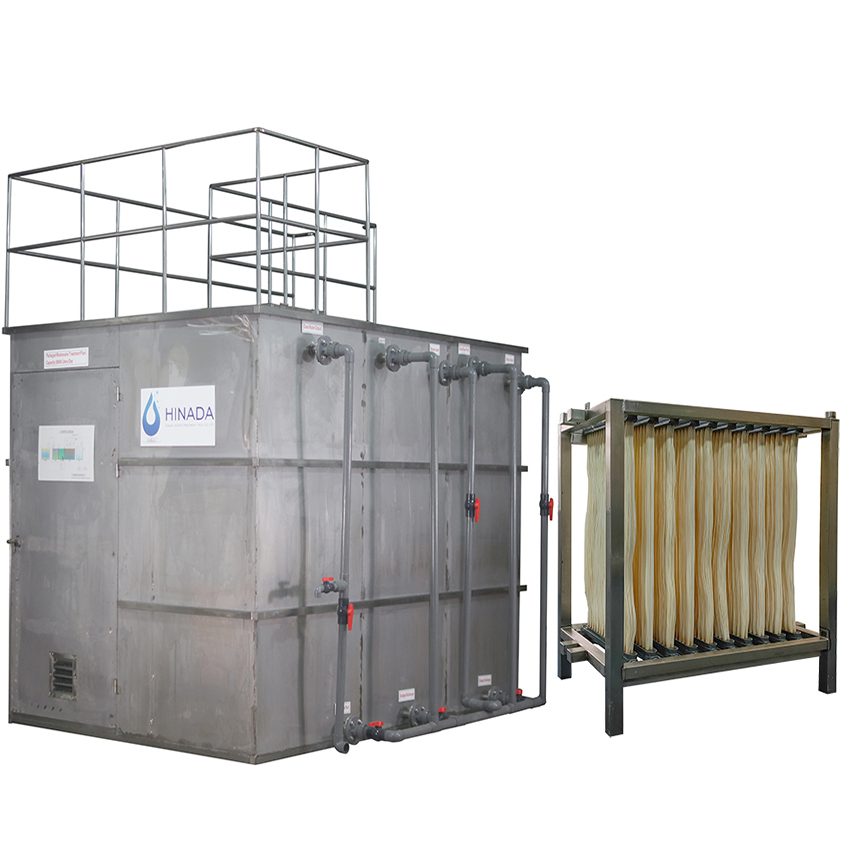
Containerized versions package all necessary components—equalization tank, aeration tank, membrane tank, blowers, pumps, valves, controls, and chemical dosing systems—into standard ISO shipping containers. These containers are modified with insulation, ventilation, lighting, and access points. Piping and wiring are pre-installed and tested at the factory. The system is then shipped as a complete unit, ready to be connected to local utilities and piping upon arrival.
The key advantages of containerized MBR systems include:
Rapid deployment: Factory-built and pre-tested, reducing on-site construction time by up to 70%.
Compact footprint: Ideal for space-constrained sites.
Scalability: Multiple containers can be linked to increase capacity.
High effluent quality: MBR membranes produce water suitable for reuse.
Low civil works: Only a simple concrete pad and utility connections are required.
Mobility: Systems can be relocated if needed.
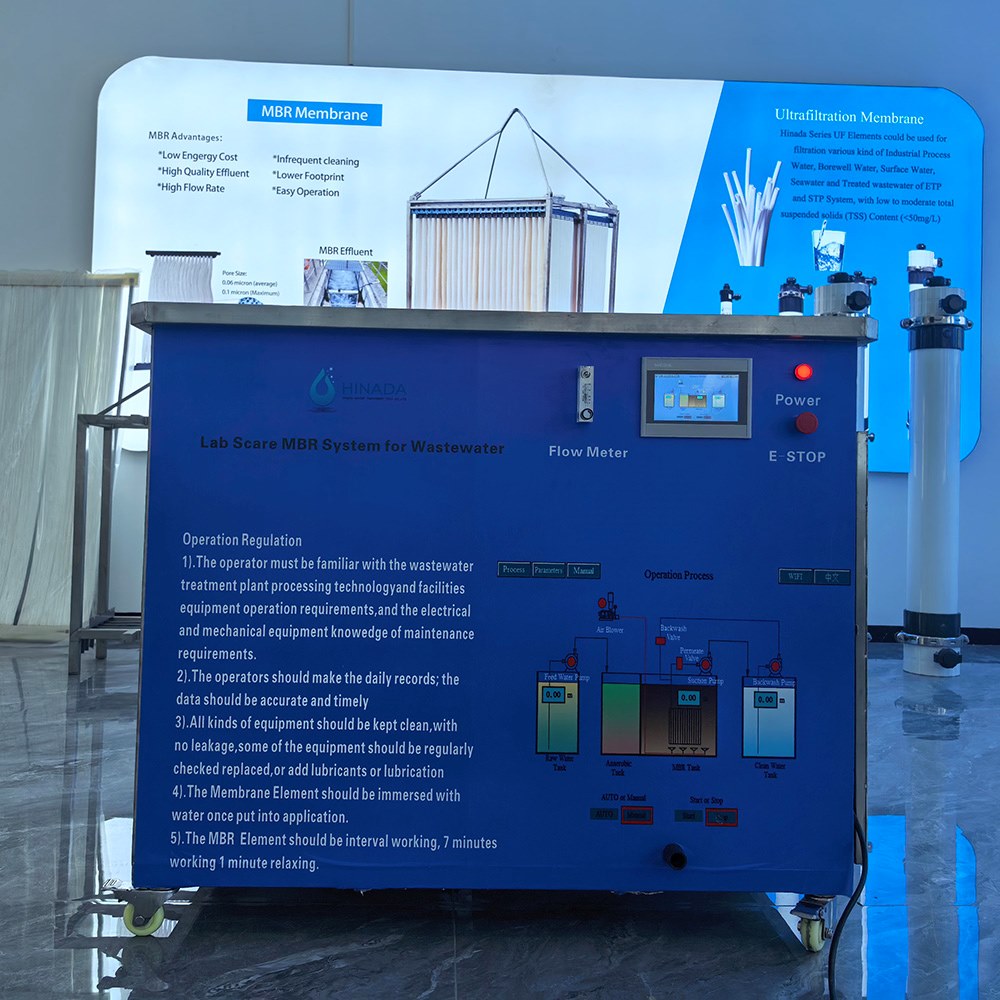
HINADA manufactures both submerged MBR membrane modules and complete containerized MBR systems. The company's submerged MBR modules are designed for high flux and long service life, utilizing PVDF or PVC hollow fiber membranes. These modules are the heart of the containerized systems, and HINADA's in-house production of these membranes gives it a significant advantage in meeting deadlines.
In addition to MBR systems, HINADA produces a range of complementary products such as DAF systems, UF systems, and RO systems. This broad portfolio allows the company to offer integrated solutions for various water and wastewater treatment needs. For clients with tight deadlines, having a single supplier for multiple treatment stages simplifies procurement and reduces coordination time.
The Anatomy of a Tight Deadline in Wastewater Projects
To appreciate how a factory meets tight deadlines, one must first understand what constitutes a tight deadline in this industry. A typical wastewater treatment project involves several phases: feasibility study, design, permitting, procurement, manufacturing, shipping, site preparation, installation, commissioning, and performance testing. In traditional projects, these phases are often sequential, leading to long lead times. A tight deadline compresses these phases, sometimes overlapping them.
Common sources of tight deadlines include:
Regulatory compliance: A factory may be given a fixed date by which it must treat its effluent or face fines or shutdown.
Production schedules: A new industrial facility may need wastewater treatment operational before it can start production.
Seasonal constraints: In some regions, construction is only possible during certain months.
Funding requirements: Grants or loans may have expiration dates for project completion.
Emergency response: Disasters or disease outbreaks require immediate sanitation.
Political or public pressure: Communities may demand quick action on pollution issues.
In each case, the ability to shorten the manufacturing and delivery timeline is crucial. A containerized MBR system factory can shave months off a project by shifting work from the site to the factory. But this requires the factory to be highly organized, with robust supply chains, skilled labor, and efficient production processes.
HINADA has encountered all these scenarios and has developed strategies to address them. For example, the company maintains a stock of standard containers and membrane modules that can be quickly assembled for urgent orders. Its engineering team is trained to work under pressure, and its project managers are experienced in expediting production without compromising quality.
HINADA: A Factory Built for Speed and Quality
HINADA's journey began in 2012, and since then, it has focused on two core technology pillars: hollow fiber ultrafiltration (UF/MBR) membranes and intelligent integrated wastewater treatment equipment. The company's manufacturing base in Chenzhou, Hunan Province, is equipped with modern production lines for membrane spinning, module assembly, container fabrication, and system integration. This vertical integration is the cornerstone of HINADA's ability to meet tight deadlines.
Vertical Integration: From Membrane to Container
Vertical integration means that HINADA controls the entire production chain, from raw materials to finished systems. This eliminates dependency on external suppliers for critical components, which is often a major source of delays. For example, if a project requires a specific membrane module, HINADA can manufacture it in-house rather than waiting for an outside vendor. Similarly, container modifications, piping, and electrical works are all done internally.
The benefits of vertical integration for deadline-driven projects include:
Reduced lead times: No waiting for third-party components.
Quality control: Every stage is monitored under one roof.
Customization: Design changes can be implemented quickly without external coordination.
Cost control: Eliminating middlemen reduces costs, which can be passed on to clients.
Inventory management: Critical parts can be stocked and ready for assembly.
HINADA's complete ecosystem covers membrane R&D, component manufacturing, equipment fabrication, and turnkey solution delivery. This means that when a client places an order for a containerized MBR system, the factory can immediately begin work on multiple fronts simultaneously.
Moreover, HINADA's vertical integration extends to its supply chain. The company has long-term partnerships with suppliers of raw materials such as polymers, stainless steel, and electrical components. These partnerships ensure priority treatment during times of high demand. HINADA also maintains a safety stock of critical items, reducing the risk of production stoppages.
In-House Membrane Manufacturing
Membranes are the most critical and technically complex component of an MBR system. HINADA produces PVDF and PVC hollow fiber UF membranes, as well as submerged MBR membrane modules. The company's membrane manufacturing facility includes polymer preparation, spinning, coagulation, washing, drying, and module potting. By controlling this process, HINADA ensures a steady supply of high-quality membranes for its containerized systems.
In-house membrane production also allows for rapid customization. Different wastewater streams require different membrane specifications, such as pore size, hydrophilicity, and mechanical strength. HINADA's R&D team can adjust the formulation and production parameters to meet specific project requirements without lengthy external procurement cycles. This agility is invaluable when deadlines are tight.
Moreover, HINADA's membranes are tested rigorously for flux, rejection, and durability. The company's 10 years of membrane manufacturing experience have led to continuous improvements in membrane performance and lifespan. For containerized MBR systems, HINADA typically uses its proprietary submerged MBR modules, which are designed for high solids loading and easy maintenance.
HINADA's membrane production capacity is sufficient to support large-scale projects. The company can produce thousands of square meters of membrane per day, ensuring that even the largest containerized systems can be equipped on time. The production line is automated, with real-time monitoring of critical parameters to ensure consistency.
Modular Design and Prefabrication
Containerized MBR systems are inherently modular. HINADA's engineers design each system as a series of modules that can be fabricated and assembled in parallel. For example, the biological tank, membrane tank, and equipment room can be built as separate skids or container sections. This parallel manufacturing approach significantly reduces the overall production time.
Prefabrication also extends to piping, wiring, and instrumentation. All internal connections are made and tested at the factory. This not only speeds up on-site installation but also improves quality, as factory conditions are controlled and workers are specialized. HINADA's factory in Chenzhou has dedicated areas for each production stage, allowing for a smooth flow from raw materials to finished containers.
The modular design also facilitates shipping. Standard 20-foot or 40-foot containers are used, which can be transported by truck, rail, or ship. HINADA's systems are designed to fit within these standard dimensions, minimizing transportation costs and logistical complexity.
Furthermore, modularity allows for future expansion. If a client's wastewater flow increases, additional containers can be added to the existing system. This scalability is a major advantage for growing communities and industries.
The Production Process: How HINADA Compresses Timelines
To understand how HINADA meets tight deadlines, it is helpful to walk through the production process of a containerized MBR system. While every project is unique, the general workflow can be divided into several stages: design and engineering, procurement, membrane production, container fabrication, assembly and integration, testing, and shipping. Each stage is optimized for speed without compromising quality.
Design and Engineering
The design phase is critical for meeting deadlines. HINADA uses advanced CAD and simulation software to design systems quickly and accurately. Because the company has a library of standard designs for various capacities and applications, much of the engineering work can be customized from existing templates. This reduces design time from weeks to days.
HINADA's engineering team works closely with clients to gather requirements such as influent characteristics, effluent quality standards, site conditions, and available utilities. Based on this information, the team selects the appropriate membrane modules, tank volumes, aeration rates, and control strategies. The design is then translated into detailed fabrication drawings and bill of materials.
For urgent projects, HINADA can assign a dedicated project manager and engineering team to work exclusively on the order. This ensures that design reviews and approvals happen quickly, often within 48 hours. The use of standardized components and modular design further accelerates the process.
HINADA also uses 3D modeling to visualize the entire system and detect any clashes before fabrication. This virtual prototyping reduces the likelihood of errors during assembly, saving valuable time. The engineering team can also generate shop drawings for each container, which are used by the fabrication and assembly teams.
Procurement and Supply Chain Management
Even with vertical integration, HINADA relies on a network of suppliers for raw materials, pumps, blowers, valves, and electrical components. To meet tight deadlines, the company maintains strategic inventory of long-lead items and has established relationships with reliable suppliers who can deliver quickly. The procurement team uses an ERP system to track orders and inventory in real time, ensuring that materials arrive just in time for production.
HINADA's global presence also helps. With clients in over 75 countries, the company has experience navigating international supply chains and customs regulations. For projects with extremely tight deadlines, HINADA can prioritize procurement and even arrange for expedited shipping of critical components.
The procurement team works closely with engineering and production to forecast material needs. For standard containerized MBR systems, many components are kept in stock. For custom systems, the team can source materials in parallel with design, further compressing the timeline.
Membrane Production
As mentioned, HINADA manufactures its own membranes. The membrane production line operates on a schedule that can be adjusted to meet project deadlines. For a typical containerized MBR system, the required number of membrane modules is determined during design. The production team then schedules the spinning and potting of these modules. Because the process is in-house, there is no waiting for external suppliers.
HINADA's membrane production capacity is substantial, allowing for the simultaneous production of modules for multiple projects. The company also maintains a stock of standard membrane modules that can be used for urgent orders. If a custom membrane is needed, the R&D team can develop and produce it in a matter of weeks, rather than months.
The membrane production process is highly automated. Robots handle the spinning and potting, ensuring consistent quality and high throughput. Quality control checks are performed at each stage, from fiber spinning to module assembly. Any defects are detected early, preventing delays later in the production process.
Container Fabrication
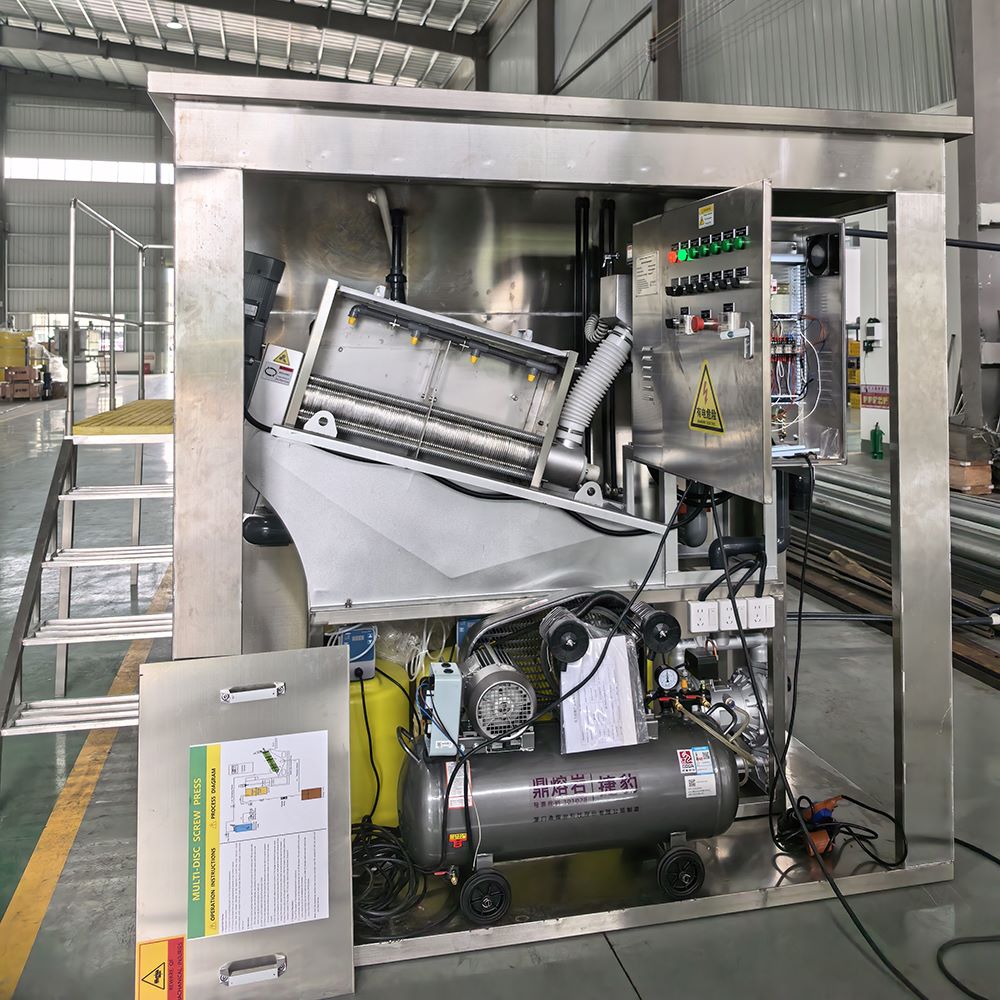
Container fabrication involves modifying standard shipping containers to house the MBR system. This includes cutting openings for pipes and cables, installing insulation, adding lighting and ventilation, and constructing internal partitions. HINADA's fabrication shop is equipped with CNC cutting machines, welding stations, and painting booths. The work is organized into cells, with each cell responsible for a specific task.
To save time, HINADA often uses new or refurbished containers that are readily available. The fabrication process is standardized, with jigs and fixtures that ensure consistency and speed. Depending on the complexity, container fabrication can be completed in 1-2 weeks.
HINADA also fabricates the internal tanks, such as the aeration tank and membrane tank. These tanks are made of stainless steel or fiberglass, depending on the application. They are prefabricated and tested for leaks before being installed in the container. This prefabrication approach allows the tanks to be built while the container is being modified, saving time.
Assembly and Integration
Assembly and integration is where all components come together. This stage includes installing the membrane modules, pumps, blowers, valves, piping, electrical panels, and control systems. HINADA's assembly line is designed for efficiency, with workers specialized in different tasks. The modular design means that sub-assemblies can be built separately and then integrated into the container.
For example, the membrane tank skid may be assembled with its modules and piping, then lifted into the container. Similarly, the blower and pump skids are pre-assembled and tested before installation. This parallel assembly approach reduces the time spent on the main line. HINADA's assembly team is experienced and can complete a standard containerized MBR system in 2-3 weeks, depending on capacity.
During assembly, HINADA uses torque-controlled tools and standardized procedures to ensure that every connection is secure and leak-free. The electrical wiring is color-coded and labeled, simplifying installation and future maintenance. All components are positioned for easy access, which is important for maintenance once the system is operational.
Testing and Quality Control
Testing is a non-negotiable step that ensures the system works as designed. HINADA conducts factory acceptance tests (FAT) on every containerized MBR system before shipping. These tests include hydrostatic testing of piping, electrical continuity and insulation testing, functional testing of pumps and blowers, and simulation of the control system. For MBR systems, a clean water test is often performed to check membrane integrity and flux.
To meet tight deadlines, HINADA integrates testing into the assembly process. Instead of waiting until the entire system is assembled, individual components and subsystems are tested as they are installed. This allows for early detection of issues and avoids last-minute delays. The quality control team works alongside production, ensuring that every step meets HINADA's stringent standards.
HINADA's testing protocols are documented and traceable. Each test result is recorded and included in the final quality dossier. Clients are welcome to witness the FAT either on-site or via video link. This transparency builds trust and ensures that the system will perform as expected upon arrival.
Shipping and Logistics
Once the system passes testing, it is prepared for shipping. This includes draining water, securing loose items, and packaging for transport. HINADA's logistics team handles all export documentation, customs clearance, and shipping arrangements. The company has extensive experience shipping to Asia, Africa, Europe, and the Americas, and can choose the fastest and most cost-effective routes.
For urgent projects, HINADA can arrange for air freight or expedited sea freight. While air freight is expensive, it may be justified for critical components or small systems. For larger systems, sea freight is the norm, and HINADA works with reputable freight forwarders to ensure timely delivery. The company also provides detailed shipping and installation manuals to facilitate smooth on-site work.
HINADA's containerized systems are designed to withstand the rigors of transport. They are secured to the container floor and walls, and fragile components are protected with padding. The company also offers optional GPS tracking and shock sensors to monitor the shipment in real time.
Quality Control: Ensuring Speed Does Not Compromise Performance
Meeting tight deadlines is meaningless if the delivered system does not perform. HINADA places a strong emphasis on quality control at every stage. The company is certified to ISO 9001:2015 and follows rigorous quality management procedures. From incoming material inspection to final performance testing, every step is documented and verified.
Key quality control measures include:
Material verification: All raw materials and components are inspected for conformity to specifications.
In-process inspection: Production workers perform self-checks, and dedicated QC inspectors audit critical stages.
Membrane integrity testing: Each membrane module is tested for leaks and permeability.
Electrical safety testing: All wiring is tested for continuity, insulation, and grounding.
Performance testing: The complete system is run with clean water to verify flow rates, pressures, and control logic.
Documentation: A comprehensive quality dossier is provided with each system, including test reports, certificates, and O&M manuals.
HINADA's quality control team is independent of production, ensuring unbiased oversight. This structure allows the company to maintain high quality even when working under tight deadlines. In fact, the discipline required for fast production often improves overall quality, as processes are standardized and waste is minimized.
HINADA also conducts regular internal audits and supplier audits to ensure that quality standards are maintained throughout the supply chain. Any non-conformance is addressed immediately, with corrective actions implemented to prevent recurrence.
Logistics and Global Delivery
Shipping a containerized MBR system to a remote site is a complex logistical operation. HINADA's experience in over 75 countries has streamlined this process. The company's logistics team coordinates with freight forwarders, customs brokers, and local agents to ensure smooth delivery. For projects with tight deadlines, HINADA can provide door-to-door delivery, including unloading and positioning at the site.
Containerized systems are designed to be transportable by standard equipment. They can be lifted by crane, rolled onto trucks, or shipped on flat racks. HINADA provides detailed weight and dimension data, as well as lifting points, to facilitate handling. The company also offers optional shock and vibration monitoring during transit to ensure the system arrives undamaged.
In some cases, HINADA pre-assembles multiple containers into a single system at the factory, then disassembles them for shipping. This ensures that all parts fit together perfectly upon arrival. The company also provides on-site supervision for reassembly if required.
HINADA's logistics team is experienced in dealing with customs regulations in various countries. They prepare all necessary documents, such as commercial invoices, packing lists, certificates of origin, and insurance certificates. This reduces the risk of delays at ports and borders.
Installation and Commissioning: The Final Sprint
Installation and commissioning are the final steps before the system is handed over. For containerized MBR systems, these steps are greatly simplified compared to traditional plants. The container is placed on a prepared foundation, and connections are made to influent, effluent, power, and air supplies. Because the system is pre-tested, commissioning is primarily a matter of checking connections and starting up the system.
HINADA provides comprehensive installation support and commissioning services. The company's engineers can travel to the site to oversee installation, train local operators, and perform initial start-up. For tight deadlines, HINADA can mobilize a team quickly, often within days of the system's arrival. The company also offers remote support via video conferencing and data monitoring.
Commissioning typically involves:
Mechanical check: Verifying that all equipment is installed correctly and rotates freely.
Electrical check: Confirming power supply, phase rotation, and control panel functionality.
Instrument calibration: Calibrating flow meters, pressure sensors, and analyzers.
Water test: Filling tanks and running the system with clean water to check for leaks and proper operation.
Biological start-up: Introducing activated sludge and gradually increasing influent flow.
Performance test: Operating the system under design conditions and verifying effluent quality.
HINADA's commissioning team is experienced in troubleshooting and can resolve issues quickly. The company also provides a detailed commissioning report and operator training to ensure the system continues to perform well after handover.
For projects in remote locations, HINADA can provide remote commissioning support. The system's control panel can be equipped with a cellular or satellite modem, allowing HINADA engineers to monitor and adjust the system from their headquarters. This capability is invaluable when travel is restricted or when deadlines are extremely tight.
Case Studies: Real-World Deadlines Met
HINADA has successfully delivered numerous containerized MBR systems under tight deadlines. Here are a few examples:
Case Study 1: Industrial Park in Southeast Asia
A large industrial park in Southeast Asia needed a wastewater treatment plant to handle 2,000 m³/day of mixed industrial effluent. The park was facing strict discharge limits and had only 4 months from contract signing to commissioning. HINADA designed a containerized MBR system with 6 containers, including two membrane tanks. The system was manufactured in 10 weeks, shipped in 2 weeks, and commissioned in 3 weeks. The effluent quality exceeded local standards, and the park was able to start operations on schedule.
Case Study 2: Remote Mining Camp in Africa
A mining company in Africa required a compact wastewater treatment system for a remote camp of 500 workers. The site had no existing infrastructure, and the deadline was 3 months. HINADA supplied a single 40-foot containerized MBR system with a capacity of 100 m³/day. The system was pre-assembled and tested at the factory, then shipped by sea and truck. Installation took only 5 days, and commissioning was completed in 2 days. The system has been operating reliably for over two years.
Case Study 3: Municipal Upgrade in Europe
A small municipality in Europe needed to upgrade its aging wastewater treatment plant to meet new EU standards. The site was in a sensitive environmental area with limited space. The deadline was 6 months. HINADA provided a containerized MBR system with a capacity of 1,500 m³/day. The system was delivered in 12 weeks and installed in 4 weeks. The compact footprint allowed it to fit into the existing site without major civil works. The plant now produces high-quality effluent for reuse.
These case studies demonstrate HINADA's ability to meet tight deadlines across different applications and regions. The common factors are early involvement, standardized design, in-house manufacturing, and experienced project management.
The Role of R&D in Meeting Deadlines
Research and development is not just about innovation; it is also about improving manufacturability and reducing lead times. HINADA's R&D team is constantly working on new membrane formulations, more efficient module designs, and smarter control systems. By staying at the forefront of technology, HINADA can offer solutions that are both high-performance and quick to produce.
For example, HINADA has developed a new generation of PVDF hollow fiber membranes with higher mechanical strength and chemical resistance. These membranes last longer and require less frequent cleaning, which reduces downtime for clients. The manufacturing process for these membranes has also been optimized, allowing for faster production without sacrificing quality.
HINADA's R&D team also works on modular system designs that can be easily scaled. This modularity not only helps clients but also allows HINADA to keep more components in stock, ready for assembly. The team uses finite element analysis (FEA) and computational fluid dynamics (CFD) to optimize designs, reducing the need for physical prototypes and speeding up development.
Standardization vs Customization: Striking the Right Balance
One of the key challenges in meeting tight deadlines is balancing standardization with customization. Every wastewater project is unique, but many have similar requirements. HINADA addresses this by offering a range of standard containerized MBR systems with fixed capacities, such as 50 m³/day, 100 m³/day, 500 m³/day, and 1,000 m³/day. These standard systems can be delivered very quickly because they use pre-designed components and pre-approved configurations.
For projects that require customization, HINADA uses a modular approach. The core treatment process remains the same, but the container layout, tank sizes, and auxiliary equipment can be adjusted. This allows HINADA to meet specific client needs without starting from scratch. The engineering team can modify existing designs, which is much faster than designing a new system from the ground up.
HINADA also maintains a library of standard operating procedures (SOPs) for manufacturing. These SOPs ensure that even customized systems are built efficiently. Workers are trained on standard tasks, and any deviations are documented and approved by engineering. This balance between standardization and customization is a key enabler of fast delivery.
Supply Chain Resilience
Global supply chains can be unpredictable. To meet tight deadlines, HINADA has built a resilient supply chain. The company works with multiple suppliers for critical components, so if one supplier is delayed, another can step in. HINADA also holds safety stock of key materials, such as membrane polymers, stainless steel, and electrical components. This inventory buffer protects against sudden shortages.
HINADA's vertical integration further reduces supply chain risk. Because the company manufactures its own membranes and fabricates its own containers, it is less dependent on external suppliers for these critical items. For other components, HINADA has long-term agreements with suppliers, which include priority delivery terms during peak periods.
In addition, HINADA uses a sophisticated ERP system to monitor inventory levels and supplier performance. The system provides early warnings of potential delays, allowing the procurement team to take corrective action. This proactive approach to supply chain management is essential for meeting tight deadlines.
Workforce and Training
A factory is only as good as its workforce. HINADA invests heavily in training its employees. Production workers are trained in multiple skills, allowing them to be reassigned to different tasks as needed. This flexibility is crucial when deadlines are tight and production schedules need to be adjusted.
HINADA's engineers and project managers are also trained in project management and lean manufacturing principles. They use tools such as Gantt charts, critical path analysis, and daily stand-up meetings to track progress and identify bottlenecks. Any issues are escalated immediately to management, ensuring rapid resolution.
The company also fosters a culture of continuous improvement. Employees are encouraged to suggest ways to improve processes and reduce waste. Many of these suggestions have been implemented, resulting in faster production times and higher quality.
Project Management Best Practices
Meeting tight deadlines requires disciplined project management. HINADA assigns a dedicated project manager to every order. The project manager is the single point of contact for the client and coordinates all internal departments, including engineering, procurement, production, quality control, and logistics.
From the moment an order is received, the project manager creates a detailed project schedule. This schedule includes milestones for design approval, material procurement, membrane production, container fabrication, assembly, testing, and shipping. The project manager monitors progress daily and updates the schedule as needed.
HINADA uses a stage-gate process to ensure that each phase is completed before the next begins. However, for urgent projects, some phases can overlap. For example, container fabrication can begin while the design is still being finalized for the internal piping. This parallel processing saves time but requires careful coordination to avoid rework.
Regular communication with the client is also key. HINADA provides weekly progress reports and holds conference calls to keep the client informed. If any issues arise, they are communicated immediately, along with a proposed solution. This transparency builds trust and allows the client to make informed decisions.
Frequently Asked Questions
Q: How quickly can HINADA deliver a containerized MBR system?
A: For standard systems, delivery can be as fast as 6-8 weeks from order confirmation. For custom systems, it typically takes 10-14 weeks. HINADA can expedite delivery for urgent projects, subject to capacity.
Q: What is the maximum capacity of a single containerized MBR system?
A: A single 40-foot container can treat up to 500 m³/day. Multiple containers can be combined to treat larger flows, up to several thousand cubic meters per day.
Q: Can HINADA provide installation and commissioning services?
A: Yes, HINADA offers on-site installation supervision and commissioning services. The company can also provide remote support and training.
Q: What kind of maintenance does a containerized MBR system require?
A: Maintenance is minimal. It includes periodic membrane cleaning, pump and blower servicing, and control system checks. HINADA provides detailed O&M manuals and training.
Q: Is it possible to relocate a containerized MBR system?
A: Yes, the modular design allows the system to be disconnected, moved, and reconnected at a new site. This is a major advantage for temporary or mobile applications.
Future Trends in Containerized MBR Manufacturing
The future of containerized MBR systems is bright. As the demand for rapid deployment continues to grow, factories like HINADA are investing in automation, digitalization, and sustainable manufacturing. Automation will further reduce production times and improve quality consistency. Digitalization, including the use of IoT sensors and digital twins, will enable predictive maintenance and remote monitoring.
Sustainability is also a key trend. HINADA is working on reducing the carbon footprint of its manufacturing processes by using renewable energy, recycling materials, and designing more energy-efficient systems. The company's membranes are already designed for long life and low chemical consumption, contributing to sustainable operations.
Another trend is the integration of advanced treatment technologies, such as advanced oxidation processes (AOPs) and membrane distillation, into containerized systems. This will allow for the treatment of more complex waste streams and the production of higher-quality water for reuse.
HINADA is well-positioned to lead these trends. With its strong R&D capabilities, vertical integration, and global presence, the company will continue to provide fast, reliable, and high-quality wastewater treatment solutions.
Conclusion: The Future of Fast-Track Wastewater Treatment
As the world faces increasing water scarcity and stricter environmental regulations, the demand for rapid wastewater treatment solutions will only grow. Containerized MBR systems offer a compelling combination of speed, quality, and flexibility. However, the ability to meet tight deadlines depends heavily on the manufacturing partner. HINADA Water Treatment Tech Co., Ltd. has proven that vertical integration, in-house membrane production, modular design, and rigorous quality control can enable the delivery of complex systems in weeks rather than months.
With over 13 years of industry experience and a presence in over 75 countries, HINADA continues to innovate and expand its capabilities. The company's two core technology pillars—hollow fiber UF/MBR membranes and intelligent integrated wastewater treatment equipment—are the foundation of its success. By controlling the entire ecosystem from membrane R&D to turnkey solution delivery, HINADA ensures that clients receive high-quality systems on time, every time.
For project owners facing tight deadlines, choosing the right factory can make all the difference. HINADA's track record of successful fast-track projects speaks for itself. As the company actively participates in international water treatment exhibitions and brings Chinese membrane technology to regions where clean water is most needed, it remains a trusted partner for urgent wastewater treatment needs.
In a world where time is of the essence, a containerized MBR system factory like HINADA is not just a supplier—it is a solution provider that understands the urgency and delivers without compromise.
For more information about HINADA's containerized MBR systems, submerged MBR membrane modules, or other wastewater treatment solutions, please visit their website or contact their sales team. HINADA serves clients in Asia, Africa, Europe, and the Americas, providing truly integrated solutions from design to commissioning.