How a Containerized MBR System Supports Water Reuse Goals
How a Containerized MBR System Supports Water Reuse Goals
October 22, 2026
Author
Solution Provider, through a professional technical team, we provide customers with targeted equipment selection recommendations and comprehensive after-sales services, winning the trust and recognition of customers.
Sarah M.
Containerized MBR systems combine biological treatment and membrane filtration in compact, factory-built units. They support water reuse by delivering high-quality effluent, reducing footprint, enabling rapid deployment, and allowing modular expansion. HINADA Water Treatment Tech Co., Ltd., founded in 2012 in Guangzhou and expanded to Chenzhou, Hunan, serves clients in over 75 countries. With more than 13 years of industry experience, HINADA manufactures hollow fiber UF membranes, submerged MBR modules, containerized MBR systems, packaged plants, and DAF systems. The company provides a complete ecosystem from membrane R&D to turnkey delivery, helping municipal, industrial, and decentralized projects meet water reuse goals efficiently and reliably.
How a Containerized MBR System Supports Water Reuse Goals
Water reuse has become a central strategy for municipalities, industries, and communities facing water scarcity, tighter discharge rules, and rising costs. A containerized membrane bioreactor, or MBR, system offers a practical way to turn wastewater into a reliable resource. By combining biological treatment with membrane filtration inside a compact, factory-built unit, it helps operators meet water reuse goals faster and with greater confidence.
Understanding the Containerized MBR Advantage
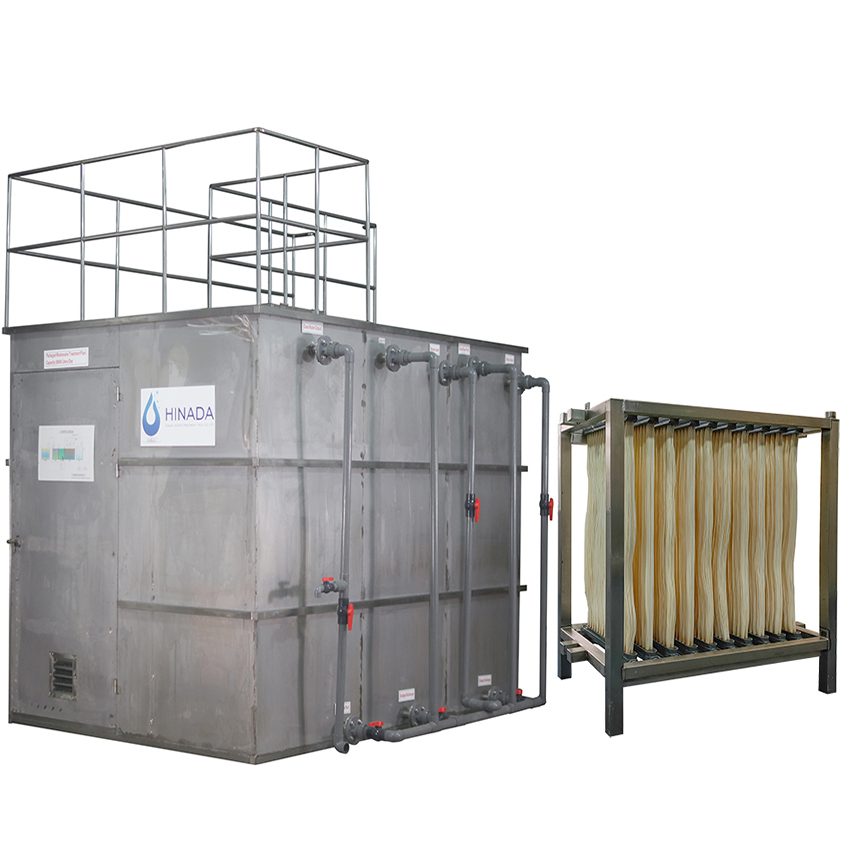
A conventional MBR plant often requires large civil works, long construction schedules, and significant site-specific engineering. A containerized MBR system shifts much of that work to the factory. The biological tank, membrane modules, blowers, pumps, controls, and piping are integrated into a standard container or skid. The result is a plug-and-play treatment plant that can be shipped, installed, and commissioned in a fraction of the time.
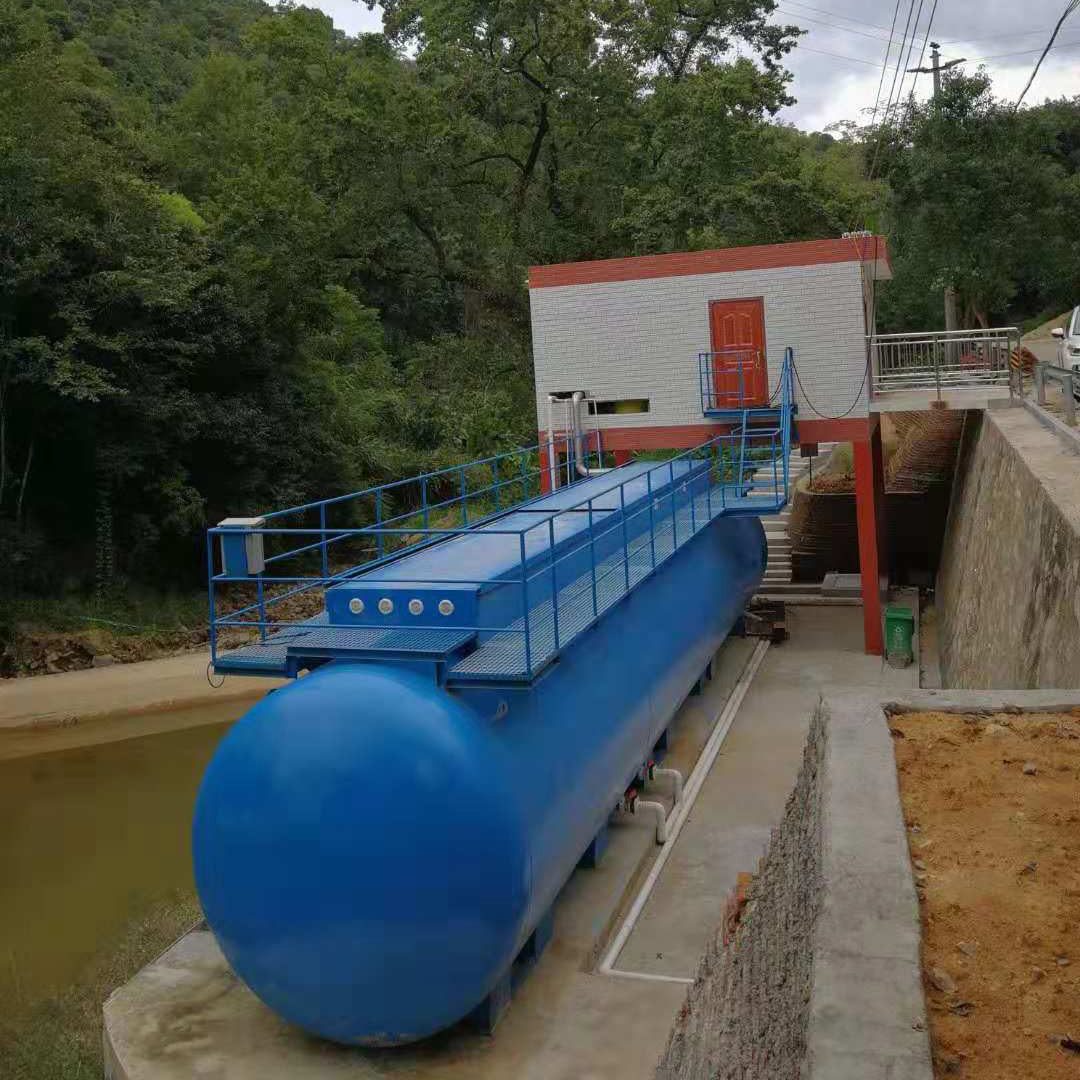
This approach is especially valuable for decentralized applications, industrial parks, remote communities, and temporary sites. It also supports water reuse because the MBR process produces a high-quality effluent that can be reused for irrigation, toilet flushing, cooling, process water, and groundwater recharge.
How MBR Technology Supports Reuse
MBR technology uses membranes to separate treated water from biomass and suspended solids. The membrane barrier removes bacteria, colloids, and macromolecular organics more effectively than conventional settling. The effluent is clear, low in turbidity, and suitable for advanced reuse treatment such as reverse osmosis or disinfection.
Key Reuse Benefits
High effluent quality: Consistent removal of suspended solids and pathogens.
Small footprint: Ideal for space-constrained urban and industrial sites.
Rapid deployment: Factory-built units reduce site work and startup time.
Scalability: Modular containers can be added as demand grows.
HINADA Water Treatment Tech Co., Ltd. is a globally recognized manufacturer of wastewater treatment equipment, hollow fiber ultrafiltration membranes, submerged MBR membrane modules, integrated packaged wastewater treatment systems, and DAF systems. Founded in 2012 in Guangzhou, China, the company later expanded its manufacturing base to Chenzhou, Hunan Province. Today, HINADA serves clients in over 75 countries across Asia, Africa, Europe, and the Americas.
HINADA focuses on two core technology pillars: hollow fiber ultrafiltration and MBR membranes for precise physical separation, and intelligent integrated wastewater treatment equipment for municipal, industrial, and decentralized applications. The company provides a complete ecosystem from membrane research and component manufacturing to equipment fabrication and turnkey solution delivery.
With more than 13 years in the water treatment industry and 10 years of membrane and equipment manufacturing experience, HINADA supports projects from design and supply to installation support, commissioning, and training. Its key application fields include industrial wastewater treatment and reuse, municipal sewage treatment and water recycling, rural decentralized water supply and sanitation, and drinking water purification.
Meeting Water Reuse Goals with Confidence
Containerized MBR systems help communities and businesses treat wastewater close to the source and reuse it close to the point of demand. This reduces pumping costs, preserves freshwater resources, and lowers environmental impact. As water reuse targets become more ambitious, integrated MBR solutions will remain a proven path to resilient water management.
HINADA continues to bring Chinese membrane technology to regions where clean water is most needed, helping clients achieve reuse goals through reliable, integrated, and scalable treatment systems.