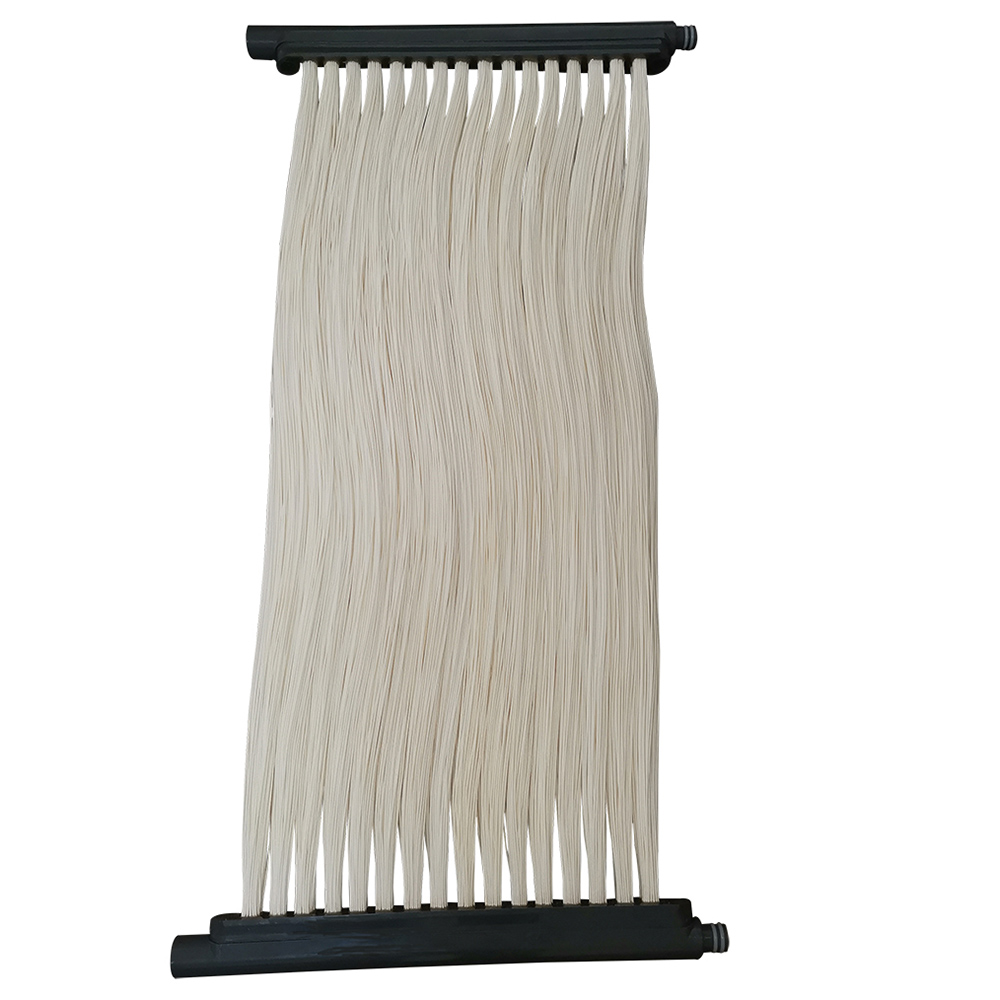
How an MBR Membrane Bioreactor factory Supports Global Project Timelines
How an MBR Membrane Bioreactor factory Supports Global Project Timelines
October 29, 2026
Author
Solution Provider, through a professional technical team, we provide customers with targeted equipment selection recommendations and comprehensive after-sales services, winning the trust and recognition of customers.
Sarah M.
This article examines how MBR membrane bioreactor factories influence and protect global project timelines. It begins by explaining why water and wastewater projects are governed by strict deadlines tied to financing, permits, and production schedules, and then identifies the most common sources of delay, including long-lead membrane supply, late design changes, fragmented procurement, documentation gaps, and commissioning bottlenecks. The article shows how a well-organized factory counters each of these risks through master production scheduling, buffer inventory of standardized components, engineering-to-order flexibility, and transparent progress reporting. It explores vertical integration as a lead-time compressor, covering in-house membrane research and development, component manufacturing, equipment fabrication, and turnkey delivery, and explains how modular design, standardized cassettes, skid-mounted ancillaries, and prefabricated pipework shift labor from the site into the controlled factory environment. Parallel manufacturing capacity, containerized MBR systems, and packaged treatment plants are presented as powerful schedule levers, particularly for decentralized rural programs and industrial clients operating within short shutdown windows. The article details factory acceptance testing as schedule insurance, export logistics and documentation discipline as border-risk mitigation, and installation support, commissioning, and operator training as the critical last mile. It addresses quality control and the cost of rework, spare parts and consumables planning for the long tail of a project, and offers a practical checklist for selecting a factory partner. Reference is made throughout to HINADA Water Treatment Tech Co., Ltd., founded in Guangzhou in 2012 and later expanded to Chenzhou, Hunan Province, which serves clients in more than 75 countries with hollow fiber UF membranes, submerged MBR modules, containerized MBR systems, packaged plants, DAF, UF, and industrial RO systems. The article concludes that the MBR factory is a quiet guarantor of deadlines, and that manufacturer selection is fundamentally a schedule and risk decision rather than a simple procurement choice.
Across Asia, Africa, Europe, and the Americas, the success of a wastewater treatment project is measured long before the first cubic meter of polished effluent is discharged. It is measured in calendar days. A municipal upgrade that slips by three months can delay an entire housing development, push an industrial plant into non-compliance with its discharge permit, or leave a rural community without safe sanitation for yet another season. Behind nearly every one of those deadlines stands a supply chain that most project stakeholders never see: the membrane bioreactor factory where submerged MBR modules, cassettes, skids, and containerized plants are engineered, assembled, and tested before they ever reach a site.
The MBR membrane bioreactor factory is not simply a warehouse of membranes or a workshop that bends steel. It is, in practical terms, a schedule instrument. Its production planning, its inventory strategy, its testing protocols, and its documentation discipline collectively determine whether a project can be commissioned on the date written into a contract. When a factory is well organized, the effect ripples outward through engineering firms, general contractors, municipal utilities, and the communities they serve. When it is not, the delay is felt just as widely.
This article examines, in detail, the many ways a specialized MBR membrane bioreactor manufacturing facility supports global project timelines. It looks at production planning, vertical integration, modular design, factory acceptance testing, export logistics, installation support, and long-term service. It also considers how an established manufacturer such as HINADA Water Treatment Tech Co., Ltd., founded in Guangzhou in 2012 and later expanded into Chenzhou, Hunan Province, approaches these challenges for clients in more than 75 countries.
Why Global Water Infrastructure Runs on Deadlines
Water and wastewater projects are rarely isolated engineering exercises. They are embedded in larger programs. A treatment plant may be one line item in a national sanitation plan, one milestone in an industrial expansion, or one condition in a development finance agreement. Each of those contexts carries its own timetable, and each timetable is usually tied to money: loan disbursement schedules, penalty clauses, performance bonds, and revenue assumptions.
Consider a typical industrial project. A beverage manufacturer builds a new bottling line and, under its environmental permit, must have a functioning wastewater treatment system operational before the line starts production. The treatment system is therefore on the critical path. Every week of delay at the MBR factory becomes a week of idle production capacity at the plant. The financial loss is not theoretical; it is calculated in lost output and in penalties.
Consider a municipal project. A city receives concessional financing to upgrade an overloaded treatment works. The financing agreement includes a completion date, and the utility must demonstrate commissioning before the final tranche is released. Here, the MBR factory's shipping schedule and its commissioning support determine whether the utility meets its obligations to the lender.
Consider a rural or decentralized project. A regional government installs packaged treatment systems across dozens of villages. Each site is small, but the program is large, and the political commitment is tied to a visible completion date. In these programs, the factory's ability to produce standardized units in repeated batches is the single most important factor in keeping the rollout on schedule.
In all three cases, the same conclusion emerges. The membrane bioreactor factory sits at the intersection of engineering, manufacturing, and logistics, and it holds an extraordinary amount of influence over whether a global project meets its timeline.
The Anatomy of Schedule Risk in MBR Projects
To understand how a factory supports timelines, it is necessary to understand where timelines actually break. In membrane bioreactor projects, delay rarely comes from a single catastrophic event. It accumulates from many small, predictable sources that a well-run factory anticipates and absorbs.
Common Sources of Delay
Long-lead membrane supply: Hollow fiber membranes and completed module cassettes often carry the longest lead time of any component in the plant.
Design changes after order placement: Late revisions to flow rates, effluent quality targets, or footprint constraints force re-engineering.
Fragmented procurement: When tanks, membranes, blowers, pumps, and controls come from separate vendors, interface problems multiply.
Site readiness mismatches: Equipment arrives before civil works are complete, or civil works finish before equipment ships.
Documentation gaps: Missing certificates, test reports, or customs paperwork can hold a shipment at port for weeks.
Commissioning bottlenecks: Equipment that has never been wet-tested requires extensive on-site debugging.
Spare parts and consumables: A missing gasket, valve, or instrument can stall start-up after everything else is ready.
Each of these risks has a factory-side countermeasure. Long-lead membrane supply is countered by vertical integration and rolling production. Design changes are countered by modular architectures that tolerate late adjustment. Fragmented procurement is countered by single-source supply of complete systems. Site readiness mismatches are countered by flexible shipping windows and staging. Documentation gaps are countered by export-experienced quality and compliance teams. Commissioning bottlenecks are countered by factory acceptance testing. Spare parts risk is countered by structured spares kits.
In other words, the MBR factory is not merely a place where equipment is built. It is a risk-management system whose output happens to be membrane modules, skids, and packaged plants.
What an MBR Membrane Bioreactor Factory Actually Builds
The term membrane bioreactor factory can be misleading, because the modern facility produces far more than a reactor. A full-scope manufacturer typically produces several product families that must work together as one hydraulic and biological system.
Core Product Families
Product Family
Function in the Project
Typical Timeline Role
PVDF and PVC hollow fiber UF membranes
Physical separation of suspended solids, bacteria, colloids, and macromolecular organics
Long-lead critical component
Submerged MBR membrane modules
Biological treatment combined with membrane separation
Determines biological train completion
Containerized MBR systems
Pre-assembled treatment trains in ISO-format enclosures
Compresses site installation from months to weeks
Packaged wastewater treatment plants
Compact decentralized treatment
Enables rapid multi-site rollout
Dissolved air flotation systems
Pre-treatment and solids removal
Upstream schedule dependency
Ultrafiltration systems
Filtration for reuse and potable applications
Parallel train to MBR
Industrial reverse osmosis systems
Desalination and high-purity reuse
Downstream polishing stage
A manufacturer that produces the entire chain can synchronize delivery. A manufacturer that produces only one element forces the project to coordinate multiple vendors, each with its own schedule priorities. The difference is measurable in weeks.
HINADA, for example, has built its business around two core technology pillars. The first is hollow fiber ultrafiltration and MBR membranes, designed for precise physical separation. The second is intelligent integrated wastewater treatment equipment, designed as ready-to-install solutions for municipal, industrial, and decentralized applications. Together, these pillars allow the company to supply a coherent system rather than a collection of parts.
The Factory as a Schedule Instrument, Not Just a Supplier
There is a meaningful difference between a supplier and a schedule partner. A supplier quotes a lead time and delivers when production permits. A schedule partner builds its production plan around the client's commissioning date and works backward from that date through shipping, testing, assembly, and component procurement.
This backward-planning discipline is what allows a factory to support global timelines rather than merely react to them. It requires several organizational capabilities that are not always present in the industry.
Capability One: Master Production Scheduling
A factory serving multiple continents must balance dozens of concurrent orders. Master production scheduling allocates membrane casting slots, module assembly stations, welding bays, and testing rigs across all active projects. When a project is identified as schedule-critical, the factory can prioritize it without starving others.
Capability Two: Buffer Inventory of Standard Components
Standardized components, such as membrane fibers of common specification, module end caps, permeate headers, and standardized control panels, can be produced to stock rather than to order. Buffer inventory converts a six-week lead time into a two-week assembly and testing period.
Not every project is standard. Industrial effluent characteristics vary widely, and municipal flow projections differ from site to site. A capable factory maintains a modular design library so that engineering-to-order work is limited to the interfaces rather than the whole system.
Capability Four: Transparent Progress Reporting
Project managers on the client side need visibility. Factories that provide milestone photographs, production status reports, and test data during manufacture allow clients to plan downstream activities with confidence rather than hope.
When these four capabilities are present, the factory becomes a participant in project control rather than a black box.
Vertical Integration and the Compression of Lead Time
Vertical integration is one of the most powerful, and least discussed, levers for compressing project timelines. When a single organization controls membrane research and development, component manufacturing, equipment fabrication, and turnkey solution delivery, it removes the handoffs that typically consume weeks of calendar time.
Membrane Research and Development
Membrane development determines how quickly a manufacturer can respond to unusual water chemistry. If a client's wastewater contains high oil and grease, elevated salinity, or abrasive solids, the membrane specification may need adjustment. A manufacturer with in-house research and development can test and qualify a variant without waiting for an external membrane producer to schedule a trial.
HINADA has accumulated more than thirteen years of experience in the water treatment industry and ten years of water treatment membrane and equipment manufacturing experience. That depth matters most precisely when a project is under time pressure and a non-standard solution is required.
Component Manufacturing
In-house production of membrane fibers, module housings, and cassettes eliminates dependence on third-party component lead times. It also eliminates a common failure mode in which a system integrator is ready to assemble but is waiting for a critical subcomponent.
Equipment Fabrication
Fabrication of skids, frames, piping spools, and control panels under the same roof as membrane assembly allows the factory to sequence work efficiently. Piping can be prefabricated while membranes are being potted. Electrical panels can be wired while frames are being coated.
Turnkey Solution Delivery
Turnkey delivery, from design and supply through installation support, commissioning, and training, means the client deals with one schedule. There is no argument between vendors about who delayed whom.
The combined effect of a complete ecosystem, from membrane research and development through component manufacturing to equipment fabrication and turnkey delivery, is a measurable reduction in the total elapsed time between contract signature and process start-up.
Modular Design as a Schedule Multiplier
Modularity is the quiet hero of schedule performance. A membrane bioreactor designed as a set of standardized modules can be manufactured, shipped, and installed far faster than a stick-built system fabricated entirely on site.
Standardized Membrane Cassettes
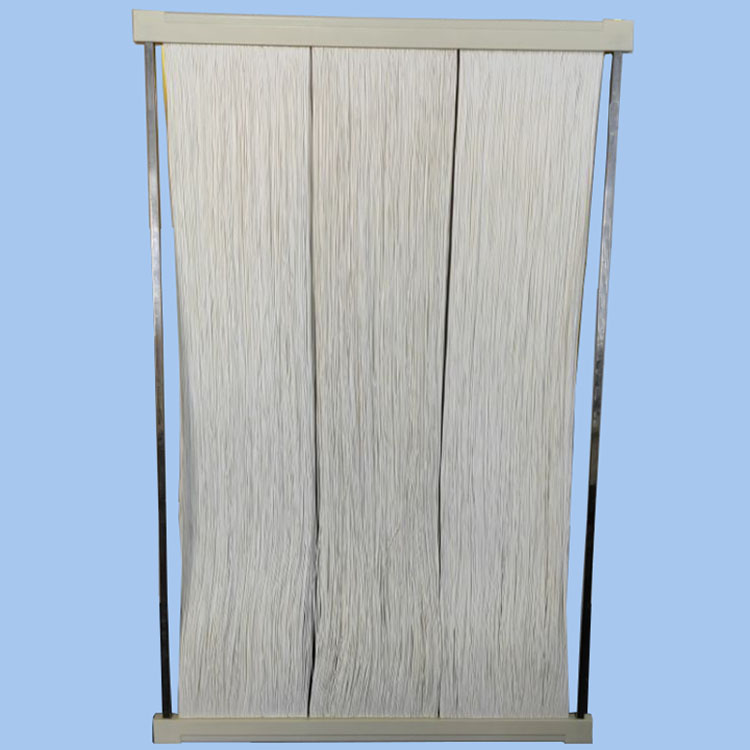
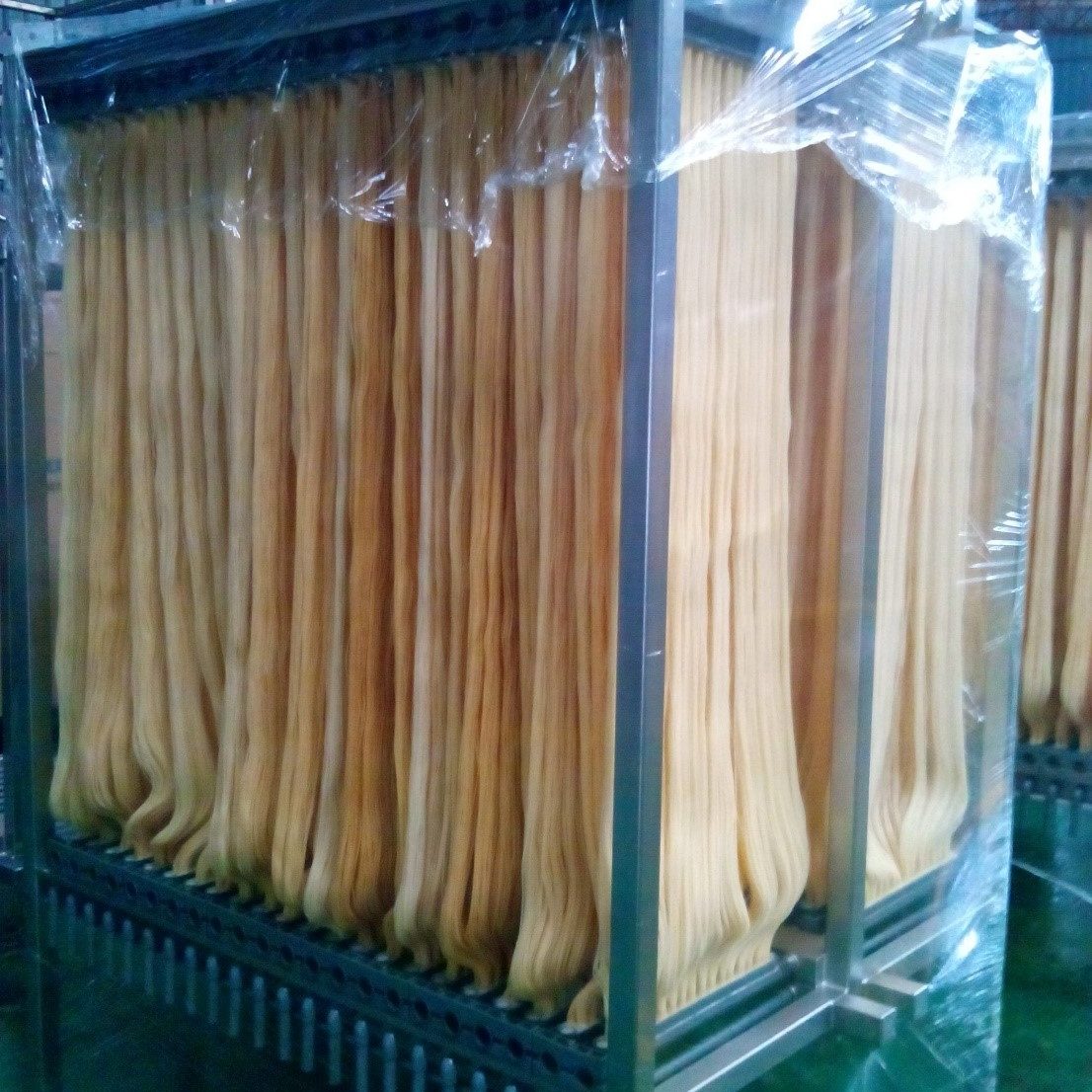
Submerged MBR membrane modules are typically grouped into cassettes that can be lifted, lowered, and connected with standardized headers. This approach allows the factory to pre-assemble and pre-test each cassette, reducing site work to placement and connection.
Skid-Mounted Ancillaries
Blowers, permeate pumps, chemical dosing units, and instrumentation are increasingly mounted on skids. A skid arrives with piping and wiring already terminated, requiring only utility connections on site.
Prefabricated Interconnecting Pipework
Spooling pipework in the factory rather than on site removes a large portion of field labor, which is often the least predictable element of a construction schedule.
Repeatable Train Architecture
When a plant is designed as multiple identical trains, the factory can produce modules in batches. Batch production lowers unit cost and, more importantly for timelines, shortens the manufacturing cycle for each subsequent train.
The practical consequence is that a modular MBR plant can often be delivered in a fraction of the time required for a conventional custom-built facility of equivalent capacity.
Parallel Manufacturing: The Hidden Advantage of Capacity
Capacity is not only about volume. It is about the ability to run multiple workstreams in parallel. A factory with limited floor space and a small workforce must serialize production, meaning one project waits while another is completed. A factory with substantial capacity can produce multiple projects simultaneously.
How Parallel Production Protects Timelines
Multiple membrane casting lines allow different specifications to be produced at the same time.
Dedicated assembly bays prevent one large order from blocking smaller urgent orders.
Independent testing stations allow factory acceptance testing to proceed without queuing.
Separate coating, welding, and finishing areas reduce cross-contamination and rework.
Warehouse capacity allows finished goods to be staged for staggered shipping.
For global projects, parallel production is particularly valuable because shipping windows differ by destination. A manufacturer supplying both an African municipal utility and a European industrial client can align production completion with vessel schedules rather than forcing both clients into the same dispatch window.
HINADA operates manufacturing operations originating in Guangzhou and expanded into Chenzhou, Hunan Province. A multi-site manufacturing base provides additional flexibility, allowing production to be distributed according to product type, capacity demand, and delivery destination.
Typical Lead Time Structures and Where Factories Save Weeks
Understanding lead time structure helps project planners identify where a factory relationship can save time. The table below illustrates a generalized sequence for a submerged MBR system, with indicative durations that vary by specification and capacity.
Stage
Typical Duration
Factory-Side Lever for Compression
Design and engineering freeze
2 to 6 weeks
Standard modular library reduces design scope
Membrane and module production
4 to 10 weeks
In-house casting and buffer stock
Skid and frame fabrication
3 to 8 weeks
Parallel fabrication bays
Assembly and integration
2 to 5 weeks
Pre-engineered interfaces
Factory acceptance testing
1 to 2 weeks
Dedicated test rigs, no queuing
Export packing and documentation
1 to 3 weeks
Experienced export compliance team
Ocean freight and customs
3 to 8 weeks
Flexible incoterms and staging
Site installation
2 to 8 weeks
Containerized or modular delivery
Commissioning and training
2 to 4 weeks
Remote support plus on-site specialists
Factories that excel at schedule support typically compress several of these stages simultaneously. Design freeze is faster because the modular library narrows the decision space. Production is faster because membranes are made in-house. Assembly is faster because interfaces were designed before fabrication. Testing is faster because rigs are available. Logistics is faster because documentation is prepared in advance.
Containerized MBR Systems and Packaged Plants
Few developments have done more for global project timelines than the containerized MBR system. By placing a complete treatment train inside one or more ISO-format enclosures, manufacturers move an enormous amount of site work back into the factory, where it can be controlled.
Why Containerization Accelerates Projects
Civil works are reduced to a foundation slab and utility connections.
All process piping, wiring, and instrumentation is completed and tested before shipment.
Weather-related site delays are largely eliminated during the installation phase.
Skilled labor requirements on site drop significantly, which matters in regions where specialized labor is scarce.
Relocation is possible if the project's needs change, protecting the client's investment.
Packaged wastewater treatment plants follow the same logic at smaller scale. For rural decentralized water supply and sanitation programs, standardized packaged units allow a government or NGO to deploy dozens of systems across a region using the same design, the same spare parts list, and the same operating procedures.
HINADA produces both containerized MBR systems and packaged wastewater treatment plants as part of its integrated equipment portfolio, alongside submerged MBR membrane modules, hollow fiber UF membranes, DAF systems, UF systems, and industrial RO systems. This breadth allows a single manufacturer to serve an entire program, from decentralized village units to large industrial reuse plants.
Factory Acceptance Testing as Schedule Insurance
Factory acceptance testing, commonly abbreviated as FAT, is one of the most effective schedule-protection measures available to a project. During FAT, equipment is assembled, wired, and functionally tested in the factory before shipment. Problems are discovered where they can be solved quickly, by the people who built the equipment, using tools and spare parts that are immediately available.
The alternative, discovering problems on site, is expensive in both money and time. A failed valve actuator discovered in the factory is a same-day fix. The same failure discovered on a remote site may require an international shipment, customs clearance, and a visa for a service technician.
What a Thorough FAT Program Includes
Verification of dimensions against approved drawings
Hydrostatic and leak testing of piping and vessels
Electrical continuity and insulation resistance checks
Functional testing of pumps, blowers, and valves
Instrument calibration verification
Control system logic verification and alarm testing
Membrane integrity testing at module level
Documentation review and as-built markups
Client witness testing, either on site at the factory or by video
Factories that support remote witnessing through video conferencing have removed a significant logistical barrier for international clients. A utility in Africa or a contractor in South America can observe testing without the cost and time of international travel.
Export Logistics, Documentation, and Border Risk
Manufacturing is only half of the timeline equation. A perfectly built system that sits in a port warehouse for six weeks has failed the project. Export logistics is therefore a core factory competency, not an afterthought.
Documentation Discipline
International shipments require commercial invoices, packing lists, certificates of origin, bill of lading instructions, insurance certificates, and in many cases conformity certificates or third-party inspection reports. Missing or inconsistent documents are a leading cause of customs delay.
Experienced manufacturers prepare documentation packages in parallel with production. By the time the equipment is packed, the paperwork is ready for submission.
Packing for Long Voyages and Difficult Roads
Membrane modules are sensitive to impact, ultraviolet exposure, and temperature extremes. Proper export packing, including reinforced crates, moisture barriers, desiccant, and shock indicators, prevents damage that would otherwise require replacement and re-shipment.
Incoterms and Staging Flexibility
Factories that offer flexible incoterms allow clients to choose the point at which responsibility transfers. Some clients have strong freight forwarder relationships and prefer to control shipping. Others prefer the manufacturer to handle delivery to site. The ability to accommodate both models reduces friction and delay.
Experience Across Many Destinations
A manufacturer that has shipped to more than 75 countries has, by necessity, built a working knowledge of customs procedures, port conditions, and inland transport constraints across Asia, Africa, Europe, and the Americas. That knowledge is applied to every new shipment.
Installation Support and Commissioning: The Last Mile of the Schedule
The final phase of a project is often the most schedule-sensitive, because it is the phase during which the client's own obligations come due. A plant that is mechanically complete but not commissioned cannot treat wastewater. A plant that is commissioned but whose operators have not been trained cannot reliably stay in compliance.
An integrated solution provider addresses this phase as part of its scope, from design and supply through installation support and commissioning to training.
Installation Support Models
Supervisory support: A factory engineer supervises the client's installation contractor.
Direct installation: The manufacturer supplies the installation crew.
Remote support: Video-guided installation with factory specialists available on call.
Hybrid support: Remote support for standard phases, on-site presence for critical phases.
Commissioning Sequence
A structured commissioning sequence typically includes mechanical completion checks, electrical and control verification, water trials, biological seeding, membrane integrity verification, performance testing, and handover. Each step produces documentation that the client may need for regulatory approval or financing release.
Operator Training
Training is frequently underestimated as a schedule factor. A well-trained operations team reaches stable performance faster, which shortens the period between mechanical completion and final acceptance. Factories that include training in their scope of supply protect the client against a slow, uncertain ramp-up.
Case Perspectives: Municipal, Industrial, and Decentralized Projects
Different project types place different demands on an MBR factory. Examining three broad categories clarifies how factory capabilities translate into schedule outcomes.
Municipal Sewage Treatment and Water Recycling
Municipal projects are usually large, publicly funded, and subject to formal acceptance procedures. They require extensive documentation, performance guarantees, and often independent verification. A factory with mature quality systems and export experience supports these requirements without generating schedule surprises. Modular MBR trains allow the utility to commission capacity in phases, generating treatment capacity earlier than a monolithic build would allow.
Industrial Wastewater Treatment and Reuse
Industrial clients are typically driven by production schedules and discharge permits. They value speed and certainty above almost everything else. Containerized MBR systems and pre-assembled skids allow an industrial plant to install treatment capacity during a short shutdown window rather than over many months of site work.
Industrial effluent is also more variable, which places a premium on a manufacturer's ability to adjust membrane specification and process design quickly. A manufacturer with in-house membrane research and development can run bench tests and propose a tailored configuration without waiting on an external supplier.
Rural Decentralized Water Supply and Sanitation
Decentralized programs are defined by repetition. Fifty villages need fifty systems, each simple to operate and easy to maintain. Standardization is the key schedule lever. When a factory produces a standardized packaged plant, it can build in batches, ship in batches, and train operators using a single curriculum. The result is a predictable, replicable rollout that meets program deadlines.
HINADA lists industrial wastewater treatment and reuse, municipal sewage treatment and water recycling, rural decentralized water supply and sanitation, and drinking water purification from surface water and groundwater among its key application fields. That spread of applications reflects the range of timelines a modern factory must support.
Quality Control and the Cost of Rework
Rework is the enemy of schedules. Every defect that requires correction consumes factory capacity, delays shipment, and creates downstream disruption. Robust quality control is therefore a timeline investment, not merely a compliance exercise.
Incoming Material Inspection
Membrane polymers, housings, resins, stainless steel, valves, and instruments are inspected on receipt. Rejecting a defective batch at the gate is far cheaper in time than discovering the defect during assembly or, worse, after commissioning.
In-Process Inspection
Dimensional checks, weld quality verification, potting integrity checks, and electrical continuity tests are performed at defined hold points. In-process inspection catches deviations before they propagate.
Final Inspection and Testing
Final inspection confirms that the delivered product matches the approved design and functions as intended. For membrane systems, this includes integrity testing at module and cassette level.
Traceability
Batch traceability allows a manufacturer to identify which production run a component came from. If an issue emerges in the field, traceability allows a targeted response rather than a broad recall, which protects both the client's timeline and the manufacturer's reputation.
Spare Parts, Consumables, and the Long Tail of a Project
A project timeline does not end at commissioning. It extends through the warranty period and into decades of operation. Factories that plan for this long tail protect their clients against operational delays.
Recommended Spares Packages
A well-designed spares package includes membrane modules or cassettes for replacement, pump and blower wear parts, valve and actuator spares, instrumentation spares, chemical dosing components, and gaskets and seals. Providing this package at the time of initial shipment avoids a second international shipment later.
Consumables Planning
Cleaning chemicals, calibration gases, and filter elements are consumables that must be available before commissioning. Factories that include consumables in the initial supply prevent start-up delays caused by missing materials.
Remote Diagnostics and Support
Modern control systems allow remote diagnostics, which shortens response time when issues arise. A manufacturer able to review operating data remotely can often resolve a problem in hours rather than dispatching a technician across an ocean.
Selecting a Factory Partner: A Practical Checklist
Project owners, engineering firms, and contractors evaluating MBR membrane bioreactor manufacturers can use the following checklist to assess schedule capability.
Assessment Area
What to Look For
Manufacturing scope
In-house membrane production plus equipment fabrication
Demonstrated multi-year track record and international references
Global footprint
Shipments to numerous countries with export documentation capability
Testing capability
Documented factory acceptance testing procedures and witness options
Service model
Installation support, commissioning, and training included in scope
Spares strategy
Structured spares and consumables packages offered at supply
Communication
Milestone reporting, production photographs, and responsive project management
Industry engagement
Participation in international water treatment exhibitions and technical forums
The last item on that list deserves emphasis. Manufacturers that participate actively in international water treatment exhibitions tend to develop a broader understanding of regional requirements, regulatory expectations, and operating conditions. That understanding translates directly into fewer surprises during delivery.
HINADA actively participates in international water treatment exhibitions, bringing membrane technology developed in China to regions where clean water is most needed. This engagement supports both technical exchange and commercial reliability.
The Human Element: Engineering Support Across Time Zones
Timelines are ultimately managed by people. A factory may have excellent equipment and efficient production, but if communication is slow or unclear, the project will suffer.
Dedicated Project Management
Each order should have a named project manager responsible for schedule, documentation, and client communication. A single point of contact prevents information loss between departments.
Time Zone Coverage
Serving clients across Asia, Africa, Europe, and the Americas requires deliberate scheduling of meetings and support windows. Factories that support global clients structure their teams to ensure that a query raised in one hemisphere receives a response within a reasonable period.
Technical Documentation in Accessible Formats
Drawings, operation manuals, maintenance procedures, and training materials should be clear, well-illustrated, and available in a language the client's team can use. Poor documentation creates operational delays long after the project is handed over.
Sustainability, Compliance, and Reporting Deadlines
Increasingly, water projects carry sustainability and compliance obligations that include reporting deadlines. Discharge permits, reuse standards, and environmental impact commitments all require documented performance.
An MBR factory supports these obligations in two ways. First, by supplying equipment capable of consistently meeting tight effluent quality targets, including removal of suspended solids, bacteria, and colloidal material. Second, by supplying the performance data, test reports, and documentation that clients need to demonstrate compliance.
Membrane bioreactor technology is particularly well suited to water reuse applications because membrane separation produces high-quality effluent suitable for irrigation, industrial reuse, and in some cases indirect potable applications. Factories that design for reuse from the outset help clients meet both environmental and schedule commitments.
The Future of MBR Factory Manufacturing
The role of the factory in supporting project timelines is likely to expand. Several trends point in this direction.
Greater Standardization
As modular architectures mature, more of the design work will move into product platforms rather than project-specific engineering. This shift reduces design time and improves manufacturing predictability.
Digital Integration
Digital twins, remote monitoring, and predictive maintenance will allow factories to support operations continuously rather than episodically. A manufacturer that can monitor membrane performance remotely can advise on cleaning cycles before performance degrades, avoiding unplanned downtime.
Distributed Manufacturing
Manufacturers with multiple production sites can position capacity closer to demand, reducing shipping time and tariff exposure. The expansion of production from a single location into additional facilities is a practical example of this trend.
Energy and Chemical Efficiency
As operating costs rise, clients increasingly prioritize energy-efficient aeration and optimized chemical cleaning. Factories that design for efficiency help clients meet both financial and environmental targets, which in turn supports the long-term viability of the project.
Conclusion: The Factory as an Invisible Guarantor of Deadlines
When a wastewater treatment plant is commissioned on schedule, the credit usually goes to the contractor, the engineering firm, or the utility. Rarely does anyone mention the factory. Yet the factory determined the outcome long before the first concrete was poured.
It determined the outcome when it planned production around the client's commissioning date. It determined the outcome when it cast membranes in-house rather than waiting for a third-party supplier. It determined the outcome when it pre-assembled modules into cassettes and skids so that site work could be compressed. It determined the outcome when it ran factory acceptance tests that caught problems before shipment. It determined the outcome when it prepared export documentation in advance and packed membranes to survive a long ocean voyage. It determined the outcome when it sent engineers to support installation, commissioning, and operator training.
For project owners across Asia, Africa, Europe, and the Americas, the practical implication is clear. The selection of an MBR membrane bioreactor manufacturer is not merely a procurement decision. It is a schedule decision, a risk decision, and ultimately a decision about whether a community receives reliable wastewater treatment on the date it was promised.
Manufacturers such as HINADA Water Treatment Tech Co., Ltd., founded in Guangzhou in 2012 and later expanded to Chenzhou, Hunan Province, illustrate how a complete ecosystem, spanning membrane research and development, component manufacturing, equipment fabrication, and turnkey solution delivery, can be organized to serve clients in more than 75 countries. The company's portfolio of PVDF and PVC hollow fiber UF membranes, submerged MBR membrane modules, containerized MBR systems, packaged wastewater treatment plants, DAF systems, UF systems, and industrial RO systems reflects the breadth required to support projects of different sizes and types.
Global project timelines are demanding, and they will only become more so as water infrastructure investment accelerates. The factories that succeed in this environment will be those that treat schedule performance as a core engineering discipline rather than a commercial promise. They will plan backward from commissioning, build in parallel, test thoroughly, document meticulously, and support their clients long after the equipment leaves the dock.
In that sense, the MBR membrane bioreactor factory is not simply a place where membranes and steel come together. It is the quiet guarantor of deadlines that shape lives, economies, and environments around the world.