How to Choose a DAF System Equipment supplier for Your Facility
How to Choose a DAF System Equipment supplier for Your Facility
September 30, 2026
Author
Solution Provider, through a professional technical team, we provide customers with targeted equipment selection recommendations and comprehensive after-sales services, winning the trust and recognition of customers.
Sarah M.
This article provides a comprehensive guide on how to choose a DAF system equipment supplier for a facility. It outlines ten critical factors: technical expertise, product quality and range, customization and engineering support, after-sales service, cost and value, regulatory compliance, global reach with local presence, case studies, innovation and R&D, and sustainability. The article emphasizes that supplier selection is a long-term strategic decision, not just a purchase. It includes a detailed checklist, common pitfalls to avoid, steps for conducting a supplier audit, contract negotiation tips, and considerations for installation, commissioning, and training. The importance of total cost of ownership over initial price is stressed, along with the need for performance guarantees and regulatory compliance. Examples from HINADA Water Treatment Tech Co., Ltd. illustrate how a reputable supplier with global experience, a broad product range, and integrated solutions can meet diverse needs. By following the guidelines, facility managers can systematically evaluate suppliers, avoid costly mistakes, and choose a partner that ensures reliable, efficient, and compliant DAF system operation, contributing to operational success and environmental sustainability.
How to Choose a DAF System Equipment Supplier for Your Facility
Dissolved air flotation (DAF) systems are indispensable in modern wastewater treatment, offering efficient removal of suspended solids, oils, grease, and other pollutants. For facility managers, engineers, and procurement teams, the selection of a DAF system equipment supplier is a critical decision that can influence operational efficiency, compliance with environmental regulations, and long-term costs. This comprehensive guide, written in third person, explores the essential factors to consider when choosing a DAF system supplier. It provides a detailed framework for evaluation, including technical, commercial, and support considerations, to help facilities make an informed choice.
The global water treatment market is highly competitive, with numerous suppliers offering DAF systems. However, not all suppliers are created equal. Some focus on low-cost manufacturing, while others emphasize engineering excellence and comprehensive service. The right supplier for a facility depends on its specific needs, budget, and operational context. This article aims to equip decision-makers with the knowledge to navigate this complex landscape.
undefined
Understanding Dissolved Air Flotation (DAF) Systems
Before evaluating suppliers, it is essential to understand what a DAF system does and how it works. A DAF system is a water treatment process that clarifies wastewater by removing suspended matter such as oil, grease, and solids. The removal is achieved by dissolving air in water or wastewater under pressure and then releasing the air at atmospheric pressure in a flotation tank. The released air forms tiny bubbles that adhere to suspended matter, causing it to float to the surface where it can be skimmed off.
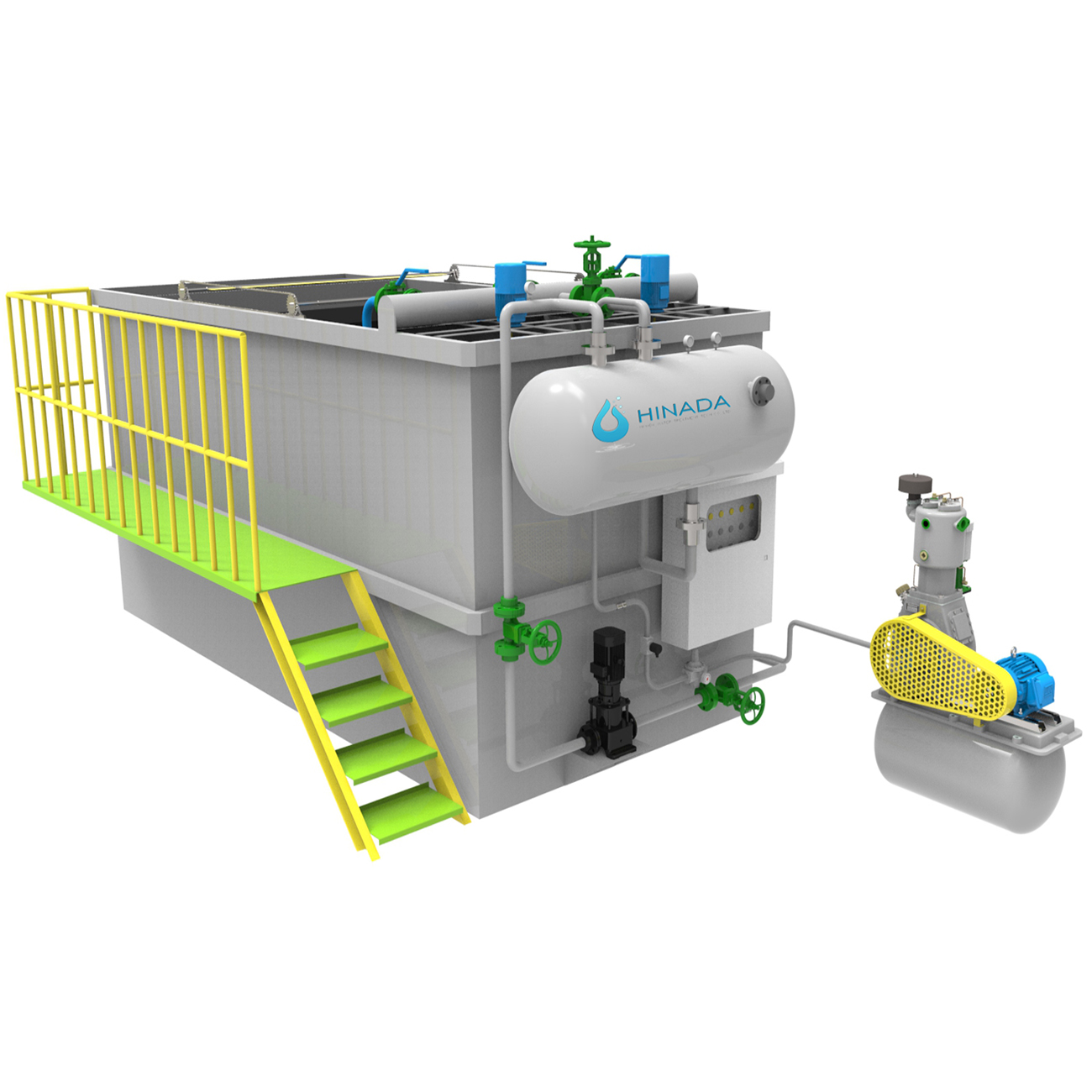
The key components of a DAF system include:
Flotation tank: Where the separation occurs. It can be rectangular, circular, or inclined plate design.
Saturation system: Consists of a recycle pump, air compressor, and pressure vessel (saturator) where air dissolves into water.
Chemical dosing system: Adds coagulants and flocculants to enhance particle agglomeration.
Scraping mechanism: Skims the floated sludge from the surface.
Control panel: Monitors and controls the process parameters.
DAF systems are used in various applications, including:
Municipal wastewater treatment and water recycling
Drinking water treatment (surface water/groundwater)
Rural decentralized water supply and sanitation
Oil and gas produced water treatment
Mining and mineral processing
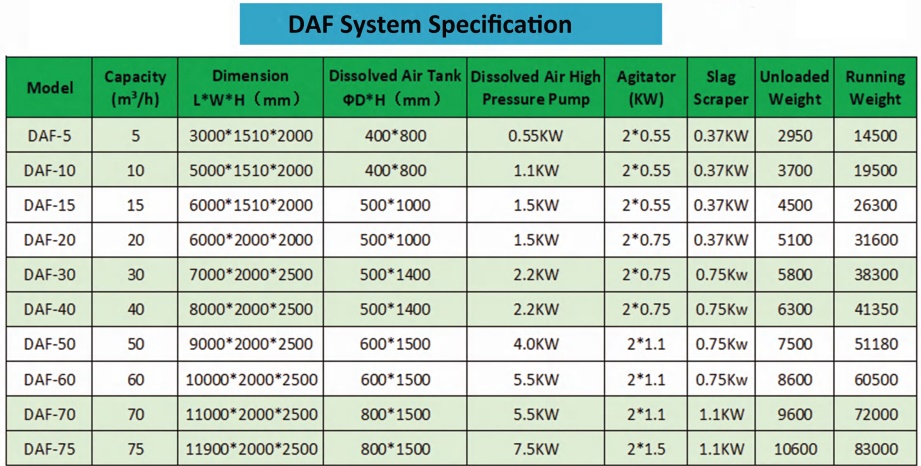
The design of a DAF system depends on factors such as flow rate, influent characteristics, effluent requirements, and space availability. A typical DAF system can treat flow rates from a few cubic meters per hour to thousands of cubic meters per hour. The efficiency of removal depends on the air-to-solids ratio, recycle ratio, and chemical conditioning.
Why Supplier Selection Matters
Choosing a DAF system supplier is not a one-time purchase; it is the start of a long-term relationship. The supplier will be responsible for the design, manufacturing, delivery, installation, commissioning, and after-sales support of the equipment. A poor choice can lead to:
Frequent breakdowns and downtime
Inadequate treatment performance, leading to regulatory fines
High maintenance and operating costs
Difficulty in obtaining spare parts
Lack of technical support when needed
Conversely, a reputable supplier can provide a system that operates reliably, meets performance targets, and offers long-term support. Therefore, it is crucial to evaluate suppliers against a comprehensive set of criteria.
Key Factors to Evaluate When Choosing a DAF System Supplier
1. Technical Expertise and Industry Experience
The supplier's technical expertise is the foundation of a successful DAF project. A supplier with deep knowledge of DAF technology can design a system that is optimized for your specific wastewater. They should understand the principles of air dissolution, bubble generation, flotation kinetics, and hydraulic design. They should also be familiar with the latest advancements in DAF technology, such as high-rate DAF, dissolved gas flotation, and cavitation air flotation.
Experience in the water treatment industry is a strong indicator of a supplier's capability. For example, HINADA Water Treatment Tech Co., Ltd. (HINADA) has been in the water treatment industry for over 13 years, with 10 years of dedicated membrane and equipment manufacturing experience. Founded in 2012 in Guangzhou, China, HINADA expanded its manufacturing base to Chenzhou, Hunan Province, and now serves clients in over 75 countries across Asia, Africa, Europe, and the Americas. This longevity and global reach demonstrate a robust understanding of diverse wastewater challenges and a capacity to deliver reliable solutions.
When evaluating a supplier, consider the following:
How many years have they been in business?
How many DAF systems have they installed?
Do they have experience in your specific industry?
Can they provide references from similar projects?
Do they have in-house engineering and design capabilities?
Are their engineers knowledgeable about your process?
A supplier that relies solely on third-party designs or lacks in-house expertise may not be able to offer the same level of customization or troubleshooting support. It is advisable to request resumes of key technical personnel and inquire about their training and certifications.
2. Product Quality and Range
The quality of the DAF equipment is paramount. The materials of construction, workmanship, and components used will determine the system's durability and performance. Common materials for DAF tanks include:
Carbon steel with epoxy coating: Cost-effective for non-corrosive environments.
Stainless steel (304 or 316): Resistant to corrosion, suitable for aggressive wastewater.
Concrete: Durable and often used for large, permanent installations.
FRP (fiberglass reinforced plastic): Lightweight and corrosion-resistant.
The choice of material depends on the corrosiveness of the wastewater, the facility's environment, and the budget. A reputable supplier will offer options and guide you on the most suitable material.
Beyond the DAF unit, the supplier's product range can indicate their overall capabilities. A company that manufactures a broad spectrum of water treatment equipment, such as hollow fiber ultrafiltration (UF) membranes, submerged MBR membrane modules, integrated packaged wastewater treatment systems, and reverse osmosis (RO) systems, is likely to have a comprehensive understanding of the entire treatment process. HINADA, for example, offers all these products, which allows them to provide integrated solutions. This can be advantageous because the DAF system can be seamlessly integrated with downstream or upstream processes, and the supplier can take responsibility for the entire treatment train.
When assessing product quality, ask for:
Detailed specifications and drawings
Material certificates
Warranty terms
Brand of key components (pumps, valves, air compressors, etc.)
A factory audit or virtual tour can provide valuable insights into the supplier's manufacturing capabilities. Look for modern fabrication equipment, organized production lines, and a clean working environment. HINADA's manufacturing base in Chenzhou, Hunan Province, is equipped to produce a wide range of equipment, ensuring quality and consistency.
3. Customization and Engineering Support
No two wastewater treatment challenges are identical. Flow rates, contaminant concentrations, space availability, and discharge requirements vary from facility to facility. Therefore, a one-size-fits-all DAF system is rarely optimal. The supplier must be able to customize the system to meet your specific needs.
Customization can include:
Tank dimensions and geometry
Surface area and hydraulic loading rate
Recycle ratio and saturation pressure
Chemical dosing systems (coagulants and flocculants)
Sludge scraping and collection mechanisms
Control system and instrumentation
Materials of construction
Integration with existing treatment processes
Engineering support is a critical component of customization. The supplier should offer process design, mechanical design, and electrical/instrumentation design. They should be able to provide P&IDs, layout drawings, and operation manuals. During the proposal stage, a good supplier will ask detailed questions about your wastewater characteristics and site conditions. They may also request a sample of your wastewater for bench-scale testing to determine the optimal treatment approach.
HINADA, for instance, provides a truly integrated solution to water and wastewater projects, from design, supplying, installation support, and commissioning to training. This end-to-end service ensures that the DAF system is not just a piece of equipment but part of a cohesive solution. When evaluating suppliers, ask about their customization process. Do they have a standard product line that can be modified, or do they design from scratch? How long does the customization take? What is the typical lead time?
It is also important to discuss the design basis with the supplier. What influent characteristics are they assuming? What effluent quality do they guarantee? What are the design margins? A thorough design review can prevent surprises later.
4. After-Sales Service and Support
The importance of after-sales service cannot be overstated. A DAF system is a long-term investment, and it will require maintenance, spare parts, and occasional troubleshooting. A supplier with a strong service network and responsive support team can minimize downtime and extend the life of your equipment.
Key questions to ask include:
What is the warranty period? What does it cover?
Is there a local service team or partner?
How quickly can they respond to an emergency?
Do they offer preventive maintenance contracts?
What is the availability of spare parts?
Do they provide training for operators and maintenance staff?
Is there a remote monitoring and diagnostics capability?
A supplier that stocks spare parts locally or has a fast shipping process can save you valuable time and money. Training is another aspect of after-sales support. The supplier should provide comprehensive training for your operators and maintenance staff. This includes classroom sessions and hands-on training during commissioning. Well-trained staff can operate the DAF system efficiently and perform routine maintenance, reducing the need for costly service calls.
HINADA's commitment to customer support is evident in their turnkey solution delivery, which includes installation support, commissioning, and training. This level of support is particularly valuable for facilities that may not have extensive in-house expertise in DAF technology.
5. Cost and Value for Money
While cost is always a consideration, it should not be the sole deciding factor. The cheapest DAF system may end up costing more in the long run due to poor quality, frequent repairs, and inefficient operation. Instead, focus on value for money—the total cost of ownership (TCO) over the system's lifecycle.
Maintenance costs: Spare parts, service contracts, repairs.
Downtime costs: Lost production or treatment capacity.
A more expensive system that is highly efficient and reliable may have a lower TCO than a cheaper alternative. When comparing quotes, ensure you understand what is included. Some suppliers may quote a lower price but exclude items like chemical dosing systems, control panels, or installation. Request a detailed breakdown of costs.
Also, consider the energy efficiency of the DAF system. The recycle pump and air compressor are the main energy consumers. A well-designed system with variable frequency drives (VFDs) and efficient pumps can significantly reduce electricity costs. Ask the supplier for estimated power consumption and compare it across different proposals.
Financing options may also be available. Some suppliers offer leasing or payment plans, which can help with cash flow. However, always read the fine print and understand the total cost of financing.
6. Regulatory Compliance and Certifications
Depending on your location and industry, the DAF system may need to comply with specific regulations and standards. For example, in the United States, equipment may need to meet UL, NSF, or API standards. In Europe, CE marking is required. In China, GB standards may apply. A reputable supplier will be able to provide documentation showing compliance with relevant standards.
Moreover, the supplier should be knowledgeable about local discharge regulations. They should be able to design a system that consistently meets your effluent limits, whether for suspended solids, oil and grease, or biochemical oxygen demand (BOD). Ask for a guarantee of performance and understand how it is backed. Some suppliers may offer a performance bond or guarantee that the system will meet specific treatment targets.
Certifications such as ISO 9001 for quality management and ISO 14001 for environmental management indicate a supplier's commitment to quality and sustainability. HINADA, as a globally recognized manufacturer, likely adheres to such standards, ensuring that their equipment is manufactured to high-quality benchmarks. When evaluating suppliers, request copies of relevant certifications and verify their validity.
7. Global Reach and Local Presence
The global nature of the water treatment industry means that suppliers may be based in another country. While this can offer cost advantages, it also introduces logistical and support challenges. A supplier with a global reach but local presence—through offices, distributors, or service partners—can provide the best of both worlds.
HINADA, for example, serves clients in over 75 countries across Asia, Africa, Europe, and the Americas. This global footprint demonstrates their ability to handle international projects, including shipping, customs, and documentation. However, they also emphasize local support through their network. When choosing a supplier, consider their ability to provide on-site support in your region. If they are overseas, do they have a local partner who can handle service calls? How do they manage spare parts logistics?
Cultural and language differences can also be a factor. A supplier with multilingual staff or local representatives can communicate more effectively, reducing the risk of misunderstandings. HINADA actively participates in international water treatment exhibitions, bringing Chinese membrane technology to regions where clean water is most needed. This indicates a commitment to understanding and serving diverse markets.
8. Case Studies and Client References
One of the best ways to assess a supplier's capabilities is to review their past projects. Ask for case studies that are similar to your application. For example, if you are in the food and beverage industry, ask for references from other food processing plants. If you are treating municipal wastewater, ask for municipal references.
Contact these references directly. Ask about their experience with the supplier:
Did the system meet performance expectations?
Was the project delivered on time and within budget?
How responsive was the supplier during and after installation?
Would they recommend this supplier?
What challenges did they face, and how were they resolved?
HINADA's application fields include industrial wastewater treatment and reuse, municipal sewage treatment and water recycling, rural decentralized water supply and sanitation, and drinking water purification. Their experience across these diverse sectors suggests a versatile and adaptable approach. When reviewing case studies, pay attention to the specific challenges and how the supplier solved them. This will give you confidence in their ability to handle your project.
9. Innovation and Research & Development
The water treatment industry is constantly evolving, with new technologies and stricter regulations driving innovation. A supplier that invests in research and development (R&D) is more likely to offer cutting-edge solutions that can improve efficiency and reduce costs. Look for suppliers that have their own R&D team, patents, or partnerships with research institutions.
HINADA, for instance, has focused on two core technology pillars: hollow fiber ultrafiltration (UF/MBR) membranes and intelligent integrated wastewater treatment equipment. Their complete ecosystem from membrane R&D and component manufacturing to equipment fabrication and turnkey solution delivery demonstrates a strong commitment to innovation. This vertical integration allows them to control quality and continuously improve their products.
When evaluating a supplier, ask about their R&D activities. Have they introduced any new DAF designs or features in recent years? Are they working on any advanced technologies, such as energy-efficient saturation systems or automated control systems? A supplier that is stagnant may not be able to offer you the best available technology.
10. Sustainability and Environmental Responsibility
Sustainability is increasingly important in procurement decisions. A supplier that prioritizes environmental responsibility can help your facility reduce its carbon footprint and achieve sustainability goals. Look for suppliers who manufacture using eco-friendly processes, design energy-efficient equipment, and offer solutions for water reuse and resource recovery.
DAF systems themselves contribute to sustainability by enabling water reuse and reducing the volume of sludge that needs disposal. A well-designed DAF system can recover valuable byproducts, such as oils and fats, which can be recycled. The supplier should be able to discuss these aspects and provide options for sustainable operation.
HINADA's focus on wastewater treatment and water recycling aligns with global sustainability goals. Their participation in international exhibitions to bring clean water technology to regions in need reflects a broader commitment to environmental stewardship. When choosing a supplier, consider their environmental policies and any certifications they hold, such as ISO 14001.
Checklist for Evaluating DAF System Suppliers
To streamline your evaluation process, use the following checklist. It covers the key factors discussed above and can be used to score and compare suppliers.
Criteria
Supplier A
Supplier B
Supplier C
Years in business
Number of DAF installations
Experience in your industry
Material of construction options
Key component brands
Customization capabilities
Engineering support (P&IDs, drawings)
After-sales service network
Response time for service
Spare parts availability
Training provided
Total cost of ownership
Regulatory compliance
Certifications (ISO, CE, UL, etc.)
Global reach with local support
Client references
R&D activities
Sustainability practices
This table can be adapted to include specific weightings based on your priorities. For example, if after-sales service is critical, give it a higher weight.
Common Pitfalls to Avoid
When selecting a DAF system supplier, be aware of these common pitfalls:
Focusing solely on price: As discussed, the lowest price may not offer the best value. Consider the total cost of ownership.
Ignoring after-sales support: A supplier without a strong service network can leave you stranded when problems arise.
Overlooking customization: A standard system may not perform optimally for your specific wastewater. Ensure the supplier can tailor the design.
Not checking references: Past clients can provide honest feedback about the supplier's performance.
Underestimating installation and commissioning: These phases are critical. Ensure the supplier provides adequate support.
Neglecting training: Without proper training, your operators may not run the system efficiently.
Failing to verify certifications: Ensure the supplier's claims of compliance are backed by valid certificates.
Disregarding cultural and language barriers: If working with an international supplier, ensure communication is clear and effective.
How to Conduct a Supplier Audit
A supplier audit is a thorough evaluation of a potential supplier's capabilities, quality management, and financial stability. It can be conducted on-site or remotely. Here are steps to conduct an effective audit:
1. Pre-audit questionnaire: Send a detailed questionnaire to the supplier covering their company profile, quality management system, manufacturing capabilities, and references. Review their responses to identify areas for further investigation.
2. On-site visit: If possible, visit the supplier's manufacturing facility. Observe their production processes, quality control procedures, and warehouse. Meet with key personnel, including engineers, production managers, and quality assurance staff.
3. Document review: Request copies of their quality manual, certificates, test reports, and drawings. Verify that their processes are documented and followed.
4. Interview key staff: Ask about their experience with DAF systems, their approach to customization, and their after-sales support. Assess their technical knowledge and responsiveness.
5. Check financial health: A financially unstable supplier may not be able to honor warranties or provide long-term support. Request financial statements or use credit reports.
6. Evaluate references: Contact the provided references and ask specific questions about performance, reliability, and support.
For international suppliers like HINADA, a remote audit may be necessary. Many suppliers now offer virtual tours and video conferences to facilitate this. HINADA's global presence and experience with clients in over 75 countries suggest they are accustomed to international audits and can provide the necessary documentation.
Negotiating Contracts and Warranties
Once you have shortlisted suppliers, the next step is negotiation. A well-drafted contract protects your interests and ensures clear expectations. Key elements to include:
Scope of supply: Detailed list of equipment, components, and services included.
Performance guarantees: Specific treatment targets (e.g., effluent suspended solids, oil and grease) and penalties for non-compliance.
Delivery schedule: Milestones for design, manufacturing, shipping, installation, and commissioning.
Payment terms: Typically tied to milestones. Avoid large upfront payments.
Warranty: Duration, coverage, and exclusions. Ensure it covers parts and labor.
After-sales support: Response times, spare parts availability, and training.
Confidentiality: Protect your proprietary information.
Dispute resolution: Mechanism for resolving conflicts, such as arbitration.
Force majeure: Provisions for unforeseen events.
It is advisable to have a legal expert review the contract before signing. Also, ensure that the warranty period starts after successful commissioning, not after shipment.
Installation, Commissioning, and Training
The installation and commissioning phase is where the DAF system comes to life. A well-executed installation ensures the system operates as designed. The supplier should provide experienced supervisors to oversee the installation, or if you have your own team, they should provide detailed instructions and remote support.
Commissioning involves testing the system with actual wastewater, adjusting chemical dosing, and optimizing the recycle ratio. The supplier should be on-site to fine-tune the system and ensure it meets performance guarantees. During this phase, operators should receive hands-on training.
Training should cover:
System overview and process theory
Start-up and shutdown procedures
Normal operation and monitoring
Chemical dosing and adjustment
Routine maintenance tasks
Troubleshooting common issues
Safety procedures
HINADA's turnkey solution includes installation support, commissioning, and training, which is a significant advantage. When evaluating suppliers, ask about the qualifications of their commissioning engineers and the content of their training programs.
Long-Term Partnership Considerations
Choosing a DAF system supplier is the beginning of a long-term relationship. Over the life of the equipment, you will interact with the supplier for spare parts, service, upgrades, and technical advice. Therefore, consider the supplier's long-term viability and commitment to customer satisfaction.
A supplier that continuously improves its products, invests in customer support, and values feedback is more likely to be a reliable partner. HINADA's 13 years in the industry and expansion to serve over 75 countries indicate a stable and growing company. Their focus on two core technology pillars and a complete ecosystem from R&D to turnkey delivery shows a commitment to long-term innovation.
Also, consider the supplier's ability to support future expansions or modifications. If your facility grows, you may need to upgrade the DAF system. A supplier that offers modular designs and retrofit options can make this easier. Discuss future scalability during the selection process.
Conclusion
Selecting a DAF system equipment supplier for your facility is a multi-faceted decision that requires careful consideration of technical expertise, product quality, customization, after-sales support, cost, compliance, and more. By following the guidelines in this article, you can systematically evaluate potential suppliers and choose the one that best fits your needs.
Remember that the lowest price is not always the best choice; value for money, reliability, and support are equally important. A supplier with a proven track record, like HINADA, which has extensive experience, a broad product range, and a global presence, can provide a reliable solution. However, each facility's needs are unique, so conduct your due diligence, ask the right questions, and involve your engineering and operations teams in the decision.
With the right supplier, your DAF system will be a valuable asset that enhances your wastewater treatment performance, ensures regulatory compliance, and contributes to your facility's sustainability goals.
Summary: This article provides a comprehensive guide on how to choose a DAF system equipment supplier. It covers ten key factors: technical expertise, product quality, customization, after-sales service, cost, regulatory compliance, global reach, case studies, innovation, and sustainability. It includes a checklist, common pitfalls, audit steps, contract negotiation tips, and installation considerations. The article emphasizes that the decision should be based on total value rather than just price, and highlights the importance of a long-term partnership. By following these guidelines, facility managers can select a supplier that delivers reliable, efficient, and compliant DAF systems, ensuring operational success and environmental responsibility.