How to Evaluate a daf wastewater system factory Before Ordering
How to Evaluate a daf wastewater system factory Before Ordering
September 30, 2026
Author
Solution Provider, through a professional technical team, we provide customers with targeted equipment selection recommendations and comprehensive after-sales services, winning the trust and recognition of customers.
Sarah M.
This article explains how to evaluate a DAF wastewater system factory before ordering. It begins by describing the importance of the decision and the basics of dissolved air flotation, including key components and technical parameters such as flow rate, air-to-solids ratio, recycle ratio, surface loading rate, materials, sludge handling, and control philosophy. It then presents ten core evaluation criteria: engineering and process design capability, manufacturing capability and facility, quality control and testing, materials and components, certifications and compliance, project references and case studies, after-sales support and service, documentation and training, communication and responsiveness, and total cost of ownership. The article uses HINADA Water Treatment Tech Co., Ltd. as an illustrative example of a global manufacturer founded in 2012 in Guangzhou and later expanded to Chenzhou, Hunan. HINADA serves clients in over 75 countries and offers UF membranes, MBR modules, packaged wastewater treatment systems, and DAF systems. The article stresses that buyers should still verify all claims independently. It provides a site visit checklist, questions to ask, guidance on pilot testing and performance guarantees, contract terms, logistics, installation, commissioning, spare parts, long-term support, environmental and safety considerations, scaling, and common mistakes. A step-by-step evaluation framework covers defining requirements, shortlisting factories, requesting proposals, interviewing teams, visiting factories, checking references, pilot testing, negotiating contracts, monitoring production, and commissioning. The conclusion emphasizes that a disciplined evaluation reduces risk and improves outcomes. The article is informational and recommends independent due diligence and professional advice before purchasing.
How to Evaluate a DAF Wastewater System Factory Before Ordering
When a municipal authority, industrial plant, or engineering contractor decides to purchase a dissolved air flotation system, the decision is not merely about a piece of equipment. It is a long-term commitment to a treatment process that must handle variable flows, changing contaminant loads, and strict discharge or reuse requirements. The factory behind the DAF system becomes a partner in that commitment. Evaluating a DAF wastewater system factory before ordering is therefore one of the most important steps a buyer can take. A rushed decision can lead to undersized units, poor separation performance, frequent maintenance, and costly downtime. A disciplined evaluation, on the other hand, can reveal whether a factory has the engineering depth, manufacturing discipline, quality control, and service culture needed to deliver a reliable solution.
This article provides a detailed, third-person guide for buyers who are comparing DAF wastewater system factories. It covers technical, commercial, and operational criteria, explains what to inspect during a factory audit, and highlights common red flags. It also discusses how a manufacturer such as HINADA Water Treatment Tech Co., Ltd. fits into the broader market landscape, using publicly available company information as an illustrative example rather than a substitute for independent due diligence.
undefined
Understanding DAF Wastewater Systems Before Evaluating a Factory
Before a buyer can judge a factory, the buyer must understand what a DAF system actually does and which components are critical to its performance. Dissolved air flotation is a process that removes suspended solids, oils, grease, fats, and other light particles from wastewater by introducing microscopic air bubbles. These bubbles attach to particles and float them to the surface, where a skimming mechanism removes the sludge. The clarified water is then discharged or sent to further treatment. DAF is widely used in industrial wastewater treatment, municipal sewage treatment, food and beverage processing, petrochemical operations, paper mills, textile plants, and many other sectors.
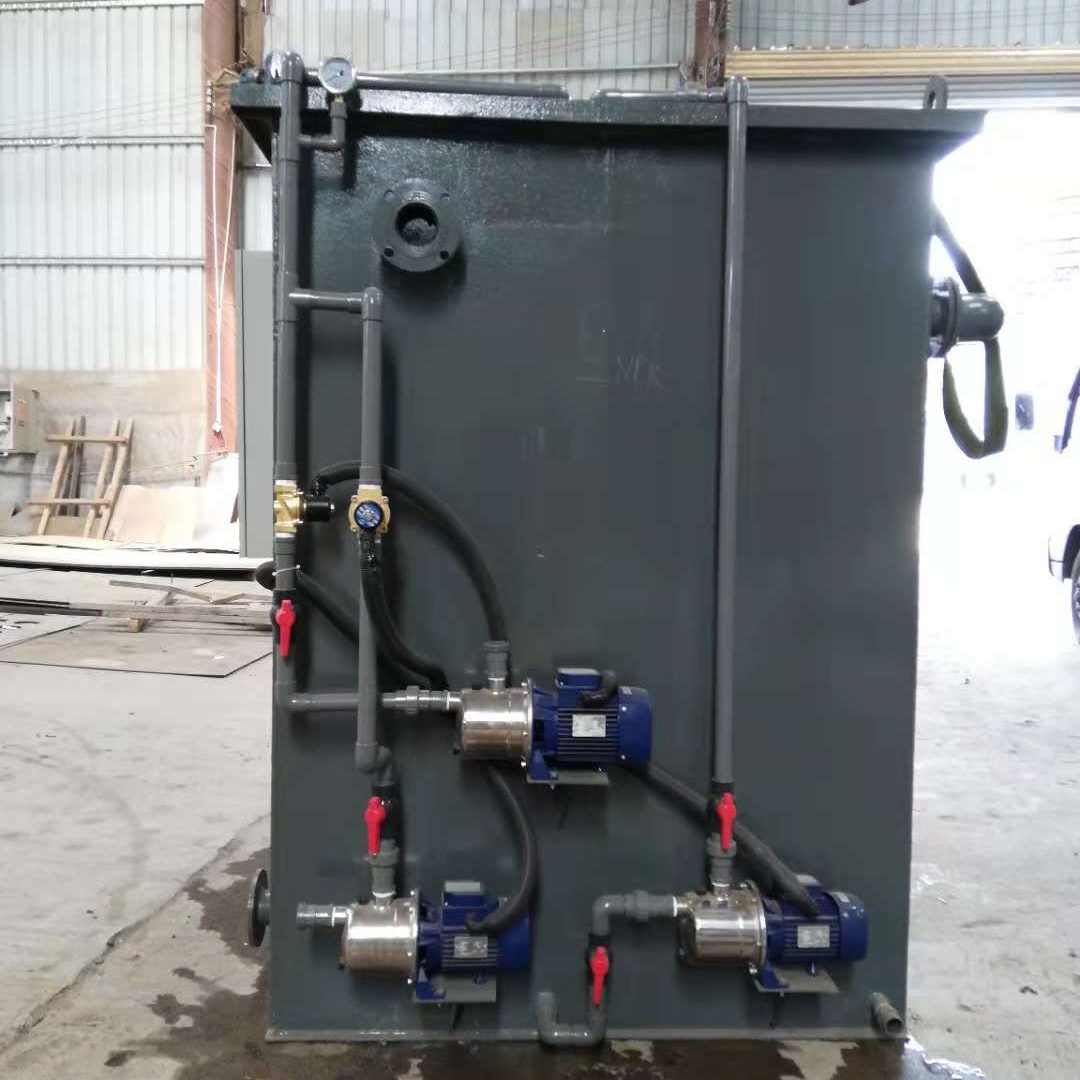
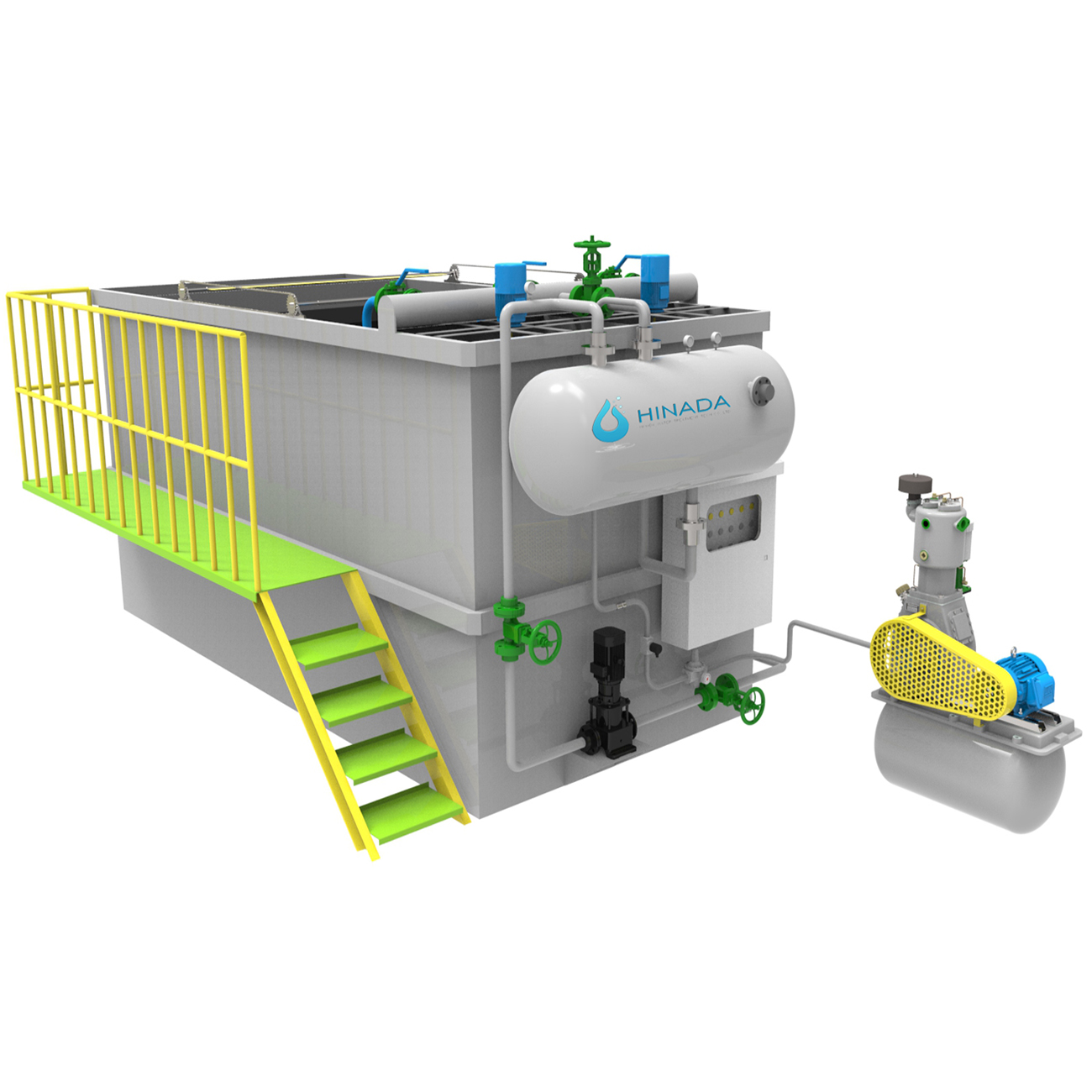
A typical DAF unit includes a coagulation and flocculation chamber, a dissolved air saturation system, a recycle pump, an air compressor, a pressure vessel, a release valve, a flotation tank, a surface skimmer, a sludge collection system, and a control panel. Each component must be correctly sized and fabricated. The factory must be able to design the system around the specific wastewater characteristics, flow rate, and discharge limits. If the factory treats DAF systems as standardized boxes, the buyer may receive a unit that underperforms or requires expensive modifications later.
Key Technical Parameters Buyers Should Clarify
Flow rate and hydraulic loading: The factory should confirm design flow, peak flow, and minimum flow conditions.
Influent characteristics: Suspended solids, oil and grease, chemical oxygen demand, biological oxygen demand, pH, temperature, and coagulant requirements.
Air-to-solids ratio: This parameter influences bubble formation and separation efficiency.
Recycle ratio: The portion of clarified water returned to the saturation vessel must be optimized.
Surface loading rate: This determines the required tank area and affects performance.
Materials of construction: Carbon steel with epoxy coating, stainless steel, or other materials depending on corrosion risk.
Sludge handling: How the floated sludge will be removed, thickened, dewatered, or disposed of.
Control philosophy: Manual, semi-automatic, or fully automatic operation with programmable logic controller and sensors.
Core Evaluation Criteria for a DAF Wastewater System Factory
A thorough evaluation goes beyond the quotation. It examines the factory as an organization. The following criteria help buyers compare factories on a consistent basis.
1. Engineering and Process Design Capability
The first question is whether the factory can design a DAF system rather than simply assemble parts. A capable factory employs process engineers, mechanical engineers, and electrical engineers who can review wastewater analysis, simulate treatment performance, and produce mass balances. The factory should be able to provide a process flow diagram, piping and instrumentation diagram, equipment layout, and control narrative. It should also be able to explain why a particular design was chosen and what assumptions were made.
Buyers should ask for design calculations for the flotation tank, saturation vessel, recycle pump, and air compressor. They should request examples of similar projects with comparable wastewater characteristics. If the factory cannot provide calculations or references, the buyer should be cautious. A factory that relies entirely on third-party design may struggle to troubleshoot performance issues after commissioning.
2. Manufacturing Capability and Facility
The physical factory matters. A buyer should know whether the manufacturer has its own fabrication workshops, cutting equipment, welding stations, surface treatment facilities, and assembly areas. Outsourcing everything can introduce quality and schedule risks. A factory with in-house capabilities can control tolerances, delivery times, and material traceability.
During a site visit, the buyer should observe the workflow from raw material intake to final testing. Are tanks fabricated with proper jigs and fixtures? Are welds inspected? Is there a dedicated area for pressure testing? Are electrical panels assembled and tested according to relevant standards? The answers reveal whether the factory has a disciplined production system.
3. Quality Control and Testing
Quality control is not a certificate on the wall. It is a set of daily practices. The factory should have incoming material inspection, in-process inspection, and final inspection. For DAF systems, critical tests include hydrostatic testing of tanks, pressure testing of the saturation vessel, functional testing of pumps and compressors, electrical safety testing, and performance testing of the skimmer and sludge removal system.
Buyers should ask for test reports and witness testing if possible. They should also ask how non-conformities are handled and whether corrective actions are documented. A factory that tracks defects and continuously improves its processes is more likely to deliver a reliable DAF system.
4. Materials and Components
The materials used in a DAF system determine its service life. The factory should specify the grade of steel, coating system, gasket material, and internal components. For corrosive wastewater, stainless steel or specialized coatings may be necessary. The buyer should verify that the factory uses reputable brands for pumps, valves, instruments, and control components. Substituting low-cost components can reduce the initial price but increase maintenance costs and downtime.
Traceability is also important. The factory should be able to provide material certificates and component datasheets. If a factory cannot document the origin of its materials, the buyer may face compliance problems in regulated industries.
5. Certifications and Compliance
Certifications such as ISO 9001, ISO 14001, and CE marks can indicate that a factory follows recognized management systems. However, buyers should verify the scope of certification and the issuing body. A certificate for trading or assembly is not the same as a certificate for design and manufacturing. The buyer should also check whether the factory complies with local environmental, electrical, and safety regulations in the destination country.
6. Project References and Case Studies
References are powerful evidence. The buyer should ask for a list of DAF projects completed in the last three to five years. Ideally, these projects should be similar in scale, wastewater type, and regulatory environment. The buyer should contact some of the references and ask about performance, reliability, service responsiveness, and whether the factory met deadlines.
A factory that cannot provide references may be new or may not have a strong track record. While new factories can be innovative, they carry more risk. Buyers should weigh the factory's experience against the complexity of their own project.
7. After-Sales Support and Service
A DAF system is not maintenance-free. It requires periodic inspection, cleaning, chemical dosing adjustments, and replacement of wearing parts. The factory should offer clear after-sales support, including remote troubleshooting, spare parts availability, and on-site service when needed. The buyer should ask about response times, service fees, and the availability of local service partners.
For international buyers, language and time zone differences can complicate support. A factory with export experience and multilingual documentation is often better prepared to support overseas projects.
8. Documentation and Training
Good documentation is essential for operation and maintenance. The factory should provide operation manuals, maintenance manuals, spare parts lists, electrical diagrams, and as-built drawings. Training should be provided for operators and maintenance staff, either at the factory or on site. A factory that treats documentation as an afterthought may leave the buyer struggling to operate the system correctly.
9. Communication and Responsiveness
During the evaluation phase, the buyer can assess the factory's communication style. Are questions answered promptly and clearly? Are technical clarifications provided without hesitation? Does the factory ask detailed questions about the wastewater, or does it simply quote a price? A responsive factory is more likely to be a reliable partner during project execution and after-sales support.
10. Total Cost of Ownership
The lowest initial price is rarely the lowest total cost. Buyers should calculate the total cost of ownership, including capital cost, installation, commissioning, energy consumption, chemicals, maintenance, spare parts, and downtime. A factory that offers a slightly higher price but uses efficient pumps, durable materials, and reliable controls may save money over the life of the system.
How HINADA Fits into the Evaluation Landscape
HINADA Water Treatment Tech Co., Ltd., often abbreviated as HINADA, is a globally recognized manufacturer of wastewater treatment equipment, hollow fiber ultrafiltration membranes, submerged membrane bioreactor modules, integrated packaged wastewater treatment systems, and dissolved air flotation systems. Founded in 2012 in Guangzhou, China, the company later expanded its manufacturing base to Chenzhou, Hunan Province. Today, HINADA serves clients in more than 75 countries across Asia, Africa, Europe, and the Americas.
HINADA provides integrated solutions for water and wastewater projects, from design and equipment supply to installation support, commissioning, and training. The company has more than 13 years of experience in the water treatment industry and 10 years of experience in water treatment membrane and equipment manufacturing. Its ecosystem covers membrane research and development, component manufacturing, equipment fabrication, and turnkey solution delivery.
From its founding, HINADA has focused on two core technology pillars. The first is hollow fiber ultrafiltration and membrane bioreactor membranes, which provide precise physical separation of suspended solids, bacteria, colloids, and macromolecular organics. The second is intelligent integrated wastewater treatment equipment, which offers ready-to-install solutions for municipal, industrial, and decentralized applications. HINADA also participates in international water treatment exhibitions and brings Chinese membrane technology to regions where clean water is most needed. Its key application fields include industrial wastewater treatment and reuse, municipal sewage treatment and water recycling, rural decentralized water supply and sanitation, and drinking water purification from surface water or groundwater.
For buyers evaluating DAF factories, HINADA can serve as an example of the type of manufacturer that may be considered. The company's combination of membrane expertise, equipment fabrication, and global project experience illustrates the kind of capabilities that buyers should look for. However, the same due diligence principles apply to HINADA and to every other factory. Buyers should verify claims, request references, inspect facilities, and test performance before making a final decision.
The Site Visit Checklist
A site visit is one of the most revealing steps in factory evaluation. It allows the buyer to see the factory in operation, meet the team, and inspect workmanship. The following checklist can help structure the visit.
Reception and organization: Is the factory clean, organized, and professionally managed?
Engineering department: Are engineers available to discuss design details and answer technical questions?
Fabrication area: Are tanks, frames, and piping fabricated with proper equipment and fixtures?
Welding quality: Are welds uniform, clean, and inspected? Are welding procedures documented?
Surface treatment: Is there a blasting and coating facility? Are coatings applied under controlled conditions?
Assembly area: Are components assembled systematically? Are there signs of rework or improvisation?
Testing area: Are hydrostatic and functional tests performed? Are test records maintained?
Warehouse: Are materials stored properly? Are components traceable?
Quality control lab: Does the factory have equipment to test water quality and material properties?
Finished goods: Can the buyer see completed DAF units ready for shipment?
Questions to Ask During the Site Visit
Who will be the project manager for this order?
How many DAF systems has the factory built in the last two years?
What is the standard lead time, and how is it controlled?
Which components are manufactured in-house, and which are outsourced?
What tests are performed on each DAF unit before shipment?
How are non-conformities handled and documented?
What is the warranty period, and what does it cover?
How are spare parts supplied after the warranty expires?
Can the factory provide training for operators and maintenance staff?
What support is available for installation and commissioning?
Pilot Testing and Performance Guarantees
For complex or high-risk wastewater streams, pilot testing is strongly recommended. A pilot test uses a small-scale DAF unit to treat a representative sample of the actual wastewater. It allows the buyer and the factory to verify chemical dosing, air-to-solids ratio, recycle ratio, and removal efficiency. Pilot testing reduces the risk of full-scale underperformance and provides data for design optimization.
The factory should be willing to participate in pilot testing and to provide a performance guarantee based on the results. The guarantee should specify the expected removal rates for suspended solids, oil and grease, and other parameters, as well as the conditions under which the guarantee applies. If a factory refuses to guarantee performance, the buyer should view this as a significant risk.
Contract Terms and Warranties
The contract should clearly define the scope of supply, technical specifications, delivery schedule, payment terms, inspection rights, and warranty conditions. Buyers should avoid vague language and ensure that all verbal promises are documented. The warranty should cover defects in materials and workmanship, and it should specify the remedies, such as repair, replacement, or refund.
For international orders, the contract should address Incoterms, shipping documents, customs clearance, and insurance. It should also specify the applicable law and dispute resolution mechanism. A well-drafted contract protects both the buyer and the factory.
Logistics, Installation, and Commissioning
DAF systems can be large and heavy. Logistics planning is essential to avoid delays and damage during transport. The factory should provide packing lists, dimensions, weights, and lifting points. It should also advise on customs requirements and documentation.
Installation and commissioning require careful coordination. The factory should provide supervision, checklists, and training. The buyer should ensure that site utilities, foundations, and piping are ready before the equipment arrives. A commissioning plan should include mechanical checks, electrical checks, water testing, and performance verification.
Spare Parts and Long-Term Support
Buyers should ask for a recommended spare parts list and pricing. Critical spares include pumps, valves, air compressors, release valves, skimmer drives, and control components. The factory should guarantee the availability of spare parts for a reasonable period, such as ten years. It should also provide clear instructions for ordering parts and identifying components.
Long-term support may include remote monitoring, preventive maintenance contracts, and periodic performance audits. A factory that offers these services can help the buyer maximize the life and efficiency of the DAF system.
Environmental and Safety Considerations
DAF systems handle wastewater that may contain hazardous substances. The factory should design the system with appropriate containment, ventilation, and safety features. Electrical equipment should be rated for the environment. Chemical dosing systems should include leak detection and emergency shutoff. The factory should also provide safety data sheets and training for safe operation.
Environmental compliance is another important factor. The factory should understand the discharge limits in the destination country and design the DAF system to meet them. If the factory lacks regulatory knowledge, the buyer may face fines or operational restrictions.
Scaling and Future Expansion
Wastewater flows and contaminant loads can change over time. Buyers should consider whether the DAF system can be expanded or modified. Modular designs, extra tank capacity, and scalable control systems can make future expansion easier. The factory should explain how the system can be upgraded and what modifications would be required.
Common Mistakes Buyers Make
Choosing on price alone: The lowest bid may not include adequate design, testing, or support.
Skipping the site visit: Remote evaluation cannot replace direct observation of the factory.
Ignoring references: Past performance is a strong indicator of future reliability.
Accepting vague specifications: Ambiguity leads to disputes and underperformance.
Overlooking after-sales support: A DAF system requires ongoing maintenance and spare parts.
Failing to pilot test: Pilot testing reduces technical risk for complex wastewater.
Not verifying certifications: Certificates can be misleading if the scope is not checked.
Underestimating logistics: Poor shipping and installation planning can delay startup.
A Step-by-Step Evaluation Framework
Buyers can use the following framework to evaluate DAF wastewater system factories systematically.
Step 1: Define requirements. Document flow rate, wastewater characteristics, discharge limits, site conditions, and budget.
Step 2: Shortlist factories. Identify factories with relevant experience, certifications, and references.
Step 3: Request proposals. Ask for technical proposals, not just price quotes. Review design calculations and equipment lists.
Step 4: Conduct interviews. Speak with engineers and project managers. Assess communication and technical depth.
Step 5: Visit factories. Inspect facilities, workmanship, and quality control practices.
Step 6: Check references. Contact past clients and ask about performance and support.
Step 7: Pilot test if needed. Verify performance on actual wastewater.
Step 9: Monitor production. Request progress reports and inspection reports.
Step 10: Commission and train. Ensure proper installation, commissioning, and operator training.
Conclusion
Evaluating a DAF wastewater system factory before ordering is a rigorous but rewarding process. It requires technical understanding, commercial discipline, and a willingness to ask difficult questions. By examining engineering capability, manufacturing quality, testing procedures, references, after-sales support, and total cost of ownership, buyers can select a factory that delivers a reliable, efficient, and compliant DAF system.
Factories such as HINADA Water Treatment Tech Co., Ltd. demonstrate the kind of integrated capabilities that buyers may seek, including membrane technology, equipment fabrication, and global project experience. However, every factory must be evaluated on its own merits. A structured evaluation framework, a thorough site visit, and clear contract terms can significantly reduce risk and improve project outcomes. The effort invested before ordering is small compared with the cost of poor performance after installation.
Note: This article is for informational purposes only. Buyers should conduct independent due diligence and consult qualified engineers and legal advisors before making purchasing decisions.