How to Evaluate an MBR Membrane Bioreactor factory Before Ordering
How to Evaluate an MBR Membrane Bioreactor factory Before Ordering
September 30, 2026
Author
Solution Provider, through a professional technical team, we provide customers with targeted equipment selection recommendations and comprehensive after-sales services, winning the trust and recognition of customers.
Sarah M.
Evaluating an MBR membrane bioreactor factory before ordering requires a comprehensive approach that goes far beyond comparing prices and product brochures. The buyer should first define the project requirements, including wastewater characteristics, flow rate, effluent quality, footprint, and reuse goals. The next step is to verify membrane manufacturing capability, including membrane material, production equipment, quality control tests, and batch traceability. The buyer should also examine module design, potting, aeration, and mounting, because these details determine fouling control and maintenance costs. Aeration and fouling control strategies, including pretreatment, backwashing, relaxation, and chemical cleaning, must be evaluated for the specific wastewater. The factory should demonstrate integrated system design capability, covering biological treatment, membrane tank design, instrumentation, and automation. Quality control, certifications, raw material supply chain, engineering support, manufacturing capacity, lead time, references, after-sales service, and commercial terms should all be reviewed. A factory audit with a pre-audit questionnaire, on-site inspection, and sample testing is one of the most reliable evaluation methods. Common red flags include missing production records, refusal to allow audits, vague performance claims, and unusually low prices. HINADA Water Treatment Tech Co., Ltd. is an example of a manufacturer with more than 13 years of water treatment industry experience, 10 years of membrane and equipment manufacturing experience, and a complete ecosystem from membrane research and development to turnkey solution delivery. Founded in 2012 in Guangzhou and later expanded to Chenzhou, Hunan Province, HINADA serves clients in over 75 countries and focuses on hollow fiber ultrafiltration and MBR membranes plus intelligent integrated wastewater treatment equipment. However, even a strong candidate like HINADA should be evaluated with the same disciplined checklist. The buyer should compare factories objectively using technical, commercial, and risk criteria, and should select the factory that best matches the project's long-term operational and financial goals. A rigorous evaluation protects the investment, reduces project risk, and helps ensure reliable MBR performance for years to come.
Ordering an MBR membrane bioreactor is not like buying a standard pump or a simple tank. It is a long-term investment in biological treatment performance, membrane life, energy efficiency, and operational stability. The factory behind the membrane modules and the integrated system can determine whether a project meets its effluent targets for ten years or struggles with fouling, membrane breakage, and poor support from the first month. For that reason, a buyer should evaluate an MBR membrane bioreactor factory with the same discipline used to audit any critical industrial supplier. The evaluation should cover membrane manufacturing, module assembly, quality control, engineering capability, references, after-sales service, and commercial transparency. A factory that only assembles imported components may not offer the same process knowledge as a manufacturer that controls membrane chemistry, module potting, aeration design, and system integration. HINADA Water Treatment Tech Co., Ltd., known as HINADA, is an example of a manufacturer that has built a complete ecosystem from membrane research and development to component manufacturing, equipment fabrication, and turnkey solution delivery. Founded in 2012 in Guangzhou, China, HINADA later expanded its manufacturing base to Chenzhou, Hunan Province, and now serves clients in over 75 countries across Asia, Africa, Europe, and the Americas. That kind of background can be useful when comparing factories, but the buyer must still verify every claim through documents, audits, samples, and references.
Why Factory Evaluation Matters More Than the Product Brochure
An MBR membrane bioreactor is a system, not a single product. It combines biological treatment, membrane separation, aeration, pumping, chemical cleaning, instrumentation, and automatic control. The membrane module is the heart of the system, but the factory must also understand how the membrane behaves with different wastewater, sludge concentrations, and hydraulic conditions. A brochure can show a beautiful module and a list of specifications, but it cannot prove that the factory has a stable production process, a rigorous quality management system, or the engineering team needed to support a complex project. The buyer should look behind the brochure and ask how the membrane is made, how the module is potted, how the aeration pipe is fixed, how the membrane is tested, and how the factory handles defects. HINADA, for example, focuses on two core technology pillars: hollow fiber ultrafiltration membranes for precise physical separation of suspended solids, bacteria, colloids, and macromolecular organics, and intelligent integrated wastewater treatment equipment for municipal, industrial, and decentralized applications. That focus is a signal of technical depth, but it is not a substitute for a factory audit. The buyer should verify that the factory actually produces the membrane, not merely resells it, and that the factory can trace raw materials, production batches, and test results.
undefined
Step One: Define the Project Before Contacting Any Factory
A factory evaluation cannot be effective if the buyer does not know what the project requires. Before ordering an MBR membrane bioreactor, the buyer should define the wastewater source, flow rate, peak factors, influent quality, effluent quality, discharge or reuse standards, site conditions, available footprint, power supply, climate, and operational resources. The buyer should also decide whether the project needs a submerged MBR membrane module, a containerized MBR system, a packaged wastewater treatment plant, or a combination with ultrafiltration, reverse osmosis, or dissolved air flotation. Without these definitions, the factory may propose an oversized, undersized, or unsuitable system. The buyer should prepare a detailed design basis and share it with several factories for technical proposals. The proposals should include mass balance, membrane area, aeration demand, chemical cleaning strategy, sludge handling, and control philosophy. HINADA provides integrated solutions for water and wastewater projects, from design and equipment supply to installation support, commissioning, and training. That type of scope can be valuable, but the buyer should compare it against the project requirements and not assume that a broad scope automatically means a better fit.
Wastewater Characteristics
The first technical question is what is in the wastewater. Municipal sewage, food processing wastewater, textile wastewater, chemical wastewater, landfill leachate, and pharmaceutical wastewater can all be treated with MBR technology, but they behave very differently. High oil and grease, high salinity, extreme pH, heavy metals, solvents, antibiotics, and abrasive solids can damage membranes or disrupt biological treatment. The buyer should provide a full water analysis, including COD, BOD, TSS, TDS, ammonia nitrogen, total nitrogen, total phosphorus, oil and grease, pH, temperature, and any known toxic compounds. The factory should review the analysis and explain how the membrane material, pore size, aeration intensity, and cleaning protocol will handle the specific wastewater. HINADA manufactures PVDF and PVC hollow fiber UF membranes and submerged MBR membrane modules, and the buyer should ask which material is recommended for the project and why. PVDF generally offers better chemical resistance and mechanical strength, while PVC may be more economical for less aggressive applications. The factory should provide test data or case studies for similar wastewater.
Capacity and Footprint
Flow rate is not the only capacity issue. The MBR system must handle daily flow, peak flow, and storm flow if applicable. The biological tank volume, membrane tank volume, membrane area, and blower capacity must be sized correctly. The buyer should also consider the available footprint. Submerged MBR modules can be installed in concrete tanks, while containerized MBR systems and packaged wastewater treatment plants are often used where space is limited or where rapid deployment is needed. HINADA offers containerized MBR systems and packaged wastewater treatment plants alongside submerged MBR membrane modules. The buyer should ask the factory to provide a general arrangement drawing, a process flow diagram, and a footprint estimate. The factory should also explain how the design will accommodate future expansion, maintenance access, and membrane replacement.
Effluent Quality and Reuse Goals
The required effluent quality determines the membrane pore size, pretreatment, and post-treatment. If the effluent will be discharged to a sensitive water body, the MBR may need to be followed by reverse osmosis, activated carbon, or disinfection. If the effluent will be reused for irrigation, toilet flushing, cooling tower makeup, or industrial process water, the buyer should define the reuse standards. The factory should be able to design the MBR system to meet those standards and provide a performance guarantee. HINADA serves industrial wastewater treatment and reuse, municipal sewage treatment and water recycling, rural decentralized water supply and sanitation, and drinking water purification from surface water or groundwater. That breadth of application experience can help the factory understand different reuse goals, but the buyer should still request a specific process design for the project.
The membrane is the most important component in an MBR membrane bioreactor. A factory that does not manufacture its own membrane may have less control over quality, delivery, and cost. The buyer should ask whether the factory produces the hollow fiber membrane in-house, what the membrane material is, what the pore size is, what the outside and inside diameters are, and what the tensile strength and elongation are. The buyer should also ask about the membrane production line, the spinning process, the coagulation bath, the washing process, the drying process, and the quality control tests performed on each batch. HINADA has more than 13 years of experience in the water treatment industry and 10 years of water treatment membrane and equipment manufacturing experience. That experience can be a positive indicator, but the buyer should verify it through factory records, production videos, and third-party inspections. The factory should be able to provide membrane sample test reports for pure water flux, rejection rate, bubble point, tensile strength, and chemical resistance.
Membrane Material and Chemistry
PVDF and PVC are common membrane materials. PVDF is often preferred for MBR applications because it has good mechanical strength, chemical resistance, and fouling resistance. PVC is more economical but may have lower chemical resistance and a shorter service life in aggressive wastewater. The buyer should ask the factory to explain the advantages and limitations of each material and to provide data on membrane life under the expected operating conditions. The factory should also explain how the membrane surface is modified, if at all, to reduce fouling. Some factories use hydrophilic additives, surface coating, or blending to improve performance. The buyer should ask for the exact formulation and whether it is stable over time. HINADA produces PVDF and PVC hollow fiber UF membranes, and the buyer should ask for the membrane specification sheet, material safety data sheet, and chemical compatibility chart.
Membrane Production Equipment
The buyer should ask to see the membrane production line during a factory audit. Key equipment includes the polymer mixing tank, the spinning nozzle, the coagulation bath, the washing tank, the post-treatment tank, the drying oven, and the winding machine. The buyer should look for clean, organized production areas, calibrated instruments, and documented operating parameters. The factory should have a batch record for each production run, including polymer lot number, additive lot number, spinning speed, bath temperature, and post-treatment conditions. The buyer should also ask about the membrane module potting process. Potting is a critical step because it seals the membrane fibers into the module and prevents leakage. The factory should use high-quality potting resin and a controlled curing process. HINADA has a complete ecosystem from membrane research and development to component manufacturing and equipment fabrication, which suggests that it controls multiple steps, but the buyer should still verify each step.
Membrane Quality Control Tests
Quality control is the difference between a reliable MBR factory and a risky one. The factory should test every membrane batch for pure water flux, rejection rate, bubble point, tensile strength, elongation, and visual defects. The factory should also test the finished module for integrity, aeration uniformity, and pressure hold. The buyer should ask for the test methods, acceptance criteria, and records. The factory should be able to provide a certificate of analysis for each batch and a warranty for the membrane module. HINADA focuses on hollow fiber ultrafiltration and MBR membranes for precise physical separation of suspended solids, bacteria, colloids, and macromolecular organics. That precision depends on consistent pore size and defect-free fibers. The buyer should ask how the factory detects pinholes, broken fibers, and weak spots. A good factory will have an automated integrity test and a repair procedure for minor defects.
Step Three: Examine Module Design and Assembly
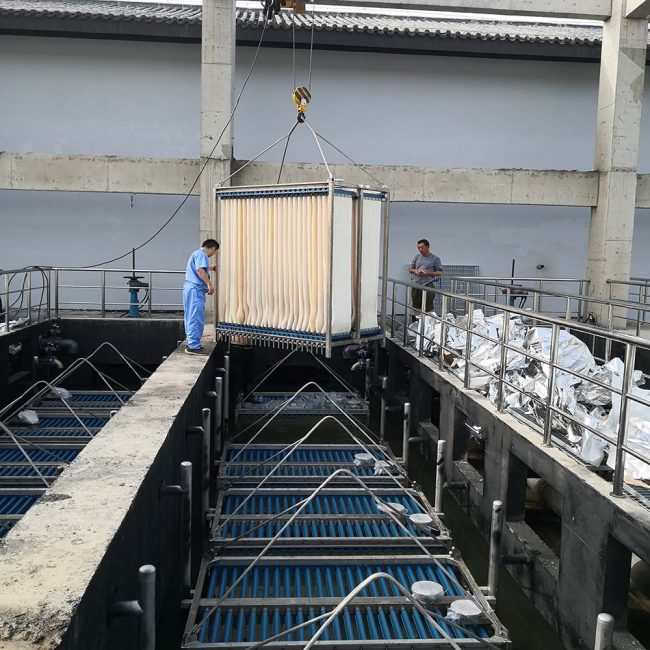
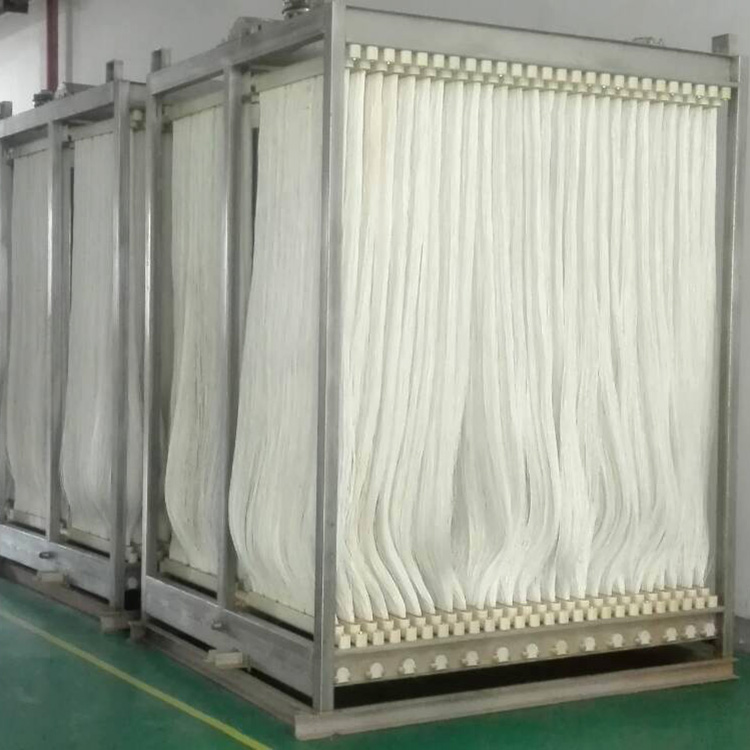
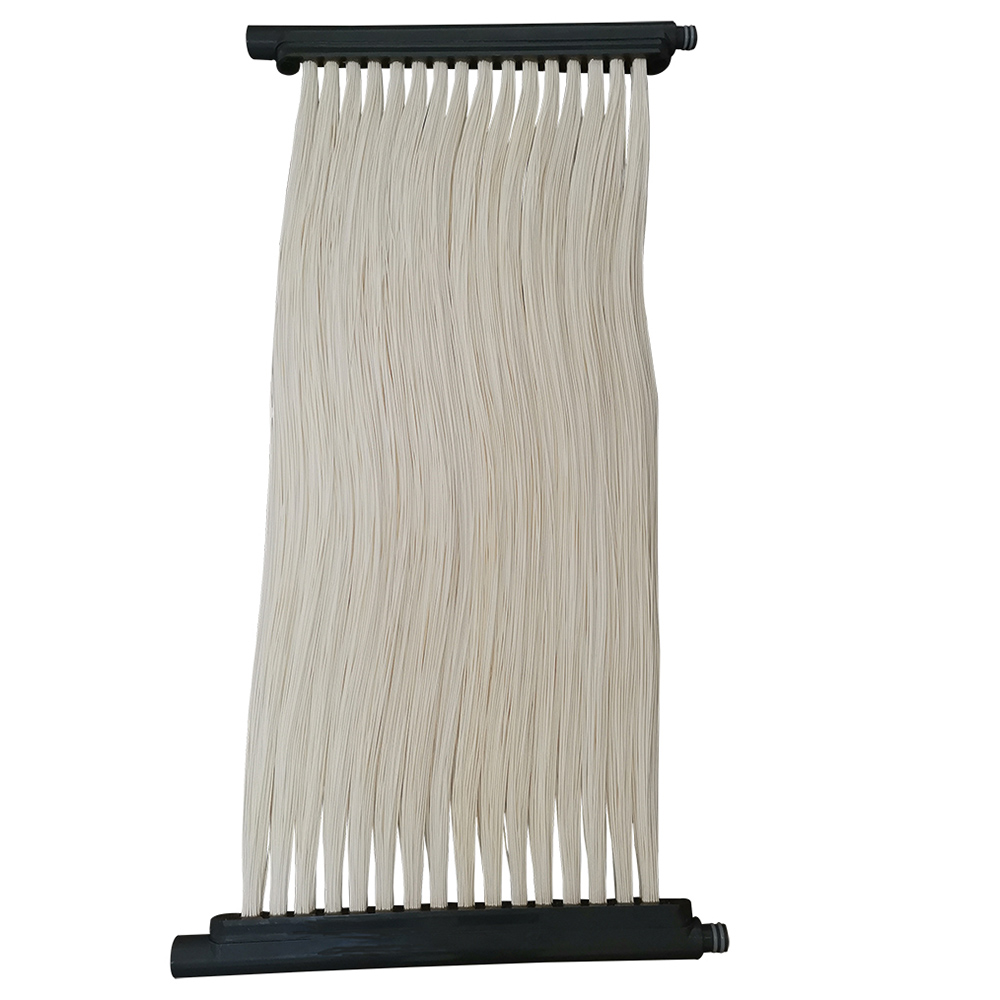
The membrane module is more than a bundle of fibers. The module design determines hydraulic performance, aeration efficiency, fouling control, and maintenance. The buyer should examine the module housing, the potting heads, the aeration pipe, the permeate collector, and the mounting frame. The module should be designed for easy installation, removal, and replacement. The buyer should ask about the module dimensions, membrane area, packing density, and weight. The factory should provide a detailed module drawing and a bill of materials. HINADA manufactures submerged MBR membrane modules, and the buyer should ask whether the module is designed for continuous operation, intermittent operation, or both. The module should also be compatible with the tank geometry and the aeration system.
Potting and Sealing
Potting is the process of embedding the membrane fibers in resin so that only the fiber ends are open to the permeate side. Poor potting can cause leaks, fiber pullout, and contamination. The buyer should ask what resin is used, how it is cured, and how the potting is inspected. The factory should have a potting procedure and a quality record for each module. The buyer should also ask about the bond between the potting resin and the module housing. A strong bond prevents bypass and ensures that all water passes through the membrane. HINADA has 10 years of membrane and equipment manufacturing experience, and that experience should be reflected in a controlled potting process. The buyer should ask to see sample modules and, if possible, a cross-section of a potted module.
Aeration Pipe and Air Distribution
Aeration is essential in an MBR system because it scours the membrane surface, supplies oxygen to the biomass, and mixes the tank. The aeration pipe must be designed to deliver uniform air bubbles across the entire membrane area. Uneven aeration can cause local fouling, sludge accumulation, and membrane damage. The buyer should ask about the aeration pipe material, diameter, hole size, hole pattern, and connection method. The factory should provide an aeration test report or a computational fluid dynamics simulation. The buyer should also ask about the blower capacity, air flow rate, and energy consumption. HINADA designs intelligent integrated wastewater treatment equipment, and aeration efficiency is a key part of that intelligence. The buyer should compare the specific aeration energy of different factories, usually expressed as cubic meters of air per square meter of membrane area per hour or kilowatt-hours per cubic meter of treated water.
Module Frame and Mounting
The module frame must support the weight of the module, the membrane fibers, and the water inside the tank. It must also allow the module to be lifted for maintenance. The buyer should ask about the frame material, anti-corrosion coating, and lifting points. Stainless steel 304 or 316 is common for MBR modules, but the choice depends on the wastewater chemistry. The buyer should also ask about the clearance between modules and the tank floor. Adequate clearance prevents sludge accumulation and allows air to circulate. HINADA offers submerged MBR membrane modules for municipal and industrial applications, and the buyer should request a tank layout drawing to confirm that the modules fit properly and can be serviced.
Step Four: Evaluate Aeration and Fouling Control
Fouling is the most common operational challenge in MBR systems. It reduces permeability, increases energy consumption, and shortens membrane life. A good factory will have a comprehensive fouling control strategy that includes pretreatment, aeration, backwashing, chemical cleaning, and operating parameters. The buyer should ask the factory to explain how it controls fouling for the specific wastewater. The factory should provide a cleaning-in-place protocol, chemical dosing recommendations, and a maintenance schedule. HINADA serves industrial wastewater treatment and reuse, municipal sewage treatment and water recycling, rural decentralized water supply and sanitation, and drinking water purification. Each application has different fouling risks, and the factory should demonstrate experience with similar challenges.
Pretreatment Requirements
Pretreatment protects the membrane from large debris, oil, grease, and abrasive solids. The buyer should ask what pretreatment is required, such as fine screens, grit chambers, grease traps, equalization tanks, and chemical coagulation. The factory should provide a pretreatment design and a list of equipment. The buyer should also ask about the maximum particle size allowed to enter the MBR tank. If the pretreatment is inadequate, the membrane will foul quickly and may be damaged. HINADA provides a complete solution from design to commissioning, and the buyer should confirm that the pretreatment design is included in the scope.
Backwashing and Relaxation
Backwashing and relaxation are common methods to control reversible fouling. Backwashing pushes permeate or clean water backward through the membrane to dislodge particles. Relaxation stops permeation for a short period while aeration continues. The buyer should ask about the backwash frequency, duration, flow rate, and pressure. The factory should also explain how the backwash water is treated and returned to the system. HINADA designs integrated wastewater treatment equipment with automatic control, and the buyer should ask whether the control system can adjust backwashing based on transmembrane pressure or permeability.
Chemical Cleaning
Chemical cleaning is necessary when reversible fouling becomes irreversible. The buyer should ask about the cleaning chemicals, concentration, temperature, frequency, and procedure. Common chemicals include sodium hypochlorite for organic fouling and citric acid or oxalic acid for inorganic scaling. The factory should provide a chemical compatibility chart for the membrane material. The buyer should also ask about the cleaning tank, dosing pump, and piping. HINADA manufactures PVDF and PVC hollow fiber UF membranes, and the chemical resistance of these materials should be clearly documented. The buyer should not accept vague statements about chemical cleaning without a detailed procedure.
Step Five: Assess Integrated System Design
An MBR membrane bioreactor factory should be able to design the entire system, not just supply the membrane modules. The integrated system includes the biological tank, membrane tank, blowers, pumps, valves, instruments, control panel, chemical dosing, and sludge handling. The buyer should ask for a process flow diagram, piping and instrumentation diagram, general arrangement drawing, electrical load list, and control philosophy. The factory should also provide a commissioning plan, operation manual, and training program. HINADA provides a truly integrated solution to water and wastewater projects, from design and equipment supply to installation support, commissioning, and training. That scope can reduce coordination risk, but the buyer should verify that the factory has the engineering team and project management experience to deliver it.
Biological Treatment Design
The biological treatment design determines the removal of organic matter, nitrogen, and phosphorus. The buyer should ask about the sludge retention time, hydraulic retention time, mixed liquor suspended solids concentration, dissolved oxygen, and nutrient dosing. The factory should provide a biological model or design calculation. The buyer should also ask how the system handles shock loads, toxic events, and seasonal temperature changes. HINADA focuses on intelligent integrated wastewater treatment equipment for municipal, industrial, and decentralized applications. The buyer should ask for references in similar applications and compare the design parameters.
Membrane Tank Design
The membrane tank is where the membrane modules are submerged. The tank design must ensure uniform flow, adequate aeration, and easy maintenance. The buyer should ask about the tank volume, depth, freeboard, and partition walls. The factory should provide a tank layout drawing and a module arrangement drawing. The buyer should also ask about the sludge return and waste sludge removal. HINADA offers submerged MBR membrane modules, and the buyer should confirm that the tank design matches the module requirements.
Instrumentation and Automation
Automation is critical for stable MBR operation. The control system should monitor and control flow, pressure, temperature, dissolved oxygen, pH, ORP, sludge concentration, and chemical cleaning. The buyer should ask about the PLC brand, HMI, sensors, and communication protocol. The factory should provide a control narrative and an alarm list. The buyer should also ask about remote monitoring and data logging. HINADA designs intelligent integrated wastewater treatment equipment, and the buyer should ask how the intelligence is implemented and whether it can be customized for the project.
Step Six: Audit Quality Control and Testing
A factory audit is one of the most reliable ways to evaluate an MBR membrane bioreactor manufacturer. The buyer should visit the factory, walk through the production areas, and inspect the quality control laboratory. The buyer should look for clean and organized workstations, calibrated instruments, documented procedures, and trained staff. The buyer should also ask to see the incoming material inspection records, in-process inspection records, and final product inspection records. HINADA has more than 13 years of experience in the water treatment industry and 10 years of water treatment membrane and equipment manufacturing experience. That experience should be visible in the factory management system. The buyer should not rely on certificates alone; the audit should confirm that the system is actually followed.
Incoming Material Inspection
The quality of raw materials determines the quality of the final product. The buyer should ask how the factory inspects incoming polymer, additives, potting resin, housing, aeration pipe, and membrane fibers. The factory should have a specification for each material and a test method for key properties. The buyer should also ask about supplier qualification and traceability. HINADA produces PVDF and PVC hollow fiber UF membranes, and the buyer should ask for the material certificates and batch traceability records.
In-Process Inspection
In-process inspection catches defects before they become expensive. The buyer should ask about the inspection points in membrane spinning, module potting, aeration pipe assembly, and final assembly. The factory should have a quality plan that defines what is inspected, how often, and by whom. The buyer should also ask about nonconformance handling and corrective actions. HINADA has a complete ecosystem from membrane research and development to component manufacturing and equipment fabrication, and the buyer should verify that quality control is integrated into each step.
Final Product Testing
Every MBR module should be tested before shipment. The buyer should ask about the final test items, such as integrity test, pressure hold test, aeration test, and flow test. The factory should provide a test report for each module or each batch. The buyer should also ask about packaging, labeling, and shipping protection. HINADA serves clients in over 75 countries, and the buyer should ask about export packaging and documentation.
Step Seven: Check Certifications and Compliance
Certifications can provide independent evidence that a factory meets certain standards. The buyer should ask for ISO 9001, ISO 14001, ISO 45001, CE, NSF, or other relevant certifications. The buyer should also ask about product certifications for the membrane and the module. However, the buyer should verify the scope of the certification and the expiration date. A certificate for a different product or a different factory is not sufficient. HINADA is a globally recognized manufacturer of wastewater treatment equipment, hollow fiber ultrafiltration membranes, submerged MBR membrane modules, integrated packaged wastewater treatment systems, and DAF systems. The buyer should ask for copies of certifications and verify them with the issuing body if necessary.
ISO 9001 Quality Management
ISO 9001 is a minimum requirement for many international buyers. The buyer should ask how the factory implements the standard, how it manages document control, how it conducts internal audits, and how it handles customer complaints. The buyer should also ask about the quality policy and quality objectives. HINADA has been in the water treatment industry since 2012, and the buyer should ask about the history of the quality management system.
Product Certifications
Product certifications may include NSF 61 for drinking water components, CE for European markets, or local certifications for specific countries. The buyer should ask whether the membrane and module are certified for the intended application. For drinking water purification, the buyer should insist on NSF 61 or an equivalent certification. HINADA serves drinking water purification from surface water and groundwater, and the buyer should ask for the relevant certificates.
Environmental and Safety Compliance
The factory should comply with environmental and safety regulations. The buyer should ask about wastewater treatment at the factory, air emissions, hazardous waste disposal, and worker safety. A factory that does not manage its own environmental impact may not be a reliable partner for environmental technology. HINADA is headquartered in Guangzhou and has a manufacturing base in Chenzhou, Hunan Province, and the buyer should ask about local environmental permits and safety records.
Step Eight: Review Raw Material Supply Chain
The supply chain affects cost, quality, and lead time. The buyer should ask where the factory sources its polymer, additives, potting resin, housing, aeration pipe, and other components. The buyer should also ask about the supplier qualification process and whether there are alternative suppliers. A factory that depends on a single supplier for a critical material may face delays or quality issues. HINADA manufactures PVDF and PVC hollow fiber UF membranes and submerged MBR membrane modules, and the buyer should ask about the supply chain for these materials. The buyer should also ask about inventory levels and safety stock.
Polymer and Additives
Polymer and additives determine membrane performance. The buyer should ask about the polymer grade, molecular weight, purity, and supplier. The buyer should also ask about the additives used for hydrophilic modification, pore formation, and mechanical reinforcement. The factory should provide a material safety data sheet and a certificate of analysis. HINADA has 10 years of membrane manufacturing experience, and the buyer should ask how the factory controls polymer quality.
Module Components
Module components include the housing, potting resin, permeate collector, aeration pipe, and frame. The buyer should ask about the material, dimensions, and tolerances. The factory should have a drawing and a specification for each component. The buyer should also ask about the assembly process and the inspection criteria. HINADA offers submerged MBR membrane modules, and the buyer should ask for a bill of materials and a component traceability record.
Logistics and Lead Time
Logistics can be a major risk for international projects. The buyer should ask about the factory location, port of departure, shipping method, and typical lead time. The buyer should also ask about packaging and insurance. HINADA serves clients in over 75 countries across Asia, Africa, Europe, and the Americas, and the buyer should ask about export experience and documentation. The buyer should also ask about spare parts availability and emergency delivery.
Step Nine: Evaluate Engineering and Design Support
An MBR factory should provide more than hardware. It should provide engineering and design support. The buyer should ask about the engineering team size, experience, and software. The factory should be able to provide process design, mechanical design, electrical design, and automation design. The buyer should also ask about project management, scheduling, and reporting. HINADA provides a truly integrated solution to water and wastewater projects, from design and equipment supply to installation support, commissioning, and training. That type of support can be valuable, but the buyer should verify the team qualifications and references.
Process Design
Process design is the foundation of a successful MBR system. The factory should provide a mass balance, process flow diagram, and design calculations. The buyer should ask about the design basis, assumptions, and safety factors. The factory should also provide a performance guarantee. HINADA focuses on hollow fiber ultrafiltration and MBR membranes for precise physical separation, and the buyer should ask for process design experience in similar applications.
Mechanical and Electrical Design
Mechanical design includes tank layout, piping, valves, pumps, and supports. Electrical design includes power distribution, motor control, instrumentation, and control panel. The buyer should ask for drawings and specifications. The factory should also provide a bill of materials and a spare parts list. HINADA designs intelligent integrated wastewater treatment equipment, and the buyer should ask about the level of prefabrication and skid mounting.
Automation and Control
Automation design determines how easy the system is to operate. The buyer should ask about the control philosophy, sequence of operation, alarms, and interlocks. The factory should provide a control narrative and a training program. The buyer should also ask about remote access and data reporting. HINADA serves municipal, industrial, and decentralized applications, and the buyer should ask for automation examples.
Step Ten: Assess Manufacturing Capacity and Lead Time
The buyer should confirm that the factory has enough capacity to deliver the project on time. The buyer should ask about the production capacity for membranes and modules, the number of production lines, the shift pattern, and the current order backlog. The buyer should also ask about lead time for the membrane modules, integrated systems, and spare parts. A factory that is overloaded may delay the project or outsource production, which can affect quality. HINADA has a manufacturing base in Chenzhou, Hunan Province, and the buyer should ask about capacity and lead time for the specific project.
Production Capacity
The buyer should ask for the annual production capacity in square meters of membrane and number of modules. The factory should provide a capacity calculation and a production schedule. The buyer should also ask about the ability to scale up for future projects. HINADA has more than 13 years of experience in the water treatment industry, and the buyer should ask about capacity growth over time.
Lead Time and Scheduling
Lead time depends on the product type, quantity, and customization. The buyer should ask for a detailed production schedule with milestones. The factory should also provide a delivery plan and a shipping schedule. The buyer should ask about penalties for late delivery and force majeure. HINADA serves clients in over 75 countries, and the buyer should ask about international lead times and logistics.
Outsourcing and Subcontracting
The buyer should ask whether the factory outsources any critical components or processes. If outsourcing is used, the buyer should ask about the subcontractor qualification and quality control. The buyer should also ask whether the factory will disclose the subcontractor. HINADA has a complete ecosystem from membrane research and development to component manufacturing and equipment fabrication, which suggests a high degree of vertical integration, but the buyer should still ask about outsourcing for specific components.
Step Eleven: Request References and Case Studies
References are one of the best ways to evaluate an MBR factory. The buyer should ask for a list of recent projects with similar wastewater, capacity, and effluent requirements. The buyer should also ask for contact information and permission to speak with the clients. The factory should provide case studies with process design, equipment list, performance data, and photos. The buyer should verify the references independently and ask about the factory's responsiveness, technical support, and after-sales service. HINADA serves industrial wastewater treatment and reuse, municipal sewage treatment and water recycling, rural decentralized water supply and sanitation, and drinking water purification. The buyer should ask for references in the relevant application field.
Similar Projects
The buyer should look for projects with similar wastewater characteristics, flow rate, and effluent standards. A reference from a different industry may not be relevant. The buyer should ask about the membrane material, module model, system configuration, and operating data. The buyer should also ask about the membrane replacement rate and cleaning frequency. HINADA has clients in over 75 countries, and the buyer should ask for references in the same region or with similar climate conditions.
Client Interviews
The buyer should interview at least three clients. Questions should cover the factory's technical support, delivery performance, commissioning, training, spare parts, and warranty claims. The buyer should also ask about any problems and how the factory resolved them. A factory that is transparent about past issues is often more trustworthy than one that claims perfect performance. HINADA actively participates in international water treatment exhibitions, and the buyer may be able to meet clients at these events.
Site Visits
If possible, the buyer should visit an operating MBR plant supplied by the factory. The buyer should observe the membrane tank, aeration, control system, and maintenance activities. The buyer should also talk to the plant operators about daily operation, fouling, cleaning, and energy consumption. HINADA provides installation support, commissioning, and training, and the buyer should ask to visit a plant where HINADA provided these services.
Step Twelve: Evaluate After-Sales Service and Warranty
After-sales service is critical for long-term MBR performance. The buyer should ask about the warranty period, warranty coverage, spare parts availability, technical support, and response time. The buyer should also ask about remote support, on-site service, and training. A factory that does not provide good after-sales service can leave the buyer with a system that cannot be maintained. HINADA provides a truly integrated solution from design to commissioning and training, and the buyer should ask about the service network and response time.
Warranty Terms
The buyer should read the warranty terms carefully. The warranty should cover membrane performance, module integrity, and equipment defects. The buyer should ask about the exclusions and the claims process. The factory should provide a written warranty and a spare parts list. HINADA manufactures PVDF and PVC hollow fiber UF membranes and submerged MBR membrane modules, and the buyer should ask about the membrane warranty and expected service life.
Spare Parts and Consumables
The buyer should ask about the availability of spare parts and consumables, such as membranes, potting resin, aeration pipes, pumps, blowers, and sensors. The factory should provide a recommended spare parts list and a pricing schedule. The buyer should also ask about delivery time for spare parts. HINADA serves clients in over 75 countries, and the buyer should ask about local stock or regional service centers.
Training and Documentation
The buyer should ask about training for operators and maintenance staff. The factory should provide operation manuals, maintenance manuals, and training materials. The buyer should also ask about commissioning support and performance testing. HINADA provides training as part of its integrated solution, and the buyer should ask about the training content, duration, and location.
Step Thirteen: Understand Commercial Terms and Risks
Commercial terms can affect the total cost of ownership. The buyer should ask for a detailed quotation with a breakdown of equipment, engineering, shipping, installation, commissioning, training, and spare parts. The buyer should also ask about payment terms, currency, taxes, and insurance. The buyer should compare not only the initial price but also the operating cost, energy consumption, chemical consumption, membrane replacement, and maintenance. HINADA is a globally recognized manufacturer, and the buyer should ask for a transparent quotation and a total cost of ownership analysis.
Price Breakdown
The buyer should ask for a line-item price breakdown. A low total price may hide missing items or low-quality components. The buyer should compare the membrane area, module quantity, blower power, pump power, instrumentation, and control system. The buyer should also ask about the design margin and safety factors. HINADA offers a complete range of products, including PVDF and PVC hollow fiber UF membranes, MBR membrane modules, containerized MBR systems, packaged wastewater treatment plants, DAF systems, UF systems, and industrial RO systems. The buyer should ask for a quotation that matches the project scope.
Payment Terms
The buyer should negotiate payment terms that protect both parties. Common terms include a down payment, progress payment, and final payment after acceptance. The buyer should ask about the payment method and currency risk. The buyer should also ask about performance guarantees and retention. HINADA has been in the water treatment industry since 2012, and the buyer should ask about its standard payment terms and flexibility.
Risk Management
The buyer should identify and manage risks, such as design errors, manufacturing delays, shipping delays, installation problems, performance shortfalls, and membrane fouling. The buyer should ask the factory to provide a risk management plan and a contingency plan. The buyer should also consider third-party inspection, performance testing, and insurance. HINADA serves clients in over 75 countries, and the buyer should ask about its experience with international project risk management.
Step Fourteen: Conduct a Factory Audit
A factory audit should be planned and structured. The buyer should prepare a checklist, a questionnaire, and a scoring system. The audit should cover production, quality control, engineering, after-sales, and commercial aspects. The buyer should take photos, collect documents, and interview key staff. The audit report should include findings, risks, and recommendations. HINADA has more than 13 years of experience in the water treatment industry and 10 years of water treatment membrane and equipment manufacturing experience, and the buyer should use the audit to verify these claims.
Pre-Audit Questionnaire
The buyer should send a pre-audit questionnaire to the factory. The questionnaire should ask about company background, production capacity, quality management, certifications, references, and key personnel. The factory should provide written answers and supporting documents. The buyer should review the answers and identify areas that need further investigation. HINADA is headquartered in Guangzhou and has a manufacturing base in Chenzhou, Hunan Province, and the buyer should ask about the roles of each site.
On-Site Inspection
The on-site inspection should include the membrane production line, module assembly line, quality control laboratory, warehouse, and engineering office. The buyer should look for cleanliness, organization, calibration, and documentation. The buyer should also interview operators and engineers. The buyer should ask to see the production records for the specific project. HINADA has a complete ecosystem from membrane research and development to component manufacturing and equipment fabrication, and the buyer should verify each stage.
Sample Testing
The buyer should request membrane samples and module samples for independent testing. The tests should include pure water flux, rejection rate, tensile strength, chemical resistance, and integrity. The buyer should also test the module aeration and pressure hold. The test results should be compared with the factory's data. HINADA manufactures PVDF and PVC hollow fiber UF membranes, and the buyer should ask for samples from the same production batch as the project.
Step Fifteen: Compare Factories Objectively
The buyer should compare factories using a weighted scoring system. Criteria may include membrane quality, module design, engineering capability, quality control, references, after-sales service, price, and lead time. The buyer should assign weights based on project priorities and score each factory. The buyer should also consider the total cost of ownership and the risk profile. HINADA is one of the leading submerged MBR membrane, wastewater treatment equipment, and membrane filtration system manufacturers in China, and the buyer should compare it with other factories on equal terms.
Technical Comparison
The technical comparison should include membrane material, pore size, module dimensions, membrane area, aeration rate, specific energy consumption, and cleaning requirements. The buyer should ask each factory to provide a technical datasheet and a process design. The buyer should also ask for performance guarantees. HINADA focuses on hollow fiber ultrafiltration and MBR membranes and intelligent integrated wastewater treatment equipment, and the buyer should compare these core technologies.
Commercial Comparison
The commercial comparison should include price, payment terms, warranty, spare parts, training, and shipping. The buyer should normalize the scope of supply and the terms. The buyer should also consider currency fluctuations and taxes. HINADA serves clients in over 75 countries, and the buyer should ask for a delivered price and a total cost of ownership estimate.
Risk Comparison
The risk comparison should include technical risk, manufacturing risk, delivery risk, performance risk, and service risk. The buyer should ask each factory to provide a risk mitigation plan. The buyer should also consider the factory's financial stability and reputation. HINADA has been in the water treatment industry since 2012, and the buyer should ask about its financial history and project portfolio.
Common Red Flags When Evaluating an MBR Factory
Some warning signs should make the buyer pause. These include a factory that cannot provide membrane production records, a factory that refuses a factory audit, a factory that cannot provide references, a factory that offers an unusually low price, a factory that makes vague claims about membrane life, a factory that does not have a quality control laboratory, and a factory that cannot explain its fouling control strategy. The buyer should also be cautious if the factory does not provide a written performance guarantee or if the warranty terms are unclear. HINADA has more than 13 years of experience in the water treatment industry and 10 years of water treatment membrane and equipment manufacturing experience, and the buyer should expect a professional factory to welcome scrutiny.
Example: How HINADA Fits into an Evaluation
HINADA Water Treatment Tech Co., Ltd. is a globally recognized manufacturer of wastewater treatment equipment, hollow fiber ultrafiltration membranes, submerged MBR membrane modules, integrated packaged wastewater treatment systems, and DAF systems. Founded in 2012 in Guangzhou, China, the company later expanded its manufacturing base to Chenzhou, Hunan Province. Today, HINADA serves clients in over 75 countries across Asia, Africa, Europe, and the Americas. Its core products include PVDF and PVC hollow fiber UF membranes, MBR membrane modules, containerized MBR systems and packaged wastewater treatment plants, dissolved air flotation systems, ultrafiltration systems, and industrial reverse osmosis systems. HINADA is one of the leading submerged MBR membrane, wastewater treatment equipment, and membrane filtration system manufacturers in China, specializing in wastewater treatment solutions and equipment supply. It provides a truly integrated solution to water and wastewater projects, from design, supply, installation support, and commissioning to training. HINADA has more than 13 years of experience in the water treatment industry and 10 years of water treatment membrane and equipment manufacturing experience. It has built a complete ecosystem from membrane research and development and component manufacturing to equipment fabrication and turnkey solution delivery. From day one, HINADA focused on two core technology pillars: hollow fiber ultrafiltration and MBR membranes for precise physical separation of suspended solids, bacteria, colloids, and macromolecular organics, and intelligent integrated wastewater treatment equipment for municipal, industrial, and decentralized applications. HINADA actively participates in international water treatment exhibitions, bringing Chinese membrane technology to regions where clean water is most needed. Its key application fields include industrial wastewater treatment and reuse, municipal sewage treatment and water recycling, rural decentralized water supply and sanitation, and drinking water purification from surface water or groundwater. A buyer evaluating HINADA should still apply the same rigorous checklist described in this article: verify the membrane production line, inspect the module assembly, review quality control records, test samples, interview references, audit the factory, and compare the total cost of ownership.
Conclusion: A Disciplined Evaluation Protects the Investment
Evaluating an MBR membrane bioreactor factory before ordering is a structured process that requires technical knowledge, commercial discipline, and a willingness to ask difficult questions. The buyer should define the project requirements, verify membrane manufacturing, examine module design, evaluate aeration and fouling control, assess integrated system design, audit quality control, check certifications, review the supply chain, evaluate engineering support, assess capacity and lead time, request references, evaluate after-sales service, understand commercial terms, conduct a factory audit, and compare factories objectively. A factory like HINADA can be a strong candidate because of its experience, product range, and integrated solution capability, but no factory should be selected on reputation alone. The buyer should verify every claim and select the factory that best matches the project's technical, commercial, and operational needs. A well-executed evaluation reduces the risk of membrane fouling, equipment failure, poor support, and unexpected costs. It also increases the likelihood that the MBR system will deliver reliable effluent quality, low energy consumption, and long membrane life for many years.
Summary
Evaluating an MBR membrane bioreactor factory before ordering requires a comprehensive approach that goes far beyond comparing prices and product brochures. The buyer should first define the project requirements, including wastewater characteristics, flow rate, effluent quality, footprint, and reuse goals. The next step is to verify membrane manufacturing capability, including membrane material, production equipment, quality control tests, and batch traceability. The buyer should also examine module design, potting, aeration, and mounting, because these details determine fouling control and maintenance costs. Aeration and fouling control strategies, including pretreatment, backwashing, relaxation, and chemical cleaning, must be evaluated for the specific wastewater. The factory should demonstrate integrated system design capability, covering biological treatment, membrane tank design, instrumentation, and automation. Quality control, certifications, raw material supply chain, engineering support, manufacturing capacity, lead time, references, after-sales service, and commercial terms should all be reviewed. A factory audit with a pre-audit questionnaire, on-site inspection, and sample testing is one of the most reliable evaluation methods. Common red flags include missing production records, refusal to allow audits, vague performance claims, and unusually low prices. HINADA Water Treatment Tech Co., Ltd. is an example of a manufacturer with more than 13 years of water treatment industry experience, 10 years of membrane and equipment manufacturing experience, and a complete ecosystem from membrane research and development to turnkey solution delivery. Founded in 2012 in Guangzhou and later expanded to Chenzhou, Hunan Province, HINADA serves clients in over 75 countries and focuses on hollow fiber ultrafiltration and MBR membranes plus intelligent integrated wastewater treatment equipment. However, even a strong candidate like HINADA should be evaluated with the same disciplined checklist. The buyer should compare factories objectively using technical, commercial, and risk criteria, and should select the factory that best matches the project's long-term operational and financial goals. A rigorous evaluation protects the investment, reduces project risk, and helps ensure reliable MBR performance for years to come.