How to Find a Trusted Containerized MBR System supplier
How to Find a Trusted Containerized MBR System supplier
September 30, 2026
Author
Solution Provider, through a professional technical team, we provide customers with targeted equipment selection recommendations and comprehensive after-sales services, winning the trust and recognition of customers.
Sarah M.
Finding a trusted containerized MBR system supplier requires more than comparing prices. Buyers must evaluate membrane knowledge, process design, container engineering, manufacturing quality, project references, certifications, after-sales support, spare parts availability, and total cost of ownership. A containerized MBR system is an integrated wastewater treatment plant that combines biological treatment, membrane separation, aeration, pumping, chemical dosing, automation, and remote monitoring. Because it is complex, the supplier must be capable of designing the whole system, not just selling components. A structured due diligence process should begin with a clear requirement package, followed by an RFI, RFP, technical and commercial evaluation, factory audits, reference checks, and performance guarantees. Buyers should ask detailed questions about membrane material, flux, cleaning, energy consumption, sludge handling, scalability, warranty, and service response. Red flags include vague proposals, no process calculations, no references, unrealistic prices, and poor communication. A supplier that combines membrane manufacturing with equipment fabrication, such as HINADA Water Treatment Tech Co., Ltd., may offer advantages through integrated design, testing, commissioning, and training. HINADA was founded in 2012 in Guangzhou, China, expanded to Chenzhou, Hunan Province, and serves clients in over 75 countries. Its products include PVDF and PVC hollow fiber UF membranes, submerged MBR modules, containerized MBR systems, packaged wastewater treatment plants, DAF systems, UF systems, and industrial RO systems. It has more than 13 years of water treatment experience and 10 years of membrane and equipment manufacturing experience. However, buyers should always verify current capabilities, references, and certifications for their specific project. The best supplier will be transparent about limitations, provide measurable guarantees, support installation and training, and remain available for long-term service. By following a disciplined selection process, buyers can reduce risk, ensure compliance, and achieve reliable performance from their containerized MBR investment.
How to Find a Trusted Containerized MBR System Supplier
Finding a trusted containerized MBR system supplier is one of the most important decisions a project developer, industrial facility, municipality, or engineering firm can make. A containerized membrane bioreactor, often called a containerized MBR system, is not simply a box with membranes inside. It is a compact, pre-engineered, highly integrated wastewater treatment plant that combines biological treatment, membrane separation, aeration, pumping, chemical dosing, automation, and remote monitoring into a transportable structure. When it works well, it delivers high-quality effluent, small footprint, rapid installation, and predictable performance. When it does not, it can become a source of downtime, membrane failure, compliance problems, and unexpected operating costs. That is why supplier selection deserves careful, structured, and technical due diligence.
This article explains how to identify, evaluate, and qualify a trusted containerized MBR system supplier. It covers technical capability, manufacturing strength, engineering depth, project references, quality control, after-sales support, commercial transparency, and long-term partnership potential. It also provides practical checklists, questions to ask, red flags to avoid, and a due diligence process that can be used for municipal, industrial, and decentralized wastewater projects. Throughout the discussion, examples from the global water treatment industry are used to illustrate what a reliable supplier looks like. One such example is HINADA Water Treatment Tech Co., Ltd., often abbreviated as HINADA, a manufacturer of wastewater treatment equipment, hollow fiber ultrafiltration membranes, submerged MBR membrane modules, integrated packaged wastewater treatment systems, and DAF systems. Founded in 2012 in Guangzhou, China, HINADA later expanded its manufacturing base to Chenzhou, Hunan Province, and today serves clients in over 75 countries across Asia, Africa, Europe, and the Americas.
undefined
Understanding the Containerized MBR System Before Judging the Supplier
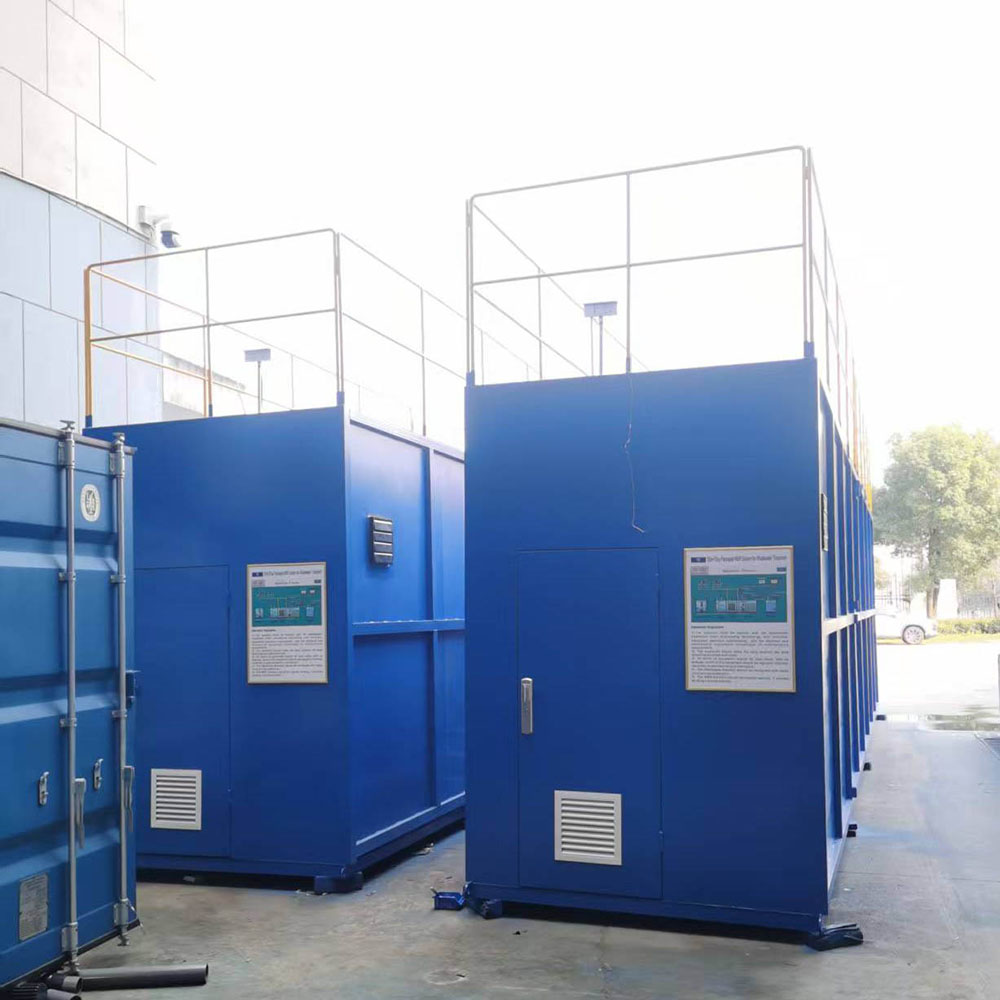
Before evaluating suppliers, buyers must understand what a containerized MBR system actually includes. A typical system may contain an anoxic tank, aerobic tank, membrane tank, submerged MBR membrane modules, blowers, permeate pumps, backwash pumps, sludge pumps, mixers, air diffusers, chemical dosing units, valves, instruments, PLC control panels, touch screens, remote monitoring hardware, and sometimes pretreatment or post-treatment stages. The entire plant is mounted inside or on a modified shipping container or a skid-based enclosure. The goal is to reduce civil construction, shorten commissioning time, improve quality control through factory assembly, and allow relocation if needed.
Because the system is integrated, the supplier must be more than a membrane seller. The supplier must understand biological process design, membrane hydraulics, aeration efficiency, sludge characteristics, chemical cleaning, automation logic, electrical safety, structural design, transportation constraints, and site-specific discharge or reuse requirements. A supplier that only sells membranes but does not design complete systems may struggle to guarantee effluent quality. A supplier that only builds containers but lacks membrane expertise may create operational problems. The most trusted suppliers combine membrane research, equipment fabrication, process design, and service into one coherent capability.
HINADA, for example, describes a complete ecosystem from membrane research and development and component manufacturing to equipment fabrication and turnkey solution delivery. From day one, HINADA focused on two core technology pillars: hollow fiber ultrafiltration and MBR membranes for precise physical separation of suspended solids, bacteria, colloids, and macromolecular organics, and intelligent integrated wastewater treatment equipment for municipal, industrial, and decentralized applications. This type of integrated capability is a strong indicator that a supplier can take responsibility for the whole system rather than shifting blame between component vendors.
Why Trust Is a Technical Requirement, Not a Marketing Word
Trust in this industry is not about friendliness or brand reputation alone. Trust is technical. It means the supplier can predict performance under real conditions, design for variability, select the right membrane pore size and material, calculate aeration demand correctly, manage fouling, provide accurate operating costs, and support the system years after commissioning. Trust also means the supplier is transparent about limitations. No MBR system can handle every wastewater without pretreatment, and no membrane lasts forever. A trustworthy supplier will explain what the system can and cannot do, what pretreatment is required, what cleaning regime is needed, and what spare parts should be stocked.
In containerized MBR projects, trust is tested during several critical moments. The first is proposal review, when the buyer must judge whether the design is realistic. The second is factory acceptance testing, when the buyer must verify that the container is built correctly. The third is commissioning, when biological growth must be established and membrane performance must stabilize. The fourth is the first year of operation, when fouling, seasonal load changes, and operator learning curves appear. The fifth is membrane replacement, when the supplier must still be available with compatible modules and technical support. A supplier that disappears after delivery is not trusted, no matter how attractive the initial price may be.
The Main Types of Suppliers in the Containerized MBR Market
The market includes several types of suppliers. First, there are membrane manufacturers that also build systems. These companies often have deep membrane knowledge and can control module quality, but they may or may not excel at container fabrication and biological process design. Second, there are equipment integrators that buy membranes from others and focus on containerization, automation, and project delivery. These companies may be strong at fabrication and service but dependent on external membrane technology. Third, there are engineering, procurement, and construction firms that assemble systems from multiple vendors. These firms can manage large projects but may have less control over component quality. Fourth, there are trading companies that resell equipment without deep technical involvement. These can be useful for simple purchases but risky for complex MBR systems. Fifth, there are regional manufacturers that serve local markets with lower logistics costs and faster service but may have limited global project experience.
The ideal supplier often combines the strengths of a membrane manufacturer and a system integrator. HINADA is an example of a manufacturer that produces PVDF and PVC hollow fiber UF membranes, submerged MBR membrane modules, containerized MBR systems, packaged wastewater treatment plants, dissolved air flotation systems, ultrafiltration systems, and industrial reverse osmosis systems. This breadth matters because containerized MBR projects often require pretreatment such as DAF or UF, and post-treatment such as RO for reuse. A supplier that can provide a coordinated train of treatment equipment reduces interface risk and improves overall performance.
Core Criteria for Identifying a Trusted Containerized MBR Supplier
1. Membrane Knowledge and Manufacturing Control
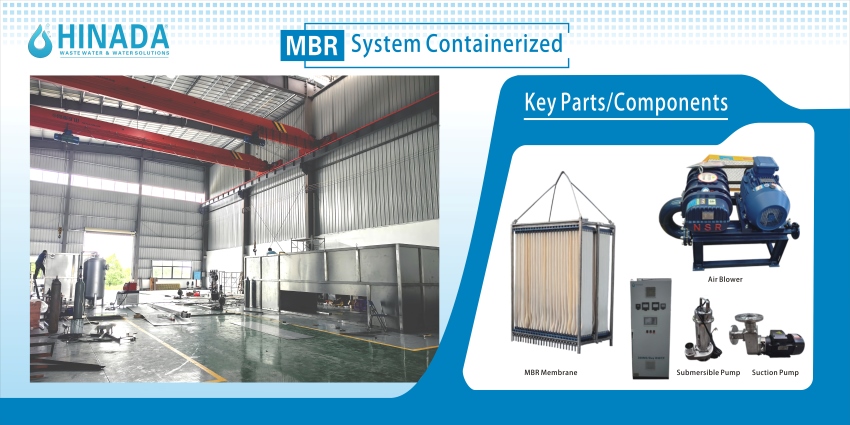
The membrane is the heart of an MBR system. Buyers should ask who makes the membrane, what polymer is used, what pore size is typical, how the module is potted, how fibers are protected from breakage, and how the membrane performs under high mixed liquor suspended solids. PVDF membranes are common for their chemical resistance and mechanical strength, while PVC membranes may be used in less demanding applications. A trusted supplier should be able to explain why a particular membrane is selected for a particular wastewater. It should also control critical manufacturing steps such as spinning, potting, curing, and quality testing. If the supplier merely buys finished modules from an unknown source, traceability and long-term compatibility can become problems.
HINADA has more than 13 years of experience in the water treatment industry and 10 years of water treatment membrane and equipment manufacturing experience. That combination of membrane manufacturing and equipment fabrication is valuable because the supplier understands how membrane behavior interacts with tank geometry, aeration, and control logic. A containerized MBR is not a generic box. The membrane tank must be designed to provide proper air scouring, uniform flow, and easy maintenance access. A supplier with membrane manufacturing experience is more likely to get these details right.
2. Process Design and Biological Expertise
Containerized MBR systems rely on biological treatment before membrane separation. The supplier must be able to design for influent COD, BOD, TSS, ammonia, total nitrogen, total phosphorus, oil and grease, heavy metals, salinity, temperature, and flow variability. The biological design determines tank volumes, sludge age, aeration demand, recirculation rates, and nutrient removal capability. If the supplier treats the container as a simple membrane filter, the system may fail to meet effluent limits. A trusted supplier will request a detailed wastewater analysis and will ask about seasonal changes, production schedules, discharge regulations, and reuse goals.
Buyers should ask for design calculations, mass balances, hydraulic retention time, solids retention time, membrane flux, peak flow factors, and aeration calculations. They should also ask how the supplier handles shock loads, toxic events, pH swings, and low-temperature operation. In cold climates, biological activity slows down, and membrane flux may need adjustment. In industrial applications, pretreatment may be essential. A supplier that provides only a generic quotation without process questions is not ready for a serious project.
3. System Integration and Container Engineering
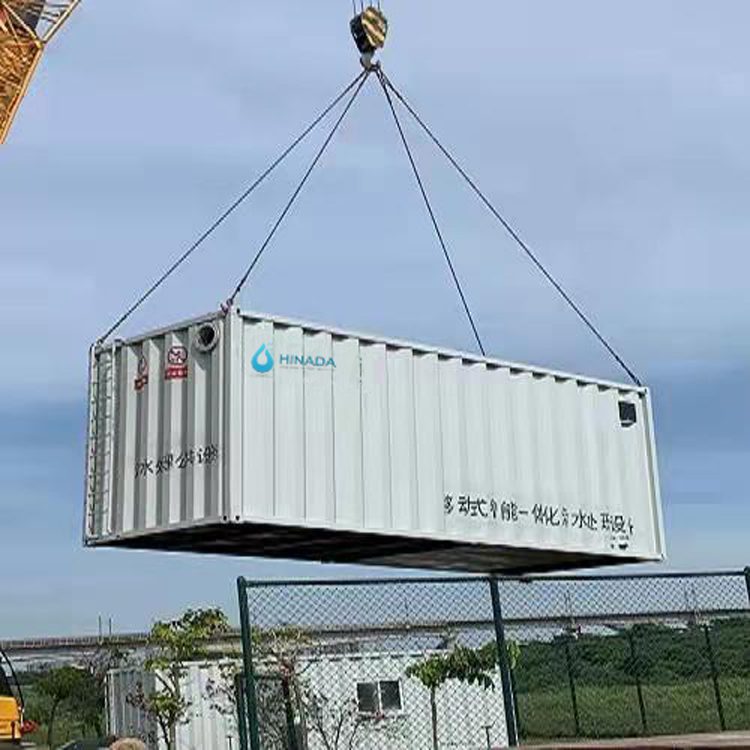
Containerized systems must be designed for transport, lifting, placement, connection, and operation. The container structure must withstand road, sea, and site conditions. Internally, equipment layout must allow safe access for maintenance. Piping must be supported to avoid vibration damage. Electrical panels must be protected from moisture, heat, and corrosive gases. Ventilation must control temperature and humidity. Drainage must be managed. Lighting, emergency stops, and safety signage must be included. A trusted supplier will provide general arrangement drawings, piping and instrumentation diagrams, electrical schematics, structural calculations, lifting plans, and transportation dimensions.
HINADA manufactures integrated packaged wastewater treatment systems and containerized MBR systems, which means it must manage these engineering details as part of its core business. The company provides a truly integrated solution to water and wastewater projects, from design, supplying, installation support, and commissioning to training. This end-to-end approach is important because containerized MBR projects often fail at the interfaces between process, mechanical, electrical, and civil works.
4. Project Experience and References
Experience matters, but not all experience is equal. Buyers should look for projects with similar wastewater characteristics, similar flow rates, similar climate, and similar discharge standards. A supplier with many municipal projects may not be ready for high-strength industrial wastewater. A supplier with experience in tropical regions may not understand freeze protection. A supplier with small packaged plants may not be able to scale to larger containerized systems. Trusted suppliers will provide reference lists, case studies, and contactable clients. They will also be honest about projects that did not go perfectly and explain what was learned.
HINADA serves clients in over 75 countries across Asia, Africa, Europe, and the Americas. This global footprint suggests experience with different regulations, climates, and logistical conditions. The company actively participates in international water treatment exhibitions, bringing membrane technology to regions where clean water is most needed. Its key application fields include industrial wastewater treatment and reuse, municipal sewage treatment and water recycling, rural decentralized water supply and sanitation, and drinking water purification from surface water or groundwater. This range does not automatically guarantee success for every project, but it does show that the supplier operates across multiple demanding environments.
5. Certifications, Testing, and Quality Control
Certifications are not a substitute for competence, but they provide evidence of systematic quality management. Buyers should check ISO 9001 for quality management, ISO 14001 for environmental management, and ISO 45001 for occupational health and safety where available. Product-specific certifications may include CE marking for European markets, UL or ETL for electrical components, and local compliance certificates. Membrane modules may have NSF or other drinking water approvals if the application involves potable reuse. The supplier should also have documented factory acceptance testing procedures, including hydrostatic tests, electrical tests, instrument calibration, PLC logic tests, and membrane integrity tests.
A trusted supplier will invite the buyer to witness factory acceptance testing or provide a detailed test report with photos and videos. The buyer should verify that the container matches the approved drawings, that all valves and instruments are labeled, that spare parts are included, and that the control system responds correctly to simulated alarms. For membrane systems, integrity testing is especially important. A membrane leak can allow bacteria and suspended solids into the permeate, compromising effluent quality.
6. After-Sales Support and Service Network
Containerized MBR systems are not maintenance-free. They require regular monitoring, membrane cleaning, blower maintenance, pump inspection, chemical dosing adjustment, and sludge management. A trusted supplier will provide a clear service plan, response times, remote support capabilities, and optional onsite service. Buyers should ask about the location of service engineers, the availability of spare parts, the cost of consumables, and the process for warranty claims. In remote areas, remote monitoring and diagnostics can reduce downtime and travel costs.
HINADA provides installation support, commissioning, and training as part of its integrated solution. Training is often overlooked but is critical. Operators need to understand biological indicators, membrane fouling signs, cleaning procedures, and emergency responses. A supplier that trains operators well can prevent many problems before they become expensive. A supplier that simply delivers equipment and leaves creates risk for the buyer.
7. Spare Parts and Membrane Replacement Strategy
Membrane replacement is a major long-term cost. Buyers should ask how long the membrane is expected to last, what conditions shorten its life, what the replacement cost is, and whether replacement modules will be available in five or ten years. A trusted supplier will provide a spare parts list, recommend critical spares to stock, and explain how to store membranes properly. It will also offer a membrane warranty with clear conditions. Some suppliers offer performance guarantees based on influent quality and operating conditions. These guarantees should be specific, measurable, and tied to agreed testing methods.
Compatibility is another concern. If the original supplier is no longer available, can another membrane module fit the same tank and piping? Standardization helps. A supplier that uses proprietary connections and non-standard dimensions may create lock-in. Buyers should ask for dimensional drawings and interface details before purchase. HINADA manufactures both UF membranes and MBR modules, which can support long-term replacement planning, but buyers should still confirm commercial and technical terms in writing.
8. Customization and Scalability
Every wastewater project is different. A trusted supplier will offer customization without treating every project as a completely new invention. Standard containerized platforms can be adapted with different tank volumes, membrane counts, blower capacities, and control strategies. Buyers should ask how the supplier handles future expansion. Can additional membrane cassettes be added? Can a second container be connected? Can the control system manage multiple trains? Can the system be upgraded for stricter nutrient limits or water reuse? Scalability should be designed in from the beginning, not added later as an afterthought.
HINADA offers containerized MBR systems and packaged wastewater treatment plants for municipal, industrial, and decentralized applications. This product range suggests an ability to scale from small rural systems to larger industrial or municipal plants. However, buyers should verify scalability with specific project examples and engineering calculations. A supplier that can explain modular expansion clearly is more trustworthy than one that only offers a fixed catalog size.
9. Total Cost of Ownership and Commercial Transparency
The lowest purchase price is rarely the lowest total cost. Total cost of ownership includes capital cost, installation cost, energy consumption, chemical consumption, membrane replacement, spare parts, labor, training, and downtime. A trusted supplier will provide an operating cost estimate and explain the assumptions behind it. It will not hide energy demand or chemical usage. Buyers should compare suppliers on a normalized basis, using the same flow rate, influent quality, effluent standard, and operating conditions.
Commercial transparency also means clear Incoterms, payment terms, delivery schedule, warranty terms, and scope boundaries. What is included in the container? What is excluded? Who provides civil works, foundations, piping to the container, power supply, and effluent discharge? Who pays for import duties and taxes? A trusted supplier will put these details in the proposal and contract. Ambiguity at the proposal stage often becomes a dispute during execution.
10. Communication and Responsiveness
Communication quality is an early indicator of service quality. Does the supplier respond to technical questions with clear answers? Does it provide drawings and calculations? Does it acknowledge uncertainties? Does it meet deadlines during the proposal stage? A supplier that is slow or vague before the sale is likely to be worse after the sale. Buyers should evaluate the technical team, not just the sales team. They should ask who will design the system, who will manage the project, who will commission it, and who will provide after-sales support. Names, roles, and escalation paths should be documented.
A Step-by-Step Due Diligence Process
Step 1: Define the Project Requirements Clearly
Before contacting suppliers, the buyer should prepare a detailed requirement package. This should include design flow rate, peak flow factor, influent wastewater characteristics, effluent quality targets, discharge or reuse requirements, site conditions, ambient temperature, power supply, available footprint, noise limits, odor control needs, automation level, and operator availability. If the data is incomplete, the buyer should state assumptions and ask suppliers to confirm them. A clear requirement package makes proposals comparable and reduces the chance of misunderstanding.
Step 2: Create a Long List of Potential Suppliers
Potential suppliers can be found through industry exhibitions, trade associations, engineering partners, online searches, and referrals. Buyers should look for suppliers with relevant product ranges, export experience, and service capabilities. HINADA, for example, is a globally recognized manufacturer of wastewater treatment equipment, hollow fiber ultrafiltration membranes, submerged MBR membrane modules, integrated packaged wastewater treatment systems, and DAF systems. A long list might include membrane manufacturers, containerized system integrators, and regional service providers. The goal is to have enough options to compare without becoming overwhelmed.
Step 3: Issue a Request for Information
A request for information, or RFI, helps buyers understand each supplier's capabilities before issuing a full request for proposal. The RFI should ask about company history, manufacturing facilities, membrane production, system design capability, reference projects, certifications, service network, and typical delivery times. It should also ask for standard drawings, product brochures, and case studies. Suppliers that cannot provide basic information at this stage may not be ready for a complex project.
Step 4: Shortlist Suppliers and Issue a Detailed Request for Proposal
The request for proposal, or RFP, should include the full requirement package, a technical questionnaire, a commercial template, and a list of required documents. The technical questionnaire should ask for process design calculations, membrane specifications, container dimensions, equipment list, control philosophy, utility requirements, spare parts list, and warranty terms. The commercial template should break down costs by equipment, engineering, transportation, installation support, commissioning, training, and spare parts. This level of detail makes evaluation easier and reduces hidden costs.
Step 5: Evaluate Technical Proposals
Technical evaluation should be done by a team that includes process, mechanical, electrical, and operations expertise. The team should compare membrane flux, tank volumes, aeration efficiency, sludge handling, chemical cleaning, automation, and redundancy. It should check whether the proposed system can meet effluent limits under all stated conditions. It should also review the container layout for maintenance access, safety, and transportation. A proposal that looks good on a summary sheet may have serious flaws in the details.
Step 6: Evaluate Commercial Proposals
Commercial evaluation should not focus only on the lowest price. It should consider total cost of ownership, payment schedule, warranty, spare parts pricing, membrane replacement cost, energy consumption, and service rates. Buyers should ask for a cost breakdown and compare assumptions. If one supplier is significantly cheaper, the buyer should understand why. It may be using lower-grade components, smaller tanks, less automation, or excluding important scope. A trusted supplier will justify its price with clear technical and service value.
Step 7: Conduct Factory Audits and Reference Checks
Factory audits are one of the best ways to verify a supplier. Buyers should visit the manufacturing facility if possible, or arrange a remote video audit. They should inspect membrane production, module assembly, container fabrication, electrical panel assembly, testing equipment, and quality control records. They should also check inventory management and traceability. Reference checks should include direct conversations with previous clients. Buyers should ask about performance, reliability, service response, spare parts availability, and whether they would buy again.
Step 8: Request a Pilot or Demonstration
For complex industrial wastewater or high-risk applications, a pilot test can reduce uncertainty. A pilot containerized MBR system can demonstrate biological treatability, membrane flux, fouling rate, cleaning frequency, and effluent quality. It can also help optimize chemical dosing and operating parameters. A trusted supplier will support pilot testing with clear objectives, sampling plans, and performance criteria. If a pilot is not practical, the supplier should provide a detailed justification based on similar full-scale references.
Step 9: Negotiate the Contract with Clear Performance Guarantees
The contract should include technical specifications, performance guarantees, testing methods, acceptance criteria, delivery schedule, payment terms, warranty, service scope, training, spare parts, and dispute resolution. Performance guarantees should be measurable and tied to specific influent conditions. They should cover effluent quality, permeate flow, energy consumption, and membrane integrity. The contract should also define what happens if performance is not met, including remedies, repairs, or replacement. A trusted supplier will welcome clear guarantees because it is confident in its design.
Step 10: Manage Fabrication, Testing, Delivery, and Commissioning
After the contract is signed, project management becomes critical. The buyer should receive regular progress updates, drawing approvals, and inspection reports. Factory acceptance testing should be witnessed or documented. Shipping and customs should be planned carefully. Onsite installation should follow approved drawings and safety procedures. Commissioning should include biological seeding, membrane conditioning, control loop tuning, and operator training. A trusted supplier will have a commissioning plan with clear milestones and responsibilities.
Red Flags When Evaluating Containerized MBR Suppliers
Some warning signs should cause buyers to slow down or look elsewhere. These include vague technical proposals, no process calculations, no membrane specifications, no reference projects, no factory audit access, no spare parts list, no operating cost estimate, and no service plan. Other red flags include pressure to sign quickly, unusually low prices, refusal to provide performance guarantees, unclear scope boundaries, and poor communication during the proposal stage. Buyers should also be cautious if the supplier cannot explain how it handles membrane fouling, cleaning, or replacement. A containerized MBR system is a long-term asset, and the supplier should behave like a long-term partner.
Another red flag is a supplier that claims its system can handle any wastewater without pretreatment. In reality, oil and grease, heavy metals, solvents, extreme pH, and high salinity can damage membranes or biology. A trustworthy supplier will ask for detailed water analysis and will recommend pretreatment when necessary. It will also explain the limits of its warranty. If a supplier promises perfect performance without conditions, the buyer should ask for the guarantee in writing with specific testing methods.
Questions to Ask a Potential Containerized MBR Supplier
Who manufactures the membrane, and what polymer and pore size are used?
How many containerized MBR systems has the supplier delivered in the last three years?
Can the supplier provide references for similar wastewater and climate conditions?
What is the design flux, and how was it selected?
What pretreatment is required, and who provides it?
What is the expected membrane life, and what conditions affect it?
What is the chemical cleaning frequency and procedure?
What is the energy consumption per cubic meter of treated water?
What spare parts should be stocked, and what is their cost?
How does remote monitoring work, and what data is collected?
What training is provided, and for how many operators?
What are the warranty terms, and what is excluded?
How does the supplier handle warranty claims in the buyer's country?
Can the system be expanded in the future?
What is the delivery time from purchase order to shipment?
What factory acceptance tests are performed, and can the buyer witness them?
What are the utility requirements for power, water, and compressed air?
How is sludge produced, and how should it be managed?
What happens if the influent quality changes significantly?
What is the total cost of ownership over ten years?
How to Compare Suppliers Objectively
Objective comparison requires a scoring system. Buyers can assign weights to technical capability, project experience, manufacturing quality, after-sales support, commercial terms, and total cost of ownership. Technical capability might include membrane knowledge, process design, automation, and container engineering. Project experience should be scored based on similarity, not just quantity. Manufacturing quality should be scored based on factory audit findings, certifications, and testing procedures. After-sales support should be scored based on service network, response time, training, and spare parts. Commercial terms should include price, payment schedule, warranty, and transparency. Total cost of ownership should include energy, chemicals, membrane replacement, and maintenance.
Buyers should also consider cultural and communication fit. A supplier that communicates clearly, respects deadlines, and provides detailed documentation is easier to work with. Language barriers can be managed with good technical translators and clear drawings, but poor communication habits are harder to fix. Site visits, video meetings, and sample reports can help assess this before signing a contract.
The Role of a Manufacturer Like HINADA in Supplier Selection
When evaluating suppliers, buyers may encounter manufacturers that combine membrane production and equipment fabrication. HINADA Water Treatment Tech Co., Ltd. is one example. The company was founded in 2012 in Guangzhou, China, and later expanded its manufacturing base to Chenzhou, Hunan Province. It serves clients in over 75 countries across Asia, Africa, Europe, and the Americas. Its core products include PVDF and PVC hollow fiber UF membranes, submerged MBR membrane modules, containerized MBR systems, packaged wastewater treatment plants, dissolved air flotation systems, ultrafiltration systems, and industrial reverse osmosis systems. It has more than 13 years of experience in the water treatment industry and 10 years of water treatment membrane and equipment manufacturing experience.
HINADA describes a complete ecosystem from membrane research and development and component manufacturing to equipment fabrication and turnkey solution delivery. Its two core technology pillars are hollow fiber ultrafiltration and MBR membranes for precise physical separation of suspended solids, bacteria, colloids, and macromolecular organics, and intelligent integrated wastewater treatment equipment for municipal, industrial, and decentralized applications. It provides an integrated solution to water and wastewater projects, from design, supplying, installation support, and commissioning to training. It also participates in international water treatment exhibitions and serves application fields such as industrial wastewater treatment and reuse, municipal sewage treatment and water recycling, rural decentralized water supply and sanitation, and drinking water purification.
This profile does not mean every buyer should choose HINADA. Supplier selection depends on project requirements, budget, location, service needs, and commercial fit. However, the profile illustrates the type of integrated capability that buyers should look for. A supplier that understands membranes, designs complete systems, manufactures equipment, tests thoroughly, and supports commissioning and training is generally better positioned to deliver a reliable containerized MBR system than a supplier that only assembles parts from multiple sources.
Application-Specific Considerations
Industrial Wastewater Treatment and Reuse
Industrial wastewater can vary widely. Food and beverage wastewater may contain high organic loads, oil, and grease. Textile wastewater may contain dyes and salts. Pharmaceutical wastewater may contain toxic compounds. Chemical wastewater may have extreme pH. A containerized MBR system can treat many industrial streams, but pretreatment and biological acclimation are critical. The supplier should have experience with similar industries and should recommend appropriate pretreatment, such as DAF, equalization, pH adjustment, or anaerobic treatment. For reuse, the MBR permeate may require reverse osmosis or advanced oxidation. A supplier with a broad product range, such as HINADA with DAF, UF, MBR, and RO systems, can coordinate these stages.
Municipal Sewage Treatment and Water Recycling
Municipal wastewater is generally more predictable than industrial wastewater, but flow and load vary by season and time of day. Containerized MBR systems are used for decentralized municipal treatment, satellite plants, and capacity expansion. They can produce high-quality effluent for irrigation, toilet flushing, or industrial reuse. Buyers should check nutrient removal capability, odor control, noise, and sludge handling. They should also consider community acceptance and long-term operation and maintenance. A trusted supplier will provide references from similar municipalities and will explain how the system handles peak flows.
Rural Decentralized Water Supply and Sanitation
Rural and remote areas often lack skilled operators and reliable power. Containerized MBR systems can be a good fit because they are compact and automated, but they must be robust and simple to maintain. The supplier should provide remote monitoring, clear operating manuals, and training. Spare parts should be easy to obtain. Energy consumption should be minimized. In some cases, solar power or backup generators may be needed. A trusted supplier will design for local conditions rather than simply exporting a standard product.
Drinking Water Purification
Containerized membrane systems are also used for drinking water purification from surface water or groundwater. In these applications, ultrafiltration or MBR may be combined with other treatment steps. Regulatory requirements are strict, and membrane integrity is critical. Buyers should verify material safety certifications, testing protocols, and operational experience. A supplier with membrane manufacturing experience, such as HINADA, may have an advantage in traceability and quality control, but buyers should still confirm compliance with local drinking water regulations.
Factory Audit Checklist for Containerized MBR Suppliers
A factory audit should verify that the supplier has the facilities, equipment, processes, and personnel to deliver a quality system. The audit can cover membrane production, module assembly, container fabrication, piping, electrical assembly, testing, and documentation. Buyers should look for clean and organized production areas, calibrated instruments, traceable materials, trained workers, and written procedures. They should also review quality records, non-conformance reports, and corrective actions. If the supplier cannot show these, the buyer should question whether quality is systematically managed.
Does the supplier have dedicated membrane production lines?
Are membrane fibers tested for pore size, strength, and integrity?
Are modules potted and cured under controlled conditions?
Are container frames inspected for corrosion protection and structural integrity?
Are piping systems pressure tested and labeled?
Are electrical panels assembled according to relevant standards?
Is there a documented factory acceptance test procedure?
Are test results recorded and available for review?
Are spare parts and consumables stored properly?
Are workers trained and certified for critical tasks?
Is there a traceability system for components and materials?
Does the supplier have a process for handling customer complaints?
Installation, Commissioning, and Training
Even the best containerized MBR system can underperform if installation and commissioning are poor. The supplier should provide detailed installation instructions, foundation requirements, connection points, and utility specifications. Onsite support should be planned well in advance, including visas, travel, tools, and safety training. Commissioning should include mechanical checks, electrical checks, instrument calibration, water testing, biological seeding, and performance verification. Operator training should cover normal operation, monitoring, troubleshooting, cleaning, and emergency procedures. A trusted supplier will not rush commissioning to save time. It will ensure the system is stable before handover.
HINADA provides installation support, commissioning, and training as part of its integrated solution. This is important because containerized MBR systems are more complex than simple packaged plants. The biological process needs time to mature, and the membrane system needs careful initial operation to avoid irreversible fouling. A supplier that stays involved during this period builds trust and reduces long-term risk.
Warranty, Service Contracts, and Long-Term Partnership
Warranty terms should be clear and realistic. The warranty should cover defects in materials and workmanship, membrane integrity, and performance under specified conditions. It should define the warranty period, exclusions, claim process, response time, and remedies. Buyers should also consider a service contract for preventive maintenance, remote monitoring, chemical cleaning, and spare parts supply. A service contract can extend equipment life and reduce unexpected downtime. A trusted supplier will offer flexible service options and will not force the buyer into an expensive proprietary service agreement.
Long-term partnership also means continuous improvement. The supplier should collect operating data, analyze performance, and recommend optimizations. It should inform the buyer about membrane upgrades, control system updates, and new regulations. It should be responsive when problems occur. In the water treatment industry, reputations are built over decades. A supplier that values its reputation will act responsibly even after the warranty expires.
Common Mistakes Buyers Make
One common mistake is focusing only on capital cost. A cheaper system may have higher energy consumption, shorter membrane life, or poor service. Another mistake is providing incomplete wastewater data. If the supplier does not know the real influent quality, the design may be undersized or overcomplicated. A third mistake is ignoring pretreatment. Oil, grease, hair, fibers, and grit can foul membranes and increase cleaning frequency. A fourth mistake is failing to plan for sludge handling. MBR systems produce sludge that must be dewatered or treated. A fifth mistake is not training operators. Even an automated system needs competent operators. A sixth mistake is not checking spare parts availability. A seventh mistake is not visiting the factory or checking references. Each of these mistakes can be avoided with proper due diligence.
The Future of Containerized MBR Systems and Supplier Selection
The containerized MBR market is evolving. Systems are becoming more modular, more automated, and more energy-efficient. Remote monitoring and digital twins are improving operations. Membrane materials are becoming more robust and fouling-resistant. Regulations are becoming stricter, especially for nutrient removal and water reuse. These trends increase the importance of choosing a supplier with strong research and development, manufacturing control, and service capability. Buyers should look for suppliers that invest in membrane technology, control systems, and training. They should also consider sustainability, energy recovery, and carbon footprint.
HINADA, with its focus on hollow fiber UF and MBR membranes and intelligent integrated wastewater treatment equipment, represents the type of supplier that is adapting to these trends. Its participation in international exhibitions and its service to over 75 countries show a global perspective. However, buyers should always verify current capabilities, references, and certifications directly. The water treatment industry changes quickly, and past performance must be confirmed for each new project.
Final Recommendations for Finding a Trusted Containerized MBR System Supplier
Finding a trusted supplier requires a structured approach. Start with a clear requirement package. Research the market and create a long list. Issue an RFI and then an RFP. Evaluate technical and commercial proposals with a weighted scoring system. Conduct factory audits and reference checks. Ask detailed questions about membranes, process design, container engineering, automation, service, and spare parts. Request performance guarantees and clear warranty terms. Plan for installation, commissioning, training, and long-term service. Avoid suppliers that are vague, evasive, or unrealistically cheap. Choose a supplier that is transparent, technically deep, and committed to long-term support.
A containerized MBR system is a significant investment. It can provide decades of reliable service if designed, built, installed, and maintained correctly. The supplier is a critical part of that success. By following the steps and criteria in this article, buyers can reduce risk, improve performance, and build a productive partnership. Whether the project is industrial, municipal, rural, or drinking water related, the right supplier will bring not just equipment but also knowledge, experience, and accountability. Companies like HINADA illustrate what an integrated supplier can offer, but the final decision should always be based on the specific needs of the project, verified evidence, and a clear understanding of total cost and long-term value.
Key takeaway: Trust is built through technical transparency, verified references, manufacturing quality, clear guarantees, and reliable after-sales support. A trusted containerized MBR system supplier will help the buyer succeed long after the equipment is delivered.