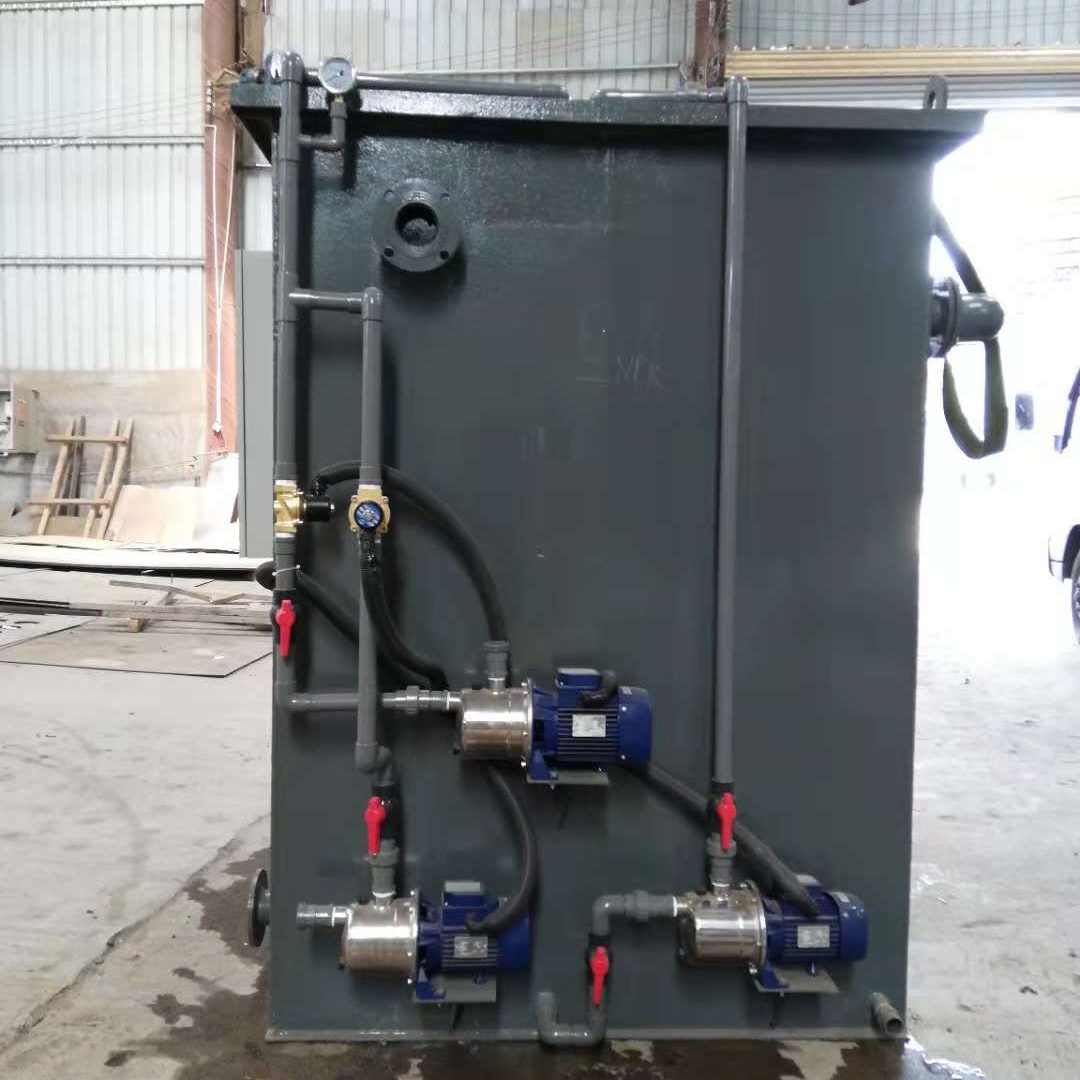
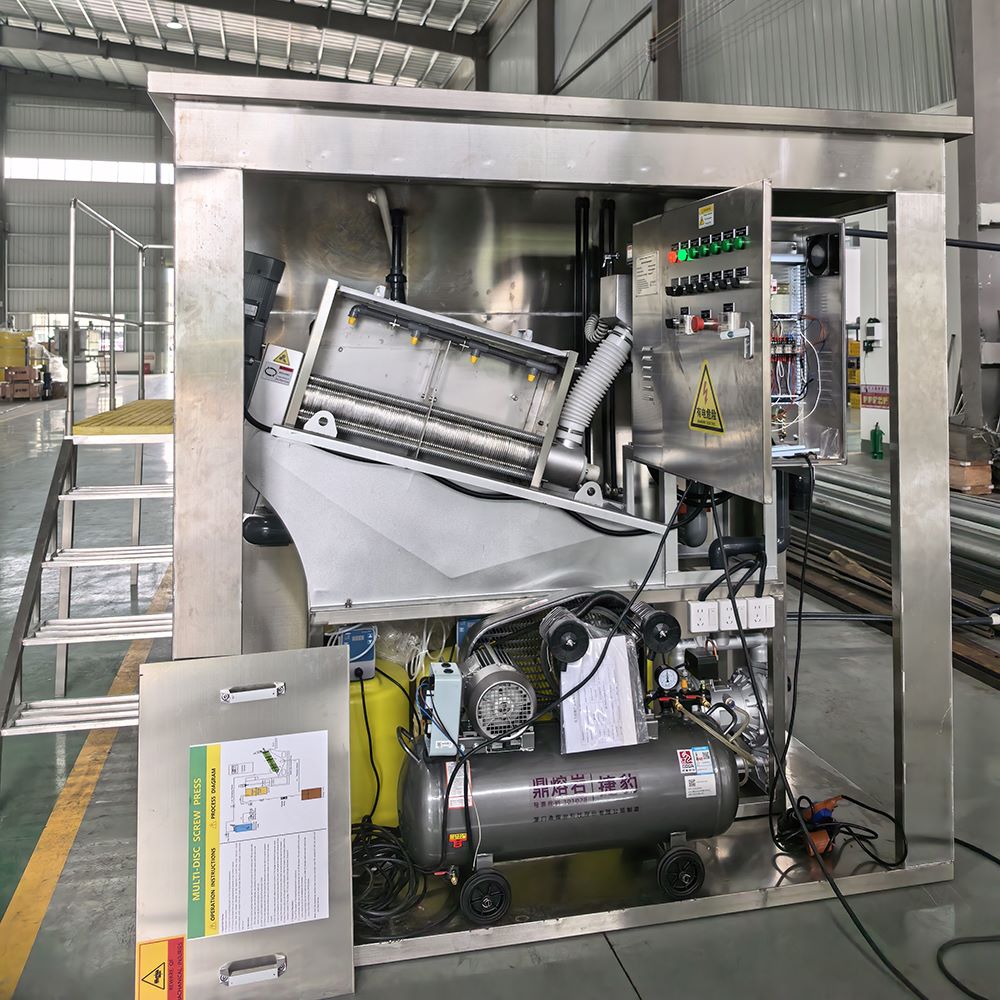
Inside a daf wastewater system factory Focused on Durability
Inside a daf wastewater system factory Focused on Durability
September 30, 2026
Author
Solution Provider, through a professional technical team, we provide customers with targeted equipment selection recommendations and comprehensive after-sales services, winning the trust and recognition of customers.
Sarah M.
This blog explores what it means to build dissolved air flotation systems inside a factory focused on durability. It follows HINADA Water Treatment Tech Co., Ltd., a globally recognized manufacturer founded in 2012 in Guangzhou, China, with a later manufacturing base in Chenzhou, Hunan Province. HINADA serves clients in over 75 countries and provides a complete ecosystem from membrane research and development to equipment fabrication and turnkey delivery. The article explains why durability is essential in DAF systems, which must handle oils, grease, suspended solids, chemical flocs, and abrasive sludge under continuous operation. It describes material selection, corrosion resistance, welding quality, distortion control, coating systems, and surface treatment. It then examines the air dissolution system, micro-bubble generation, nozzles, skimmers, scrapers, pumps, valves, and instrumentation. The role of intelligent control systems, interlocks, alarms, and factory acceptance testing is also covered. The blog highlights HINADA’s integrated approach, combining DAF with UF, MBR, and RO systems for industrial wastewater treatment, municipal sewage treatment, rural decentralized sanitation, and drinking water purification. It discusses packaging, shipping, installation support, commissioning, training, and lifecycle cost. By focusing on durability, HINADA aims to reduce downtime, lower total cost of ownership, and support sustainable water management. The article concludes that durability is a promise that travels with every DAF system, ensuring reliable performance long after installation.
Inside a DAF Wastewater System Factory Focused on Durability
Durability is not a marketing slogan inside a dissolved air flotation system factory. It is a daily engineering discipline that shapes every tank, weld, pump, valve, scraper, control panel, and coating decision. For HINADA Water Treatment Tech Co., Ltd., a globally recognized manufacturer of wastewater treatment equipment, hollow fiber ultrafiltration membranes, submerged MBR membrane modules, integrated packaged wastewater treatment systems, and DAF systems, durability is the quiet promise behind every shipment. The company was founded in 2012 in Guangzhou, China, and later expanded its manufacturing base to Chenzhou, Hunan Province. Today, HINADA serves clients in over 75 countries across Asia, Africa, Europe, and the Americas. Inside its DAF production environment, the focus is not merely on making equipment that works on day one. The focus is on building systems that continue to perform after years of abrasive sludge, corrosive chemicals, variable loads, humid climates, and remote operating conditions.
A dissolved air flotation system is often described simply as a tank where bubbles lift solids to the surface. That description misses the harsh reality of the factory floor and the even harsher reality of the treatment plant. DAF units must handle fats, oils, grease, suspended solids, fibrous materials, chemical flocs, and biological sludge. They must withstand constant water exposure, chemical dosing, pressure fluctuations, and mechanical scraping. In many installations, maintenance access is limited, power quality is inconsistent, and operational staff may change frequently. Under these conditions, durability becomes a form of respect for the end user. It reduces downtime, lowers lifecycle cost, and protects the treatment process from avoidable failure.
undefined
The HINADA Manufacturing Philosophy Behind DAF Durability
HINADA is one of the leading submerged MBR membrane, wastewater treatment equipment, and membrane filtration system manufacturers in China, specializing as a wastewater treatment solution provider and equipment supplier in Guangzhou since 2012. The company provides a truly integrated solution to water and wastewater projects, from designation, supplying, installation support, and commissioning to training. That integrated approach is visible inside the DAF factory. Design engineers, fabrication teams, quality inspectors, and service technicians work from a shared understanding that a DAF system is not a collection of isolated parts. It is a pressure vessel, a clarifier, a sludge concentrator, a chemical reaction chamber, and a mechanical handling system operating at the same time.
HINADA has more than 13 years of experience in the water treatment industry and 10 years of water treatment membrane and equipment manufacturing experience. This experience has produced a complete ecosystem from membrane research and development and component manufacturing to equipment fabrication and turnkey solution delivery. From day one, HINADA focused on two core technology pillars. The first is hollow fiber ultrafiltration, including UF and MBR membranes, which provide precise physical separation of suspended solids, bacteria, colloids, and macromolecular organics. The second is intelligent integrated wastewater treatment equipment, which delivers ready-to-install solutions for municipal, industrial, and decentralized applications. DAF systems sit at the intersection of these pillars. They are often the first barrier that protects downstream membranes, and they are often the last mechanical process before water is reused or discharged.
Durability in this context is not about overbuilding for its own sake. It is about understanding where corrosion, abrasion, fatigue, and operator error will attack a system. It is about selecting materials that match the wastewater chemistry. It is about designing tanks that can be transported without distortion. It is about assembling skimmers that remain aligned after thousands of cycles. It is about writing control logic that protects pumps from dry running and air saturation systems from pressure instability. Every one of these concerns is addressed inside the factory before the equipment ever reaches a customer site.
Material Selection as the First Line of Durability
The durability story of a DAF unit begins long before welding arcs are struck. It begins with material selection. HINADA engineers evaluate the customer’s wastewater characteristics, including pH, temperature, chloride concentration, oil and grease content, suspended solids, and chemical dosing regime. These parameters determine whether carbon steel with protective coatings, stainless steel, duplex stainless steel, or another material is appropriate. In many industrial applications, carbon steel with a properly prepared and applied coating system offers an excellent balance of strength and cost. In highly corrosive environments, stainless steel becomes necessary. The factory maintains strict incoming material inspection to confirm grade, thickness, and surface condition.
Steel plates and profiles are checked for flatness, mill scale, rust, and lamination. Any defect that could compromise a pressure boundary or structural joint is identified before fabrication. This may seem like a small step, but it prevents expensive rework later. A DAF tank that is out of tolerance can create alignment problems for scrapers, skimmers, and internal baffles. A pressure vessel with hidden lamination can fail during hydrostatic testing or, worse, during operation. HINADA’s material traceability practices help ensure that each component can be linked to its source and inspection record.
Corrosion resistance is not only about the base metal. It is also about the compatibility of every wetted component. Pipes, valves, flanges, gaskets, fasteners, and sensors must be selected as a system. For example, a stainless steel tank connected to carbon steel piping can suffer galvanic corrosion if isolation is not provided. A high-chloride wastewater stream can attack certain grades of stainless steel, causing pitting and crevice corrosion. HINADA’s engineering team reviews these interactions during the design phase, not after a failure occurs. This is one reason the company can serve clients in over 75 countries with widely varying water qualities and environmental conditions.
Fabrication and Welding: Building a DAF That Holds Together
Inside the DAF factory, fabrication is a controlled sequence of cutting, forming, fitting, welding, inspection, and surface preparation. The goal is not simply to join metal. The goal is to create structures that resist fatigue, pressure, vibration, and thermal cycling. DAF tanks and saturation vessels are often subjected to internal pressure, vacuum conditions during drainage, and repeated filling and emptying. Poor weld quality can lead to leaks, corrosion initiation, and structural weakness. HINADA therefore relies on qualified welders and documented welding procedures.
Welding parameters are controlled for voltage, current, travel speed, and shielding gas. Joint preparation is inspected before welding, and finished welds are inspected after welding. Depending on the application and customer requirements, non-destructive testing methods such as visual inspection, dye penetrant testing, magnetic particle testing, and ultrasonic testing may be used. Pressure vessels and critical joints receive particular attention. Hydrostatic testing is performed to verify strength and leak tightness. For air saturation vessels, the test pressure and hold time are carefully recorded. These records become part of the equipment documentation and provide evidence that the system was built to specification.
Distortion control is another durability concern. Welding generates heat that can warp plates and frames. If a tank wall distorts, internal baffles may not fit correctly, and scraper alignment may be compromised. HINADA fabricators use tack welds, balanced welding sequences, temporary stiffeners, and fixtures to minimize distortion. After welding, critical dimensions are checked against drawings. The factory does not treat dimensional accuracy as a cosmetic issue. It is a functional requirement that determines whether the DAF system will operate smoothly for years.
Corrosion Protection and Surface Treatment
After fabrication, DAF components enter surface preparation and coating. This stage is essential for durability, especially for carbon steel equipment. Surface preparation typically involves abrasive blasting to remove mill scale, rust, oil, and other contaminants. The cleanliness and profile of the surface determine how well the coating will bond. HINADA follows coating supplier recommendations for surface profile, ambient conditions, and curing times. Humidity, temperature, and dew point are monitored because they affect coating performance.
Coating systems may include epoxy primers, intermediate coats, and polyurethane or other topcoats. The number of coats and dry film thickness depend on the corrosivity category of the installation environment. For coastal or chemical plants, a more robust coating system is specified. For submerged surfaces, coatings must be compatible with continuous water exposure and the specific wastewater chemistry. Internal linings may be used in tanks and vessels where the liquid is aggressive. Edges, welds, and hard-to-reach areas receive extra attention because these are common starting points for corrosion.
Stainless steel components also require proper treatment. After welding, heat tint and contamination must be removed to restore corrosion resistance. Pickling and passivation may be performed to remove free iron and create a passive oxide layer. The factory understands that stainless steel is not automatically immune to corrosion. It must be handled, cleaned, and fabricated correctly. This attention to detail is part of why HINADA equipment is trusted in municipal, industrial, and decentralized applications around the world.
The Air Dissolution System: Heart of DAF Durability
The air dissolution system is often called the heart of a DAF unit. It consists of a recycle pump, air compressor or air supply, pressure vessel, and associated valves and instruments. The system dissolves air into a pressurized water stream and then releases it into the flotation tank through specialized nozzles or valves. The sudden pressure drop creates millions of micro-bubbles that attach to suspended particles and carry them to the surface. If the air dissolution system is unreliable, the entire DAF process suffers. If it is inefficient, operating costs rise. If it is fragile, maintenance becomes constant.
HINADA focuses on durability in every part of this loop. The recycle pump is selected for continuous duty and resistance to cavitation. The pressure vessel is designed and fabricated to withstand operating pressure with an appropriate safety factor. Air injection points are arranged to promote efficient dissolution without causing vibration or water hammer. Pressure relief devices protect the system from overpressure. Instrumentation monitors pressure and flow so that operators can detect deviations before they cause process failure. The control system can interlock the recycle pump with the feed pump and air supply to prevent dry running or unstable operation.
Air saturation efficiency depends on pressure, temperature, residence time, and water quality. The factory tests these parameters during factory acceptance testing. The goal is to confirm that the system can produce the required dissolved air concentration and that the released bubbles are fine and uniform. A durable DAF system must maintain this performance even when the feed water quality changes. HINADA engineers therefore design with a margin for variability. They do not tune the system to a single ideal condition. They build it to handle the real-world range of flows and loads that the customer will face.
Micro-Bubble Generation and Nozzle Durability
Micro-bubble generation is a precise physical process. The size and distribution of bubbles determine how effectively solids, oils, and grease are captured. Nozzles and release devices must resist erosion, clogging, and corrosion. If a nozzle wears, the bubble pattern changes, and treatment performance declines. If a nozzle clogs, the system may become unbalanced, with some areas receiving too much air and others too little. HINADA selects nozzle materials and designs based on the wastewater characteristics and the expected operating hours.
Some applications contain abrasive particles, such as sand, grit, or metal fines. These can erode soft materials quickly. Other applications contain oils and greases that can coat surfaces and attract debris. The factory considers these risks when specifying nozzle geometry and material. Maintenance access is also designed into the system. Nozzles and release points should be accessible for inspection and cleaning without requiring the entire tank to be drained or dismantled. This design choice reduces downtime and encourages preventive maintenance.
The durability of micro-bubble generation is not only about the nozzle. It is also about the piping that feeds it. Piping must be supported to avoid vibration, and it must be arranged to prevent air pockets and sediment accumulation. HINADA fabricators follow isometric drawings and support standards to ensure that the air dissolution loop remains stable. The factory performs pressure and flow tests before shipment to confirm that the system behaves as designed. These tests are not a formality. They are a final opportunity to catch issues that could otherwise become field problems.
Skimmers, Scrapers, and Mechanical Reliability
Mechanical sludge removal is one of the most demanding parts of a DAF system. The surface skimmer must collect floated sludge without excessive turbulence or water carryover. The bottom scraper must move settled solids toward the sludge outlet without binding or wearing out. Chains, flights, bearings, shafts, and drive units operate continuously in a wet and often corrosive environment. If any of these components fail, the DAF unit may lose its ability to separate solids effectively.
HINADA designs mechanical assemblies for alignment, strength, and serviceability. Drive units are selected with appropriate service factors. Chains and flights are guided to prevent lateral movement. Bearings are protected from water and debris. Shafts are sized to resist bending and fatigue. The factory checks alignment during assembly and again after installation of the drive system. This attention to mechanical detail is especially important for large DAF units, where even a small misalignment can accelerate wear.
Durability also means designing for maintenance. Components that are likely to wear should be replaceable without major demolition. Access covers, inspection doors, and lifting points are positioned to help maintenance crews. The factory provides documentation that identifies wear parts and recommended inspection intervals. HINADA’s service team can support installation, commissioning, and training, helping the end user establish a maintenance routine that protects the equipment. A DAF system that is easy to maintain is more likely to remain durable over its full service life.
Pumps, Valves, and Instrumentation
Pumps and valves are the muscles and joints of a DAF system. They control flow, pressure, chemical dosing, sludge withdrawal, and recycle. HINADA selects pumps based on flow, head, viscosity, solids content, and chemical compatibility. For abrasive or fibrous slurries, the factory may specify open impellers, recessed impellers, or other designs that resist clogging. For chemical dosing, materials such as PVC, PVDF, or PTFE may be used. The goal is to avoid premature failure and to maintain accurate dosing.
Valves must be reliable and easy to operate. Manual valves are used where adjustment is infrequent. Automated valves are used where process control requires rapid response. Actuators are selected for the available power and control signal. Limit switches and position feedback help the control system confirm that valves are in the correct state. If a valve fails, the process may be disrupted, or safety may be compromised. HINADA therefore pays close attention to valve quality, installation orientation, and accessibility.
Instrumentation provides the data that operators need to run the DAF system efficiently. Flow meters, pressure transmitters, level sensors, pH sensors, and turbidity meters may be included depending on the application. These instruments must be durable and appropriate for the wastewater environment. Sensors can foul, corrode, or drift. HINADA selects instruments with suitable materials and cleaning options. The control system can include alarms and trends that help operators detect sensor problems early. This integration of instrumentation and control is part of HINADA’s intelligent integrated wastewater treatment equipment approach.
Control Systems and Intelligent Operation
Modern DAF systems are not just mechanical. They are intelligent systems that coordinate pumps, valves, air supply, chemical dosing, and sludge removal. HINADA designs control panels that are robust, well-labeled, and easy to troubleshoot. Electrical components are selected for the ambient conditions of the installation. Enclosures may be rated for dust and water protection. Wiring is routed and numbered according to drawings. Terminal blocks, relays, contactors, and PLC modules are arranged for serviceability.
The control logic is written to protect the equipment and maintain process stability. For example, the recycle pump may be interlocked with the feed pump so that it cannot run without water. The air compressor may be interlocked with pressure feedback so that it does not overpressurize the saturation vessel. The sludge scraper may be interlocked with the drive motor to detect overload. Chemical dosing may be paced to flow or pH. These interlocks reduce the risk of operator error and equipment damage. They also make the system more durable because they prevent the abnormal conditions that cause wear and failure.
HINADA can provide integrated packaged wastewater treatment systems and containerized MBR systems that combine DAF with downstream membrane processes. In these integrated solutions, the control system coordinates all units. Data can be logged and displayed on a touch screen or remote interface. Operators can see trends and respond to changes. The factory tests control logic during factory acceptance testing to confirm that sequences, alarms, and safeties work correctly. This testing reduces commissioning time and improves long-term reliability.
Factory Acceptance Testing and Quality Control
Quality control inside the DAF factory is a series of gates, not a single final inspection. Incoming materials are checked. Fabrication dimensions are checked. Welds are inspected. Coatings are measured. Assemblies are aligned. Electrical panels are tested. Pumps are run. Valves are cycled. Instruments are calibrated. The system is then assembled and tested as a whole. Factory acceptance testing may include hydrostatic testing of tanks and pressure vessels, functional testing of skimmers and scrapers, flow testing of pumps, and simulation of control sequences.
For DAF systems, performance testing may involve a test tank where air dissolution and bubble formation can be observed. The factory can verify that the recycle flow and pressure are within specification. It can check that the air saturation vessel produces the expected dissolved air concentration. It can confirm that the skimmer moves smoothly and that the sludge discharge operates correctly. These tests provide objective evidence that the equipment is ready for shipment. They also give the customer confidence that the system will perform as expected.
Documentation is part of quality control. HINADA prepares drawings, material certificates, test reports, operation manuals, and maintenance manuals. This documentation helps the end user understand the equipment and care for it properly. A durable DAF system without proper documentation is vulnerable to incorrect operation and poor maintenance. By providing clear information, HINADA helps protect its equipment after it leaves the factory.
Packaging, Shipping, and Installation Support
Durability must survive the journey from the factory to the site. DAF systems can be large, heavy, and awkward to transport. They may travel by truck, rail, or sea container. They may be exposed to humidity, salt air, vibration, and rough handling. HINADA prepares equipment for transport with protective coatings, wrapping, bracing, and crating. Lifting points are clearly marked. Small parts are packaged and labeled. Piping and instruments may be protected with caps or covers. The goal is to prevent damage that could compromise performance or appearance.
HINADA provides installation support and commissioning as part of its integrated solution. Service engineers can travel to the site to supervise installation, check alignment, verify electrical connections, and start up the system. They can train local operators on routine operation, maintenance, and troubleshooting. This support is especially valuable for decentralized or rural projects where local technical resources may be limited. A DAF system that is installed correctly is more likely to achieve its design life. A system that is commissioned properly is more likely to operate efficiently from the start.
Training covers daily checks, chemical dosing, sludge handling, pump maintenance, sensor cleaning, and record keeping. It also covers safety procedures and emergency shutdown. HINADA believes that durable equipment and trained operators are a powerful combination. The company’s experience in over 75 countries has shown that local knowledge and reliable documentation are essential for long-term success. This is why training is included in the company’s turnkey delivery approach.
Applications That Demand Durable DAF Systems
HINADA actively participates in international water treatment exhibitions, bringing Chinese membrane technology to regions where clean water is most needed. The company’s key application fields include industrial wastewater treatment and reuse, municipal sewage treatment and water recycling, rural decentralized water supply and sanitation, and drinking water purification from surface water or groundwater. DAF systems are used across these fields because they are versatile, compact, and effective for removing suspended solids, oils, grease, algae, and chemical flocs.
In industrial wastewater treatment, DAF units often handle highly variable flows and loads. Factories may discharge oils, fats, heavy metals, surfactants, and fibrous materials. The DAF system must be robust enough to handle these contaminants without frequent breakdowns. It may also be used for water reuse, where consistent performance is critical. HINADA designs DAF systems with corrosion-resistant materials, reliable mechanical components, and intelligent controls to meet these demands.
In municipal sewage treatment, DAF can be used for primary treatment, sludge thickening, or combined with membrane bioreactor systems. It helps reduce suspended solids and organic load before downstream processes. In rural decentralized applications, DAF systems may be packaged in containers or skids for easy transport and installation. They must operate with minimal supervision and tolerate power fluctuations. Durability is essential in these settings because maintenance visits may be infrequent. HINADA’s integrated packaged wastewater treatment systems are designed for exactly these conditions.
In drinking water purification, DAF is used to remove algae, color, turbidity, and low-density particles. The process is gentle and effective, but the equipment must meet strict hygiene and reliability standards. HINADA applies its experience in membrane filtration and wastewater treatment to design DAF systems that support clean water production. The combination of DAF, UF, and RO can provide a multi-barrier approach for challenging water sources.
Integration with UF, MBR, and RO Systems
HINADA’s core products include PVDF and PVC hollow fiber UF membranes, submerged MBR membrane modules, containerized MBR systems and packaged wastewater treatment plants, DAF systems, ultrafiltration systems, and industrial reverse osmosis systems. This product range allows the company to integrate DAF with membrane processes. DAF can act as a pretreatment step to remove solids and oils that would otherwise foul membranes. UF can remove bacteria, viruses, and colloids. RO can remove dissolved salts and other contaminants. The result is a complete treatment train that can produce high-quality water for discharge, reuse, or drinking.
Integration requires careful engineering. The DAF effluent must be compatible with downstream membranes. Chemical dosing must be optimized to avoid membrane damage. Flow and pressure must be balanced. Control systems must coordinate the entire train. HINADA’s experience in membrane research and development and equipment manufacturing helps ensure that these interfaces are managed correctly. The company’s complete ecosystem from membrane R and D and component manufacturing to equipment fabrication and turnkey solution delivery means that customers can work with one partner for multiple treatment stages.
Durability in an integrated system is even more important because a failure in one unit can affect the entire process. A DAF failure can send solids to the membranes, causing rapid fouling. A membrane failure can reduce water quality and require expensive replacement. HINADA therefore designs each unit for reliability and provides controls that protect the whole train. This systems approach is a key differentiator for the company in the global water treatment market.
Lifecycle Cost and the Value of Durability
Durability has a direct impact on lifecycle cost. A cheaper DAF system may save money at the time of purchase, but it can cost far more over its service life. Frequent repairs, downtime, premature replacement, and poor treatment performance all add cost. Energy consumption can also be higher if pumps and air dissolution systems are inefficient. Maintenance labor can be significant if components are difficult to access. HINADA’s focus on durability is therefore also a focus on economics. The company aims to deliver equipment that provides a low total cost of ownership.
Key factors in lifecycle cost include energy efficiency, chemical consumption, sludge handling, spare parts availability, and service support. HINADA selects efficient pumps and motors, optimizes air dissolution, and designs controls that avoid unnecessary operation. The factory uses standardized components where possible to simplify spare parts management. Documentation and training help operators avoid costly mistakes. Service support helps identify issues before they become failures. Together, these measures extend equipment life and reduce unplanned downtime.
Durability also has an environmental dimension. Equipment that lasts longer requires fewer raw materials and less energy for replacement. It produces less waste and reduces the environmental footprint of the treatment plant. By building durable DAF systems, HINADA supports sustainable water management. This aligns with the company’s mission to bring reliable water treatment solutions to communities and industries around the world.
Inside the Factory Culture: Attention to Detail
Inside the HINADA DAF factory, attention to detail is a cultural norm. Workers understand that a small error can have large consequences. A missing weld can leak. A loose bolt can vibrate free. An incorrect wire can damage a pump. A poorly applied coating can allow corrosion. The factory therefore emphasizes training, supervision, and accountability. Each workstation has clear instructions and quality checkpoints. Problems are documented and corrected. Feedback from service engineers is fed back to design and production. This continuous improvement loop makes the equipment better over time.
The factory layout supports efficient and safe production. Material flow is organized to reduce handling damage. Welding bays are equipped with ventilation and safety equipment. Coating areas are controlled for temperature and humidity. Assembly areas have lifting equipment and test stations. Finished goods are stored in a protected area before shipment. These practical details may not appear in a product brochure, but they are essential for producing durable equipment consistently.
HINADA’s team includes engineers, fabricators, electricians, quality inspectors, and project managers. They work together from the initial design meeting to the final shipment. This cross-functional collaboration helps identify potential problems early. For example, a fabricator may suggest a change that makes a weld easier to inspect. An electrician may recommend a different cable route that improves serviceability. A service engineer may point out that a component needs better access for maintenance. These insights are valuable because they come from people who understand both the factory and the field.
Global Reach and Local Support
HINADA serves clients in over 75 countries across Asia, Africa, Europe, and the Americas. This global reach requires an understanding of different standards, climates, and operating practices. A DAF system installed in a humid coastal region faces different corrosion risks than one installed in a dry inland area. A system in a cold climate must be protected from freezing. A system in a remote area must be easy to maintain with locally available tools and skills. HINADA adapts its designs to these conditions.
The company participates in international water treatment exhibitions to share knowledge and learn from global partners. These events help HINADA stay current with technology trends and customer needs. They also allow the company to demonstrate its products and build relationships with distributors, consultants, and end users. HINADA’s goal is not just to sell equipment. It is to provide solutions that work in the real world, in the environments where clean water is most needed.
Local support is essential for durability. HINADA provides installation support, commissioning, and training. The company can also provide spare parts and technical assistance. When customers have questions, they can reach engineers who understand the equipment. This support network helps ensure that DAF systems continue to operate effectively long after installation. It also builds trust and long-term partnerships.
Common Durability Risks and How HINADA Addresses Them
Every DAF system faces risks that can shorten its life. Corrosion is one of the most common. It can be caused by aggressive chemicals, high chloride levels, or poor coating application. HINADA addresses corrosion through material selection, surface preparation, coating systems, and quality control. Abrasion is another risk, especially in systems handling grit, sand, or metal fines. HINADA selects wear-resistant materials and designs for easy replacement of wear parts. Fatigue and vibration can cause cracks in welds and piping. HINADA uses proper support, welding procedures, and alignment to reduce these risks.
Operator error is a significant risk. Incorrect chemical dosing, failure to remove sludge, or running pumps dry can damage equipment. HINADA addresses this through clear labeling, interlocks, alarms, and training. Maintenance neglect is another risk. If bearings are not greased, chains are not lubricated, or sensors are not cleaned, performance will decline. HINADA provides maintenance schedules and documentation to guide the end user. By anticipating these risks, the factory builds equipment that is more resilient and easier to care for.
Water quality variability can also stress a DAF system. A sudden increase in oil and grease, suspended solids, or flow can overwhelm the process. HINADA designs with margin and provides controls that adjust chemical dosing and recycle flow. The system can be monitored and tuned as conditions change. This flexibility helps protect the equipment and maintain treatment performance. It is a key reason why HINADA DAF systems are used in such a wide range of applications.
Case for Standardization and Customization
HINADA balances standardization and customization in DAF manufacturing. Standard designs help reduce cost, shorten lead times, and simplify spare parts. Custom designs allow the system to fit specific site conditions, flow rates, and water qualities. The factory uses modular fabrication where possible. Tanks, frames, and skids can be standardized, while internals, nozzles, and controls can be customized. This approach gives customers the benefits of both efficiency and flexibility.
Modular design also improves durability. Standardized components are easier to replace and more likely to be available in the future. Modular construction simplifies transportation and installation. It also allows the factory to test components before final assembly. HINADA engineers work with customers to define the right level of customization. They consider available space, access, power supply, chemical storage, and sludge handling. The goal is to deliver a system that fits the site and operates reliably.
Customization may include special materials, explosion-proof electrical components, winterization, odor control, or integrated chemical dosing. HINADA can also provide containerized or skid-mounted DAF systems for decentralized applications. These packaged systems are pre-assembled and tested at the factory, reducing site work and improving quality control. They are ideal for rural areas, construction sites, resorts, and small industrial facilities. Durability is built into the package through robust materials and careful design.
The Role of Research and Development
Research and development supports durability by improving materials, components, and control strategies. HINADA’s membrane R and D experience informs its DAF designs, especially when DAF is used as pretreatment for UF or MBR. Understanding membrane fouling helps engineers optimize DAF performance to protect downstream membranes. R and D also evaluates new coatings, corrosion-resistant alloys, and wear-resistant materials. Testing can be done in the factory or in partnership with customers and research institutions.
Control system development is another area of R and D. Modern PLC and HMI platforms allow more sophisticated monitoring and diagnostics. Remote access can help service engineers troubleshoot without traveling to the site. Data logging can reveal trends that indicate maintenance needs. HINADA invests in these capabilities to make its equipment more reliable and easier to operate. The company’s intelligent integrated wastewater treatment equipment is designed to be smart, not just strong.
Research and development also focuses on energy efficiency. DAF systems can consume significant energy, especially the recycle pump and air compressor. Optimizing pump curves, air dissolution pressure, and control logic can reduce power consumption. Lower energy use reduces operating cost and environmental impact. HINADA’s engineers look for these opportunities during design and commissioning. Durability and efficiency are complementary goals.
Quality Assurance from Design to Delivery
Quality assurance at HINADA begins with design reviews. Engineers check that the design meets customer requirements, industry standards, and internal guidelines. They consider safety, maintainability, and manufacturability. Drawings are checked and approved before fabrication. Bill of materials is verified. Long-lead items are ordered early. Production planning ensures that resources are available. These steps reduce the risk of errors and delays.
During fabrication, quality inspectors monitor critical processes. They check dimensions, weld quality, coating thickness, and assembly alignment. They witness pressure tests and functional tests. They review material certificates and test reports. Non-conformances are documented and resolved. Only when all checks are complete is the equipment approved for shipment. This disciplined approach is how HINADA maintains consistent quality across many projects and countries.
After delivery, quality assurance continues through service feedback. If a problem occurs in the field, it is analyzed to determine the root cause. Corrective actions are taken in design, production, or documentation. This feedback loop helps prevent similar problems in the future. It is a key part of HINADA’s commitment to continuous improvement. Durability is not a destination. It is an ongoing process.
Conclusion: Durability as a Promise
Inside a DAF wastewater system factory focused on durability, every decision is connected to the long-term performance of the equipment. From material selection and welding to coating, assembly, testing, and service, HINADA builds DAF systems that are meant to last. The company’s 13 years of water treatment experience and 10 years of manufacturing experience provide a strong foundation. Its complete ecosystem from membrane R and D to turnkey solution delivery allows it to integrate DAF with UF, MBR, and RO systems. Its global reach across more than 75 countries demonstrates that its equipment can perform in diverse conditions.
For customers, durability means fewer surprises, lower costs, and greater peace of mind. It means a DAF system that continues to separate solids, oils, and grease effectively year after year. It means a treatment plant that meets discharge standards and supports water reuse. It means a partner who stands behind the equipment with support, training, and spare parts. HINADA Water Treatment Tech Co., Ltd. is committed to being that partner. The factory may be far from the customer’s site, but its focus on durability travels with every system it ships.
As the world faces increasing water scarcity and stricter environmental regulations, reliable wastewater treatment becomes more important than ever. DAF systems will continue to play a vital role in industrial, municipal, and decentralized applications. The factories that build these systems must prioritize durability, not just capacity. HINADA’s approach shows what that looks like in practice. It is a story of steel, engineering, quality control, and service. It is a story of understanding that the best DAF system is not the one that looks impressive in a brochure, but the one that keeps working when it matters most.