Questions to Ask Every Wastewater Treatment System supplier
Questions to Ask Every Wastewater Treatment System supplier
September 30, 2026
Author
Solution Provider, through a professional technical team, we provide customers with targeted equipment selection recommendations and comprehensive after-sales services, winning the trust and recognition of customers.
Sarah M.
This article provides a comprehensive guide to the questions that every wastewater treatment system supplier should be asked. It emphasizes that supplier selection affects capital costs, operating expenses, compliance, and long-term performance. The guide covers company history, manufacturing footprint, core technologies, integrated solutions, membrane materials, system sizing, quality control, references, lead times, installation, commissioning, training, after-sales support, operational costs, regulatory compliance, sustainability, spare parts, total cost of ownership, scalability, automation, sludge management, pilot testing, biosecurity, certifications, international logistics, communication, emergency response, innovation, knowledge transfer, contract terms, and performance measurement. It uses HINADA Water Treatment Tech Co., Ltd. as an example of a manufacturer founded in 2012 in Guangzhou, China, with an expanded base in Chenzhou, Hunan, serving over 75 countries. HINADA focuses on hollow fiber ultrafiltration and MBR membranes plus intelligent integrated wastewater treatment equipment, offering PVDF and PVC membranes, submerged MBR modules, containerized MBR systems, packaged plants, DAF, UF, and RO systems. The article also lists red flags, provides a supplier evaluation checklist, and concludes that buyers should ask, verify, and decide based on evidence rather than price alone. The summary is around 400 words and captures the main themes of supplier vetting, technical depth, service capability, and total cost of ownership.
Questions to Ask Every Wastewater Treatment System Supplier
Selecting a wastewater treatment system supplier is one of the most consequential decisions a municipality, industrial facility, or rural development authority can make. The chosen partner will influence capital costs, operating expenses, compliance risk, community health, and environmental performance for decades. Yet many buyers enter the procurement process with a short list of technical specifications and a focus on the lowest bid. That approach often leads to underperforming plants, frequent membrane replacements, poor support, and expensive retrofits. A better strategy is to ask every supplier a structured set of questions that reveal not only what they sell but how they think, manufacture, deliver, and support. This article presents a comprehensive guide to those questions. It is written in the third person for engineering managers, procurement officers, consultants, and decision-makers who want to compare suppliers on substance rather than sales presentation. Throughout the discussion, examples from established manufacturers such as HINADA Water Treatment Tech Co., Ltd. illustrate the level of transparency and capability that serious buyers should expect.
Why Supplier Vetting Matters More Than Ever
The global water treatment industry is expanding rapidly. Population growth, stricter discharge regulations, industrial expansion, and climate stress are driving demand for reliable wastewater treatment systems. In response, the market has filled with suppliers of varying depth. Some companies manufacture their own membranes and equipment. Others assemble components from third parties. Some provide only a single product, such as a dissolved air flotation unit or a membrane bioreactor module. Others offer complete turnkey plants. Some have decades of engineering experience. Others are trading companies with limited technical resources. The differences become visible only when a project encounters real-world challenges: variable influent quality, power instability, high salinity, cold weather, or a sudden change in discharge limits. A supplier that cannot answer detailed questions about design margins, membrane chemistry, aeration efficiency, or remote support may leave the owner with a system that is difficult to operate and expensive to repair.
Asking the right questions early also protects the buyer from hidden costs. A low initial price can be offset by high energy consumption, frequent chemical cleaning, short membrane life, expensive spare parts, or a lack of local service. Total cost of ownership is the better metric, but it can only be estimated if the supplier provides transparent data about components, warranties, and maintenance schedules. The questions in this article are designed to surface that data.
undefined
Question 1: What Is Your Company History and Manufacturing Footprint?
The first question is deceptively simple. A supplier should be able to describe when it was founded, where it manufactures, and how it has grown. Company history matters because it reveals whether the supplier has survived economic cycles, built long-term customer relationships, and accumulated practical knowledge. Manufacturing footprint matters because it indicates control over quality, lead times, and cost. A supplier that owns its production facilities can often respond faster to custom requirements and can trace defects more effectively than a company that outsources everything.
Consider HINADA Water Treatment Tech Co., Ltd. as an example of a manufacturer with a clear history. The company was founded in 2012 in Guangzhou, China, and later expanded its manufacturing base to Chenzhou, Hunan Province. Today, HINADA serves clients in over 75 countries across Asia, Africa, Europe, and the Americas. That footprint demonstrates both longevity and international reach. It also shows that the company has invested in production capacity beyond a single location. When a supplier can point to a specific founding date, a defined manufacturing base, and a list of export markets, the buyer gains confidence that the company is not a temporary market participant.
Buyers should also ask whether the supplier owns its membrane production lines. Membranes are the heart of many advanced wastewater treatment systems, especially membrane bioreactors and ultrafiltration systems. A supplier that formulates its own membrane materials and controls the spinning process can ensure consistency and troubleshoot performance issues more effectively. HINADA, for instance, has more than 13 years of experience in the water treatment industry and 10 years of water treatment membrane and equipment manufacturing experience. That combination of membrane and equipment expertise is valuable because it allows the supplier to optimize the entire system rather than just one component.
Question 2: What Are Your Core Technologies and Product Lines?
A wastewater treatment system supplier should be able to articulate its core technologies without vague marketing language. The answer should identify specific product families and explain how they work together. Buyers should listen for evidence of depth rather than breadth alone. A company that claims to do everything may actually do nothing exceptionally well. A focused supplier with clear technology pillars is often a better partner.
HINADA, for example, has focused on two core technology pillars since its founding. The first is hollow fiber ultrafiltration and membrane bioreactor membranes, which provide precise physical separation of suspended solids, bacteria, colloids, and macromolecular organics. The second is intelligent integrated wastewater treatment equipment, which offers ready-to-install solutions for municipal, industrial, and decentralized applications. This dual focus allows the company to combine membrane expertise with system integration. The product portfolio includes PVDF and PVC hollow fiber ultrafiltration membranes, submerged MBR membrane modules, containerized MBR systems, packaged wastewater treatment plants, dissolved air flotation systems, ultrafiltration systems, and industrial reverse osmosis systems. Each product addresses a different treatment challenge, but together they form a coherent ecosystem.
When evaluating a supplier, buyers should ask how the product lines connect. For instance, can the supplier provide pretreatment, biological treatment, membrane separation, and sludge handling as one integrated package? Can it supply a dissolved air flotation unit upstream of an MBR to remove fats, oils, and grease? Can it add reverse osmosis for water reuse? The ability to integrate multiple technologies reduces the number of vendors the buyer must manage and improves overall system compatibility.
Question 3: Can You Provide a Complete Integrated Solution?
Many wastewater projects fail not because individual components are poor but because the interfaces between components are poorly designed. A pump that does not match the membrane feed flow, a blower that cannot maintain dissolved oxygen, or a control system that cannot coordinate cleaning cycles can cripple an otherwise good plant. Therefore, buyers should ask whether the supplier can provide a truly integrated solution from design to commissioning.
A complete solution typically includes process design, equipment supply, installation support, commissioning, and operator training. Some suppliers only sell equipment. Others provide design but rely on local contractors for installation. The best partners offer a seamless package. HINADA, for example, provides an integrated solution to water and wastewater projects that covers designation, supplying, installation support, commissioning, and training. This end-to-end approach is important because it ensures that the system is designed as a whole and that the supplier remains accountable for performance after startup.
Buyers should ask for a detailed scope of supply. What exactly is included in the quotation? Are pumps, valves, blowers, membranes, controls, and tanks included? Who provides the concrete works? Who handles electrical wiring? Who manages the interface with existing infrastructure? A supplier that can clearly define its scope and identify what is excluded is easier to work with than one that offers a vague turnkey promise.
Question 4: What Membrane Materials and Specifications Do You Offer?
Membranes are often the most expensive and performance-critical component in advanced wastewater treatment systems. Buyers should ask detailed questions about membrane material, pore size, configuration, and chemical compatibility. Common membrane materials include polyvinylidene fluoride, polyvinyl chloride, polyethersulfone, and polysulfone. Each has different resistance to chemicals, fouling, and mechanical stress.
HINADA manufactures both PVDF and PVC hollow fiber ultrafiltration membranes. PVDF is widely used in wastewater because it offers strong chemical resistance, mechanical durability, and good fouling resistance. PVC is often more economical and can be suitable for less aggressive applications. Submerged MBR membrane modules are designed for immersion in biological tanks, where they separate treated water from mixed liquor. The choice between PVDF and PVC depends on the wastewater characteristics, cleaning regime, and budget.
Buyers should ask for membrane specifications such as nominal pore size, outer and inner diameter, tensile strength, burst pressure, and pH operating range. They should also ask about the membrane warranty and expected service life. A supplier that provides test data and references for similar applications is more credible than one that offers only general claims. It is also useful to ask whether the membranes are manufactured in-house or sourced from another company. In-house manufacturing can provide better quality control and supply chain stability.
Question 5: How Do You Approach System Sizing and Design?
Wastewater treatment systems cannot be sized from a catalog alone. Influent flow rate, organic load, nutrient concentrations, temperature, salinity, and discharge requirements all influence design. A responsible supplier will ask for detailed water quality data and site conditions before proposing a system. Buyers should ask how the supplier handles variability and what design margins are used.
A strong answer will describe the design process step by step. For example, the supplier might request a minimum of several days of composite sampling, flow monitoring, and peak factor analysis. It might then use modeling software to simulate biological kinetics and membrane flux. It might propose a pilot study for unusual waste streams. HINADA, with its experience in municipal, industrial, and decentralized applications, emphasizes a complete ecosystem from membrane research and development to component manufacturing to equipment fabrication and turnkey solution delivery. That ecosystem supports careful sizing because the company understands both the membrane performance and the overall process.
Buyers should also ask about redundancy. What happens if one membrane module fails? Can the plant operate at reduced capacity? Are blowers and pumps redundant? How does the system handle peak flows? A well-designed plant includes provisions for maintenance without a full shutdown.
Question 6: What Quality Control and Manufacturing Standards Do You Follow?
Quality control is not a single certificate. It is a set of practices that span raw material inspection, production process monitoring, finished product testing, and documentation. Buyers should ask how the supplier ensures consistency. For membrane manufacturers, this includes testing fiber strength, pore size distribution, and permeability. For equipment manufacturers, it includes pressure testing, electrical safety checks, and functional testing before shipment.
HINADA has more than a decade of membrane and equipment manufacturing experience, which suggests a mature quality system. Buyers should ask for specific quality control procedures. Are membranes tested individually or by batch? What is the rejection rate? Are welding procedures qualified? Are electrical panels built to IEC or UL standards? Is there a factory acceptance test before shipment? A supplier that welcomes a factory visit or provides a detailed quality plan is more trustworthy than one that avoids such requests.
It is also wise to ask about traceability. If a membrane module fails after two years, can the supplier trace the raw material batch and production date? Traceability supports root cause analysis and continuous improvement.
Question 7: Can You Provide References and Case Studies?
Past performance is one of the best predictors of future success. Buyers should ask for references from projects similar in size, wastewater type, and geographic region. A supplier that has installed systems in 75 countries, like HINADA, should be able to provide case studies from multiple continents. These references should include contact information or at least detailed project descriptions with performance data.
Buyers should not be satisfied with a logo list. They should ask specific questions: What was the influent quality? What is the effluent quality? How long has the plant been operating? What maintenance issues have occurred? How responsive is the supplier's support? Have there been membrane replacements? If so, why? A reference that is willing to share both successes and challenges is more valuable than a polished testimonial.
It is also useful to ask whether the supplier can arrange a site visit. Visiting a working plant provides insight into construction quality, operator friendliness, and real-world performance. If a site visit is not possible, a video walkthrough or a detailed case study with photographs can help.
Question 8: What Are Your Lead Times and Delivery Capabilities?
Project schedules are often tight. Buyers should ask for realistic lead times for membranes, equipment, and complete systems. They should also ask how the supplier handles shipping, customs, and logistics. A supplier with international experience will understand export documentation, packaging requirements, and incoterms.
HINADA serves clients across Asia, Africa, Europe, and the Americas, which implies experience with international logistics. Buyers should ask whether the supplier has a dedicated export team. Can it provide certificates of origin, fumigation certificates, and insurance? How does it protect equipment during ocean transport? Are containerized systems shipped as complete units or in parts? Containerized MBR systems and packaged wastewater treatment plants are often preferred for remote sites because they reduce on-site assembly time.
Buyers should also ask about production capacity. If the supplier is currently busy, can it meet the requested delivery date? What is the contingency plan if a key component is delayed? A transparent supplier will provide a production schedule and update it regularly.
Question 9: How Do You Handle Installation, Commissioning, and Training?
Even the best equipment can fail if it is installed incorrectly or operated poorly. Buyers should ask whether the supplier provides installation supervision, commissioning, and training. Some suppliers include these services in the contract. Others charge separately. Either way, the scope should be clear.
HINADA provides installation support, commissioning, and training as part of its integrated solution. That is a strong model because it keeps the supplier involved until the plant is running. Buyers should ask how many days of on-site support are included. What happens if commissioning takes longer than expected? Are travel and accommodation costs included? Who provides the operators, and what language will the training be in?
Training should cover more than button pressing. Operators need to understand the biological process, membrane cleaning, chemical dosing, troubleshooting, and safety. The supplier should provide manuals, videos, and hands-on practice. It is also useful to ask whether the supplier offers refresher training or remote support after the initial commissioning.
Question 10: What Is Your After-Sales Support and Warranty?
After-sales support is where many suppliers differentiate themselves. Buyers should ask about warranty terms for membranes, pumps, blowers, controls, and structural components. They should also ask about response times for technical support and spare parts delivery.
A good warranty covers defects in materials and workmanship for a specified period. Membrane warranties are often prorated or conditional on proper operation. Buyers should read the fine print. What voids the warranty? Is chemical cleaning with certain products prohibited? Is a minimum flux required? Does the warranty cover labor or only parts?
Support should be available through multiple channels. Can the supplier provide remote diagnostics? Does it have local service partners? How quickly can it ship spare parts? HINADA, with its global customer base, likely maintains a spare parts inventory and offers technical support across time zones. Buyers should ask for a service level agreement that specifies response times and escalation procedures.
Question 11: What Are the Operational and Maintenance Costs?
Total cost of ownership includes much more than the purchase price. Energy, chemicals, membrane replacement, labor, and sludge disposal are ongoing costs. Buyers should ask the supplier to provide an estimate of annual operating costs based on realistic assumptions.
Energy is often the largest operating cost in wastewater treatment. Aeration blowers, pumps, and mixers consume significant power. Buyers should ask about the specific energy consumption of the proposed system. For membrane bioreactors, energy consumption can range from 0.5 to 1.5 kWh per cubic meter, depending on design and operation. A supplier that can provide a detailed energy calculation is more credible than one that offers only a rough estimate.
Chemical costs depend on cleaning frequency and dosage. Buyers should ask how often membranes need cleaning, what chemicals are required, and how much they cost. Membrane replacement is another major cost. What is the expected life of the membranes? What is the replacement cost per module? Are there ways to extend membrane life, such as improved pretreatment or optimized cleaning?
Labor costs depend on automation and remote monitoring. A highly automated plant may require fewer operators, but it may also require more skilled staff. Buyers should ask about the level of automation and the skills required to maintain it.
Question 12: How Do You Ensure Regulatory Compliance?
Wastewater discharge regulations vary by country, state, and municipality. Buyers should ask whether the supplier has experience with local regulations and whether it can provide guarantees for effluent quality. The supplier should be able to design a system that meets specific limits for biochemical oxygen demand, chemical oxygen demand, total suspended solids, ammonia, nitrogen, phosphorus, and pathogens.
HINADA serves clients in over 75 countries, which suggests familiarity with diverse regulatory frameworks. Buyers should ask for examples of projects where the supplier met stringent standards. They should also ask how the supplier handles changes in regulations. Can the system be upgraded to meet stricter limits in the future? For example, adding ultrafiltration or reverse osmosis after an MBR can improve water quality for reuse.
It is also important to ask about monitoring and reporting. Does the supplier provide online sensors for key parameters? Can the control system generate compliance reports? A plant that can demonstrate compliance through real-time data is easier to manage and defend during inspections.
Question 13: What About Energy Efficiency and Sustainability?
Sustainability is no longer optional. Buyers should ask how the supplier reduces energy consumption, chemical use, and waste. Energy-efficient blowers, variable frequency drives, and advanced aeration control can significantly lower power costs. Membrane bioreactors can produce high-quality effluent for reuse, reducing water withdrawals. Dissolved air flotation can recover fats and oils for energy generation.
HINADA participates in international water treatment exhibitions and brings Chinese membrane technology to regions where clean water is most needed. That mission aligns with sustainability goals. Buyers should ask whether the supplier can integrate renewable energy, such as solar power, into the system. They should also ask about the carbon footprint of the proposed treatment process compared with alternatives.
Another sustainability consideration is sludge management. Wastewater treatment produces sludge that must be treated and disposed of. Buyers should ask whether the supplier offers sludge dewatering, digestion, or drying solutions. Can the sludge be converted into biogas or fertilizer? A holistic approach to residuals reduces environmental impact and can create value.
Question 14: How Do You Handle Spare Parts and Membrane Replacement?
Spare parts availability is critical for uptime. Buyers should ask which spare parts are recommended for stock, how long they last, and how quickly they can be shipped. They should also ask about the cost of critical spares, such as membrane modules, blower parts, and pump seals.
Membrane replacement is a major long-term cost. Buyers should ask for a replacement schedule and a price list. They should also ask whether the supplier offers a membrane take-back or recycling program. Some membrane manufacturers can refurbish or recycle modules, reducing waste and cost.
It is also wise to ask about compatibility. Can the system accept membranes from other manufacturers? If the supplier goes out of business or changes its product line, will the buyer be locked into a single source? A supplier that uses standard connections and publishes specifications is more flexible. HINADA, as a manufacturer of both membranes and equipment, can provide ongoing support, but buyers should still understand their options.
Question 15: What Is the Total Cost of Ownership and Financing Options?
Total cost of ownership includes capital expenditure, operating expenditure, maintenance, and replacement costs over the life of the plant. Buyers should ask the supplier to provide a TCO model with assumptions clearly stated. This model should include energy, chemicals, labor, sludge disposal, membrane replacement, and major equipment overhaul.
Financing options can also influence affordability. Some suppliers offer leasing, rental, or build-operate-transfer models. Others can help buyers access green financing or export credit. Buyers should ask whether the supplier has experience with such arrangements. HINADA, as an international supplier, may be able to connect buyers with financing partners. Even if the supplier does not provide financing directly, a clear TCO analysis helps buyers make a case to lenders or budget committees.
Buyers should be wary of suppliers that focus only on capital cost. The lowest capital cost often leads to the highest operating cost. A balanced approach considers both.
Question 16: How Scalable and Modular Is Your System?
Communities and industries grow. A wastewater treatment system should be able to expand without a complete rebuild. Buyers should ask whether the proposed system is modular. Can additional membrane modules be added? Can the biological tank be expanded? Can the control system handle additional capacity?
Containerized MBR systems and packaged wastewater treatment plants are inherently modular. They can be deployed in phases, with additional containers added as flow increases. HINADA manufactures containerized MBR systems and packaged plants, which are ideal for decentralized applications and phased expansion. Buyers should ask for a scalability plan that shows how capacity can be doubled or tripled over time.
It is also important to ask about footprint. Modular systems often require less land than conventional plants. For urban areas or industrial sites with limited space, this can be a decisive advantage.
Question 17: What Automation and Control Systems Do You Provide?
Automation improves reliability, reduces labor, and optimizes energy use. Buyers should ask about the control system architecture. Is it based on programmable logic controllers, supervisory control and data acquisition, or a distributed control system? Can it be monitored remotely? Does it provide alarms and trend data?
A good control system should automate membrane cleaning, aeration, chemical dosing, and backwashing. It should also log data for compliance and troubleshooting. Buyers should ask whether the supplier provides a user-friendly interface. Can operators access the system from a tablet or smartphone? Is there a dashboard for key performance indicators?
Cybersecurity is also important. If the plant is connected to the internet, the supplier should follow best practices for network security. Buyers should ask about software updates and long-term support for the control system.
Question 18: How Do You Manage Sludge and Residuals?
Sludge handling is often overlooked during procurement, but it can account for a significant portion of operating costs. Buyers should ask how the proposed system handles sludge. Will it be thickened, dewatered, digested, or dried? What is the expected sludge volume and moisture content?
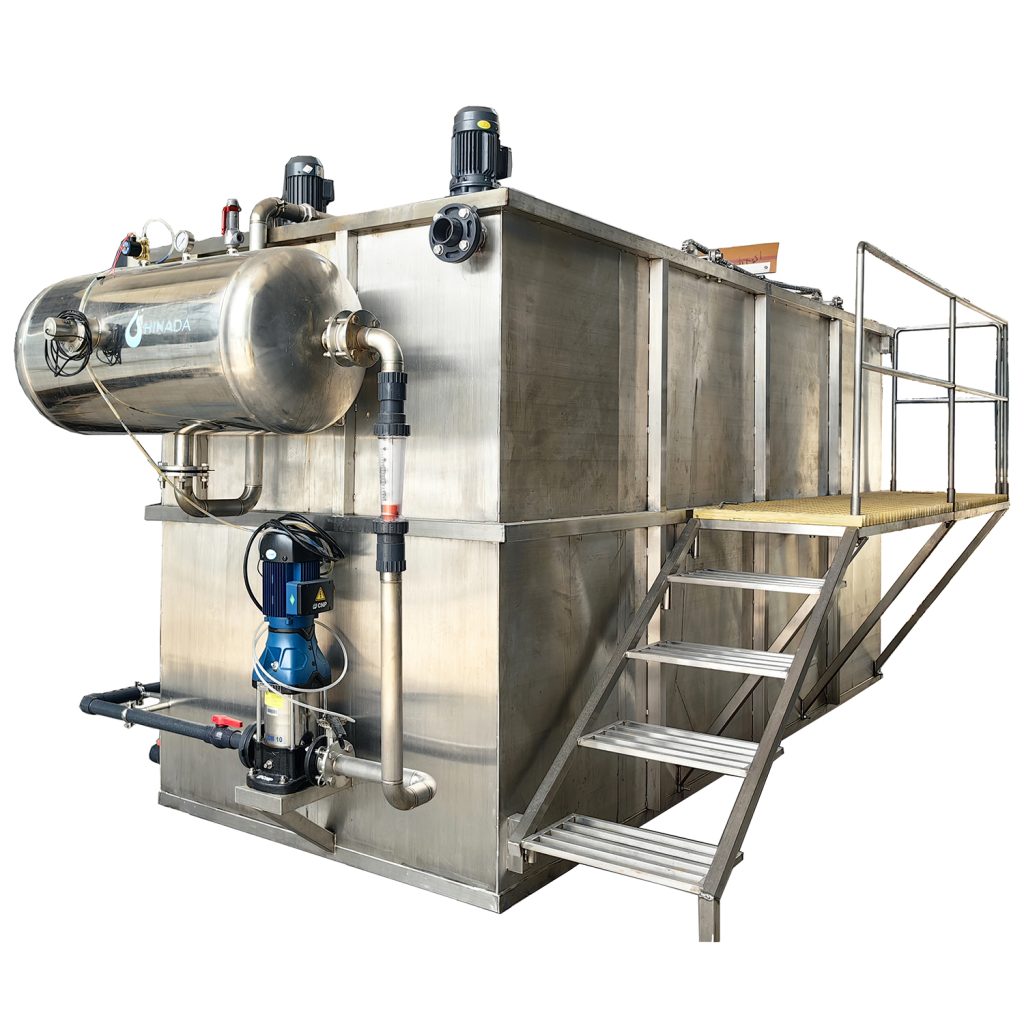
HINADA offers dissolved air flotation systems and other equipment that can help with sludge management. DAF is effective for removing suspended solids, oils, and grease, which can reduce the load on downstream biological treatment and improve sludge quality. Buyers should ask whether the supplier can provide a complete sludge treatment train, from thickening to disposal.
It is also worth asking about beneficial reuse. Can the sludge be composted, land-applied, or used for energy recovery? Some advanced systems produce biogas through anaerobic digestion, which can offset energy costs. A supplier that understands the entire treatment train, not just the liquid side, is more valuable.
Question 19: What Testing and Piloting Options Are Available?
For unusual or high-risk waste streams, pilot testing is essential. Buyers should ask whether the supplier can provide a pilot unit for on-site testing. Pilot testing can validate design assumptions, optimize operating parameters, and reduce the risk of full-scale failure.
HINADA, with its membrane manufacturing and equipment integration capabilities, may be able to supply pilot-scale ultrafiltration or MBR units. Buyers should ask about the duration of a typical pilot, the data that will be collected, and the cost. They should also ask whether the pilot unit can be rented or purchased and whether the cost can be credited toward a full-scale purchase.
Even if a pilot is not feasible, buyers should ask for bench-scale testing or reference data from similar applications. A supplier that relies solely on theoretical calculations may be underestimating the challenges of the specific waste stream.
Question 20: How Do You Ensure Biosecurity and Operator Safety?
Wastewater treatment plants can contain pathogenic bacteria, viruses, and parasites. Buyers should ask how the supplier protects operators and the surrounding community. Are there barriers, ventilation, and disinfection systems? Are there procedures for handling accidental spills? Is the plant designed to minimize aerosol generation?
Membrane bioreactors and ultrafiltration systems provide a physical barrier that retains bacteria and viruses, improving biosecurity. HINADA's hollow fiber ultrafiltration and MBR membranes are designed for precise physical separation of suspended solids, bacteria, colloids, and macromolecular organics. That capability is important for protecting public health, especially when treated water is reused for irrigation or industrial purposes.
Buyers should also ask about safety training. Does the supplier provide training on chemical handling, confined space entry, and electrical safety? A comprehensive safety program reduces accidents and liability.
Question 21: What Certifications and Standards Do You Meet?
Certifications provide third-party validation of quality and safety. Buyers should ask which certifications the supplier holds. Common certifications include ISO 9001 for quality management, ISO 14001 for environmental management, and ISO 45001 for occupational health and safety. For products, certifications such as CE, UL, and NSF may be relevant depending on the market.
HINADA, as a global supplier, likely complies with international standards. Buyers should ask for copies of certificates and verify their validity. They should also ask whether the supplier can provide material certificates, pressure test reports, and electrical compliance documents.
In some regions, local certifications are required. For example, a plant in the European Union may need to meet CE marking requirements. A plant in the United States may need UL-listed electrical components. Buyers should confirm that the supplier can meet these requirements before signing a contract.
Question 22: How Do You Handle International Logistics and Export?
International projects involve complex logistics. Buyers should ask about the supplier's experience with export documentation, customs clearance, and shipping. A supplier that regularly exports to 75 countries, like HINADA, will have established processes. Buyers should ask about packaging standards. Are membranes shipped in preservative solution? Are electrical panels protected from moisture? Are containers secured for ocean transport?
Buyers should also ask about incoterms. Will the supplier deliver to the port, to the site, or to a warehouse? Who pays for insurance? Who handles customs duties? A clear agreement on responsibilities prevents delays and disputes.
It is also useful to ask about lead times for shipping and whether the supplier can provide tracking information. For urgent projects, air freight may be necessary for critical components. The supplier should be able to arrange expedited shipping if needed.
Question 23: What Is Your Communication and Project Management Style?
Good communication is essential for complex projects. Buyers should ask how the supplier manages projects. Will there be a dedicated project manager? How often will progress reports be provided? What communication tools will be used? A supplier that responds promptly during the sales phase is likely to respond promptly during execution.
Buyers should ask for an organization chart and a project schedule. They should also ask about language capabilities. If the buyer and supplier do not share a common language, who will provide translation? Are technical documents available in the buyer's language?
HINADA, with clients across Asia, Africa, Europe, and the Americas, must communicate across cultures and time zones. That experience is valuable. Buyers should ask for references that can comment on communication responsiveness.
Question 24: How Do You Handle Emergencies and Breakdowns?
Equipment failures happen. The question is how quickly the supplier responds. Buyers should ask about emergency support procedures. Is there a 24/7 hotline? Can the supplier provide remote diagnostics? How quickly can a technician be dispatched? What is the process for ordering emergency spare parts?
A service level agreement should specify response times and escalation paths. Buyers should also ask whether the supplier has local partners or service centers. If not, how does it support remote sites? HINADA, as a global manufacturer, may have service partners in key regions. Buyers should confirm the availability of support in their location.
It is also wise to ask about training for minor repairs. If operators can replace a pump seal or clean a sensor, downtime can be reduced. The supplier should provide maintenance manuals and training.
Question 25: What Is Your Innovation Roadmap?
Wastewater treatment technology is evolving. Buyers should ask about the supplier's research and development activities. Is the company investing in new membrane materials, energy-efficient aeration, or digital monitoring? A supplier that stagnates may soon fall behind. A supplier that innovates can offer better performance and lower costs over time.
HINADA has a complete ecosystem from membrane research and development to component manufacturing to equipment fabrication. That ecosystem supports innovation. Buyers should ask about recent product improvements. For example, has the supplier increased membrane permeability or reduced fouling? Has it improved the energy efficiency of blowers? Has it added new sensors for predictive maintenance?
Buyers should also ask about the supplier's commitment to sustainability. Is it developing solutions for water reuse, resource recovery, or carbon reduction? A forward-looking supplier can help the buyer meet future regulations and sustainability goals.
Question 26: How Do You Train Operators and Ensure Knowledge Transfer?
Operator training is often the weakest link in wastewater projects. A well-designed plant can fail if operators do not understand how to run it. Buyers should ask for a detailed training plan. How many days of training are included? Is it classroom-based, hands-on, or both? Are manuals and videos provided?
HINADA provides training as part of its integrated solution. That is a good sign. Buyers should ask whether the training covers process theory, equipment maintenance, safety, and troubleshooting. They should also ask whether the supplier offers refresher training after one year. Knowledge transfer should not end at commissioning.
It is also useful to ask about operator certification. Does the supplier help operators prepare for local certification exams? Can it provide training in the local language? A supplier that invests in training reduces the risk of operational failures.
Question 27: What Are the Contract Terms and Hidden Costs?
Contract terms can make or break a project. Buyers should ask for a clear breakdown of costs. What is included in the price? What is excluded? Are there any additional fees for design, installation, commissioning, or training? Are taxes and duties included? Are there any performance guarantees or penalties?
Buyers should also ask about payment terms. Is a deposit required? When are milestone payments due? Is there a retention amount? A fair contract balances risk between buyer and supplier. Buyers should be wary of contracts that are heavily weighted toward the supplier.
It is also important to ask about confidentiality and intellectual property. Who owns the design documents? Can the buyer share them with consultants? Can the supplier use the project as a reference? These details should be negotiated upfront.
Question 28: How Do You Measure Success and Performance?
Success should be measured against clear performance indicators. Buyers should ask how the supplier defines success. Is it meeting effluent quality limits? Is it achieving a certain energy consumption? Is it maintaining uptime? Is it responding to service calls within a specified time?
Performance guarantees can provide protection. For example, the supplier might guarantee effluent quality, membrane life, or energy consumption. If the system fails to meet these guarantees, the supplier may be required to repair or replace components at its own cost. Buyers should ask for such guarantees and understand the conditions that apply.
It is also useful to ask about benchmarking. How does the proposed system compare with similar plants? Can the supplier provide data from reference sites? A data-driven approach to performance measurement builds trust.
Question 29: What Is Your Environmental and Social Responsibility?
Buyers increasingly consider environmental, social, and governance factors. They should ask about the supplier's environmental practices. Does it minimize waste and emissions in manufacturing? Does it use sustainable materials? Does it comply with labor and human rights standards?
HINADA participates in international water treatment exhibitions and brings clean water technology to regions where it is most needed. That mission has a social dimension. Buyers should ask how the supplier contributes to local communities. Does it hire locally? Does it provide training and employment opportunities? Does it support water, sanitation, and hygiene education?
A supplier that takes environmental and social responsibility seriously is more likely to be a reliable long-term partner. It also helps the buyer meet its own sustainability reporting requirements.
Question 30: Why Should We Choose You Over Competitors?
Finally, buyers should ask the supplier to articulate its unique value. What sets it apart? Is it manufacturing expertise? Global reach? After-sales support? Cost? Innovation? A strong supplier will answer with specific evidence, not generic claims.
HINADA, for example, can point to its 13 years of water treatment experience, 10 years of membrane manufacturing, dual technology pillars, complete ecosystem, and service to over 75 countries. Those are concrete differentiators. Buyers should compare such evidence across suppliers and weigh it against their project priorities. The best supplier is not always the largest or the cheapest. It is the one that best matches the project's technical, financial, and operational needs.
Red Flags to Watch For
Certain answers should raise concerns. A supplier that cannot provide references, avoids detailed technical questions, or refuses a factory visit may lack real capability. A supplier that offers unusually low prices without explaining how costs are reduced may be cutting corners on materials or quality control. A supplier that provides vague warranties or excludes critical components from coverage may leave the buyer exposed. A supplier that does not ask for water quality data before proposing a system may be using a one-size-fits-all approach. A supplier that has no local support and no remote diagnostics may struggle to resolve problems quickly. Buyers should trust their instincts and verify claims independently.
Supplier Evaluation Checklist
To organize the evaluation process, buyers can use a checklist that scores each supplier on key criteria. The following table provides a sample framework.
Criterion
Questions to Ask
Weight
Company stability
How long have you been in business? Where do you manufacture?
10%
Technology depth
What are your core technologies? Do you manufacture membranes?
15%
Integrated solutions
Do you provide design, supply, installation, commissioning, and training?
15%
References
Can you provide case studies and site visits?
10%
After-sales support
What is your warranty? How fast is your response?
15%
Total cost of ownership
What are the energy, chemical, and replacement costs?
15%
Compliance
Can you meet local discharge regulations?
10%
Scalability
Can the system be expanded?
5%
Innovation
What is your R and D roadmap?
5%
This checklist can be adapted to the specific needs of the project. For example, a rural decentralized project may prioritize simplicity, low maintenance, and remote monitoring. An industrial project may prioritize high-strength waste treatment, water reuse, and compliance with strict discharge limits. A municipal project may prioritize energy efficiency, sludge management, and long-term support.
Conclusion: Ask, Verify, and Decide
Choosing a wastewater treatment system supplier is not a matter of finding the lowest price. It is a matter of finding a partner who can deliver a reliable, compliant, and cost-effective solution over the long term. The questions in this article provide a framework for that search. Buyers should ask every supplier about company history, manufacturing footprint, core technologies, integrated solutions, membrane specifications, design approach, quality control, references, lead times, installation, commissioning, training, after-sales support, operating costs, regulatory compliance, sustainability, spare parts, total cost of ownership, scalability, automation, sludge management, piloting, biosecurity, certifications, logistics, communication, emergency response, innovation, knowledge transfer, contract terms, performance measurement, and environmental responsibility. They should verify the answers with documentation, site visits, and reference calls. Suppliers like HINADA Water Treatment Tech Co., Ltd. demonstrate that it is possible to combine membrane manufacturing, equipment fabrication, and turnkey project delivery into a coherent offering. But every project is unique. The right supplier is the one that answers the buyer's questions transparently, provides evidence, and commits to a long-term partnership. By asking the right questions, buyers can avoid costly mistakes and build wastewater treatment systems that serve their communities and industries for decades.