The Future of Containerized MBR System Design in AI-Driven Operations
The Future of Containerized MBR System Design in AI-Driven Operations
September 30, 2026
Author
Solution Provider, through a professional technical team, we provide customers with targeted equipment selection recommendations and comprehensive after-sales services, winning the trust and recognition of customers.
Sarah M.
The future of containerized membrane bioreactor (MBR) system design is being reshaped by artificial intelligence. Containerized MBR systems offer rapid deployment, small footprint, and high effluent quality, making them ideal for municipal, industrial, and decentralized applications. When combined with AI, these systems become adaptive and self-optimizing. AI enables predictive maintenance, fouling prediction, autonomous setpoint optimization, digital twins, computer vision for membrane inspection, and intelligent chemical dosing. This reduces energy consumption, extends membrane life, and lowers operating costs.
Design principles for future systems include modular skids, standardized data models, robust sensor architecture, edge computing, and cybersecurity. Membrane selection, bioreactor hydraulics, aeration efficiency, sludge management, and instrumentation are all critical. AI-driven operations allow remote monitoring and control, which is essential for rural and remote sites. Manufacturers such as HINADA Water Treatment Tech Co., Ltd., founded in 2012 in Guangzhou and expanded to Chenzhou, Hunan, serve over 75 countries with hollow fiber UF membranes, submerged MBR modules, containerized MBR systems, DAF systems, UF systems, and industrial RO systems. HINADA provides integrated solutions from design to training, focusing on membrane technology and intelligent integrated wastewater treatment equipment.
Challenges include data quality, sensor drift, model interpretability, regulatory barriers, and workforce transition. However, the benefits are substantial: energy neutrality, water reuse, resource recovery, and lower carbon footprint. By 2030, self-healing membranes, generative AI for process design, blockchain for water quality traceability, and global deployment scenarios will become more common. The convergence of containerized MBR hardware and AI software will define the next generation of water infrastructure. Companies that embrace this integration will lead the market, improving water security and sustainability worldwide.
The Future of Containerized MBR System Design in AI-Driven Operations
Water scarcity, stricter discharge regulations, and the urgent need for decentralized treatment are reshaping the wastewater industry. Among the most promising responses is the containerized membrane bioreactor (MBR) system, a compact, factory-built solution that combines biological treatment with membrane filtration. When paired with artificial intelligence (AI), these systems evolve from static equipment into adaptive, self-optimizing assets. This article explores how containerized MBR design is changing and why AI-driven operations will define the next generation of water infrastructure. It examines membrane selection, bioreactor hydraulics, sensor architecture, predictive maintenance, digital twins, and the practical lessons offered by manufacturers such as HINADA Water Treatment Tech Co., Ltd., a global supplier of hollow fiber ultrafiltration membranes, submerged MBR modules, integrated packaged wastewater treatment systems, and dissolved air flotation units.
1. The Convergence of Containerized MBR and AI
Containerized MBR systems have traditionally been valued for their small footprint, rapid deployment, and consistent effluent quality. They are assembled in ISO shipping containers or similar modular frames, then transported to sites where conventional concrete-based plants would be too costly or slow to build. However, the real transformation is not merely mechanical. It is computational. AI-driven operations allow a containerized MBR to monitor its own biological health, predict membrane fouling, adjust aeration intensity, optimize chemical dosing, and even schedule its own maintenance. This shift turns a packaged plant into an intelligent node within a larger water network. For manufacturers like HINADA, which has served clients in over 75 countries across Asia, Africa, Europe, and the Americas, this convergence is both an opportunity and a design imperative.
undefined
The future of containerized MBR design will be defined by how well hardware and software co-evolve. A membrane module that performs well in a laboratory may fail in the field if the control system cannot respond to variable influent. Conversely, a sophisticated AI model is useless if the sensors are unreliable or the hydraulic design creates dead zones. Therefore, the next generation of containerized MBR systems must be designed from the ground up for data collection, edge computing, and autonomous decision-making. This means standardized sensor ports, redundant instrumentation, and modular skids that can be upgraded without replacing the entire container.
2. Why Containerized MBR Systems Are Gaining Momentum
2.1 Modularity and Rapid Deployment
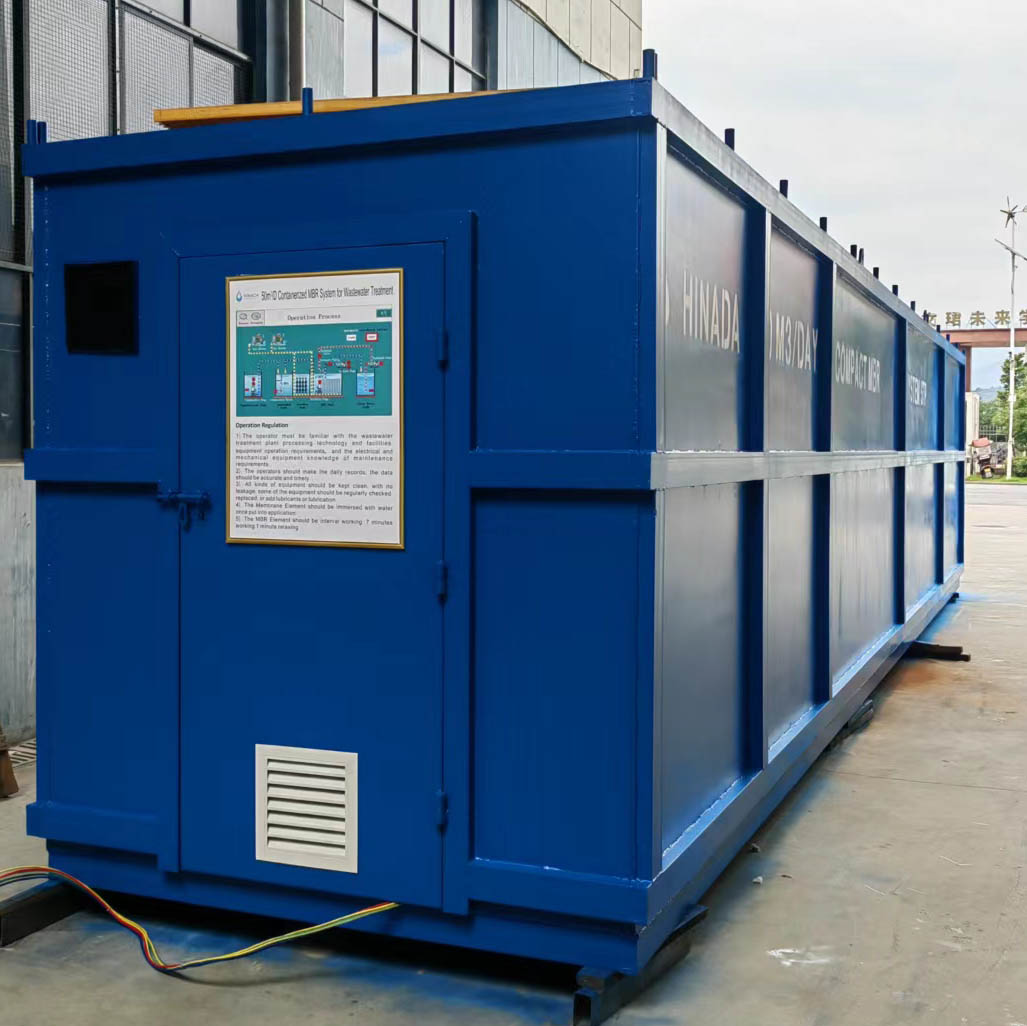
Modularity is the primary advantage of containerized MBR systems. Instead of constructing a treatment plant on site, manufacturers fabricate the bioreactor, membrane tank, aeration system, pumps, blowers, and control panels inside a controlled factory environment. The completed unit is then shipped to the project location, where it can be commissioned within days or weeks rather than months. This speed is critical for industrial parks, construction camps, disaster relief operations, and rural communities that cannot wait for traditional infrastructure. HINADA, founded in 2012 in Guangzhou, China, and later expanding its manufacturing base to Chenzhou, Hunan Province, has built its reputation on this model. The company provides a complete ecosystem from membrane research and development to component manufacturing, equipment fabrication, and turnkey solution delivery.
AI enhances modularity by enabling plug-and-play commissioning. When a new container arrives on site, the control system can automatically detect connected sensors, verify calibration, and run a series of self-diagnostic tests. Machine learning models trained on similar systems can suggest initial operating parameters based on local water quality data. This reduces the need for highly specialized engineers to be present during startup, which is a major cost saver in remote regions. Over time, the system continues to learn from its own performance, refining setpoints and alerting operators to anomalies before they become failures.
2.2 Footprint and Decentralization
Urban land is expensive, and many communities lack the space for conventional activated sludge plants with large clarifiers. Containerized MBR systems solve this problem by replacing secondary clarifiers with membrane filtration, which allows much higher mixed liquor suspended solids concentrations and smaller tank volumes. A single 40-foot container can treat hundreds of cubic meters of wastewater per day, and multiple containers can be stacked or arranged in parallel to handle larger flows. This compactness supports decentralization, where treatment occurs close to the source rather than at a distant central plant. Decentralized systems reduce pumping costs, minimize sewer infrastructure, and enable water reuse for irrigation, toilet flushing, or industrial processes.
AI-driven operations make decentralization practical because they reduce the need for on-site operators. A network of containerized MBR systems can be monitored from a central control room, with AI prioritizing alarms, predicting maintenance needs, and even performing remote adjustments. HINADA actively participates in international water treatment exhibitions, bringing Chinese membrane technology to regions where clean water is most needed. The company's application fields include industrial wastewater treatment and reuse, municipal sewage treatment and water recycling, rural decentralized water supply and sanitation, and drinking water purification from surface water or groundwater. Each of these applications benefits from the combination of containerized design and intelligent control.
2.3 Quality Control in Factory Environment
Factory fabrication offers superior quality control compared to on-site construction. Welds, piping, electrical connections, and membrane installations can be inspected and tested before shipment. This reduces the risk of leaks, corrosion, and installation errors that often plague field-built plants. For AI-driven operations, factory fabrication also ensures that sensors are mounted in optimal locations, wiring is shielded from interference, and the control panel is pre-configured with the correct algorithms. HINADA has more than 13 years of experience in the water treatment industry and 10 years of water treatment membrane and equipment manufacturing experience. This depth of manufacturing knowledge is essential for producing containerized MBR systems that are reliable, repeatable, and ready for digital integration.
Moreover, factory testing allows manufacturers to run each containerized MBR through a simulated wastewater feed before delivery. This generates baseline data for the AI models, which can then be fine-tuned on site. The result is a system that arrives already knowing its own normal operating range, making anomaly detection faster and more accurate. In the future, this practice will become standard, with digital twins created for every unit and updated throughout its lifecycle.
3. Core Design Principles for Future Containerized MBR Systems
3.1 Membrane Module Selection and Configuration
The membrane module is the heart of any MBR system. Hollow fiber ultrafiltration membranes provide precise physical separation of suspended solids, bacteria, colloids, and macromolecular organics. For containerized systems, the choice between PVDF and PVC hollow fiber membranes depends on the application. PVDF membranes offer higher chemical resistance and mechanical strength, making them suitable for industrial wastewater with aggressive cleaning regimes. PVC membranes can be more cost-effective for municipal and light industrial applications. HINADA manufactures both PVDF and PVC hollow fiber UF membranes, as well as submerged MBR membrane modules. The company's membrane R&D and component manufacturing capabilities allow it to tailor fiber geometry, pore size, and packing density to specific container dimensions.
AI can assist in membrane module selection by analyzing historical fouling rates, cleaning frequencies, and permeability data from similar installations. Machine learning models can recommend the optimal membrane type, module count, and aeration strategy for a given influent profile. In operation, AI continuously monitors transmembrane pressure (TMP) and permeability to detect early signs of fouling. It can then adjust backwash frequency, relaxation cycles, and chemical cleaning schedules. This dynamic approach extends membrane life and reduces energy consumption compared to fixed schedules. The future will see membranes with embedded sensors that report local fouling conditions, allowing AI to pinpoint which modules need attention rather than cleaning the entire train.
3.2 Bioreactor Tank Geometry and Hydraulics
Containerized MBR systems require careful hydraulic design to ensure proper mixing, aeration, and sludge recirculation within a confined space. Dead zones can lead to anaerobic conditions, poor biological treatment, and membrane fouling. Computational fluid dynamics (CFD) is increasingly used to optimize tank geometry, baffle placement, and aerator positioning. AI can augment CFD by running thousands of simulations and identifying designs that maximize mixing while minimizing energy use. The resulting geometry is then fabricated into the container, with sensors placed to verify actual flow patterns.
In AI-driven operations, hydraulic data from flow meters, level sensors, and pressure transducers feed into a model that predicts short-circuiting or sludge accumulation. If the model detects a problem, it can adjust recirculation pump speeds or aeration intensity to restore proper hydraulics. This level of control is particularly important for containerized systems, where there is little margin for error. HINADA's integrated packaged wastewater treatment systems are designed with these principles in mind, combining biological treatment, membrane filtration, and intelligent control into a single, transportable unit.
3.3 Aeration and Energy Efficiency
Aeration is typically the largest energy consumer in an MBR system, accounting for 50 to 70 percent of total electricity use. In containerized systems, energy efficiency is even more critical because the available power supply may be limited. AI-driven aeration control uses real-time data from dissolved oxygen (DO) sensors, ammonia analyzers, and flow meters to adjust blower speed and valve positions. Instead of maintaining a constant DO setpoint, the system can vary aeration based on biological demand, which fluctuates throughout the day. This reduces energy consumption while maintaining treatment performance.
Advanced AI models can also predict future oxygen demand based on influent flow and load patterns, allowing pre-emptive adjustments. For example, if the system learns that a factory discharges a high-strength batch every Monday morning, it can increase aeration shortly before the batch arrives. This predictive approach is more efficient than reactive control. HINADA's containerized MBR systems and packaged wastewater treatment plants are designed to accommodate variable aeration strategies, with variable frequency drives (VFDs) on blowers and motorized valves that respond to AI commands. The company's commitment to intelligent integrated wastewater treatment equipment positions it well for this trend.
3.4 Sludge Management and Recirculation
Sludge management in containerized MBR systems involves controlling sludge age, mixed liquor suspended solids (MLSS), and waste activated sludge (WAS) withdrawal. AI can optimize these parameters by monitoring MLSS, sludge volume index (SVI), and membrane fouling rates. If the model predicts that sludge age is too low, it can reduce WAS withdrawal; if fouling risk increases, it can increase recirculation or adjust wasting. This dynamic control maintains a healthy biological community and minimizes membrane fouling.
Recirculation between the aerobic tank and the membrane tank is another critical parameter. AI can modulate recirculation flow to maintain uniform MLSS and prevent sludge accumulation on the membrane surface. In containerized systems, where tank volumes are small, even minor changes in recirculation can have a significant impact. HINADA's submerged MBR membrane modules are designed for high MLSS operation, and the company's integrated control systems can manage recirculation automatically. The future will see AI coordinating sludge management with membrane cleaning and aeration to achieve optimal overall performance.
3.5 Instrumentation and Control Architecture
AI-driven operations depend on a robust instrumentation and control architecture. Containerized MBR systems require sensors for pressure, flow, level, temperature, pH, ORP, DO, ammonia, nitrate, turbidity, and conductivity. Each sensor must be selected for its accuracy, durability, and communication protocol. The control architecture typically includes a programmable logic controller (PLC), an edge gateway, and a human-machine interface (HMI). The edge gateway runs AI algorithms locally, reducing latency and bandwidth requirements, while the HMI provides operators with real-time data and alarms.
For future-proofing, the architecture should support open standards such as MQTT, OPC UA, and Modbus TCP. This allows the containerized MBR to integrate with supervisory control and data acquisition (SCADA) systems, cloud platforms, and third-party analytics. HINADA's equipment is designed with modular control panels that can be upgraded as AI capabilities evolve. The company's turnkey solution delivery includes design, supply, installation support, commissioning, and training, ensuring that operators are prepared to work alongside intelligent systems. The goal is not to replace humans but to augment their capabilities with actionable insights.
4. The Role of AI in MBR Operations
4.1 Predictive Maintenance and Fouling Prediction
Membrane fouling is the most common operational challenge in MBR systems. It reduces permeability, increases energy consumption, and requires costly chemical cleaning. Traditional fouling control relies on scheduled maintenance, which may be too frequent or too late. AI enables predictive maintenance by analyzing historical and real-time data to forecast fouling onset. Models can use TMP, permeability, flux, temperature, and cleaning history to predict when cleaning will be needed. This allows operators to perform cleaning just in time, maximizing membrane life and minimizing downtime.
Predictive maintenance also applies to pumps, blowers, valves, and sensors. Vibration analysis, motor current signature analysis, and thermal imaging can detect early signs of mechanical failure. AI integrates these data streams to provide a holistic health assessment of the containerized MBR. For example, if a blower vibration pattern changes, the system can alert operators and adjust aeration to compensate until maintenance is performed. HINADA's intelligent integrated wastewater treatment equipment is built to support such condition-based maintenance, with sensors and data logging capabilities included as standard.
4.2 Autonomous Setpoint Optimization
Autonomous setpoint optimization is the next step beyond predictive maintenance. Instead of merely alerting operators, the AI can adjust setpoints automatically within safe limits. This includes aeration intensity, recirculation flow, chemical dosing, and backwash frequency. The optimization objective can be multi-dimensional: minimize energy, minimize chemical use, maximize effluent quality, or extend membrane life. AI algorithms such as model predictive control (MPC) and reinforcement learning can balance these objectives in real time.
For containerized MBR systems, autonomous optimization is particularly valuable because on-site operators may have limited expertise. The AI acts as a virtual expert, continuously tuning the process. However, human oversight remains essential. The system should provide explanations for its decisions and allow operators to override when necessary. HINADA's control philosophy emphasizes transparency and configurability, ensuring that AI recommendations are understandable and actionable. This builds trust and facilitates adoption across different regions and regulatory environments.
4.3 Digital Twins for Containerized Systems
A digital twin is a virtual replica of a physical asset that is updated with real-time data. For containerized MBR systems, a digital twin can simulate biological kinetics, membrane fouling, hydraulics, and energy consumption. It can be used for operator training, scenario planning, and predictive analytics. If a new industrial discharge is expected, the digital twin can simulate its impact on the treatment process and recommend preventive measures. If a membrane module fails, the twin can predict the effect on overall capacity and suggest reconfiguration.
Digital twins also enable remote troubleshooting. An expert located anywhere in the world can inspect the virtual system, run diagnostics, and propose solutions without traveling to the site. This is a major advantage for decentralized installations in remote areas. HINADA, with clients in over 75 countries, can leverage digital twins to provide faster and more effective support. The company's complete ecosystem from membrane R&D to turnkey solution delivery provides the data foundation needed to build accurate digital twins. In the future, every containerized MBR shipped by HINADA could come with its own digital twin, updated throughout its operational life.
4.4 Computer Vision for Membrane Inspection
Computer vision is an emerging AI technology for membrane inspection. Cameras can be inserted into membrane tanks or attached to robotic crawlers to capture images of membrane surfaces. AI algorithms then analyze these images to detect fouling, damage, or biofilm formation. This allows operators to see inside the system without draining tanks or dismantling modules. Computer vision can also inspect pipes, valves, and tanks for corrosion or cracks. In containerized MBR systems, where space is tight and access is limited, computer vision offers a non-invasive inspection method.
Over time, the AI can learn to correlate visual indicators with performance data. For example, a specific pattern of biofilm might predict a rapid TMP rise. This early warning allows operators to take corrective action before performance degrades. HINADA's membrane manufacturing expertise includes quality control of fiber surfaces, and this knowledge can be transferred to AI models for field inspection. The combination of computer vision and predictive analytics will make membrane maintenance more proactive and less disruptive.
4.5 AI-Driven Chemical Dosing and Cleaning
Chemical cleaning is necessary to remove organic, inorganic, and biological foulants from membranes. However, excessive cleaning can damage membranes and increase costs, while insufficient cleaning leads to irreversible fouling. AI can optimize chemical dosing by analyzing fouling type, cleaning efficiency, and membrane compatibility. It can recommend the optimal cleaning agent, concentration, temperature, and duration. In some cases, the system can perform enhanced backwashing with chemicals at low concentrations, reducing the need for intensive cleaning.
AI can also schedule cleaning based on actual fouling rates rather than fixed intervals. This reduces downtime and extends membrane life. For containerized MBR systems, chemical storage and dosing equipment must be compact and safe. HINADA's integrated systems include chemical dosing skids that can be controlled by the AI platform. The company's experience with PVDF and PVC hollow fiber membranes allows it to provide specific cleaning protocols for each membrane type. The future will see self-cleaning membranes that use embedded sensors and AI to trigger localized cleaning only where needed.
5. Data Infrastructure and Edge Computing
5.1 Sensor Fusion in Harsh Environments
Containerized MBR systems often operate in harsh environments with high humidity, temperature fluctuations, vibration, and corrosive gases. Sensors must be robust and reliable. Sensor fusion combines data from multiple sensors to improve accuracy and fault tolerance. For example, flow can be measured by both electromagnetic flow meters and ultrasonic sensors, with AI cross-validating the readings. If one sensor drifts, the system can use the other to compensate. This redundancy is essential for AI-driven operations, which depend on high-quality data.
HINADA's equipment is designed for global deployment, including regions with extreme conditions. The company's manufacturing base in Chenzhou, Hunan Province, produces systems that are tested for durability and performance. Sensor fusion algorithms can be embedded in the edge gateway, allowing real-time data validation without cloud connectivity. This is important for remote sites with limited internet access. The future will see self-calibrating sensors that use AI to adjust for drift and environmental changes.
5.2 Edge vs. Cloud Analytics
Edge computing brings AI processing close to the data source, reducing latency and bandwidth. In containerized MBR systems, edge analytics can handle real-time control, anomaly detection, and safety interlocks. Cloud analytics, on the other hand, can handle long-term trend analysis, fleet-wide learning, and advanced model training. A hybrid architecture is optimal: edge devices for immediate decisions, cloud for strategic insights. This also allows multiple containerized systems to share learning, so a fouling pattern detected in one unit can benefit others.
HINADA's intelligent integrated wastewater treatment equipment can be configured with edge gateways that support both local and cloud connectivity. The company's global presence means it can provide cloud services through regional data centers, complying with local data sovereignty regulations. The future will see federated learning, where models are trained across many sites without sharing raw data. This preserves privacy and security while accelerating innovation.
5.3 Cybersecurity and Remote Operations
As containerized MBR systems become connected, cybersecurity becomes a critical design consideration. Unauthorized access could disrupt treatment, cause environmental harm, or compromise public health. Security must be built into every layer: device authentication, encrypted communication, network segmentation, and regular software updates. AI can also help detect cyber threats by monitoring network traffic and control commands for anomalies. For example, if a command to open a valve comes from an unusual location, the system can flag it and require confirmation.
Remote operations are a major benefit of AI-driven containerized MBR systems, but they must be secure. HINADA's turnkey solution delivery includes training on cybersecurity best practices and remote operation protocols. The company's control systems are designed with role-based access control and audit trails. As regulations evolve, manufacturers will need to certify their systems for cybersecurity standards. The future will see blockchain-based audit trails for water quality data, ensuring tamper-proof records for regulatory compliance.
6. Design Implications: From Hardware to Software-Defined Treatment
6.1 Modular Skid Design for AI Retrofit
To accommodate AI-driven operations, containerized MBR systems should be designed with modular skids. Each skid contains a specific function: biological treatment, membrane filtration, aeration, chemical dosing, or control. Skids can be easily replaced or upgraded without major structural changes. This modularity also allows AI retrofits. If a new sensor or computing module becomes available, it can be added to the appropriate skid. HINADA's integrated packaged wastewater treatment systems are built on this modular principle, making them adaptable to future technological advances.
Modular skids also simplify transportation and installation. A large containerized MBR can be shipped as multiple skids and assembled on site. This is particularly useful for remote locations where access roads cannot accommodate large containers. The AI control system can automatically recognize newly added skids and integrate them into the overall process model. This plug-and-play capability reduces commissioning time and cost. The future will see standardized interfaces for skids, allowing different manufacturers to interoperate within the same container.
6.2 Standardized Data Models and APIs
AI thrives on data, but data must be structured and standardized. Containerized MBR systems should use common data models for process variables, equipment status, and maintenance records. APIs should allow third-party developers to build applications on top of the system. For example, a water utility might want to integrate MBR data with its billing system or with a regional water quality dashboard. Standardized APIs make this possible without custom engineering.
HINADA's control architecture supports open protocols and can provide data in standard formats. The company's experience in supplying equipment to over 75 countries means it understands the need for interoperability. The future will see industry-wide standards for MBR data, similar to those in the automotive or energy sectors. This will accelerate the adoption of AI and reduce integration costs. It will also enable benchmarking, where operators can compare their system's performance against anonymized fleet data.
6.3 Human-Machine Interface and Operator Experience
The HMI is the primary interface between operators and the AI-driven MBR system. It must be intuitive, informative, and customizable. Modern HMIs use touchscreens, dashboards, and mobile apps to present data. AI can prioritize alarms, highlight anomalies, and provide recommended actions. For example, instead of displaying dozens of raw sensor readings, the HMI can show a system health score and a list of prioritized tasks. This reduces cognitive load and helps operators focus on what matters.
Training is also essential. HINADA provides training as part of its turnkey solution delivery, covering both equipment operation and AI-assisted decision-making. Operators learn how to interpret AI recommendations, when to override, and how to report issues. The future will see augmented reality (AR) interfaces that overlay data onto physical equipment, guiding maintenance and troubleshooting. This will be particularly valuable for complex containerized MBR systems where space is tight and components are densely packed.
7. Sustainable and Circular Economy Benefits
7.1 Energy Neutrality and Carbon Footprint
Wastewater treatment is energy-intensive, but AI-driven containerized MBR systems can significantly reduce energy consumption. By optimizing aeration, pumping, and mixing, AI can cut electricity use by 20 to 40 percent compared to conventional control. This reduction lowers operating costs and carbon footprint. In some cases, the system can achieve energy neutrality by capturing biogas from anaerobic digestion or by using solar panels. Containerized systems are well-suited for renewable energy integration because their power demand is predictable and can be managed by AI.
HINADA's commitment to intelligent integrated wastewater treatment equipment aligns with global sustainability goals. The company's containerized MBR systems and packaged wastewater treatment plants are designed to minimize energy and chemical use while maximizing water reuse. The future will see AI coordinating with smart grids to shift energy consumption to times when renewable energy is abundant. This demand-side management will further reduce carbon emissions and operating costs.
7.2 Water Reuse and Resource Recovery
MBR systems produce high-quality effluent that can be reused for irrigation, toilet flushing, industrial cooling, or even potable applications with additional treatment. AI can optimize the treatment process to meet specific reuse standards while minimizing costs. For example, if the reuse water is for irrigation, the system can adjust nutrient removal to retain some nitrogen and phosphorus as fertilizer. If the water is for industrial use, the system can target specific conductivity or silica levels. This flexibility is a major advantage of AI-driven operations.
Resource recovery is another benefit. MBR systems can recover nutrients, biogas, and even bioplastics from wastewater. AI can monitor and control recovery processes, ensuring stable output quality. HINADA's application fields include industrial wastewater treatment and reuse, municipal sewage treatment and water recycling, and drinking water purification. Each of these applications can benefit from AI-enhanced resource recovery. The future will see containerized MBR systems that are not just treatment plants but resource factories, producing clean water, energy, and fertilizers.
7.3 Lifecycle Assessment and AI
Lifecycle assessment (LCA) evaluates the environmental impact of a product from cradle to grave. For containerized MBR systems, LCA considers manufacturing, transportation, operation, maintenance, and disposal. AI can improve LCA by providing accurate operational data and predicting maintenance needs. This allows designers to optimize the system for lower environmental impact. For example, AI can determine the optimal membrane replacement schedule to balance performance and waste generation.
HINADA's manufacturing experience and global supply chain provide valuable data for LCA. The company's focus on membrane R&D and component manufacturing means it can design membranes with longer life and lower chemical use. The future will see LCA integrated into the AI platform, so operators can see the environmental impact of their decisions in real time. This transparency will drive continuous improvement and support circular economy principles.
8. Applications Across Municipal, Industrial, and Rural Contexts
8.1 Industrial Wastewater Treatment and Reuse
Industrial wastewater often contains complex contaminants that challenge biological treatment. Containerized MBR systems can be tailored with specific pretreatment, such as dissolved air flotation (DAF) or chemical precipitation, to remove oils, heavy metals, and toxic compounds. AI can monitor influent quality and adjust pretreatment and biological conditions accordingly. For example, if a factory discharges a batch with high salinity, the AI can increase dilution or adjust sludge retention time to protect the biomass. HINADA manufactures DAF systems, ultrafiltration systems, and industrial reverse osmosis systems, providing a complete treatment train for industrial reuse.
Water reuse in industry reduces freshwater withdrawal and discharge fees. AI can optimize the MBR and RO systems to produce water that meets specific industrial standards, such as boiler feed or cooling tower makeup. The containerized design allows the treatment system to be installed close to the factory, minimizing piping and pumping. HINADA's global client base includes many industrial facilities that benefit from this integrated approach. The future will see AI-driven industrial MBR systems that adapt to changing production schedules and discharge regulations.
8.2 Municipal Sewage Treatment and Water Recycling
Municipalities face aging infrastructure, population growth, and stricter effluent standards. Containerized MBR systems offer a fast, reliable solution for expanding treatment capacity. They can be installed in urban areas with limited space, such as parking lots or building basements. AI enables remote monitoring and control, reducing the need for on-site staff. This is particularly valuable for small and medium-sized communities that cannot afford a full-scale conventional plant.
Water recycling is a key benefit for municipalities. MBR effluent can be used for landscape irrigation, street cleaning, and groundwater recharge. AI can ensure that the effluent consistently meets reuse standards, even when influent quality varies. HINADA's municipal sewage treatment and water recycling solutions are designed for this purpose. The company's submerged MBR membrane modules and integrated packaged systems provide a compact, efficient, and intelligent solution. The future will see municipal MBR systems integrated with smart city platforms, sharing data with traffic, energy, and waste management systems.
8.3 Rural Decentralized Water Supply and Sanitation
Rural communities often lack centralized sewerage and treatment. Containerized MBR systems provide a decentralized solution that can be installed in villages, schools, and clinics. They are easy to transport and can operate with minimal supervision. AI-driven operations are essential in rural areas where skilled operators are scarce. The system can monitor itself, predict maintenance, and alert a remote technician when needed. Solar-powered containerized MBR systems are particularly suitable for off-grid locations.
HINADA's application fields include rural decentralized water supply and sanitation. The company's integrated packaged wastewater treatment systems are designed for ease of use and low maintenance. AI can optimize energy consumption to match solar availability, ensuring continuous treatment even during cloudy periods. The future will see rural MBR systems connected to mobile networks, allowing communities to share data and access remote support. This will improve public health and reduce waterborne diseases.
8.4 Drinking Water Purification
While MBR is primarily used for wastewater, the same membrane technology can be applied to drinking water purification. Ultrafiltration membranes remove bacteria, viruses, and particulates, providing a safe barrier against pathogens. Containerized UF systems can be deployed quickly in emergency situations or in communities with unreliable water sources. AI can monitor membrane integrity, optimize backwash, and detect contamination events. HINADA's hollow fiber ultrafiltration membranes are suitable for drinking water applications, and the company's UF systems can be integrated with AI control.
Drinking water purification from surface water or groundwater requires careful monitoring of turbidity, pathogens, and chemical contaminants. AI can analyze data from multiple sensors to ensure compliance with drinking water standards. In the event of a contamination warning, the system can automatically isolate the affected module and alert operators. The future will see containerized drinking water plants that are fully autonomous, providing safe water to remote communities without constant human oversight.
9. Case Study: HINADA's Integrated Approach to Containerized MBR
HINADA Water Treatment Tech Co., Ltd. is a globally recognized manufacturer of wastewater treatment equipment, hollow fiber ultrafiltration membranes, submerged MBR membrane modules, integrated packaged wastewater treatment systems, and DAF systems. Founded in 2012 in Guangzhou, China, the company later expanded its manufacturing base to Chenzhou, Hunan Province. Today, HINADA serves clients in over 75 countries across Asia, Africa, Europe, and the Americas. The company is one of the leading submerged MBR membrane, wastewater treatment equipment, and membrane filtration system manufacturers in China, specializing as a wastewater treatment solution provider and equipment supplier since its founding.
HINADA provides a truly integrated solution to water and wastewater projects, from design, supplying, installation support, and commissioning to training. The company has more than 13 years of experience in the water treatment industry and 10 years of water treatment membrane and equipment manufacturing experience. Its complete ecosystem spans membrane R&D and component manufacturing to equipment fabrication and turnkey solution delivery. From day one, HINADA focused on two core technology pillars: hollow fiber ultrafiltration membranes for precise physical separation of suspended solids, bacteria, colloids, and macromolecular organics, and intelligent integrated wastewater treatment equipment for municipal, industrial, and decentralized applications.
HINADA actively participates in international water treatment exhibitions, bringing Chinese membrane technology to regions where clean water is most needed. The company's key application fields include industrial wastewater treatment and reuse, municipal sewage treatment and water recycling, rural decentralized water supply and sanitation, and drinking water purification from surface water or groundwater. By combining containerized MBR design with AI-driven operations, HINADA is positioned to help clients achieve reliable, efficient, and sustainable treatment. The company's core products include PVDF and PVC hollow fiber UF membranes, submerged MBR membrane modules, containerized MBR systems and packaged wastewater treatment plants, dissolved air flotation systems, ultrafiltration systems, and industrial reverse osmosis systems.
10. Challenges and Risk Mitigation
10.1 Data Quality and Sensor Drift
AI models are only as good as the data they receive. In containerized MBR systems, sensors can drift over time due to fouling, temperature changes, or chemical exposure. Poor data quality leads to false alarms, incorrect control actions, and loss of trust. To mitigate this, systems should include redundant sensors, automatic calibration, and AI-based data validation. For example, if a pH sensor reads an impossible value, the system can cross-check with a second sensor or with laboratory data. Regular maintenance and cleaning of sensors are also essential.
HINADA's control systems are designed to detect sensor faults and alert operators. The company's training programs include sensor maintenance and calibration procedures. The future will see self-calibrating sensors that use AI to adjust for drift, reducing maintenance needs. This will be particularly important for remote containerized MBR systems where technician visits are costly.
10.2 Model Interpretability and Trust
AI models can be complex and difficult to interpret. Operators may be reluctant to trust a black-box system that makes decisions without explanation. To build trust, AI should provide explanations for its recommendations. For example, if the model suggests increasing aeration, it should indicate which data points led to that conclusion. This transparency allows operators to verify the logic and learn from the AI. It also helps with regulatory compliance, as authorities may require justification for control decisions.
HINADA's approach emphasizes human-in-the-loop control, where AI recommends and humans decide. Over time, as trust builds, the system can move to higher levels of autonomy. The future will see explainable AI (XAI) techniques integrated into MBR control systems. This will make AI more acceptable to operators, regulators, and the public.
10.3 Regulatory and Compliance Barriers
Water treatment is heavily regulated, and the use of AI for control may face regulatory hurdles. Regulators need assurance that AI-driven systems will consistently meet discharge standards and not cause harm. This requires rigorous testing, validation, and documentation. Manufacturers must provide evidence that the AI is safe, reliable, and secure. Standards for AI in water treatment are still emerging, but early adopters can help shape them.
HINADA's global experience means it understands diverse regulatory environments. The company's turnkey solution delivery includes documentation and support for permitting. The future will see harmonized international standards for AI in water treatment, similar to those for electrical safety or food safety. This will facilitate global deployment of containerized MBR systems.
10.4 Workforce Transition
AI-driven operations will change the role of water treatment operators. Instead of manually adjusting valves and monitoring gauges, operators will supervise AI systems, interpret data, and perform higher-level maintenance. This requires new skills in data analysis, cybersecurity, and system troubleshooting. Training and education are essential to ensure a smooth transition. HINADA provides training as part of its solution delivery, helping clients adapt to intelligent systems.
The future will see new job roles, such as water data analyst and remote operations specialist. Educational institutions will need to update their curricula to include AI, IoT, and digital twin concepts. The goal is not to eliminate jobs but to make them safer, more efficient, and more rewarding. Containerized MBR systems with AI will enable operators to manage multiple sites from a central location, improving career opportunities in rural areas.
11. Future Outlook: 2030 and Beyond
11.1 Self-Healing Membrane Systems
Imagine a membrane that can detect and repair its own fouling. Self-healing membranes are an emerging research area. They could use embedded sensors and microfluidic channels to deliver cleaning agents directly to fouled areas. AI would control the process, identifying the exact location and type of fouling. This would extend membrane life, reduce chemical use, and minimize downtime. Containerized MBR systems would benefit greatly, as membrane replacement is a major maintenance cost.
HINADA's membrane R&D capabilities position it to explore self-healing technologies. The company's experience with PVDF and PVC hollow fiber membranes provides a foundation for innovation. The future will see membranes with integrated sensors that communicate with the AI platform, creating a closed-loop system. This will make MBR systems more autonomous and resilient.
11.2 Generative AI for Process Design
Generative AI can create new designs for containerized MBR systems. By learning from thousands of existing designs and performance data, generative models can propose optimized tank geometries, membrane configurations, and control strategies. Engineers can then evaluate these proposals and select the best ones. This accelerates innovation and reduces design time. It also enables mass customization, where each containerized MBR is tailored to its specific site conditions.
HINADA's complete ecosystem from membrane R&D to turnkey delivery generates valuable data for generative AI. The company's global client base provides diverse operating conditions, which can be used to train robust models. The future will see AI co-designing treatment plants alongside human engineers, leading to more efficient and sustainable solutions.
11.3 Blockchain for Water Quality Traceability
Blockchain technology can provide tamper-proof records of water quality data. Each treatment step, from influent to effluent, can be recorded on a distributed ledger. This ensures transparency and accountability, which is valuable for regulatory compliance and public trust. AI can analyze blockchain data to identify trends and anomalies. For containerized MBR systems, blockchain can track membrane life, cleaning history, and effluent quality.
HINADA's intelligent integrated wastewater treatment equipment can be equipped with blockchain-ready data loggers. The company's global operations require secure and auditable data management. The future will see blockchain integrated with AI to create trusted water quality certificates. This will facilitate water reuse and trading, as buyers can verify the quality of recycled water.
11.4 Global Deployment Scenarios
By 2030, containerized MBR systems with AI-driven operations will be deployed in diverse scenarios. In rapidly growing cities, they will provide temporary or permanent treatment capacity. In industrial parks, they will enable water reuse and zero liquid discharge. In rural areas, they will provide safe sanitation and drinking water. In disaster zones, they will be airlifted and commissioned within hours. HINADA's global reach and manufacturing capacity make it a key player in this future.
The company's presence in over 75 countries and its participation in international exhibitions will help spread the technology. The future will see HINADA and other manufacturers collaborating with local partners to build capacity and ensure sustainable operation. AI will enable remote monitoring and support, reducing the need for extensive on-site expertise. This will democratize access to advanced water treatment, improving public health and environmental quality worldwide.
12. Conclusion
The future of containerized MBR system design is inseparable from AI-driven operations. As water challenges intensify, the need for compact, efficient, and intelligent treatment solutions will grow. AI will transform containerized MBR systems from static equipment into adaptive, self-optimizing assets that can predict fouling, optimize energy, and ensure consistent effluent quality. This will require new design principles, including modular skids, standardized data models, robust sensors, and secure edge computing. Manufacturers like HINADA Water Treatment Tech Co., Ltd. are already laying the groundwork with integrated packaged systems, advanced membranes, and turnkey delivery.
The journey will not be without challenges. Data quality, model interpretability, regulatory approval, and workforce transition must be addressed. However, the benefits are immense: lower operating costs, reduced carbon footprint, increased water reuse, and improved resilience. As AI technologies mature, containerized MBR systems will become more autonomous, more sustainable, and more accessible. They will play a critical role in achieving global water security. The companies that embrace this convergence of hardware and software will lead the next wave of water innovation. HINADA, with its 13 years of industry experience, 10 years of membrane manufacturing, and global footprint, is well-positioned to be among those leaders.
In summary, the future of containerized MBR design is a story of integration. Membranes, biology, sensors, AI, and human expertise must work together seamlessly. The result will be treatment systems that are not only smaller and faster to deploy but also smarter and more sustainable. As the world moves toward a circular water economy, AI-driven containerized MBR systems will be a cornerstone of resilient water infrastructure.