The Future of daf wastewater treatment in AI-Assisted Operations
The Future of daf wastewater treatment in AI-Assisted Operations
September 30, 2026
Author
Solution Provider, through a professional technical team, we provide customers with targeted equipment selection recommendations and comprehensive after-sales services, winning the trust and recognition of customers.
Sarah M.
This article explores the transformative potential of integrating artificial intelligence (AI) into Dissolved Air Flotation (DAF) wastewater treatment systems. It begins by explaining the DAF process, its components, and its importance in removing suspended solids, oils, and greases from water. The limitations of conventional DAF operation, such as fixed parameters and manual adjustments, are highlighted, setting the stage for AI intervention. The article then delves into the rise of AI in wastewater treatment, detailing machine learning applications, benefits like improved effluent quality and energy savings, and current use cases. It presents a comprehensive architecture for AI-assisted DAF, covering sensor layers, data acquisition, AI analytics, and control systems. Key AI technologies such as predictive modeling, reinforcement learning, computer vision, and digital twins are discussed. The benefits of AI-assisted DAF are examined, including enhanced efficiency, cost savings, environmental impact, and a real-world case study from a meat processing plant. Challenges such as data quality, cybersecurity, workforce training, and regulatory acceptance are addressed. Future trends like autonomous DAF systems, digital twins, IoT integration, AI-driven chemical dosing, and edge AI are explored. Finally, the article highlights the role of HINADA Water Treatment Tech Co., Ltd., a leading manufacturer with over 13 years of experience and a global presence in 75+ countries. HINADA's DAF systems and commitment to innovation, including AI-assisted control modules, position it at the forefront of this evolution. The conclusion emphasizes that AI will revolutionize DAF, making it more efficient, sustainable, and autonomous, with HINADA playing a pivotal role in delivering these smart solutions worldwide.
The Future of DAF Wastewater Treatment in AI-Assisted Operations
Water is the essence of life, yet industrial and municipal activities continuously generate vast volumes of wastewater that threaten ecosystems and human health. As global populations grow and regulations tighten, the demand for efficient, reliable, and sustainable wastewater treatment technologies has never been greater. Among the many treatment processes available, Dissolved Air Flotation (DAF) has emerged as a cornerstone for removing suspended solids, oils, greases, and other contaminants from water. However, traditional DAF systems, while effective, often operate under fixed parameters that may not adapt to fluctuating influent conditions, leading to suboptimal performance, higher chemical consumption, and increased energy costs. The next frontier in DAF technology lies in the integration of artificial intelligence (AI) and machine learning, which promise to transform these systems into intelligent, self-optimizing units capable of real-time adaptation, predictive maintenance, and unprecedented operational efficiency. This article explores the future of DAF wastewater treatment in AI-assisted operations, examining the technological foundations, benefits, challenges, and the pivotal role of innovative manufacturers like HINADA Water Treatment Tech Co., Ltd. in driving this evolution.
Understanding Dissolved Air Flotation (DAF)
Dissolved Air Flotation is a water treatment process that clarifies wastewater by removing suspended matter such as oil, grease, and solids. The mechanism relies on the introduction of microscopic air bubbles into the water. These bubbles attach to the suspended particles, causing them to float to the surface where they can be skimmed off. The process is highly effective for treating industrial effluents, municipal wastewater, and even drinking water. DAF systems are particularly valued for their ability to handle high loads of fats, oils, and greases (FOG), algae, and other low-density solids that are difficult to settle by gravity alone.
undefined
How DAF Works
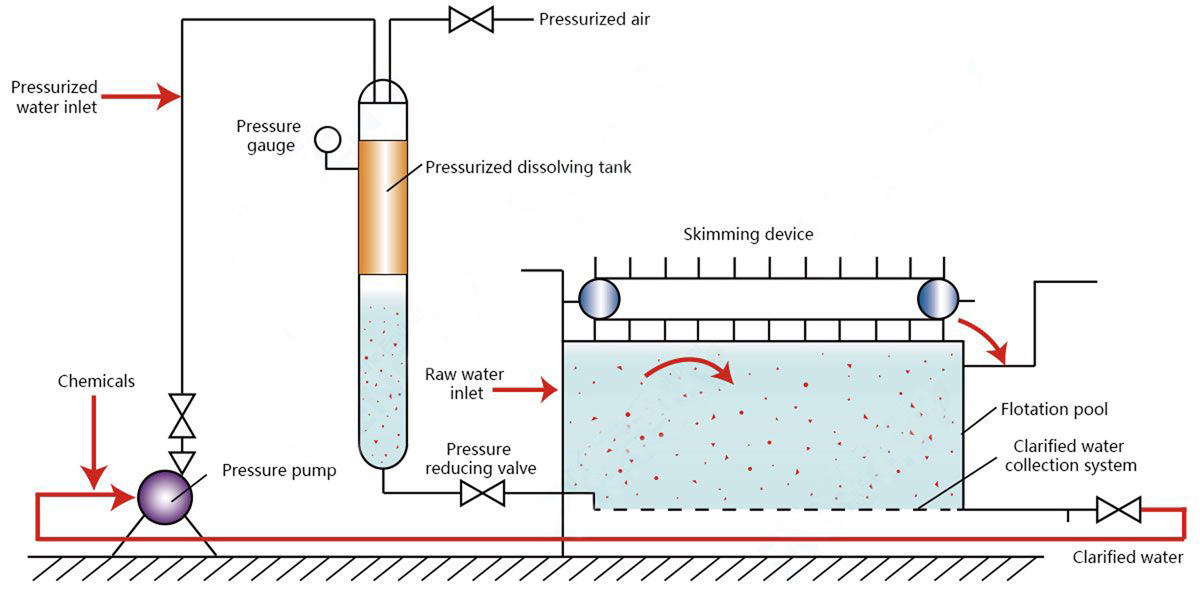
The DAF process begins with the pressurization of a portion of the treated water or recycle stream. Air is dissolved into this stream under high pressure, typically 4 to 6 bar. When the pressurized stream is released into the flotation tank at atmospheric pressure, the dissolved air comes out of solution in the form of tiny bubbles, usually 20 to 100 microns in diameter. These bubbles collide with suspended particles, forming agglomerates that become buoyant and rise to the surface. A skimmer mechanism then removes the floated sludge, while clarified water is drawn from the bottom of the tank. Chemical coagulants and flocculants are often added upstream to enhance particle aggregation and bubble attachment.
Key components of a DAF system include:
Air saturation system (compressor, pressure vessel, and air dissolving tube)
Flotation tank with inclined or vertical walls
Skimmer assembly (chain and flight or rotary)
Recycle pump and pressurization system
Chemical dosing units (coagulant and flocculant)
Effluent and sludge handling equipment
Despite its widespread use, conventional DAF operation is often based on conservative design assumptions and manual adjustments. Operators may set fixed recycle ratios, chemical doses, and skimming frequencies based on average conditions, which can lead to inefficiencies when influent characteristics vary. This is where AI-assisted operations can make a significant difference.
The Rise of AI in Wastewater Treatment
Artificial intelligence, particularly machine learning (ML) and deep learning, has been gradually permeating the water and wastewater industry. AI algorithms can analyze large datasets from sensors, historical records, and even weather forecasts to identify patterns, predict outcomes, and optimize processes. In wastewater treatment, AI is being used for a variety of applications, from predicting influent quality and flow rates to controlling aeration, chemical dosing, and membrane fouling. The integration of AI into DAF systems is a natural progression, given the complex, non-linear relationships between operational variables and treatment performance.
AI and Machine Learning in Water Treatment
Machine learning models can be trained on historical data to learn the relationships between input variables (e.g., influent turbidity, pH, flow rate, temperature) and output variables (e.g., effluent quality, sludge volume, energy consumption). Once trained, these models can predict future behavior and recommend optimal setpoints for control systems. Common ML techniques used in water treatment include regression models, neural networks, support vector machines, and reinforcement learning. More recently, deep learning with recurrent neural networks (RNNs) and long short-term memory (LSTM) networks has shown promise for time-series forecasting and control.
Benefits of AI in Wastewater Operations
The adoption of AI in wastewater treatment offers numerous benefits:
Improved effluent quality: AI can continuously adjust process parameters to meet discharge standards, even under variable loading.
Energy savings: By optimizing aeration, pumping, and mixing, AI can reduce energy consumption by 10-30%.
Chemical reduction: Precise dosing of coagulants and flocculants minimizes waste and costs.
Predictive maintenance: AI can forecast equipment failures, allowing for timely maintenance and reduced downtime.
Operational insight: Data-driven dashboards provide operators with actionable insights and early warnings.
Environmental compliance: Real-time monitoring and control help avoid permit violations.
Current AI Applications
Several wastewater treatment plants have already implemented AI-based control systems. For example, AI is used to optimize the activated sludge process by predicting oxygen uptake rates and adjusting blower speeds. In membrane bioreactors (MBRs), AI helps manage fouling by controlling backwash cycles and chemical cleaning. In DAF systems, AI can optimize bubble size, recycle ratio, and chemical dosing based on real-time influent characteristics. However, the full potential of AI in DAF is still being explored, and many opportunities remain.
Integrating AI with DAF Systems
The integration of AI with DAF systems involves the deployment of sensors, data acquisition systems, and control algorithms that work together to create a closed-loop, self-optimizing process. The goal is to move from reactive, manual operation to proactive, automated control that maximizes performance while minimizing resource consumption.
AI-Assisted DAF: Concept and Architecture
An AI-assisted DAF system typically comprises several layers:
Sensor layer: Instruments measure key parameters such as flow rate, pH, turbidity, temperature, dissolved oxygen, and pressure. Advanced sensors may include online particle counters, oil-in-water analyzers, and image-based sludge monitoring.
Data acquisition and communication layer: Programmable logic controllers (PLCs) and edge devices collect data and transmit it to a central server or cloud platform.
AI and analytics layer: Machine learning models process the data to predict performance, detect anomalies, and generate optimal setpoints.
Control layer: Actuators adjust valves, pumps, and chemical dosing systems based on AI recommendations.
Human-machine interface (HMI): Operators can monitor the system, override AI decisions, and receive alerts.
The architecture can be centralized or distributed, depending on the size and complexity of the plant. Edge computing allows for low-latency control, while cloud computing provides scalability and advanced analytics.
Key AI Technologies for DAF Optimization
Several AI technologies are particularly relevant for DAF optimization:
Predictive modeling: Regression and neural network models predict effluent quality (e.g., suspended solids, oil and grease) based on influent characteristics and operating parameters.
Reinforcement learning: Agents learn optimal control policies by interacting with the DAF system, balancing treatment performance and operational costs.
Computer vision: Cameras and image processing algorithms analyze floc formation and bubble attachment, providing real-time feedback on coagulation efficiency.
Anomaly detection: Unsupervised learning identifies deviations from normal operation, such as sudden changes in influent quality or equipment malfunction.
Digital twins: Virtual replicas of the DAF system simulate different scenarios and help optimize design and operation.
Real-time Monitoring and Control
Real-time monitoring is the backbone of AI-assisted DAF. Sensors continuously measure critical parameters and feed data to the AI model. The model then computes the optimal recycle ratio, air pressure, chemical dose, and skimming frequency. For instance, if the influent turbidity increases, the AI might increase the coagulant dose and adjust the recycle ratio to ensure sufficient bubble generation. If oil and grease levels spike, the AI could increase the skimming rate to remove the floated sludge more quickly. All these adjustments happen automatically, without operator intervention, ensuring consistent effluent quality.
Moreover, AI can integrate weather data and upstream process information to anticipate changes. For example, if heavy rain is forecast, the AI might prepare the DAF system for a dilution effect or increased flow. This predictive capability is a game-changer for plants that receive variable influent from combined sewer systems or industrial batch processes.
Predictive Maintenance
AI also enhances maintenance strategies for DAF systems. By analyzing vibration, temperature, and power consumption data from pumps, compressors, and skimmers, AI can predict when components are likely to fail. This allows maintenance to be scheduled proactively, reducing unplanned downtime and extending equipment life. For example, if the recycle pump shows signs of cavitation or wear, the AI can alert operators and recommend replacement before a breakdown occurs. Predictive maintenance not only saves costs but also ensures continuous treatment, which is critical for compliance.
Benefits of AI-Assisted DAF
The marriage of AI and DAF brings a multitude of benefits that span operational, economic, and environmental domains. These benefits are not just theoretical; early adopters are already reporting significant improvements.
Enhanced Efficiency and Performance
AI-assisted DAF systems achieve higher removal efficiencies for suspended solids, oil, and grease. By continuously optimizing bubble size, recycle ratio, and chemical dosing, the system can adapt to changing influent conditions in real time. This results in consistently low effluent turbidity and oil concentrations, often surpassing regulatory requirements. Moreover, the AI can identify the most efficient operating point, reducing the need for oversized equipment and lowering capital costs.
Cost Savings
Operational cost savings are substantial. Energy consumption is reduced because pumps and compressors run only as needed. Chemical usage drops due to precise dosing, which also reduces sludge production and disposal costs. Labor costs decrease as operators shift from manual adjustments to supervisory roles. A study by a major water utility found that AI-based control of DAF reduced coagulant consumption by 25% and energy use by 18%, resulting in annual savings of over $100,000 for a medium-sized plant.
Environmental Impact
The environmental benefits are equally compelling. Reduced chemical use means less chemical manufacturing and transportation, lowering the carbon footprint. Energy savings translate directly into reduced greenhouse gas emissions. Improved treatment performance protects receiving waters from pollutants, safeguarding aquatic ecosystems. Furthermore, AI can help plants recover resources such as water, nutrients, and even biogas, contributing to a circular economy.
Case Study: AI-Enhanced DAF in Industrial Wastewater
Consider a meat processing plant that generates wastewater high in fats, oils, and greases. The plant installed a DAF system with AI-based control. Sensors monitor influent flow, pH, and oil concentration. The AI model, trained on six months of historical data, predicts the optimal coagulant dose and recycle ratio. Within three months of deployment, the plant reduced coagulant consumption by 30%, energy use by 20%, and achieved a 95% reduction in oil and grease, well below the discharge limit. The payback period for the AI system was less than 18 months. This case illustrates the transformative potential of AI in DAF operations.
Challenges and Considerations
Despite the promise, the journey to AI-assisted DAF is not without challenges. Organizations must address technical, organizational, and regulatory hurdles to fully realize the benefits.
Data Quality and Integration
AI models require large volumes of high-quality data to train effectively. Many wastewater plants lack sufficient sensors or historical data. Integrating data from disparate systems (SCADA, LIMS, maintenance logs) can be complex. Moreover, data must be cleaned, normalized, and labeled, which requires time and expertise. Without good data, AI models may produce unreliable predictions.
Cybersecurity
As DAF systems become connected to networks and cloud platforms, they become vulnerable to cyberattacks. A breach could disrupt treatment, cause environmental damage, or compromise public health. Therefore, robust cybersecurity measures, including encryption, firewalls, and access controls, are essential. Regular security audits and employee training are also recommended.
Workforce Training
Operators and engineers need new skills to work alongside AI. They must understand how AI models make decisions, how to interpret outputs, and when to intervene. Training programs should cover data literacy, basic machine learning, and human-machine interface (HMI) operation. Resistance to change is common, so change management is crucial. Organizations should foster a culture of innovation and continuous learning.
Regulatory Acceptance
Regulators may be hesitant to accept AI-controlled treatment without thorough validation. Plants must demonstrate that AI systems are reliable, safe, and capable of meeting permit limits. Documentation of AI decision-making and fail-safes is important. Collaboration with regulators early in the process can help smooth the path to approval.
Future Trends
The future of AI-assisted DAF is bright, with several emerging trends poised to reshape the landscape.
Autonomous DAF Systems
We are moving toward fully autonomous DAF systems that require minimal human intervention. These systems will self-diagnose, self-optimize, and self-heal. They will communicate with other treatment units (e.g., MBR, RO) to optimize the entire plant. Autonomous DAF will be particularly valuable in remote or decentralized locations where skilled operators are scarce.
Digital Twins
Digital twins—virtual replicas of physical DAF systems—will become more common. They allow operators to simulate scenarios, test control strategies, and predict outcomes without risking the actual process. Digital twins can also be used for training and design optimization. As IoT sensors become cheaper, digital twins will be updated in real time, providing a living model of the plant.
Integration with IoT and Cloud
The Internet of Things (IoT) enables seamless data collection from sensors and equipment. Cloud platforms provide scalable storage and computing power for AI algorithms. Together, they enable remote monitoring and control, predictive analytics, and fleet-wide learning. For example, a manufacturer like HINADA could deploy DAF systems worldwide and use cloud-based AI to continuously improve performance across all installations.
AI-Driven Chemical Dosing
Chemical dosing is a critical cost and performance driver in DAF. AI will enable precise, on-demand dosing based on real-time water quality. This will reduce chemical waste, improve sludge quality, and lower costs. Advanced AI might even recommend alternative coagulants or flocculants based on performance and environmental impact.
Edge AI and 5G
Edge AI processes data locally, reducing latency and bandwidth needs. Combined with 5G connectivity, edge AI can enable real-time control in remote areas. This is particularly relevant for DAF systems in rural or industrial settings where network infrastructure is limited.
HINADA's Role in Advancing DAF and AI
HINADA Water Treatment Tech Co., Ltd., a globally recognized manufacturer of wastewater treatment equipment, is at the forefront of integrating AI into DAF systems. Founded in 2012 in Guangzhou, China, and later expanding its manufacturing base to Chenzhou, Hunan Province, HINADA serves clients in over 75 countries across Asia, Africa, Europe, and the Americas. The company's core products include PVDF/PVC hollow fiber UF membranes, MBR membrane modules, containerized MBR systems, packaged wastewater treatment plants, and DAF systems. With more than 13 years of experience in the water treatment industry and 10 years of membrane and equipment manufacturing, HINADA offers a complete ecosystem from membrane R&D to turnkey solution delivery.
HINADA's DAF Systems
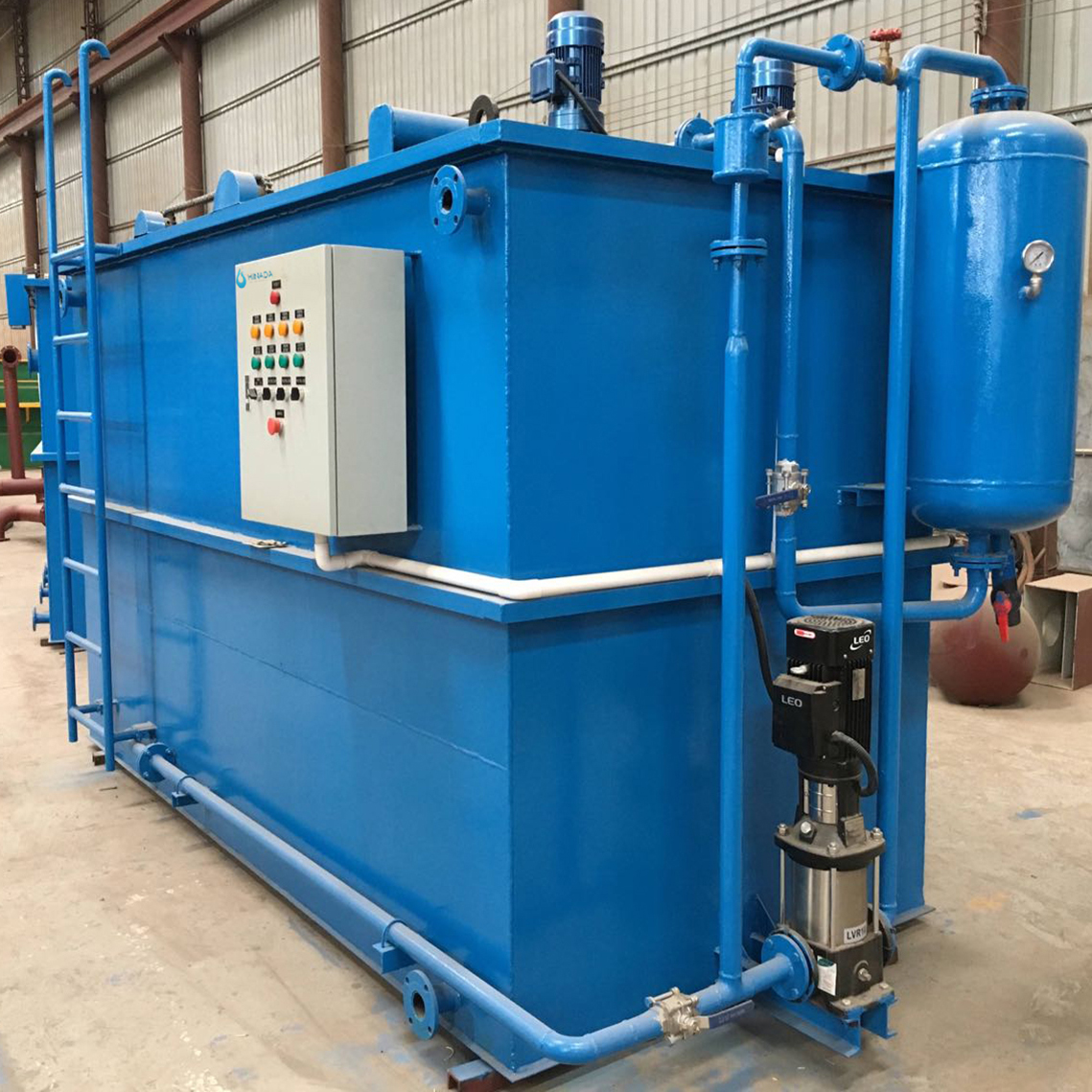
HINADA's DAF systems are designed for high efficiency and reliability. They incorporate advanced air saturation systems, robust flotation tanks, and intelligent skimming mechanisms. But what sets HINADA apart is its commitment to innovation. The company has developed AI-assisted control modules that can be integrated into new or existing DAF units. These modules use machine learning to optimize performance based on real-time data, delivering significant operational savings.
HINADA's Commitment to Innovation
From day one, HINADA focused on two core technology pillars: hollow fiber ultrafiltration (UF/MBR) membranes for precise physical separation, and intelligent integrated wastewater treatment equipment for municipal, industrial, and decentralized applications. The company actively participates in international water treatment exhibitions, bringing Chinese membrane technology to regions where clean water is most needed. By investing in AI research and development, HINADA is helping to shape the future of DAF wastewater treatment.
Global Reach and Applications
HINADA's solutions are applied in industrial wastewater treatment and reuse, municipal sewage treatment and recycling, rural decentralized water supply and sanitation, and drinking water purification. The company provides truly integrated solutions from design, supplying, installation support, and commissioning to training. With a global footprint, HINADA is well-positioned to lead the AI-assisted DAF revolution, delivering smart, sustainable water treatment solutions worldwide.
Conclusion
The future of DAF wastewater treatment is inextricably linked to AI-assisted operations. As water scarcity and environmental regulations intensify, the need for intelligent, efficient, and adaptable treatment systems will only grow. AI offers the tools to transform DAF from a static, manually operated process into a dynamic, self-optimizing system. The benefits—improved effluent quality, cost savings, environmental protection, and operational resilience—are compelling. While challenges remain, ongoing advances in sensors, data analytics, and computing power are rapidly overcoming them. Manufacturers like HINADA are already paving the way, integrating AI into their DAF systems and delivering value to clients around the world. As we look ahead, the convergence of AI, IoT, and digital twins will usher in an era of autonomous DAF systems that are not only more efficient but also more sustainable. The future is intelligent, and it is here.