The Role of a DAF System Equipment manufacturer in Cleaner Water
The Role of a DAF System Equipment manufacturer in Cleaner Water
September 30, 2026
Author
Solution Provider, through a professional technical team, we provide customers with targeted equipment selection recommendations and comprehensive after-sales services, winning the trust and recognition of customers.
Sarah M.
This blog explores the critical role of DAF system equipment manufacturers in delivering cleaner water. It begins by explaining dissolved air flotation, how it works, and its key components. The article then discusses the responsibilities of a DAF manufacturer, including design, innovation, quality assurance, customer service, and sustainability. It highlights HINADA Water Treatment Tech Co., Ltd., a global manufacturer founded in 2012 in Guangzhou, China, with an expanded base in Chenzhou, Hunan. HINADA serves over 75 countries and offers a complete ecosystem of water treatment products, including DAF systems, UF membranes, MBR modules, and packaged plants. The blog details design considerations, industrial and municipal applications, rural decentralized solutions, drinking water purification, and integration with membrane technologies. It also covers quality assurance, global support, turnkey project delivery, case studies, sustainability, and future trends. The conclusion emphasizes that DAF manufacturers are essential partners in achieving water security. HINADA's experience, innovation, and comprehensive service make it a leading example of how DAF technology can address water challenges worldwide.
The Role of a DAF System Equipment Manufacturer in Cleaner Water
Access to clean water is one of the defining challenges of the twenty-first century. As populations grow, industries expand, and regulatory standards tighten, the demand for effective, reliable, and affordable water treatment technologies has never been higher. Among the many treatment processes available, dissolved air flotation, commonly known as DAF, has emerged as a cornerstone technology for removing suspended solids, oils, grease, algae, and other contaminants from water and wastewater. Behind every successful DAF installation stands a specialized DAF system equipment manufacturer, a company that combines engineering expertise, manufacturing precision, and application knowledge to deliver systems that protect public health and the environment.
This blog explores the vital role that DAF system equipment manufacturers play in the global pursuit of cleaner water. It examines how DAF technology works, why it matters, and how leading manufacturers such as HINADA Water Treatment Tech Co., Ltd. are driving innovation across municipal, industrial, and decentralized water treatment markets. By understanding the capabilities and responsibilities of DAF equipment manufacturers, plant owners, consultants, and communities can make better decisions about water infrastructure that will serve generations to come.
Understanding Dissolved Air Flotation
Dissolved air flotation is a water treatment process that clarifies wastewater or drinking water by removing suspended matter such as oil, grease, solids, and algae. The mechanism relies on the introduction of microscopic air bubbles into the water. These bubbles attach to particles and floc masses, reducing their density and causing them to float to the surface. Once at the surface, the buoyant material forms a sludge blanket that can be mechanically skimmed away. The clarified water is then drawn from the bottom of the DAF tank for further treatment or discharge.
undefined
The origins of DAF can be traced to the mining and mineral processing industries, where flotation was used to separate valuable minerals from ore. Over time, the technology was adapted for municipal drinking water treatment, industrial wastewater pretreatment, and sludge thickening. Today, DAF is recognized as a highly efficient and versatile process that can handle a wide range of flow rates and contaminant loads. Its compact footprint, rapid startup, and ability to achieve high removal efficiencies make it particularly attractive for sites with limited space or stringent discharge limits.
Unlike sedimentation, which relies on gravity to settle heavy particles, DAF is ideal for removing low-density particles that would otherwise take a very long time to settle. This includes fats, oils, grease, algae, and many types of biological flocs. By accelerating the separation process, DAF systems can reduce treatment time from hours to minutes, allowing plants to achieve higher throughput with smaller tanks. This efficiency translates directly into lower capital costs, reduced land requirements, and more consistent effluent quality.
How a DAF System Works
A typical DAF system consists of several key components that work together to produce clarified water. The first stage is usually coagulation and flocculation. Coagulants such as aluminum sulfate, ferric chloride, or polyaluminum chloride are added to neutralize the electrical charges on suspended particles. This allows the particles to come together and form larger, more easily removable flocs. Flocculants, often long-chain polymers, are then added to bind the flocs into robust agglomerates that can withstand the turbulence of the DAF process.
The next stage is air dissolution. A portion of the clarified effluent, known as recycle flow, is pumped into a pressure vessel called an air saturation tank. Compressed air is injected into the vessel, and the high pressure causes the air to dissolve into the water. The saturated water is then released into the DAF tank through a specialized valve or nozzle. The sudden drop in pressure causes the dissolved air to come out of solution as millions of tiny bubbles, typically ranging from 20 to 100 microns in diameter.
These microbubbles attach to the floc particles and carry them to the surface. The DAF tank is designed with a gentle hydraulic regime to promote bubble-particle attachment while avoiding excessive turbulence that could break apart the flocs. A surface skimmer or scraper mechanism continuously removes the floating sludge blanket, while a bottom collector draws off the clarified water. Some systems also include a sludge thickening zone to reduce the volume of waste sludge that must be handled downstream.
The performance of a DAF system depends on several operating parameters, including the air-to-solids ratio, recycle ratio, coagulant dose, pH, temperature, and hydraulic loading rate. A skilled DAF system equipment manufacturer will optimize these parameters for each application, ensuring that the system achieves the required removal efficiency while minimizing operating costs. This requires a deep understanding of both the chemistry of coagulation and the physics of flotation.
Key Components of a DAF System
Although designs vary, most DAF systems include the following components:
Coagulation and flocculation tanks: Where chemicals are added and mixed to form flocs.
Air saturation system: A pressure vessel, air compressor, and pump that dissolve air into recycle water.
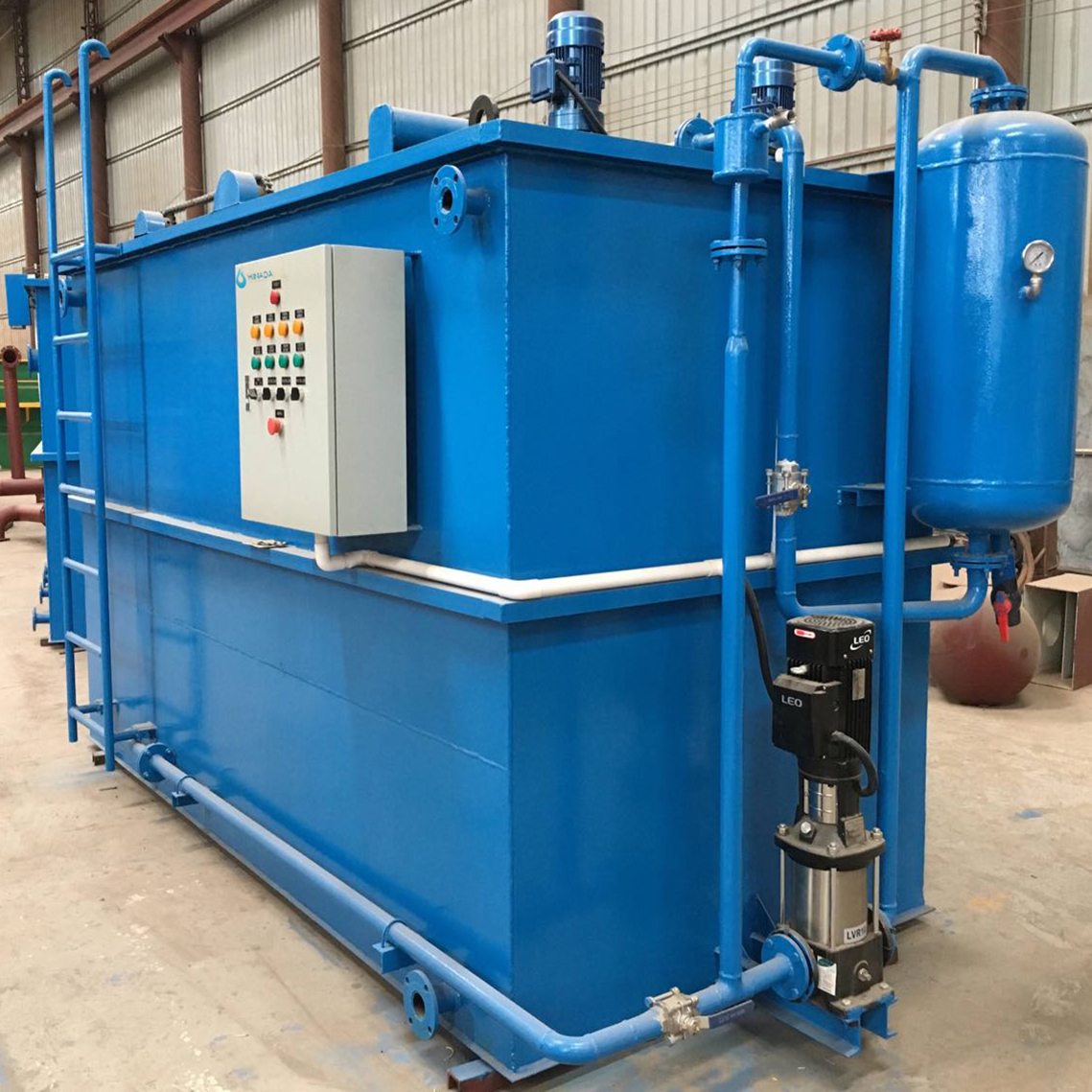
DAF tank: The main flotation chamber where bubbles attach to particles and sludge rises to the surface.
Skimmer system: Mechanical scrapers or chains that remove floating sludge.
Sludge collection and thickening: Equipment to concentrate and dewater waste sludge.
Effluent collection: Pipes and weirs that draw clarified water from the bottom of the tank.
Control panel: Instrumentation and automation for monitoring and adjusting system parameters.
Each component must be carefully designed and manufactured to ensure reliable operation. For example, the air saturation tank must be able to withstand high pressures and resist corrosion. The skimmer must be robust enough to handle varying sludge loads without frequent breakdowns. The DAF tank must be hydraulically optimized to prevent short-circuiting and ensure uniform flow distribution. These are the details that separate a high-quality DAF system from a mediocre one.
The Role of a DAF System Equipment Manufacturer
A DAF system equipment manufacturer plays a multifaceted role in the water treatment industry. At the most basic level, the manufacturer designs and fabricates the physical equipment. However, the best manufacturers go far beyond fabrication. They act as technology partners, providing process design, pilot testing, installation support, commissioning, training, and ongoing service. They help clients select the right equipment for their specific water quality and flow requirements, and they ensure that the system operates efficiently over its entire lifecycle.
One of the most important responsibilities of a DAF manufacturer is innovation. Water quality regulations are becoming stricter, and industrial processes are becoming more complex. Manufacturers must continually develop new designs, materials, and control systems to meet these challenges. For instance, modern DAF systems may incorporate advanced dissolved air injection systems, high-efficiency saturators, and automated chemical dosing. They may also be integrated with membrane filtration, such as ultrafiltration or reverse osmosis, to create comprehensive treatment trains.
Another critical role is quality assurance. A DAF system is a significant capital investment, and it must operate reliably for decades. Manufacturers must use high-quality materials, such as stainless steel, corrosion-resistant coatings, and durable polymers. They must also implement rigorous testing and inspection procedures at every stage of production. This includes pressure testing of vessels, dimensional checks of tanks, and functional testing of skimmers and pumps. A manufacturer that cuts corners on quality will ultimately deliver a system that underperforms and requires frequent repairs.
Manufacturers also have a responsibility to provide excellent customer service. This includes timely delivery, responsive technical support, and a commitment to solving problems as they arise. Because DAF systems are often part of a larger treatment process, manufacturers must be able to collaborate with other equipment suppliers, engineering firms, and plant operators. They must also offer spare parts and maintenance programs to ensure long-term reliability. In many cases, the manufacturer becomes a trusted advisor to the client, helping them navigate regulatory changes and operational challenges.
Finally, DAF manufacturers play a role in sustainability. By enabling effective water treatment and reuse, they help industries reduce their freshwater consumption and minimize environmental discharge. They also contribute to the circular economy by recovering valuable materials from wastewater, such as oils, fats, and nutrients. As the world moves toward a more sustainable future, the importance of DAF manufacturers will only continue to grow.
HINADA: A Global DAF System Equipment Manufacturer
Among the leading DAF system equipment manufacturers, HINADA Water Treatment Tech Co., Ltd. stands out for its comprehensive capabilities and global reach. Founded in 2012 in Guangzhou, China, HINADA later expanded its manufacturing base to Chenzhou, Hunan Province. Today, the company serves clients in over 75 countries across Asia, Africa, Europe, and the Americas. Its product portfolio includes hollow fiber ultrafiltration membranes, submerged MBR membrane modules, integrated packaged wastewater treatment systems, and, of course, dissolved air flotation systems.
HINADA is more than just an equipment supplier. The company is a wastewater treatment solution provider, offering truly integrated services from design and supplying to installation support, commissioning, and training. With more than 13 years of experience in the water treatment industry and 10 years of membrane and equipment manufacturing experience, HINADA has built a complete ecosystem that spans membrane research and development, component manufacturing, equipment fabrication, and turnkey solution delivery.
From day one, HINADA focused on two core technology pillars. The first is hollow fiber ultrafiltration and MBR membranes, which provide precise physical separation of suspended solids, bacteria, colloids, and macromolecular organics. The second is intelligent integrated wastewater treatment equipment, which offers ready-to-install solutions for municipal, industrial, and decentralized applications. These two pillars complement each other, allowing HINADA to deliver comprehensive treatment trains that combine DAF, UF, MBR, and reverse osmosis as needed.
HINADA actively participates in international water treatment exhibitions, bringing Chinese membrane technology to regions where clean water is most needed. The company's key application fields include industrial wastewater treatment and reuse, municipal sewage treatment and water recycling, rural decentralized water supply and sanitation, and drinking water purification from surface water and groundwater. In each of these fields, DAF systems play a critical role, and HINADA's expertise as a DAF manufacturer helps clients achieve their treatment goals.
HINADA's Core Products and DAF Systems
HINADA's core products include PVDF and PVC hollow fiber UF membranes, submerged MBR membrane modules, containerized MBR systems, packaged wastewater treatment plants, dissolved air flotation systems, ultrafiltration systems, and industrial reverse osmosis systems. This broad portfolio allows the company to serve as a single-source provider for many water treatment projects. Clients can rely on HINADA for everything from primary clarification to advanced desalination.
HINADA's DAF systems are designed to remove suspended solids, oils, grease, and algae from a wide range of water sources. They are available in different configurations, including circular and rectangular tanks, with capacities ranging from a few cubic meters per hour to several thousand cubic meters per hour. The systems can be supplied as standalone units or integrated into larger treatment trains. They can also be containerized for rapid deployment in remote or temporary locations.
Each HINADA DAF system is engineered to meet the specific needs of the application. The company's engineers work closely with clients to understand their water quality, flow rates, discharge requirements, and site constraints. They then use advanced modeling and simulation tools to optimize the design. This includes selecting the right coagulants and flocculants, sizing the air saturation system, and configuring the tank hydraulics. The result is a system that achieves high removal efficiencies with minimal chemical consumption and energy use.
Manufacturing takes place in HINADA's modern facilities in Guangzhou and Chenzhou. The company uses computer-aided design and computer-aided manufacturing to ensure precision. Stainless steel components are welded and passivated to resist corrosion. Pumps, valves, and instruments are sourced from reputable suppliers. Every system undergoes thorough testing before shipment, including hydrostatic testing, electrical checks, and functional testing of all moving parts. This commitment to quality ensures that HINADA DAF systems perform reliably in the field.
Design Considerations for DAF Systems
Designing an effective DAF system requires careful attention to many factors. The first is the characteristics of the wastewater or raw water. Parameters such as suspended solids concentration, oil and grease content, particle size distribution, and temperature all influence the design. For example, water with high oil content may require a larger flotation area and a more robust skimmer. Water with high algae content may require pre-oxidation or coagulation with a higher dose of chemicals.
The second factor is the required effluent quality. If the DAF system is used for pretreatment before membrane filtration, the effluent must be clean enough to protect the membranes from fouling. If it is used for direct discharge, it must meet strict regulatory limits. The design must therefore incorporate sufficient redundancy and flexibility to handle variations in influent quality and flow.
The third factor is the hydraulic loading rate. This is the flow rate per unit area of the DAF tank. If the loading rate is too high, bubbles and flocs may not have enough time to separate, leading to poor clarification. If it is too low, the tank will be unnecessarily large and expensive. Manufacturers use empirical data and computational fluid dynamics to determine the optimal loading rate for each application.
The fourth factor is the air-to-solids ratio. This is the mass of air supplied per mass of solids to be removed. A higher ratio generally improves removal efficiency but increases energy consumption. The optimal ratio depends on the nature of the solids and the desired effluent quality. Manufacturers must balance performance and operating costs.
Other important considerations include the selection of materials, the type of skimmer, the method of sludge removal, and the level of automation. HINADA addresses all these factors through a comprehensive design process that involves client collaboration, pilot testing, and detailed engineering. This ensures that each DAF system is tailored to its specific application and delivers reliable performance for years.
Industrial Applications of DAF Systems
DAF systems are used in a wide variety of industries to treat process water and wastewater. In the food and beverage industry, DAF is used to remove fats, oils, grease, and suspended solids from wastewater generated during processing, cleaning, and packaging. The treated water can often be reused for non-potable purposes, reducing freshwater consumption and discharge fees. HINADA has supplied DAF systems to food processing plants in many countries, helping them meet stringent environmental regulations.
In the meat and poultry industry, DAF is essential for treating high-strength wastewater containing blood, fat, and manure. The process reduces the organic load on downstream biological treatment systems, improving their efficiency and reducing operating costs. It also helps recover valuable by-products, such as proteins and fats, which can be sold or reused.
In the oil and gas industry, DAF is used to treat produced water, refinery wastewater, and stormwater runoff. It effectively removes dispersed oil, grease, and suspended solids, preparing the water for reinjection, discharge, or reuse. The robust construction of industrial DAF systems allows them to withstand harsh conditions, including high temperatures and corrosive chemicals.
In the pulp and paper industry, DAF is used to clarify whitewater and deinking wastewater. It removes fibers, fillers, and inks, allowing the water to be recycled back into the process. This reduces freshwater intake and minimizes the discharge of pollutants. HINADA's DAF systems are designed to handle the high solids loads typical of paper mills.
In the textile industry, DAF is used to remove dyes, pigments, and other chemicals from wastewater. It is often combined with chemical coagulation and flocculation to achieve high color removal. The treated water can be reused in the dyeing process, reducing both water and chemical consumption.
In the mining industry, DAF is used to treat acid mine drainage, tailings water, and process water. It removes heavy metals, suspended solids, and residual reagents. The technology is also used in mineral processing to separate valuable minerals from gangue. HINADA's experience in mining applications ensures that its DAF systems are rugged and reliable.
In the pharmaceutical and chemical industries, DAF is used to treat wastewater containing solvents, oils, and suspended solids. It is often part of a multi-stage treatment train that includes biological treatment, membrane filtration, and advanced oxidation. The ability of DAF to handle variable flows and loads makes it an ideal pretreatment step.
Municipal Applications of DAF Systems
In municipal water treatment, DAF is widely used for drinking water clarification. It is particularly effective for treating surface water sources that contain algae, low-density particles, and natural organic matter. Conventional sedimentation can be slow and ineffective for these contaminants, especially during algal blooms. DAF, on the other hand, rapidly floats algae and other particles to the surface, producing clear water with low turbidity.
DAF is also used in municipal wastewater treatment plants for primary clarification and sludge thickening. In primary clarification, DAF removes suspended solids and fats, oils, and grease before biological treatment. This reduces the load on aeration tanks and improves energy efficiency. In sludge thickening, DAF concentrates waste activated sludge, reducing the volume that must be digested or dewatered. This can significantly lower sludge handling costs.
Many municipalities are upgrading their existing plants with DAF systems to increase capacity without expanding their footprint. Because DAF tanks are more compact than sedimentation basins, they can be installed in limited spaces. They also offer faster startup and better performance during wet weather flows. HINADA has worked with municipal clients to design DAF systems that integrate seamlessly with existing infrastructure.
In addition to treatment, DAF can be used for water reuse. Municipalities are increasingly treating wastewater to high standards for irrigation, industrial use, and groundwater recharge. DAF serves as an effective pretreatment step before ultrafiltration, reverse osmosis, and disinfection. This allows communities to diversify their water sources and reduce reliance on imported water.
Rural and Decentralized Water Treatment
Rural and decentralized communities often face unique water treatment challenges. They may lack access to centralized sewer systems, have limited financial resources, and struggle to attract skilled operators. In these settings, packaged and containerized treatment systems are ideal. HINADA specializes in integrated packaged wastewater treatment systems and containerized MBR systems that can be deployed quickly and operated with minimal supervision.
DAF systems can be integrated into these packaged solutions to provide primary treatment. For example, a containerized system might include a DAF unit, a biological treatment tank, and a membrane module. The DAF removes fats, oils, and suspended solids, protecting the downstream membrane from fouling. The result is a compact, turnkey system that produces high-quality effluent suitable for reuse or safe discharge.
HINADA's rural water supply and sanitation solutions are designed to be robust, easy to install, and affordable. They can be powered by grid electricity or renewable energy sources such as solar panels. They can also be monitored remotely, allowing a single operator to manage multiple sites. This makes them well-suited for villages, resorts, construction camps, and remote industrial sites.
By providing decentralized treatment, DAF manufacturers help bring clean water and sanitation to areas that would otherwise be underserved. This improves public health, protects local ecosystems, and supports economic development. HINADA's participation in international exhibitions and projects has helped expand access to these technologies in Asia, Africa, and Latin America.
Drinking Water Purification with DAF
Drinking water purification is one of the most important applications of DAF. Surface water sources often contain algae, bacteria, viruses, and organic matter that must be removed to meet health standards. DAF is highly effective at removing algae and other low-density particles that can clog filters and cause taste and odor problems. It also reduces the formation of disinfection by-products by removing natural organic matter before chlorination.
Groundwater sources may also require DAF treatment if they contain iron, manganese, or other contaminants that can be oxidized and floated. In some cases, DAF is combined with oxidation and filtration to produce safe drinking water. The process is versatile and can be adapted to different water qualities and treatment goals.
HINADA's DAF systems for drinking water treatment are designed to meet stringent health and safety standards. They use food-grade materials, corrosion-resistant coatings, and advanced control systems. They can be supplied as complete package plants or as components for larger treatment facilities. The company's engineering team works with clients to ensure that the systems comply with local regulations and provide reliable, high-quality drinking water.
Integrating DAF with Membrane Technologies
Modern water treatment increasingly relies on membrane technologies such as ultrafiltration, microfiltration, nanofiltration, and reverse osmosis. These membranes can produce very high-quality water, but they are susceptible to fouling by suspended solids, oils, and organic matter. DAF serves as an excellent pretreatment step, removing contaminants that would otherwise foul the membranes and reduce their lifespan.
HINADA manufactures both DAF systems and membrane systems, which gives the company a unique advantage. It can design integrated treatment trains that optimize the performance of both technologies. For example, a system might use DAF for primary clarification, followed by ultrafiltration for removal of bacteria and viruses, and then reverse osmosis for desalination. This integrated approach ensures that each stage operates efficiently and that the overall system meets the required water quality.
In membrane bioreactor (MBR) systems, DAF can be used for pretreatment of the influent. This is particularly useful for industrial wastewater containing high concentrations of oils and grease. By removing these contaminants before they reach the MBR, DAF protects the membranes and reduces cleaning frequency. HINADA's submerged MBR membrane modules are designed to work seamlessly with its DAF systems.
The combination of DAF and membranes is also effective for water reuse. Treated wastewater can be upgraded to high-purity water for industrial processes, irrigation, or even indirect potable reuse. DAF removes the bulk of suspended solids and organic matter, while membranes provide an absolute barrier against pathogens and dissolved contaminants. This multi-barrier approach is essential for ensuring public health and environmental protection.
Quality Assurance and Manufacturing Excellence
Quality assurance is a top priority for any DAF system equipment manufacturer. HINADA implements strict quality control procedures throughout the manufacturing process. Raw materials are inspected upon arrival to ensure they meet specifications. Stainless steel plates are checked for thickness and surface finish. Welds are inspected using non-destructive testing methods. Pumps and valves are tested for performance and leak-tightness.
During assembly, each component is fitted and aligned with precision. The air saturation system is pressure-tested to ensure it can withstand operating pressures. The skimmer mechanism is run through a full cycle to verify smooth operation. Electrical panels are wired and tested according to international standards. Finally, the complete system is given a functional test under simulated operating conditions before it is shipped.
HINADA also maintains a comprehensive quality management system that covers design, procurement, production, inspection, and after-sales service. The company is committed to continuous improvement, regularly reviewing customer feedback and implementing corrective actions. This dedication to quality has earned HINADA a reputation as a reliable supplier of DAF systems and other water treatment equipment.
In addition to quality control, HINADA invests in research and development. The company's engineers are constantly exploring new materials, designs, and control strategies to improve DAF performance. They collaborate with universities and research institutions to stay at the forefront of water treatment technology. This commitment to innovation ensures that HINADA's clients benefit from the latest advances in the field.
Global Reach and Local Support
HINADA serves clients in over 75 countries, with projects spanning Asia, Africa, Europe, and the Americas. The company's global reach is supported by a network of sales offices, distributors, and service partners. This allows HINADA to provide local support while leveraging its manufacturing base in China for cost-effective production.
For international projects, HINADA offers comprehensive support from the initial inquiry to final commissioning. The company's engineers can travel to the site to conduct site surveys, collect water samples, and discuss project requirements. They can also provide installation supervision, operator training, and performance testing. This hands-on approach ensures that every system is installed correctly and operates as designed.
HINADA also offers remote support through digital platforms. Many of its systems are equipped with sensors and controllers that can transmit data to the company's service center. This allows HINADA's engineers to monitor performance, diagnose issues, and provide guidance without the need for immediate travel. Remote support reduces downtime and lowers service costs for clients in remote locations.
By combining global manufacturing with local service, HINADA has become a trusted partner for water treatment projects around the world. The company's ability to deliver high-quality DAF systems and other equipment on time and within budget has made it a preferred supplier for many engineering firms and end users.
Turnkey Solutions and Project Delivery
HINADA provides truly integrated solutions for water and wastewater projects. This includes design, equipment supply, installation support, commissioning, and training. The company's turnkey approach simplifies project management for clients, who can rely on a single point of contact for all their water treatment needs.
The project delivery process typically begins with a detailed consultation. HINADA's engineers work with the client to define the project scope, water quality goals, and site constraints. They then develop a conceptual design and cost estimate. If the client approves, HINADA proceeds with detailed engineering, which includes process flow diagrams, piping and instrumentation diagrams, equipment layouts, and electrical schematics.
Once the design is finalized, HINADA manufactures the equipment in its own facilities. This vertical integration ensures quality control and reduces lead times. The equipment is then shipped to the site, where HINADA's technicians supervise installation and conduct commissioning. During commissioning, the system is tested under real operating conditions, and adjustments are made to optimize performance. Finally, HINADA provides training to the client's operators, covering system operation, maintenance, and troubleshooting.
This comprehensive approach has been applied to numerous projects, from small industrial plants to large municipal facilities. Clients appreciate the convenience of dealing with a single manufacturer that can handle all aspects of the project. They also benefit from HINADA's deep expertise in DAF, membrane, and biological treatment technologies.
Case Study: Industrial Wastewater Reuse with DAF and UF
To illustrate the role of a DAF system equipment manufacturer, consider a typical industrial wastewater reuse project. A food processing plant generates wastewater with high concentrations of fats, oils, grease, and suspended solids. The plant wants to reuse the treated water for boiler feed and cooling tower makeup, reducing its freshwater consumption and discharge fees.
HINADA designed a treatment train that includes a DAF system, an ultrafiltration system, and a reverse osmosis system. The DAF system removes the bulk of the fats, oils, grease, and suspended solids. The effluent from the DAF is then sent to the ultrafiltration system, which removes bacteria, viruses, and colloidal particles. Finally, the reverse osmosis system removes dissolved salts and other contaminants, producing high-purity water suitable for reuse.
The DAF system is equipped with automatic chemical dosing, a high-efficiency air saturation system, and a robust skimmer. It is designed to handle flow rates of 500 cubic meters per day, with peaks up to 750 cubic meters per day. The system achieves 95 percent removal of fats, oils, and grease, and 90 percent removal of suspended solids. This performance protects the downstream membranes and ensures reliable operation.
Since commissioning, the plant has reduced its freshwater intake by 70 percent and its wastewater discharge by 80 percent. The payback period for the investment was less than three years, thanks to savings on water and discharge fees. The plant operators have been trained by HINADA and are able to maintain the system with minimal external support. This case study demonstrates how a skilled DAF manufacturer can help industries achieve both environmental and economic benefits.
Case Study: Municipal Drinking Water Treatment with DAF
A municipality draws its drinking water from a surface reservoir that experiences seasonal algal blooms. Conventional treatment, consisting of coagulation, sedimentation, and filtration, struggles to cope with the algae, leading to frequent filter backwashing and taste and odor complaints. The municipality decides to upgrade its plant with a DAF system.
HINADA supplied a DAF system with a capacity of 20,000 cubic meters per day. The system includes coagulation and flocculation tanks, an air saturation system, and a rectangular DAF tank with a chain-and-flight skimmer. It is designed to remove algae, turbidity, and natural organic matter. The DAF effluent is then filtered and disinfected before distribution.
After installation, the plant experienced a dramatic improvement in water quality. Algae removal efficiency exceeded 98 percent, and filter run times increased by 50 percent. The DAF system also reduced the formation of disinfection by-products by removing organic matter before chlorination. The municipality has received positive feedback from residents about the improved taste and odor of the water.
This project highlights the importance of selecting a DAF manufacturer with experience in drinking water treatment. HINADA's engineers conducted pilot testing to determine the optimal coagulant dose and air-to-solids ratio. They also worked closely with the plant operators to ensure a smooth transition. The result is a reliable, efficient treatment system that provides safe drinking water to thousands of people.
Sustainability and the Circular Economy
Sustainability is a growing concern for industries and municipalities alike. DAF systems contribute to sustainability by enabling water reuse, reducing freshwater consumption, and minimizing environmental discharge. They also help recover valuable resources from wastewater, such as oils, fats, and nutrients.
For example, in the food industry, DAF sludge can be processed to recover fats and proteins for use in animal feed or biodiesel production. In the oil and gas industry, recovered oil can be recycled back into the process. In municipal wastewater treatment, DAF sludge can be digested to produce biogas, a renewable energy source. These resource recovery opportunities turn waste into value, supporting the circular economy.
HINADA designs its DAF systems with sustainability in mind. The company uses energy-efficient pumps and motors, optimized air dissolution systems, and advanced control algorithms to minimize energy consumption. It also offers options for heat recovery and chemical recovery. By reducing operating costs and environmental impact, HINADA's DAF systems help clients achieve their sustainability goals.
In addition to equipment design, HINADA promotes sustainable practices through its own operations. The company is committed to reducing waste, conserving energy, and minimizing its carbon footprint. It also supports community water projects and educational initiatives. As a responsible manufacturer, HINADA recognizes that its success is tied to the health of the communities and ecosystems it serves.
Future Trends in DAF Technology
The field of dissolved air flotation is continuously evolving. Several trends are shaping the future of DAF technology and the role of DAF system equipment manufacturers. One trend is the increasing use of automation and digitalization. Modern DAF systems are equipped with sensors, programmable logic controllers, and human-machine interfaces that allow real-time monitoring and control. This enables operators to optimize performance, predict maintenance needs, and reduce downtime.
Another trend is the development of more compact and modular systems. As urban spaces become more crowded and industrial sites seek to minimize their footprint, manufacturers are designing DAF systems that are smaller, lighter, and easier to install. Containerized and skid-mounted systems are becoming increasingly popular, especially for decentralized and temporary applications.
A third trend is the integration of DAF with other advanced treatment technologies. Membranes, advanced oxidation, and biological treatment are often combined with DAF to create multi-barrier treatment trains. This integration requires manufacturers to have a broad understanding of water treatment processes and the ability to collaborate with other technology providers.
Finally, there is a growing focus on energy efficiency and sustainability. Manufacturers are developing new air dissolution systems that use less energy, and new materials that last longer and require less maintenance. They are also exploring the use of renewable energy sources to power DAF systems. These innovations will help make DAF technology even more cost-effective and environmentally friendly in the years to come.
Choosing the Right DAF System Equipment Manufacturer
When selecting a DAF system equipment manufacturer, there are several factors to consider. The first is experience. A manufacturer with a long track record in water treatment and a diverse portfolio of projects is more likely to have the expertise to handle complex applications. HINADA, with more than 13 years in the industry and 10 years in membrane and equipment manufacturing, is a strong example of an experienced manufacturer.
The second factor is technical capability. The manufacturer should have in-house engineering, design, and manufacturing capabilities. This allows for better quality control, faster response times, and greater flexibility in customization. HINADA's complete ecosystem, from membrane R&D to equipment fabrication, gives it a significant advantage in this regard.
The third factor is references and reputation. Prospective clients should ask for case studies, customer testimonials, and site visits. They should also check whether the manufacturer has experience in their specific industry or application. HINADA's global presence and numerous installations in over 75 countries provide a strong reference base.
The fourth factor is service and support. The manufacturer should offer installation support, commissioning, training, and after-sales service. They should also have a reliable supply of spare parts and a responsive technical support team. HINADA's comprehensive service offerings and global network ensure that clients receive the support they need throughout the lifecycle of their DAF system.
By carefully evaluating these factors, clients can choose a DAF manufacturer that will deliver a reliable, efficient, and cost-effective solution. The right manufacturer becomes a long-term partner in the pursuit of cleaner water.
Conclusion
The role of a DAF system equipment manufacturer in cleaner water cannot be overstated. These companies design, build, and support the technology that removes contaminants from water, protects public health, and enables sustainable water management. They are innovators, problem-solvers, and partners in the global effort to ensure that everyone has access to clean water.
HINADA Water Treatment Tech Co., Ltd. exemplifies the best of what a DAF manufacturer can be. With its broad product portfolio, integrated solutions, global reach, and commitment to quality, HINADA helps clients across industries and communities achieve their water treatment goals. From industrial wastewater reuse to municipal drinking water purification, HINADA's DAF systems and membrane technologies are making a difference in over 75 countries.
As the world faces increasing water scarcity and stricter environmental regulations, the demand for effective DAF systems will continue to grow. Manufacturers that invest in innovation, quality, and service will be well-positioned to meet this demand. They will also play a critical role in building a more sustainable and equitable water future for all.
In the end, cleaner water is not just a technical challenge; it is a human imperative. DAF system equipment manufacturers are on the front lines of this effort, turning engineering expertise into real-world solutions that improve lives and protect the planet. Their work is essential, and their impact is lasting.