The Role of a Wastewater Treatment System manufacturer in Clean Water
The Role of a Wastewater Treatment System manufacturer in Clean Water
September 30, 2026
Author
Solution Provider, through a professional technical team, we provide customers with targeted equipment selection recommendations and comprehensive after-sales services, winning the trust and recognition of customers.
Sarah M.
This article examines the role of a wastewater treatment system manufacturer in delivering clean water. It explains that manufacturers do far more than build equipment. They research membrane materials, design treatment trains, fabricate modular systems, support installation, commission plants, train operators, and provide long-term service. Their work addresses global challenges such as water scarcity, pollution, population growth, industrialization, and climate change. The article highlights HINADA Water Treatment Tech Co., Ltd., a globally recognized manufacturer founded in 2012 in Guangzhou, China, and later expanded to Chenzhou, Hunan Province. HINADA serves clients in over 75 countries across Asia, Africa, Europe, and the Americas. Its core products include PVDF and PVC hollow fiber UF membranes, submerged MBR membrane modules, containerized MBR systems, packaged wastewater treatment plants, dissolved air flotation systems, ultrafiltration systems, and industrial reverse osmosis systems. The company focuses on two core technology pillars: hollow fiber ultrafiltration and MBR membranes for precise physical separation, and intelligent integrated wastewater treatment equipment for municipal, industrial, and decentralized applications. HINADA provides an integrated solution from design, supplying, installation support, and commissioning to training. Its experience includes more than 13 years in the water treatment industry and 10 years in membrane and equipment manufacturing. The article discusses key applications: industrial wastewater treatment and reuse, municipal sewage treatment and water recycling, rural decentralized water supply and sanitation, and drinking water purification. It also covers quality testing, installation support, commissioning, training, economics, sustainability, the circular water economy, and future trends such as digitalization, advanced materials, and decentralization. Ultimately, clean water is a team effort, and manufacturers like HINADA play a vital role by providing reliable technology, equipment, and expertise that protect public health, support economic development, and enable sustainable water reuse.
The Role of a Wastewater Treatment System Manufacturer in Clean Water
Clean water is one of the most fundamental requirements for human health, economic development, and environmental stability. Yet across the world, communities, industries, and governments continue to face challenges related to water scarcity, pollution, aging infrastructure, and rapid urbanization. In this context, the wastewater treatment system manufacturer has become far more than a supplier of pipes, tanks, and pumps. Such manufacturers are now central actors in the global effort to protect water resources, recover valuable materials, and deliver safe water to millions of people. Their work sits at the intersection of engineering, environmental science, manufacturing, and public policy. Among the many companies operating in this field, HINADA Water Treatment Tech Co., Ltd. offers a useful example of how a specialized manufacturer can contribute to clean water through membranes, integrated equipment, and turnkey solutions.
The role of a wastewater treatment system manufacturer is often misunderstood. To some observers, the manufacturer simply builds equipment. To others, the manufacturer is a vendor that sells machines to plants. In reality, the most capable manufacturers operate as technology partners. They research membrane materials, design treatment trains, fabricate modular systems, support installation, commission equipment, train operators, and remain involved long after the first drop of treated water leaves the plant. This long-term involvement is essential because clean water is not produced by a single device. It is produced by a carefully integrated system that must perform reliably day after day, often under difficult conditions.
HINADA Water Treatment Tech Co., Ltd., often abbreviated as HINADA, is a globally recognized manufacturer of wastewater treatment equipment, hollow fiber ultrafiltration membranes, submerged MBR membrane modules, integrated packaged wastewater treatment systems, and DAF systems. Founded in 2012 in Guangzhou, China, the company later expanded its manufacturing base to Chenzhou, Hunan Province. Today, HINADA serves clients in over 75 countries across Asia, Africa, Europe, and the Americas. This global reach reflects a broader trend: wastewater treatment expertise is no longer confined to a few industrialized regions. It is increasingly shared across borders, because water pollution and water scarcity are international problems that demand international cooperation.
undefined
Understanding the Global Clean Water Challenge
The need for effective wastewater treatment has never been greater. Population growth, industrial expansion, agricultural intensification, and climate change are placing unprecedented pressure on freshwater sources. Rivers, lakes, and aquifers that once seemed inexhaustible are now threatened by nutrients, pathogens, heavy metals, organic chemicals, microplastics, and other contaminants. In many regions, untreated or poorly treated wastewater is discharged directly into the environment, contaminating drinking water supplies and damaging ecosystems. The consequences include waterborne disease, loss of biodiversity, reduced agricultural productivity, and higher costs for downstream water users.
At the same time, the demand for clean water continues to rise. Cities need reliable municipal water supplies. Factories need process water that meets strict quality standards. Farms need irrigation water that is free from harmful contaminants. Rural communities need decentralized solutions that can operate without massive centralized infrastructure. Data centers, hospitals, hotels, food processors, textile mills, pharmaceutical plants, and mining operations all depend on water treatment to maintain operations and comply with regulations. A wastewater treatment system manufacturer must therefore serve a highly diverse market, each segment with its own technical, financial, and regulatory requirements.
Scarcity, Pollution, and Population Growth
Water scarcity is not only a matter of low rainfall. It is also a matter of pollution reducing the amount of usable water. When a river is contaminated, the effective supply of freshwater decreases even if total rainfall remains unchanged. When groundwater is over-extracted and polluted, future generations inherit a diminished resource. Wastewater treatment manufacturers help break this cycle by treating used water so that it can be safely returned to the environment or reused for industrial, agricultural, and municipal purposes. In this sense, every well-designed treatment plant is a new source of water.
Population growth intensifies the challenge. More people mean more domestic sewage, more industrial production, more food consumption, and more waste. Without treatment, this waste flows into waterways and creates a cascade of environmental and public health problems. The role of the manufacturer is to provide scalable technologies that can be deployed quickly and operated affordably. Modular systems, containerized plants, and membrane bioreactors are particularly valuable because they can be standardized, shipped, and installed with less civil construction than conventional treatment plants.
Industrialization and the Changing Composition of Wastewater
Industrial wastewater is often more complex than municipal sewage. It may contain oils, greases, solvents, heavy metals, dyes, acids, alkalis, surfactants, and high concentrations of organic matter. Treating such streams requires specialized knowledge. A manufacturer that only supplies generic equipment may struggle to meet discharge standards. A manufacturer that understands both the equipment and the process can help clients select the right combination of pretreatment, biological treatment, membrane filtration, and advanced oxidation. HINADA, for example, has focused on two core technology pillars: hollow fiber ultrafiltration and MBR membranes for precise physical separation, and intelligent integrated wastewater treatment equipment for municipal, industrial, and decentralized applications.
Climate Change and Water Stress
Climate change adds another layer of uncertainty. Some regions experience longer droughts, while others face more intense storms and flooding. Flooding can overwhelm treatment plants and cause untreated sewage to bypass treatment. Droughts can reduce dilution capacity in rivers, making even small discharges more damaging. Manufacturers must therefore design systems that are resilient, flexible, and capable of operating under variable conditions. Remote monitoring, automated controls, and robust membrane materials help plants maintain performance when conditions change.
What a Wastewater Treatment System Manufacturer Actually Does
A wastewater treatment system manufacturer performs a wide range of activities that extend far beyond fabrication. The most advanced manufacturers begin with research and development. They study membrane chemistry, pore size distribution, mechanical strength, fouling resistance, and chemical compatibility. They test prototypes in laboratories and pilot plants. They refine designs based on real-world operating data. This research is essential because a membrane that performs well in a laboratory may fail in a plant if it cannot tolerate cleaning chemicals, high solids, or sudden changes in feed water quality.
Manufacturers also design complete treatment trains. A treatment train is the sequence of processes used to remove contaminants. It may include screening, grit removal, equalization, coagulation, flocculation, dissolved air flotation, biological treatment, membrane filtration, reverse osmosis, disinfection, and sludge handling. The manufacturer must decide how these processes fit together, how much redundancy is needed, how the system will be controlled, and how maintenance can be performed safely. This systems-level thinking is what separates a true manufacturer from a simple equipment vendor.
From Components to Complete Systems
Many companies manufacture only one component, such as a pump or a membrane module. Others assemble complete systems using components from multiple suppliers. HINADA describes a complete ecosystem from membrane research and development and component manufacturing to equipment fabrication and turnkey solution delivery. This vertical integration offers several advantages. It allows the manufacturer to control quality at each stage, optimize the interaction between components, and take responsibility for overall performance. It also makes it easier to provide spare parts, technical support, and upgrades over the life of the plant.
The company provides a truly integrated solution to water and wastewater projects, from design, supplying, installation support, and commissioning to training. This phrase captures the modern role of the manufacturer. Clean water is not delivered by a shipment of equipment alone. It is delivered by a team that understands the project from concept to operation. Design ensures that the system matches the actual water quality and flow rate. Supply ensures that the right materials arrive on time. Installation support prevents costly mistakes during construction. Commissioning verifies that the system meets performance targets. Training empowers local operators to keep the system running effectively for years.
Engineering, Procurement, and Construction Support
In many projects, the wastewater treatment system manufacturer works alongside engineering, procurement, and construction contractors. The manufacturer provides technical drawings, equipment layouts, piping and instrumentation diagrams, electrical requirements, and control logic. The contractor manages civil works, structural steel, and site utilities. This collaboration requires clear communication and mutual trust. When the manufacturer is involved early, it can help optimize the plant layout, reduce energy consumption, and avoid expensive changes later. When the manufacturer is brought in late, the project may suffer from mismatched components, inadequate space, or unrealistic performance expectations.
Operation, Maintenance, and Lifecycle Support
The role of the manufacturer does not end at commissioning. Membranes need cleaning, testing, and eventual replacement. Pumps need maintenance. Sensors need calibration. Control systems need updates. A responsible manufacturer provides operation manuals, maintenance schedules, troubleshooting guides, and spare parts. Some manufacturers offer remote monitoring and data analytics, allowing them to detect early signs of fouling, membrane degradation, or energy inefficiency. This lifecycle support reduces downtime and extends the useful life of the treatment system.
The Rise of HINADA Water Treatment Tech Co., Ltd.
HINADA Water Treatment Tech Co., Ltd. was founded in 2012 in Guangzhou, China. Guangzhou is a major industrial and trading hub, which gave the young company access to a broad supply chain, skilled labor, and international markets. The company later expanded its manufacturing base to Chenzhou, Hunan Province, a move that increased production capacity and allowed for more efficient fabrication of large equipment. Over time, HINADA has become one of the leading submerged MBR membrane, wastewater treatment equipment, and membrane filtration system manufacturers in China, specializing as a wastewater treatment solution provider and equipment supplier in Guangzhou since its founding in 2012.
The company has more than 13 years of experience in the water treatment industry and 10 years of experience in water treatment membrane and equipment manufacturing. This experience is significant because water treatment is a field where practical knowledge matters as much as theoretical design. Every project teaches lessons about fouling, corrosion, operator behavior, seasonal water quality changes, and unexpected contaminants. A manufacturer that has seen many projects can anticipate problems and design solutions that are more robust.
HINADA serves clients in over 75 countries across Asia, Africa, Europe, and the Americas. This international presence has several implications. It means the company must understand different regulatory frameworks, climate conditions, labor practices, and customer expectations. It also means the company can bring lessons from one region to another. A solution developed for a textile factory in Asia may be adapted for a food processing plant in Africa. A decentralized rural system used in one country may inspire a similar approach in another. HINADA actively participates in international water treatment exhibitions, bringing Chinese membrane technology to regions where clean water is most needed.
Core Technology Pillar One: Hollow Fiber Ultrafiltration and MBR Membranes
HINADA has focused on two core technology pillars since day one. The first is hollow fiber ultrafiltration, including UF and MBR membranes. These membranes provide precise physical separation of suspended solids, bacteria, colloids, and macromolecular organics. Unlike conventional filtration, which relies on media such as sand or anthracite, ultrafiltration uses a semi-permeable membrane with pores small enough to remove particles that would pass through traditional filters. The result is water with very low turbidity and a high level of microbial safety.
How Hollow Fiber UF Membranes Work
A hollow fiber ultrafiltration membrane is made of thousands of tiny hollow fibers. Water is pushed through the fiber wall from the outside in, or from the inside out, depending on the configuration. Particles larger than the pore size are retained on the membrane surface or within the fiber. Clean water passes through and is collected. The retained particles are removed periodically by backwashing, air scouring, or chemical cleaning. The membrane material is typically PVDF or PVC, both of which offer good chemical resistance, mechanical strength, and fouling resistance. HINADA manufactures PVDF and PVC hollow fiber UF membranes, giving clients options based on water quality, cleaning regime, and budget.
Ultrafiltration is used in drinking water treatment, wastewater reclamation, industrial process water, and pretreatment for reverse osmosis. It is particularly effective at removing bacteria, viruses, and suspended solids. When combined with coagulation or powdered activated carbon, UF can also reduce natural organic matter and some dissolved contaminants. Because UF is a physical barrier, it provides consistent performance even when feed water quality fluctuates. This reliability is one reason why UF has become a standard technology in modern water treatment plants.
Why MBR Membrane Modules Matter
Membrane bioreactor technology combines biological treatment with membrane filtration. In a conventional activated sludge system, treated water is separated from biomass in a clarifier. The clarifier relies on gravity settling, which requires careful control of sludge settling properties. In an MBR, the separation is performed by membranes, usually submerged in the biological tank. This allows a much higher concentration of biomass, a smaller footprint, and better effluent quality. The effluent is essentially free of suspended solids and has a low concentration of bacteria and viruses.
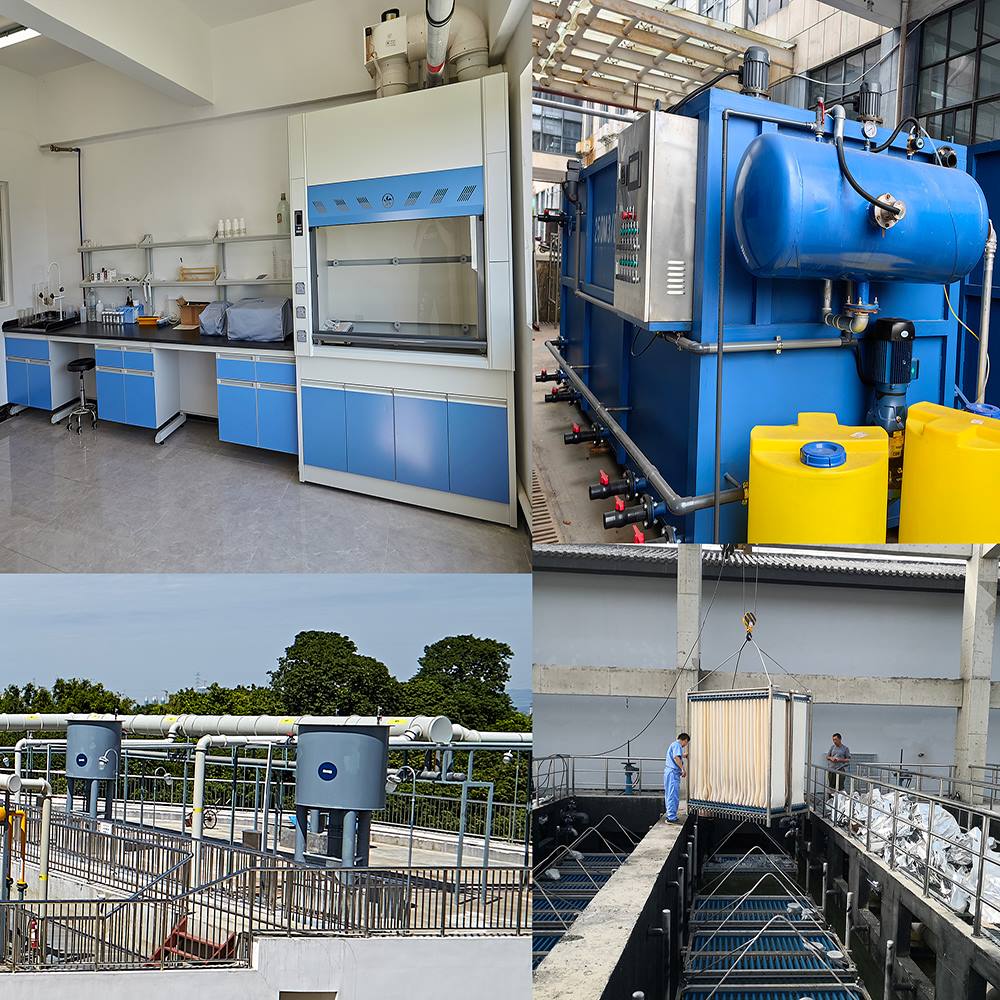
HINADA manufactures submerged MBR membrane modules. These modules are designed to be immersed in the mixed liquor, where they filter water while biomass remains in the tank. The modules are often arranged in cassettes or racks, making them easy to install, remove, and replace. Submerged MBR systems are used for municipal sewage treatment, industrial wastewater treatment, and water reuse. They are especially useful where space is limited, where discharge standards are strict, or where water must be reused for irrigation, toilet flushing, or industrial processes.
Fouling Control and Membrane Longevity
Fouling is the most common challenge in membrane systems. Organic matter, microorganisms, and inorganic precipitates can accumulate on the membrane surface and reduce permeability. If fouling is not controlled, energy consumption rises, cleaning frequency increases, and membrane life shortens. Manufacturers address fouling through several strategies. They optimize membrane pore size and surface chemistry. They design aeration systems that scour the membrane surface. They recommend pretreatment to remove oils, grit, and large debris. They provide cleaning protocols that use the right chemicals at the right concentration and temperature. They also use monitoring to detect fouling early, before it becomes severe.
HINADA has more than a decade of membrane manufacturing experience, which informs its approach to fouling control. The company understands that membranes are not isolated products. They are part of a system that includes tanks, pumps, blowers, valves, sensors, and controls. A membrane that performs well in one system may underperform in another if the hydrodynamics, aeration, or pretreatment are inadequate. This is why HINADA emphasizes integrated solutions rather than selling membranes as standalone commodities.
The second core technology pillar at HINADA is intelligent integrated wastewater treatment equipment. These are ready-to-install solutions for municipal, industrial, and decentralized applications. Instead of designing a treatment plant from scratch at every site, clients can select a packaged or containerized system that has been engineered, fabricated, and tested in a factory. The system is then transported to the site, connected to utilities, and commissioned. This approach reduces construction time, minimizes site disruption, and improves quality control.
Containerized MBR Systems and Packaged Wastewater Treatment Plants
Containerized MBR systems are a powerful example of integrated equipment. The entire treatment process, including biological tanks, membrane modules, blowers, pumps, controls, and sometimes disinfection, is housed inside one or more shipping containers. The containers can be shipped by truck, rail, or sea. Once on site, they are connected to inlet and outlet piping, power, and communications. Because the system is pre-assembled, it can be commissioned quickly. This is especially valuable for remote mining camps, construction sites, temporary worker camps, hotels, resorts, and rural communities that need reliable treatment without a large construction crew.
Packaged wastewater treatment plants are similar in concept but may use different shapes and materials. They can be buried underground, installed above ground, or placed in a building. They are often used for decentralized applications where central sewers are not available or not economically feasible. By treating wastewater close to the source, these systems reduce the risk of pollution and create opportunities for local water reuse. HINADA offers integrated packaged wastewater treatment systems alongside its membrane products, giving clients a single source for the core treatment process.
Intelligent Controls and Remote Monitoring
The word intelligent in intelligent integrated wastewater treatment equipment refers to automation and data. Modern systems use programmable logic controllers, human-machine interfaces, and sensors to monitor flow, pressure, temperature, dissolved oxygen, pH, turbidity, and membrane performance. The control system can adjust aeration, pumping, and chemical dosing automatically. It can also send alarms and data to remote operators. Remote monitoring is particularly useful for decentralized plants, where local staff may not have advanced technical training. Engineers can diagnose problems from a distance, guide maintenance, and optimize performance without traveling to the site.
Intelligent controls also improve energy efficiency. Aeration is often the largest energy consumer in a biological treatment plant. By controlling dissolved oxygen precisely, the system can reduce blower power while maintaining treatment performance. Pumping can be scheduled to avoid peak electricity tariffs. Membrane cleaning can be triggered by permeability trends rather than a fixed schedule, reducing chemical use and extending membrane life. These small improvements add up to significant operational savings over the life of a plant.
Dissolved Air Flotation and Reverse Osmosis in the Clean Water Chain
While HINADA is known for UF, MBR, and integrated wastewater treatment systems, it also manufactures dissolved air flotation systems, ultrafiltration systems, and industrial reverse osmosis systems. These technologies serve different but complementary roles in the clean water chain.
Dissolved Air Flotation Systems
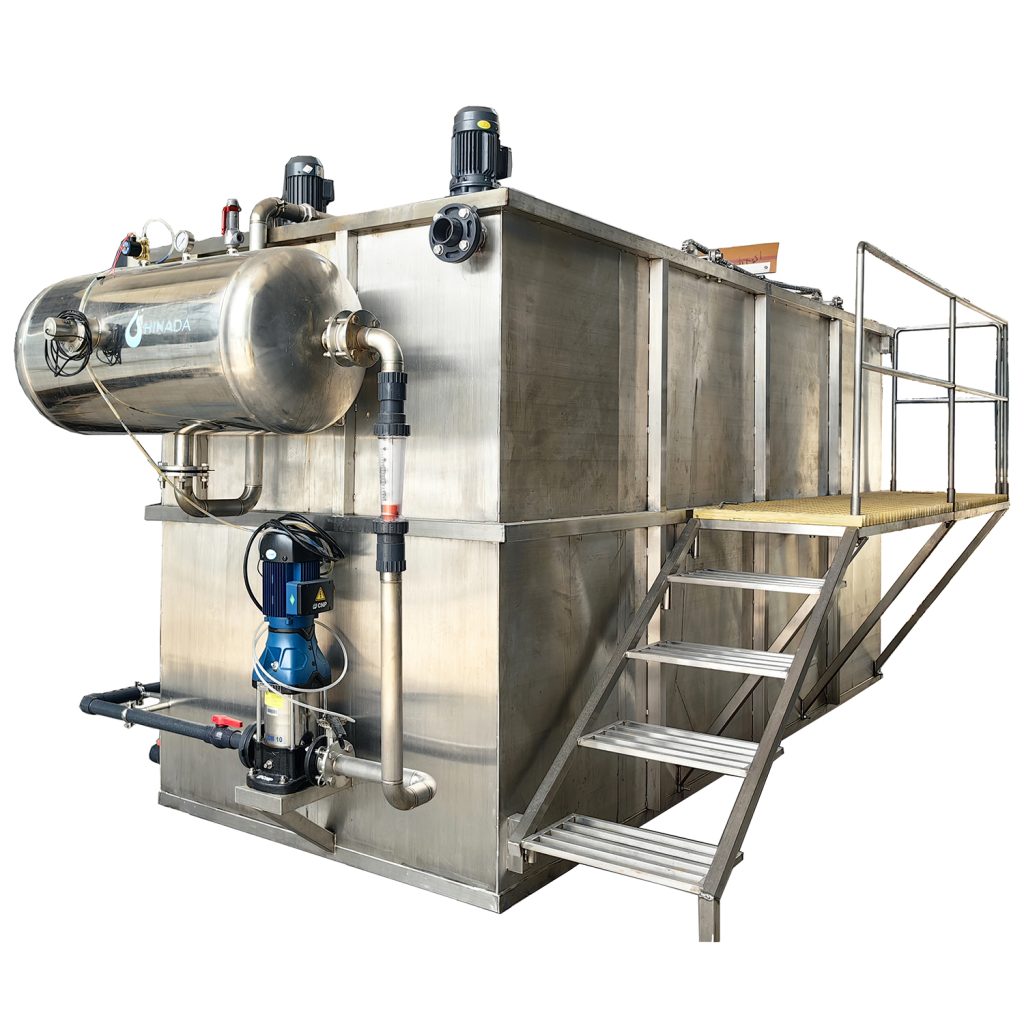
Dissolved air flotation, or DAF, is a water treatment process that removes suspended solids, oils, greases, and other low-density particles. The process works by dissolving air into water under pressure and then releasing the pressure in a flotation tank. Tiny air bubbles form and attach to particles, causing them to rise to the surface. The floating sludge is then removed by a skimming mechanism. DAF is widely used in industrial wastewater treatment, particularly in food processing, meat processing, dairy, paper, textile, and oil and gas industries. It is also used in municipal water treatment for algae removal and pretreatment.
DAF systems are often used before biological treatment or membrane filtration. By removing oils and suspended solids early, DAF reduces the load on downstream processes and protects membranes from fouling. This is a good example of how a wastewater treatment system manufacturer must think about the entire treatment train. A DAF unit may not be the most visible part of a plant, but it can be essential for reliable performance.
Ultrafiltration Systems
Ultrafiltration systems use hollow fiber membranes to remove particles, bacteria, and viruses. They can be used for drinking water production, wastewater reuse, and industrial process water. A typical UF system includes pretreatment, membrane racks, backwash pumps, air scour blowers, chemical cleaning equipment, and controls. The system is often skid-mounted for easy installation. UF is a robust barrier against microbial contamination, which makes it valuable in regions where source water quality is variable or where disinfection alone is not sufficient.
Industrial Reverse Osmosis Systems
Reverse osmosis, or RO, uses semi-permeable membranes to remove dissolved salts, metals, and small organic molecules. RO is used for desalination, boiler feed water, pharmaceutical water, food and beverage processing, and industrial wastewater reuse. Because RO membranes are sensitive to fouling and scaling, they require careful pretreatment. UF and MBR are often used as pretreatment for RO, creating a multi-barrier treatment train. HINADA provides industrial RO systems as part of its broader portfolio, allowing clients to integrate biological treatment, UF, and RO into a complete water reuse solution.
The Manufacturing Ecosystem Behind Reliable Treatment Systems
A wastewater treatment system manufacturer must maintain a complex manufacturing ecosystem. This includes membrane production lines, module assembly, pressure vessel fabrication, tank manufacturing, pipe welding, electrical panel assembly, control system programming, and quality testing. Each stage requires skilled workers, precise equipment, and strict quality control. HINADA describes a complete ecosystem from membrane research and development and component manufacturing to equipment fabrication and turnkey solution delivery. This ecosystem allows the company to control lead times, manage costs, and ensure compatibility between components.
Membrane Research and Development
Membrane research and development is the foundation of HINADA s product line. Researchers study polymer formulations, spinning conditions, pore structure, hydrophilicity, and mechanical properties. They test membranes for pure water flux, rejection rate, tensile strength, elongation, and chemical resistance. They also evaluate fouling resistance using model foulants such as bovine serum albumin, sodium alginate, and humic acid. This laboratory work is followed by pilot testing in real applications. The goal is to produce membranes that are not only high-performing in ideal conditions but also durable in the field.
Component Manufacturing and Equipment Fabrication
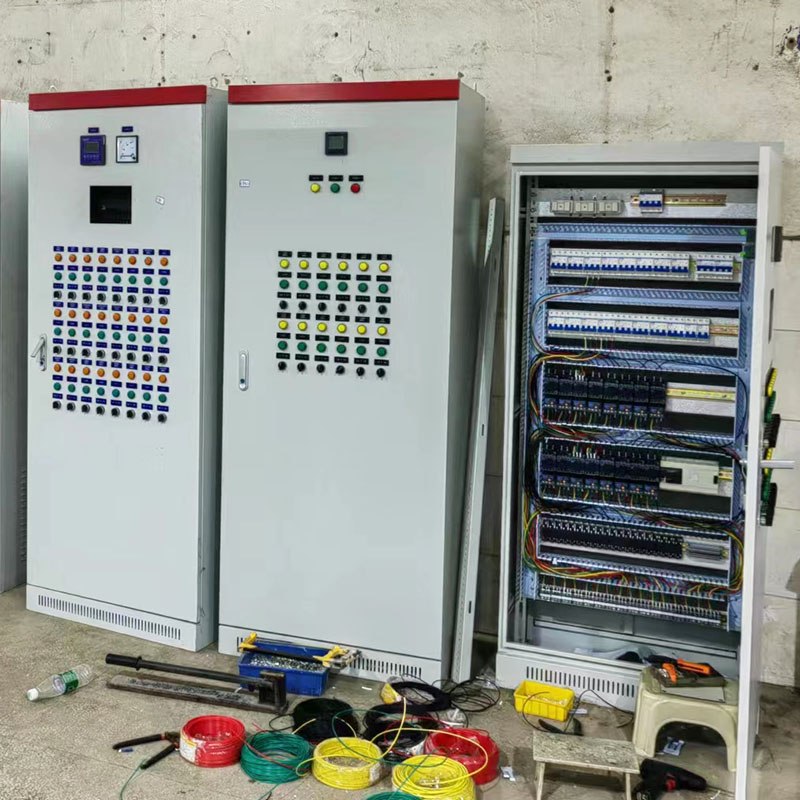
Component manufacturing includes the production of membrane fibers, module housings, end caps, potting materials, and seals. Equipment fabrication includes cutting, welding, machining, and assembling tanks, frames, skids, and containers. Quality control is critical at every step. Welds must be leak-tested. Electrical panels must be inspected. Pumps and blowers must be tested. Control systems must be simulated. When all components are manufactured under one roof or within a tightly managed supply chain, the manufacturer can identify and correct problems before shipment.
Quality Testing and Performance Validation
Before a system leaves the factory, it should be tested. Factory acceptance testing may include hydrostatic testing, electrical testing, functional testing of valves and instruments, and software testing. For membrane systems, the manufacturer may test flux, pressure drop, and integrity. For integrated plants, the manufacturer may run the system with clean water to verify flow and control logic. This testing reduces the risk of surprises during commissioning. It also provides baseline data that can be used later to evaluate performance.
Applications That Change Communities
Wastewater treatment manufacturers have an impact across many application fields. HINADA identifies several key areas: industrial wastewater treatment and reuse, municipal sewage treatment and water recycling, rural decentralized water supply and sanitation, and drinking water purification from surface water or groundwater. Each application has unique requirements, but all benefit from reliable equipment and thoughtful system design.
Industrial Wastewater Treatment and Reuse
Industry is one of the largest users of water and one of the largest producers of wastewater. Factories need water for cooling, cleaning, processing, and steam generation. They discharge wastewater containing organic matter, suspended solids, oils, heavy metals, and chemicals. Treating this wastewater is not only a regulatory requirement but also an economic opportunity. Water reuse can reduce intake costs, lower discharge fees, and improve the company s environmental reputation. MBR systems are particularly attractive for industrial reuse because they produce high-quality water that can be further treated with RO for boiler feed, cooling tower makeup, or process use.
Different industries require different solutions. Food and beverage plants often use DAF followed by biological treatment and MBR. Textile mills may need color removal and advanced oxidation. Pharmaceutical plants require careful management of active pharmaceutical ingredients. Mining operations need heavy metal removal and water recovery. A manufacturer with a broad product portfolio and engineering experience can tailor a treatment train to the specific industrial wastewater. HINADA serves clients in many countries, which gives it exposure to a wide range of industrial challenges.
Municipal Sewage Treatment and Water Recycling
Municipal sewage treatment protects public health and the environment. It removes organic matter, nutrients, and pathogens from domestic wastewater before discharge or reuse. Conventional activated sludge is widely used, but MBR is increasingly popular for new plants and upgrades. MBR produces a smaller footprint, better effluent quality, and easier reuse. In water-scarce cities, treated municipal wastewater can be reused for irrigation, landscaping, toilet flushing, and industrial cooling. This creates a drought-resistant water source and reduces pressure on freshwater supplies.
Municipal projects often involve large flows and long design lives. The manufacturer must provide equipment that is durable, easy to maintain, and supported by spare parts. HINADA s experience in membrane manufacturing and integrated equipment helps it serve municipal clients who need reliable performance over decades. The company s global reach also means it can support projects in different regulatory environments, from stringent European standards to rapidly developing regions in Asia and Africa.
Rural Decentralized Water Supply and Sanitation
Rural and remote communities often lack access to centralized sewers and treatment plants. Building large-scale infrastructure may be too expensive, too slow, or impractical due to geography. Decentralized systems offer an alternative. A packaged or containerized wastewater treatment plant can serve a village, a school, a clinic, a resort, or a small industrial park. It can be installed quickly, operated with modest training, and expanded as the community grows. This approach improves sanitation, reduces waterborne disease, and protects local water sources.
HINADA provides integrated packaged wastewater treatment systems that are well suited to decentralized applications. These systems can be designed for small flows and can include MBR or conventional biological treatment. They can be buried underground to save space or installed above ground for easy access. With intelligent controls and remote monitoring, they can be supported by technicians who are not permanently on site. This is especially important in rural areas where skilled labor may be scarce.
Drinking Water Purification
Clean drinking water is essential for human health. Surface water and groundwater can contain bacteria, viruses, protozoa, suspended solids, iron, manganese, arsenic, fluoride, and organic chemicals. Treatment may include coagulation, sedimentation, filtration, ultrafiltration, reverse osmosis, activated carbon, and disinfection. Hollow fiber UF membranes are particularly effective for removing microbial contaminants and suspended solids. They can be used as a standalone treatment or as pretreatment for RO. In regions where source water quality is unreliable, UF provides a consistent barrier that protects public health.
HINADA manufactures PVDF and PVC hollow fiber UF membranes that are used in drinking water purification. The company s participation in international water treatment exhibitions helps it share Chinese membrane technology with regions where clean water is most needed. This exchange of technology and knowledge is an important part of the global effort to achieve universal access to safe water.
Quality, Testing, and Performance Assurance
Quality is the foundation of a wastewater treatment system manufacturer s reputation. A system that fails in the field can cause environmental damage, regulatory penalties, and financial loss for the client. Manufacturers must therefore implement rigorous quality management systems. These may include ISO 9001 certification, standardized procedures, incoming material inspection, in-process inspection, final inspection, and traceability. Membranes must be tested for integrity and performance. Pumps and blowers must be tested for flow, head, and power consumption. Electrical panels must be tested for safety and functionality. Control software must be tested for logic and alarms.
Performance assurance also involves realistic guarantees. A manufacturer should not promise effluent quality that cannot be achieved with the given feed water and operating conditions. Instead, it should conduct pilot testing when necessary, define operating parameters, and provide clear performance guarantees. It should also provide operation and maintenance manuals, spare parts lists, and training. When problems occur, the manufacturer should respond quickly and work with the client to find a solution. This commitment to service is what turns a one-time equipment sale into a long-term partnership.
Membrane Integrity and Effluent Safety
Membrane integrity is critical for effluent safety. If a membrane fiber breaks or a seal leaks, contaminants can pass into the treated water. Manufacturers use several methods to detect and prevent integrity issues. Pressure decay tests, vacuum tests, and particle counting can identify breaches. Module design can include redundant barriers or isolation valves. In MBR systems, the biomass itself provides some additional treatment, but membrane integrity remains essential. Regular maintenance and monitoring help ensure that the system continues to meet discharge or reuse standards.
Corrosion Resistance and Material Selection
Wastewater is corrosive. It contains acids, alkalis, chlorides, sulfides, and microorganisms. Material selection is therefore critical. Tanks may be made of concrete, steel with protective coatings, stainless steel, or fiberglass-reinforced plastic. Pipes may be PVC, CPVC, PVDF, stainless steel, or high-density polyethylene. Membranes may be PVDF or PVC. The manufacturer must consider temperature, pH, chemical cleaning agents, and abrasion. Choosing the right materials increases service life and reduces maintenance costs.
Installation Support, Commissioning, and Training
HINADA provides a truly integrated solution to water and wastewater projects, from designation, supplying, installation support, and commissioning to training. This integrated approach is one of the most important roles of a wastewater treatment system manufacturer. Installation support ensures that equipment is correctly positioned, connected, and protected. Commissioning verifies that the system operates as designed. Training ensures that local operators understand the process, the equipment, and the safety procedures.
Installation Support
Installation support can take many forms. The manufacturer may provide detailed installation drawings, video calls, or on-site supervision. It may send technicians to guide mechanical and electrical installation. It may review piping layouts to avoid dead legs, air pockets, or excessive pressure drops. It may check alignment of pumps and blowers. It may verify that sensors are installed in representative locations. Good installation support prevents small errors that can cause big problems later. For containerized and packaged systems, installation is often simpler, but it still requires careful connection to utilities and proper commissioning.
Commissioning
Commissioning is the process of bringing the system from installation to stable operation. It includes checking electrical connections, testing valves and instruments, calibrating sensors, filling tanks, starting pumps and blowers, and adjusting control parameters. For biological systems, commissioning may include seeding with activated sludge and gradually increasing flow as biomass develops. For membrane systems, commissioning includes checking membrane integrity, setting backwash and cleaning cycles, and establishing baseline flux and pressure. A successful commissioning ensures that the plant can meet its design performance and that operators are confident in running it.
Training
Training is often overlooked but is essential for long-term success. Operators need to understand the treatment process, the function of each unit, normal operating ranges, alarm responses, and maintenance procedures. They need to know how to clean membranes, replace cartridges, calibrate sensors, and troubleshoot common problems. They also need to understand safety, including chemical handling, electrical safety, and confined space entry. HINADA provides training as part of its integrated solution, helping clients build local capacity and reduce reliance on external experts.
The Economics of Choosing a Specialist Manufacturer
Cost is always a consideration in water treatment projects. Clients may be tempted to choose the lowest-priced equipment, but the lowest initial cost is not always the lowest lifecycle cost. A cheap membrane may foul quickly, requiring more cleaning and earlier replacement. A poorly designed system may consume more energy or produce inconsistent effluent. A manufacturer that lacks support may leave the client struggling to find spare parts or technical advice. A specialist manufacturer can reduce these risks by providing optimized designs, reliable equipment, and long-term support.
Capital Expenditure vs Operating Expenditure
Water treatment projects involve both capital expenditure and operating expenditure. Capital expenditure includes equipment, civil works, installation, and commissioning. Operating expenditure includes energy, chemicals, labor, maintenance, and membrane replacement. A manufacturer can help clients find the right balance. For example, a more efficient blower may cost more upfront but save energy over time. A higher-quality membrane may last longer and reduce replacement costs. A well-designed pretreatment system may reduce fouling and cleaning costs. The goal is to minimize total cost of ownership, not just purchase price.
Modularity and Scalability
Modular systems offer economic advantages. They can be manufactured in a factory, which reduces on-site labor costs. They can be shipped in standard containers, which reduces transportation costs. They can be expanded by adding modules, which avoids overbuilding at the start. This scalability is valuable for growing communities, industrial parks, and temporary facilities. HINADA s containerized MBR systems and packaged wastewater treatment plants are examples of modular solutions that can be deployed quickly and expanded as needed.
Energy Efficiency
Energy is one of the largest operating costs in wastewater treatment. Aeration, pumping, and membrane scouring consume significant electricity. Manufacturers can reduce energy use through efficient equipment, variable frequency drives, precise dissolved oxygen control, and optimized membrane aeration. They can also recover energy from biogas produced in anaerobic digestion, although this is more common in large municipal plants. For smaller plants, solar power and energy storage can be combined with efficient treatment systems to reduce reliance on the grid. HINADA s intelligent integrated equipment includes controls that help optimize energy consumption.
Sustainability and the Circular Water Economy
Sustainability is no longer a niche concern. It is a central principle in water management. The circular water economy aims to reduce, reuse, and recover resources from wastewater. Instead of treating wastewater as waste, it is seen as a resource. Water can be reused. Nutrients such as nitrogen and phosphorus can be recovered. Biogas can be produced. Sludge can be converted into energy or soil conditioner. A wastewater treatment system manufacturer contributes to this circular economy by providing technologies that enable reuse and resource recovery.
Water Reuse
Water reuse is one of the most direct ways to increase water availability. Treated wastewater can be used for irrigation, industrial cooling, toilet flushing, groundwater recharge, and even indirect potable reuse with advanced treatment. MBR and UF systems produce high-quality water that is suitable for many reuse applications. Reverse osmosis can further remove salts and dissolved contaminants. By enabling reuse, manufacturers help communities and industries reduce their freshwater intake and discharge volumes.
Nutrient Recovery
Nitrogen and phosphorus are essential for agriculture but can cause eutrophication when discharged into water bodies. Treatment plants can recover these nutrients through processes such as struvite precipitation, ammonia stripping, and membrane concentration. The recovered nutrients can be used as fertilizer. This reduces the environmental impact of discharge and creates a valuable product. Manufacturers can integrate nutrient recovery into treatment trains, especially in municipal and industrial plants with high nutrient loads.
Energy Recovery
Wastewater contains organic matter that can be converted into biogas through anaerobic digestion. Biogas can be used to generate electricity and heat, reducing the plant s energy costs. In some cases, treatment plants can become energy-neutral or even energy-positive. While this is more feasible in large plants, smaller systems can also recover energy through heat exchangers or solar panels. Manufacturers can design systems that are compatible with anaerobic digestion and energy recovery, helping clients improve sustainability.
Global Reach and Local Impact
HINADA serves clients in over 75 countries across Asia, Africa, Europe, and the Americas. This global reach is impressive, but the real impact is local. Each project addresses a specific water challenge in a specific community or industry. A textile factory in Asia may reduce its water pollution. A municipality in Africa may provide safe sanitation to a growing town. A resort in the Americas may reuse water for irrigation. A rural village may gain access to clean drinking water. These local impacts add up to a global improvement in water quality and availability.
Adapting to Local Conditions
Water treatment is not one-size-fits-all. Local conditions vary widely. Temperature affects biological treatment and membrane performance. Water chemistry affects fouling and scaling. Power reliability affects equipment selection. Labor skills affect automation requirements. Regulations affect discharge limits. A manufacturer with global experience can adapt its designs to local conditions. HINADA s experience in different regions helps it understand these variables and provide appropriate solutions.
Technology Transfer and Capacity Building
International projects involve more than equipment. They involve technology transfer and capacity building. When a manufacturer provides training, documentation, and support, it helps local operators and engineers develop skills that remain in the community. This is especially important in regions where water treatment expertise is still developing. HINADA s participation in international exhibitions and its training programs contribute to this capacity building. By sharing knowledge, manufacturers help raise standards across the industry.
Common Misconceptions About Wastewater Treatment Manufacturers
There are several misconceptions about wastewater treatment system manufacturers. One is that they only sell equipment. In reality, they provide design, engineering, fabrication, installation support, commissioning, training, and after-sales service. Another misconception is that all manufacturers are the same. In reality, manufacturers differ in technology, quality, experience, and support. A manufacturer that specializes in membranes may have deep expertise in filtration but less experience in biological treatment. A manufacturer that specializes in packaged plants may be excellent for decentralized applications but less suited for large municipal projects. Clients should evaluate manufacturers based on their specific needs.
A third misconception is that imported equipment is always better than local equipment. In many cases, local or regional manufacturers can provide equivalent performance at lower cost and with faster support. Chinese manufacturers like HINADA have invested heavily in research and development and quality control. They now compete globally on technology, not just price. A fourth misconception is that wastewater treatment is only a cost. In reality, it can create value through water reuse, energy recovery, nutrient recovery, and improved public health. Manufacturers that understand this can help clients turn treatment into an opportunity.
The Future of Wastewater Treatment Manufacturing
The future of wastewater treatment manufacturing will be shaped by several trends. Digitalization will continue to transform how plants are monitored and operated. Sensors, cloud platforms, and artificial intelligence will enable predictive maintenance, real-time optimization, and remote support. Membrane technology will improve, with higher flux, better fouling resistance, and longer life. Energy efficiency will become even more important as energy prices rise and climate concerns grow. Modular and containerized systems will become more common, especially for decentralized applications. Water reuse and resource recovery will move from niche to mainstream.
Digitalization and Smart Water
Smart water systems use data to improve performance. Flow meters, pressure sensors, turbidity meters, and online analyzers provide continuous information. Software can analyze this data to detect anomalies, predict maintenance needs, and optimize energy use. For manufacturers, digitalization offers an opportunity to provide value-added services. Instead of simply selling equipment, they can offer monitoring, analytics, and performance guarantees. HINADA s intelligent integrated equipment is already moving in this direction, with controls and remote monitoring capabilities.
Advanced Materials and Membranes
Membrane research continues to advance. New polymers, nanocomposites, and surface modifications can improve permeability and fouling resistance. Ceramic membranes offer high chemical and thermal stability but are more expensive. Forward osmosis and membrane distillation are emerging technologies for specific applications. Manufacturers must invest in research and development to stay competitive. HINADA s focus on PVDF and PVC hollow fiber membranes provides a solid foundation, but ongoing innovation will be essential.
Decentralization and Resilience
Decentralized treatment is likely to grow. Centralized systems are efficient for dense urban areas, but they are vulnerable to pipe failures, power outages, and flooding. Decentralized systems can provide redundancy and resilience. They can be installed quickly and operated independently. They can also reduce the cost of pumping wastewater over long distances. Containerized MBR systems and packaged plants are well suited to this trend. As cities and communities seek more resilient water infrastructure, decentralized treatment will play a larger role.
Conclusion: Clean Water Is a Team Effort
Clean water is not produced by a single company, technology, or policy. It is the result of a team effort involving governments, utilities, industries, engineers, operators, communities, and manufacturers. The wastewater treatment system manufacturer plays a critical role in this team. It provides the technology, equipment, and expertise that turn polluted water into a safe and valuable resource. It designs systems that protect public health, reduce environmental damage, and enable water reuse. It supports installation, commissioning, and training so that plants can operate reliably for years.
HINADA Water Treatment Tech Co., Ltd. is an example of a manufacturer that has embraced this role. Founded in 2012 in Guangzhou, China, and later expanding to Chenzhou, Hunan Province, HINADA has grown into a globally recognized manufacturer of wastewater treatment equipment, hollow fiber ultrafiltration membranes, submerged MBR membrane modules, integrated packaged wastewater treatment systems, and DAF systems. The company serves clients in over 75 countries and offers a complete ecosystem from membrane research and development to turnkey solution delivery. Its two core technology pillars, hollow fiber UF and MBR membranes for precise physical separation, and intelligent integrated wastewater treatment equipment for municipal, industrial, and decentralized applications, address some of the most pressing water challenges of our time.
The role of a wastewater treatment system manufacturer will only become more important in the coming decades. As populations grow, industries expand, and climate change alters water availability, the world will need more efficient, resilient, and sustainable treatment solutions. Manufacturers that invest in research, quality, service, and global collaboration will help meet this need. They will not only sell equipment but also build capacity, share knowledge, and create partnerships that last. In doing so, they will contribute to a future where clean water is available to more people, ecosystems are protected, and the circular water economy becomes a reality.