TIPS for Biological Treatment without Testing Instruments
May 06, 2026
TIPS for Biological Treatment without Testing Instruments
For a small wastewater treatment plant without testing instruments, how to judge the health of cultivated bacteria based on water color, sediment, and touch?
Without instruments, sensory methods (look, smell, touch) are common on-site empirical techniques to assess activated sludge (bacteria culture) health. Although not as precise as data, they allow quick identification of problem trends.
The logic below uses color, sediment, and touch and applies to aerobic activated sludge processes (e.g., AO, SBR, etc.).
1. Color: The most intuitive health indicator
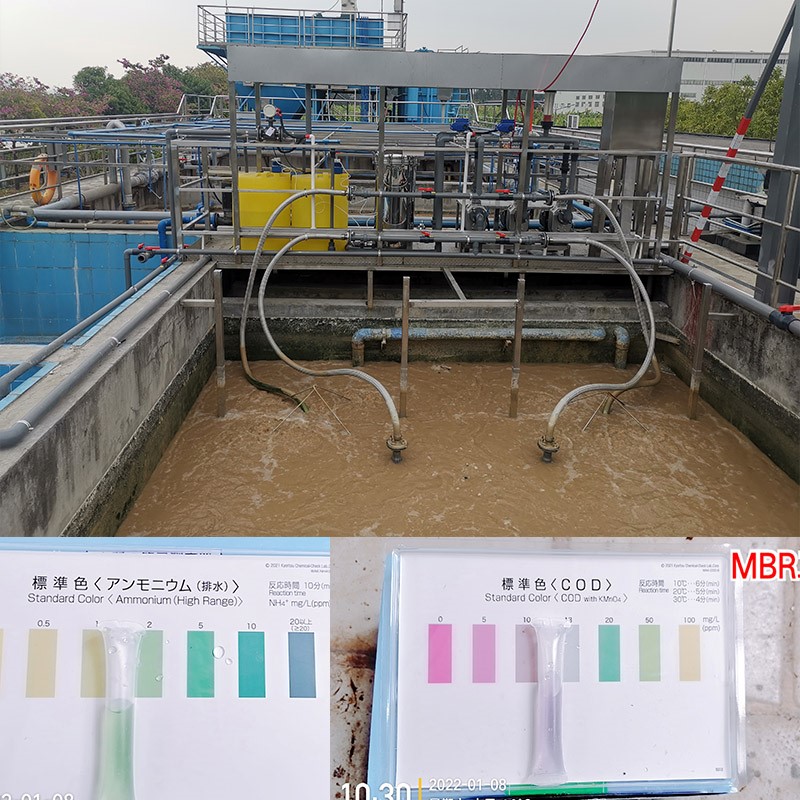
Under normal conditions, healthy bacteria (activated sludge) appear tea-brown or earth-brown with an earthy, musty smell (not foul).
Color
Possible Cause
Judgement
Yellow-brown / Earth-brown
Good bacterial activity, adequate DO
Good
Dark brown / Black
Low DO (hypoxia), or sludge decay
Bad
Gray-white / Pale yellow
Excess DO, or very low organic load (sludge self-oxidation)
Bad
Greenish
Algae bloom (usually sunlight exposure, long retention)
Fair (may affect effluent SS but not necessarily bacteria)
Key point: Look at the color of the mixed liquor in the aeration tank. If black → increase aeration immediately. If pale → reduce aeration or increase influent load.
2. Sediment: Use a beaker or clear bottle for a 30‑minute settling test
No instrument? Take a 2‑liter transparent plastic bottle or beaker of mixed liquor from the aeration tank and let it settle for 30 minutes.
2.1 Settling speed and sludge interface
Healthy sludge: After 30 min, clear interface between sludge and water, clear supernatant, sludge volume about 30‑40% (SV30 = 30‑40%).
Bulking sludge (bad): Small/fluffy flocs do not settle, or settle very slowly; after 30 min the interface is fuzzy, sludge volume >80%.
Aged sludge (bad): Settles very fast – reaches bottom in 5‑10 minutes, but supernatant has fine floating flocs resembling "fine sand".
2.2 Supernatant condition
Crystal clear → Good sludge, good settleability
Turbid (like muddy water) → Sludge deflocculation or high organic shock load
Many fine flocs remaining in suspension → Sludge aging or excessive aeration breaking flocs
Scum / floating sludge with bubbles → Denitrification or sludge putrefaction
2.3 Floc morphology (observe with naked eye or phone magnifier)
Healthy: Large flocs, distinct edges, granular appearance
Bad: Very fine flocs, cloudy / diffused shape
3. Touch: Feel the sludge texture with fingers
Take a small amount of settled sludge from the bottom and gently rub it between fingers (wear gloves or wash hands thoroughly afterward).
Healthy sludge: Smooth, slightly gritty, loose, not sticky. When gently rubbed, flocs break apart but don't turn into paste.
Unhealthy indications:
Sticky, slimy → Likely filamentous bulking.
Dry, coarse/gritty → Too much inorganic matter or sand, low active biomass.
Watery mud without any granular feel → Severely dispersed sludge or over‑aged.
⚠️ Note: Smell your fingers after touching – healthy sludge smells like earth. Foul or rotten egg smell indicates anaerobic sludge decay.
4. Auxiliary judgement: Smell
Normal: Slight earthy musty odour
Foul (hydrogen sulfide, rotten eggs) → Severe hypoxia or sludge decay
Sour odour → Overload of organic matter (acidification)
5. If you have no instruments, build these three habits
Do a 30‑minute settleability test every day (same time, same duration)Record sludge volume trend and whether supernatant becomes turbid. Trend is more important than a single reading.
Color memory ruleBrown → good; Black → low DO; White/pale → over‑aeration or low load.
Compare influent and effluent colourDark influent does not mean bad bacteria, but dark / foul effluent definitely indicates a problem.
Quick reference table
Sensory observation
Judgement
Action
Brown colour, settles well, gritty/loose feel
✅ Good bacteria
Maintain current operation
Black colour, foul smell, turbid supernatant
❌ Low DO or decay
Increase aeration, waste some sludge
Pale/white colour, very slow settling, clear supernatant
❌ Sludge bulking
Check for filaments; add a little chlorine (if allowed) or raise DO
Earth-brown but many fine flocs in supernatant
❌ Over‑aged sludge
Waste more sludge (reduce SRT)
Earth-brown but supernatant muddy / turbid
❌ Overload (high F/M)
Reduce influent flow or increase aeration
Final note: Sensory methods can tell you "good vs bad", but they cannot give precise quantities. If your budget is extremely limited, at least buy a portable dissolved oxygen meter (a few hundred yuan) and a graduated cylinder – they will greatly improve accuracy. The most common risks during bacteria cultivation are prolonged hypoxia or excessive aeration, which are hard to detect perfectly by eye and hand alone.
Hinada is the leading manufacturer of WWTP Equipments and Solutions provider, further inquiry or questions please contact with us.
Read More