How to Choose the Right Wastewater Treatment Supplier in China
Sep 24, 2026
How to Choose the Right Wastewater Treatment Supplier in China
Choosing a suitable wastewater treatment supplier in China is not just about buying equipment. It is about selecting a partner who understands your wastewater and treatment targets, designs an appropriate treatment process that meets discharge standards while staying within budget, and supports your team through installation, commissioning, and training on operation.
For buyers considering compact or decentralized treatment, Hinada is a China-based wastewater treatment manufacturer and solution provider for all types of industrial wastewater and sewage treatment applications.
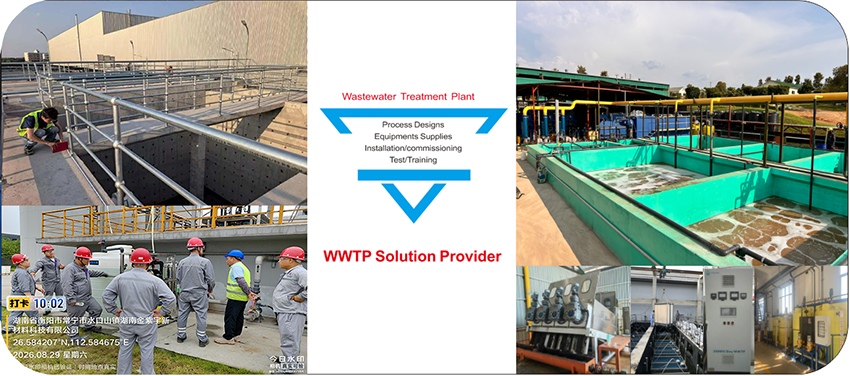
Wastewater Treatment Plant
Define Your Project Requirements Before Requesting a Quotation
Prepare the following information before getting a proposal:
Information
What to Provide
Why It Matters
Wastewater source
Domestic sewage, food processing, printing, metal finishing, or mixed wastewater
Determines likely pollutants and treatment options
Design flow
Average daily flow, peak hourly flow, and operating hours
Supports tank, pump, and equalization sizing
Water analysis
COD, BOD, TSS, pH, ammonia, total nitrogen, total phosphorus, oil and grease
Establishes biological and physical-chemical treatment needs
Special contaminants
Heavy metals, solvents, salinity, or other process-specific pollutants
Identifies treatment limitations and pretreatment requirements
Effluent target
Applicable discharge limits or intended reuse specifications
Defines the required treatment performance
Site conditions
Available space, temperature, elevation, access, and utilities
Affects layout, equipment selection, and installation
Operating resources
Operator availability, electricity cost, chemicals, and sludge disposal options
Helps evaluate practical operating costs
Buyer tip: Provide representative laboratory results, including known production variations. For complex industrial wastewater treatment projects, ask whether treatability testing or pilot trials are needed before final design.
Choose Treatment Process Expertise, Not Just a Product Catalog
The right wastewater treatment manufacturer should explain why a treatment process suits your wastewater—and where its limitations are.
Hinada’s engineering team is ready to design a cost-effective and reliable wastewater treatment solution for you.
Frequently Asked Questions
How do I verify a wastewater treatment manufacturer in China?
Check its business registration, confirm the factory location, request a live production tour, and review relevant project references. For significant purchases, consider an independent factory audit and pre-shipment inspection.
Can a containerized MBR system treat industrial wastewater?
It can treat suitable biodegradable industrial wastewater, often with pretreatment, coagulation, flocculation, and DAF system for excessive oil and suspended solids. Biological treatment + MBR filtration can provide high-quality effluent, while RO system may be required for high salinity, heavy metals, or poor biodegradability. Additional treatment or a different process may be required depending on the wastewater characteristics.
Is a mobile WWTP ready to operate immediately after delivery?
Not necessarily. A mobile WWTP or containerized plant still requires site connections, equipment checks, and commissioning. Biological processes also need suitable biomass and a stabilization period.
Can treated wastewater be reused?
Potentially, but reuse depends on the treated water quality and local requirements. For irrigation and toilet flushing applications, MBR permeate may be sufficient to meet the required water quality. For cooling towers or other industrial processes, further treatment may be required.
What should I send HINADA to request a quotation?
Send the project location, wastewater source, average and peak flow, laboratory analysis, discharge or reuse targets, available space, and utility details. Include your required delivery schedule and installation support needs.
Read More