< img height="1" width="1" src="https://www.facebook.com/tr?id=957592723535502&ev=PageView&noscript=1"/>
inquiry_img
Leave A Message
If you are interested in our products and want to know more details,please leave a message here,we will reply you as soon as we can.
submit
Building B1, BYC-AI Industrial District, Chenzhou , Chenzhou Pilot Free Trade Zone, Hunan, China
whatsapp. y in
banner

industrial wastewater treatment

Home

industrial wastewater treatment

  • How to Choose the Right Wastewater Treatment Supplier in China
    How to Choose the Right Wastewater Treatment Supplier in China
    Sep 24, 2026
    How to Choose the Right Wastewater Treatment Supplier in China Choosing a suitable wastewater treatment supplier in China is not just about buying equipment. It is about selecting a partner who understands your wastewater and treatment targets, designs an appropriate treatment process that meets discharge standards while staying within budget, and supports your team through installation, commissioning, and training on operation.   For buyers considering compact or decentralized treatment, Hinada is a China-based wastewater treatment manufacturer and solution provider for all types of industrial wastewater and sewage treatment applications.   Wastewater Treatment Plant    Define Your Project Requirements Before Requesting a Quotation   Prepare the following information before getting a proposal:   Information What to Provide Why It Matters Wastewater source Domestic sewage, food processing, printing, metal finishing, or mixed wastewater Determines likely pollutants and treatment options Design flow Average daily flow, peak hourly flow, and operating hours Supports tank, pump, and equalization sizing Water analysis COD, BOD, TSS, pH, ammonia, total nitrogen, total phosphorus, oil and grease Establishes biological and physical-chemical treatment needs Special contaminants Heavy metals, solvents, salinity, or other process-specific pollutants Identifies treatment limitations and pretreatment requirements Effluent target Applicable discharge limits or intended reuse specifications Defines the required treatment performance Site conditions Available space, temperature, elevation, access, and utilities Affects layout, equipment selection, and installation Operating resources Operator availability, electricity cost, chemicals, and sludge disposal options Helps evaluate practical operating costs   Buyer tip: Provide representative laboratory results, including known production variations. For complex industrial wastewater treatment projects, ask whether treatability testing or pilot trials are needed before final design.   Choose Treatment Process Expertise, Not Just a Product Catalog The right wastewater treatment manufacturer should explain why a treatment process suits your wastewater—and where its limitations are. Hinada’s engineering team is ready to design a cost-effective and reliable wastewater treatment solution for you.   Frequently Asked Questions   How do I verify a wastewater treatment manufacturer in China? Check its business registration, confirm the factory location, request a live production tour, and review relevant project references. For significant purchases, consider an independent factory audit and pre-shipment inspection.   Can a containerized MBR system treat industrial wastewater? It can treat suitable biodegradable industrial wastewater, often with pretreatment, coagulation, flocculation, and DAF system for excessive oil and suspended solids. Biological treatment + MBR filtration can provide high-quality effluent, while RO system may be required for high salinity, heavy metals, or poor biodegradability. Additional treatment or a different process may be required depending on the wastewater characteristics.   Is a mobile WWTP ready to operate immediately after delivery? Not necessarily. A mobile WWTP or containerized plant still requires site connections, equipment checks, and commissioning. Biological processes also need suitable biomass and a stabilization period.   Can treated wastewater be reused? Potentially, but reuse depends on the treated water quality and local requirements. For irrigation and toilet flushing applications, MBR permeate may be sufficient to meet the required water quality. For cooling towers or other industrial processes, further treatment may be required.   What should I send HINADA to request a quotation? Send the project location, wastewater source, average and peak flow, laboratory analysis, discharge or reuse targets, available space, and utility details. Include your required delivery schedule and installation support needs.  
    Read More
  • Wastewater Treatment and Water Reuse System for polyester textile dyeing & finishing factory
    Wastewater Treatment and Water Reuse System for polyester textile dyeing & finishing factory
    Sep 21, 2026
    Wastewater Treatment and Water Reuse System for polyester textile dyeing & finishing factory  Project: Industrial Wastewater Treatment and Water Reuse Plant Application: Black Fabric / Polyester Textile Dyeing & Finishing Design Capacity: 800 m³/day   The proposed MBR system is designed to treat wastewater generated from textile production processes and produce treated water suitable for reuse within the production process, while achieving the required treated water quality and the minimum overall water recovery specified by the Client. Hinada proposes a technically robust, reliable, energy-efficient, and economically optimized textile wastewater treatment and water reuse system, based on its experience with wastewater generated from polyester textile dyeing, disperse dyeing, weight reduction, fabric washing, and finishing processes.   Project Background   The Client is developing a textile manufacturing facility producing black polyester fabric.The production facility will include, among other processes: Polyester weight reduction; Disperse dyeing; Fabric washing; Fabric finishing; Associated utility and auxiliary services. Wastewater Treatment and Water Reuse System for Polyester Textile Dyeing Treatment Process Design   Hinada shall develop and propose a complete polyester textile wastewater treatment process suitable for the identified wastewater characteristics and required water reuse application.   The process may include, as applicable: Preliminary screening; Coarse / fine screening; Equalization; pH adjustment; Chemical coagulation; Flocculation; DAF; Primary clarification; Advanced oxidation, where justified; Biological treatment (Anoxic / aerobic treatment); Secondary clarification or MBR filtration; Tertiary filtration; Multimedia filtration; Activated carbon; Ultrafiltration (UF); Nanofiltration (NF), where applicable; Post-treatment / polishing; Disinfection, where applicable. Textile Wastewater Treatment Process MBR Application Dyeing Wastewater   Hinada is a wastewater treatment equipment manufacturer and water treatment solution provider, specializing in textile wastewater treatment, MBR, UF, DAF, RO, and customized water and wastewater treatment solutions.
    Read More
  • HINADA MBR Membranes for Wastewater Treatment
    HINADA MBR Membranes for Wastewater Treatment
    Sep 16, 2026
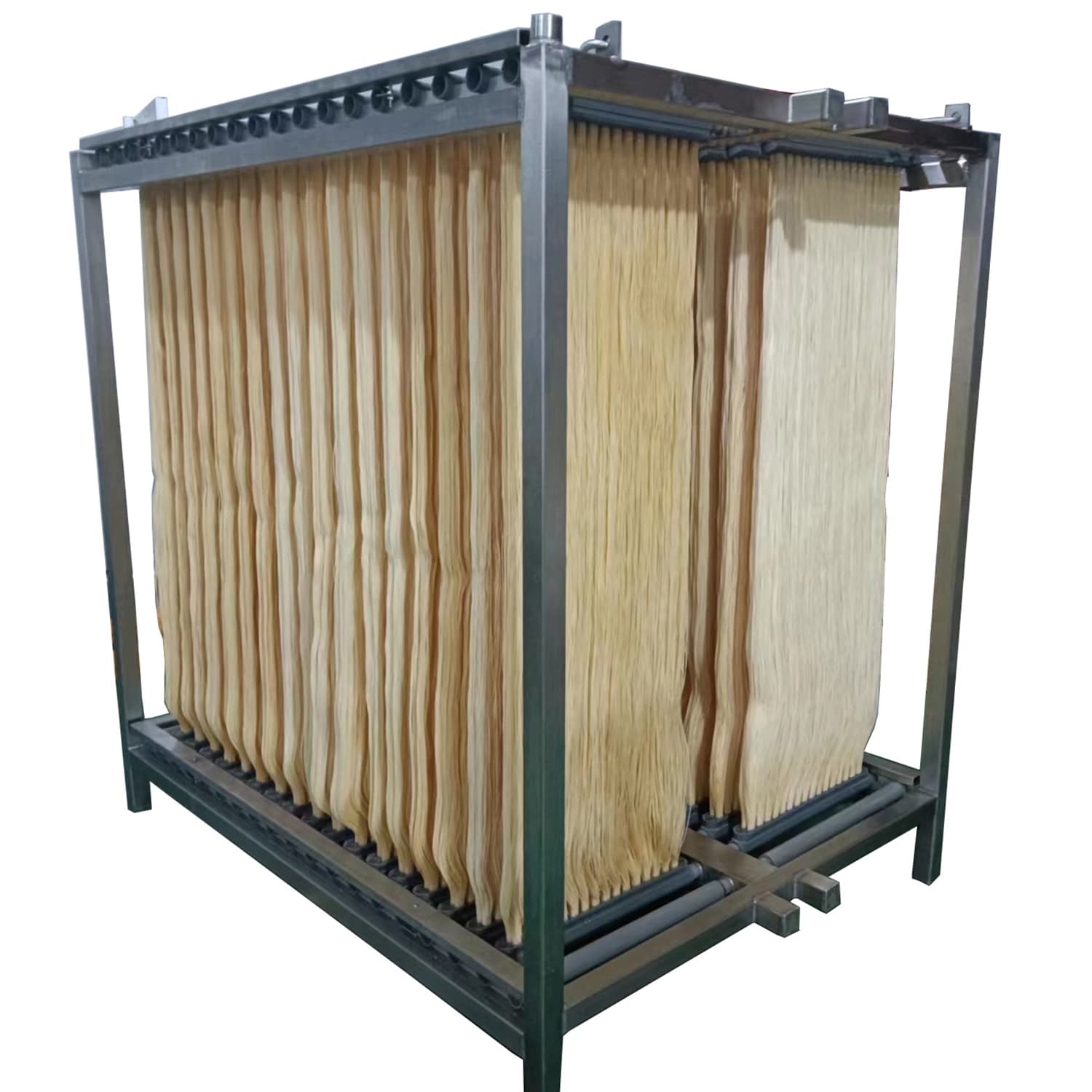
    HINADA MBR Membranes for Wastewater Treatment HINADA MBR membranes are submerged hollow-fiber PVDF membrane modules used in MBR systems for industrial wastewater treatment, municipal sewage treatment, and water reuse. By combining membrane filtration with biological treatment, they separate treated water from activated sludge, producing low-suspended-solids effluent in a compact treatment process. biorreactores de membrana MBR destinados a plantas de tratamiento de aguas residuales industriales y HINADA supplies MBR membrane modules for packaged wastewater treatment plants, containerized MBR systems, municipal sewage treatment, and suitable pretreated industrial wastewater applications. Key benefits: Efficient separation: Effectively separates biomass and suspended solids. Compact footprint: Eliminates the need for a conventional secondary clarifier, helping reduce the space required. Flexible and modular: Suitable for new wastewater treatment plants and existing WWTP upgrades. Easy integration: Compatible with automated filtration, backwashing, and chemical cleaning systems. MBR membrane selection and operating conditions are tailored to wastewater characteristics, treatment capacity, and effluent requirements. Additional pretreatment or post-treatment may be necessary for specific industrial wastewater or water reuse applications. Hinada is a Chinese manufacturer of MBR membranes and wastewater treatment systems, providing PVDF hollow-fiber membrane modules and customized MBR solutions for industrial and municipal wastewater treatment. Our MBR solutions are designed to provide high-quality effluent, a compact footprint, and convenient operation and maintenance based on specific project requirements. For MBR membrane selection, WWTP upgrades, or wastewater treatment projects, please contact HINADA Water Treatment.
    Read More
  • How a Dissolved Air Flotation (DAF) System Works for Wastewater
    How a Dissolved Air Flotation (DAF) System Works for Wastewater
    Sep 14, 2026
    How a Dissolved Air Flotation (DAF) System Works for Wastewater First and foremost, a Dissolved Air Flotation (DAF) system is a highly efficient water clarification technology. Its primary purpose is to separate suspended solids (TSS), fats, oils, grease (FOG), and other low-density particles from a liquid stream.   In essence, a DAF system is an important part of many Wastewater Treatment Plant (WWTP) pretreatment stages. It tackles problematic contaminants such as high TSS levels and fats, oils, and grease (FOG) at an early stage. By removing these pollutants early, a DAF system can significantly reduce the load on downstream biological treatment processes, help optimize chemical consumption, and improve the overall performance of the wastewater treatment process. The DAF process can be broken down into four essential stages: ⚙️ 1. Chemical Coagulation and Flocculation (Pretreatment) Before the wastewater enters the main DAF tank, coagulants such as aluminum or iron salts and flocculants such as polyelectrolytes are typically added. These chemicals neutralize electrical charges and cause fine suspended particles and colloidal matter to bind together, forming larger, fluffy agglomerates called “flocs.” This step is crucial because larger flocs are much easier for the microbubbles to attach to during the flotation process. 💨 2. Dissolution and Release of Air (Bubble Generation) This is the heart of the DAF system — creating a large number of extremely fine bubbles. Dissolution (Pressurization) A portion of the clarified effluent or clean water is diverted into a pressure vessel called the saturation tank or air-dissolving tube. Compressed air is injected into this stream under pressure, typically around 4–6 bar. At this elevated pressure, a significant amount of air dissolves into the water, forming a pressurized, air-rich solution. Release (Depressurization) The pressurized, air-rich water is then discharged through special pressure-release nozzles into the main DAF flotation tank, which is normally at atmospheric pressure. The sudden pressure drop causes the dissolved air to come out of solution and form a large number of microscopic bubbles, typically around 20–40 micrometres in diameter. These microbubbles provide the flotation force required for efficient solid-liquid separation.   ⬆️ 3. Bubble Attachment and Flotation (Separation) In the contact zone of the DAF tank, the released microbubbles mix with the chemically pretreated wastewater. The microbubbles attach to the surfaces of flocs, oil droplets, and other suspended particles. Once attached, the overall density of the bubble-particle agglomerates becomes lower than that of water, causing them to rise to the surface under buoyancy. This creates a floating layer of sludge, commonly called the “float” or “scum,” on the surface of the DAF tank. At the same time, the clarified water remains below the floating layer and moves toward the treated-water collection area.   🧹 4. Sludge Skimming and Collection (Final Clarification) Sludge Skimming The accumulated floating sludge layer is continuously or intermittently removed from the surface by chain-driven or spiral skimmers. The collected sludge is directed into a sludge trough and can then be sent for further sludge dewatering, treatment, or disposal, depending on the project requirements. Clear Effluent Withdrawal The clarified water remains in the lower portion of the flotation tank. It is collected uniformly through a system of collection pipes or launders and discharged from the DAF unit. Depending on the overall treatment process, the clarified effluent can then proceed to biological treatment, MBR, UF, RO, or other downstream treatment processes, or be reused when the required water quality is achieved. 💡 Key Advantages and Typical Applications DAF is especially effective for contaminants whose density is close to or less than that of water, including: Fats, oils, and grease (FOG) Suspended and colloidal solids Algae and fibers Emulsified oils Other low-density particles With appropriate chemical conditioning and proper system design, DAF can achieve high removal efficiency. Actual performance depends on wastewater characteristics, chemical dosage, hydraulic loading, air-to-solids ratio, and overall process design. Common Applications Include: Industrial wastewater – food processing, dairy, meat processing, pulp and paper, petrochemical, and metal finishing industries. Municipal wastewater – as a primary treatment step or for sludge thickening. Drinking water treatment – for removing algae, turbidity, and other suspended particles. Oil-water separation – for applications such as refinery and marine wastewater treatment. In summary, a Dissolved Air Flotation (DAF) system combines chemical conditioning, pressure-dissolved air, and physical flotation to provide a robust and widely adaptable solution for solid-liquid separation in wastewater treatment. The effectiveness of DAF makes it an important pretreatment technology for many industrial wastewater treatment applications, particularly where high levels of TSS, oil, grease, and floating or colloidal solids need to be removed before downstream treatment. DAF Wastewater Treatment Solutions from Hinada At Hinada Water Treatment Tech Co., Ltd., we are more than just an equipment supplier. We provide water and wastewater treatment solutions based on each customer's specific water quality, treatment capacity, and project requirements. Our DAF systems can be integrated with other wastewater treatment technologies, including MBR membranes, UF systems, RO systems, sludge dewatering, and packaged wastewater treatment systems, to create a complete and efficient treatment process. With expertise in wastewater treatment equipment and membrane technologies, Hinada supports customers from process design and equipment manufacturing to installation and commissioning, providing practical solutions for industrial and municipal wastewater treatment projects. To discuss how a DAF system can be integrated into your wastewater treatment process, contact the Hinada team to discuss your project requirements.
    Read More
  • Case Study MBR Membrane Replacement for Photoresist Novel Sensitive Fine Chemicals Project
    Case Study MBR Membrane Replacement for Photoresist Novel Sensitive Fine Chemicals Project
    Sep 21, 2026
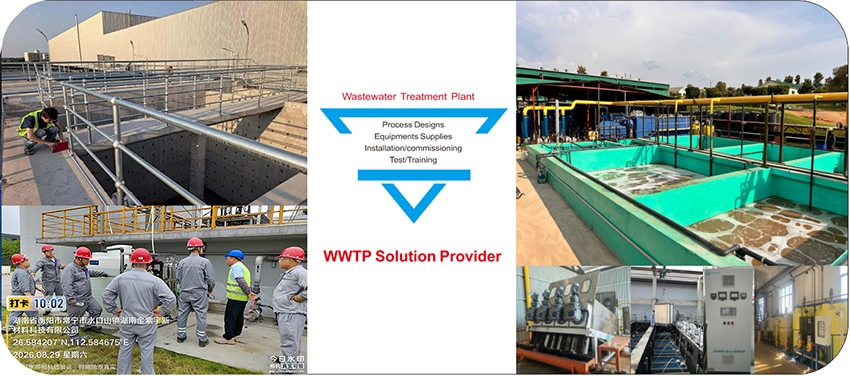
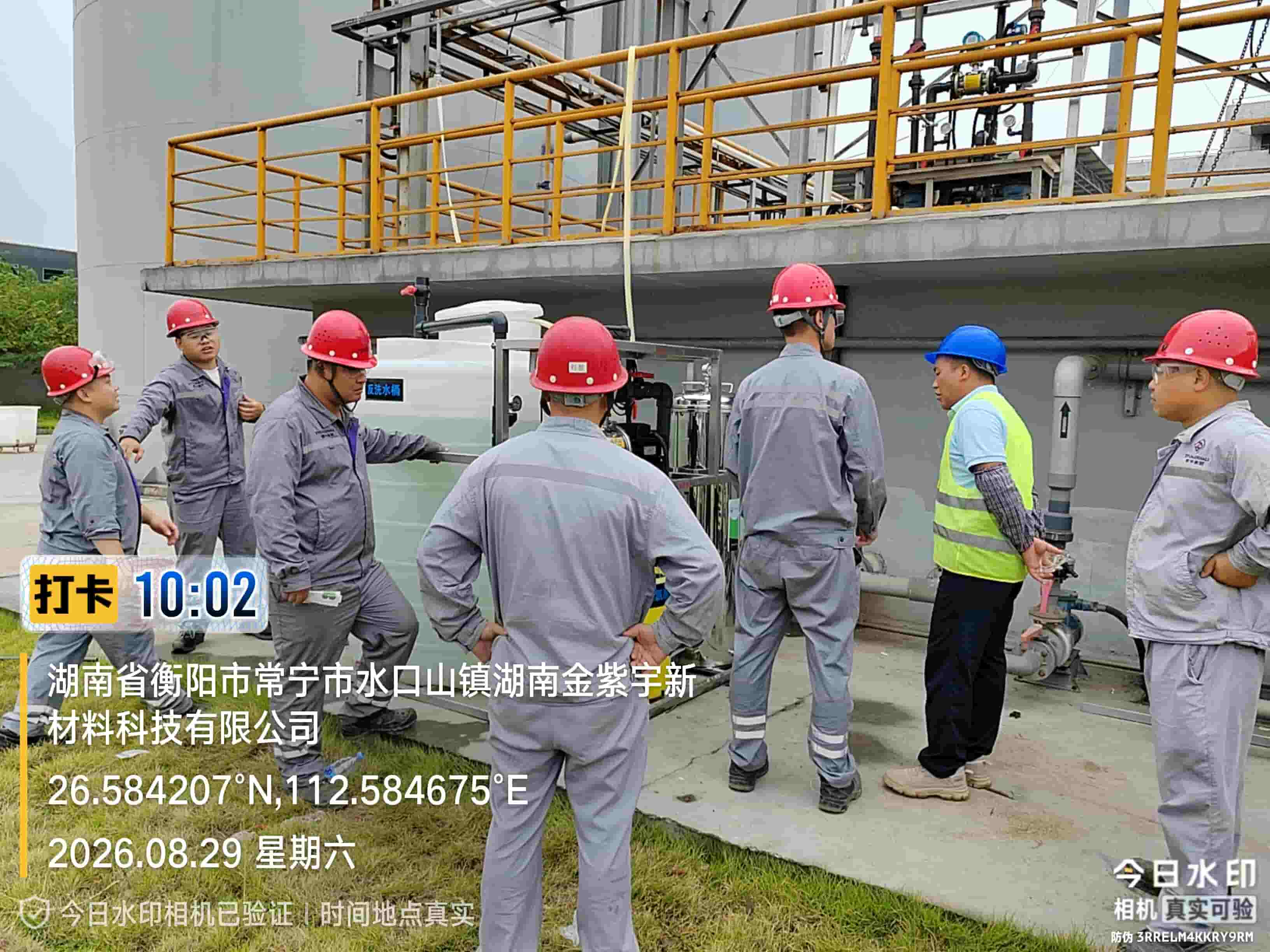
    Case Study MBR Membrane Replacement for Photoresist Novel Sensitive Fine Chemicals Project     1. Project Background   Hunan Jinziyu New Material Technology Co., Ltd. was established in June 2021 and is located in Shuikoushan Industrial Park, Changning City, Hengyang, Hunan Province. It is a national high-tech enterprise jointly founded by Hunan Jinhua Technology Group and the returned overseas Chinese Ph.D. team led by Dr. Shi Aibin.   Photoresist, as a strategic emerging material, is a critical material for manufacturing fine electronic circuit patterns and is one of the most technologically demanding fine chemical products. The wastewater generated during its production is complex, containing photoresist residues, organic solvents, other refractory organics, and acid/alkaline substances, making photoresist wastewater treatment extremely challenging.   To ensure environmental compliance and achieve green production, Jinziyu New Material set high standards for its fine chemical wastewater treatment system. Case Study MBR Membrane Replacement for Photoresist Novel Sensitive Fine Chemicals Project   2. Project Requirements and Challenges   After the photoresist project went into production, the wastewater treatment system adopted the MBR (Membrane Bioreactor) process as the core of biochemical treatment. With a microfiltration pore size of 0.1–0.4 μm, the MBR membrane effectively retains macromolecular organics and suspended solids, keeping activated sludge completely within the reactor and thoroughly solving solid-liquid separation issues.   However, photoresist production wastewater presents the following distinct characteristics, which pose severe challenges to the MBR membrane system:   High concentration of organic pollutants: The wastewater contains high concentrations of COD from photoresist residues and developing solutions, making biodegradation difficult.   Complex composition and shock load: With multiple organic solvents and fine chemical residues, the water quality fluctuates greatly, demanding high shock-load resistance from the membrane system.   High membrane fouling risk: Macromolecular organics and colloids in the wastewater easily adhere to the membrane surface, causing pore clogging and fouling, leading to flux decline and increased transmembrane pressure.   After a period of operation, the original MBR membrane modules, having long treated high-concentration and high-viscosity photoresist wastewater, suffered from significant flux decline, increased cleaning frequency, and unstable effluent quality.   3. Solution In response to the actual conditions of Jinziyu’s photoresist wastewater treatment system, Hinada assembled a professional technical team to conduct an on-site assessment and formulated and implemented a targeted MBR membrane replacement plan.   3.1 System Design and Membrane Selection Hinada's technical team selected compatible PVDF (polyvinylidene fluoride) hollow fiber MBR membrane modules that fit the existing membrane frame dimensions at the Jinziyu site.   PVDF material offers excellent chemical resistance and mechanical strength, making it suitable for wastewater with complex chemical compositions and helping ensure long-term stable operation of the industrial MBR membrane system.   3.2 Installation Implementation   New membrane installation: The selected PVDF hollow fiber MBR membrane modules were precisely installed onto the original frames.   System commissioning: After installation, water flow testing, air tightness checks, and operational parameter adjustments were performed to ensure that the new membrane system achieved the designed treatment capacity.   3.3 Operation and Maintenance   Hinada provided comprehensive technical support and after-sales guidance, including daily operation and maintenance protocols, as well as standard procedures for on-line and off-line chemical cleaning.   Regular cleaning effectively removes fouling from the membrane surface and helps extend the service life of the MBR membrane modules.   4. Implementation Results   After the MBR membrane replacement, the performance of Jinziyu’s photoresist project wastewater treatment system improved significantly:   Stable effluent quality: With the physical barrier of the MBR membrane, activated sludge was completely retained in the reactor, resulting in near-zero effluent SS and stable compliance of key indicators such as COD.   Enhanced shock-load resistance: The superior material and structural design of the new modules better accommodated the fluctuating water quality of photoresist wastewater, leading to more reliable and stable operation.   Optimized O&M costs: The cleaning interval was extended, and maintenance frequency reduced, effectively decreasing downtime and operational expenses.   5. Project Significance This case represents a successful application of MBR membrane technology in treating wastewater from the production of novel photosensitive fine chemicals for photoresists.   The successful implementation demonstrates the application of Hinada PVDF hollow fiber MBR membrane modules in treating high-strength, high-difficulty fine chemical wastewater, while providing a practical reference for industrial wastewater treatment systems requiring MBR membrane replacement and optimization.
    Read More
Start a Conversation

Hi! Click one of our members below to chat on