What to Expect from a Leading MBR Membrane Bioreactor manufacturer
What to Expect from a Leading MBR Membrane Bioreactor manufacturer
September 30, 2026
Author
Solution Provider, through a professional technical team, we provide customers with targeted equipment selection recommendations and comprehensive after-sales services, winning the trust and recognition of customers.
Sarah M.
This article examines what buyers, engineers, and project owners should expect from a leading MBR membrane bioreactor manufacturer. It uses HINADA Water Treatment Tech Co., Ltd. as a reference point for excellence. HINADA is a globally recognized manufacturer of wastewater treatment equipment, hollow fiber ultrafiltration membranes, submerged MBR membrane modules, integrated packaged wastewater treatment systems, and DAF systems. Founded in 2012 in Guangzhou, China, and later expanded to Chenzhou, Hunan Province, the company serves clients in over 75 countries across Asia, Africa, Europe, and the Americas.
The article explains that a leading MBR manufacturer must integrate membrane science, process engineering, equipment fabrication, and project delivery. HINADA focuses on two core technology pillars: Hollow Fiber Ultrafiltration (UF/MBR) Membranes for precise physical separation of suspended solids, bacteria, colloids, and macromolecular organics, and Intelligent Integrated Wastewater Treatment Equipment for ready-to-install municipal, industrial, and decentralized solutions.
The company offers a comprehensive portfolio, including PVDF and PVC hollow fiber UF membranes, submerged MBR modules, containerized MBR systems, packaged wastewater treatment plants, DAF systems, UF systems, and industrial RO systems. It provides a truly integrated solution from design, supplying, installation support, and commissioning to training. With more than 13 years of water treatment experience and 10 years of membrane and equipment manufacturing experience, HINADA has built a complete ecosystem from membrane R&D and component manufacturing to equipment fabrication and turnkey delivery.
The article also covers key applications such as industrial wastewater treatment and reuse, municipal sewage treatment and water recycling, rural decentralized water supply and sanitation, and drinking water purification. It highlights quality control, R&D, global project experience, and after-sales support. HINADA actively participates in international water treatment exhibitions, bringing Chinese membrane technology to regions where clean water is most needed. The summary concludes that a leading MBR manufacturer like HINADA offers proprietary technology, in-house fabrication, process expertise, and comprehensive service, making it a reliable partner for sustainable water treatment projects worldwide.
When a municipality, industrial facility, or decentralized community decides to adopt membrane bioreactor technology, the choice of manufacturer shapes everything from capital cost and operational reliability to long-term compliance and lifecycle expense. A leading MBR membrane bioreactor manufacturer is not simply a supplier of modules. It is a partner that combines membrane science, process engineering, equipment fabrication, and project delivery into a single, accountable ecosystem. HINADA Water Treatment Tech Co., Ltd., known as HINADA, exemplifies this model. Founded in 2012 in Guangzhou, China, and later expanding its manufacturing base to Chenzhou, Hunan Province, HINADA has grown into a globally recognized manufacturer of wastewater treatment equipment, hollow fiber ultrafiltration membranes, submerged MBR membrane modules, integrated packaged wastewater treatment systems, and DAF systems. The company serves clients in over 75 countries across Asia, Africa, Europe, and the Americas.
This article explores what buyers, engineers, and project owners should expect from a leading MBR membrane bioreactor manufacturer. It examines technology pillars, product portfolios, manufacturing depth, global service, application expertise, and the practical commitments that separate a true leader from a basic vendor. Throughout, HINADA serves as a reference point for the standards that define excellence in the MBR and membrane filtration industry.
undefined
Understanding the Role of an MBR Membrane Bioreactor Manufacturer
An MBR membrane bioreactor manufacturer occupies a unique position in the water treatment value chain. The manufacturer must understand biological treatment, membrane filtration, hydraulic design, aeration efficiency, chemical cleaning, and automation. It must also deliver equipment that performs consistently for years in harsh environments. A leading manufacturer does not treat these as separate disciplines. Instead, it integrates them into a cohesive system that reduces risk for the end user.
HINADA approaches MBR manufacturing with more than 13 years of experience in the water treatment industry and 10 years of water treatment membrane and equipment manufacturing experience. That history has produced a complete ecosystem from membrane R&D and component manufacturing to equipment fabrication and turnkey solution delivery. For clients, this means fewer interfaces, clearer accountability, and faster project timelines. Instead of coordinating multiple vendors for membranes, tanks, blowers, pumps, controls, and commissioning, the client can rely on one manufacturer to deliver a validated solution.
The company is one of the leading Submerged MBR membrane, Wastewater Treatment Equipment, and Membrane Filtration System manufacturers in China. It specializes as a wastewater treatment solution provider and equipment supplier in Guangzhou since its founding in 2012. This specialization matters because MBR technology is not a commodity. It requires deep process knowledge and continuous innovation.
Two Core Technology Pillars
From day one, HINADA focused on two core technology pillars. The first is Hollow Fiber Ultrafiltration (UF/MBR) Membranes, which provide precise physical separation of suspended solids, bacteria, colloids, and macromolecular organics. The second is Intelligent Integrated Wastewater Treatment Equipment, which delivers ready-to-install solutions for municipal, industrial, and decentralized applications. These two pillars form the foundation of every project the company undertakes.
Pillar One: Hollow Fiber Ultrafiltration and MBR Membranes
Hollow fiber membranes are the heart of any MBR system. Their pore size, material chemistry, mechanical strength, and packing density determine filtration performance, cleaning frequency, and membrane life. HINADA manufactures PVDF and PVC hollow fiber UF membranes, along with submerged MBR membrane modules. PVDF membranes are known for their chemical resistance, mechanical durability, and resistance to fouling. PVC membranes offer cost-effective performance for certain water qualities. By producing both types, HINADA can match the membrane to the application rather than forcing a single solution.
The membranes perform precise physical separation of suspended solids, bacteria, colloids, and macromolecular organics. In an MBR, this separation replaces the traditional secondary clarifier. The result is a compact footprint, high effluent quality, and reliable disinfection. The membrane barrier ensures that treated water is free from most pathogens and suspended particles, making it suitable for reuse, irrigation, industrial processes, or safe discharge.
The second pillar is intelligent integrated wastewater treatment equipment. These are ready-to-install solutions for municipal, industrial, and decentralized applications. Instead of designing every project from scratch, engineers can deploy packaged systems that arrive pre-assembled, pre-wired, and pre-tested. This approach reduces construction time, minimizes site disruption, and improves quality control because the equipment is built in a controlled factory environment.
HINADA offers containerized MBR systems and packaged wastewater treatment plants. These systems are ideal for remote communities, construction sites, resorts, industrial parks, and temporary facilities. They can be delivered by truck, installed on a concrete pad, and commissioned quickly. The integrated design includes biological treatment, membrane filtration, aeration, pumping, and controls. The client receives a complete treatment train rather than a collection of components.
Core Product Portfolio of a Leading Manufacturer
A leading MBR membrane bioreactor manufacturer must offer more than one product. It must provide a portfolio that covers the entire water treatment train. HINADA manufactures a comprehensive range of products that support MBR and related processes. The portfolio includes PVDF and PVC hollow fiber UF membranes, MBR membrane modules in submerged configuration, containerized MBR systems, packaged wastewater treatment plants, Dissolved Air Flotation (DAF) systems, Ultrafiltration (UF) systems, and Industrial Reverse Osmosis (RO) systems.
Product Category Primary Function Typical Applications
PVDF/PVC Hollow Fiber UF Membranes Remove suspended solids, bacteria, colloids, and macromolecular organics Drinking water purification, industrial water pretreatment, MBR systems
Submerged MBR Membrane Modules Combine biological treatment with membrane filtration Municipal sewage treatment, industrial wastewater reuse, decentralized sanitation
Containerized MBR Systems Deliver a complete MBR plant in a compact container Remote communities, construction sites, resorts, emergency response
Packaged Wastewater Treatment Plants Provide ready-to-install biological treatment Small towns, industrial parks, commercial buildings
Dissolved Air Flotation (DAF) Systems Remove fats, oils, grease, and suspended solids Food processing, petrochemical, textile, paper industries
Ultrafiltration (UF) Systems Produce high-quality filtrate for reuse or RO pretreatment Surface water, groundwater, wastewater reclamation
Industrial Reverse Osmosis (RO) Systems Remove dissolved salts and contaminants Boiler feed, process water, zero liquid discharge, reuse
This breadth allows HINADA to act as a single-source supplier. A client can procure membranes, MBR modules, DAF pretreatment, UF polishing, and RO desalination from one manufacturer. The benefit is compatibility. The components are designed to work together, and the performance guarantees are not fragmented across multiple vendors.
Membrane Manufacturing: The Foundation of Quality
The quality of an MBR system depends heavily on the membrane. A leading manufacturer controls membrane production rather than outsourcing it. HINADA manufactures PVDF and PVC hollow fiber membranes in its own facilities. This vertical integration provides several advantages. First, it ensures consistent pore size and fiber strength. Second, it allows rapid response to custom specifications. Third, it enables strict quality control from raw material to finished module.
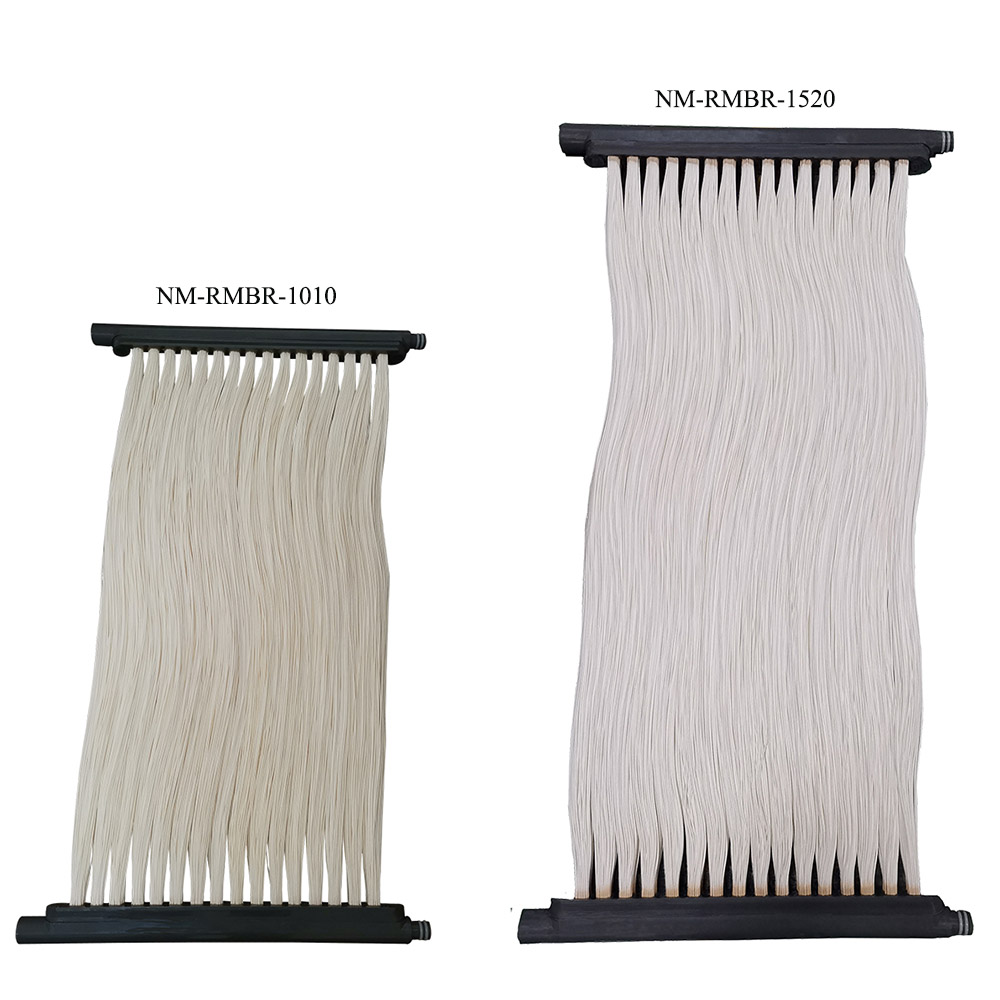
PVDF hollow fiber membranes are produced through a phase inversion process. The polymer is dissolved, extruded through a spinneret, and precipitated in a coagulation bath. The resulting fiber has a porous structure with a dense skin layer that determines rejection. HINADA engineers the spinning parameters to balance permeability and selectivity. The membranes are then potted into modules using epoxy or polyurethane resins. Potting is critical because it prevents bypass and ensures that all water passes through the membrane.
PVC hollow fiber membranes offer a more economical option. They are suitable for applications where chemical resistance requirements are moderate and cost sensitivity is high. By offering both PVDF and PVC, HINADA can serve a wider range of projects without compromising on performance.
Submerged MBR Membrane Modules
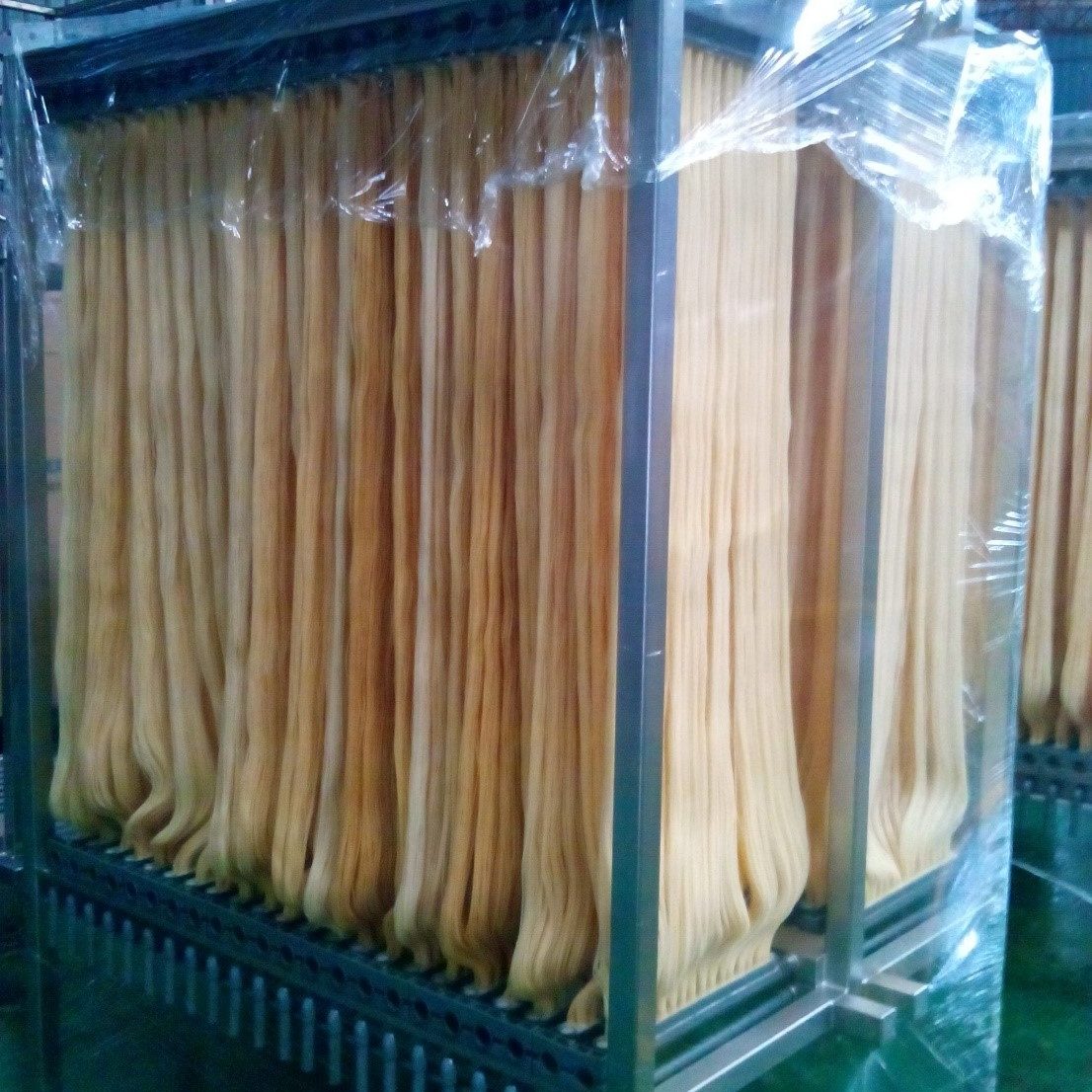
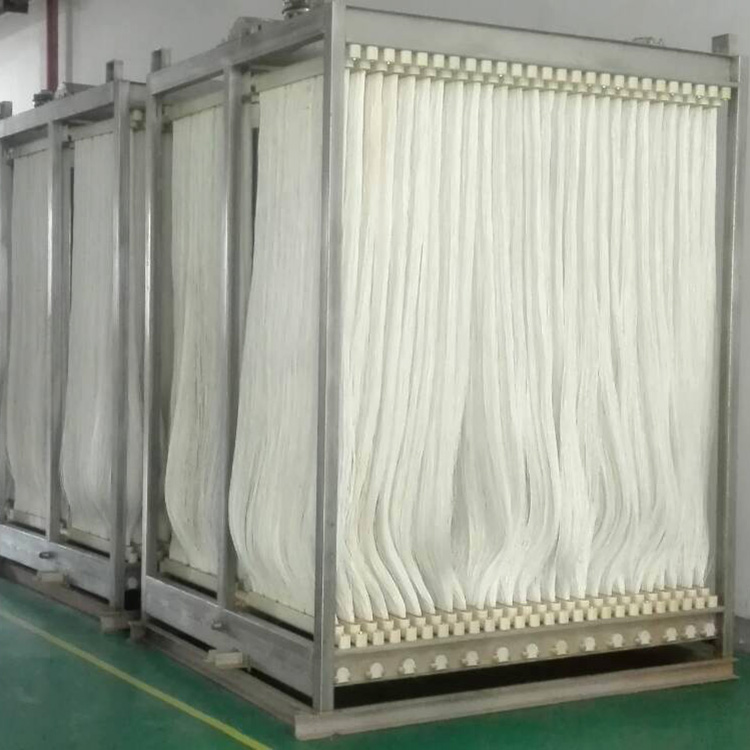
Submerged MBR membrane modules are designed to be immersed directly in the biological tank. A vacuum or gravity head draws water through the membrane, while air scouring rises from the bottom to clean the surface. This configuration is energy-efficient and compact. HINADA manufactures submerged modules with high packing density, robust potting, and optimized aeration headers. The modules can be stacked or arranged in cassettes to fit different tank geometries.
The submerged design is popular for municipal and industrial wastewater treatment because it combines biological nutrient removal with membrane separation in one tank. The membrane acts as a barrier, keeping solids in the bioreactor and producing a clear effluent. The sludge age can be extended, which promotes nitrification and reduces excess sludge production. The result is a smaller footprint, higher effluent quality, and greater operational flexibility.
Integrated Systems and Turnkey Solutions
A leading MBR manufacturer does not stop at membrane modules. It provides integrated systems and turnkey solutions. HINADA offers a truly integrated solution for water and wastewater projects, from designation, supplying, installation support, and commissioning to training. This end-to-end service model reduces the burden on the client and ensures that the system performs as designed.
The process begins with design. HINADA engineers review the water quality, flow rate, discharge standards, site conditions, and operational constraints. They select the appropriate membrane, calculate the required membrane area, design the biological process, and specify the aeration, pumping, and control systems. The design is then translated into a manufacturing plan.
During the supply phase, HINADA fabricates the equipment, procures components, and assembles the modules. Factory acceptance testing is performed to verify performance. The equipment is then shipped to the site with detailed installation manuals and drawings.
Installation support is provided by experienced engineers. They guide the local contractor on membrane cassette placement, piping connections, electrical wiring, and instrument calibration. This support is critical because improper installation can damage membranes or compromise performance.
Commissioning is the next step. HINADA engineers start up the system, seed the bioreactor, adjust aeration, and optimize membrane flux. They perform cleaning and integrity tests. Once the system meets the performance criteria, it is handed over to the client.
Training is the final component. HINADA trains the operators on daily checks, cleaning procedures, troubleshooting, and data logging. Well-trained operators are essential for long-term reliability. The company provides operation and maintenance manuals, spare parts lists, and remote support contacts.
Manufacturing Base and Global Reach
HINADA is headquartered in Guangzhou, China, and has expanded its manufacturing base to Chenzhou, Hunan Province. This dual-location strategy combines access to talent and suppliers in the Pearl River Delta with lower operating costs and room for expansion in Hunan. The manufacturing base includes facilities for membrane spinning, module assembly, sheet metal fabrication, welding, electrical assembly, and testing.
The company serves clients in over 75 countries across Asia, Africa, Europe, and the Americas. This global reach is supported by a network of distributors, partners, and regional service teams. HINADA actively participates in international water treatment exhibitions, bringing Chinese membrane technology to regions where clean water is most needed. These exhibitions allow the company to learn from global clients and to share its own innovations.
Key application fields include industrial wastewater treatment and reuse, municipal sewage treatment and water recycling, rural decentralized water supply and sanitation, and drinking water purification from surface water and groundwater. By focusing on these areas, HINADA has developed deep expertise in the challenges that each application presents.
Industrial Wastewater Treatment and Reuse
Industrial wastewater is often complex. It may contain high organic loads, oils, heavy metals, toxic compounds, or extreme pH. A leading MBR manufacturer must design systems that can handle these conditions. HINADA integrates pretreatment such as DAF, chemical dosing, and equalization with MBR biological treatment and UF/RO polishing. The goal is to produce water that can be reused in the factory or discharged safely.
In food and beverage processing, wastewater contains fats, oils, grease, and high BOD. DAF systems remove the bulk of these contaminants before the MBR. The MBR then degrades the remaining organics and separates solids. The effluent can be reused for cleaning or irrigation. In textile and dyeing, the wastewater contains color and refractory organics. Advanced oxidation or activated carbon may be added before or after the MBR. HINADA engineers design the treatment train to meet specific reuse standards.
In petrochemical and chemical plants, the wastewater may contain volatile organic compounds and heavy metals. The MBR must be robust and resistant to chemical shock. PVDF membranes are preferred for their chemical resistance. HINADA provides submerged MBR modules that can withstand periodic cleaning with hypochlorite and citric acid.
Industrial reuse is a major driver for MBR adoption. Water scarcity and discharge regulations push factories to recycle water. MBR effluent is ideal for cooling tower makeup, boiler feed pretreatment, or process water. With additional RO, the water can meet high-purity requirements. HINADA supplies industrial RO systems that work seamlessly with its UF and MBR products.
Municipal Sewage Treatment and Water Recycling
Municipal sewage treatment plants face increasing pressure to meet stricter discharge standards and to produce water for reuse. MBR technology offers a compact, reliable solution. HINADA provides submerged MBR modules and integrated packaged systems for municipal applications. The systems can be designed for new plants or for upgrading existing plants that need more capacity or better effluent quality.
In a municipal MBR, the biological process removes nitrogen and phosphorus. The membrane retains solids, allowing a long sludge age and complete nitrification. The effluent is clear, low in turbidity, and free of bacteria. It can be discharged to sensitive water bodies or reused for landscape irrigation, toilet flushing, or industrial supply.
HINADA also offers containerized MBR systems for municipal applications where land is limited or where rapid deployment is needed. These systems are pre-assembled and tested at the factory. They can be installed in weeks rather than months. This is particularly valuable for growing communities that need immediate treatment capacity.
Rural Decentralized Water Supply and Sanitation
Rural and decentralized communities often lack access to centralized sewers and treatment plants. They need affordable, robust, and easy-to-operate solutions. HINADA provides packaged wastewater treatment plants and containerized MBR systems for these settings. The systems are designed for low maintenance and remote monitoring. They can be powered by grid electricity or renewable energy.
Decentralized sanitation improves public health and protects local water sources. HINADA systems treat domestic sewage to a high standard, reducing the risk of waterborne disease. The treated water can be reused for agriculture or groundwater recharge. The compact footprint allows installation in villages, schools, hospitals, and eco-resorts.
HINADA also supplies drinking water purification systems for rural areas. These systems use UF membranes to remove bacteria, viruses, and suspended solids from surface water or groundwater. The result is safe drinking water without the need for complex chemical treatment. The systems are easy to operate and maintain, making them suitable for communities with limited technical resources.
Drinking Water Purification
Access to safe drinking water is a global challenge. Surface water and groundwater can be contaminated by pathogens, turbidity, and organic matter. Ultrafiltration is an effective barrier against these contaminants. HINADA manufactures PVDF and PVC hollow fiber UF membranes for drinking water purification. The membranes remove suspended solids, bacteria, colloids, and macromolecular organics. They can be combined with activated carbon or RO for additional treatment.
HINADA UF systems are used in municipal water treatment plants, industrial water supply, and point-of-use applications. The systems are automated and can be monitored remotely. They are designed for low chemical consumption and long membrane life. The company provides complete UF systems, including pretreatment, membrane skids, backwash pumps, and controls.
What Sets a Leading Manufacturer Apart
Many companies sell MBR membranes. Fewer can deliver a complete, integrated solution. A leading manufacturer demonstrates several distinguishing characteristics. HINADA embodies these characteristics in its daily operations.
1. Proprietary Membrane Technology
A leading manufacturer owns the membrane technology. HINADA develops and produces its own hollow fiber membranes. This control over the core component ensures quality, performance, and supply chain security. The company can customize membrane specifications for specific projects. It can also troubleshoot membrane performance issues quickly because it understands the manufacturing process.
2. In-House Equipment Fabrication
MBR systems require tanks, frames, piping, valves, blowers, pumps, and control panels. A leading manufacturer fabricates much of this equipment in-house. HINADA has facilities for welding, machining, electrical assembly, and testing. In-house fabrication reduces lead times, improves quality control, and allows for customization. It also means the manufacturer can guarantee the fit and function of all components.
3. Process Engineering Expertise
MBR is a biological process coupled with membrane filtration. The design must account for influent characteristics, biological kinetics, aeration demand, membrane flux, and cleaning cycles. HINADA employs process engineers with years of experience in wastewater treatment. They use modeling and simulation to optimize designs. They also consider operational simplicity, energy efficiency, and lifecycle cost.
4. Global Project Experience
Every region has different regulations, water qualities, and labor conditions. A leading manufacturer has experience across diverse markets. HINADA has served clients in over 75 countries. This exposure has taught the company how to adapt designs to local conditions. It has also built a library of reference projects that can be used to reassure new clients.
5. Comprehensive Service and Support
Equipment alone is not enough. A leading manufacturer provides service and support throughout the project lifecycle. HINADA offers design assistance, installation support, commissioning, operator training, spare parts, and after-sales service. The company understands that a successful project is measured by years of reliable operation, not just by the initial sale.
Project Delivery: From Design to Training
The delivery of an MBR project involves multiple stages. Each stage requires careful coordination. HINADA follows a structured approach that has been refined over more than a decade.
Design and Engineering: HINADA engineers collect water samples, review discharge standards, and develop a process design. They create P&IDs, layout drawings, and equipment specifications. They also perform hydraulic and mass balance calculations.
Manufacturing and Procurement: The company manufactures membranes, modules, and equipment. It procures standard components from qualified suppliers. All items are inspected upon receipt.
Factory Assembly and Testing: Systems are assembled in the factory. Membrane modules are tested for integrity. Control panels are wired and programmed. Factory acceptance tests are conducted with the client.
Shipping and Logistics: Equipment is packed for safe transport. HINADA provides all necessary documentation for customs and import.
Installation Support: Field engineers guide the installation team. They ensure that membranes are handled correctly and that piping and wiring meet specifications.
Commissioning: The system is started up, biological seeding is performed, and operating parameters are tuned. Performance tests verify that the effluent meets requirements.
Training: Operators are trained on system operation, maintenance, cleaning, and troubleshooting. Training includes classroom sessions and hands-on practice.
After-Sales Service: HINADA provides remote support, spare parts, and periodic maintenance visits. The company also offers membrane replacement and cleaning services.
This comprehensive approach reduces risk and ensures that the client receives a working system, not just a shipment of parts.
Quality Control and Testing
Quality control is critical in membrane manufacturing. A single defective fiber can compromise an entire module. HINADA implements strict quality control at every stage. Raw materials are tested for purity and molecular weight. Membrane fibers are inspected for diameter, strength, and pore size. Modules are tested for bubble point, permeability, and integrity. Finished systems are tested for electrical safety, hydraulic performance, and control logic.
HINADA also conducts long-term performance testing. Membrane modules are operated under realistic conditions to evaluate fouling rates and cleaning effectiveness. This data is used to improve products and to provide accurate performance guarantees to clients.
Research and Development
Innovation is essential for a leading MBR manufacturer. HINADA invests in research and development to improve membrane materials, module design, and system automation. Current research areas include hydrophilic membrane coatings to reduce fouling, high-strength PVDF fibers for harsh conditions, energy-efficient aeration designs, and smart control algorithms for predictive maintenance.
The company collaborates with universities and research institutes. It also participates in international water treatment exhibitions to stay current with global trends. This commitment to innovation ensures that HINADA remains competitive and that its clients benefit from the latest advances.
Applications Across Industries
HINADA products are used in a wide range of industries. The company has developed specialized solutions for each.
Municipal Wastewater
Municipalities use HINADA MBR systems to treat sewage and produce reusable water. The systems are compact and can be installed in urban areas where land is expensive. They can also be upgraded to increase capacity without building new clarifiers.
Industrial Wastewater
Industries such as food and beverage, textile, pharmaceutical, chemical, and automotive use HINADA systems to treat process wastewater. The treated water can be reused, reducing freshwater intake and discharge fees.
Decentralized Sanitation
Remote villages, resorts, military bases, and construction camps use HINADA packaged plants. These systems are self-contained and easy to operate.
Drinking Water
HINADA UF systems provide safe drinking water from surface water and groundwater. They are used in municipal plants, schools, hospitals, and communities.
Water Reuse
HINADA MBR and RO systems produce high-quality water for irrigation, toilet flushing, cooling towers, and industrial processes. Water reuse is essential in water-scarce regions.
Common Misconceptions About MBR Manufacturers
There are several misconceptions about MBR manufacturers. Understanding these can help buyers make better decisions.
Misconception 1: All MBR membranes are the same. In reality, membrane materials, pore size, and module design vary significantly. PVDF and PVC membranes have different chemical and mechanical properties. The choice affects performance and lifespan.
Misconception 2: The lowest price is the best value. MBR systems have significant operating costs, including energy, chemicals, and membrane replacement. A low-cost system may have higher lifecycle costs. A leading manufacturer considers total cost of ownership.
Misconception 3: MBR is too complex for small communities. Modern packaged MBR systems are automated and easy to operate. HINADA designs systems for decentralized applications with remote monitoring and simple maintenance.
Misconception 4: Any contractor can install an MBR. MBR installation requires careful handling of membranes and precise piping. Improper installation can void warranties and cause premature failure. Manufacturer support is essential.
Misconception 5: Membranes never need cleaning. All membranes foul over time. Regular maintenance cleaning and periodic recovery cleaning are required. A leading manufacturer provides clear cleaning protocols and support.
Future Trends in MBR Technology
The MBR market continues to evolve. Several trends are shaping the future.
Energy Efficiency: Aeration is the largest energy consumer in MBR systems. Manufacturers are developing low-energy aeration and cyclic aeration to reduce power consumption.
Digitalization: Smart sensors and IoT platforms enable remote monitoring, predictive maintenance, and real-time optimization. HINADA is integrating digital controls into its systems.
Membrane Materials: New materials and coatings are improving fouling resistance and chemical durability. PVDF remains dominant, but new formulations are emerging.
Decentralization: More communities are adopting decentralized treatment. Containerized and packaged MBR systems are ideal for this trend.
Water Reuse: As freshwater scarcity grows, MBR and RO systems will become more important for water reuse.
Sustainability: Manufacturers are focusing on reducing chemical use, energy consumption, and carbon footprint.
HINADA is actively involved in these trends. The company continues to invest in R&D and to participate in international exhibitions. Its goal is to bring reliable, affordable, and sustainable water treatment solutions to regions where they are most needed.
Why Choose HINADA as an MBR Membrane Bioreactor Manufacturer
HINADA Water Treatment Tech Co., Ltd. offers a compelling combination of technology, manufacturing, and service. The company is a globally recognized manufacturer of wastewater treatment equipment, hollow fiber UF membranes, submerged MBR membrane modules, integrated packaged wastewater treatment systems, and DAF systems. Founded in 2012 in Guangzhou, China, and expanded to Chenzhou, Hunan Province, HINADA serves clients in over 75 countries.
The company provides a truly integrated solution for water and wastewater projects, from designation, supplying, installation support, and commissioning to training. With more than 13 years of industry experience and 10 years of membrane and equipment manufacturing experience, HINADA has built a complete ecosystem from membrane R&D and component manufacturing to equipment fabrication and turnkey solution delivery.
From day one, HINADA focused on two core technology pillars: Hollow Fiber Ultrafiltration (UF/MBR) Membranes for precise physical separation, and Intelligent Integrated Wastewater Treatment Equipment for ready-to-install solutions. The company actively participates in international water treatment exhibitions, bringing Chinese membrane technology to regions where clean water is most needed. Its key application fields include industrial wastewater treatment and reuse, municipal sewage treatment and water recycling, rural decentralized water supply and sanitation, and drinking water purification.
For buyers seeking a reliable partner, HINADA represents the standards of a leading MBR membrane bioreactor manufacturer: proprietary membrane technology, in-house fabrication, process expertise, global experience, and comprehensive support.
Conclusion
Choosing an MBR membrane bioreactor manufacturer is a strategic decision. The right partner delivers more than equipment. It provides a complete solution that addresses design, manufacturing, installation, commissioning, training, and long-term service. HINADA has demonstrated these capabilities across more than 75 countries and numerous applications. Its two core technology pillars, its integrated product portfolio, and its commitment to innovation make it a strong choice for municipal, industrial, and decentralized water treatment projects.
As water scarcity and environmental regulations intensify, MBR technology will continue to grow. Manufacturers that combine membrane science with practical engineering and global service will lead the market. HINADA is positioned to be one of those leaders, bringing clean water solutions to communities and industries around the world.