Why Factory Testing Matters for DAF System Equipment factory Output
Why Factory Testing Matters for DAF System Equipment factory Output
September 30, 2026
Author
Solution Provider, through a professional technical team, we provide customers with targeted equipment selection recommendations and comprehensive after-sales services, winning the trust and recognition of customers.
Sarah M.
Factory testing is one of the most decisive factors determining whether a dissolved air flotation (DAF) system performs as specified after it leaves the manufacturing facility. A DAF unit is a system of interdependent subsystems, including the flotation tank, recycle and pressurization loop, air dissolution vessel, release and distribution header, skimmer and sludge collection mechanism, chemical dosing interface, and control panel. Each of these presents failure modes that are far cheaper to detect in a controlled factory environment than on a customer site under schedule pressure. This article examines the full scope of DAF factory testing, including dimensional verification, weld inspection and hydrostatic testing, mechanical function checks, air dissolution validation, coating and corrosion protection assessment, electrical and control logic testing, and comprehensive wet performance testing. It explains why factory testing matters commercially as well as technically: it reduces rework costs, protects delivery schedules, shortens commissioning, lowers warranty claims, builds customer confidence, and supports regulatory and contractual compliance. The article also explores the hidden costs of skipping testing, the staged protocols that define a disciplined testing program, the economics of testing across different DAF configurations, common misconceptions, and the criteria buyers should use to evaluate a supplier's testing regime. Manufacturers such as HINADA Water Treatment Tech Co., Ltd., founded in 2012 in Guangzhou and now serving clients in more than 75 countries with a manufacturing base in Chenzhou, Hunan Province, illustrate how integrated testing supports international delivery of wastewater treatment equipment, ultrafiltration membranes, MBR modules, and DAF systems. The conclusion is straightforward: factory testing is not an expense to be minimized but a competitive advantage that converts factory output into reliable field outcomes.
Why Factory Testing Matters for DAF System Equipment Factory Output
In the global water and wastewater treatment industry, dissolved air flotation (DAF) systems occupy a position of unusual importance. They sit at the front end of many treatment trains, removing fats, oils, grease, suspended solids, algae, and other floatable contaminants before downstream biological or membrane processes are asked to do their work. When a DAF unit performs well, everything downstream performs better. When it performs poorly, the consequences ripple through the entire plant, from clogged membranes to failed discharge permits. Yet for all of the engineering attention that goes into DAF design, one of the most decisive factors in whether a DAF system actually performs as promised is something that happens long before the equipment reaches a customer site: factory testing.
Factory testing is the structured process by which a manufacturer verifies that a completed DAF system, or its major subassemblies, meets design specifications, functions correctly, and is safe to ship. It is the moment of truth that occurs inside a controlled industrial environment rather than on a customer site under schedule pressure and weather. For manufacturers such as HINADA Water Treatment Tech Co., Ltd., which has been building wastewater treatment equipment since 2012 and now serves clients in more than 75 countries, factory testing is not a bureaucratic checkbox. It is a core determinant of factory output quality, delivery reliability, and long-term reputation.
This article examines why factory testing matters so much for DAF system equipment factory output. It explores what factory testing actually involves, how it influences cost, schedule, and customer satisfaction, what happens when it is skipped or diluted, and how buyers can evaluate whether a supplier takes testing seriously. The argument is straightforward: a DAF system that is tested at the factory is a fundamentally different product from one that is not, even if the two look identical on a specification sheet.
undefined
The DAF System in Context: A Brief Technical Foundation
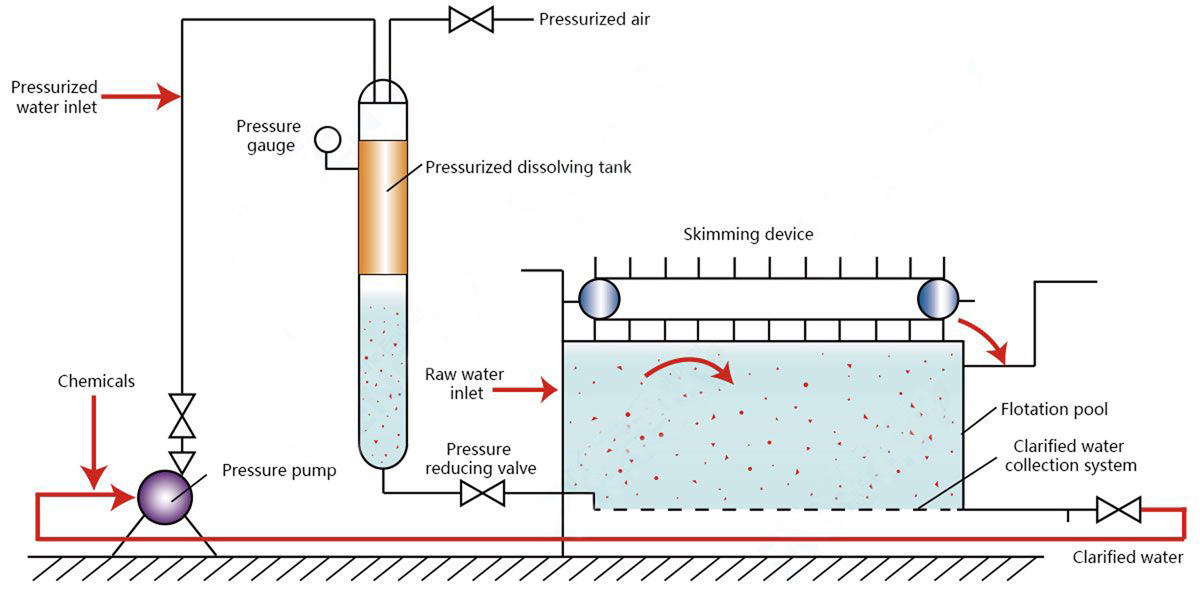
To understand why testing matters, it helps to recall what a DAF system does and how many interdependent subsystems must work together for it to succeed. Dissolved air flotation is a physical separation process. A portion of clarified effluent is recycled, pressurized, and saturated with air inside a pressure vessel. When this pressurized recycle stream is released into the flotation tank through a specialized valve or nozzle arrangement, the sudden pressure drop causes dissolved air to come out of solution as millions of microscopic bubbles. These bubbles attach to suspended particles, oils, and flocs, reducing their effective density and lifting them to the surface, where a mechanical skimmer removes the accumulated sludge blanket.
The apparent simplicity of that description is deceptive. A functional DAF unit depends on the correct interaction of a recycle pump, an air compressor or ejector system, a saturation vessel, a pressure retention system, a release and distribution header, a flotation tank with carefully designed inlet and outlet geometry, a surface skimmer, a sludge collection and discharge system, a bottom sludge scraper or collection cone, level control instrumentation, chemical dosing points, and a control panel that ties the whole sequence together. Each of these elements has its own failure modes, and many of those failure modes are subtle.
Consider the saturation vessel. If the internal packing or the retention time is inadequate, the recycle stream will not reach the intended dissolved air concentration, and the bubble population in the flotation tank will be too sparse to lift the solids effectively. The unit will still run. Water will still flow. But the effluent quality will be disappointing, and the operator will spend months chasing a problem that was baked in at the factory. This is exactly the kind of defect that factory testing is designed to catch.
Consider the release valve and distribution header. If the pressure drop across the release point is not within the design window, bubbles may be too large, too few, or unevenly distributed across the tank cross-section. Short-circuiting and dead zones follow. Again, the system will appear to operate, but performance will fall short of the design basis. Without a wet test at the factory, these issues travel silently to the site.
Consider the skimmer mechanism. A skimmer that binds, misaligns, or travels at the wrong speed will either leave sludge on the surface or remove excessive water with the sludge, increasing downstream loading. These are mechanical issues that can be observed in minutes during a factory test and can take weeks to diagnose and correct in the field.
The list continues: pump alignment, valve actuation, level sensor calibration, air compressor performance, piping integrity, structural rigidity, coating adhesion, and electrical safety. A DAF system is a system, and systems fail at interfaces. Factory testing is the discipline of exercising those interfaces before the customer does.
What Leaves the Factory Gate: The Anatomy of DAF Equipment Output
When a manufacturer speaks of factory output, the phrase can mean several things. It can mean production volume, the number of units completed per month. It can mean the physical quality of what is shipped. It can also mean the completeness of the deliverable, whether everything the customer needs arrives in a coherent, documented, ready-to-install package. Factory testing influences all three interpretations, but its most direct influence is on quality and completeness.
A modern DAF system is rarely a single monolithic object. Depending on configuration, it may be a steel tank with internals shipped as a large fabricated assembly, a containerized package with everything pre-installed, or a modular set of skids designed for on-site assembly. In every case, the manufacturer is shipping an engineered system, not raw material. The value added at the factory is precisely the engineering integration, and factory testing is the verification that this integration is sound.
Core Subsystems That Must Be Verified
A representative DAF package includes the following subsystems, each of which presents specific testing requirements:
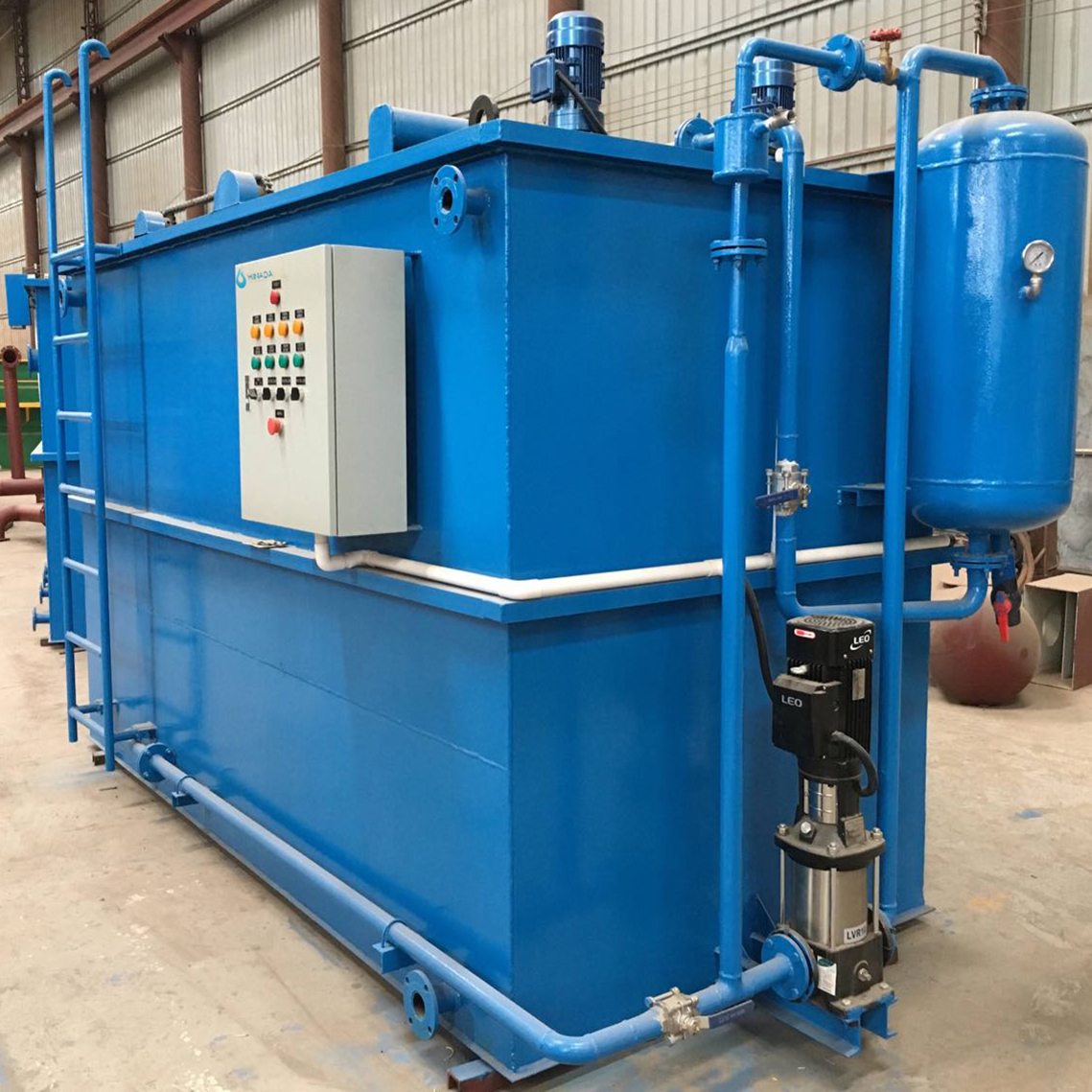
Flotation tank and structural frame — geometry, weld integrity, watertightness, levelness, and coating condition.
Recycle and pressurization system — recycle pump performance, saturation vessel integrity, air injection and dissolution efficiency, and pressure control.
Release and distribution assembly — valve function, pressure drop characteristics, and distribution uniformity.
Skimmer and sludge collection — drive operation, travel limits, chain or cable tension, scraper alignment, and discharge valve sequencing.
Chemical dosing interface — injection point location, mixing provision, and compatibility with dosing equipment.
Instrumentation and control — level sensors, flow meters, pressure transmitters, motor protection, PLC logic, HMI screens, and alarm behavior.
Electrical and safety systems — panel wiring, grounding, insulation resistance, emergency stop function, and interlock logic.
Auxiliary and access items — ladders, walkways, handrails, inspection hatches, and maintenance access provisions.
Each of these items is testable at the factory to some degree. Some can be fully verified only under wet conditions. Others can be verified dry. A mature manufacturer defines which tests apply to which subsystem and applies them consistently across every unit that leaves the shop.
A Comparison of What Can Be Verified Before and After Shipment
Verification Item
Ease of Testing at Factory
Ease of Testing in Field
Cost of Late Discovery
Tank weld watertightness
High
Moderate
High
Recycle pump performance
High
Moderate
Moderate
Air dissolution efficiency
High
Low
High
Release valve pressure drop
High
Low
High
Skimmer travel and alignment
High
Moderate
Moderate
PLC logic and interlocks
High
Moderate
Moderate
Coating adhesion and thickness
High
Low
Very High
Structural fit of access items
High
Moderate
Low
Overall hydraulic performance
Moderate to High
Moderate
Very High
The pattern in this table is revealing. Items that are easy to test at the factory often become difficult and expensive to test in the field, and the cost of discovering a defect after shipment is almost always higher than the cost of finding it before. Factory testing is, in economic terms, a way of moving defect discovery upstream to the cheapest possible point in the value chain.
What Factory Testing Actually Means in a DAF Manufacturing Environment
The phrase factory testing can cover a wide range of activities, from a quick visual inspection to a full wet commissioning run with simulated wastewater. To be meaningful, it must be defined, documented, and repeatable. The following sections describe the principal categories of testing that a serious DAF manufacturer performs.
Dimensional and Fabrication Verification
Before any water touches a DAF tank, the manufacturer verifies that the fabricated structure matches the approved drawings. This includes overall dimensions, nozzle and penetration locations, flange orientations, support spacing, and the positioning of internal components such as baffles, weirs, and collection pipes. Dimensional errors that are trivial to correct in the shop can become major field problems when they prevent the mating of a pump skid, block access for a maintenance technician, or misalign a sludge discharge connection.
Dimensional verification is also the first line of defense for hydraulic behavior. The inlet geometry, the position of the baffle, and the depth of the flotation zone determine the flow pattern inside the tank. A tank that is built to the wrong dimensions will not produce the intended flow regime, and no amount of field adjustment will fully compensate.
Weld Integrity and Hydrostatic Testing
DAF tanks are typically fabricated from carbon steel, stainless steel, or sometimes concrete in large municipal applications. For steel tanks, weld quality is critical. A manufacturer will inspect welds visually, often with dye penetrant or magnetic particle methods for critical joints, and then perform a hydrostatic test by filling the tank with water and observing for leaks over a defined period.
Hydrostatic testing does more than detect leaks. It also reveals structural weakness. A tank that deflects excessively under a full water load may pass a visual inspection but fail in service. By filling the tank at the factory, the manufacturer confirms that the structure behaves as designed and that support and stiffener arrangements are adequate.
There is also a practical benefit. A tank that holds water at the factory is far less likely to leak at the site, where a leak can mean lost production time, environmental incident reporting, and a damaged relationship with the customer.
Mechanical Function Testing
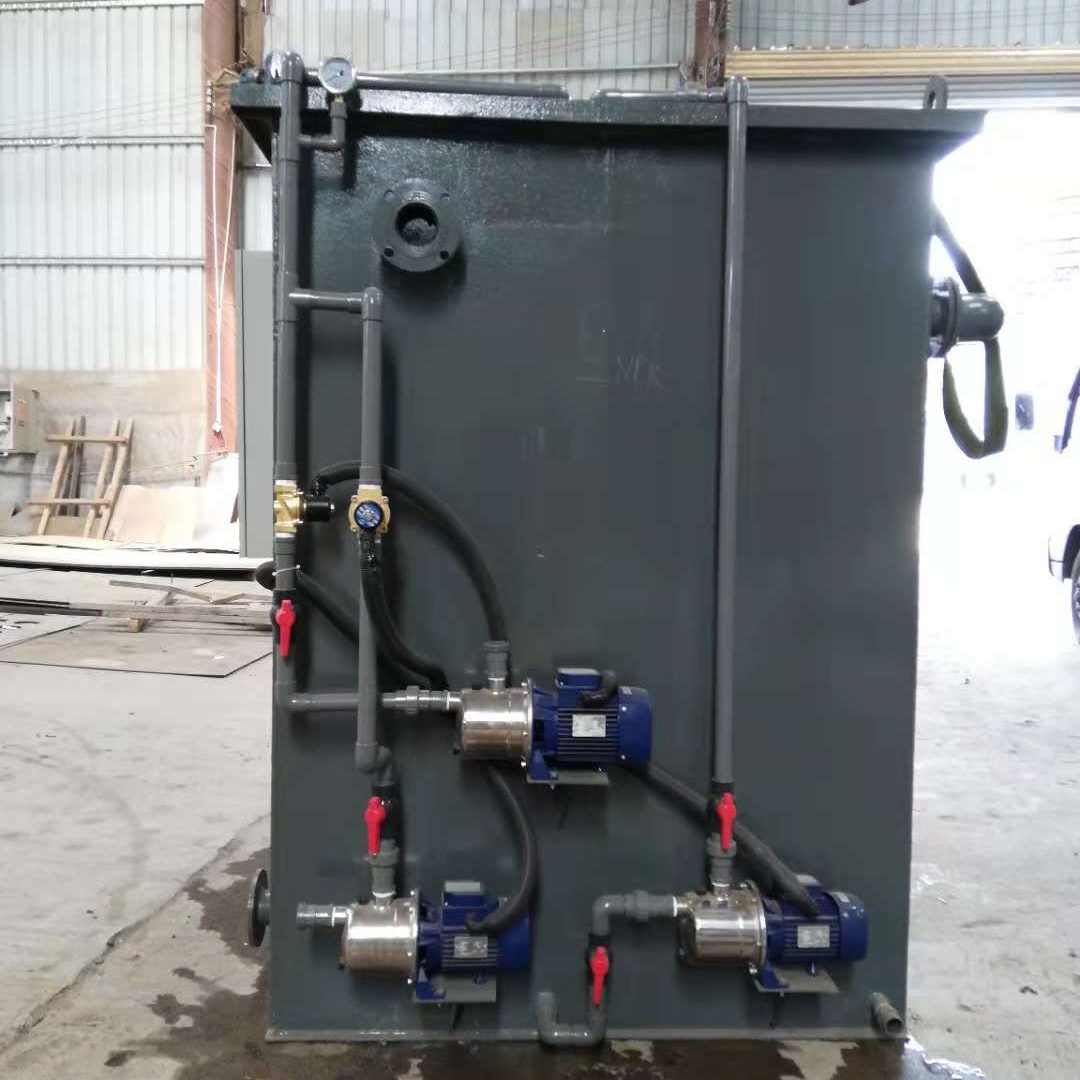
Every moving component in a DAF system should be exercised before shipment. This includes recycle pumps, air compressors, skimmer drives, scraper drives, discharge valves, and any actuated dampers or gates. Mechanical function testing verifies that components are correctly installed, aligned, lubricated, and capable of completing their full range of motion without binding or excessive vibration.
Motor rotation direction deserves particular attention. A three-phase motor connected with reversed phases will run backwards, and the consequences can range from reduced performance to immediate mechanical damage. Checking rotation direction is a matter of seconds at the factory and can be a matter of hours in the field, particularly if the error is intermittent or obscured by other startup issues.
Similarly, valve stroke testing confirms that actuators are correctly sized and mounted, that limit switches are set properly, and that the control system receives accurate position feedback. A valve that fails to fully open or close can undermine the entire treatment process, and the fault is often invisible until a specific operating condition arises.
Air Dissolution and Recycle System Validation
The heart of any DAF system is the air dissolution process. Testing this subsystem requires more than turning on a pump. The manufacturer must verify that the recycle flow rate matches design, that the saturation vessel reaches and holds the intended pressure, that the air injection system delivers the correct mass flow of air, and that the resulting dissolved air concentration is sufficient to support the required flotation performance.
Some manufacturers operate the recycle loop with clear water and measure dissolved oxygen or use a specialized dissolved air measurement technique to infer saturation efficiency. Others conduct a full wet test with a synthetic or actual waste stream and observe the quality of the float layer produced. Both approaches have value, and the best practice is to combine them: a controlled hydraulic check followed by a performance demonstration.
This is one of the most important areas where factory testing earns its keep. Air dissolution problems are notoriously difficult to diagnose in the field because they present as vague underperformance rather than clear failure. A DAF unit that produces a thin, patchy float layer may be suffering from insufficient dissolved air, poor release valve performance, incorrect chemical dosing, or simply an unusual waste stream. Isolating the cause in the field can take weeks. Isolating it at the factory, with clean water and controlled conditions, takes hours.
Coating, Lining, and Corrosion Protection Verification
DAF systems operate in aggressive environments. Wastewater contains salts, sulfides, organic acids, and abrasive solids. Corrosion protection is therefore a critical part of the product, and it is one of the hardest things to repair once the equipment is on site. Factory testing of coatings includes measuring dry film thickness, checking adhesion with pull-off or cross-hatch methods, verifying surface preparation standards, and inspecting for holidays or pinholes in the coating.
The economics here are stark. Repairing a coating defect at the factory might involve a few hours of labor and a small quantity of paint. Repairing the same defect in the field may require draining the tank, abrasive blasting in a confined space, and reapplying a full coating system under conditions that are far from ideal. In extreme cases, corrosion damage discovered after several years of service can require tank replacement, an outcome that no customer accepts willingly.
Electrical, Instrumentation, and Control Testing
Modern DAF systems are controlled systems. The control panel is not an accessory; it is the interface through which the operator understands and manages the process. Factory testing of the electrical and control package should include insulation resistance measurement, continuity checks, grounding verification, functional testing of every input and output, simulation of alarm conditions, and verification of the control sequence from startup through normal operation to shutdown.
Testing the human machine interface (HMI) at the factory is particularly valuable. Screen layouts, alarm messages, trend displays, and navigation logic can all be reviewed with the customer before shipment. Feedback gathered at this stage can be incorporated immediately, rather than through a costly field modification. When the panel arrives on site with a logic that has already been proven, commissioning becomes a matter of verification rather than discovery.
Wet Performance Testing
The most comprehensive form of factory testing is a wet performance test, in which the completed DAF unit is operated with water and, where feasible, a representative or synthetic waste stream. This test integrates every subsystem and provides the closest possible approximation of field behavior within a factory environment.
Wet testing can verify hydraulic loading rates, surface loading rates, recycle ratios, float layer formation and quality, skimmer effectiveness, sludge concentration, and effluent clarity. It can reveal unexpected interactions between subsystems, such as vibration transmitted from the recycle pump to the release header, or turbulence patterns that disturb the float layer.
Not every manufacturer can perform full wet testing on every unit, because it requires space, water, power, and time. But the capability to perform wet testing, and the willingness to do so on critical or first-of-a-kind units, is a strong indicator of engineering seriousness.
The Business Case for Factory Testing
Factory testing costs money. It consumes shop space, labor hours, water, power, and schedule time. A manufacturer that skips testing can ship faster and cheaper in the short term. The question, therefore, is whether the benefits of testing justify the cost. The answer, supported by decades of experience across the water treatment industry, is an emphatic yes. The following sections explain why.
Reducing the Cost of Rework
The cost of correcting a defect rises dramatically as the product moves downstream. A defect found at the fabrication stage may cost a few dollars to fix. The same defect found during factory assembly may cost ten times as much. Found during factory testing, it may cost a hundred times as much. Found at the customer site during installation, it may cost a thousand times as much. Found after the plant is in operation, the cost can be measured in lost production, regulatory penalties, and reputational damage.
This progression is sometimes called the rule of ten, and while the exact multipliers vary by industry and defect type, the underlying principle is universal. Factory testing is the mechanism that intercepts defects at the low-cost end of this progression.
Protecting the Delivery Schedule
Customers buy DAF systems because they have a treatment problem that needs solving by a certain date. A municipal plant may be under a consent order. An industrial facility may be expanding production. A developer may be facing occupancy deadlines. In every case, the delivery schedule matters.
It might seem that skipping factory testing accelerates delivery. In practice, the opposite is usually true. A defect discovered at the factory delays shipment by days. A defect discovered at the site delays commissioning by weeks, because the manufacturer must mobilize personnel, ship spare parts, and coordinate with the customer site team. The apparent time saved by skipping tests is almost always repaid with interest.
Shortening Commissioning Time
Commissioning is the phase in which the customer first operates the equipment under real conditions. It is a high-pressure period, often with multiple contractors on site, tight schedules, and limited tolerance for surprises. A DAF system that has been thoroughly factory tested arrives with a known baseline. The commissioning team can focus on integration with the surrounding plant rather than on debugging the equipment itself.
In practice, manufacturers report that factory tested units commission in a fraction of the time required for untested units. This is not merely a matter of convenience. Shorter commissioning means lower labor costs for both the manufacturer and the customer, faster achievement of treatment objectives, and a smoother handover.
Reducing Warranty Claims and Service Costs
Every defect that reaches the field has the potential to become a warranty claim. Warranty claims are expensive not only because of the direct cost of parts and labor but also because they consume engineering attention, damage customer confidence, and generate administrative overhead. A manufacturer with a strong factory testing program will, over time, see a measurable reduction in warranty claim frequency and severity.
This reduction has a compounding effect. Fewer claims mean lower service costs, which mean either higher margins or more competitive pricing. Fewer claims also mean fewer field service engineers tied up on corrective work, freeing them for commissioning, training, and new projects.
Building Customer Confidence and Reputation
Trust in the water treatment industry is built slowly and lost quickly. A customer who receives a DAF system that works as specified from the first day becomes a repeat customer and a reference. A customer who receives a system that requires months of troubleshooting becomes a cautionary tale.
Factory testing is also a marketing asset when it is conducted transparently. Inviting customers to witness factory acceptance testing, or providing them with a detailed test report, transforms an abstract promise of quality into a tangible demonstration. For manufacturers serving international markets, where customers may never visit the factory, documented testing is one of the few ways to build confidence across distance.
Meeting Regulatory and Contractual Requirements
Many projects, particularly in municipal and regulated industrial sectors, explicitly require factory acceptance testing (FAT) as a contractual condition. The FAT may be witnessed by the customer, by a consulting engineer, or by a third-party inspector. Failing to perform the required tests can result in payment delays, non-conformance reports, or outright rejection of the equipment.
Beyond contractual obligations, factory testing supports compliance with broader requirements. A DAF system that fails to meet effluent limits because of a manufacturing defect can expose the owner to regulatory penalties, and the manufacturer to liability. Demonstrating that the equipment was tested and verified before shipment is a powerful form of risk mitigation.
The Hidden Costs of Skipping Factory Testing
Manufacturers sometimes rationalize reduced testing by pointing to the direct savings. What this calculation often omits is the cascade of indirect costs that follow a field failure. These include:
Emergency mobilization costs — flights, visas, accommodation, and overtime for field service engineers.
Expedited shipping — air freight for replacement components that would have cost little to correct at the factory.
Customer downtime — lost production or regulatory non-compliance while the equipment is out of service.
Liquidated damages — contractual penalties for late performance or missed milestones.
Rework of adjacent systems — damage to pumps, membranes, or downstream equipment caused by a malfunctioning DAF unit.
Reputational damage — lost references, negative word of mouth, and reduced ability to win future bids.
Engineering distraction — senior engineers pulled from design work to troubleshoot field problems.
When these costs are aggregated, the true price of skipping factory testing is typically an order of magnitude greater than the cost of performing it. The savings are visible and immediate; the costs are diffuse and delayed. This asymmetry explains why so many manufacturers underinvest in testing, and why those who resist the temptation gain a durable competitive advantage.
Testing Standards and Protocols: What a Disciplined Program Looks Like
A credible factory testing program is built on documented protocols. These protocols specify what is tested, how it is tested, what constitutes a pass, and who is responsible for recording and approving the results. The following table outlines a representative testing matrix for a DAF system.
Test Stage
Objective
Typical Method
Acceptance Criterion
Incoming material inspection
Verify plate, pipe, and component quality
Visual, dimensional, certificate review
Matches specification
Weld inspection
Confirm weld integrity
Visual, dye penetrant, ultrasonic where required
No rejectable indications
Dimensional check
Confirm fabrication accuracy
Tape, laser, template
Within drawing tolerance
Hydrostatic test
Confirm watertightness and structural adequacy
Fill with water, hold, inspect
No leakage, acceptable deflection
Coating inspection
Confirm corrosion protection
DFT gauge, adhesion test, holiday detection
Within specified range
Mechanical function test
Confirm moving parts operate
Energize, observe full stroke
Smooth operation, correct direction
Electrical test
Confirm safety and wiring integrity
Insulation resistance, continuity, grounding
Within limits, no faults
Control logic test
Confirm sequences and interlocks
Simulate inputs, observe outputs
Correct response to all conditions
Recycle system test
Confirm hydraulic performance
Operate with water, measure flow and pressure
Matches design values
Wet performance test
Confirm treatment performance
Operate with representative feed
Meets specified removal efficiency
Final inspection and packing
Confirm completeness for shipment
Checklist review
All items present and protected
The exact content of the matrix will vary with the size, configuration, and application of the DAF system. A small packaged unit for a food processing plant may not justify the same depth of testing as a large municipal installation. But the principle of a documented, staged, and recorded testing program applies universally.
How Factory Testing Shapes Factory Output Quality
It is worth examining more closely the relationship between factory testing and factory output, because the two are connected in ways that are not always obvious.
Testing as a Feedback Loop for Manufacturing
Every defect found during testing is a data point about the manufacturing process. If the same defect appears repeatedly, it points to a systemic issue: a drawing error, a training gap, a supplier problem, or a fixture that is out of tolerance. A manufacturer that records and analyzes test results can drive continuous improvement in fabrication and assembly. A manufacturer that does not test never learns.
This feedback function is often overlooked. Testing is not only a filter that prevents bad units from shipping; it is a sensor that monitors the health of the production system. Over time, a strong testing program reduces the defect rate itself, because the causes of defects are identified and eliminated.
Testing as a Standardization Mechanism
When a manufacturer builds many DAF units, consistency becomes a challenge. Different welders, different assemblers, and different shifts can produce subtly different results. A standardized testing protocol forces consistency by defining a single standard that every unit must meet. It also creates a common language for the production team, so that quality expectations are explicit rather than implicit.
Testing as a Skill Development Tool
Technicians who perform factory testing develop a deep understanding of how the equipment works. They see the consequences of assembly decisions, and they learn to anticipate problems. This knowledge circulates through the organization, raising the overall level of competence. In many manufacturers, the testing team becomes an informal center of expertise that supports design, production, and field service alike.
The Economics of Factory Testing: A Quantitative View
While precise figures vary by manufacturer and product, the general economics of factory testing can be illustrated with a simplified model. The following table compares two scenarios for a hypothetical DAF project.
Cost Category
With Factory Testing
Without Factory Testing
Factory test labor and utilities
Moderate
None
Factory rework
Low
None
Field rework labor
Very low
High
Field service travel
Low
High
Expedited parts shipping
Rare
Frequent
Commissioning duration
Short
Long
Warranty claims
Low
Elevated
Customer satisfaction
High
Variable
Repeat business probability
High
Reduced
The most striking feature of this comparison is that the without testing column contains no savings beyond the elimination of test costs. Every other line item is worse. The apparent economy of skipping testing is an illusion created by looking at a single line of the ledger rather than the whole.
There is also a strategic dimension. In competitive markets, manufacturers differentiate on reliability as much as on price. A manufacturer known for delivering equipment that works from day one can command a premium and win projects on value rather than cost. Factory testing is one of the primary mechanisms for building that reputation.
Factory Testing Across Different DAF Configurations
DAF systems come in many configurations, and the testing approach must be adapted accordingly.
Packaged and Containerized DAF Units
Containerized and packaged DAF systems are assembled completely at the factory and shipped as a finished product. These configurations offer the greatest opportunity for comprehensive factory testing, because the entire system is present and can be operated as a unit. A manufacturer building containerized systems can perform full wet testing, verify control logic end to end, and confirm that all internal piping, wiring, and instrumentation are complete before the container doors are closed.
The benefits are particularly significant for export projects, where field support is expensive and slow. A containerized DAF unit that has been fully tested at the factory arrives at a remote site as a proven product, ready for connection to power, feed, and discharge.
Modular and Skid-Mounted DAF Systems
Modular systems are shipped as separate skids and assembled on site. Testing here focuses on the individual skids, with particular attention to interface points. The manufacturer must verify that the pump skid, the saturation skid, and the tank module will mate correctly, that piping connections align, and that control signals between skids are compatible. Pre-assembly at the factory, even if only temporarily, is a valuable technique for verifying interfaces.
Large Custom-Engineered DAF Systems
Very large DAF systems, such as those used in municipal plants, may be too large to test as a complete unit. In these cases, testing is performed on subassemblies and components, and the manufacturer relies on engineering analysis and simulation for system-level behavior. Even here, factory testing of the recycle system, the release mechanism, and the control panel provides substantial risk reduction.
How HINADA Approaches Factory Testing and Quality Assurance
HINADA Water Treatment Tech Co., Ltd. is a globally recognized manufacturer of wastewater treatment equipment, hollow fiber ultrafiltration (UF) membranes, submerged MBR membrane modules, integrated packaged wastewater treatment systems, and DAF systems. Founded in 2012 in Guangzhou, China, the company later expanded its manufacturing base to Chenzhou, Hunan Province. Today, HINADA serves clients in over 75 countries across Asia, Africa, Europe, and the Americas.
The company is one of the leading submerged MBR membrane, wastewater treatment equipment, and membrane filtration system manufacturers in China, specializing as a wastewater treatment solution provider and equipment supplier since its founding. Its core product range includes PVDF and PVC hollow fiber UF membranes, submerged MBR membrane modules, containerized MBR systems and packaged wastewater treatment plants, dissolved air flotation systems, ultrafiltration systems, and industrial reverse osmosis systems.
HINADA provides a truly integrated solution to water and wastewater projects, covering design, supply, installation support and commissioning, and training. With more than 13 years of experience in the water treatment industry and 10 years of experience in water treatment membrane and equipment manufacturing, the company has built a complete ecosystem from membrane research and development and component manufacturing to equipment fabrication and turnkey solution delivery.
From day one, HINADA has focused on two core technology pillars. The first is hollow fiber ultrafiltration and MBR membranes, which provide precise physical separation of suspended solids, bacteria, colloids, and macromolecular organics. The second is intelligent integrated wastewater treatment equipment, offering ready-to-install solutions for municipal, industrial, and decentralized applications.
This dual focus shapes the company's approach to factory testing. Because HINADA manufactures both the membranes and the equipment that houses them, it can test integrated systems in a way that a pure equipment assembler cannot. A DAF system feeding an ultrafiltration or MBR train can be evaluated as part of a coordinated treatment process rather than as an isolated unit.
The company's application experience spans industrial wastewater treatment and reuse, municipal sewage treatment and water recycling, rural decentralized water supply and sanitation, and drinking water purification from surface water and groundwater sources. Each of these applications imposes different demands on DAF performance, and each informs the testing criteria applied at the factory.
HINADA also participates actively in international water treatment exhibitions, bringing Chinese membrane technology to regions where clean water is most needed. This international orientation reinforces the importance of factory testing, because equipment shipped to distant markets must perform correctly the first time, with limited opportunity for factory return or extensive field rework.
Integrating Testing Into the Production Workflow
In a well-run factory, testing is not an isolated event at the end of the production line. It is integrated into the workflow at multiple stages. Inspection occurs as materials arrive, as components are fabricated, as subassemblies are completed, and as the final system is assembled. Each stage has defined checkpoints and sign-offs.
This staged approach has several advantages. Defects are caught when they are easiest to fix. Production teams receive immediate feedback. And the final acceptance test becomes a confirmation of quality rather than a hunt for problems. When the final test is reached, most issues have already been resolved.
Documentation and Traceability
Testing without documentation is of limited value, because it cannot be verified, audited, or learned from. A disciplined manufacturer maintains records for every unit, including test dates, test conditions, measured values, acceptance decisions, and the identity of the personnel involved. These records serve multiple purposes. They support warranty administration, they provide evidence for customer audits, and they create a historical database for continuous improvement.
For customers, the test report is a tangible deliverable. It documents what was verified, under what conditions, and with what results. It is a form of assurance that travels with the equipment and remains available throughout its service life.
Common Misconceptions About Factory Testing
Several misconceptions surround factory testing, and addressing them helps clarify why it deserves serious investment.
Misconception One: Testing Is Only Necessary for Complex Equipment
Some argue that DAF systems are simple enough that testing is unnecessary. This view underestimates the number of failure modes even in a straightforward unit. A DAF system may have dozens of valves, instruments, and mechanical components, each of which can fail. Complexity is not the only reason to test; the consequences of failure are.
Misconception Two: Testing Slows Down Production
Testing does consume time, but it also prevents the disruptions that untested defects cause. A factory with a well-designed testing program can maintain a predictable production schedule, because it is not constantly diverting resources to field emergencies. In this sense, testing supports throughput rather than undermining it.
Misconception Three: Customers Will Never Notice
Customers notice immediately. A DAF system that leaks, vibrates, or underperforms is obvious to anyone who operates it. Even when a defect is subtle, it manifests as poor treatment performance, which the customer experiences as a failure to meet objectives. There is no such thing as a defect that customers never notice; there is only a defect that has not yet surfaced.
Misconception Four: Testing Is a One-Time Activity
Testing is not a milestone but a discipline. It requires procedures, trained personnel, calibrated instruments, and management commitment. A manufacturer that tests only when a customer demands it is not really testing; it is performing a demonstration. Sustainable quality comes from systematic, repeated verification.
What Buyers Should Look For in a DAF Supplier's Testing Regime
For buyers of DAF systems, understanding a supplier's testing practices is one of the most valuable due diligence activities available. The following checklist offers a practical framework.
Documented test procedures — Does the supplier have written protocols, or does testing vary from project to project?
Staged inspection — Is testing performed throughout production, or only at the end?
Wet testing capability — Can the supplier operate the unit with water before shipment?
Instrument calibration — Are test instruments calibrated and traceable?
Test reports — Will the buyer receive a detailed report with measured values?
Witnessed testing — Can the buyer or its representative attend the factory acceptance test?
Non-conformance handling — How are failures recorded, corrected, and re-tested?
Personnel qualifications — Who performs the tests, and what training have they received?
Traceability — Can the supplier link test records to a specific serial number?
Continuous improvement — Does the supplier analyze test data to improve future production?
A supplier that can answer these questions clearly and provide supporting documentation is likely to deliver equipment that performs as promised. A supplier that cannot is asking the buyer to accept risk that the supplier has chosen not to manage.
Factory Testing and the Total Cost of Ownership
Buyers increasingly evaluate water treatment equipment on total cost of ownership rather than purchase price alone. This shift favors manufacturers with strong testing programs, because testing directly reduces several components of lifetime cost.
Energy consumption is one example. A DAF system with a correctly performing recycle and air dissolution system operates at its design efficiency. A system with an undersized or misadjusted saturation vessel may require higher recycle rates, longer operating hours, or additional chemical dosing to achieve the same effluent quality. These inefficiencies accumulate over years of operation.
Maintenance cost is another. Equipment that is correctly aligned and properly coated at the factory requires less frequent intervention. Pumps that are correctly installed and aligned last longer. Skimmers that travel smoothly wear more slowly. Coatings that are properly applied resist corrosion for years longer than coatings that are not.
Downtime cost is perhaps the most significant. A DAF system that fails unexpectedly can halt an entire treatment process, with consequences ranging from production loss to regulatory violation. Factory testing reduces the probability of such failures and therefore reduces the expected cost of downtime over the equipment's life.
The Future of DAF Factory Testing
Factory testing is evolving. Several trends are shaping how manufacturers will verify DAF performance in the coming years.
Digitalization and Data Capture
Test data is increasingly captured digitally, with results stored in databases that support analysis and reporting. Digital records make it easier to identify trends, compare units, and provide customers with transparent documentation. Some manufacturers now offer customers remote access to test data or real-time video of factory testing.
Simulation and Virtual Testing
Computational fluid dynamics and process simulation allow manufacturers to evaluate DAF designs before fabrication. While simulation does not replace physical testing, it complements it by identifying potential problems earlier in the design cycle and by helping interpret test results.
Modular Test Rigs
Manufacturers are investing in dedicated test rigs that can accommodate a range of DAF sizes and configurations. These rigs reduce the cost and time required for wet testing, making it feasible to test a higher proportion of production units.
Customer Witnessing and Remote FAT
Remote factory acceptance testing, conducted via video link with live instrumentation data, has become more common. This allows international customers to witness testing without travel, expanding the reach of transparent quality assurance.
Conclusion: Testing Is the Difference Between Output and Outcome
Factory output is easy to measure in units shipped. Outcome is harder to measure, but it is what customers actually buy. A DAF system is not purchased because it exists; it is purchased because it is expected to remove contaminants, protect downstream processes, and comply with discharge requirements for years to come. Factory testing is the bridge between output and outcome.
For manufacturers, factory testing is an investment in reputation, in reduced rework, in shorter commissioning, and in lower warranty costs. For buyers, it is a signal of engineering seriousness and a form of risk transfer. For the industry as a whole, it is a mechanism for raising standards and building trust.
The evidence is clear. Equipment that is tested at the factory performs better, arrives more complete, commissions faster, and generates fewer problems over its service life. The savings from skipping testing are illusory, and the costs are real. In a sector where reliability is everything, factory testing is not an expense to be minimized. It is a competitive advantage to be cultivated.
Manufacturers such as HINADA, with more than a decade of experience in membrane and equipment manufacturing and a customer base spanning more than 75 countries, demonstrate that quality and international reach go hand in hand. When equipment must travel thousands of kilometers to reach a site where support resources are limited, the value of verifying performance at the factory becomes unmistakable. Factory testing is not merely a step in the production process. It is the guarantee that what leaves the factory will do what it was built to do.