How a Dissolved Air Flotation (DAF) System Works for Wastewater
Aug 04, 2026
How a Dissolved Air Flotation (DAF) System Works for Wastewater
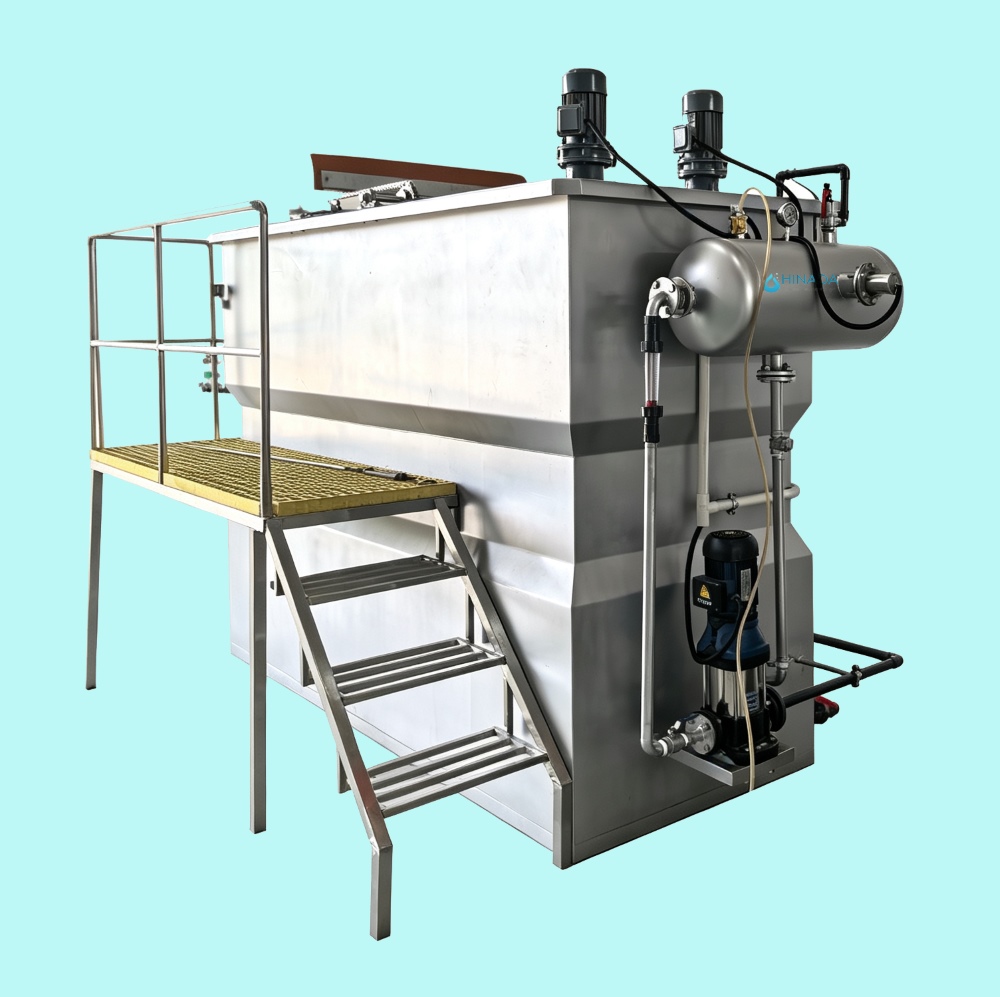
First and foremost, a Dissolved Air Flotation (DAF) system is a highly efficient water clarification technology. Its primary purpose is to separate suspended solids (TSS), fats, oils, and grease (FOG), and other low-density particles from a liquid stream.
In essence, a DAF is the core of many Wastewater Treatment Plant (WWTP) pre-treatment stages. It tackles problematic contaminants like high TSS levels and Fats, Oils, and Grease (FOG) head-on. By removing these pollutants early, a DAF system significantly reduces the load on downstream biological treatment processes, lowers overall chemical consumption, and is often the key to achieving regulatory compliance for the final effluent.The process can be broken down into four essential stages:
⚙️ 1. Chemical Coagulation and Flocculation (Pretreatment)
Before the wastewater enters the main DAF tank, coagulants (such as aluminium or iron salts) and flocculants (polyelectrolytes) are typically added. These chemicals neutralise electrical charges and cause fine suspended particles and colloidal matter to bind together, forming larger, fluffy agglomerates called "flocs". This step is crucial because larger flocs are much easier for the microbubbles to attach to later.
💨 2. Dissolution and Release of Air (Bubble Generation)
This is the heart of the DAF system – creating a vast number of extremely fine bubbles.
Dissolution (Pressurisation): A portion of the clarified effluent (or clean water) is diverted into a pressure vessel called the saturation tank (or air‑dissolving tube). Compressed air is injected into this stream under high pressure (typically 4-6 bar). At this elevated pressure, a large amount of air dissolves into the water, forming a supersaturated dissolved‑air solution.
Release (De‑pressurisation): This pressurised, air‑rich water is then discharged through special pressure‑release nozzles into the main DAF flotation tank, which is at atmospheric pressure. The sudden pressure drop causes the dissolved air to come out of solution instantly, forming an enormous number of microscopic bubbles (typically 20–40 micrometres in diameter).
⬆️3. Bubble Attachment and Flotation (Separation)
In the contact zone of the DAF tank, the released microbubbles mix intimately with the chemically pretreated wastewater. Because the bubbles have a natural hydrophobic (water‑repelling) tendency, they attach preferentially to the surfaces of the flocs, oil droplets, and other suspended particles. Once attached, the overall density of the bubble‑floc agglomerate becomes less than that of water, causing them to rise rapidly to the surface under buoyancy. This forms a floating layer of sludge (commonly called the float or scum) on top of the tank.
🧹️ 4. Separation Sludge Skimming and Collection (Final Clarification)
Sludge Skimming: The accumulated floating sludge layer is continuously or intermittently scraped off the surface by chain‑driven or spiral skimmers and directed into a sludge trough for further dewatering or disposal.
Clear Effluent Withdrawal: The clarified, treated water remains in the lower portion of the tank. It is collected uniformly through a system of collection pipes (or launders) at the bottom and discharged from the DAF unit. This effluent can be reused or discharged in compliance with environmental regulations.
💡 Key Advantages and Typical Applications
DAF is especially effective for contaminants whose density is close to or less than that of water, such as:
Fats, oils, and grease
Colloidal solids
Algae and fibres
Emulsified oils
With proper chemical conditioning, DAF can achieve removal efficiencies of 95–99% for these pollutants.
Common applications include:
Industrial wastewater – from food processing, dairy, meat packing, pulp and paper, petrochemical, and metal finishing industries.
Municipal wastewater – as a primary treatment step or for thickening biological sludge.
Drinking water treatment – for removing algae and turbidity.
Oil‑water separation – in refinery and marine operations.
In summary, the DAF system combines chemical conditioning, pressure‑dissolved air, and physical flotation to deliver a robust, reliable, and widely adaptable solution for solid‑liquid separation in wastewater treatment.
At Hinada Water Treatment Tech Co.,Ltd, we are more than just an equipment supplier; we are your end-to-end water solution partner. Our expertise as an EPC and BOO (Build, Own, Operate) solutions provider ensures that your DAF system is not just a piece of wastewater equipment, but a fully integrated, high-performing asset. We handle the complexity of water treatment, from design to long-term OMS (Operation, Maintenance, Service), allowing you to focus on your core business.
To discuss how a DAF system can be integrated into your facility, speak with our experts.
Read More