How to Choose the Packaged MBR System for Sewage or Industrial Wastewater Project
Apr 18, 2026
How to Choose the Packaged MBR System for Sewage or Industrial Wastewater Project
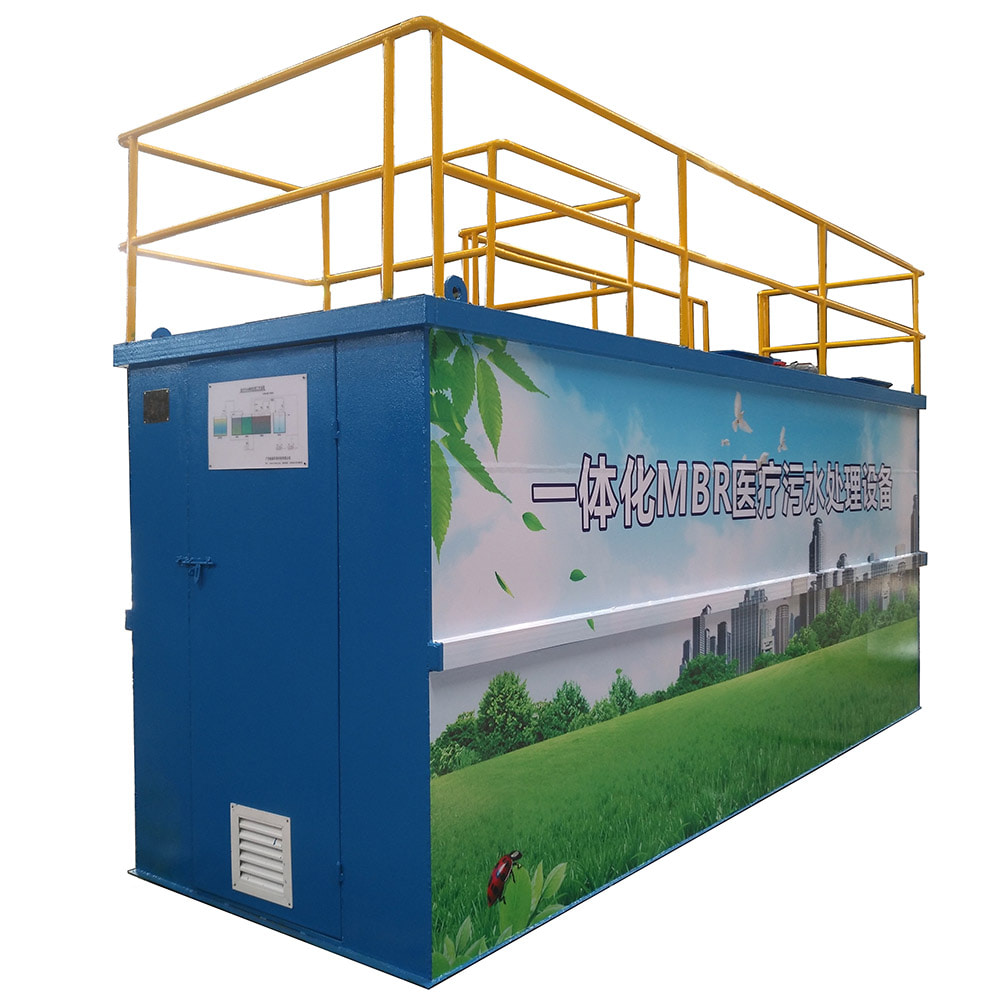
A packaged MBR system combines biological treatment and MBR filtration in a compact, pre-engineered unit (often containerized or skid-mounted). For small projects (typically 5–120 m³/day), choosing the right system requires balancing performance, cost, and operational simplicity.
1. Define Your Project Basics
Before evaluating any equipment, establish:
Flow rate – Average daily flow (m³/day or GPD) and peak hourly flow.
Influent characteristics – Domestic sewage only ? Or mixed with industrial discharge? Key parameters: BOD, COD, TSS, ammonia, phosphorus, fats/oil/grease.
Effluent requirements – Discharge to surface water (e.g., Class 1A or EU standards) or reuse (irrigation, toilet flushing, car washing). MBR typically produces very high quality, but check local limits for nitrogen, phosphorus, and pathogens.
Site conditions – Ambient temperature (affects biological activity), available space, access for delivery, noise restrictions, and power availability (single or three-phase).
2. Select the Right Membrane Type
Recommendation for small projects with limited operator skill: Choose PVDF Hollow Fiber MBR. It is more forgiving and easier to maintain.
3. Check Pre-treatment Requirements
MBR is not a "dump-and-run" system. Inadequate pre-treatment will ruin membranes.
Coarse screen – Must have a fine screen (1–3 mm) before the MBR. Some packaged units include an internal rotary drum or wedge-wire screen.
Grit removal – For projects with sand or heavy solids (e.g., from roads), include a grit chamber.
Flow equalization – A balancing tank is strongly recommended if flow varies greatly (e.g., hotels or schools). It protects the MBR from hydraulic shock.
Red flag: Any packaged MBR that claims "no pre-treatment" for raw sewage – avoid it.
4. Evaluate Automation & Controls
Small projects usually have minimal on-site staff. Therefore:
PLC with HMI (touchscreen) – Must be included. Look for intuitive alarms (high TMP, low air flow, pump failures).
Remote monitoring – Increasingly standard. Allows you (or a service provider) to check status and receive alerts via cellular or Wi-Fi.
Automatic cleaning sequences – The system should perform daily maintenance cleans (e.g., relaxations, backwashes) and prompt for periodic chemical cleaning (CIP).
Low-maintenance design – Ask: How often does an operator need to handle sludge wasting? Is there an easy way to check mixed liquor suspended solids (MLSS)?
5. Compare Physical Footprint & Installation
Containerized (shipping container) – Truly plug-and-play, delivered with internal piping, blowers, pumps, and controls. Requires only concrete pad, power, and pipe connections. Ideal for remote sites.
Skid-mounted (open frame) – More flexible for fitting into existing buildings. May need an enclosure or shelter.
Dimensions – Ensure the unit can be transported to your site (road width, crane access, etc.).
For very small flows (<20 m³/day), a single 20-ft container is common. For up to 100 m³/day, a 40-ft container or multiple smaller units.
6. Assess Energy Efficiency
MBR consumes more energy than conventional activated sludge (CAS) because of membrane air scouring. For small systems:
Specific energy consumption – Ask for kWh per m³ of treated water. Good small MBRs: 0.6–1.2 kWh/m³ (domestic sewage). Higher than 1.5 kWh/m³ indicates inefficiency.
Air blowers – Use high-efficiency blowers (e.g., rotary lobe or side-channel) with variable frequency drives (VFDs) to match airflow to demand.
Recovery of cleaning chemicals – Not critical for small projects, but avoid designs that waste excessive water during backwashes.
7. Verify Manufacturer & After-Sales Support
Because small projects often lack specialized operators, vendor support is crucial.
Proven reference – Ask for at least 3 similar projects (same flow range, same wastewater type) that have run for >2 years.
Spare parts availability – Membranes, pumps, blowers, and seals must be available without long delays.
Training – Hinada can provide on-site or remote training, with a manual written in clear language
Local service – If you are outside a major market, check if the manufacturer has a local representative or service partner.
Beware of very cheap units from unknown brands – membrane replacement alone can cost more than the original system.
8. Compare Costs (CAPEX & OPEX)
Cost Type
What to Include
Capital cost (CAPEX)
Equipment, shipping, import duties, foundation/installation, electrical hookup, initial chemicals, training
Operational cost (OPEX)
Membrane replacement (every 5–8 years), energy, chemicals (cleaning agents, antichlor if needed), sludge disposal, spare parts, remote monitoring subscription
Typical budget range (for small MBR, 10–50 m³/day, delivered but not installed):
Basic containerized unit: $20,000 – $60,000 USD
Complete with all auxiliaries (pre-screen, equalization, sludge handling): $35,000 – $100,000 USD
Always get a lifecycle cost estimate (10 years). A slightly more expensive system with lower energy and easier maintenance often pays back.
9. Consider Sludge Handling
MBR produces less sludge than conventional plants, but it still needs removal.
Sludge storage tank – Does the packaged unit include a small tank or must you add one?
De-watering – For very small projects, a simple sludge bag or drying bed may suffice. For larger small projects, consider a filter press.
Disposal route – Check local regulations. Can sludge be land-applied? Or must it be hauled to a treatment plant?
10. Regulatory Compliance & Permitting
Ensure the chosen MBR can consistently meet your permit limits – not just in ideal conditions but in winter (low temperature) or during peak flow.
Ask for performance test data from a third-party or certified factory test. For discharge to sensitive waters, you may need additional disinfection (UV or chlorine) – some MBR units already include it.
Quick Selection Checklist
Flow rate matches manufacturer’s nameplate (including peak factor).
Membrane type: Hollow fibers MBR preferred for small, low-skill sites.
Fine screen (≤2 mm) included or specified separately.
Automatic cleaning and remote monitoring available.
Energy use <1.2 kWh/m³.
Manufacturer has verifiable references.
Spare membranes can be delivered within 2 weeks.
Total 10-year cost fits your budget (not just purchase price).
Sludge handling is addressed.
Effluent quality meets all local discharge or reuse standards.
Example: Choosing for a 30 m³/day Hotel in a Remote Area
Need – Discharge to a nearby stream, strict nutrient limits.
Choice – 40-ft containerized flat-sheet MBR with automatic backwash, integral UV disinfection, and cellular remote monitoring.
Pre-treatment – 2 mm rotary drum screen + 10 m³ equalization tank.
Result – Effluent BOD <15 mg/L, TSS <1 mg/L, NH₃-N <10 mg/L. Operator checks unit once per week via smartphone.
If you share your specific flow rate, wastewater type, and discharge standard, I can narrow down the recommendation further.
Read More