How MBR Membranes Help Reduce COD in Wastewater
May 25, 2026
Hinada: A Leading MBR Membrane Supplier in China since 2012, MBR as advance technology that work together with biological treatment, as one of the effective solutions for achieving strict discharge standards or meet water reuse requirement.
MBR membrane technology plays a pivotal role in addressing two of the most pressing challenges in environmental management: how to reduce COD in wastewater and how to treat industrial wastewater effectively and reliably.
How MBR Membranes Help Reduce COD in Wastewater
Chemical Oxygen Demand (COD) is a critical indicator of organic pollution in wastewater. Especailly industrial wastewater, the COD value reach 3000----10000mg/L and even higher,
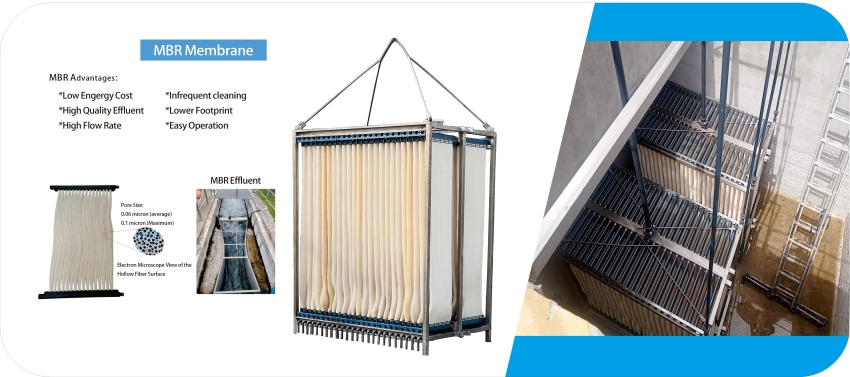
This high value COD always a tough challenge for wastewater specialist, but as MBR membrane this advance technology that can by combining biological degradation with membrane filtration. MLSS can reach 6000---8000mg/L, enhancing the degradation of COD organic matter. the COD removal efficiencies ranging from approximately 80% to 94% under various industrial conditions.
How MBR Technology Treats Industrial Wastewater
When addressing how to treat industrial wastewater, To treat industrial wastewater effectively, an MBR system typically consists of three key steps: (1) biological treatment where microorganisms break down be organic pollutants under high MLSS ; (2) membrane filtration with pore size average of 0.06micron, where treated water is separated from the biomass using low-pressure ultrafiltration membranes; and (3) MBR eliminates the need for secondary clarifiers and tertiary filtration, drastically reducing the footprint of the treatment plant—typically to half or two-thirds of traditional systems—making it particularly suitable for space-constrained industrial sites.
Hinada supplied an MBR Membrane to Liby Co., Ltd., a leading Chinese laundry care brand, demonstrating the technology’s reliability in demanding industrial environments.
As industries face increasing regulatory pressure to reduce COD and manage wastewater responsibly, choosing a proven MBR partner like Hinada becomes a strategic advantage for achieving environmental compliance, operational efficiency, and long-term cost savings.
Read More