What Makes a daf wastewater system factory Stand Out
What Makes a daf wastewater system factory Stand Out
September 30, 2026
Author
Solution Provider, through a professional technical team, we provide customers with targeted equipment selection recommendations and comprehensive after-sales services, winning the trust and recognition of customers.
Sarah M.
This article explores the key factors that distinguish an outstanding dissolved air flotation wastewater system factory from ordinary suppliers. It begins by explaining the role of DAF in modern wastewater treatment, emphasizing that a DAF unit is part of a larger treatment train and must be designed with upstream and downstream processes in mind. The article then examines what makes a factory stand out, including engineering depth, process knowledge, manufacturing capabilities, quality control, customization, and application-specific design. It highlights the importance of air dissolution and recycle systems, scraper and sludge removal mechanisms, automation, energy efficiency, and modular containerized designs. Testing, commissioning, and after-sales support are presented as critical differentiators. Global reach and export experience are also discussed, along with certifications and standards. The article uses HINADA Water Treatment Tech Co., Ltd. as a reference point. Founded in 2012 in Guangzhou and later expanding to Chenzhou, Hunan Province, HINADA serves clients in over 75 countries. Its product range includes PVDF and PVC hollow fiber UF membranes, submerged MBR membrane modules, containerized MBR systems, packaged wastewater treatment plants, DAF systems, ultrafiltration systems, and industrial RO systems. With more than 13 years of industry experience and 10 years of manufacturing experience, HINADA has built a complete ecosystem from membrane R&D to turnkey solution delivery. The article emphasizes that a standout factory is vertically integrated, customer-centric, and committed to innovation. It concludes that choosing the right DAF factory is a long-term investment decision, and that HINADA exemplifies the qualities that make a DAF wastewater system factory truly stand out.
What Makes a DAF Wastewater System Factory Stand Out
In the crowded landscape of wastewater treatment equipment suppliers, a dissolved air flotation system factory can appear similar to many others on the surface. Catalogs show tanks, pumps, scrapers, and control panels. Websites list capacities and dimensions. Yet the real differences emerge when a project moves from a glossy brochure to a live installation. A standout DAF wastewater system factory is not defined by a single machine or a single price point. It is defined by engineering depth, manufacturing discipline, application knowledge, and the ability to support a client from concept to commissioning. This article explores the qualities that separate an ordinary fabricator from a truly exceptional DAF system manufacturer, using the experience and capabilities of HINADA Water Treatment Tech Co., Ltd. as a reference point.
Understanding the Role of DAF in Modern Wastewater Treatment
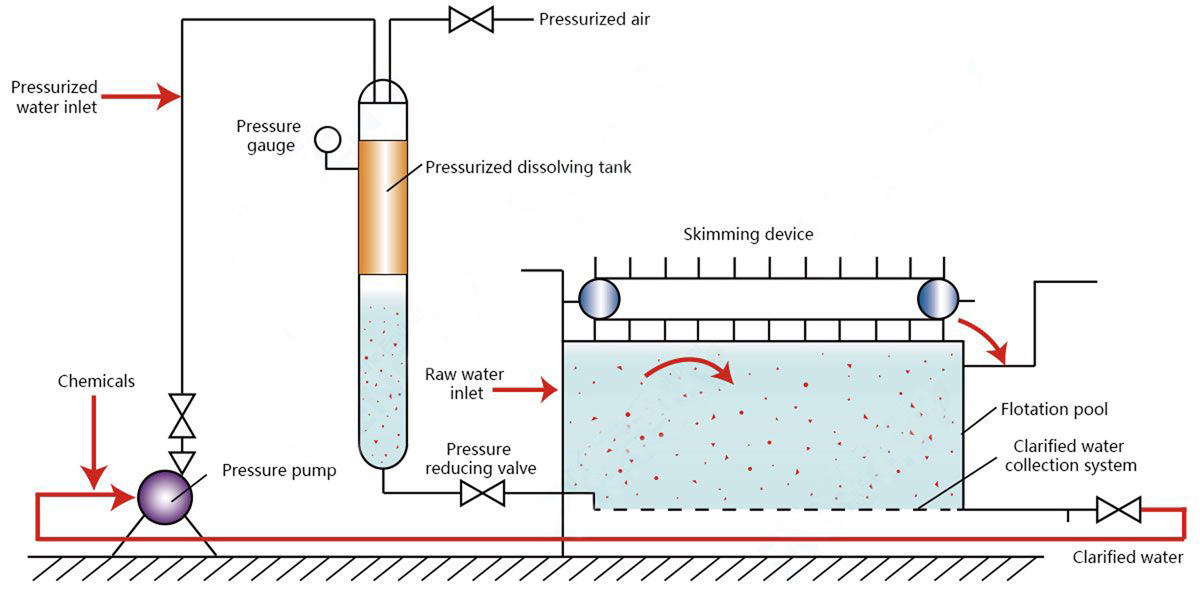
Dissolved air flotation, commonly known as DAF, is a physical separation process that removes suspended solids, oils, grease, and other light particles from water. The principle is straightforward: tiny air bubbles are generated under pressure and released into a flotation tank. These bubbles attach to particles, lifting them to the surface where they form a sludge blanket. A scraper or skimmer then removes the floated material, leaving clarified water behind. Despite this simple concept, the engineering behind a reliable DAF system is complex. It involves precise control of air dissolution, recycle flow, hydraulic loading, chemical conditioning, and sludge handling.
undefined
DAF systems are used in industrial wastewater treatment, municipal sewage treatment, drinking water purification, and many decentralized applications. They are particularly valuable when contaminants are too light to settle by gravity or when space is limited. For industries such as food processing, paper manufacturing, textiles, petrochemicals, and mining, DAF units often serve as a critical first line of defense before biological treatment or membrane filtration. In municipal settings, DAF can be used for algae removal, phosphorus reduction, and combined sewer overflow treatment. In drinking water plants, DAF helps remove low-density particles, algae, and natural organic matter.
Because DAF sits at the heart of many treatment trains, the quality of the factory behind the system matters enormously. A poorly built DAF unit can lead to inconsistent effluent quality, high chemical consumption, frequent maintenance, and operational headaches. A well-built DAF system, by contrast, can operate for decades with minimal downtime. The difference lies in how the factory approaches design, fabrication, testing, and support.
The Factory Behind the System: More Than Assembly
Many companies that sell DAF systems are essentially assemblers. They purchase tanks, pumps, valves, and scrapers from third parties and bolt them together in a warehouse. This approach can work for simple applications, but it leaves the client vulnerable to component mismatches, limited customization, and fragmented responsibility when problems arise. A standout DAF factory, however, is vertically integrated. It controls critical manufacturing steps, from steel preparation and welding to surface treatment, assembly, and electrical wiring. This integration allows the factory to ensure quality at every stage and to respond quickly when a project requires special modifications.
HINADA Water Treatment Tech Co., Ltd. is an example of a manufacturer that has built a complete ecosystem. Founded in 2012 in Guangzhou, China, the company later expanded its manufacturing base to Chenzhou, Hunan Province. Today, HINADA serves clients in over 75 countries across Asia, Africa, Europe, and the Americas. Its product range includes PVDF and PVC hollow fiber ultrafiltration membranes, submerged MBR membrane modules, containerized MBR systems, packaged wastewater treatment plants, DAF systems, ultrafiltration systems, and industrial reverse osmosis systems. This breadth of experience gives HINADA a unique perspective on how DAF systems interact with downstream and upstream processes.
For a DAF factory to stand out, it must understand that a DAF unit is not an isolated piece of equipment. It is part of a treatment train. The factory must consider how upstream screening, equalization, chemical dosing, and downstream biological or membrane treatment will affect DAF performance. It must also consider how sludge handling, odor control, and automation will impact the overall plant. A factory that only focuses on its own unit may deliver a machine that works in isolation but fails in the real world.
Engineering Depth and Process Knowledge
Engineering depth is one of the most important differentiators. A standout DAF factory employs process engineers, mechanical engineers, electrical engineers, and automation specialists who work together from the beginning of a project. They do not simply fill in a standard template. They analyze the wastewater characteristics, flow rates, peak factors, temperature variations, and discharge requirements. They calculate the air-to-solids ratio, recycle ratio, surface loading rate, and hydraulic retention time. They select the right coagulants and flocculants and determine the optimal dosing points.
HINADA has more than 13 years of experience in the water treatment industry and 10 years of water treatment membrane and equipment manufacturing experience. This long-term focus has allowed the company to develop deep process knowledge across many applications. Its engineers understand that industrial wastewater is not the same as municipal sewage. They know that food processing wastewater may contain high levels of fats, oils, and grease, while textile wastewater may contain dyes and surfactants. They recognize that paper mill effluent may have high fiber content, and petrochemical wastewater may contain volatile organic compounds. This application-specific knowledge is what enables a factory to design a DAF system that truly performs.
Process knowledge also extends to pilot testing. A standout factory will often recommend bench-scale or pilot-scale testing before full-scale design. This step reduces risk and ensures that the proposed DAF system will meet effluent targets. HINADA, for example, provides integrated solutions from design and supply to installation support, commissioning, and training. This end-to-end approach means that process knowledge is not lost between the sales team and the engineering team. The same experts who design the system are involved in its start-up and optimization.
Membrane and DAF Integration: A Complete Ecosystem
One of the qualities that makes HINADA stand out is its ability to integrate DAF with membrane filtration. The company focuses on two core technology pillars: hollow fiber ultrafiltration and MBR membranes, and intelligent integrated wastewater treatment equipment. Hollow fiber UF and MBR membranes provide precise physical separation of suspended solids, bacteria, colloids, and macromolecular organics. DAF systems, on the other hand, provide efficient removal of oils, grease, and floatable solids. When combined, these technologies can create a powerful treatment train.
For example, in industrial wastewater reuse projects, a DAF unit can act as a pretreatment step before ultrafiltration. By removing the bulk of suspended solids and oils, the DAF system reduces the load on the UF membranes, extending their life and reducing cleaning frequency. In municipal applications, DAF can be used before MBR systems to remove algae and other problematic particles. HINADA's portfolio includes both DAF and membrane systems, so its engineers can optimize the entire train rather than just one component.
This ecosystem approach also benefits clients who need a single point of responsibility. Instead of coordinating multiple suppliers, they can work with one manufacturer that understands how all the pieces fit together. HINADA provides a truly integrated solution to water and wastewater projects, from designation and supplying to installation support and commissioning to training. This level of integration is rare and is a clear sign of a standout DAF factory.
Manufacturing Capabilities and Quality Control
A DAF system is only as good as its manufacturing. The factory must have the right equipment, skilled workers, and quality control systems. Key manufacturing capabilities include steel cutting, rolling, welding, sandblasting, painting, and assembly. For corrosion-resistant applications, the factory must be able to work with stainless steel, duplex steel, and other specialty alloys. It must also have clean rooms or controlled environments for electrical panel assembly and testing.
HINADA's manufacturing base in Chenzhou, Hunan Province, is equipped to handle large-scale fabrication. The company has invested in modern welding machines, automatic cutting equipment, and surface treatment facilities. Quality control is not an afterthought. It is built into every step. Incoming materials are inspected for grade and thickness. Weld seams are tested for penetration and leaks. Tanks are hydro-tested. Pumps and valves are checked for performance. Electrical panels are wired and tested according to international standards. Before shipment, every DAF system undergoes a factory acceptance test to ensure that it meets design specifications.
Quality control also extends to documentation. A standout factory provides material certificates, weld inspection reports, pressure test reports, electrical schematics, and operation manuals. This documentation is essential for clients who need to comply with local regulations or who want to maintain their equipment properly. HINADA understands that a DAF system is a long-term investment, and it supports that investment with comprehensive documentation and traceability.
Customization and Application-Specific Design
No two wastewater projects are exactly alike. Flow rates vary. Contaminant levels vary. Space constraints vary. Discharge standards vary. A standout DAF factory does not force clients into a standard product. It offers customization. This may mean adjusting tank dimensions, adding multiple flotation cells, changing the scraper type, modifying the recycle system, or integrating chemical dosing skids. It may also mean designing a containerized or modular DAF system that can be shipped and installed quickly.
HINADA offers a range of DAF configurations to meet different needs. For small decentralized applications, a compact packaged DAF unit may be sufficient. For large industrial plants, a custom-engineered DAF system with multiple trains may be required. The company also offers containerized MBR systems and packaged wastewater treatment plants, which can be combined with DAF for a complete solution. This flexibility is a hallmark of a factory that listens to its clients and designs for the specific application.
Customization also involves material selection. DAF systems can be built in carbon steel with epoxy coating, stainless steel 304 or 316L, or even duplex stainless steel for highly corrosive environments. The factory must be able to advise on the best material based on the wastewater chemistry, temperature, and chloride content. HINADA's engineers work closely with clients to select the right materials and coatings, ensuring long service life and low maintenance.
Air Dissolution and Recycle Systems
The heart of any DAF system is the air dissolution and recycle system. This is where compressed air is dissolved into a portion of the treated effluent under pressure. The pressurized solution is then released into the flotation tank through special nozzles or valves, creating millions of micro-bubbles. The efficiency of this process depends on the design of the saturator, the air compressor, the recycle pump, and the pressure control system.
A standout DAF factory pays close attention to these components. It uses high-efficiency saturators that maximize air dissolution while minimizing energy consumption. It selects reliable air compressors and recycle pumps that can handle continuous operation. It designs the piping and valves to minimize pressure loss and ensure even distribution of bubbles across the tank. It also includes instrumentation to monitor pressure, flow, and air saturation, allowing operators to optimize performance.
HINADA's DAF systems are engineered with these principles in mind. The company understands that poor air dissolution leads to poor flotation. It therefore uses proven designs and high-quality components to ensure that the recycle system operates reliably. In addition, HINADA offers training and commissioning support so that operators understand how to adjust the recycle ratio and air pressure for different wastewater conditions.
Scraper and Sludge Removal Mechanisms
Once the bubbles have lifted the sludge to the surface, it must be removed efficiently. This is the job of the scraper or skimmer system. There are several types of sludge removal mechanisms, including chain-and-flight scrapers, rotating scrapers, and suction skimmers. Each has its own advantages and disadvantages. A standout factory will recommend the right type based on the sludge characteristics, tank size, and maintenance preferences.
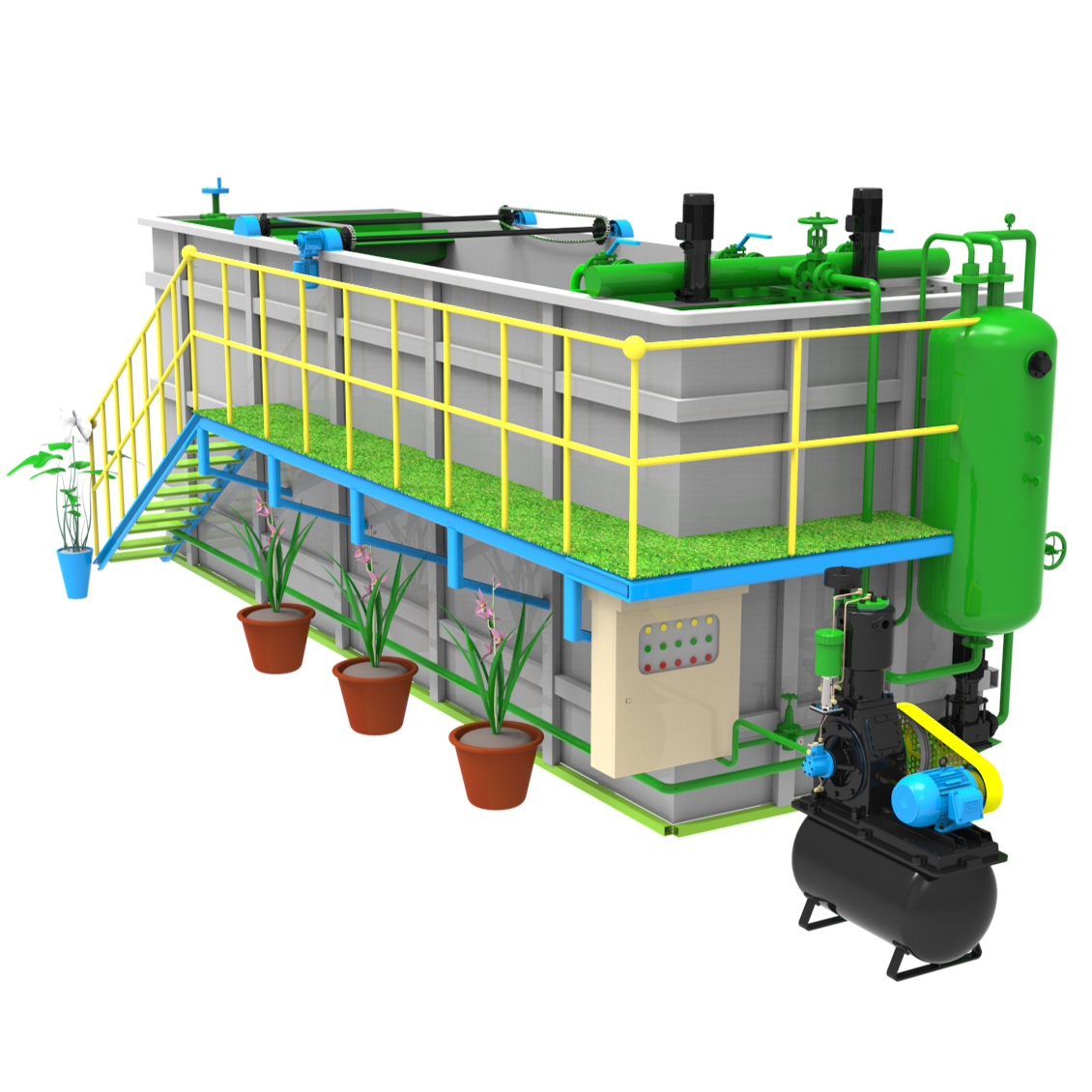
Chain-and-flight scrapers are common in rectangular DAF tanks. They use chains and flights to move sludge along the surface and down a ramp into a sludge collection hopper. Rotating scrapers are often used in circular DAF tanks. They use a rotating arm to sweep sludge into a central hopper. Suction skimmers remove sludge by vacuum, which can be useful for very light or fragile flocs. The factory must be able to design and fabricate these mechanisms with precision to avoid jamming, excessive wear, and sludge carryover.
HINADA manufactures DAF systems with robust scraper mechanisms that are designed for continuous operation. The company uses high-quality chains, sprockets, and flights that resist corrosion and wear. It also designs the sludge hopper and discharge system to handle the expected sludge volume and concentration. For clients who need automated sludge removal, HINADA can integrate level sensors and control logic to optimize the scraping cycle.
Automation and Intelligent Control
Modern DAF systems are increasingly automated. A standout factory offers intelligent control systems that monitor key parameters and adjust operation automatically. This reduces labor requirements, improves consistency, and saves energy and chemicals. Automation can include variable frequency drives on pumps, automatic valves, pH and turbidity sensors, flow meters, and programmable logic controllers.
HINADA's integrated wastewater treatment equipment is designed with intelligent control in mind. The company offers PLC-based control panels with touchscreen interfaces that allow operators to monitor and adjust the system easily. The control system can be integrated with a plant-wide SCADA system for remote monitoring and data logging. This level of automation is especially valuable for decentralized plants or facilities with limited staff.
Automation also improves troubleshooting. When a parameter goes out of range, the control system can send alarms and suggest corrective actions. It can also record historical data, which helps engineers identify trends and optimize performance over time. A factory that understands automation is better positioned to deliver a DAF system that operates smoothly in the real world.
Energy Efficiency and Operating Costs
Energy is a major operating cost for DAF systems. The recycle pump, air compressor, and scraper drive all consume electricity. A standout factory designs for energy efficiency. This means selecting high-efficiency motors, optimizing pipe sizes to reduce head loss, using variable frequency drives to match flow to demand, and minimizing the recycle ratio while maintaining treatment performance.
Chemical consumption is another cost driver. DAF systems often use coagulants and flocculants to improve particle capture. The factory must be able to recommend the right chemicals and dosing points to achieve the best results at the lowest cost. It should also design the chemical dosing system for accurate and reliable delivery. HINADA's process engineers work with clients to optimize chemical dosing, often conducting jar tests to determine the best coagulant and flocculant combinations.
Maintenance costs also matter. A DAF system with high-quality components and easy access for maintenance will cost less to operate over its lifetime. A standout factory designs for maintainability. It provides access platforms, inspection hatches, and isolation valves so that maintenance can be performed safely and quickly. It also supplies spare parts and offers service agreements to keep the system running at peak performance.
Modular and Containerized DAF Systems
In many projects, speed of installation and ease of transport are critical. This is where modular and containerized DAF systems shine. A standout factory can deliver a DAF system that is pre-assembled, pre-wired, and pre-tested in a container or skid. This reduces on-site construction time, minimizes civil works, and ensures consistent quality.
HINADA offers containerized MBR systems and packaged wastewater treatment plants that can incorporate DAF technology. These systems are ideal for remote locations, temporary installations, and decentralized treatment. They are also suitable for industrial plants that need to expand capacity quickly. The factory builds the system in a controlled environment, tests it thoroughly, and then ships it to the site. On-site, the client only needs to connect power, water, and piping. This approach saves time and money and reduces the risk of installation errors.
Containerized DAF systems also offer flexibility. They can be relocated if the plant layout changes. They can be expanded by adding additional modules. They can be customized with different tank materials, insulation, and heating for cold climates. A factory that excels in modular design is a factory that understands the diverse needs of global clients.
Testing, Commissioning, and After-Sales Support
A DAF system is a significant investment. Clients need confidence that it will work as promised. A standout factory provides comprehensive testing, commissioning, and after-sales support. Factory acceptance testing is the first step. This involves running the system with water and air to verify mechanical and electrical integrity. It may also involve performance testing with actual wastewater or a simulated feed.
Commissioning is the next critical step. The factory should send experienced engineers to the site to supervise installation, start-up, and initial operation. They should train the client's operators on how to run the system, adjust parameters, and perform routine maintenance. They should also help troubleshoot any issues that arise during the first weeks of operation. HINADA provides installation support and commissioning services as part of its integrated solution. The company's engineers have experience in diverse environments and can adapt to local conditions.
After-sales support is equally important. A standout factory offers spare parts, technical assistance, and periodic maintenance visits. It responds quickly to emergencies. It provides updated documentation and training as needed. HINADA serves clients in over 75 countries, so it has developed a global support network. This network allows the company to provide timely service regardless of where the system is installed.
Global Reach and Export Experience
Exporting DAF systems requires more than just shipping equipment. It requires understanding international standards, customs regulations, packaging requirements, and cultural differences. A standout factory has extensive export experience. It knows how to prepare equipment for long ocean voyages, including corrosion protection, moisture barriers, and secure crating. It knows how to provide documentation for import clearance. It knows how to support clients in different time zones.
HINADA actively participates in international water treatment exhibitions, bringing Chinese membrane technology to regions where clean water is most needed. This global presence has helped the company build a strong reputation in Asia, Africa, Europe, and the Americas. Its export team is experienced in handling complex logistics and can provide door-to-door delivery if needed. This level of service is a clear differentiator for a DAF factory.
Global reach also means global learning. By working in different countries, HINADA has encountered a wide range of wastewater challenges. This experience feeds back into its design and manufacturing processes. The company continually improves its products based on field feedback from around the world. This cycle of innovation and improvement is what keeps a factory at the forefront of the industry.
Certifications and Standards
Certifications are not just pieces of paper. They demonstrate that a factory has implemented rigorous quality management and environmental management systems. A standout DAF factory will hold certifications such as ISO 9001 for quality management and ISO 14001 for environmental management. It may also have product certifications for specific markets, such as CE for Europe or UL for North America.
HINADA is committed to maintaining high standards in its manufacturing processes. The company follows international best practices for welding, electrical assembly, and quality control. Its products are designed to meet applicable codes and standards. For clients, this means peace of mind. They know that the DAF system they receive has been built to a recognized standard and is likely to pass local inspections.
Certifications also indicate a culture of continuous improvement. A factory that pursues certifications is a factory that is willing to invest in training, documentation, and process optimization. This culture ultimately benefits the client through better products and services.
Key Application Fields for DAF Systems
DAF systems are versatile and can be used in many different applications. A standout factory has experience in a wide range of fields. HINADA's key application fields include industrial wastewater treatment and reuse, municipal sewage treatment and water recycling, rural decentralized water supply and sanitation, and drinking water purification from surface water and groundwater.
In industrial wastewater treatment, DAF is often used to remove oils, grease, suspended solids, and heavy metals. It can be combined with chemical precipitation to remove phosphorus and other nutrients. In municipal sewage treatment, DAF can be used for primary treatment, tertiary treatment, or combined sewer overflow. It can also be used to thicken waste activated sludge. In rural decentralized water supply, DAF can be part of a compact treatment system that provides safe drinking water. In drinking water purification, DAF is effective for removing algae, turbidity, and natural organic matter.
Each application has its own challenges. A factory that understands these challenges can design a DAF system that is optimized for the specific use. HINADA's engineers have worked on projects in all these fields, so they bring practical knowledge to every design.
Comparing DAF Factories: Questions to Ask
When evaluating DAF system factories, clients should ask several important questions. How long has the factory been in business? What is its manufacturing capability? Does it have in-house engineering and design? Can it provide references from similar projects? What kind of testing does it perform before shipment? What support does it offer during installation and commissioning? What is its spare parts policy? How does it handle warranty claims?
A standout factory will answer these questions transparently and confidently. It will provide detailed case studies, client testimonials, and site visit opportunities. It will not shy away from tough technical questions. It will demonstrate a genuine interest in solving the client's problem, not just selling a product. HINADA, for example, provides a truly integrated solution from design to training. This approach requires a deep commitment to customer success.
Another important question is whether the factory can integrate DAF with other treatment processes. As mentioned earlier, DAF rarely works alone. A factory that can supply membranes, MBR systems, and RO systems in addition to DAF can offer a more holistic solution. This reduces interface risks and ensures that all components work together seamlessly.
The HINADA Story: From Guangzhou to Chenzhou
HINADA Water Treatment Tech Co., Ltd. was founded in 2012 in Guangzhou, China. From the beginning, the company focused on two core technology pillars: hollow fiber ultrafiltration and MBR membranes, and intelligent integrated wastewater treatment equipment. Over the years, HINADA has grown from a small startup to a globally recognized manufacturer. It later expanded its manufacturing base to Chenzhou, Hunan Province, to increase capacity and improve production efficiency.
Today, HINADA is one of the leading submerged MBR membrane, wastewater treatment equipment, and membrane filtration system manufacturers in China. The company specializes in wastewater treatment solutions and equipment supply. It has more than 13 years of experience in the water treatment industry and 10 years of experience in membrane and equipment manufacturing. This combination of experience and expertise is what allows HINADA to stand out in the DAF market.
HINADA's complete ecosystem covers membrane research and development, component manufacturing, equipment fabrication, and turnkey solution delivery. This vertical integration gives the company control over quality, cost, and lead time. It also allows HINADA to offer customized solutions that meet the specific needs of each client.
Two Technology Pillars: UF/MBR Membranes and Integrated Equipment
The first pillar is hollow fiber ultrafiltration and MBR membranes. These membranes provide precise physical separation of suspended solids, bacteria, colloids, and macromolecular organics. HINADA manufactures PVDF and PVC hollow fiber UF membranes, as well as submerged MBR membrane modules. These products are used in drinking water treatment, wastewater reuse, and industrial process water.
The second pillar is intelligent integrated wastewater treatment equipment. This includes containerized MBR systems, packaged wastewater treatment plants, DAF systems, ultrafiltration systems, and industrial RO systems. These products are designed to be easy to install, easy to operate, and easy to maintain. They are ideal for decentralized applications, rural sanitation, and industrial plants with limited space.
By combining these two pillars, HINADA can offer a complete treatment train. For example, a client might need a system that removes oil with DAF, then removes bacteria and viruses with UF, then removes dissolved solids with RO. HINADA can supply all these components and ensure they work together. This capability is a major advantage for clients who want a single supplier for their entire water treatment plant.
Research, Development, and Innovation
A standout DAF factory invests in research and development. It does not rely on outdated designs. It continuously improves its products based on field data, laboratory testing, and customer feedback. HINADA has a dedicated R&D team that focuses on membrane technology, process optimization, and equipment design. The company collaborates with universities and research institutions to stay at the cutting edge of water treatment science.
Innovation at HINADA is not limited to membranes. The company also develops new DAF designs that are more efficient, more compact, and easier to operate. For example, it has improved the air dissolution system to reduce energy consumption. It has developed new scraper designs that require less maintenance. It has integrated advanced sensors and control algorithms to optimize performance. These innovations help clients achieve better results at lower cost.
R&D also involves testing. HINADA operates a pilot testing facility where new designs can be evaluated under realistic conditions. This facility allows the company to try new ideas before offering them to clients. It also allows HINADA to test wastewater samples from potential clients to determine the best treatment approach. This commitment to testing reduces risk and increases confidence.
Customer-Centric Approach
Ultimately, a DAF factory stands out because of its customers. A customer-centric factory listens to client needs, responds to inquiries promptly, and provides honest advice. It does not oversell or under-deliver. It treats every project as a partnership. HINADA has built its reputation on this approach. The company works closely with clients from the initial inquiry to the final handover. It provides transparent pricing, realistic timelines, and clear communication.
Customer-centric also means being responsive after the sale. HINADA offers technical support by phone, email, and video conference. It can dispatch engineers to the site if needed. It maintains a stock of spare parts for critical components. It provides training and documentation to help clients operate their systems safely and efficiently. This level of support is what turns a one-time sale into a long-term relationship.
Many of HINADA's clients have become repeat customers. They return for additional equipment, upgrades, or new projects. This loyalty is a testament to the company's commitment to customer satisfaction. It is also a clear indicator that HINADA is a standout DAF factory.
Conclusion: What Truly Sets a DAF Factory Apart
In conclusion, what makes a DAF wastewater system factory stand out is not one single factor. It is a combination of engineering depth, manufacturing quality, application knowledge, customization, automation, energy efficiency, global support, and customer focus. A standout factory is vertically integrated, so it controls quality from raw material to finished product. It has experienced engineers who understand the complexities of wastewater treatment. It offers a complete ecosystem of products, including membranes and integrated equipment, so it can provide a holistic solution. It tests thoroughly, commissions carefully, and supports continuously.
HINADA Water Treatment Tech Co., Ltd. exemplifies these qualities. Founded in 2012 in Guangzhou and now with a manufacturing base in Chenzhou, Hunan Province, HINADA serves clients in over 75 countries. Its product range includes PVDF and PVC hollow fiber UF membranes, submerged MBR membrane modules, containerized MBR systems, packaged wastewater treatment plants, DAF systems, ultrafiltration systems, and industrial RO systems. With more than 13 years of industry experience and 10 years of manufacturing experience, HINADA has built a complete ecosystem from membrane R&D to turnkey solution delivery.
For clients seeking a DAF system, the choice of factory is critical. A low-cost supplier may save money upfront but can cost far more in downtime, poor performance, and maintenance headaches. A standout factory like HINADA may not always be the cheapest, but it delivers value over the life of the system. It provides peace of mind. It stands behind its products. It treats clients as partners. These are the qualities that truly make a DAF wastewater system factory stand out.
Whether the application is industrial wastewater treatment and reuse, municipal sewage treatment and water recycling, rural decentralized water supply and sanitation, or drinking water purification from surface water and groundwater, the right DAF factory can make all the difference. HINADA actively participates in international water treatment exhibitions and brings Chinese membrane technology to regions where clean water is most needed. Its commitment to innovation, quality, and customer service ensures that it remains a leader in the industry. For anyone evaluating DAF system manufacturers, HINADA is a name worth considering.