What to Know Before Installing a Containerized MBR System
What to Know Before Installing a Containerized MBR System
September 30, 2026
Author
Solution Provider, through a professional technical team, we provide customers with targeted equipment selection recommendations and comprehensive after-sales services, winning the trust and recognition of customers.
Sarah M.
A containerized MBR system combines biological treatment with membrane filtration inside a prefabricated container, offering high-quality effluent, a small footprint, and rapid deployment. Before installation, project owners must evaluate wastewater characteristics, flow and load variability, site conditions, utilities, and regulatory requirements. Membrane selection is critical: PVDF or PVC hollow fiber membranes differ in chemical resistance and cost. Biological process design must address carbon oxidation, nitrification, denitrification, and phosphorus removal. Pretreatment, including fine screening and oil removal, protects membranes from damage and fouling. Container design must consider corrosion, ventilation, temperature control, and safety. Automation and remote monitoring improve reliability but require cybersecurity. Power supply, energy efficiency, and backup systems affect operating costs. Permitting, discharge standards, and reuse requirements dictate treatment goals. Life-cycle cost analysis should include CAPEX, OPEX, membrane replacement, and downtime. Vendor selection, installation, commissioning, training, and maintenance are essential for long-term success. Common pitfalls include undersized pretreatment, ignored variability, and scope gaps. Containerized MBR systems are ideal for municipal, industrial, rural, and decentralized applications. With careful planning and an experienced partner such as HINADA, a containerized MBR can deliver reliable wastewater treatment and water reuse.
What to Know Before Installing a Containerized MBR System
Containerized membrane bioreactor (MBR) systems have rapidly moved from niche innovation to mainstream solution for decentralized, industrial, and emergency wastewater treatment. They combine biological treatment with membrane filtration inside a prefabricated steel container, delivering high-quality effluent in a compact footprint. For project owners, engineers, and operators, the decision to install a containerized MBR is not simply a matter of buying a box. It requires a clear understanding of wastewater characteristics, site conditions, regulatory drivers, membrane chemistry, biological process design, automation, logistics, and long-term service. This article explores what to know before installing a containerized MBR system, drawing on practical experience from the water treatment industry and from manufacturers such as HINADA Water Treatment Tech Co., Ltd., often abbreviated as HINADA.
HINADA Water Treatment Tech Co., Ltd. is a globally recognized manufacturer of wastewater treatment equipment, hollow fiber ultrafiltration (UF) membranes, submerged MBR membrane modules, integrated packaged wastewater treatment systems, and dissolved air flotation (DAF) systems. Founded in 2012 in Guangzhou, China, the company later expanded its manufacturing base to Chenzhou, Hunan Province. Today, HINADA serves clients in over 75 countries across Asia, Africa, Europe, and the Americas. Its experience illustrates the broader trends and technical considerations that shape containerized MBR projects worldwide.
1. Understanding the Containerized MBR Concept
A containerized MBR system is a pre-engineered, skid-mounted, or container-housed wastewater treatment plant that uses membrane separation as the primary solid-liquid separation step. Instead of relying on gravity settling in a clarifier, the system pumps mixed liquor through a membrane module, typically a submerged hollow fiber membrane, to produce permeate. The membranes retain suspended solids, bacteria, and much of the colloidal and macromolecular organic matter, allowing the biological process to operate at higher mixed liquor suspended solids (MLSS) concentrations and longer solids retention times (SRT).
1.1 What Is a Membrane Bioreactor?
A membrane bioreactor is a biological wastewater treatment process coupled with membrane filtration. The biological tank contains activated sludge that consumes organic matter, nitrogen, and phosphorus under controlled aerobic and anoxic conditions. The membrane unit replaces the secondary clarifier. Because the membrane pore size is typically in the range of 0.1 to 0.4 microns for ultrafiltration, the effluent is essentially free of suspended solids and has a very low turbidity. This makes MBR technology ideal for water reuse, irrigation, toilet flushing, industrial process water, and discharge to sensitive environments.
undefined
1.2 Why Containerization Changes the Game
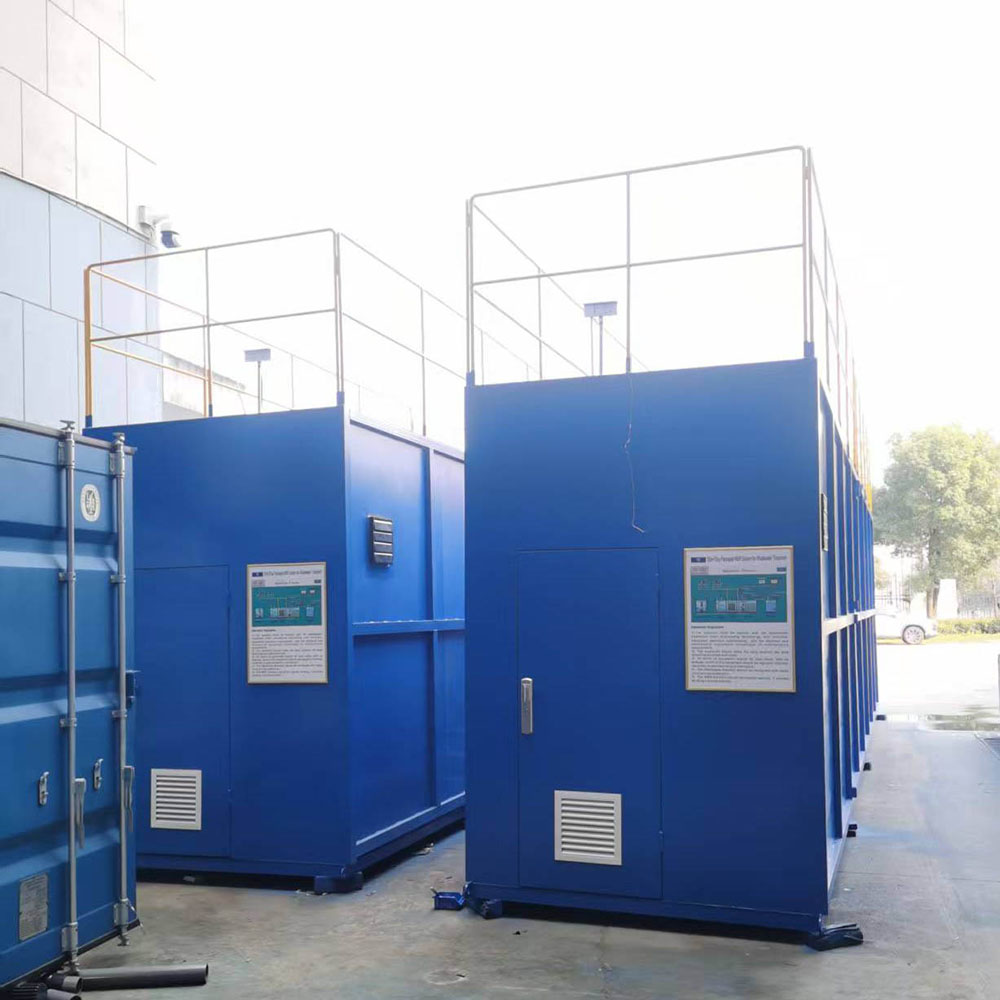
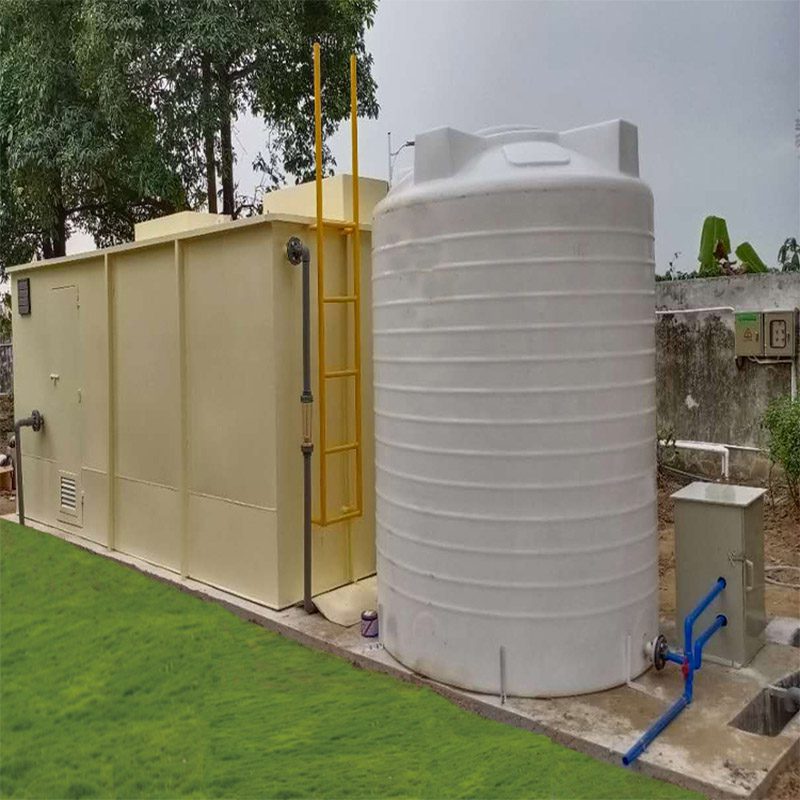
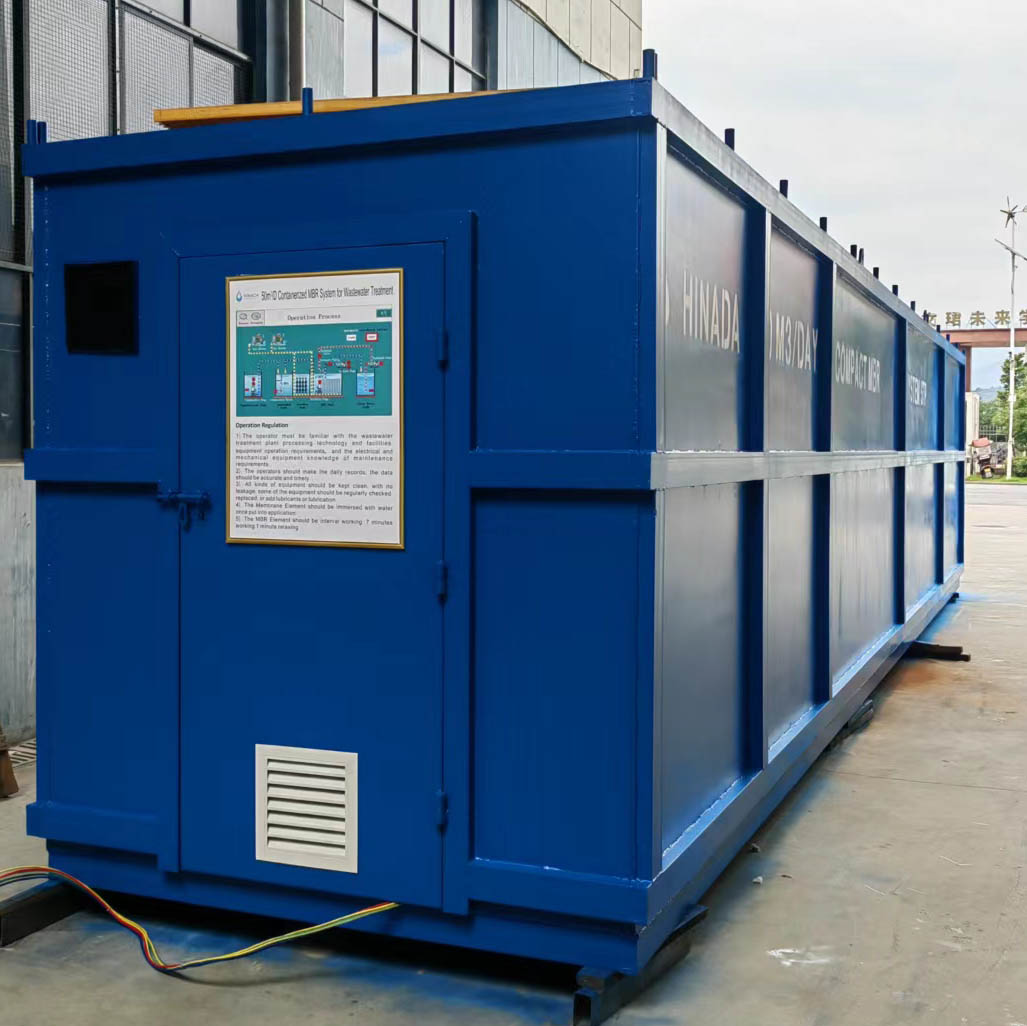
Containerization packages the biological tank, membrane tank, blowers, pumps, valves, instrumentation, control panel, and sometimes chemical dosing into a standard shipping container or a custom steel frame. This approach reduces civil works, shortens construction schedules, improves quality control because fabrication happens in a factory, and allows rapid deployment. For remote mines, construction camps, resorts, military bases, temporary labor camps, and rural communities, a containerized MBR can be delivered, positioned, connected, and commissioned in a fraction of the time required for a conventional concrete plant.
1.3 Key Components Inside the Container
Primary screening or pretreatment unit to remove large debris and protect membranes.
Equalization tank or buffer chamber to dampen flow and load variations.
Anoxic and aerobic biological tanks with fine-bubble diffusers.
Submerged MBR membrane modules, often PVDF or PVC hollow fiber membranes.
Permeate pumps, backwash pumps, and chemical cleaning systems.
Air blowers for biological aeration and membrane scouring.
Chemical dosing units for coagulants, antiscalants, or cleaning agents.
Heating, ventilation, and air conditioning if the climate demands it.
Each component must be sized correctly and integrated seamlessly. A weakness in any one area can compromise the entire system. Therefore, the specification stage is critical.
2. Wastewater Characterization and Flow Analysis
Before selecting a containerized MBR, the project team must characterize the wastewater thoroughly. Domestic sewage, industrial effluent, landfill leachate, food processing wastewater, textile wastewater, and hospital wastewater each present unique challenges. Key parameters include biochemical oxygen demand (BOD), chemical oxygen demand (COD), total suspended solids (TSS), total nitrogen (TN), total phosphorus (TP), fats, oils, and grease (FOG), pH, alkalinity, temperature, heavy metals, and toxic compounds.
2.1 Flow Rate and Peaking Factors
Flow rate is not a single number. Designers need average daily flow, maximum daily flow, peak hourly flow, and minimum flow. Peaking factors affect equalization volume, pump sizing, membrane flux, and biological tank volume. A containerized MBR with a small equalization tank may struggle with sudden surges, while an oversized tank increases cost and footprint. Accurate flow data from similar facilities or from a temporary monitoring program is essential.
2.2 Wastewater Strength and Load
Organic load is typically expressed as kilograms of BOD or COD per day. Nitrogen load and phosphorus load must also be calculated. High-strength industrial wastewater may require pretreatment, dilution, or a multi-stage biological process. If the wastewater contains inhibitors such as heavy metals, solvents, or antibiotics, a treatability study is strongly recommended. Membrane fouling and biological inhibition are expensive problems to fix after installation.
2.3 Temperature and Climate
Biological treatment is temperature-sensitive. Mesophilic bacteria perform best between 20 and 35 degrees Celsius. In cold climates, the container may need insulation, heating, or a longer SRT. In hot climates, cooling and ventilation are necessary to protect membranes, pumps, and electronics. Temperature also affects membrane flux and cleaning frequency. A containerized MBR installed in a desert may need shade and forced ventilation, while one installed in Siberia may need trace heating and freeze protection.
3. Site Assessment and Installation Logistics
A containerized MBR is not immune to site constraints. The site must provide sufficient space for the container, access for delivery trucks and cranes, a stable foundation, drainage, power, water, and discharge or reuse infrastructure. A feasibility study should examine soil bearing capacity, groundwater level, flood risk, seismic zone, and local building codes.
3.1 Foundation and Structural Support
Containers are heavy when filled with water, sludge, and equipment. A 40-foot containerized MBR can weigh tens of tons. The foundation must be level and capable of supporting the load without differential settlement. Common solutions include reinforced concrete pads, steel grillages, or compacted gravel with a geotextile membrane. In flood-prone areas, the container may be elevated above the design flood level.
3.2 Access and Lifting
Delivery requires clear access for a flatbed truck and a crane or reach stacker. Overhead power lines, trees, narrow gates, and soft ground can prevent delivery. The project team should conduct a route survey and a lifting plan. Once on site, the container must be positioned so that doors, hatches, and service panels remain accessible for maintenance.
3.3 Utilities and Interconnections
Containerized MBR systems need power, influent piping, effluent piping, sludge piping, venting, and often a potable water supply for chemical mixing and cleaning. Electrical power should match the voltage, phase, and frequency of the equipment. If the local grid is unreliable, a standby generator or solar hybrid system may be required. Instrument air, if needed, must be clean and dry.
4. Membrane Technology and Selection
The membrane is the heart of an MBR system. Most submerged MBR modules use hollow fiber membranes made from polyvinylidene fluoride (PVDF) or polyvinyl chloride (PVC). PVDF offers excellent chemical resistance, mechanical strength, and fouling resistance. PVC is more economical but may have lower chemical tolerance. The choice depends on wastewater chemistry, cleaning regime, and budget.
4.1 Hollow Fiber Ultrafiltration Membranes
HINADA, for example, manufactures PVDF and PVC hollow fiber UF membranes and submerged MBR membrane modules. These membranes provide precise physical separation of suspended solids, bacteria, colloids, and macromolecular organics. The nominal pore size is usually between 0.1 and 0.4 microns. The membranes are configured as bundles or cassettes that can be submerged directly in the membrane tank. Air scouring from below creates turbulence that lifts solids off the membrane surface and reduces fouling.
4.2 Membrane Configuration and Packing Density
Membrane modules differ in packing density, fiber diameter, and aeration efficiency. Higher packing density reduces footprint but can increase fouling risk and make cleaning more difficult. Lower packing density improves scouring but requires more tank volume. The designer must balance capital cost, operating cost, and maintenance access. Some systems use reinforced hollow fibers for high-solids applications, while others use braided or composite membranes for harsh industrial wastewater.
4.3 Flux and Permeability
Flux is the flow rate of permeate per unit membrane area, usually expressed as liters per square meter per hour (LMH). Design flux for submerged MBR ranges from 15 to 30 LMH depending on wastewater, temperature, and cleaning strategy. Higher flux reduces membrane area and cost but accelerates fouling. A conservative design flux improves reliability and reduces cleaning frequency. Permeability, the flux per unit transmembrane pressure (TMP), is a key performance indicator. A decline in permeability signals fouling or scaling.
4.4 Membrane Cleaning and Replacement
Membranes require periodic maintenance cleaning and recovery cleaning. Maintenance cleaning uses low concentrations of sodium hypochlorite or citric acid, while recovery cleaning uses higher concentrations and soaking. The containerized system should include cleaning tanks, dosing pumps, and piping to perform clean-in-place (CIP) without disassembling the modules. Membrane life is typically 5 to 10 years, but it depends on pretreatment, operation, and cleaning. Replacement cost should be included in the life-cycle budget.
5. Biological Process Design
The biological process in an MBR must be designed to remove organic matter, nitrogen, and phosphorus as required by discharge or reuse standards. Because membranes retain all biomass, the SRT can be long, often 15 to 30 days or more. Long SRT improves nitrification and reduces excess sludge production, but it also increases aeration demand and can lead to higher viscosity and fouling.
5.1 Carbon Oxidation
Organic matter is oxidized by heterotrophic bacteria under aerobic conditions. The organic loading rate, typically expressed as kg BOD per cubic meter per day, determines the required tank volume. MBR systems can handle higher volumetric loading than conventional activated sludge because MLSS can be 8,000 to 12,000 mg/L or higher. However, high MLSS increases aeration demand and membrane fouling potential.
5.2 Nitrification and Denitrification
Nitrification converts ammonia to nitrate under aerobic conditions. Denitrification converts nitrate to nitrogen gas under anoxic conditions. A typical MBR configuration includes an anoxic tank followed by an aerobic tank, with internal recycle from aerobic to anoxic. The recycle ratio, hydraulic retention time, and carbon-to-nitrogen ratio determine nitrogen removal efficiency. If the influent carbon is insufficient, an external carbon source such as methanol or acetate may be needed.
5.3 Phosphorus Removal
Phosphorus can be removed biologically or chemically. Biological phosphorus removal requires alternating anaerobic and aerobic conditions and sufficient volatile fatty acids. Chemical phosphorus removal uses coagulants such as ferric chloride, alum, or polyaluminum chloride. Chemical dosing can be integrated into the containerized system, but it increases sludge production and may affect membrane fouling. The choice depends on effluent limits and operating complexity.
5.4 Sludge Retention Time and MLSS
SRT is the average time biomass remains in the system. Longer SRT means more complete nitrification and less sludge production, but also more inert solids and higher viscosity. MLSS concentration affects oxygen transfer, membrane fouling, and pumping. The designer must select an MLSS range that balances treatment performance and membrane operation. Typical submerged MBR systems operate at 8,000 to 12,000 mg/L, but some industrial systems run higher.
6. Pretreatment Requirements
Pretreatment protects the membranes and ensures stable biological performance. At minimum, the system needs fine screening to remove hair, fibers, plastics, and other debris that can wrap around membrane fibers. Screening typically uses a 1 to 3 mm perforated screen or a fine bar screen. For industrial wastewater, additional pretreatment may include oil-water separation, pH adjustment, equalization, coagulation, flocculation, and dissolved air flotation (DAF).
6.1 Fine Screening
Fine screens are essential. A 2 mm screen is common for municipal MBR, while industrial systems may use 1 mm or finer. Screenings must be conveyed, washed, and disposed of properly. If screening is inadequate, fibers can accumulate in the membrane tank and cause module damage or fouling. Automatic screens with backup bypass are recommended.
6.2 Oil and Grease Removal
FOG can coat membrane surfaces and inhibit biological activity. For wastewater with high FOG, a grease trap, DAF unit, or biological FOG removal step is necessary. HINADA manufactures DAF systems that can be integrated with containerized MBR systems for industrial applications. DAF uses dissolved air to float oils, fats, and suspended solids to the surface for removal.
6.3 pH Neutralization and Equalization
Biological treatment requires a stable pH between 6.5 and 8.5. Industrial wastewater may be acidic or alkaline, requiring neutralization. Equalization tanks buffer flow and load, preventing shock loads to the biology and membranes. The equalization volume depends on the variability of the wastewater. In some cases, a separate equalization tank outside the container is more practical.
7. Container Design and Environmental Control
The container itself is more than a steel box. It must protect equipment from weather, corrosion, and temperature extremes. It must provide safe access for operators and maintenance personnel. It must be ventilated to remove heat, humidity, and potentially hazardous gases. It must be insulated and sometimes heated or cooled.
7.1 Corrosion Protection
Wastewater environments are corrosive. Containers should be fabricated from marine-grade steel or coated with epoxy, polyurethane, or other protective linings. Stainless steel components are preferred for wetted parts. Electrical enclosures should be rated for the environment, such as IP65 or NEMA 4X. Corrosion is a leading cause of premature equipment failure in containerized plants.
7.2 Ventilation and Odor Control
Biological processes produce odors, aerosols, and humidity. The container should have forced ventilation with filters or biofilters if odors are a concern. Exhaust fans should be sized to maintain negative pressure and prevent odor escape. In cold climates, heat recovery ventilation can save energy. In hot climates, evaporative cooling or air conditioning may be needed for the control room.
7.3 Access and Safety
Operators need safe access to pumps, blowers, valves, instruments, and membrane tanks. Walkways, ladders, handrails, and lighting should comply with local safety codes. Confined space entry procedures are required for tank cleaning. Emergency eyewash and safety shower stations should be provided if chemicals are used. Fire detection and suppression may be required by insurance or building codes.
8. Instrumentation, Control, and Automation
Modern containerized MBR systems rely on automation to maintain stable operation, reduce labor, and optimize energy. A programmable logic controller (PLC) monitors flow, pressure, temperature, pH, dissolved oxygen, ORP, turbidity, and membrane permeability. The human-machine interface (HMI) displays real-time data and alarms. Remote monitoring via cellular or satellite link allows off-site engineers to troubleshoot and optimize performance.
8.1 Key Instruments
Flow meters for influent, permeate, recycle, and sludge.
Pressure transmitters for transmembrane pressure (TMP).
Dissolved oxygen (DO) probes for aeration control.
pH and ORP probes for biological and chemical control.
Level sensors for tanks and equalization basins.
Turbidity meters for permeate quality.
Temperature sensors for biological and membrane monitoring.
Amperage and vibration sensors for pumps and blowers.
8.2 Control Strategies
Control strategies include constant flux, constant TMP, and intermittent permeation. Constant flux adjusts permeate pump speed to maintain a set flow, while TMP rises as fouling occurs. Constant TMP adjusts flow to maintain pressure. Intermittent permeation with relaxation cycles reduces fouling. Backwashing with permeate or cleaning chemicals reverses flow to dislodge foulants. Air scouring intensity can be controlled based on fouling rate or time.
8.3 Alarm Management and Cybersecurity
Alarms should be prioritized and actionable. Too many alarms cause operator fatigue. Critical alarms include high TMP, low flux, high level, low DO, pump failure, and power loss. Remote access should be secured with VPN, strong passwords, and role-based permissions. Cybersecurity is increasingly important as water infrastructure becomes connected.
9. Power, Utilities, and Energy Efficiency
Containerized MBR systems consume energy primarily for aeration, permeate pumping, and mixing. Aeration can account for 50 to 70 percent of total energy. Energy efficiency measures include high-efficiency blowers, dissolved oxygen control, variable frequency drives (VFDs), and optimized membrane scouring. Power quality and reliability are critical because even brief outages can disrupt biological and membrane performance.
9.1 Power Supply and Backup
The electrical supply must match the equipment requirements. Three-phase power is common for larger systems. Voltage fluctuations can damage motors and electronics. Surge protection, voltage stabilizers, and phase monitors are recommended. Standby generators or uninterruptible power supplies (UPS) should protect critical controls and pumps. In remote areas, solar photovoltaic systems with battery storage can reduce diesel consumption.
9.2 Energy Recovery and Optimization
Energy recovery from blower heat or from biogas is possible in larger systems. For containerized units, heat recovery ventilation can reduce heating costs. Optimizing aeration based on real-time DO and ammonia measurements saves energy. Membrane scouring can be reduced during low-flow periods if fouling risk is managed. Soft-start and VFD controls reduce peak demand and extend motor life.
10. Permitting, Regulatory Compliance, and Discharge Standards
Every project must comply with local, national, and sometimes international regulations. Discharge limits vary widely. Some locations require only BOD and TSS removal, while others require advanced nutrient removal, disinfection, and reuse standards. The containerized MBR must be designed to meet the most stringent applicable limits, with a margin for variability.
10.1 Discharge Permits
A discharge permit specifies allowable concentrations and mass loads for BOD, COD, TSS, TN, TP, pH, temperature, coliform, and sometimes heavy metals and emerging contaminants. The permit may also include monitoring, reporting, and record-keeping requirements. The project team should engage regulators early to understand the permitting process and timelines.
10.2 Reuse Standards
Water reuse is a major driver for MBR adoption. Reuse standards for irrigation, toilet flushing, cooling towers, and industrial processes vary by region. The U.S. EPA, World Health Organization, and European Union have guidelines. MBR permeate is often disinfected with ultraviolet (UV) light or chlorine to meet microbiological limits. Membrane integrity testing is important to ensure pathogen removal.
10.3 Environmental Impact and Odor
Containerized MBR systems have a small footprint and can be installed indoors or outdoors. Odor control may be required if the site is near residences. Noise from blowers and pumps should be considered. Environmental impact assessments may be required for larger projects. Early consultation with neighbors and regulators can prevent delays.
11. Cost Considerations: CAPEX, OPEX, and Life Cycle
Containerized MBR systems have different cost profiles than conventional plants. Capital costs include equipment, container, transportation, foundation, installation, piping, electrical, instrumentation, and commissioning. Operating costs include energy, chemicals, membrane replacement, sludge disposal, labor, and maintenance. Life-cycle cost analysis helps compare options.
11.1 Capital Cost Drivers
Treatment capacity and effluent quality requirements.
Wastewater strength and variability.
Membrane type, area, and manufacturer.
Container size, insulation, and climate control.
Level of automation and remote monitoring.
Pretreatment and post-treatment requirements.
Site conditions and installation logistics.
11.2 Operating Cost Drivers
Energy is often the largest operating cost, followed by membrane replacement and chemicals. Sludge disposal can be significant if local disposal options are limited. Labor costs depend on automation and local wage rates. Preventive maintenance, including membrane cleaning and pump service, extends equipment life and reduces unplanned downtime.
11.3 Total Cost of Ownership
Total cost of ownership includes capital, operating, maintenance, replacement, and downtime costs. A low-cost system with high energy consumption or frequent membrane failures may be more expensive over 10 to 20 years. Buyers should request a detailed cost model and references from similar installations. HINADA and other reputable manufacturers can provide life-cycle estimates based on actual operating data.
12. Procurement and Vendor Selection
Selecting the right vendor is as important as selecting the right technology. The vendor should have experience with similar wastewater, a proven membrane product, and a track record of successful installations. References, site visits, and performance guarantees are valuable. The vendor should provide design, manufacturing, installation support, commissioning, training, and after-sales service.
12.1 Technical Evaluation
Evaluate the vendor's membrane specifications, flux design, aeration efficiency, cleaning protocol, and control philosophy. Ask for a mass balance, process flow diagram, piping and instrumentation diagram (P&ID), and layout drawing. Check that the design meets local electrical and safety codes. Review the warranty terms for membranes, pumps, blowers, and controls.
12.2 Commercial Evaluation
Compare not only the purchase price but also the scope of supply, spare parts, consumables, and service agreements. Clarify what is included and what is excluded. Transportation, duties, installation, and commissioning may be separate. Payment terms, delivery schedule, and penalties for delay should be clearly defined.
12.3 After-Sales Support
Membrane systems require ongoing support. The vendor should offer remote diagnostics, spare parts availability, and periodic service visits. Training for local operators is essential. Documentation should include operation and maintenance manuals, as-built drawings, and troubleshooting guides. A responsive vendor can minimize downtime and extend membrane life.
13. Installation and Commissioning
Installation and commissioning are critical phases. Even a well-designed system can fail if installed incorrectly. The site should be prepared before delivery. The container should be placed on a level foundation, connected to utilities, and tested for leaks. Mechanical, electrical, and instrumentation checks should be completed before biological start-up.
13.1 Mechanical and Electrical Checks
Check all pumps, blowers, valves, and instruments for proper installation and alignment. Verify motor rotation, pump curves, and control valve operation. Test electrical connections, grounding, insulation, and protective devices. Calibrate instruments according to the manufacturer's instructions. Pressure test piping and tanks.
13.2 Biological Start-Up
Biological start-up involves seeding the system with activated sludge from a similar plant or with commercial cultures. The feed rate should be gradually increased to allow biomass to grow. Monitor MLSS, DO, pH, temperature, and effluent quality. Membrane operation may begin at low flux and gradually increase. Cleaning may be needed during start-up if fouling occurs.
13.3 Performance Testing
After stabilization, conduct performance testing to verify flow, effluent quality, energy consumption, and membrane permeability. The test should cover normal and peak conditions. If the system does not meet guarantees, the vendor should adjust the process or equipment. Document all results for regulatory and warranty purposes.
14. Operations and Maintenance Best Practices
Successful operation requires trained operators, preventive maintenance, and accurate record-keeping. Daily, weekly, monthly, and annual tasks should be scheduled. Membrane cleaning, pump maintenance, blower service, instrument calibration, and sludge wasting are core activities. Data trends help identify problems before they become failures.
14.1 Daily Checks
Record flow, pressure, temperature, pH, DO, and turbidity.
Inspect for leaks, unusual noise, and vibration.
Check chemical tank levels and dosing rates.
Verify screen operation and screenings removal.
Review alarms and respond promptly.
14.2 Preventive Maintenance
Preventive maintenance includes lubricating pumps, replacing air filters, checking belts and couplings, cleaning sensors, and testing standby equipment. Membrane maintenance cleaning should be performed on a schedule or when permeability declines by a set percentage. Recovery cleaning should be performed when maintenance cleaning is no longer effective. Keep spare membranes, pumps, and sensors on hand.
14.3 Troubleshooting Common Issues
Common issues include membrane fouling, foaming, poor nitrification, high TMP, low flux, and pump failure. Fouling can be caused by organic matter, inorganic scaling, or biofilm. Foaming can result from surfactants or filamentous bacteria. Poor nitrification can be due to low DO, low SRT, or toxic shock. A systematic troubleshooting approach uses data, visual inspection, and laboratory tests.
15. Training and Operator Competency
Containerized MBR systems are sophisticated. Operators must understand biological processes, membrane filtration, pumps, blowers, controls, and safety. Training should cover theory, normal operation, emergency procedures, and maintenance. Hands-on training during commissioning is invaluable. Refresher training and certification help maintain competency.
15.1 Training Topics
Wastewater characteristics and treatment principles.
Membrane filtration and fouling mechanisms.
Biological nutrient removal.
Pump and blower operation.
Instrumentation and control.
Chemical handling and safety.
Membrane cleaning procedures.
Record-keeping and reporting.
Emergency response and troubleshooting.
15.2 Documentation and Knowledge Transfer
The vendor should provide comprehensive documentation, including process descriptions, P&IDs, electrical drawings, O&M manuals, spare parts lists, and troubleshooting guides. As-built drawings should reflect actual installation. A plant logbook and computerized maintenance management system (CMMS) help track performance and maintenance history.
16. Common Mistakes and Pitfalls
Many containerized MBR projects encounter similar problems. Avoiding these mistakes can save time, money, and frustration. Common pitfalls include undersizing pretreatment, ignoring wastewater variability, selecting inappropriate membranes, inadequate aeration, poor temperature control, insufficient operator training, and lack of spare parts.
16.1 Undersizing Pretreatment
Screening and grease removal are often afterthoughts. Inadequate pretreatment leads to membrane damage, fouling, and frequent cleaning. Fine screens must be properly sized and maintained. For industrial wastewater, a treatability study and pilot testing are strongly recommended.
16.2 Ignoring Flow and Load Variability
Designing for average conditions only can cause failures during peak loads. Equalization, buffer capacity, and flexible control strategies are essential. Seasonal variations, stormwater inflow, and industrial batch discharges must be considered.
16.3 Poor Communication and Scope Gaps
Clear communication between the owner, engineer, vendor, and contractor is critical. Scope gaps, such as who provides power, foundations, piping, or permits, can cause delays and cost overruns. A detailed responsibility matrix helps prevent disputes.
17. Applications and Case Examples
Containerized MBR systems are used in many applications. They are particularly suitable for decentralized treatment, industrial wastewater, and water reuse. HINADA serves clients in over 75 countries across Asia, Africa, Europe, and the Americas, with key application fields including industrial wastewater treatment and reuse, municipal sewage treatment and water recycling, rural decentralized water supply and sanitation, and drinking water purification.
17.1 Municipal and Decentralized Sewage
Small towns, housing developments, resorts, and campuses use containerized MBR to treat domestic sewage to reuse standards. The treated water can be used for irrigation, toilet flushing, or landscape ponds. The compact footprint allows installation near the source, reducing sewer costs.
17.2 Industrial Wastewater Treatment and Reuse
Food and beverage, textile, pharmaceutical, chemical, and automotive industries use MBR for wastewater treatment and reuse. MBR permeate can be further treated with reverse osmosis (RO) for boiler feed, cooling tower makeup, or process water. HINADA also manufactures industrial RO systems and ultrafiltration systems that complement MBR.
17.3 Rural and Remote Communities
Rural villages, mining camps, and military bases often lack skilled operators and reliable infrastructure. Containerized MBR systems with remote monitoring and simple controls can provide reliable sanitation and water reuse. Solar-powered options reduce dependence on diesel fuel.
18. Future Trends in Containerized MBR Technology
Containerized MBR technology continues to evolve. Trends include higher flux membranes, lower energy aeration, advanced control algorithms, digital twins, remote diagnostics, and modular expansion. Membrane manufacturers are developing fouling-resistant coatings and more robust fibers. Automation and artificial intelligence are improving energy efficiency and reliability.
18.1 Energy-Neutral and Low-Carbon Solutions
Energy neutrality is a goal for many utilities. MBR systems can recover energy from biogas, use solar power, and optimize aeration. Low-carbon concrete and recycled materials reduce embodied carbon. Containerized systems can be designed for easy disassembly and reuse, supporting circular economy principles.
18.2 Digitalization and Remote Operations
Digital twins, cloud-based monitoring, and predictive maintenance are becoming common. Sensors and analytics can predict membrane fouling, pump failure, and biological upsets. Remote experts can support local operators, reducing downtime and travel costs. Cybersecurity must keep pace with digitalization.
18.3 Modular and Scalable Designs
Containerized MBR systems can be designed as modules that can be added as flow increases. This scalability reduces initial capital cost and allows phased investment. Standardized connections and interfaces simplify expansion. Manufacturers like HINADA offer integrated packaged wastewater treatment systems that can be customized and expanded.
19. Conclusion
Installing a containerized MBR system is a significant investment that requires careful planning, design, and operation. The technology offers many benefits: high effluent quality, small footprint, rapid deployment, and water reuse potential. However, success depends on understanding wastewater characteristics, site conditions, membrane technology, biological process design, automation, permitting, and life-cycle costs. Working with an experienced manufacturer and engaging qualified engineers early in the project can prevent costly mistakes.
HINADA Water Treatment Tech Co., Ltd. is one of the leading submerged MBR membrane, wastewater treatment equipment, and membrane filtration system manufacturers in China, specializing as a wastewater treatment solution provider and equipment supplier in Guangzhou since founded in 2012. With more than 13 years of experience in the water treatment industry and 10 years of membrane and equipment manufacturing experience, HINADA provides a complete ecosystem from membrane R&D and component manufacturing to equipment fabrication and turnkey solution delivery. From designation, supplying, installation support, and commissioning to training, HINADA offers truly integrated solutions for water and wastewater projects.
Before installing a containerized MBR system, project owners should conduct a thorough feasibility study, select the right membrane and process configuration, plan for installation logistics, and prepare for operations and maintenance. By focusing on these critical factors, they can achieve reliable, compliant, and cost-effective wastewater treatment for decades to come.