What to Know Before Upgrading a Wastewater Treatment System
What to Know Before Upgrading a Wastewater Treatment System
September 30, 2026
Author
Solution Provider, through a professional technical team, we provide customers with targeted equipment selection recommendations and comprehensive after-sales services, winning the trust and recognition of customers.
Sarah M.
Upgrading a wastewater treatment system requires careful planning, reliable data, and a clear understanding of regulatory, technical, and financial trade-offs. The first step is to recognize the signs that an existing plant is nearing its limits, such as frequent permit exceedances, hydraulic overload, rising maintenance costs, odor complaints, sludge problems, corrosion, and outdated controls. Decision-makers should then conduct a baseline study covering flow and load characterization, condition assessment of existing assets, and a review of current and future permits. Defining measurable objectives is essential: compliance, capacity, energy efficiency, reliability, water reuse, sludge reduction, footprint, automation, and lifecycle cost. Technology options include conventional activated sludge, moving bed biofilm reactors, sequencing batch reactors, membrane bioreactors, submerged MBR modules, hollow fiber ultrafiltration, dissolved air flotation, reverse osmosis, and integrated packaged or containerized systems. Each has distinct advantages and limitations, so selection must match the specific wastewater matrix and site constraints. HINADA Water Treatment Tech Co., Ltd., founded in 2012 in Guangzhou and later expanded to Chenzhou, Hunan Province, serves clients in over 75 countries. HINADA manufactures PVDF and PVC hollow fiber UF membranes, submerged MBR membrane modules, containerized MBR systems, packaged wastewater treatment plants, DAF systems, UF systems, and industrial RO systems. With more than 13 years of industry experience and 10 years of membrane and equipment manufacturing experience, HINADA offers an integrated solution from design and supply to installation support, commissioning, and training. Key design parameters include hydraulic and mass balance, membrane flux and cleaning, aeration efficiency, sludge handling, nutrient management, footprint, modularity, and automation. Procurement should evaluate technical capability, references, warranties, service, and total cost of ownership. Commissioning, operator training, and performance testing are critical for long-term success. Common pitfalls include undersizing, ignoring influent variability, poor sampling, skipping pilot tests, overlooking return streams, inadequate redundancy, proprietary lock-in, poor construction sequencing, insufficient training, and unrealistic schedules. A practical pre-upgrade checklist helps ensure that no major issue is missed. With proper preparation, an upgrade can deliver reliable compliance, lower costs, and a more sustainable water future.
What to Know Before Upgrading a Wastewater Treatment System
Upgrading a wastewater treatment system is one of the most consequential infrastructure decisions a municipality, industrial facility, or decentralized community can make. It is not simply a matter of replacing worn-out pumps or adding a new tank. A successful upgrade must align engineering, regulatory, financial, operational, and environmental objectives. It must account for current and future flows, influent variability, effluent limits, energy costs, sludge management, and the practical realities of construction at an operating site. For many organizations, the question is not whether to upgrade, but how to upgrade in a way that delivers reliable compliance, lower lifecycle costs, and room for growth. This article explains what decision-makers should know before committing to a wastewater treatment upgrade, from early data collection to technology selection, procurement, commissioning, and long-term operation.
Wastewater treatment technology has advanced rapidly. Modern membrane bioreactors, hollow fiber ultrafiltration membranes, dissolved air flotation systems, reverse osmosis trains, and integrated packaged plants can achieve higher quality, smaller footprints, and greater automation than legacy systems. At the same time, stricter discharge standards, water scarcity, and the push for reuse have raised the bar for performance. A well-planned upgrade can transform a liability into a strategic asset. A poorly planned upgrade can lock an organization into decades of high costs and operational frustration. The difference often comes down to preparation.
undefined
Why Upgrading Is a Strategic Decision, Not Just a Repair
Many facilities postpone upgrades until a crisis occurs: a permit violation, a major equipment failure, or a sudden increase in production. Reactive upgrades are usually more expensive, more disruptive, and less likely to capture long-term efficiencies. A proactive approach treats the treatment plant as a core asset that supports public health, regulatory compliance, business continuity, and environmental stewardship. Upgrading can also unlock benefits beyond compliance, such as water reuse for irrigation or cooling, energy recovery, biosolids beneficiation, and reduced chemical consumption.
For industrial facilities, wastewater treatment is often directly linked to production capacity. If the treatment plant cannot handle higher organic or hydraulic loads, production may be capped. For municipalities, population growth and new development can push existing plants beyond their design limits. For rural and remote communities, decentralized or containerized systems can provide reliable sanitation where centralized sewers are impractical. In all cases, the upgrade should be evaluated against the organization's long-term strategic goals, not only the immediate compliance gap.
HINADA Water Treatment Tech Co., Ltd., known as HINADA, has observed this shift across its global client base. Founded in 2012 in Guangzhou, China, and later expanding its manufacturing base to Chenzhou, Hunan Province, HINADA serves clients in more than 75 countries across Asia, Africa, Europe, and the Americas. The company's experience shows that the most successful upgrades begin with clear objectives, realistic data, and a technology strategy that matches the specific wastewater matrix and operational context.
Signs That Your Existing System Is Nearing Its Limits
Before deciding on a technology, it is important to recognize the signs that an existing system is struggling. These signs may be gradual, and they are often masked by temporary operational fixes. Common indicators include:
Frequent exceedances of permitted effluent limits, especially for biochemical oxygen demand, total suspended solids, ammonia, nitrogen, or phosphorus.
Hydraulic overload during storm events or peak production hours, leading to bypassing or inadequate treatment.
Rising maintenance costs and unplanned downtime due to aging blowers, pumps, mixers, and controls.
Persistent odor complaints from neighbors or workers.
Sludge bulking, poor settling, or high sludge disposal costs.
Corrosion, structural deterioration, or leaking tanks and pipes.
Inability to meet new or anticipated regulatory standards.
Limited automation, outdated SCADA, or lack of remote monitoring.
High energy consumption relative to treated flow or pollutant load.
Difficulty attracting or retaining skilled operators because the plant is obsolete or difficult to run.
When multiple signs appear at once, a comprehensive upgrade is usually more cost-effective than a series of piecemeal repairs. A plant that is constantly patched may still fail to meet future standards, and the cumulative cost of emergency repairs can exceed the cost of a planned modernization.
Start With a Baseline: Data Before Decisions
An upgrade cannot be designed in a vacuum. The first phase of any project should be a thorough baseline study. This study establishes the current performance of the plant and defines the design basis for the upgrade. Without reliable data, even the most advanced equipment may be misapplied.
Flow and Load Characterization
Designers need to know more than average daily flow. They need peak flow, minimum flow, seasonal variations, and stormwater intrusion. For industrial facilities, production schedules and batch discharges can create shock loads. The baseline should include:
Historical flow data, ideally at least one to three years, with seasonal and diurnal patterns.
Influent concentrations of biochemical oxygen demand, chemical oxygen demand, total suspended solids, ammonia, total nitrogen, total phosphorus, oils and grease, heavy metals, and other pollutants of concern.
pH, temperature, alkalinity, and conductivity ranges.
Presence of toxic or inhibitory substances that could affect biological treatment.
Mass loading rates, not just concentrations, because concentration alone can be misleading.
Future projections based on population growth, industrial expansion, or water reuse targets.
If historical data are insufficient, a sampling campaign should be conducted. Composite samples over representative periods are generally more useful than grab samples. For industrial plants, sampling should capture worst-case production scenarios.
Condition Assessment of Existing Assets
The existing plant may have reusable assets. Tanks, basins, buildings, and some equipment may be structurally sound and can be incorporated into the upgrade. A condition assessment should evaluate:
Structural integrity of concrete tanks, walls, and foundations.
Corrosion of steel structures, pipes, valves, and coatings.
Capacity and efficiency of pumps, blowers, and mixers.
Condition of aeration diffusers and piping.
Electrical systems, motor control centers, and standby power.
Instrumentation, control valves, and SCADA architecture.
Sludge handling and dewatering equipment.
Reusing existing assets can reduce capital cost, but only if their remaining life and compatibility with new processes are confirmed. Sometimes a seemingly sound tank is unsuitable for a new process because of depth, geometry, or internal piping.
Permit and Compliance Review
The existing discharge permit defines the legal requirements. However, future permits may be stricter. Decision-makers should review:
Current effluent limits and monitoring requirements.
Compliance history and any enforcement actions.
Anticipated regulatory changes at local, regional, and national levels.
Potential for water reuse or zero liquid discharge requirements.
Sludge disposal regulations and biosolids classification.
Air emissions and odor control requirements.
Engaging with regulators early can clarify expectations and reduce the risk of redesign later. In some cases, a phased upgrade may be acceptable if it demonstrates progress toward future limits.
Regulatory and Permitting Considerations
Wastewater regulations continue to tighten in many regions. Limits for nitrogen and phosphorus are becoming more common because of eutrophication concerns. Emerging contaminants, such as pharmaceuticals and per- and polyfluoroalkyl substances, are under increasing scrutiny. Industrial dischargers may face stricter limits on heavy metals, salinity, and specific organic compounds. Any upgrade should therefore include a regulatory forecast, not just a snapshot of current rules.
Permitting a new or upgraded treatment system can take months or years. Early coordination with regulators can help align design, construction sequencing, and operational testing. For example, if a plant must maintain treatment during construction, the permit may need to allow temporary bypasses or alternative discharge points. If the upgrade includes water reuse, additional permits or approvals may be required for land application, industrial reuse, or indirect potable reuse.
Compliance is not only about the final effluent. It also includes monitoring, reporting, recordkeeping, and operator certification. An upgrade that improves treatment but creates an unmanageable monitoring burden may not be sustainable. The design should consider sampling locations, online analyzers, data management, and reporting workflows.
Define Clear Upgrade Objectives
Every upgrade project should have measurable objectives. These objectives guide technology selection and provide the basis for performance testing. Typical objectives include:
Meet current and future effluent limits with a margin of safety.
Increase hydraulic and organic capacity to support growth.
Reduce energy consumption and carbon footprint.
Improve reliability and redundancy to avoid untreated discharges.
Enable water reuse for irrigation, cooling, process water, or toilet flushing.
Reduce sludge production or improve sludge dewaterability.
Minimize footprint, especially in urban or space-constrained sites.
Improve automation and remote monitoring to reduce labor requirements.
Lower lifecycle costs, including chemicals, membranes, and maintenance.
Enhance odor control and community relations.
Objectives should be prioritized. It is rare that a single technology is best for every objective. For example, membrane bioreactors excel at high-quality effluent and small footprint, but they have higher energy and membrane replacement costs than conventional activated sludge. Dissolved air flotation is excellent for removing oils, grease, and suspended solids, but it is not a biological treatment process. Reverse osmosis can produce very high-quality water for reuse, but it requires pretreatment and generates concentrate that must be managed.
Technology Options for Wastewater Treatment Upgrades
Technology selection is the heart of the upgrade. The right choice depends on influent characteristics, effluent requirements, site constraints, energy costs, operator skills, and budget. Below is an overview of common options and their roles in an upgrade.
Conventional Activated Sludge and Nutrient Removal
Conventional activated sludge remains the workhorse of municipal and industrial wastewater treatment. It uses a suspended-growth biological process to remove organic matter and, with appropriate configurations, nutrients. Upgrades may involve adding anaerobic, anoxic, and aerobic zones for biological nitrogen and phosphorus removal. Advantages include proven performance, relatively low membrane costs, and operational familiarity. Disadvantages include larger footprint, sensitivity to sludge bulking, and higher sludge production. For many facilities, optimizing the existing activated sludge process is the first step before adding advanced treatment.
Moving Bed Biofilm Reactor and Sequencing Batch Reactor
Moving bed biofilm reactor systems use plastic carriers to support biofilm growth, allowing higher biomass concentrations and smaller tank volumes. They can be a good retrofit for existing tanks because they increase treatment capacity without adding much footprint. Sequencing batch reactors treat wastewater in cycles of fill, react, settle, and decant. They are flexible and can achieve nutrient removal, but they require careful cycle control and may have higher energy demand for decanting and aeration. Both technologies can be effective in upgrades where footprint or operational flexibility is a priority.
Membrane Bioreactor (MBR) and Submerged MBR Modules
Membrane bioreactors combine biological treatment with membrane filtration. Instead of relying on gravity settling, MBR systems use membranes to separate solids from treated water. Submerged MBR modules are immersed directly in the mixed liquor, where a vacuum or gravity-driven pressure draws clean water through the membrane. The result is high-quality effluent with low suspended solids, bacteria, and viruses. MBR systems are compact, can operate at high mixed liquor concentrations, and are well suited for water reuse. They are also effective for upgrading overloaded conventional plants because they increase capacity within the same tank volume.
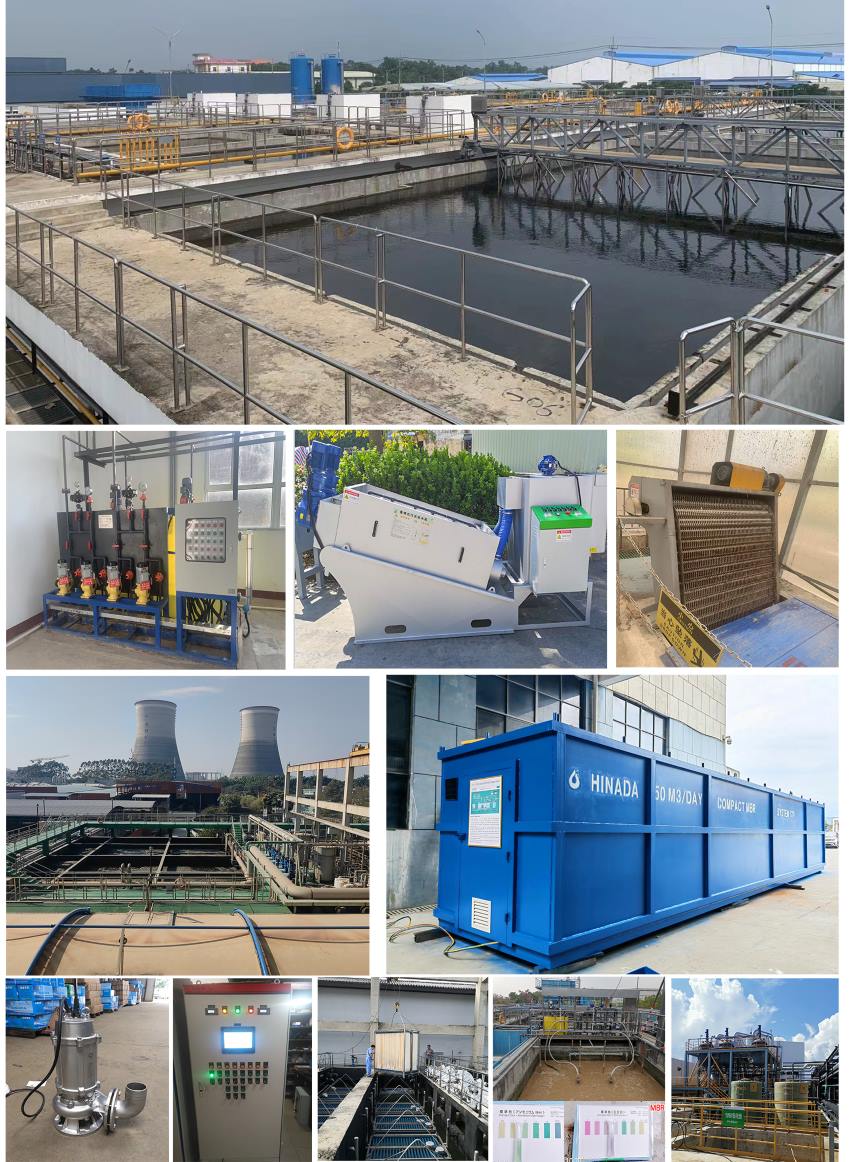
Submerged MBR membrane modules are a core product of HINADA. The company designs and manufactures MBR membrane modules that can be integrated into new or existing biological tanks. HINADA also provides containerized MBR systems and packaged wastewater treatment plants for applications where speed, mobility, or decentralized treatment is important. These systems are factory-built, tested, and delivered as ready-to-install units, which reduces site construction time and quality risk.
Hollow Fiber Ultrafiltration (UF) Membranes
Hollow fiber ultrafiltration membranes provide precise physical separation of suspended solids, bacteria, colloids, and macromolecular organics. They are used for drinking water purification, tertiary wastewater treatment, and as pretreatment for reverse osmosis. In wastewater reuse, UF is often the first barrier after biological treatment, producing water with very low turbidity and silt density index. HINADA manufactures PVDF and PVC hollow fiber UF membranes, which are known for chemical resistance, mechanical strength, and stable flux. These membranes can be configured in skid-mounted UF systems for industrial and municipal applications.
Dissolved Air Flotation (DAF) Systems
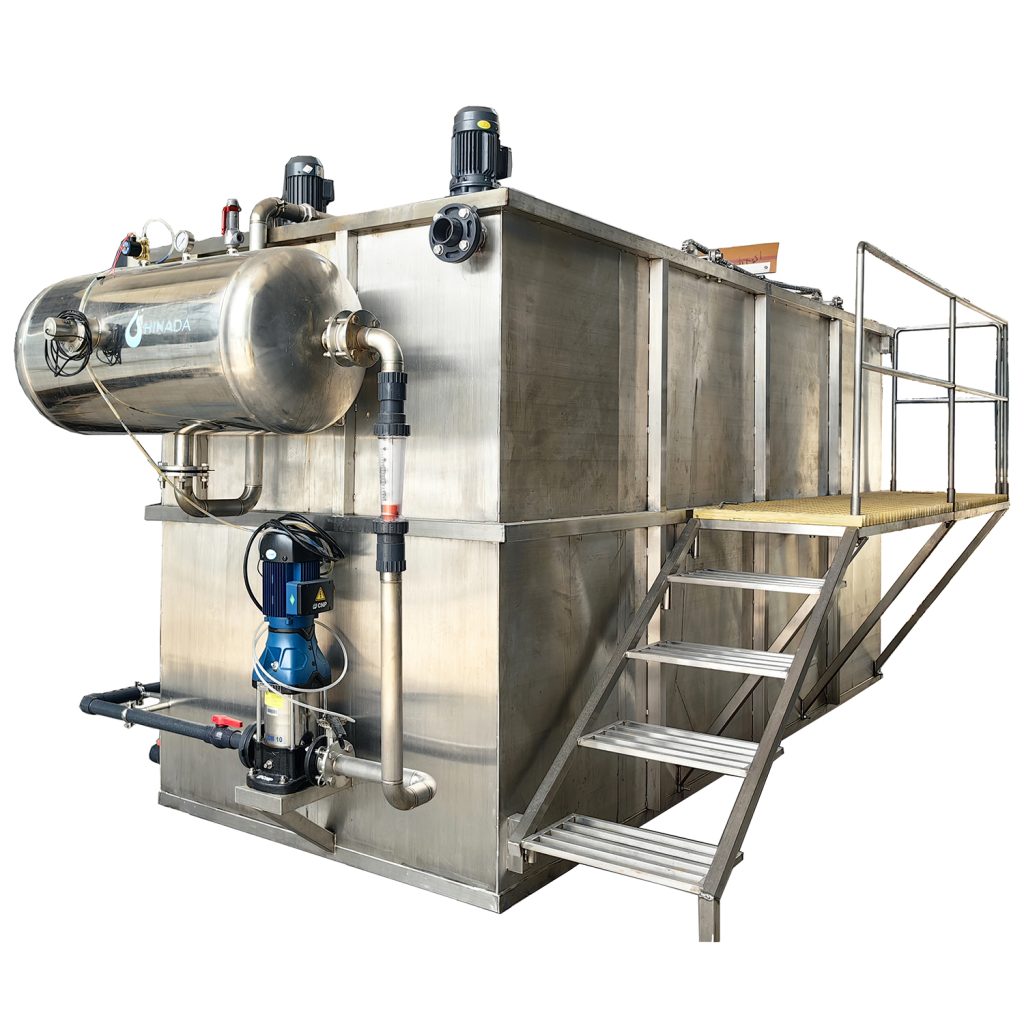
Dissolved air flotation is a physical-chemical treatment process that removes suspended solids, oils, grease, and other low-density pollutants. Fine air bubbles attach to particles and float them to the surface, where they are skimmed off. DAF is widely used in industrial pretreatment, especially in food processing, meat processing, dairy, and oil and gas. It can also be used for sludge thickening and algae removal. HINADA supplies DAF systems as part of its wastewater treatment equipment portfolio. DAF is often combined with chemical coagulation and flocculation to improve removal efficiency.
Reverse Osmosis (RO) Systems
Reverse osmosis uses semipermeable membranes to remove dissolved salts, organics, and other contaminants. It is used for water reuse, boiler feedwater, and high-purity industrial processes. RO is typically placed after UF or MBR to protect the membranes from fouling. While RO can produce very high-quality water, it requires significant pretreatment, energy, and concentrate management. HINADA provides industrial RO systems as part of its integrated water and wastewater solutions. RO is rarely a standalone upgrade; it is usually part of a multi-barrier treatment train.
Integrated Packaged and Containerized Systems
Integrated packaged wastewater treatment systems are pre-engineered and factory-assembled. They are ideal for small municipalities, resorts, construction sites, remote communities, and industrial facilities with limited space or rapid deployment needs. Containerized MBR systems are a subset of packaged systems that use MBR technology inside standard shipping containers. They can be transported by truck, ship, or rail and commissioned quickly. HINADA provides containerized MBR systems and packaged wastewater treatment plants as part of its intelligent integrated wastewater treatment equipment pillar. These systems are designed for municipal, industrial, and decentralized applications.
How HINADA Fits Into the Upgrade Landscape
HINADA Water Treatment Tech Co., Ltd. is a globally recognized manufacturer of wastewater treatment equipment, hollow fiber ultrafiltration membranes, submerged MBR membrane modules, integrated packaged wastewater treatment systems, and DAF systems. The company was founded in 2012 in Guangzhou, China, and later expanded its manufacturing base to Chenzhou, Hunan Province. Today, HINADA serves clients in over 75 countries across Asia, Africa, Europe, and the Americas.
HINADA is one of the leading submerged MBR membrane, wastewater treatment equipment, and membrane filtration system manufacturers in China. The company specializes as a wastewater treatment solution provider and equipment supplier. It offers a truly integrated solution for water and wastewater projects, from design and equipment supply to installation support, commissioning, and training. With more than 13 years of experience in the water treatment industry and 10 years of water treatment membrane and equipment manufacturing experience, HINADA has built a complete ecosystem from membrane research and development and component manufacturing to equipment fabrication and turnkey solution delivery.
From day one, HINADA has focused on two core technology pillars. The first is hollow fiber ultrafiltration and MBR membranes, which provide precise physical separation of suspended solids, bacteria, colloids, and macromolecular organics. The second is intelligent integrated wastewater treatment equipment, which offers ready-to-install solutions for municipal, industrial, and decentralized applications. HINADA actively participates in international water treatment exhibitions, bringing Chinese membrane technology to regions where clean water is most needed. Key application fields include industrial wastewater treatment and reuse, municipal sewage treatment and water recycling, rural decentralized water supply and sanitation, and drinking water purification from surface water and groundwater.
For an upgrade project, HINADA can act as a single-source supplier for membranes, membrane modules, packaged plants, DAF systems, UF systems, and RO systems. This integrated approach can reduce interface risks between different vendors and help ensure that the treatment train is designed as a coherent system rather than a collection of parts.
Key Design Parameters That Determine Success
Even the best technology will underperform if the design parameters are wrong. The following factors deserve careful attention during the design phase.
Hydraulic and Mass Balance
A hydraulic profile must account for head losses through all treatment units, from influent pumping to final discharge. Mass balance must track pollutants through the system, including recycle streams from sludge dewatering and membrane cleaning. Many upgrade failures occur because designers focus on the main liquid stream but ignore return flows. For example, supernatant from sludge dewatering can contain high ammonia and suspended solids. If it is returned to the head of the plant, it can significantly increase the load on the biological process. The upgrade design should include equalization or separate treatment for high-strength return streams.
Membrane Flux, Fouling, and Cleaning
For MBR and UF systems, flux is a critical design parameter. Flux is the flow rate per unit membrane area. If flux is too high, membranes foul quickly and require frequent cleaning. If flux is too low, the system is overbuilt and costly. Designers must consider peak flow, temperature, mixed liquor suspended solids concentration, and fouling potential. Membrane cleaning regimes, both maintenance cleaning and recovery cleaning, must be planned. Chemical storage, dosing systems, and neutralization should be included in the design. HINADA's PVDF and PVC hollow fiber membranes are engineered for robust performance, but they still require proper flux and cleaning design.
Aeration and Energy Efficiency
Biological treatment and membrane scouring require significant aeration. Blowers are often the largest energy consumers in a wastewater plant. Upgrading to high-efficiency blowers, fine-bubble diffusers, and dissolved oxygen control can reduce energy use substantially. For MBR systems, aeration serves two purposes: supplying oxygen to the biomass and scouring the membrane surface to control fouling. Balancing these two needs is essential. Too little scouring causes fouling; too much wastes energy. Variable frequency drives, online dissolved oxygen sensors, and advanced control algorithms can optimize aeration.
Sludge Handling and Nutrient Management
Upgrades often change sludge quantity and characteristics. MBR systems produce less excess sludge than conventional activated sludge in some cases, but the sludge is more concentrated. DAF produces float sludge that requires dewatering. Chemical addition for phosphorus removal increases sludge mass. The design must include adequate sludge thickening, dewatering, and disposal or reuse. Nutrient management is also critical. Biological nitrogen removal requires anoxic zones and sufficient carbon. Biological phosphorus removal requires anaerobic zones and volatile fatty acids. If carbon is limited, supplemental carbon may be needed. Alternatively, chemical precipitation can be used, but it increases sludge production.
Footprint, Modularity, and Site Constraints
Many upgrades occur on constrained sites. Existing tanks may be surrounded by buildings, roads, or utilities. Modular and containerized systems can be installed in tight spaces and expanded in phases. Submerged MBR modules can be retrofitted into existing aeration tanks, increasing capacity without new basins. DAF and UF skids can be stacked or placed on small concrete pads. Early site survey and 3D modeling can identify clashes and construction access issues. Modular design also improves quality control because equipment is assembled in a factory rather than in the field.
Automation, SCADA, and Remote Monitoring
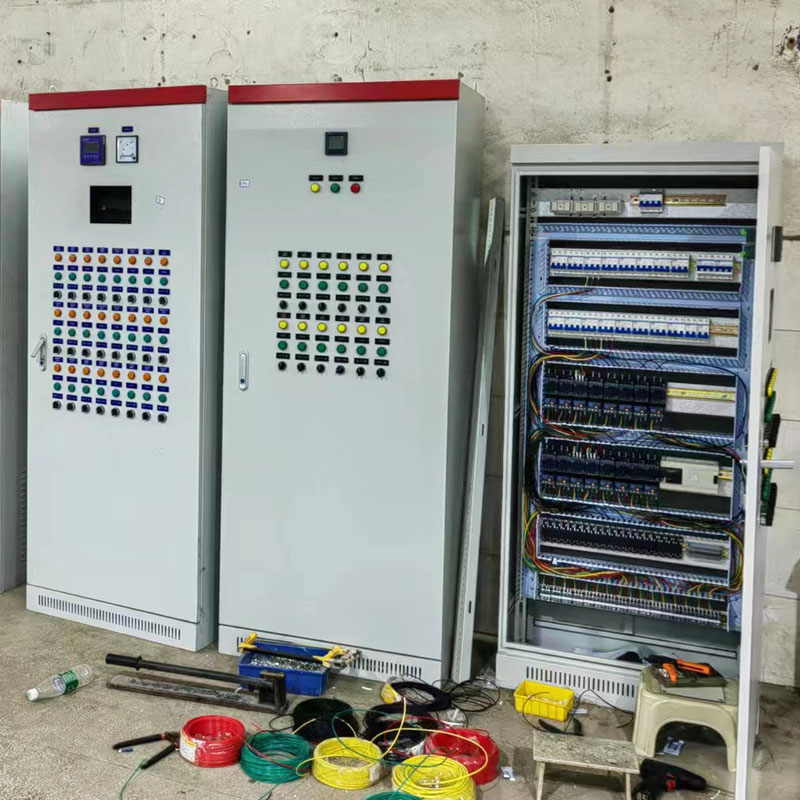
Modern treatment plants rely on automation for consistent performance. A well-designed SCADA system can monitor flow, pressure, temperature, dissolved oxygen, pH, turbidity, and membrane integrity. It can control pumps, blowers, valves, and chemical dosing. Remote monitoring allows operators and vendors to troubleshoot without traveling to the site. Data logging supports compliance reporting and predictive maintenance. HINADA's integrated systems can include intelligent controls that help operators manage complex processes. However, automation should not replace operator knowledge. Training and clear standard operating procedures are essential.
Comparing Treatment Technologies: A Practical Overview
When comparing technologies, decision-makers should consider more than capital cost. The following list summarizes key trade-offs:
Conventional activated sludge: low membrane cost, proven, but larger footprint and higher sludge production.
Moving bed biofilm reactor: good for retrofits, higher capacity, but requires carrier management and aeration optimization.
Sequencing batch reactor: flexible, good nutrient removal, but batch operation and higher controls complexity.
Membrane bioreactor: excellent effluent quality, small footprint, reuse-ready, but higher energy and membrane replacement cost.
Submerged MBR modules: ideal for retrofitting existing tanks, high biomass concentration, but requires membrane scouring and cleaning.
Hollow fiber UF: robust barrier for particles and bacteria, good pretreatment for RO, but needs pretreatment and cleaning.
DAF: excellent for oils, grease, and suspended solids, but chemical use and sludge handling required.
RO: high-quality water for reuse, but high energy, pretreatment, and concentrate management.
Integrated packaged systems: fast deployment, factory quality, good for decentralized sites, but capacity may be limited compared with custom-built plants.
Procurement and Vendor Selection
The procurement process can make or break an upgrade. The lowest bid is not always the best value. Vendors should be evaluated on technical capability, references, manufacturing quality, service network, and financial stability. Key questions include:
Does the vendor have experience with similar wastewater matrices and discharge limits?
Can the vendor provide references from operating plants of similar size and complexity?
Are the membranes and equipment manufactured in a controlled factory environment?
What are the warranties for membranes, blowers, pumps, and controls?
Does the vendor offer installation support, commissioning, and training?
What is the lead time for equipment and spare parts?
Are proprietary components available from multiple sources, or is the system locked into a single vendor?
Does the vendor provide performance guarantees and how are they tested?
HINADA, for example, provides a complete ecosystem from membrane R&D and component manufacturing to equipment fabrication and turnkey solution delivery. This vertical integration can help control quality and lead times. The company serves clients in over 75 countries, which demonstrates experience with diverse regulatory and operating conditions. However, every project should still verify local references and service capabilities.
Commissioning, Training, and Performance Testing
Commissioning is the bridge between construction and reliable operation. It includes mechanical checks, electrical checks, control loop tuning, biological seeding, and performance testing. For membrane systems, commissioning includes membrane integrity testing, flux testing, and cleaning cycle validation. For biological systems, it includes sludge acclimation and gradual load increase. Performance testing should verify that the system meets design flow, effluent quality, energy consumption, and chemical use. The test protocol should be agreed upon before construction, not after.
Training is equally important. Operators need to understand the new process, equipment, controls, and emergency procedures. Training should be hands-on and include normal operation, startup, shutdown, troubleshooting, and maintenance. Vendor documentation should be clear and accessible. HINADA provides training as part of its integrated solution, helping clients transition smoothly from commissioning to daily operation.
Operations and Maintenance After the Upgrade
An upgrade changes the operations and maintenance requirements. New equipment may require different skills, spare parts, and service intervals. A proactive maintenance program should include:
Preventive maintenance schedules for pumps, blowers, valves, and mixers.
Membrane performance monitoring, including permeability, pressure, and cleaning frequency.
Calibration of instruments and analyzers.
Sludge inventory and wasting control.
Chemical inventory and dosing system maintenance.
Corrosion inspection and coating repair.
Emergency response drills for power outages, equipment failures, and spills.
Data review to identify trends and optimize energy and chemical use.
Operators should be empowered to make process adjustments within defined limits. Remote support from the vendor can supplement local expertise. Over time, the plant should generate data that can be used to optimize setpoints, reduce costs, and plan future capacity expansions.
Budgeting, Lifecycle Cost, and Return on Investment
Upgrade budgets should include capital costs, operating costs, and lifecycle costs. Capital costs include equipment, civil works, installation, electrical, controls, and contingency. Operating costs include energy, chemicals, membranes, labor, sludge disposal, and maintenance. Lifecycle cost analysis should cover the expected life of each component. For example, membranes may last seven to twelve years depending on operation and cleaning. Blowers may last fifteen to twenty years. Concrete structures may last fifty years or more.
Return on investment can come from several sources: avoided fines, reduced energy, lower chemical use, reduced sludge disposal, water reuse revenue, and increased production capacity. In some regions, incentives or grants are available for water reuse, energy efficiency, and environmental upgrades. A total cost of ownership approach helps decision-makers compare alternatives fairly. Sometimes a higher capital cost for MBR or UF is justified by lower lifecycle costs, smaller footprint, or reuse opportunities. In other cases, conventional treatment with nutrient removal is the most cost-effective solution.
Common Pitfalls to Avoid
Many upgrade projects encounter avoidable problems. The following pitfalls are common:
Undersizing for future growth: designing only for current flow and load, then facing rapid capacity limits.
Ignoring influent variability: assuming constant flow and composition when industrial discharges or stormwater create peaks.
Poor sampling and analysis: using insufficient data to select technology and size equipment.
Skipping pilot testing: assuming a technology will work without verifying it on the actual wastewater.
Overlooking return streams: failing to account for sludge dewatering supernatant and membrane cleaning waste.
Inadequate redundancy: designing without standby power, spare blowers, or multiple membrane trains.
Proprietary lock-in: selecting a system with expensive or single-source spare parts.
Poor construction sequencing: disrupting treatment during the upgrade and causing permit violations.
Insufficient operator training: installing advanced equipment without preparing the people who will run it.
Unrealistic commissioning schedules: expecting biological systems to reach full performance immediately.
Each of these pitfalls can be mitigated with early planning, independent review, and clear communication among the owner, engineer, vendor, and contractor.
When to Pilot Test
Pilot testing is strongly recommended when the wastewater contains unusual or variable pollutants, when a new technology is being considered, or when discharge limits are very tight. A pilot test can verify treatability, flux, fouling rates, chemical demand, and sludge characteristics. It can also provide data for full-scale design and help operators gain familiarity with the process. Pilot testing is especially valuable for MBR, UF, RO, and DAF systems, where performance depends on specific wastewater characteristics. A well-designed pilot should run long enough to capture variability, ideally several months for biological systems.
Case Examples of Successful Upgrades
Real-world examples illustrate how the principles above come together. The following cases are representative of common upgrade scenarios.
Municipal MBR Upgrade
A coastal municipality faced stricter nutrient limits and limited land for expansion. The existing activated sludge plant was overloaded and could not reliably meet ammonia limits. The upgrade involved converting existing aeration tanks into MBR tanks by installing submerged MBR membrane modules. The MBR system increased biomass concentration, reduced footprint, and produced high-quality effluent suitable for irrigation reuse. The project included fine-bubble aeration, high-efficiency blowers, and automated membrane cleaning. Despite higher energy use for membrane scouring, the plant reduced its overall footprint and eliminated the need for new secondary clarifiers. The municipality also secured a reuse permit, creating a new water source for parks and golf courses.
Industrial DAF, UF, and RO Reuse
A food processing plant discharged high-strength wastewater with oils, grease, and suspended solids. The existing treatment system could not meet discharge limits, and the plant wanted to reuse water for cooling and cleaning. The upgrade included a DAF system for pretreatment, followed by biological treatment, hollow fiber UF, and reverse osmosis. The DAF removed fats, oil, and grease, protecting downstream membranes. The UF provided a barrier against bacteria and particles, while RO removed dissolved salts and organics. The treated water was reused, reducing freshwater intake and discharge volume. The concentrate from RO was managed through evaporation and land application, with careful monitoring. HINADA supplied the UF membranes, DAF system, and RO system as part of an integrated solution, demonstrating the value of a single-source supplier for a multi-barrier treatment train.
Rural Containerized MBR
A remote community lacked centralized sewers and relied on septic tanks that contaminated groundwater. The upgrade used a containerized MBR system because of its small footprint, rapid installation, and automated operation. The system was delivered factory-built, installed on a concrete pad, and commissioned in weeks rather than months. It produced effluent suitable for irrigation and toilet flushing, reducing water demand. Remote monitoring allowed a small operations team to manage the plant from a nearby town. The project improved public health and reduced environmental impact without the cost of a large centralized treatment plant.
Future Trends in Wastewater Treatment Upgrades
Wastewater treatment is evolving rapidly. Several trends are shaping upgrade decisions:
Water reuse and circular economy: more facilities are treating wastewater as a resource for water, energy, and nutrients.
Energy neutrality: anaerobic digestion, biogas, and energy-efficient equipment are reducing net energy consumption.
Digitalization: sensors, IoT, and AI are enabling predictive maintenance and real-time optimization.
Decentralized and modular systems: containerized and packaged plants are making treatment accessible in remote and rapidly growing areas.
Membrane innovation: new membrane materials and module designs are improving flux, fouling resistance, and lifespan.
Nutrient recovery: struvite precipitation and other technologies are recovering phosphorus and nitrogen.
Emerging contaminant treatment: advanced oxidation, activated carbon, and high-pressure membranes are being evaluated for trace organics.
Regulatory tightening: limits on nutrients, salts, and emerging contaminants are becoming more stringent.
HINADA continues to invest in membrane research and integrated equipment design to meet these trends. Its participation in international water treatment exhibitions reflects a commitment to bringing advanced but practical solutions to diverse markets.
A Practical Pre-Upgrade Checklist
Before moving to detailed design, decision-makers should complete the following checklist:
Define the problem and the desired outcomes in measurable terms.
Collect at least one year of flow and load data, including seasonal and peak conditions.
Review current permits and forecast future regulatory limits.
Assess the condition and remaining life of existing assets.
Identify site constraints, including footprint, access, utilities, and neighbors.
Evaluate technology options with a total cost of ownership approach.
Consider pilot testing for unfamiliar or variable waste streams.
Engage regulators early to discuss permitting and construction sequencing.
Develop a procurement strategy that balances price, quality, and service.
Plan for commissioning, training, and long-term operations and maintenance.
Secure funding and budget contingency for unforeseen conditions.
Establish performance metrics and a plan for ongoing optimization.
Conclusion
Upgrading a wastewater treatment system is a complex but manageable undertaking. The most successful projects are those that start with solid data, clear objectives, and a realistic understanding of technology trade-offs. They involve regulators, operators, engineers, and vendors early. They consider not only capital cost but also energy, chemicals, membranes, sludge, and labor over the life of the plant. They plan for construction sequencing, commissioning, and training. And they choose technologies that match the specific wastewater and the organization's long-term goals.
Whether the upgrade involves a conventional activated sludge expansion, a submerged MBR retrofit, a DAF pretreatment system, a UF and RO reuse train, or a containerized packaged plant, the fundamentals remain the same: know your wastewater, know your limits, know your site, and know your lifecycle costs. Companies like HINADA provide a broad portfolio of membranes, MBR modules, DAF systems, UF systems, RO systems, and integrated packaged plants, along with design, supply, installation support, commissioning, and training. With careful preparation, an upgrade can deliver reliable compliance, lower costs, and a more sustainable water future.