What to Look for in a Containerized MBR System manufacturer
What to Look for in a Containerized MBR System manufacturer
September 30, 2026
Author
Solution Provider, through a professional technical team, we provide customers with targeted equipment selection recommendations and comprehensive after-sales services, winning the trust and recognition of customers.
Sarah M.
A containerized MBR system manufacturer should be evaluated on membrane technology, process design, manufacturing quality, automation, service, and total cost of ownership. Buyers should look for a manufacturer that produces its own UF or MBR membranes, provides biological and hydraulic design, performs factory acceptance testing, and offers PLC, HMI, SCADA, and remote monitoring. Modularity, scalability, energy efficiency, fouling control, chemical cleaning strategy, and sludge handling are also critical. Compliance with local discharge, electrical, and safety standards is essential, as are project references in similar applications. After-sales support, spare parts availability, training, documentation, and warranty terms determine long-term reliability. A capable manufacturer provides turnkey delivery from design and fabrication to installation support and commissioning. HINADA Water Treatment Tech Co., Ltd., often abbreviated as HINADA, is a globally recognized example. Founded in 2012 in Guangzhou, China, and later expanded to Chenzhou, Hunan Province, HINADA serves clients in over 75 countries. It offers PVDF and PVC hollow fiber UF membranes, submerged MBR membrane modules, containerized MBR systems, packaged wastewater treatment plants, DAF systems, UF systems, and industrial RO systems. With more than 13 years of water treatment experience and 10 years of membrane and equipment manufacturing experience, HINADA provides a complete ecosystem from membrane R and D to turnkey solution delivery. Its two core technology pillars are hollow fiber ultrafiltration and MBR membranes, and intelligent integrated wastewater treatment equipment. HINADA application fields include industrial wastewater treatment and reuse, municipal sewage treatment and water recycling, rural decentralized water supply and sanitation, and drinking water purification. Buyers should use a structured checklist, request references, compare lifecycle costs, and verify service capabilities before selecting a containerized MBR system manufacturer.
What to Look for in a Containerized MBR System Manufacturer
A containerized membrane bioreactor (MBR) system is more than a steel box filled with membranes, pumps, blowers, and controls. It is a compact, pre-engineered wastewater treatment plant that must perform reliably under real-world conditions, often in remote locations, industrial sites, or communities with limited infrastructure. Because the containerized MBR system combines biological treatment with membrane filtration, the choice of manufacturer has a direct impact on effluent quality, operating cost, maintenance burden, and long-term project success. The buyer is not simply purchasing equipment; the buyer is selecting a partner capable of designing, fabricating, testing, delivering, commissioning, and supporting an integrated treatment solution.
This article examines the key factors that project owners, engineering firms, contractors, and municipal authorities should evaluate when choosing a containerized MBR system manufacturer. It discusses membrane technology, system design, manufacturing quality, automation, service, documentation, and total cost of ownership. It also highlights how an experienced manufacturer such as HINADA Water Treatment Tech Co., Ltd. approaches these requirements. HINADA, often abbreviated as HINADA, is a globally recognized manufacturer of wastewater treatment equipment, hollow fiber ultrafiltration membranes, submerged MBR membrane modules, integrated packaged wastewater treatment systems, and dissolved air flotation systems.
undefined
Understanding the Containerized MBR System
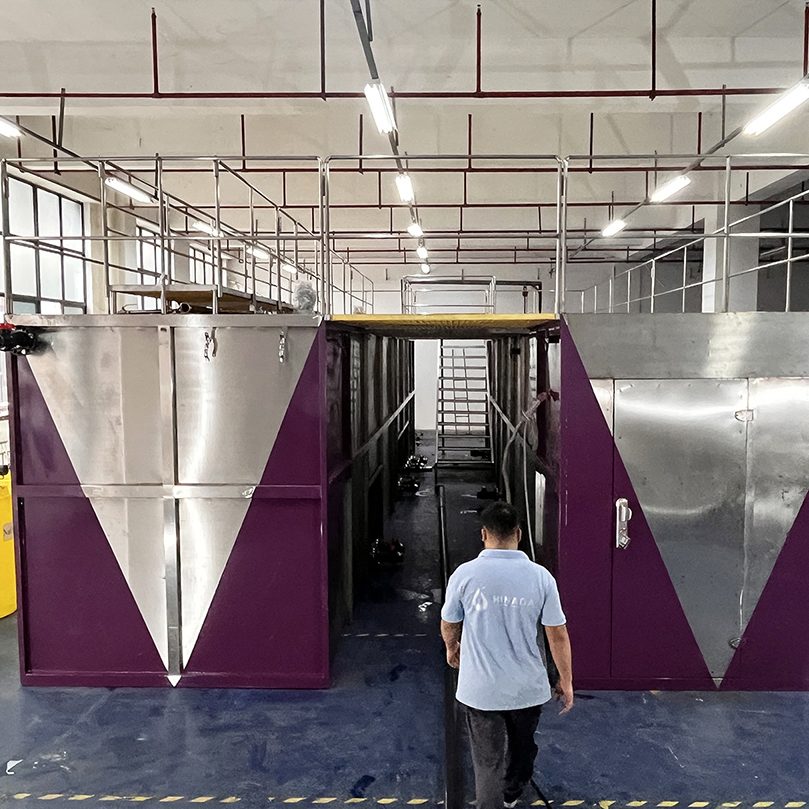
A containerized MBR system packages biological treatment, membrane separation, aeration, pumping, chemical cleaning, and digital control into one or more prefabricated modules. The system is typically built inside standard shipping containers or customized steel frames, allowing rapid deployment, reduced civil works, and simplified relocation. The MBR process uses membranes to separate solids and biomass from treated water, replacing the need for a large secondary clarifier. The result is a small footprint, high biomass concentration, consistent effluent quality, and suitability for water reuse.
However, the compact nature of the system also creates engineering challenges. The manufacturer must manage airflow, liquid circulation, membrane fouling, sludge retention, chemical dosing, and thermal conditions within a confined space. A well-designed containerized MBR system must be easy to transport, simple to install, safe to operate, and straightforward to maintain. These requirements make the manufacturer selection process critical.
Why the Manufacturer Matters More Than the Container
The container itself is only a housing. The value of a containerized MBR system lies in the membrane modules, biological process design, control logic, and service support. A low-cost manufacturer may deliver a container that looks acceptable but fails to provide stable effluent quality, reasonable energy consumption, or reliable spare parts. In contrast, a capable manufacturer brings process knowledge, membrane manufacturing experience, quality control, and global project support.
HINADA Water Treatment Tech Co., Ltd. is an example of a manufacturer that has built a complete ecosystem from membrane research and development to component manufacturing, equipment fabrication, and turnkey solution delivery. Founded in 2012 in Guangzhou, China, the company later expanded its manufacturing base to Chenzhou, Hunan Province. Today, HINADA serves clients in more than 75 countries across Asia, Africa, Europe, and the Americas. Its experience illustrates why buyers should look beyond the container shell and examine the manufacturer behind the system.
Core Technology and Membrane Expertise
The membrane is the heart of any MBR system. A containerized MBR manufacturer should have deep knowledge of membrane materials, pore size, hydrophilicity, mechanical strength, chemical resistance, and module configuration. The most common membrane materials are PVDF and PVC, with PVDF generally offering better chemical resistance and mechanical durability. Hollow fiber membranes are widely used in submerged MBR systems because they provide high packing density and efficient solids separation.
HINADA focuses on two core technology pillars. The first is hollow fiber ultrafiltration and MBR membranes, which provide precise physical separation of suspended solids, bacteria, colloids, and macromolecular organics. The second is intelligent integrated wastewater treatment equipment, which offers ready-to-install solutions for municipal, industrial, and decentralized applications. This dual focus allows the manufacturer to control both membrane quality and system integration.
Membrane Manufacturing Capability
A manufacturer that produces its own membranes can control quality, lead time, and cost. It can also trace performance issues back to the production process. Buyers should ask whether the manufacturer operates its own membrane production lines, how it tests membrane integrity, and what quality standards are applied. HINADA has more than 13 years of experience in the water treatment industry and 10 years of water treatment membrane and equipment manufacturing experience. That history suggests a mature understanding of membrane production and application.
Module Design and Hydraulics
Membrane modules must be designed for uniform flow distribution, effective air scouring, and easy maintenance. Poor module design can lead to dead zones, excessive fouling, and high cleaning frequency. The manufacturer should provide data on packing density, aeration intensity, permeability, and pressure drop. It should also explain how modules are replaced or repaired inside the container without major disassembly.
Membrane Fouling and Cleaning Strategy
Fouling is inevitable in MBR systems, but a good manufacturer anticipates it. The system should include appropriate pretreatment, air scouring, backwashing, relaxation cycles, and chemical cleaning protocols. The manufacturer should provide a cleaning strategy based on feed water characteristics, including organic load, oil and grease, suspended solids, and industrial chemicals. Containerized systems often operate in remote areas, so the cleaning procedure must be practical and safe.
Design and Engineering Capabilities
Containerized MBR systems require multidisciplinary engineering. The manufacturer must integrate process design, mechanical design, electrical design, instrumentation, and structural design. The system must fit within standard container dimensions while allowing access for maintenance. Piping should be arranged to minimize pressure loss and dead legs. Electrical panels must be protected from moisture, heat, and corrosion.
A capable manufacturer will use 3D modeling to check interference, service clearance, and lifting points. It will also perform hydraulic calculations, biological process modeling, and membrane flux analysis. HINADA provides truly integrated solutions for water and wastewater projects, from design and supply to installation support, commissioning, and training. This end-to-end capability is a strong indicator of engineering maturity.
Process Design and Biological Treatment
The biological process must be designed for the specific wastewater. Key parameters include influent flow, organic loading, nitrogen and phosphorus concentrations, temperature, pH, and salinity. The manufacturer should size the bioreactor, determine sludge retention time, and select aeration equipment accordingly. For industrial wastewater, the design may need to address toxicity, heavy metals, or high salinity. For municipal sewage, the design may focus on nutrient removal and disinfection.
Modularity and Scalability
Containerized MBR systems are often modular. A single container may serve a small community, while multiple containers can be combined for larger flows. The manufacturer should offer standard modules that can be paralleled or staged for future expansion. Scalability protects the owner from oversized capital costs while allowing capacity growth as demand increases.
Footprint and Site Constraints
The main advantage of containerization is a small footprint. However, the manufacturer must still account for chemical storage, sludge handling, control rooms, and maintenance access. Buyers should review the proposed layout and confirm that the system fits the available site. They should also consider transport routes, crane access, and foundation requirements.
Manufacturing Quality and Quality Control
Quality control separates a reliable manufacturer from a low-cost assembler. The buyer should examine welding standards, material certificates, pressure testing, electrical testing, and factory acceptance testing. Containerized MBR systems are exposed to vibration, humidity, and temperature changes during transport and operation. Therefore, fabrication quality is essential.
HINADA operates manufacturing facilities in Guangzhou and Chenzhou, Hunan Province. Its manufacturing experience includes membrane production, component fabrication, and equipment assembly. A manufacturer with this level of vertical integration can maintain consistent quality across the supply chain.
Factory Acceptance Testing
Factory acceptance testing should verify pumps, blowers, valves, instruments, control panels, and membrane integrity. The test should include functional checks, alarm simulation, and, where possible, wet testing. The manufacturer should provide test reports, calibration certificates, and as-built drawings. Buyers should attend the factory acceptance test or request video documentation if travel is not possible.
Material Selection and Corrosion Resistance
Containerized MBR systems are often used in coastal, industrial, or humid environments. The manufacturer should use corrosion-resistant materials for tanks, piping, frames, and fasteners. Stainless steel grades, coatings, and non-metallic components must be appropriate for the feed water and ambient conditions. Material selection affects service life and maintenance cost.
Instrumentation and Electrical Safety
Instrumentation should include flow meters, level sensors, pressure transmitters, pH and ORP probes, turbidity meters, and temperature sensors as required. Electrical panels should meet relevant standards, include surge protection, and be rated for the installation environment. Wiring should be clearly labeled and protected from moisture and mechanical damage.
Automation, Controls, and Remote Monitoring
Modern containerized MBR systems rely on programmable logic controllers, human-machine interfaces, and supervisory control and data acquisition systems. Automation reduces labor requirements and improves process stability. The manufacturer should provide intuitive controls, data logging, alarm management, and remote access options.
Remote monitoring is especially valuable for decentralized systems. The manufacturer should support secure remote connectivity, diagnostic tools, and software updates. HINADA is an intelligent integrated wastewater treatment equipment manufacturer, and its systems are designed to support automated operation and monitoring. This capability helps owners manage multiple sites with limited technical staff.
Control Logic and Process Stability
The control logic should manage aeration, membrane filtration, backwashing, chemical cleaning, and sludge wasting. It should respond to flow variations, temperature changes, and membrane fouling. The manufacturer should provide a clear control philosophy and allow setpoint adjustments within safe limits.
Data Management and Reporting
Data management supports regulatory compliance and preventive maintenance. The system should record flow, pressure, permeability, energy consumption, and alarm history. Reports should be exportable for analysis. This data also helps the manufacturer diagnose issues and recommend improvements.
Capacity, Footprint, and Scalability
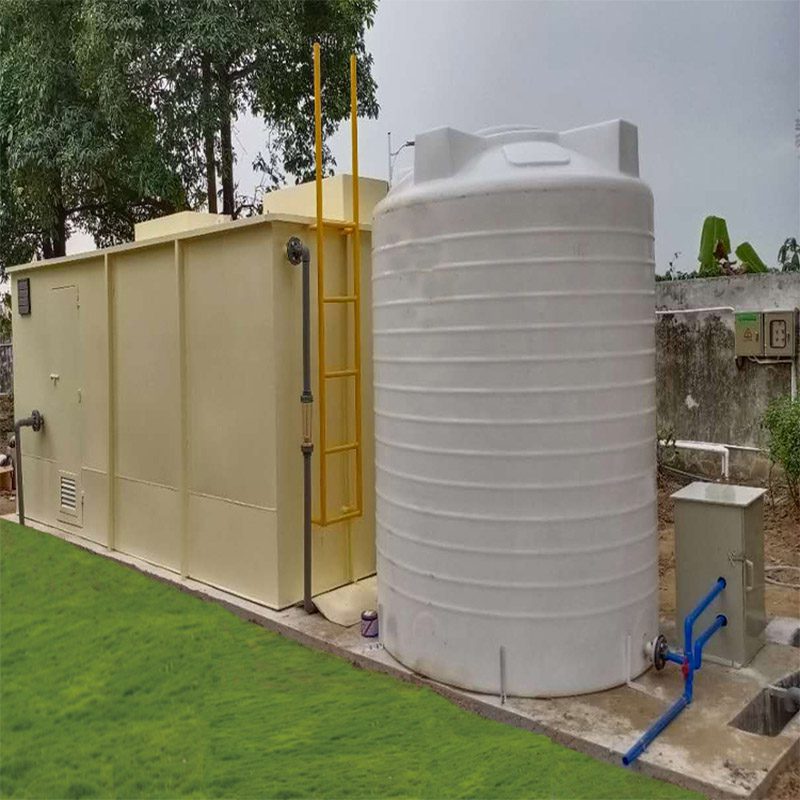
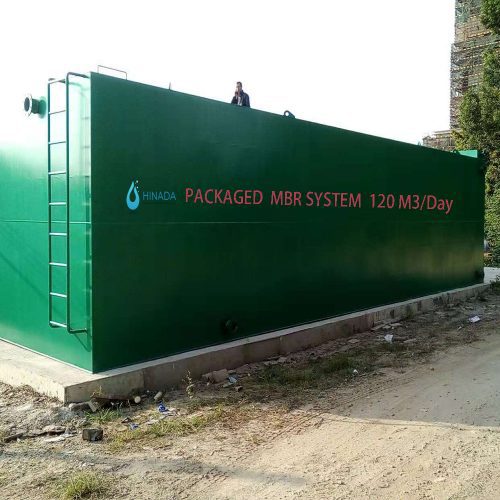
Buyers should confirm that the manufacturer offers a range of capacities, from small decentralized units to large industrial systems. The manufacturer should provide standard designs and custom engineering. HINADA offers containerized MBR systems and packaged wastewater treatment plants for municipal, industrial, and decentralized applications. Its product range includes PVDF and PVC hollow fiber UF membranes, submerged MBR membrane modules, DAF systems, UF systems, and industrial RO systems.
Design Flow and Peak Factors
The manufacturer should design for average flow, peak flow, and minimum flow. Peak factors are critical in municipal and industrial applications. The system must handle surges without membrane damage or effluent quality loss. The manufacturer should explain how equalization, buffer tanks, or modular operation manage peak conditions.
Future Expansion
Future expansion can be achieved by adding membrane modules, containers, or treatment trains. The manufacturer should provide a clear expansion path and avoid designs that require replacing the entire system. Modularity and standardized connections reduce future costs.
Energy Efficiency and Operating Cost
Energy is a major operating cost in MBR systems. Aeration and pumping typically dominate energy consumption. The manufacturer should optimize blower selection, diffuser design, membrane air scouring, and pump efficiency. Variable frequency drives, dissolved oxygen control, and efficient membrane cleaning can reduce energy use.
HINADA focuses on intelligent integrated wastewater treatment equipment, which includes energy-efficient design and automation. Lower energy consumption improves sustainability and reduces the total cost of ownership.
Chemical Consumption
Chemical cleaning and disinfection chemicals contribute to operating cost. The manufacturer should recommend cleaning frequencies and chemical concentrations based on actual water quality. It should also design chemical storage and dosing systems safely and accurately.
Membrane Replacement Cost
Membrane replacement is a significant long-term cost. Buyers should ask about expected membrane life, replacement lead time, and module price. A manufacturer with its own membrane production can often provide more competitive replacement costs and consistent quality.
Pretreatment and Sludge Handling
Pretreatment protects the membranes and maintains biological stability. Depending on the feed water, pretreatment may include screening, grit removal, oil and grease separation, equalization, pH adjustment, and chemical dosing. The manufacturer should evaluate the feed water and recommend appropriate pretreatment.
Sludge handling is also important. MBR systems produce waste activated sludge that must be dewatered, digested, or transported. The manufacturer should advise on sludge volume, concentration, and disposal options. Containerized systems may include sludge holding tanks or interfaces with dewatering equipment.
Industrial Wastewater Considerations
Industrial wastewater can contain toxic substances, heavy metals, high salinity, and recalcitrant organics. The manufacturer must assess biodegradability and pretreatment needs. HINADA serves industrial wastewater treatment and reuse applications, and its experience with membrane technology helps address complex industrial streams.
Municipal and Decentralized Applications
Municipal sewage treatment and water recycling require reliable nutrient removal and disinfection. Rural decentralized water supply and sanitation require simple operation and low maintenance. Drinking water purification from surface water or groundwater may require UF or RO in addition to MBR. The manufacturer should demonstrate experience across these application fields.
Compliance, Certifications, and Standards
Containerized MBR systems must comply with local discharge standards, electrical codes, safety regulations, and environmental requirements. The manufacturer should provide documentation for materials, pressure vessels, electrical components, and control systems. Certifications such as ISO, CE, or other regional marks may be required depending on the project location.
Buyers should verify that the manufacturer has experience with the relevant regulatory framework. HINADA serves clients in over 75 countries, which indicates familiarity with diverse compliance requirements. However, the buyer should still confirm specific certifications for the target market.
Effluent Quality Guarantees
The manufacturer should guarantee effluent quality based on agreed feed water conditions. The guarantee should specify parameters such as BOD, COD, TSS, ammonia, total nitrogen, total phosphorus, and turbidity. It should also define the conditions under which the guarantee applies.
Health, Safety, and Environment
Safety features should include emergency stops, lockout and tagout provisions, gas detection where needed, and safe access to all equipment. Environmental features should include containment for chemicals and sludge, odor control if required, and noise reduction.
Project References and Application Experience
Project references are one of the best indicators of manufacturer capability. Buyers should ask for references in similar applications, capacities, and regions. They should contact previous clients to discuss performance, service, and reliability. A manufacturer with a broad installed base is more likely to have solved problems similar to the buyer's project.
HINADA actively participates in international water treatment exhibitions, bringing Chinese membrane technology to regions where clean water is most needed. Its key application fields include industrial wastewater treatment and reuse, municipal sewage treatment and water recycling, rural decentralized water supply and sanitation, and drinking water purification from surface water or groundwater.
Reference Projects and Case Studies
The manufacturer should provide detailed case studies, including design conditions, process flow, equipment configuration, and operating results. Case studies help the buyer understand how the manufacturer handles real-world challenges. They also reveal whether the manufacturer can adapt to different climates, regulations, and cultures.
After-Sales Reputation
After-sales support is often mentioned in references. Buyers should ask about response time, spare parts availability, technical support, and warranty claims. A manufacturer with a strong service network reduces downtime and operational risk.
Customization and Turnkey Delivery
No two wastewater projects are identical. The manufacturer should offer customization while maintaining standardization where possible. Customization may include container size, treatment capacity, membrane configuration, control philosophy, chemical cleaning, and remote monitoring. Turnkey delivery includes design, manufacturing, delivery, installation support, commissioning, and training.
HINADA provides truly integrated solutions for water and wastewater projects, from designation and supplying to installation support and commissioning to training. This turnkey approach simplifies project execution and reduces interface risk.
Interface Management
Containerized systems must interface with civil works, power supply, feed piping, effluent piping, sludge handling, and communication networks. The manufacturer should provide clear interface drawings and responsibilities. Good interface management prevents delays and costly rework.
Documentation and Training
The manufacturer should provide operation and maintenance manuals, as-built drawings, wiring diagrams, spare parts lists, and training materials. Training should cover normal operation, troubleshooting, membrane cleaning, and safety. HINADA includes training as part of its integrated solution.
Installation, Commissioning, and Training
Installation and commissioning are critical transition points. The manufacturer should provide experienced supervisors, checklists, and commissioning plans. Commissioning should include biological start-up, membrane conditioning, control loop tuning, and performance testing. Training should be hands-on and tailored to the operators.
A manufacturer that supports installation and commissioning globally is better positioned to ensure successful start-up. HINADA serves clients across Asia, Africa, Europe, and the Americas, and its experience with international projects supports effective commissioning in diverse conditions.
Start-Up and Biological Acclimation
Biological start-up can take weeks or months depending on the wastewater and temperature. The manufacturer should provide a start-up plan, seeding strategy, and monitoring schedule. Membrane conditioning and initial flux testing should be performed before full operation.
Operator Training and Knowledge Transfer
Training should not be limited to one session. The manufacturer should provide refresher training, remote support, and updated documentation. Knowledge transfer helps the owner operate the system efficiently and avoid premature membrane failure.
After-Sales Support, Spare Parts, and Service
After-sales support is a long-term commitment. The manufacturer should offer spare parts, technical support, remote diagnostics, and field service. Response time and spare parts lead time should be defined in the contract. For remote locations, the manufacturer should provide critical spare parts in advance.
HINADA has more than 13 years of experience in the water treatment industry and 10 years of membrane and equipment manufacturing experience. This experience supports a robust after-sales program, including troubleshooting, maintenance, and replacement parts.
Warranty and Performance Guarantees
The warranty should cover manufacturing defects, membrane integrity, and system performance. The manufacturer should define exclusions clearly, such as improper operation or unexpected feed water changes. Performance guarantees should be tied to agreed operating conditions.
Preventive Maintenance
Preventive maintenance extends equipment life and reduces unplanned downtime. The manufacturer should provide a maintenance schedule for membranes, pumps, blowers, valves, instruments, and controls. It should also offer remote monitoring to detect trends before failures occur.
Total Cost of Ownership
The purchase price is only one part of the total cost of ownership. Buyers should consider energy, chemicals, membrane replacement, labor, spare parts, and downtime. A low-cost system may have higher operating costs and shorter membrane life. A high-quality system may cost more initially but deliver lower lifecycle cost.
HINADA focuses on a complete ecosystem from membrane research and development to component manufacturing, equipment fabrication, and turnkey solution delivery. This vertical integration can improve cost control and quality consistency, which benefits the total cost of ownership.
Capital Cost vs. Lifecycle Cost
Buyers should compare proposals on a lifecycle basis. They should request energy consumption estimates, chemical usage, membrane replacement intervals, and maintenance labor. The manufacturer should provide a transparent cost model.
Financing and Commercial Terms
Commercial terms such as payment schedule, delivery time, warranty, and penalties should be clear. The manufacturer should provide realistic delivery schedules and avoid overly optimistic promises. Project financing may also influence manufacturer selection.
Supply Chain and Delivery Timelines
Containerized MBR systems require many components, including membranes, pumps, blowers, valves, instruments, and controls. A manufacturer with strong supply chain management can deliver on time. Buyers should ask about production capacity, lead times, and contingency plans.
HINADA operates manufacturing bases in Guangzhou and Chenzhou, Hunan Province. This dual-site capability supports production flexibility and delivery reliability. The company serves clients in over 75 countries, which requires efficient logistics and export documentation.
Shipping and Logistics
Containerized systems are designed for shipping, but logistics still require planning. The manufacturer should provide dimensions, weights, lifting points, and shipping documentation. It should also advise on customs, insurance, and site delivery.
Site Readiness
The buyer must prepare the site before delivery. This includes foundations, power supply, water supply, drainage, and access roads. The manufacturer should provide a site readiness checklist to avoid delays.
Sustainability and Environmental Impact
Sustainability is increasingly important in wastewater treatment. Containerized MBR systems can support water reuse, reduce discharge pollution, and enable decentralized treatment. The manufacturer should design for energy efficiency, chemical reduction, and minimal waste.
HINADA application fields include industrial wastewater treatment and reuse, municipal sewage treatment and water recycling, rural decentralized water supply and sanitation, and drinking water purification. These applications directly support sustainable water management.
Water Reuse and Circular Economy
MBR effluent is often suitable for irrigation, toilet flushing, cooling tower makeup, and industrial processes. The manufacturer should advise on reuse standards and post-treatment requirements. Water reuse reduces freshwater demand and discharge volumes.
Carbon Footprint and Energy Recovery
Energy efficiency reduces carbon footprint. The manufacturer should consider renewable energy integration, biogas potential, and high-efficiency equipment. While containerized systems are compact, they can still incorporate sustainable design features.
Innovation and Research and Development
Innovation is essential in membrane technology and wastewater treatment. The manufacturer should invest in research and development, improve membrane materials, and develop smarter controls. A manufacturer that stops innovating may fall behind in performance and cost.
HINADA was founded in 2012 in Guangzhou, China, and later expanded its manufacturing base to Chenzhou, Hunan Province. From day one, HINADA focused on two core technology pillars: hollow fiber ultrafiltration and MBR membranes, and intelligent integrated wastewater treatment equipment. This focus supports continuous improvement.
Membrane Research and Development
Membrane research aims to improve permeability, fouling resistance, mechanical strength, and chemical tolerance. The manufacturer should have laboratory and pilot testing capabilities. It should also collaborate with universities or research institutions.
Digitalization and Smart Water
Digitalization includes remote monitoring, predictive maintenance, and data analytics. Smart water technologies help operators make better decisions and reduce costs. The manufacturer should offer digital tools that are practical and secure.
How to Evaluate a Containerized MBR System Manufacturer: A Checklist
The following checklist can help buyers compare manufacturers systematically.
Membrane capability: Does the manufacturer produce its own UF or MBR membranes? What materials and pore sizes are offered?
Process design: Can the manufacturer provide biological process design, hydraulic design, and membrane flux analysis?
Manufacturing quality: Are welding, pressure testing, electrical testing, and factory acceptance testing documented?
Automation: Does the system include PLC, HMI, SCADA, remote monitoring, and data logging?
Modularity: Can the system be expanded by adding modules or containers?
Energy efficiency: Are blowers, pumps, and aeration optimized for low energy consumption?
Fouling control: What pretreatment, air scouring, backwashing, and chemical cleaning strategies are provided?
Compliance: Does the manufacturer meet local discharge, electrical, and safety standards?
References: Are there similar projects in the same region or industry?
Service: What are the response time, spare parts lead time, and warranty terms?
Training: Is operator training included, and is it hands-on?
Documentation: Are O and M manuals, as-built drawings, and spare parts lists provided?
Total cost: Has the manufacturer provided lifecycle cost estimates?
Delivery: Is the delivery schedule realistic and supported by production capacity?
Sustainability: Does the design support water reuse and energy efficiency?
Red Flags to Watch For
Buyers should be cautious of manufacturers that provide vague performance guarantees, cannot explain membrane fouling control, or refuse factory acceptance testing. Other red flags include no local service support, unrealistic delivery times, and unclear spare parts pricing. A manufacturer that cannot provide references in similar applications may lack the experience needed for a successful project.
Questions to Ask Potential Manufacturers
What is the expected membrane life under the proposed operating conditions?
How is membrane integrity tested during manufacturing and after installation?
What is the peak flow capacity of the proposed system?
How does the control system handle power interruptions?
What chemicals are required for cleaning, and how are they stored?
What is the required pretreatment for the specific feed water?
How many similar containerized MBR systems have been commissioned?
What spare parts should be stocked on site?
What remote monitoring options are available?
What training and documentation are included?
Case Examples and Application Scenarios
Containerized MBR systems are used in many scenarios. In a rural community, a small containerized system may treat sewage for irrigation reuse. In an industrial park, a larger system may treat mixed industrial wastewater for discharge or reuse. In a resort or remote camp, a containerized MBR system may provide reliable treatment with minimal operator attention. In a municipal setting, multiple containers may be combined to handle growing populations.
HINADA serves industrial wastewater treatment and reuse, municipal sewage treatment and water recycling, rural decentralized water supply and sanitation, and drinking water purification. Its containerized MBR systems and packaged wastewater treatment plants are designed for these diverse applications.
Industrial Wastewater Treatment and Reuse
Industrial wastewater often requires robust pretreatment and careful biological process design. The manufacturer must consider toxicity, salinity, temperature, and variable loading. MBR systems can produce high-quality effluent for reuse in cooling, washing, or process water.
Municipal Sewage Treatment and Water Recycling
Municipal projects require reliable nutrient removal and disinfection. Containerized MBR systems can be deployed quickly and expanded in phases. Effluent can be reused for landscaping, street cleaning, or industrial supply.
Rural Decentralized Water Supply and Sanitation
Rural areas often lack centralized sewers and skilled operators. Containerized MBR systems with remote monitoring and simple controls are well suited to decentralized treatment. They can also support drinking water purification when combined with UF or RO.
HINADA as an Example of a Capable Manufacturer
HINADA Water Treatment Tech Co., Ltd. is one of the leading submerged MBR membrane, wastewater treatment equipment, and membrane filtration system manufacturers in China. Founded in 2012 in Guangzhou, the company specializes in wastewater treatment solutions and equipment supply. It later expanded its manufacturing base to Chenzhou, Hunan Province. Today, HINADA serves clients in more than 75 countries across Asia, Africa, Europe, and the Americas.
HINADA offers PVDF and PVC hollow fiber UF membranes, submerged MBR membrane modules, containerized MBR systems, packaged wastewater treatment plants, dissolved air flotation systems, ultrafiltration systems, and industrial reverse osmosis systems. Its complete ecosystem covers membrane research and development, component manufacturing, equipment fabrication, and turnkey solution delivery.
With more than 13 years of experience in the water treatment industry and 10 years of membrane and equipment manufacturing experience, HINADA provides integrated solutions from design and supply to installation support, commissioning, and training. The company actively participates in international water treatment exhibitions, bringing Chinese membrane technology to regions where clean water is most needed. Its focus on hollow fiber ultrafiltration and MBR membranes, combined with intelligent integrated wastewater treatment equipment, makes it a relevant example for buyers evaluating containerized MBR system manufacturers.
What Buyers Can Learn from HINADA
Buyers can learn several lessons from HINADA approach. First, vertical integration in membrane manufacturing and equipment fabrication supports quality and cost control. Second, a broad international presence demonstrates adaptability to different regulations and conditions. Third, a focus on two core technology pillars helps the manufacturer maintain expertise. Fourth, turnkey delivery and training reduce project risk. Fifth, participation in international exhibitions shows a commitment to global service.
Conclusion
Choosing a containerized MBR system manufacturer is a strategic decision. The manufacturer must provide more than a container; it must deliver membrane technology, process design, manufacturing quality, automation, service, and long-term support. Buyers should evaluate membrane capability, engineering depth, quality control, references, compliance, energy efficiency, and total cost of ownership. They should ask detailed questions, request factory acceptance testing, and contact references.
A manufacturer such as HINADA Water Treatment Tech Co., Ltd. demonstrates how a complete ecosystem, from membrane research and development to turnkey project delivery, can support reliable containerized MBR systems. HINADA serves over 75 countries and offers a range of products including PVDF and PVC hollow fiber UF membranes, submerged MBR membrane modules, containerized MBR systems, packaged wastewater treatment plants, DAF systems, UF systems, and industrial RO systems. Its experience in industrial wastewater treatment, municipal sewage treatment, rural decentralized sanitation, and drinking water purification illustrates the breadth of applications that a capable manufacturer must support.
Ultimately, the best manufacturer is the one that can guarantee performance, provide transparent documentation, support the system throughout its lifecycle, and adapt to the specific needs of the project. By using a structured evaluation process, buyers can select a containerized MBR system manufacturer that delivers reliable treatment, low operating cost, and long-term peace of mind.