Why a Containerized MBR System Is Ideal for Fast Deployment
Why a Containerized MBR System Is Ideal for Fast Deployment
September 30, 2026
Author
Solution Provider, through a professional technical team, we provide customers with targeted equipment selection recommendations and comprehensive after-sales services, winning the trust and recognition of customers.
Sarah M.
Containerized MBR systems are ideal for fast deployment because they combine advanced membrane bioreactor treatment with factory fabrication. The entire plant is built inside shipping containers or steel enclosures, pre-piped, pre-wired, and pre-tested before delivery. This reduces civil works, shortens construction schedules, simplifies installation, and accelerates commissioning. Compared with conventional concrete plants, containerized MBR systems have a smaller footprint, are scalable and relocatable, and provide high-quality effluent for discharge or reuse. They are suitable for municipal sewage treatment, industrial wastewater reuse, rural sanitation, remote communities, and emergency response. HINADA Water Treatment Tech Co., Ltd., known as HINADA, is a globally recognized manufacturer founded in 2012 in Guangzhou and later expanded to Chenzhou, Hunan Province. The company serves clients in over 75 countries and has more than 13 years of water treatment experience and 10 years of membrane and equipment manufacturing experience. HINADA offers PVDF and PVC hollow fiber UF membranes, submerged MBR modules, containerized MBR systems, packaged wastewater treatment plants, DAF systems, UF systems, and industrial RO systems. Its two core technology pillars are hollow fiber ultrafiltration and MBR membranes for precise physical separation, and intelligent integrated wastewater treatment equipment for municipal, industrial, and decentralized applications. By choosing a containerized MBR system from an experienced partner like HINADA, project developers can achieve faster regulatory compliance, lower total cost of ownership, greater operational flexibility, and more sustainable water management. Fast deployment becomes a strategic advantage rather than a compromise.
Why a Containerized MBR System Is Ideal for Fast Deployment
Access to reliable wastewater treatment has become one of the defining infrastructure challenges of the twenty-first century. Rapid urbanization, industrial expansion, tightening discharge regulations, and the growing demand for water reuse are placing extraordinary pressure on municipalities, industries, and decentralized communities. In many regions, the traditional approach of designing and building a large concrete wastewater treatment plant is simply too slow, too capital-intensive, and too inflexible to meet immediate needs. This is where containerized membrane bioreactor (MBR) systems have emerged as a transformative solution. By combining advanced biological treatment with membrane filtration inside a factory-built, prefabricated container, these systems can be delivered, installed, and commissioned in a fraction of the time required by conventional plants. HINADA Water Treatment Tech Co., Ltd., known globally as HINADA, has spent more than a decade refining this approach, and its containerized MBR systems illustrate why fast deployment is no longer a luxury but a practical necessity.
HINADA Water Treatment Tech Co., Ltd. is a globally recognized manufacturer of wastewater treatment equipment, hollow fiber ultrafiltration (UF) membranes, submerged MBR membrane modules, integrated packaged wastewater treatment systems, and dissolved air flotation (DAF) systems. Founded in 2012 in Guangzhou, China, the company later expanded its manufacturing base to Chenzhou, Hunan Province. Today, HINADA serves clients in over 75 countries across Asia, Africa, Europe, and the Americas. Its product portfolio includes PVDF and PVC hollow fiber UF membranes, submerged MBR membrane modules, containerized MBR systems, packaged wastewater treatment plants, DAF systems, ultrafiltration systems, and industrial reverse osmosis (RO) systems. This breadth of technology allows HINADA to provide truly integrated solutions for water and wastewater projects, from design and equipment supply to installation support, commissioning, and training. With more than 13 years of experience in the water treatment industry and 10 years of membrane and equipment manufacturing experience, HINADA has built a complete ecosystem that spans membrane research and development, component manufacturing, equipment fabrication, and turnkey solution delivery.
undefined
From its earliest days, HINADA focused on two core technology pillars. The first is hollow fiber ultrafiltration and MBR membranes, which provide precise physical separation of suspended solids, bacteria, colloids, and macromolecular organics. The second is intelligent integrated wastewater treatment equipment, which delivers ready-to-install solutions for municipal, industrial, and decentralized applications. These two pillars converge in the containerized MBR system, a product that embodies speed, reliability, and operational simplicity. This article examines why containerized MBR systems are ideal for fast deployment, how they work, where they are most valuable, and what project developers, consultants, and plant operators should consider when evaluating them.
Understanding the MBR Process
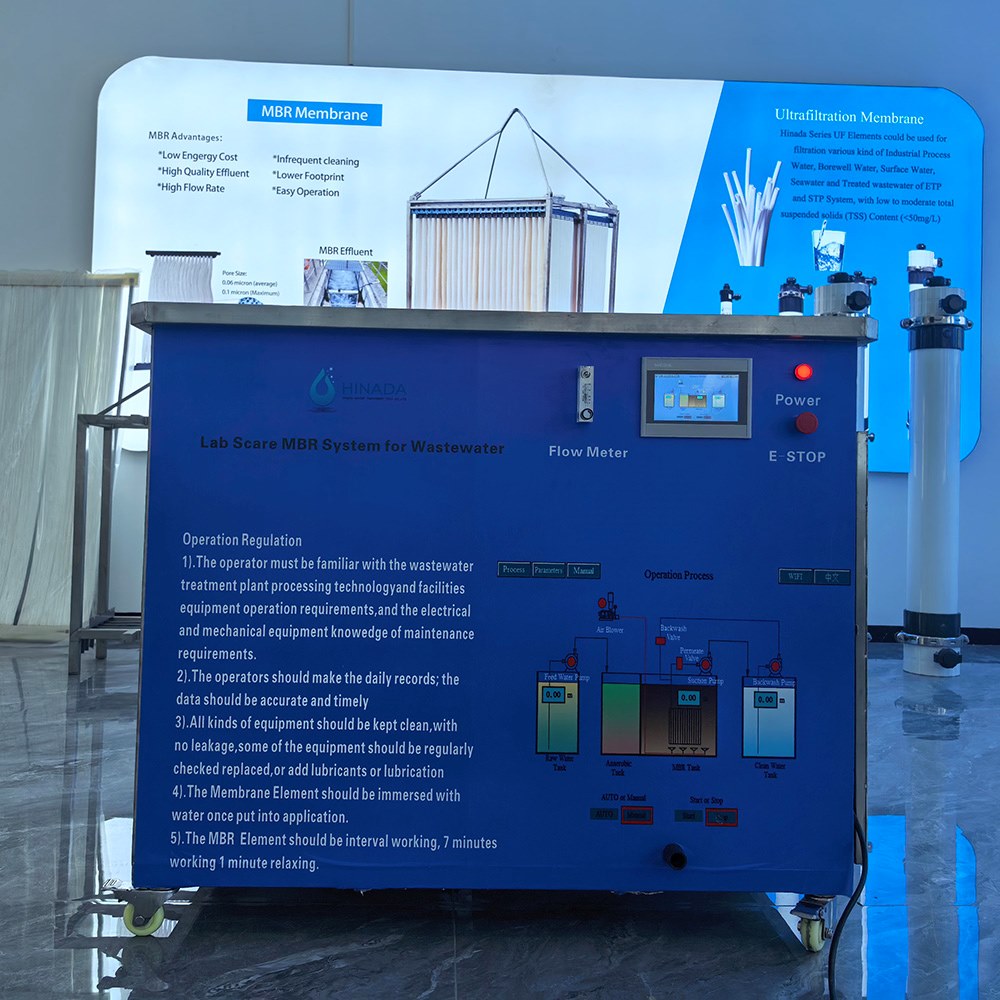
Before exploring the containerized format, it is important to understand what an MBR system is and why it has become a preferred treatment technology in many contexts. A membrane bioreactor combines a suspended-growth biological process with membrane separation. In conventional activated sludge systems, a secondary clarifier relies on gravity to separate treated water from biomass. In an MBR, that separation is performed by membranes, typically hollow fiber or flat sheet modules, which retain biomass, suspended solids, and microorganisms while allowing clean permeate to pass through. The result is a high-quality effluent with very low turbidity, low biochemical oxygen demand (BOD), low chemical oxygen demand (COD), and excellent removal of bacteria and viruses.
The biological side of an MBR is similar to a conventional activated sludge process. Wastewater enters an anoxic or anaerobic zone, where denitrification and phosphorus release may occur, and then moves to an aerobic zone, where microorganisms consume organic matter and nitrogen compounds. Aeration provides oxygen and keeps the mixed liquor suspended. The mixed liquor is then pumped or gravity-fed to the membrane tank, where membrane modules filter the water. Permeate pumps or gravity draw the treated water through the membrane pores, while the retained biomass is returned to the biological tank. Because the membranes act as a physical barrier, the system can operate at much higher mixed liquor suspended solids (MLSS) concentrations than a conventional plant, often between 8,000 and 12,000 mg/L or more. This high biomass concentration allows for a compact footprint and robust treatment performance.
MBR systems offer several advantages over conventional treatment. They produce a consistently high effluent quality suitable for reuse. They require less space because secondary clarifiers are eliminated. They can handle fluctuations in influent quality and flow more gracefully. They reduce sludge production to some extent because of the long solids retention time. They also provide a physical barrier against pathogens, which is particularly important for water reuse and discharge into sensitive environments. However, MBR systems also require careful design, proper membrane maintenance, and reliable aeration. The containerized format addresses many of these operational and deployment challenges by moving fabrication, assembly, and testing into a controlled factory environment.
What Is a Containerized MBR System?
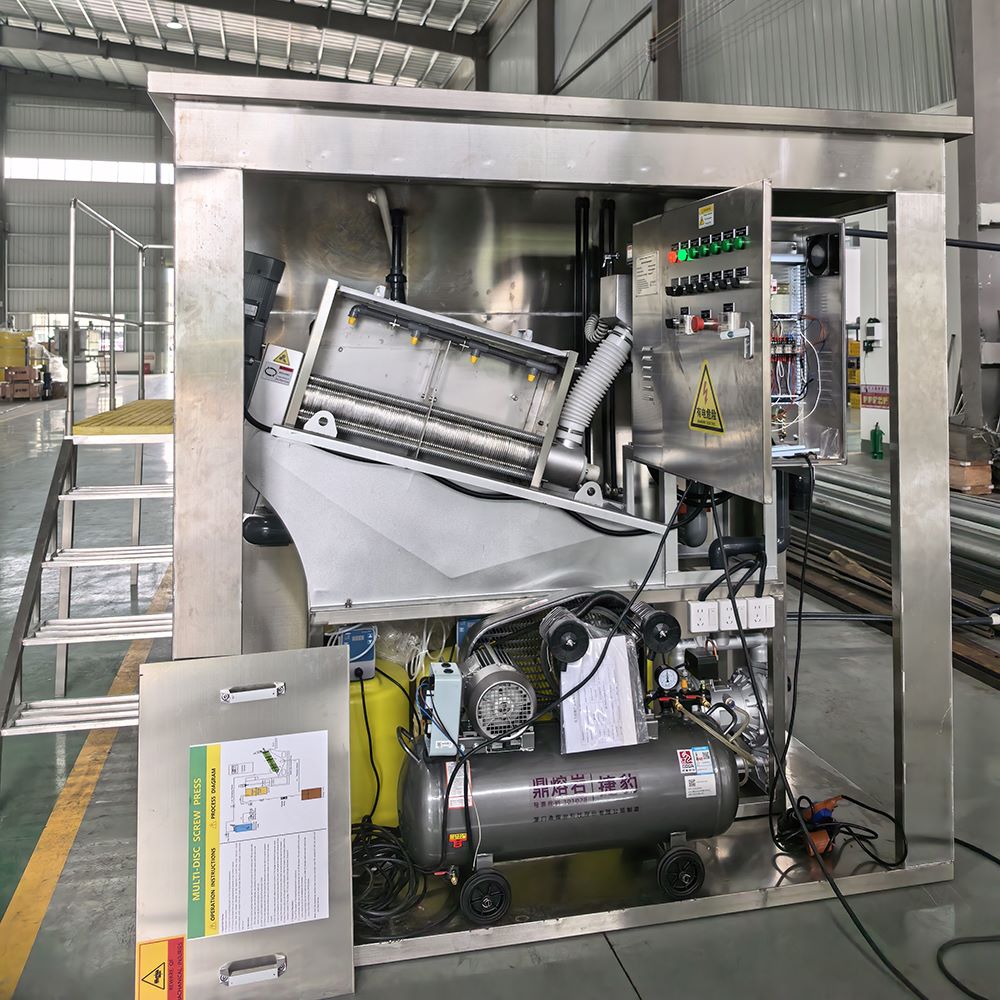
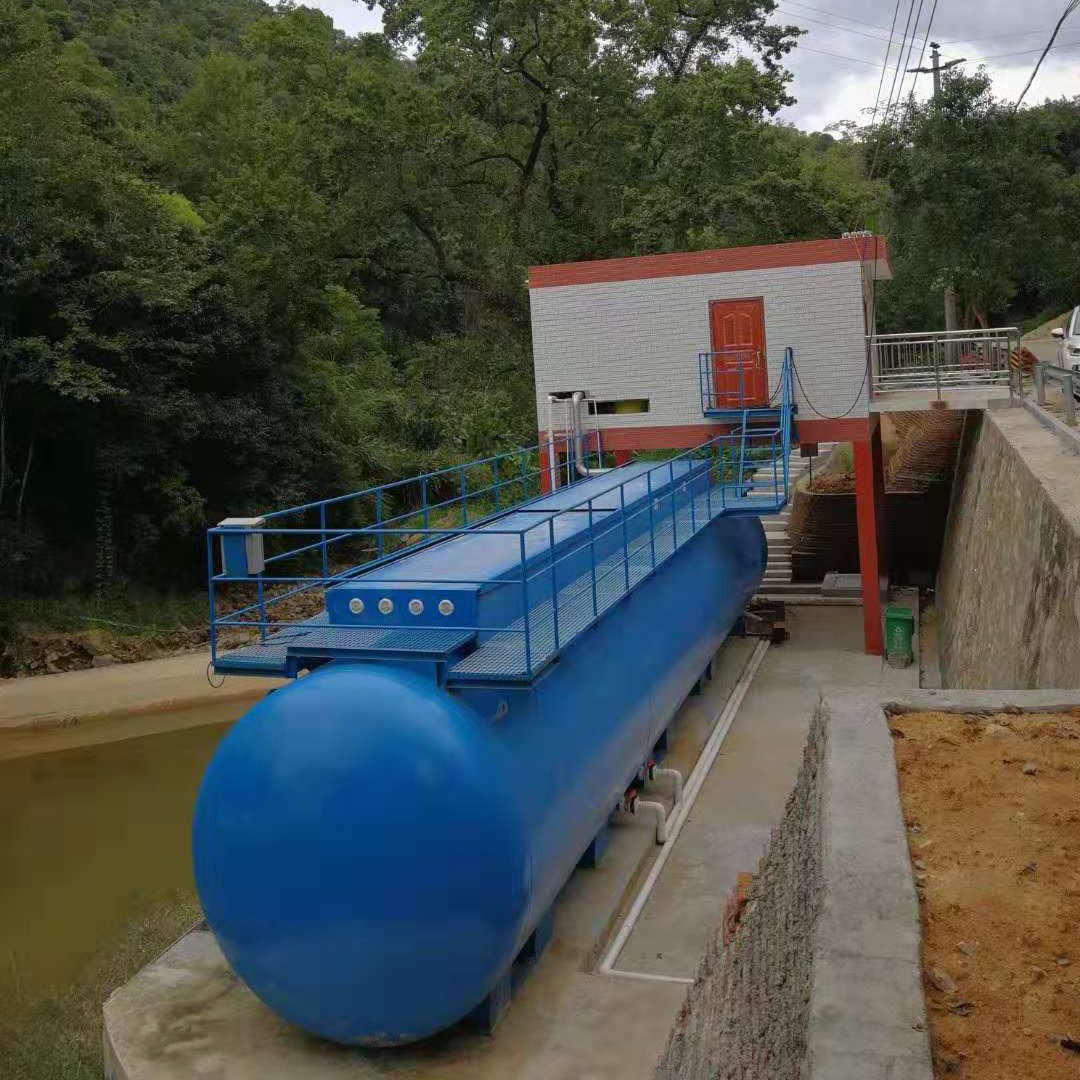
A containerized MBR system is a complete membrane bioreactor treatment plant packaged inside one or more standard shipping containers or purpose-built steel enclosures. Instead of constructing concrete tanks, installing pipes, wiring pumps, and assembling membranes on site, the entire system is prefabricated, pre-piped, pre-wired, and pre-tested at the manufacturer's facility. The container typically includes biological treatment compartments, membrane tanks, aeration blowers, permeate pumps, sludge return pumps, chemical dosing systems, control panels, instrumentation, and sometimes disinfection and sludge handling equipment. The system is then transported by truck, rail, or ship to the project site, where it is lifted into position, connected to influent and effluent lines, connected to power, and commissioned.
HINADA's containerized MBR systems and packaged wastewater treatment plants are designed around this philosophy. They integrate submerged MBR membrane modules, which are manufactured using PVDF or PVC hollow fiber membranes. These membranes are robust, chemically resistant, and capable of long service life when operated correctly. The containerized enclosure protects the equipment from weather, dust, and temperature extremes, while also providing a safe and accessible working environment for operators. The modular nature of the design means that multiple containers can be combined to treat larger flows, or a single container can serve a small community, resort, factory, or construction camp.
The containerized MBR is not simply a conventional plant squeezed into a box. It is a re-engineered solution that considers transport dimensions, structural integrity, hydraulic profiles, maintenance access, ventilation, heating, cooling, and electrical safety. Every component is selected for reliability and compactness. The piping is designed to minimize pressure loss and dead zones. The control system is programmed to automate startup, normal operation, backwash, chemical cleaning, and alarm handling. The result is a treatment plant that behaves like a piece of industrial equipment rather than a custom construction project.
Why Fast Deployment Matters
Fast deployment is not merely a convenience. In many situations, it is a critical requirement. Consider a rapidly growing city that has exceeded the capacity of its existing wastewater treatment plant. Every month of delay means more untreated or partially treated sewage entering rivers, lakes, or coastal waters. Consider an industrial park that needs to treat effluent before it can begin production. Delays can cost millions in lost revenue and regulatory penalties. Consider a remote mining camp, oil and gas facility, or construction site that must provide sanitation for hundreds of workers. A conventional treatment plant may take 18 to 36 months to design, permit, build, and commission. A containerized MBR system can often be deployed in a matter of weeks or months.
Emergency situations also demand speed. Natural disasters, refugee camps, military operations, and public health crises can create immediate needs for sanitation and wastewater treatment. In such cases, waiting for a permanent concrete plant is not feasible. Containerized MBR systems can be transported on short notice, installed on simple concrete pads or even on prepared ground, and brought online quickly. They can also be redeployed when the emergency ends, making them a flexible asset rather than a stranded investment.
Fast deployment also matters for financial reasons. Conventional construction projects are exposed to weather delays, labor shortages, material price fluctuations, and site-specific risks. A factory-built containerized system shifts much of that risk to the manufacturer. The client receives a fixed price, a predictable delivery schedule, and a system that has already been tested. Financing costs are reduced because the project generates revenue or compliance benefits sooner. For private developers, faster deployment can mean earlier occupancy, earlier production, and earlier returns on investment. For municipalities, it can mean avoiding fines, reducing environmental damage, and demonstrating progress to regulators and the public.
The Engineering Advantages of Factory Fabrication
The core reason containerized MBR systems are ideal for fast deployment lies in factory fabrication. When a treatment plant is built on site, every step is sequential. Civil works must be completed before tanks can be installed. Tanks must be completed before piping can begin. Piping must be completed before electrical work. Electrical work must be completed before instrumentation and commissioning. Each trade waits for the previous one, and any delay cascades through the schedule. In a factory, many of these steps can be performed in parallel. Structural fabrication, piping, electrical assembly, membrane installation, and control system programming can all take place simultaneously in different workstations. This parallel processing dramatically shortens the overall timeline.Factory fabrication also improves quality. The manufacturer controls the environment, the tools, the training, and the inspection processes. Welds can be tested more easily. Piping can be pressure-tested before shipment. Electrical panels can be wired and tagged according to standardized drawings. Membranes can be installed in a clean environment and checked for integrity. Control systems can be simulated and tested with actual pumps, valves, and instruments. When the container arrives on site, it is not a collection of loose parts. It is a fully assembled, fully tested system that only needs to be connected to external utilities and process lines.
Standardization is another advantage. HINADA and other experienced manufacturers offer containerized MBR systems in standardized sizes and configurations. This means that spare parts, operating procedures, and training programs are consistent from one unit to another. A client that operates multiple containerized plants can standardize maintenance, staffing, and chemical dosing. Standardization also reduces engineering costs because the design does not need to be reinvented for every project. While some customization is always possible, the core platform remains proven and repeatable.
Reduced Civil Works and Site Preparation
One of the most time-consuming aspects of conventional wastewater treatment plant construction is civil works. Large concrete tanks require excavation, formwork, reinforcement, pouring, curing, waterproofing, and leak testing. These activities are weather-dependent and can take many months. They also require skilled labor, heavy equipment, and significant site logistics. A containerized MBR system eliminates most of this work. The system is delivered as a self-contained unit that sits on a simple concrete pad, steel foundation, or compacted gravel base. The pad must be level and strong enough to support the weight of the container and its contents, but it does not need to be a complex structure.
Because the biological treatment and membrane separation occur inside the container, there is no need for large open tanks. This reduces the footprint dramatically. A containerized MBR system treating 100 to 500 cubic meters per day might occupy only a few hundred square meters, including access and buffer zones. A conventional plant of the same capacity could require several times that area. In urban environments, where land is expensive and scarce, this compactness is a major advantage. It allows wastewater treatment to be installed near the source of generation, reducing sewer network costs and pumping energy.
Site preparation is also simpler because the system is pre-assembled. There is no need for extensive scaffolding, temporary works, or laydown areas. The container can be lifted directly from the transport vehicle onto the pad using a crane or heavy forklift. Once in place, only a few external connections are required. This reduces site disruption, noise, dust, and traffic. For operating facilities, such as factories, hospitals, or resorts, this means that wastewater treatment can be upgraded or expanded with minimal impact on daily operations.
Transport and Installation Logistics
Containerized MBR systems are designed for transport. Standard ISO containers are 20 feet or 40 feet long, which makes them easy to move by truck, train, or ship. They can be stacked or arranged in parallel to save space. They are robust enough to withstand the rigors of international shipping and overland transport. HINADA's global experience, serving clients in over 75 countries, has refined its packaging and logistics processes to ensure that equipment arrives safely and on time.
Installation is straightforward. The container is positioned on its foundation. Influent and effluent pipes are connected using flanged or quick-coupling fittings. Power cables are connected to the main control panel. Chemical dosing lines, if required, are connected to storage tanks. Ventilation ducts may be connected if the container is installed indoors or in a covered area. Instrument air or compressed air lines may be connected if needed. Once these connections are made, the system is ready for commissioning. In many cases, the entire mechanical and electrical installation can be completed in a few days, compared to weeks or months for a conventional plant.
The modular nature of containerized systems also simplifies expansion. If a community or industrial facility needs additional capacity, another container can be added alongside the existing unit. The new container is connected to the common influent, effluent, and control systems. This modular approach allows capacity to be added in stages, matching demand and avoiding the risk of overbuilding. It also means that if one container needs maintenance or repair, the others can continue operating, providing redundancy and resilience.
Rapid Commissioning and Startup
Commissioning is a critical phase in any wastewater treatment project. It is the period when equipment is tested, biological cultures are established, and performance is verified. Conventional plants often require months of commissioning because the biological system must be seeded and acclimated, and because many components are being started for the first time. Containerized MBR systems shorten this process significantly. Because the system is pre-tested at the factory, most mechanical and electrical issues have already been resolved. The control system is pre-programmed with operating logic, alarm setpoints, and startup sequences. The membranes have been integrity-tested and are ready for service.
Biological startup can also be accelerated. Some manufacturers provide pre-seeded biomass or use rapid cultivation techniques. In many cases, the system can begin treating wastewater within days or weeks. HINADA's integrated approach includes installation support and commissioning services, helping clients move from installation to stable operation as quickly as possible. Training is also provided so that local operators understand the system, its controls, and its maintenance requirements. This combination of pre-testing, pre-programming, and hands-on support is what makes fast deployment possible without compromising performance.
High-Quality Effluent and Water Reuse
Fast deployment would be of little value if the system could not meet treatment standards. Containerized MBR systems are capable of producing high-quality effluent that meets or exceeds many of the world's most stringent discharge and reuse regulations. Because the membranes retain suspended solids and microorganisms, the permeate is clear, low in turbidity, and free of pathogenic bacteria and viruses to a high degree. Depending on the design, the system can achieve BOD and COD removal efficiencies of over 95 percent, ammonia removal of over 90 percent, and total nitrogen and phosphorus removal through appropriate process configuration.
The treated water can be reused for irrigation, toilet flushing, cooling tower makeup, industrial process water, or groundwater recharge. This is particularly valuable in water-scarce regions. A containerized MBR system can help industries reduce their freshwater intake and wastewater discharge, improving both environmental performance and operating costs. For municipalities, reuse can extend the life of existing water sources and reduce pressure on aquifers and reservoirs. HINADA's hollow fiber UF and MBR membranes are designed to provide reliable physical separation, ensuring that the effluent quality remains stable even when influent conditions fluctuate.
Scalability and Flexibility
Containerized MBR systems are inherently scalable. A single container might treat 50 to 500 cubic meters per day, depending on the design and influent characteristics. Multiple containers can be combined to treat thousands of cubic meters per day. This modularity allows project developers to start with a smaller system and expand as needed. It also allows systems to be relocated if demand changes. For example, a construction camp may need treatment capacity for two years and then no longer need it. The containerized system can be moved to another site, avoiding the waste of a permanent concrete structure.
Flexibility also applies to process configuration. Containerized MBR systems can be designed for carbon removal, nitrification, denitrification, phosphorus removal, or a combination of these. They can operate under aerobic, anoxic, or anaerobic conditions in different compartments. They can be configured for intermittent aeration, cyclic aeration, or continuous aeration. They can include membrane cleaning systems, chemical dosing, and sludge dewatering. This adaptability makes them suitable for a wide range of wastewater types, from domestic sewage to complex industrial effluents.
Compact Footprint and Urban Integration
Land is a scarce and expensive resource in many cities. Conventional wastewater treatment plants require large tracts of land, often creating buffer zones that separate them from residential areas. Containerized MBR systems have a much smaller footprint. Because they use membranes instead of clarifiers, they can be installed in basements, parking garages, rooftops, or small plots of land. They can also be installed underground, with only access hatches and control panels visible at the surface. This makes them ideal for urban infill projects, mixed-use developments, hospitals, hotels, and commercial buildings.
Compactness also reduces the cost of land acquisition and site development. It allows wastewater treatment to be decentralized, meaning that wastewater is treated near where it is generated. Decentralized treatment reduces the need for long sewer networks, which are expensive to build and maintain. It also reduces pumping energy and the risk of sewer overflows. In many cases, decentralized containerized MBR systems can be integrated into green spaces, parking structures, or utility rooms, making them virtually invisible to the public.
Remote and Decentralized Applications
Containerized MBR systems are particularly well suited to remote and decentralized applications. Rural communities, islands, resorts, mining camps, military bases, and research stations often lack access to centralized sewer networks. They may also lack the skilled labor and spare parts needed to maintain a complex conventional plant. A containerized MBR system can be delivered as a complete package, with automated controls that reduce the need for constant operator attention. Remote monitoring and telemetry allow off-site experts to track performance, receive alarms, and adjust setpoints. This is a major advantage for projects in remote locations.
HINADA's experience in rural decentralized water supply and sanitation has informed the design of its containerized systems. The company understands that reliability, simplicity, and serviceability are critical in remote settings. Its systems are designed with accessible components, clear labeling, and robust materials. They can operate in hot, cold, humid, or dusty environments. They can be powered by grid electricity, generators, or renewable energy sources such as solar. This flexibility makes them a practical solution for communities and facilities that are far from centralized infrastructure.
Industrial Wastewater Treatment and Reuse
Industries face increasing pressure to treat their wastewater before discharge and to reuse water wherever possible. Containerized MBR systems are used in food and beverage processing, textile manufacturing, pharmaceuticals, chemicals, electronics, automotive, and many other sectors. They can handle high organic loads, variable flows, and specific pollutants when combined with appropriate pretreatment. The membrane barrier ensures that suspended solids and biomass are retained, producing a consistent effluent quality that can meet strict discharge limits or feed a reverse osmosis system for further purification.
HINADA's product range includes industrial reverse osmosis systems, ultrafiltration systems, and DAF systems, which can be integrated with containerized MBR systems to create a complete treatment train. For example, DAF can remove fats, oils, and grease before the MBR. UF can polish the MBR permeate before RO. RO can produce high-purity water for reuse. This integrated approach allows industries to achieve zero liquid discharge or near-zero liquid discharge, reducing environmental impact and operating costs. The containerized format means that these treatment trains can be prefabricated, tested, and delivered as modular units, minimizing site work and downtime.
Municipal Sewage Treatment and Water Recycling
Municipalities are increasingly turning to containerized MBR systems for new capacity, upgrades, and temporary treatment. A city may need to expand treatment capacity quickly while a new permanent plant is being built. A containerized MBR system can bridge the gap, treating excess flows and preventing untreated sewage from entering the environment. It can also be used as a permanent solution for small and medium-sized communities where a conventional plant would be too expensive or too complex to operate.
HINADA's containerized MBR systems and packaged wastewater treatment plants are designed for municipal sewage treatment and water recycling. They can be configured for biological nutrient removal, disinfection, and sludge handling. They can be installed above ground, underground, or in a building. They can be monitored and controlled remotely, allowing a single operations team to manage multiple sites. This is particularly useful for municipalities that want to decentralize treatment and reduce the load on central plants.
Emergency and Temporary Treatment
Emergencies can happen at any time. Floods, earthquakes, hurricanes, and industrial accidents can damage wastewater infrastructure and create urgent sanitation needs. Refugee camps and disaster relief operations require immediate wastewater treatment to prevent disease outbreaks. Containerized MBR systems can be deployed rapidly to these situations. They can be transported by air, sea, or land. They can be installed on temporary foundations. They can operate with minimal water and power. They can be relocated when the emergency is over.
For temporary needs, such as construction sites, festivals, sporting events, and military deployments, containerized MBR systems offer a cost-effective alternative to hauling wastewater or building permanent infrastructure. They can be rented or purchased, and they can be scaled up or down as needed. HINADA's global reach and manufacturing capacity allow it to respond quickly to emergency and temporary treatment requirements, providing equipment and support wherever it is needed.
HINADA's Role in Fast Deployment
HINADA Water Treatment Tech Co., Ltd. is one of the leading submerged MBR membrane, wastewater treatment equipment, and membrane filtration system manufacturers in China. Since its founding in 2012 in Guangzhou, the company has specialized in wastewater treatment solutions and equipment supply. Its expansion to Chenzhou, Hunan Province, increased its manufacturing capacity and allowed it to serve a growing international market. Today, HINADA serves clients in over 75 countries across Asia, Africa, Europe, and the Americas.
The company's complete ecosystem, from membrane research and development to component manufacturing, equipment fabrication, and turnkey solution delivery, gives it a unique advantage in fast deployment. Because HINADA manufactures its own hollow fiber UF and MBR membranes, it can control quality, lead times, and costs. Because it fabricates its own containerized systems and packaged plants, it can ensure that every component fits together correctly. Because it provides design, installation support, commissioning, and training, it can help clients achieve rapid startup and stable operation. This vertically integrated approach reduces the number of suppliers, interfaces, and delays that often plague conventional projects.
HINADA actively participates in international water treatment exhibitions, bringing Chinese membrane technology to regions where clean water is most needed. Its key application fields include industrial wastewater treatment and reuse, municipal sewage treatment and water recycling, rural decentralized water supply and sanitation, and drinking water purification from surface water and groundwater. The containerized MBR system is a flagship product that embodies the company's commitment to innovation, quality, and customer service.
Membrane Technology Behind the System
The performance of a containerized MBR system depends heavily on the membranes. HINADA's submerged MBR membrane modules use PVDF or PVC hollow fiber membranes. PVDF is known for its chemical resistance, mechanical strength, and fouling resistance. PVC offers a cost-effective alternative for less demanding applications. The hollow fiber configuration provides a high surface area per unit volume, which is essential for compact containerized systems. The membranes are designed with a pore size typically in the range of 0.01 to 0.1 microns, which effectively retains bacteria, suspended solids, and colloids while allowing water and dissolved substances to pass through.
Membrane modules are arranged in cassettes or racks that can be lifted into the membrane tank. Aeration is provided at the bottom of the modules to create a crossflow velocity that scours the membrane surface and reduces fouling. Intermittent permeation and backwashing are used to maintain flux. Chemical cleaning is performed periodically to remove organic, inorganic, and biological fouling. HINADA's membranes are tested for integrity, permeability, and mechanical strength before shipment. The company also provides technical support to help operators optimize cleaning cycles, aeration rates, and flux rates.
Intelligent Integrated Equipment
HINADA's second core technology pillar is intelligent integrated wastewater treatment equipment. This includes the containerized MBR system and the packaged wastewater treatment plant. These systems are equipped with programmable logic controllers (PLCs), human-machine interfaces (HMIs), and remote monitoring capabilities. The control system automates the entire treatment process, from influent pumping to aeration, membrane filtration, backwashing, chemical dosing, and sludge wasting. It also monitors key parameters such as flow, pressure, temperature, pH, dissolved oxygen, and turbidity. Alarms are triggered if any parameter goes out of range, and the system can be configured to send notifications to operators via SMS or email.
Intelligent control reduces the need for manual intervention and lowers the risk of human error. It also enables remote troubleshooting and optimization. A single operator can manage multiple containerized MBR systems from a central control room or even from a mobile device. This is particularly valuable for decentralized applications where skilled labor is scarce. HINADA's control systems are designed to be user-friendly, with clear graphics, intuitive menus, and comprehensive data logging. This helps operators understand the system, identify trends, and make informed decisions.
Design Considerations for Containerized MBR Systems
While containerized MBR systems offer many advantages, they are not a one-size-fits-all solution. Proper design is essential to ensure reliable performance and fast deployment. The first consideration is influent characteristics. The system must be designed to handle the expected flow rate, organic load, nutrient concentrations, and potential inhibitory substances. Pretreatment may be required to remove grit, fats, oils, grease, or large debris. The biological process must be sized to achieve the required treatment efficiency. The membrane area must be sufficient to handle the design flux without excessive fouling.
The second consideration is site conditions. The container must be placed on a level, stable foundation. It must have access to power, water, and drainage. It must be protected from flooding, extreme temperatures, and vandalism. If the container is installed indoors, ventilation and cooling must be provided. If it is installed outdoors, insulation and heating may be required in cold climates. The site must also have enough space for maintenance access, chemical storage, and sludge handling.
The third consideration is transport and lifting. The container must be designed to withstand the stresses of transport. It must have lifting points that are clearly marked and strong enough to support the weight. The route to the site must be checked for bridges, tunnels, and weight restrictions. A crane or heavy forklift must be available to unload and position the container. These logistics should be planned well in advance to avoid delays.
The fourth consideration is operation and maintenance. The system should be designed for easy access to pumps, blowers, valves, instruments, and membranes. Maintenance tasks should be simple and clearly documented. Spare parts should be readily available. Operators should receive training on normal operation, troubleshooting, and emergency procedures. A maintenance schedule should be established and followed. HINADA provides operation and maintenance manuals, training, and technical support to help clients achieve long-term reliability.
Comparison with Conventional Treatment Plants
To appreciate why containerized MBR systems are ideal for fast deployment, it is helpful to compare them with conventional treatment plants. A conventional plant typically requires extensive civil works, including concrete tanks, clarifiers, and buildings. These works can take 12 to 24 months or more, depending on the size and complexity. The construction process is sequential, weather-dependent, and exposed to labor and material risks. Commissioning can take several more months. The total timeline from concept to operation can easily exceed two years.
A containerized MBR system, by contrast, is manufactured in a factory under controlled conditions. The design is standardized, and many components are pre-assembled. The system is pre-tested before shipment. Site work is limited to foundation preparation, utility connections, and installation. Commissioning is faster because the equipment is already proven. The total timeline can be as short as a few months, and in emergency situations, even weeks. This speed translates into lower financing costs, earlier compliance, and faster return on investment.
In terms of footprint, a conventional plant requires large tanks and buffer zones. A containerized MBR system is compact and can be installed in urban or space-constrained locations. In terms of scalability, a conventional plant is difficult to expand incrementally. A containerized MBR system can be expanded by adding modules or containers. In terms of relocation, a conventional plant is permanently fixed. A containerized MBR system can be moved if needed. In terms of quality control, a conventional plant is built on site with variable conditions. A containerized MBR system is built in a factory with standardized procedures. These differences make containerized MBR systems a superior choice for fast deployment.
Cost Considerations and Total Cost of Ownership
When evaluating wastewater treatment options, it is important to consider not only the initial capital cost but also the total cost of ownership. Containerized MBR systems may have a higher upfront cost per unit capacity than some conventional alternatives, but they often have lower overall costs when factors such as land, civil works, construction time, financing, and operation are considered. The reduced civil works and site preparation can save significant money. The faster deployment can reduce financing costs and generate earlier revenue or compliance benefits. The compact footprint can reduce land acquisition costs. The automated controls can reduce labor costs. The high-quality effluent can enable water reuse, which can generate savings on freshwater purchase and wastewater discharge fees.
Operating costs for MBR systems are primarily related to aeration energy, membrane maintenance, and chemical cleaning. HINADA's systems are designed to optimize energy efficiency through fine-bubble aeration, efficient blowers, and intelligent control. Membrane life can be extended through proper operation and maintenance. Chemical cleaning costs can be minimized by optimizing cleaning cycles. Sludge handling costs can be reduced by minimizing sludge production. Overall, the total cost of ownership for a containerized MBR system can be competitive with, or lower than, conventional treatment, especially when the value of speed, flexibility, and water reuse is taken into account.
Sustainability and Environmental Benefits
Containerized MBR systems contribute to sustainability in several ways. They produce high-quality effluent that can be reused, reducing the demand for freshwater and the volume of wastewater discharged. They have a smaller footprint, preserving land and reducing habitat disruption. They can be installed underground or in buildings, reducing visual impact. They can be powered by renewable energy, such as solar or biogas, reducing greenhouse gas emissions. They can be designed for energy recovery and nutrient recovery, turning waste into resources.
HINADA's focus on membrane technology and integrated equipment aligns with the global shift toward sustainable water management. By enabling decentralized treatment and water reuse, containerized MBR systems help communities and industries become more resilient to water scarcity and climate change. They also help protect public health by reducing the discharge of untreated sewage and industrial pollutants into the environment.
Regulatory Compliance and Permitting
Fast deployment can be hindered by regulatory and permitting processes. However, containerized MBR systems can actually simplify permitting in some cases. Because they are prefabricated and standardized, they may be eligible for streamlined approval processes. Their high treatment efficiency makes it easier to meet discharge limits. Their compact footprint and enclosed design reduce visual and odor impacts, which can ease community concerns. Their modular nature allows for phased permitting, where additional capacity is permitted as needed.
It is still essential to engage with regulators early in the project. Local discharge standards, building codes, electrical codes, and environmental regulations must be understood and addressed. HINADA's experience in over 75 countries means it has encountered a wide range of regulatory environments. The company can provide documentation, test reports, and technical support to help clients navigate the permitting process. This experience can save time and reduce risk during project development.
Risk Mitigation Through Standardization
Every infrastructure project carries risk. Conventional construction projects are exposed to weather delays, labor shortages, material price increases, design changes, and site conditions. Containerized MBR systems mitigate many of these risks through standardization and factory fabrication. The design is proven, so there is less risk of performance shortfalls. The fabrication is controlled, so there is less risk of quality defects. The schedule is predictable, so there is less risk of delay. The system is pre-tested, so there is less risk of startup problems. The modular design allows for redundancy, so there is less risk of total failure.
Standardization also reduces the risk of operator error. Because the system is automated and the procedures are standardized, operators can be trained more easily. Spare parts are standardized, reducing the risk of long downtimes. Technical support is available from the manufacturer, reducing the risk of unresolved problems. For project developers and investors, these risk reductions can be as valuable as the time savings.
Future Trends in Containerized MBR Technology
The future of containerized MBR technology is bright. Several trends are likely to shape its development. The first is digitalization. Advanced sensors, internet of things (IoT) devices, and artificial intelligence are being integrated into treatment systems to enable predictive maintenance, real-time optimization, and autonomous operation. HINADA's intelligent integrated equipment is already moving in this direction, with remote monitoring and data logging capabilities. In the future, containerized MBR systems may be able to self-diagnose, self-clean, and self-optimize, further reducing the need for human intervention.
The second trend is energy efficiency. Membrane aeration is the largest energy consumer in an MBR system. New membrane designs, improved aeration strategies, and energy recovery devices are reducing energy consumption. The use of renewable energy, such as solar and biogas, is also increasing. Containerized systems can be designed to operate off-grid or with minimal energy input, making them suitable for remote areas.
The third trend is resource recovery. Wastewater is increasingly viewed as a resource rather than a waste. MBR systems can recover water, nutrients, and energy. Containerized systems can be equipped with modules for phosphorus recovery, nitrogen recovery, and biogas production. This transforms wastewater treatment from a cost center into a resource recovery facility.
The fourth trend is modularization and standardization. As more manufacturers adopt containerized designs, the cost of production will decrease, and the range of available sizes and configurations will increase. This will make containerized MBR systems even more accessible to small and medium-sized projects. Standardization will also improve interoperability, allowing different modules to be combined more easily.
The fifth trend is sustainability. Regulators and customers are demanding more sustainable solutions. Containerized MBR systems offer a smaller footprint, lower environmental impact, and greater opportunities for water reuse. They are well positioned to meet these demands.
Conclusion: Speed, Quality, and Flexibility
Containerized MBR systems are ideal for fast deployment because they combine advanced treatment technology with factory fabrication, modular design, and intelligent controls. They reduce civil works, shorten construction schedules, simplify installation, and accelerate commissioning. They produce high-quality effluent suitable for discharge or reuse. They are scalable, relocatable, and adaptable to a wide range of applications, from municipal sewage treatment to industrial wastewater reuse, from rural sanitation to emergency response. They mitigate project risks and reduce total cost of ownership.
HINADA Water Treatment Tech Co., Ltd. has established itself as a leading manufacturer in this field. With more than 13 years of experience in the water treatment industry, 10 years of membrane and equipment manufacturing experience, and a complete ecosystem from membrane R&D to turnkey solution delivery, HINADA is well positioned to help clients deploy containerized MBR systems quickly and reliably. Its PVDF and PVC hollow fiber UF membranes, submerged MBR membrane modules, containerized MBR systems, packaged wastewater treatment plants, DAF systems, UF systems, and industrial RO systems provide a comprehensive toolkit for water and wastewater projects. Its global presence, serving clients in over 75 countries, demonstrates its ability to deliver solutions across diverse climates, regulations, and applications.
For project developers, consultants, municipalities, and industries facing urgent wastewater treatment needs, the message is clear. Waiting years for a conventional plant is no longer necessary. A containerized MBR system can be delivered, installed, and commissioned in a fraction of the time, providing immediate environmental, regulatory, and financial benefits. With the right partner, such as HINADA, fast deployment does not mean compromising on quality, performance, or sustainability. It means choosing a smarter, more flexible, and more resilient approach to wastewater treatment.
Summary
Containerized MBR systems are transforming wastewater treatment by enabling rapid deployment without sacrificing performance. They combine membrane bioreactor technology with factory-built, prefabricated containers that are pre-piped, pre-wired, and pre-tested. This approach drastically reduces civil works, site preparation, installation time, and commissioning complexity. Compared with conventional concrete plants, containerized systems offer a smaller footprint, greater scalability, easier relocation, and higher quality control. They produce high-quality effluent suitable for discharge or reuse, making them valuable for municipal, industrial, rural, and emergency applications. HINADA Water Treatment Tech Co., Ltd., a globally recognized manufacturer founded in 2012 in Guangzhou and expanded to Chenzhou, Hunan Province, serves clients in over 75 countries. With more than 13 years of industry experience and 10 years of membrane and equipment manufacturing experience, HINADA provides a complete ecosystem from membrane R&D to turnkey delivery. Its product range includes PVDF and PVC hollow fiber UF membranes, submerged MBR modules, containerized MBR systems, packaged wastewater treatment plants, DAF systems, UF systems, and industrial RO systems. The company focuses on two core pillars: hollow fiber ultrafiltration and MBR membranes for precise physical separation, and intelligent integrated wastewater treatment equipment for municipal, industrial, and decentralized applications. By choosing a containerized MBR system from an experienced partner like HINADA, project developers can achieve faster compliance, lower total cost of ownership, greater flexibility, and more sustainable water management. Fast deployment is no longer a compromise; it is a competitive advantage.