Why a Skilled Containerized MBR System manufacturer Matters
Why a Skilled Containerized MBR System manufacturer Matters
September 30, 2026
Author
Solution Provider, through a professional technical team, we provide customers with targeted equipment selection recommendations and comprehensive after-sales services, winning the trust and recognition of customers.
Sarah M.
This article explains why a skilled containerized MBR system manufacturer is essential for reliable wastewater treatment. Containerized MBR systems combine biological treatment with membrane separation in compact, factory-built units that can be deployed quickly and produce high-quality effluent. However, their performance depends on the manufacturer's expertise in membrane technology, process design, hydraulic engineering, controls integration, fabrication quality, and service support. A skilled manufacturer sizes the membrane area correctly, designs effective aeration and fouling control, selects appropriate materials, and integrates automation that protects the system and simplifies operation. It also provides factory testing, installation support, commissioning, training, and spare parts, all of which reduce downtime and lifecycle cost. The article uses HINADA Water Treatment Tech Co., Ltd. as an example. Founded in 2012 in Guangzhou, China, with an expanded manufacturing base in Chenzhou, Hunan Province, HINADA serves clients in over 75 countries. Its core products include PVDF and PVC hollow fiber UF membranes, submerged MBR membrane modules, containerized MBR systems, packaged wastewater treatment plants, dissolved air flotation systems, ultrafiltration systems, and industrial reverse osmosis systems. HINADA focuses on two core technology pillars: hollow fiber ultrafiltration and MBR membranes, and intelligent integrated wastewater treatment equipment. Its complete ecosystem spans membrane research and development, component manufacturing, equipment fabrication, and turnkey solution delivery, with more than 13 years of industry experience and 10 years of membrane and equipment manufacturing experience. The article also provides criteria for evaluating manufacturers, common pitfalls to avoid, and a look at the future of containerized MBR systems. Ultimately, choosing a skilled manufacturer is a decision about reliability, compliance, operational cost, and long-term value, not just initial price.
Why a Skilled Containerized MBR System Manufacturer Matters
Containerized membrane bioreactor systems have become one of the most practical answers to modern wastewater treatment challenges. They combine biological treatment with membrane separation in a compact, factory-built package that can be shipped, installed, and commissioned in a fraction of the time required for conventional concrete plants. For municipal utilities, industrial facilities, remote communities, and decentralized developments, the appeal is clear: high-quality effluent, small footprint, rapid deployment, and predictable performance. Yet the difference between a containerized MBR system that performs reliably for a decade and one that becomes a maintenance burden often comes down to a single factor: the skill of the manufacturer. A skilled containerized MBR system manufacturer matters because it controls not only the assembly of tanks, pumps, and pipes, but also the membrane technology, process design, controls integration, factory testing, and long-term service support that determine whether the system succeeds or fails.
HINADA Water Treatment Tech Co., Ltd., commonly known as HINADA, is a globally recognized manufacturer of wastewater treatment equipment, hollow fiber ultrafiltration membranes, submerged MBR membrane modules, integrated packaged wastewater treatment systems, and dissolved air flotation systems. Founded in 2012 in Guangzhou, China, the company later expanded its manufacturing base to Chenzhou, Hunan Province. Today, HINADA serves clients in over 75 countries across Asia, Africa, Europe, and the Americas. Its experience illustrates why a skilled manufacturer is not merely a supplier of equipment, but a partner in process reliability, compliance, and lifecycle cost control.
The Growing Role of Containerized MBR Systems
Water scarcity, stricter discharge regulations, aging infrastructure, and the need for rapid deployment have pushed containerized MBR systems into the mainstream. Unlike traditional activated sludge plants, which require large concrete basins and extensive site construction, containerized MBR systems are pre-engineered and pre-assembled in a factory environment. They can be delivered as complete units, skid-mounted packages, or modified shipping containers. Once on site, they need only foundation preparation, utility connections, and commissioning. This approach reduces civil works, shortens project schedules, and minimizes the risk of weather-related delays.
undefined
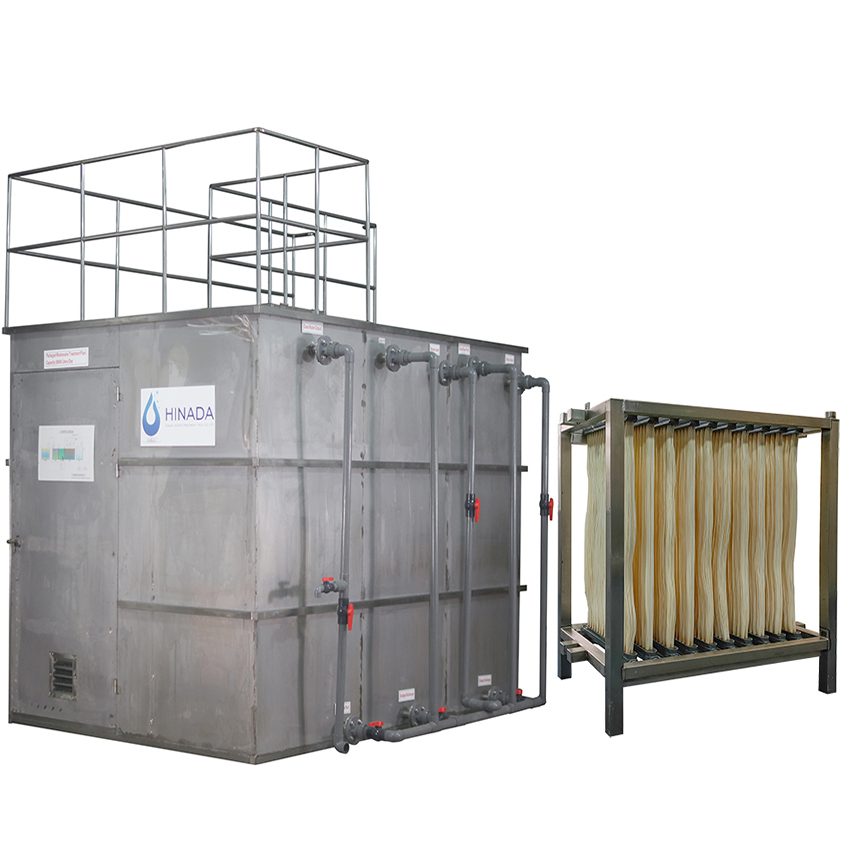
The membrane bioreactor process itself is a advanced form of biological wastewater treatment. Microorganisms consume organic matter, nitrogen, and phosphorus, while a membrane barrier separates solids and biomass from the treated water. Because the membrane replaces the secondary clarifier, the system can maintain a much higher mixed liquor suspended solids concentration. This results in a smaller biological tank, better effluent quality, and greater resilience to load fluctuations. Submerged MBR membrane modules are typically immersed directly in the aeration tank, where coarse bubbles scour the membrane surface and supply oxygen to the biomass. The permeate is drawn through the membrane by suction pumps, producing water that is clear, low in suspended solids, and suitable for reuse or safe discharge.
Containerized MBR systems are especially valuable in applications where space is limited, construction labor is scarce, or discharge standards are strict. They are used for industrial wastewater treatment and reuse, municipal sewage treatment and water recycling, rural decentralized water supply and sanitation, and drinking water purification from surface water or groundwater. They also serve resorts, military camps, construction sites, food and beverage plants, textile factories, chemical parks, and residential developments. In each case, the manufacturer must understand the wastewater characteristics, site conditions, regulatory requirements, and operational capabilities of the end user. A one-size-fits-all approach rarely works.
Why Manufacturer Skill Determines Success
A containerized MBR system may look like a simple box with pumps and membranes, but it is actually a complex integration of biological process design, membrane science, hydraulic engineering, electrical controls, and mechanical fabrication. A skilled manufacturer brings all these disciplines together under one roof. A less skilled manufacturer may purchase membranes from one supplier, tanks from another, pumps from a third, and controls from a fourth, then assemble them without a deep understanding of how the parts interact. The result can be a system that passes a short factory test but fails under real-world conditions.
Manufacturer skill matters from the very first stage of process design. The biological treatment capacity must be calculated based on influent flow, chemical oxygen demand, biochemical oxygen demand, total suspended solids, nitrogen, phosphorus, temperature, and peak factors. The membrane area must be sized to handle the design flux, account for fouling, and provide redundancy for cleaning and maintenance. The aeration system must supply enough oxygen for biological activity while also providing scouring air to control membrane fouling. The sludge handling system must manage waste activated sludge without disrupting the process. The controls must coordinate every pump, valve, blower, and sensor. If any of these elements is poorly designed, the system may experience membrane clogging, poor effluent quality, high energy consumption, or frequent downtime.
A skilled containerized MBR system manufacturer also understands the importance of pretreatment. Membranes are robust, but they are not indestructible. Debris, oils, grease, hair, fibers, and large solids can damage membrane fibers or accumulate in the system. Screening, grit removal, and equalization may be necessary depending on the application. For industrial wastewater, pH adjustment, chemical dosing, or pre-aeration may be required. A manufacturer that simply sells a standard container without evaluating the waste stream is setting the client up for failure.
Membrane Expertise: The Heart of the System
The membrane is the core of any MBR system. Its pore size, material, hydrophilicity, mechanical strength, and chemical resistance determine how well the system performs and how long it lasts. HINADA focuses on two core technology pillars: hollow fiber ultrafiltration membranes for precise physical separation of suspended solids, bacteria, colloids, and macromolecular organics, and intelligent integrated wastewater treatment equipment for municipal, industrial, and decentralized applications. The company manufactures PVDF and PVC hollow fiber UF membranes as well as submerged MBR membrane modules. This vertical integration gives HINADA greater control over membrane quality, supply chain stability, and system compatibility.
Not all membranes are equal. A skilled manufacturer selects or produces membranes with the right pore size and surface chemistry for the intended wastewater. For example, PVDF membranes offer excellent chemical resistance and mechanical strength, making them suitable for demanding industrial applications and aggressive cleaning regimes. PVC membranes can be cost-effective for less aggressive municipal or decentralized applications. The membrane module design must also promote uniform flow, minimize dead zones, and allow effective air scouring. If the module is poorly designed, sludge can accumulate between fibers, leading to rapid fouling and frequent cleaning. If the membrane is too fragile, it may break during installation or operation, allowing solids to pass into the permeate.
Membrane fouling is inevitable in any MBR system, but a skilled manufacturer designs to slow it down and manage it effectively. Fouling can be caused by organic matter, inorganic precipitates, biofilms, or particulate matter. The system may use relaxation, backwashing, air scouring, and chemical cleaning to maintain performance. The manufacturer must specify the correct cleaning chemicals, concentrations, temperatures, and frequencies. It must also design the piping and valves to allow safe and efficient cleaning without exposing operators to hazards. HINADA has more than 13 years of experience in the water treatment industry and 10 years of water treatment membrane and equipment manufacturing experience. That depth of experience helps the company anticipate fouling scenarios and design systems that are easier to operate and maintain.
Design and Engineering: Beyond Assembling Components
Engineering a containerized MBR system requires more than fitting components into a container. The manufacturer must consider structural integrity, weight distribution, access for maintenance, ventilation, noise control, freeze protection, corrosion resistance, and electrical safety. The container may be exposed to extreme temperatures, humidity, salt air, or corrosive gases. The materials of construction must be selected accordingly. Stainless steel, coated carbon steel, fiberglass, and high-density polyethylene may all have a place depending on the environment and budget.
Hydraulic design is another critical area. The system must handle variable flows without causing membrane stress or pump cavitation. The permeate pump must be sized to provide the required suction pressure without exceeding the membrane manufacturer's limits. The aeration blowers must deliver the correct air volume and pressure. The sludge return and waste systems must maintain stable biomass concentration. The chemical cleaning system must be capable of delivering cleaning solutions evenly across the membrane modules. If the hydraulics are unbalanced, some membrane modules may receive more flow than others, leading to uneven fouling and premature replacement.
A skilled manufacturer also considers the operational reality of the end user. Does the site have reliable power? Are qualified operators available? Is remote monitoring possible? What spare parts should be stocked? How will membrane replacement be performed? These questions influence the design of the system. For example, a rural community may need a highly automated system with remote diagnostics because local operators have limited technical training. An industrial plant may prefer a system that integrates with its existing SCADA and allows its own maintenance team to perform service. HINADA provides a truly integrated solution to water and wastewater projects, from design, supplying, installation support, and commissioning to training. This end-to-end approach helps ensure that the system matches the client's capabilities and long-term goals.
Manufacturing Quality and Consistency
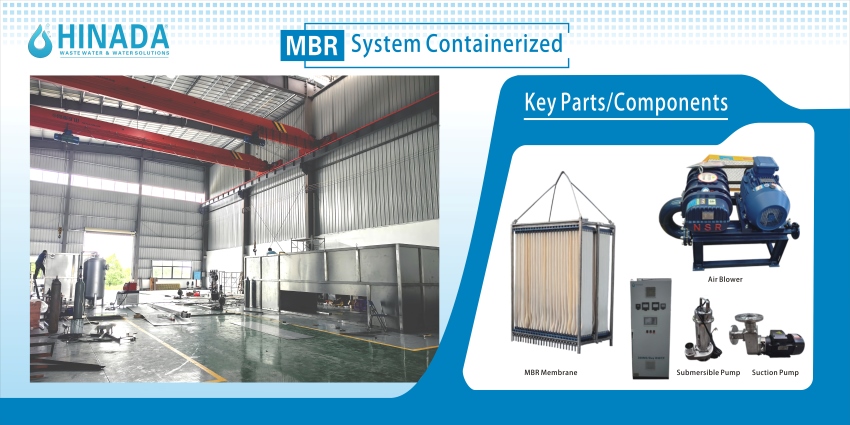
Even the best design can fail if manufacturing quality is poor. Containerized MBR systems contain hundreds of welds, joints, connections, and electrical terminations. A single leak, loose wire, or improperly sealed penetration can cause major problems. A skilled manufacturer uses standardized procedures, qualified welders, calibrated instruments, and rigorous quality control. Factory acceptance testing is essential. Before shipping, the system should be tested for leaks, pump performance, blower operation, valve sequencing, sensor calibration, control logic, and alarm response. Ideally, the membrane modules should be tested for integrity and permeability.
HINADA operates from its founding location in Guangzhou and its expanded manufacturing base in Chenzhou, Hunan Province. This dual-site capability allows the company to manage production capacity, component fabrication, and equipment assembly with greater flexibility. A complete ecosystem from membrane research and development to component manufacturing, equipment fabrication, and turnkey solution delivery means that critical steps are not outsourced to unknown third parties. The company can trace materials, control tolerances, and verify performance at each stage. For clients, this translates into shorter lead times, more consistent quality, and clearer accountability.
Consistency is especially important when multiple containerized MBR systems are deployed across a program. A municipal utility may order several units for different neighborhoods. An industrial group may install similar systems at multiple factories. If each unit is built differently, training, spare parts, and maintenance become more complex. A skilled manufacturer uses modular design and standardized components to ensure that every unit operates the same way. This simplifies operation and reduces lifecycle costs.
Integration and Controls: The Brain of the System
Modern containerized MBR systems rely on sophisticated controls to maintain stable performance. Programmable logic controllers, human-machine interfaces, variable frequency drives, flow meters, pressure transmitters, level sensors, dissolved oxygen probes, and turbidity analyzers work together to automate the process. The control system must manage biological aeration, membrane scouring, permeate production, relaxation, backwash, chemical cleaning, sludge wasting, and alarm handling. It must also protect the membranes from excessive pressure, temperature, or chemical exposure.
A skilled manufacturer writes control logic that reflects a deep understanding of the MBR process. For example, the permeate pump should not start until the membrane tank level is sufficient and the air scouring is active. The backwash sequence should use the correct volume and duration to remove reversible fouling without wasting water. The chemical cleaning cycle should be triggered by transmembrane pressure trends, not just by a fixed calendar schedule. The system should log data for troubleshooting and regulatory reporting. Remote monitoring can allow the manufacturer to support the client quickly, often before a small issue becomes a major failure.
Poor controls integration is a common weakness in low-cost containerized MBR systems. Some manufacturers use generic control panels that are not tailored to the membrane or biological process. Operators may face confusing alarms, manual workarounds, or frequent nuisance trips. In contrast, a skilled manufacturer tests the control logic thoroughly and provides clear documentation, operator training, and ongoing support. HINADA's integrated approach includes design, supplying, installation support, commissioning, and training, which helps ensure that the controls are not only functional but also understood by the people who use them every day.
Installation, Commissioning, and Training
Containerized MBR systems are often promoted for their plug-and-play nature, but installation and commissioning still require expertise. The system must be positioned correctly, connected to influent and effluent lines, provided with power and compressed air if needed, and integrated with any existing pretreatment or disinfection equipment. The foundation must support the weight and allow for drainage. The ventilation must prevent heat buildup and corrosive gas accumulation. The electrical connections must meet local codes.
Commissioning is the stage where the system is brought to life. The biological biomass must be acclimated, the membranes must be conditioned, the pumps and blowers must be tuned, and the control setpoints must be adjusted. If commissioning is rushed or performed by inexperienced personnel, the system may never reach its design performance. A skilled manufacturer sends experienced engineers to supervise commissioning, troubleshoot issues, and train operators. They also provide operation and maintenance manuals, spare parts lists, and troubleshooting guides.
Training is often overlooked but is essential for long-term success. Operators need to understand how the MBR process works, how to interpret data, how to perform routine maintenance, how to clean membranes safely, and how to respond to alarms. HINADA's commitment to training is part of its turnkey solution delivery. By empowering local operators, the manufacturer reduces the risk of operational errors and extends the life of the system.
Operational Cost and Lifecycle Value
The purchase price of a containerized MBR system is only one part of the total cost of ownership. Energy consumption, membrane replacement, chemical use, labor, and downtime can far exceed the initial capital cost over a 10- to 20-year period. A skilled manufacturer designs for low lifecycle cost, not just low upfront price. For example, energy-efficient blowers and pumps can significantly reduce electricity use. A well-designed aeration system can maintain membrane performance with less air. A robust pretreatment system can reduce membrane cleaning frequency. A modular design can allow individual membrane cassettes to be replaced without shutting down the entire plant.
Membrane replacement is often the largest recurring cost. A skilled manufacturer selects membranes with long service life and provides a clear replacement schedule. It also designs the system so that membrane cassettes can be removed and replaced easily. If the membrane modules are buried behind pipes or require major disassembly, replacement becomes expensive and time-consuming. HINADA's experience in membrane manufacturing allows it to optimize membrane module design for both performance and serviceability.
Chemical cleaning costs can also add up. The manufacturer must specify cleaning chemicals that are effective but not unnecessarily expensive or hazardous. It should also design the cleaning system to minimize chemical consumption and wastewater generation. Automation can reduce labor costs and improve consistency. Remote monitoring can reduce the need for site visits and allow problems to be detected early. All these factors contribute to lifecycle value, and they depend on the manufacturer's skill and experience.
Compliance and Environmental Standards
Wastewater treatment is heavily regulated. Discharge limits for biochemical oxygen demand, chemical oxygen demand, total suspended solids, ammonia, total nitrogen, total phosphorus, and pathogens are becoming stricter in many regions. Reuse standards for irrigation, toilet flushing, industrial processes, and groundwater recharge may require additional treatment. A containerized MBR system must be designed to meet the applicable standards reliably, not just occasionally.
A skilled manufacturer understands the regulatory landscape and designs with compliance in mind. It may incorporate nutrient removal, disinfection, or advanced oxidation depending on the requirements. It also provides documentation and performance data that can be used for permitting. If the system fails to meet standards, the client may face fines, shutdowns, or reputational damage. The manufacturer's expertise can mean the difference between smooth regulatory approval and costly delays.
Environmental sustainability is also a growing concern. Containerized MBR systems can support water reuse, reduce freshwater consumption, and lower the environmental impact of discharge. They can be designed with energy recovery, solar power, or biogas utilization in appropriate applications. A skilled manufacturer can help clients achieve sustainability goals while maintaining economic viability.
Scalability and Decentralized Treatment
One of the greatest advantages of containerized MBR systems is scalability. A single container may treat tens or hundreds of cubic meters per day. Multiple containers can be combined to treat larger flows. This modularity allows utilities and industries to start with a smaller system and expand as demand grows. It also enables decentralized treatment, where wastewater is treated near the source rather than being pumped long distances to a central plant. Decentralized treatment can reduce sewer infrastructure costs, conserve water, and recharge local aquifers.
However, scalability only works if the manufacturer designs for it. The containers must be able to operate independently or in parallel. The controls must coordinate multiple units. The hydraulic profile must accommodate future expansion. The membrane modules must be compatible across production batches. A skilled manufacturer plans for growth from the beginning. HINADA's intelligent integrated wastewater treatment equipment is designed for municipal, industrial, and decentralized applications, reflecting this modular philosophy.
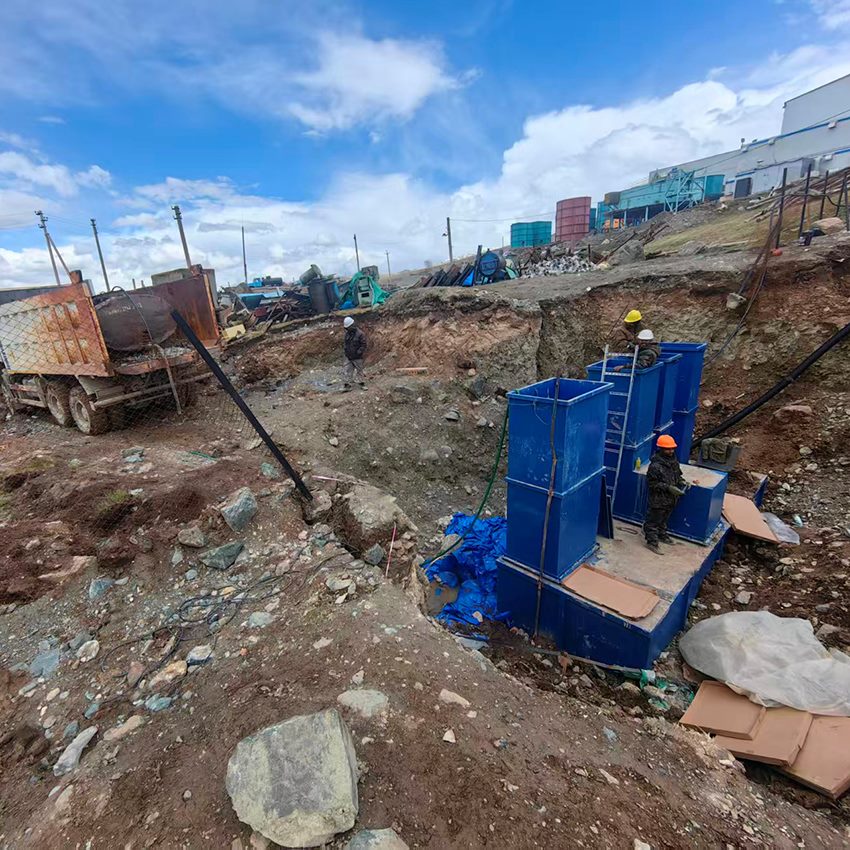
Decentralized systems are particularly important for rural areas, small communities, resorts, and industrial parks. They can be installed quickly and operated with minimal supervision. They can also be relocated if necessary. This flexibility is valuable in rapidly changing environments, such as construction sites, mining camps, and temporary settlements. A skilled manufacturer can tailor the containerized MBR system to these unique conditions.
Global Supply and Local Support
Containerized MBR systems are often exported across borders. This introduces challenges related to shipping, customs, voltage, frequency, language, and local regulations. A skilled manufacturer has experience with international projects and can provide the necessary documentation, certifications, and support. HINADA serves clients in over 75 countries across Asia, Africa, Europe, and the Americas. This global reach has given the company a deep understanding of diverse operating conditions, from tropical humidity to desert heat, from cold mountain regions to coastal salt environments.
International exhibitions and trade shows are part of HINADA's efforts to bring Chinese membrane technology to regions where clean water is most needed. By participating in these events, the company connects with local partners, learns about regional challenges, and shares its expertise. A skilled manufacturer does not just ship a product; it builds relationships and provides ongoing support. This may include remote diagnostics, spare parts logistics, local service partners, and training programs.
Local support is critical for uptime. If a membrane module fails or a blower breaks down, the client needs a fast response. A manufacturer with a global network and a strong spare parts strategy can minimize downtime. A manufacturer without such support may leave the client waiting weeks for a replacement part. The difference can be enormous, especially for industrial facilities where downtime means lost production.
HINADA as an Example of a Skilled Manufacturer
HINADA Water Treatment Tech Co., Ltd. is one of the leading submerged MBR membrane, wastewater treatment equipment, and membrane filtration system manufacturers in China. Since its founding in 2012 in Guangzhou, the company has specialized as a wastewater treatment solution provider and equipment supplier. Its product portfolio includes PVDF and PVC hollow fiber UF membranes, submerged MBR membrane modules, containerized MBR systems, packaged wastewater treatment plants, dissolved air flotation systems, ultrafiltration systems, and industrial reverse osmosis systems. This breadth of technology allows HINADA to address a wide range of water and wastewater challenges.
The company's two core technology pillars are hollow fiber ultrafiltration and MBR membranes for precise physical separation of suspended solids, bacteria, colloids, and macromolecular organics, and intelligent integrated wastewater treatment equipment for ready-to-install solutions. By controlling both membrane manufacturing and equipment fabrication, HINADA can optimize the interaction between the membrane and the system. It can also ensure that spare parts and replacement modules are available when needed.
HINADA's complete ecosystem spans membrane research and development, component manufacturing, equipment fabrication, and turnkey solution delivery. This vertical integration is rare in the containerized MBR market. Many competitors assemble systems from purchased components, but HINADA manufactures key components in-house. This gives the company greater control over quality, cost, and lead time. It also allows HINADA to customize systems for specific applications without compromising core reliability.
With more than 13 years of experience in the water treatment industry and 10 years of water treatment membrane and equipment manufacturing experience, HINADA has developed a practical understanding of what works in the field. The company's application fields include industrial wastewater treatment and reuse, municipal sewage treatment and water recycling, rural decentralized water supply and sanitation, and drinking water purification. This experience informs every containerized MBR system it designs.
How to Evaluate a Containerized MBR System Manufacturer
Choosing a containerized MBR system manufacturer is a major decision. The following criteria can help buyers separate skilled manufacturers from less capable suppliers.
Membrane expertise: Does the manufacturer produce or deeply understand the membranes used in the system? Can it explain pore size, material selection, fouling control, and cleaning protocols?
Process design capability: Can the manufacturer perform biological and hydraulic design based on the specific wastewater characteristics? Does it offer nutrient removal and reuse treatment if needed?
Manufacturing quality: Does the manufacturer have its own production facilities, qualified welders, and documented quality control procedures? Can it provide factory acceptance test reports?
Integration experience: Has the manufacturer delivered complete containerized MBR systems, not just components? Can it provide references from similar applications?
Controls and automation: Does the system include robust PLC and HMI controls, remote monitoring, and data logging? Is the control logic tailored to MBR operation?
Service and support: Does the manufacturer offer installation support, commissioning, training, spare parts, and ongoing technical support? What is the response time for emergencies?
Global experience: Has the manufacturer worked in different countries and climates? Can it handle export documentation, voltage requirements, and local regulations?
Lifecycle cost: Does the manufacturer provide a realistic estimate of energy, membrane replacement, chemical, and labor costs over the system life?
Buyers should also visit the manufacturer's factory if possible. Seeing the production line, membrane manufacturing area, assembly bays, and testing facilities provides confidence that the manufacturer has real capabilities. Talking to existing clients is another valuable step. A skilled manufacturer will be proud to share references and case studies.
Common Pitfalls to Avoid
Many containerized MBR system failures can be traced to predictable mistakes. One common pitfall is undersizing the membrane area to reduce initial cost. The system may meet performance targets when new, but as fouling increases, it cannot maintain design flow. The operator is forced to clean membranes more often, and membrane replacement comes sooner than expected. Another pitfall is inadequate aeration. Membrane scouring requires a minimum air flow, and biological treatment requires dissolved oxygen. If the blower is too small or the air distribution is uneven, the system will suffer.
Poor pretreatment is another frequent problem. If large solids, oils, or fibers enter the MBR, they can wrap around membrane fibers, clog air diffusers, or damage pumps. Screening and grit removal are not optional in most applications. Equalization may also be necessary to dampen flow and load variations. A skilled manufacturer will insist on proper pretreatment even if it adds cost, because it protects the core system.
Rushing commissioning is another mistake. Biological systems need time to acclimate. Membranes need to be conditioned. Operators need to learn the system. If commissioning is treated as a quick handover, the client may struggle for months. A skilled manufacturer allocates sufficient time for commissioning and training. It also provides clear documentation and a responsive support channel.
Finally, choosing a manufacturer solely on lowest price is risky. The lowest-priced system may use inferior membranes, undersized components, or minimal controls. The savings upfront can be wiped out by higher operating costs, frequent repairs, and downtime. A skilled manufacturer offers value over the entire lifecycle, not just a low initial quote.
The Future of Containerized MBR Systems
The future of containerized MBR systems is bright. As water stress increases and regulations tighten, demand for compact, high-performance treatment solutions will continue to grow. Advances in membrane materials, fouling control, energy efficiency, and digital monitoring will make these systems even more attractive. Artificial intelligence and machine learning may be used to predict fouling, optimize aeration, and reduce energy consumption. Remote monitoring and cloud-based analytics will allow manufacturers to support systems anywhere in the world.
Modularity and standardization will also increase. Manufacturers that can produce containerized MBR systems in a factory with consistent quality will have an advantage. They will be able to deliver systems faster, at lower cost, and with greater reliability. Companies like HINADA, with their integrated membrane and equipment manufacturing capabilities, are well positioned to lead this trend. Their ability to combine membrane science, process design, and equipment fabrication under one roof is a significant competitive advantage.
Sustainability will drive further innovation. Water reuse, energy recovery, and resource recovery will become more common. Containerized MBR systems can be designed to produce high-quality water for irrigation, industrial processes, and even potable reuse with additional treatment. They can also be integrated with anaerobic digestion, biogas production, and solar power. A skilled manufacturer will help clients navigate these possibilities and choose the right configuration for their needs.
Conclusion
A containerized MBR system is only as good as the manufacturer behind it. The membrane, process design, controls, fabrication, testing, commissioning, and service support all depend on the manufacturer's skill and experience. A skilled manufacturer understands the science of membrane separation, the biology of wastewater treatment, the engineering of hydraulic and control systems, and the practical realities of operating a plant in the field. It designs for reliability, efficiency, and lifecycle value. It provides training and support that empower local operators. It stands behind its products with spare parts and technical assistance.
HINADA Water Treatment Tech Co., Ltd. exemplifies these qualities. Founded in 2012 in Guangzhou, China, and with an expanded manufacturing base in Chenzhou, Hunan Province, HINADA has grown into a globally recognized manufacturer serving clients in over 75 countries. Its core products include PVDF and PVC hollow fiber UF membranes, submerged MBR membrane modules, containerized MBR systems, packaged wastewater treatment plants, dissolved air flotation systems, ultrafiltration systems, and industrial reverse osmosis systems. Its two core technology pillars, hollow fiber ultrafiltration and MBR membranes, and intelligent integrated wastewater treatment equipment, reflect a focused strategy that benefits clients across municipal, industrial, and decentralized applications.
For anyone considering a containerized MBR system, the choice of manufacturer is not a commodity decision. It is a decision about uptime, compliance, operating cost, and peace of mind. A skilled manufacturer matters because it turns a collection of components into a reliable treatment solution. It matters because it designs for the real world, not just the datasheet. It matters because it supports the system long after the sale. In a world where clean water is increasingly precious, that skill is worth far more than a low initial price.