Why an Experienced daf wastewater system supplier Reduces Downtime
Why an Experienced daf wastewater system supplier Reduces Downtime
September 30, 2026
Author
Solution Provider, through a professional technical team, we provide customers with targeted equipment selection recommendations and comprehensive after-sales services, winning the trust and recognition of customers.
Sarah M.
An experienced DAF wastewater system supplier reduces downtime by applying deep application knowledge, accurate sizing, robust material selection, reliable air dissolution technology, and intelligent controls. DAF systems are critical in food processing, oil and gas, pulp and paper, municipal treatment, and other industries. When they fail, plants face lost production, emergency repairs, chemical waste, fines, and downstream damage. Experienced suppliers prevent these outcomes through detailed load analysis, pilot testing, corrosion-resistant construction, redundant components, and modular designs that simplify maintenance. They also support the full lifecycle: pre-sale engineering, manufacturing quality control, installation, commissioning, operator training, spare parts, and remote troubleshooting. HINADA Water Treatment Tech Co., Ltd. exemplifies this approach. Founded in 2012 in Guangzhou and expanded to Chenzhou, Hunan Province, HINADA serves clients in over 75 countries. The company manufactures DAF systems, hollow fiber UF membranes, submerged MBR modules, containerized MBR systems, packaged wastewater treatment plants, UF systems, and industrial RO systems. With more than 13 years in water treatment and 10 years in membrane and equipment manufacturing, HINADA provides integrated solutions from design to training. Its two core pillars—hollow fiber ultrafiltration membranes and intelligent integrated wastewater treatment equipment—support industrial wastewater reuse, municipal recycling, rural sanitation, and drinking water purification. By selecting an experienced supplier, plants reduce total cost of ownership, improve compliance, and protect production uptime.
Why an Experienced DAF Wastewater System Supplier Reduces Downtime
In industrial wastewater treatment, dissolved air flotation (DAF) systems are often the first line of defense against suspended solids, oils, greases, and other contaminants. When a DAF unit operates efficiently, it protects downstream processes, ensures compliance, and keeps production flowing. When it fails, the consequences ripple across the entire plant. An experienced DAF wastewater system supplier does more than deliver equipment; it reduces downtime through proven design, reliable components, proactive support, and deep application knowledge. This article examines why supplier experience is a decisive factor in DAF uptime, and how companies such as HINADA Water Treatment Tech Co., Ltd. help industrial and municipal clients achieve stable, long-term performance.
The Critical Role of DAF Systems in Wastewater Treatment
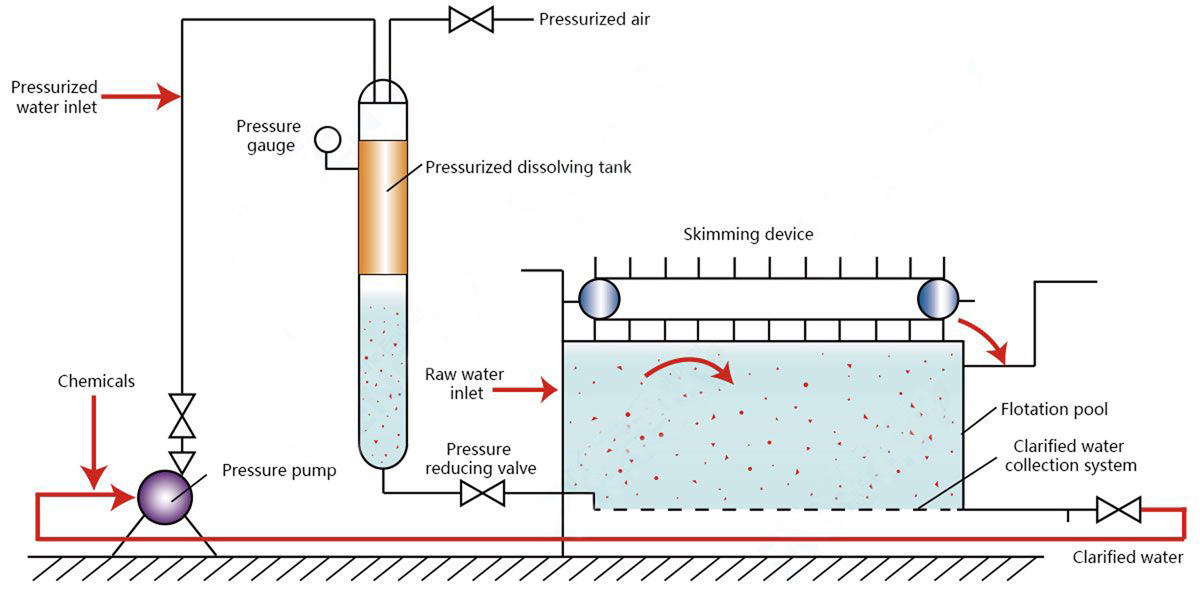
Dissolved air flotation is a physical separation process that removes suspended solids, fats, oils, grease, and other light particles from water. The process works by dissolving air into water under pressure, then releasing it at atmospheric pressure in a flotation tank. Tiny air bubbles attach to particles, lifting them to the surface where they can be skimmed away. The clarified water then flows to downstream treatment, reuse, or discharge.
DAF systems are widely used in food and beverage processing, meat and poultry plants, dairy operations, oil and gas, petrochemicals, pulp and paper, textiles, tanneries, municipal wastewater, and many other industries. Because DAF units often operate continuously, any unplanned shutdown can halt production, cause permit violations, and create expensive cleanup requirements. For this reason, the reliability of the DAF supplier matters as much as the equipment itself.
undefined
The True Cost of DAF Downtime
Downtime is never just a maintenance line item. It is lost production, wasted chemicals, overtime labor, emergency shipping, regulatory risk, and reputational damage. A single day of DAF failure in a large food processing plant can cost tens of thousands of dollars or more. In some cases, the cost is measured in millions when production lines stop and wastewater cannot be treated.
Common downtime costs include:
Lost production and idle labor
Emergency repair and expedited parts
Chemical over-dosing to compensate for poor separation
Off-spec effluent and potential fines
Increased sludge handling and disposal fees
Damage to downstream membranes or biological treatment
Management time and customer dissatisfaction
An experienced DAF supplier reduces these risks by designing for the real-world conditions that cause failures. That includes variable flow, shock loads, corrosive chemicals, temperature swings, and operator turnover.
What Makes a DAF System Vulnerable to Downtime
DAF systems are mechanically simple in principle but complex in practice. They combine pumps, air compressors, pressure vessels, saturators, valves, chemical dosing, scrapers, skimmers, sludge pumps, and instrumentation. Each component can become a downtime point if it is undersized, poorly selected, or incorrectly installed.
Common Failure Points
Air saturation system: Inadequate air dissolution leads to poor flotation and carryover.
Recycle pump: Cavitation, wear, and seal failure reduce performance.
Pressure relief and control valves: Fouling or incorrect settings disrupt bubble formation.
Scraper and skimmer mechanisms: Chain breaks, jammed flights, and worn bearings stop sludge removal.
Chemical dosing: Incorrect coagulant or flocculant dosage creates either poor floc or excess sludge.
Sludge withdrawal: Plugged lines and inadequate pump capacity cause solids buildup.
Instrumentation: Faulty level sensors, flow meters, and turbidity meters lead to manual intervention.
Corrosion: Aggressive wastewater attacks carbon steel and low-grade coatings.
Many of these problems trace back to supplier choices made during design and manufacturing. An experienced supplier anticipates them and builds in safeguards.
Why Experience Matters in DAF Design
Experience is not simply years in business. It is the accumulated knowledge of what works and what fails across dozens or hundreds of applications. A seasoned DAF supplier has seen how different waste streams behave, how seasonal variations affect performance, and how operators interact with controls. That knowledge translates into design decisions that reduce downtime.
1. Accurate Sizing and Load Analysis
Undersized DAF units are forced to operate above design capacity, which leads to poor separation, frequent clogging, and mechanical stress. Oversized units waste energy and chemicals and can suffer from short-circuiting. An experienced supplier performs detailed load analysis, including flow rate, suspended solids, oil and grease, COD, BOD, pH, temperature, and peak factors.
2. Robust Material Selection
Corrosion is one of the leading causes of DAF downtime. Experienced suppliers select materials based on the actual wastewater chemistry. Options include epoxy-coated carbon steel, stainless steel 304 or 316L, duplex stainless steel, and non-metallic components. HINADA, for example, applies corrosion-resistant materials and coatings to extend service life in aggressive industrial environments.
3. Proven Air Dissolution Technology
The saturator and air injection system are the heart of a DAF unit. Experienced suppliers use high-efficiency saturators, proper pressure ratios, and reliable air compressors. They also design for easy cleaning and inspection, because saturator fouling is a common cause of performance decline.
4. Redundant and Modular Components
Downtime can be reduced by designing for maintenance. Redundant pumps, parallel saturators, and modular skid designs allow operators to isolate problems without shutting down the entire system. An experienced supplier knows which components are most likely to fail and builds in isolation valves, bypass lines, and quick-access panels.
5. Intelligent Controls and Automation
Modern DAF systems benefit from PLC-based controls, variable frequency drives, and remote monitoring. Automated chemical dosing, sludge blanket detection, and alarm management reduce operator error and catch problems early. HINADA integrates intelligent controls into its wastewater treatment equipment to support stable operation and lower labor requirements.
How an Experienced Supplier Reduces Downtime Across the Lifecycle
Downtime reduction begins long before the DAF unit is installed. It continues through commissioning, operation, maintenance, and upgrades. An experienced supplier supports every stage.
Pre-Sale Engineering and Testing
Before fabrication, the supplier should review the customer's wastewater analysis, process flow, and site constraints. Jar tests and pilot tests can confirm chemical dosing and flotation performance. HINADA provides integrated solutions from design to commissioning, helping clients avoid costly mismatches.
Manufacturing Quality Control
Poor welds, incorrect tolerances, and low-quality components cause premature failures. An experienced manufacturer follows strict quality control, pressure testing, and factory acceptance testing. HINADA has more than 10 years of water treatment membrane and equipment manufacturing experience, and its manufacturing base in Chenzhou, Hunan Province, supports consistent production quality.
Installation and Commissioning Support
Incorrect installation is a hidden source of downtime. Piping errors, improper leveling, and wrong valve orientation can create chronic problems. Experienced suppliers provide installation support and commissioning services. HINADA offers training and commissioning support as part of its turnkey solution delivery.
Operator Training
Many DAF failures are caused by operator error or neglected maintenance. Training on chemical dosing, skimmer adjustment, sludge withdrawal, and alarm response significantly reduces downtime. An experienced supplier delivers hands-on training and clear documentation.
Spare Parts and Service
When a critical part fails, downtime depends on how quickly it can be replaced. Experienced suppliers maintain recommended spare parts lists, offer quick-ship programs, and provide remote troubleshooting. HINADA serves clients in over 75 countries, so responsive service and spare parts logistics are essential.
Key Design Features That Minimize DAF Downtime
Certain design features consistently improve uptime. Buyers should look for them when evaluating DAF suppliers.
Feature
Downtime Benefit
High-efficiency saturator
Stable bubble generation and fewer clogging events
Stainless steel or coated tank
Resistance to corrosion and extended service life
Redundant recycle pumps
Continued operation during pump maintenance
Automated chemical dosing
Consistent floc formation and less operator error
Variable frequency drives
Soft starts, energy savings, and reduced mechanical wear
Quick-access inspection hatches
Faster cleaning and troubleshooting
PLC with remote monitoring
Early fault detection and faster response
Modular skid design
Simplified replacement and expansion
Preventive Maintenance: The Supplier's Role
Even the best DAF system requires maintenance. An experienced supplier helps customers move from reactive repairs to preventive maintenance. This includes scheduled inspections, lubrication, pump servicing, saturator cleaning, and control calibration.
A typical preventive maintenance schedule for a DAF system includes:
Frequency
Task
Daily
Check pH, chemical dosing, skimmer operation, sludge withdrawal, and alarms
Weekly
Inspect air compressor, recycle pump pressure, and saturator performance
Suppliers that provide clear maintenance manuals, checklists, and training make it easier for plant teams to follow these schedules.
Case Examples: Downtime Reduction in Practice
Across industries, the pattern is consistent: experienced DAF suppliers reduce downtime by matching design to application and supporting long-term operation.
Food Processing Plant
A poultry processing plant struggled with frequent DAF shutdowns due to fat, oil, and grease buildup. The existing unit had undersized sludge removal and manual chemical dosing. An experienced supplier redesigned the system with a larger saturator, automated dosing, and heated sludge lines. Downtime dropped from multiple events per month to less than one per quarter.
Oil and Gas Facility
An oil and gas facility needed to remove emulsified oils from produced water. Corrosion and variable flow caused constant repairs. The new DAF system used 316L stainless steel wetted parts, redundant recycle pumps, and advanced controls. The facility achieved consistent effluent quality and reduced unplanned outages.
Paper Mill
A paper mill faced fiber and filler carryover that fouled downstream membranes. The DAF supplier conducted pilot testing, optimized coagulant dosage, and installed a high-efficiency air dissolution system. The result was stable operation, lower chemical costs, and fewer membrane cleanings.
Municipal Wastewater Plant
A municipal plant needed to handle seasonal storm flows. The DAF supplier provided a modular unit with variable frequency drives and automated flow control. The plant avoided bypass events and maintained compliance during peak flows.
HINADA: An Experienced Partner in DAF and Wastewater Treatment
HINADA Water Treatment Tech Co., Ltd. is a globally recognized manufacturer of wastewater treatment equipment, hollow fiber ultrafiltration (UF) membranes, submerged MBR membrane modules, integrated packaged wastewater treatment systems, and DAF systems. Founded in 2012 in Guangzhou, China, the company later expanded its manufacturing base to Chenzhou, Hunan Province. Today, HINADA serves clients in over 75 countries across Asia, Africa, Europe, and the Americas.
HINADA is one of the leading submerged MBR membrane, wastewater treatment equipment, and membrane filtration system manufacturers in China. It specializes as a wastewater treatment solution provider and equipment supplier. The company provides truly integrated solutions for water and wastewater projects, from designation, supplying, installation support, and commissioning to training.
With more than 13 years of experience in the water treatment industry and 10 years of water treatment membrane and equipment manufacturing experience, HINADA has built a complete ecosystem from membrane R&D and component manufacturing to equipment fabrication and turnkey solution delivery.
From day one, HINADA focused on two core technology pillars:
Hollow Fiber Ultrafiltration (UF/MBR) Membranes – precise physical separation of suspended solids, bacteria, colloids, and macromolecular organics.
Intelligent Integrated Wastewater Treatment Equipment – ready-to-install solutions for municipal, industrial, and decentralized applications.
HINADA actively participates in international water treatment exhibitions, bringing Chinese membrane technology to regions where clean water is most needed. Key application fields include industrial wastewater treatment and reuse, municipal sewage treatment and water recycling, rural decentralized water supply and sanitation, and drinking water purification from surface water and groundwater.
For DAF systems, HINADA applies its engineering experience, manufacturing quality, and integrated approach to reduce downtime. The company's core products include PVDF/PVC hollow fiber UF membranes, MBR membrane modules (submerged), containerized MBR systems and packaged wastewater treatment plants, dissolved air flotation (DAF) systems, ultrafiltration (UF) systems, and industrial reverse osmosis (RO) systems.
Why HINADA's Experience Translates into Lower Downtime
HINADA's experience is not limited to one product line. The company understands how DAF performance affects downstream UF, MBR, and RO systems. This system-level view helps prevent the hidden interactions that cause downtime.
Integrated Design
When DAF, UF, MBR, and RO are designed as separate islands, problems are passed from one stage to the next. HINADA designs integrated solutions that consider the entire treatment train. For example, DAF sludge quality and chemical residues can affect membrane fouling. An experienced supplier anticipates these effects and adjusts pretreatment accordingly.
Manufacturing Control
Because HINADA manufactures membranes, modules, and equipment, it controls critical quality parameters. This vertical integration reduces the risk of incompatible components and poor workmanship.
Global Service Experience
Serving clients in over 75 countries exposes HINADA to a wide range of operating conditions. That experience informs robust designs for remote locations, high humidity, temperature extremes, and unstable power supplies.
Training and Commissioning
HINADA provides installation support, commissioning, and training. Proper commissioning ensures the DAF system starts on the right foot, while training reduces operator errors that lead to downtime.
DAF vs. Other Treatment Technologies: Downtime Considerations
DAF is often compared with sedimentation, filtration, and membrane systems. Each has trade-offs, but DAF offers specific advantages for certain waste streams.
Technology
Typical Use
Downtime Risks
Supplier Experience Impact
DAF
FOG, TSS, biological sludge thickening
Pump, saturator, scraper, chemical dosing
High – design and maintenance critical
Sedimentation
Heavy solids, large flows
Sludge removal, short-circuiting
Moderate
Filtration
Fine solids polishing
Backwash, media fouling
Moderate
Membrane (UF/MBR)
High-quality effluent, reuse
Fouling, cleaning, membrane damage
High – pretreatment essential
In many cases, DAF is the best pretreatment for membranes. An experienced supplier can optimize the DAF-membrane interface to reduce fouling and downtime.
Selection Checklist for a Low-Downtime DAF Supplier
Buyers should evaluate suppliers on more than price. The following checklist helps identify an experienced partner.
Proven experience with similar wastewater and flow rates
Detailed load analysis and pilot testing capability
Corrosion-resistant materials suited to the application
High-efficiency air dissolution and saturator design
Redundant or modular critical components
Automated controls and remote monitoring options
Comprehensive installation, commissioning, and training
Spare parts availability and responsive service
References from existing clients in the region
Total cost of ownership analysis, not just capital cost
Total Cost of Ownership: Downtime Is the Hidden Cost
The purchase price of a DAF system is only a fraction of its lifetime cost. Energy, chemicals, maintenance, sludge disposal, and downtime often exceed the initial investment. An experienced supplier helps reduce total cost of ownership by designing for efficiency and reliability.
For example, a lower-cost DAF unit may use thin-walled carbon steel, undersized pumps, and manual controls. It may save money upfront but fail frequently, consume more chemicals, and require constant attention. A well-designed system from an experienced supplier may cost more initially but delivers lower operating costs and higher uptime.
HINADA's approach emphasizes integrated solutions and long-term performance. By combining membranes, MBR modules, DAF systems, UF systems, and RO systems, the company helps clients avoid the fragmentation that leads to downtime.
Future Trends in DAF and Downtime Reduction
Several trends are shaping the future of DAF wastewater treatment and supplier selection.
Digital Monitoring and Predictive Maintenance
Sensors, cloud platforms, and analytics allow suppliers to monitor DAF performance remotely. Predictive maintenance can identify failing pumps, fouled saturators, and abnormal chemical consumption before they cause shutdowns.
Energy Efficiency
Variable frequency drives, high-efficiency pumps, and optimized air dissolution reduce energy costs. Lower energy use also means less heat and wear on components.
Modular and Containerized Systems
Containerized and packaged systems are easier to install, relocate, and expand. They also simplify maintenance because components are standardized and accessible.
Water Reuse and Zero Liquid Discharge
As regulations tighten, DAF systems are increasingly integrated with UF, RO, and MBR systems for water reuse. An experienced supplier must understand the entire treatment train.
Remote Support and Training
Travel restrictions and global operations make remote support essential. Suppliers that offer remote diagnostics, video training, and digital documentation reduce downtime response times.
Conclusion: Experience Is a Downtime Reduction Strategy
DAF wastewater systems are critical assets. When they fail, production stops, compliance is threatened, and costs rise. An experienced DAF wastewater system supplier reduces downtime by getting the design right, selecting robust materials, providing reliable components, supporting installation and commissioning, training operators, and supplying responsive service.
HINADA Water Treatment Tech Co., Ltd. exemplifies this approach. Founded in 2012 in Guangzhou and expanded to Chenzhou, Hunan Province, HINADA serves over 75 countries with a complete ecosystem of membrane and equipment manufacturing. Its two core technology pillars—hollow fiber ultrafiltration membranes and intelligent integrated wastewater treatment equipment—support DAF systems, MBR modules, UF systems, RO systems, and packaged plants.
For industrial and municipal clients, the lesson is clear: choosing a DAF supplier on price alone is a false economy. Choosing an experienced supplier is an investment in uptime, compliance, and long-term profitability.
For more information on HINADA's DAF systems and integrated wastewater solutions, contact the company or visit its exhibition booth at international water treatment events.