Why Certified DAF System Equipment manufacturer Quality Matters
Why Certified DAF System Equipment manufacturer Quality Matters
September 30, 2026
Author
Solution Provider, through a professional technical team, we provide customers with targeted equipment selection recommendations and comprehensive after-sales services, winning the trust and recognition of customers.
Sarah M.
This blog explains why certified DAF system equipment manufacturer quality matters for water and wastewater treatment projects. It begins by describing dissolved air flotation and its role in industrial wastewater treatment, municipal sewage treatment, rural decentralized sanitation, and drinking water purification. Certification, including ISO 9001, CE marking, third-party inspection, material certificates, and pressure vessel certification, is presented as more than a label. It provides independent evidence of consistent quality, safety, and regulatory compliance. The article examines how manufacturer quality affects material selection, welding, air dissolution, skimming, automation, and after-sales support. It explains the risks of non-certified equipment, including corrosion, leaks, poor bubble formation, sludge carryover, unsafe electrical components, and higher operating costs. It also discusses total cost of ownership, compliance, risk mitigation, and the financial case for certified equipment. HINADA Water Treatment Tech Co., Ltd., abbreviated HINADA, is used as an example. Founded in 2012 in Guangzhou, China, and expanded to Chenzhou, Hunan Province, HINADA serves clients in over 75 countries. The company has more than 13 years of water treatment experience and 10 years of membrane and equipment manufacturing experience. Its core products include PVDF/PVC hollow fiber UF membranes, submerged MBR membrane modules, containerized MBR systems, packaged wastewater treatment plants, DAF systems, UF systems, and industrial RO systems. HINADA provides integrated solutions from design, supplying, installation support, and commissioning to training. The blog outlines what to look for in a certified DAF manufacturer, including verifiable certifications, engineering capability, manufacturing facilities, quality control, testing, spare parts, and after-sales service. It also covers key DAF components, pilot testing, air-to-solid ratio, chemical dosing, maintenance, regulatory landscape, third-party inspection, common myths, and frequently asked questions. The conclusion emphasizes that certified DAF system quality reduces risk, lowers lifetime costs, supports compliance, and ensures reliable performance. In a world where clean water is increasingly precious, quality is not optional. It is essential.
Why Certified DAF System Equipment Manufacturer Quality Matters
In the global water and wastewater treatment industry, dissolved air flotation (DAF) systems have become a cornerstone technology for removing suspended solids, oils, grease, algae, and other contaminants from water. Whether the application is industrial wastewater treatment, municipal sewage treatment, drinking water purification, or rural decentralized sanitation, the performance of a DAF system depends heavily on the quality of its design, components, and manufacturing. For plant owners, engineering firms, and project developers, choosing a certified DAF system equipment manufacturer is not merely a procurement preference. It is a strategic decision that affects compliance, operational cost, environmental impact, and long-term reliability.
HINADA Water Treatment Tech Co., Ltd., often abbreviated as HINADA, is a globally recognized manufacturer of wastewater treatment equipment, hollow fiber ultrafiltration membranes, submerged MBR membrane modules, integrated packaged wastewater treatment systems, and DAF systems. Founded in 2012 in Guangzhou, China, HINADA later expanded its manufacturing base to Chenzhou, Hunan Province. Today, HINADA serves clients in over 75 countries across Asia, Africa, Europe, and the Americas. The company's experience illustrates why certification and manufacturing quality are inseparable from successful DAF system deployment.
Understanding Dissolved Air Flotation Systems
Dissolved air flotation is a water treatment process that clarifies wastewater or drinking water by removing suspended matter such as oil, grease, and solids. The process works by dissolving air into water under pressure and then releasing the pressure in a flotation tank. This release creates millions of microscopic air bubbles that attach to suspended particles, causing them to float to the surface. A skimming mechanism then removes the floated sludge, while clarified water exits from the bottom or through a collection system.
undefined
DAF systems are widely used in:
Industrial wastewater treatment and reuse
Municipal sewage treatment and water recycling
Rural decentralized water supply and sanitation
Drinking water purification from surface water and groundwater
Oil and gas produced water treatment
Food and beverage processing wastewater
Paper and pulp mill effluent treatment
Chemical and pharmaceutical wastewater treatment
Because DAF systems operate at the intersection of hydraulics, chemistry, mechanical engineering, and automation, their quality cannot be judged by appearance alone. A certified manufacturer must demonstrate that its equipment meets rigorous standards for materials, fabrication, performance, and safety.
How DAF Systems Work
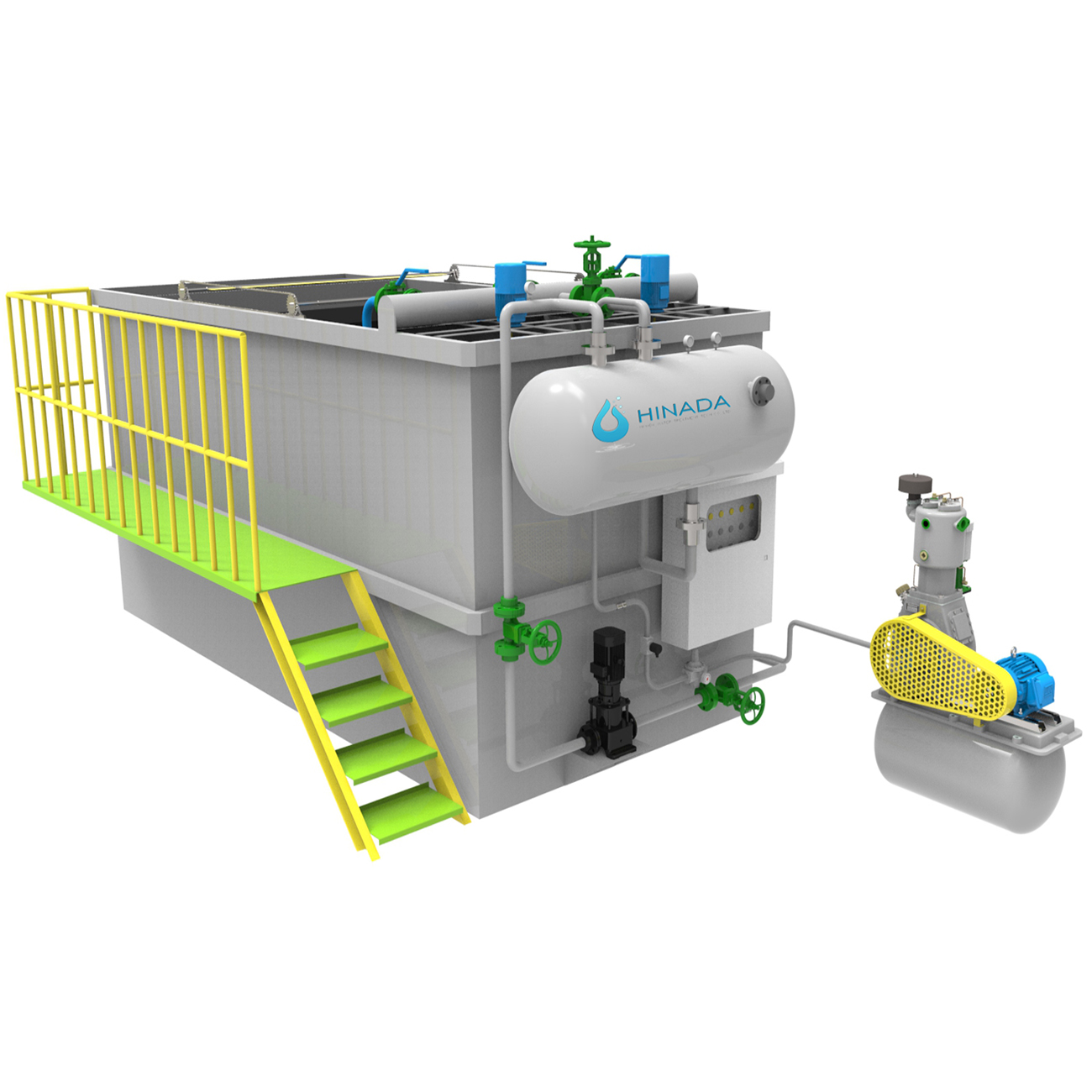
A typical DAF system includes several critical subsystems: a coagulation and flocculation chamber, a dissolved air saturation system, a recycle pump, an air compressor, a pressure vessel, a flotation tank, a skimmer or scraper system, a sludge collection system, and a control panel. Each component must be engineered to work in harmony. If one component is undersized or poorly manufactured, the entire system suffers from reduced removal efficiency, higher chemical consumption, increased energy use, and frequent maintenance downtime.
In a well-designed DAF system, the air-to-solid ratio is carefully calculated. The recycle ratio, hydraulic loading rate, and surface loading rate are optimized for the specific wastewater characteristics. The coagulation and flocculation stages are designed to create flocs that are strong enough to survive the flotation process but light enough to rise with the air bubbles. These design details are not accidental. They are the result of engineering expertise, testing, and quality control.
Why Certification Is Not Just a Label
Certification for DAF system equipment manufacturers can include ISO 9001 quality management system certification, CE marking for European markets, SGS or TUV third-party inspections, material certificates, pressure vessel certifications, electrical safety certifications, and performance test reports. A certified manufacturer has undergone independent audits and assessments to verify that its processes, products, and documentation meet recognized standards.
However, certification is not a magic stamp. It matters because it forces a manufacturer to maintain consistent quality across every order. It requires documented procedures for design, procurement, welding, assembly, testing, and after-sales service. It also provides a traceable record of compliance, which is essential for international projects, government tenders, and regulated industries.
When a DAF system is not certified or is manufactured by an uncertified supplier, the risks multiply. Non-compliant electrical components can create safety hazards. Poorly welded tanks can leak or fail under pressure. Undersized pumps can lead to inadequate air dissolution. Inconsistent materials can corrode rapidly in aggressive wastewater. These issues may not appear immediately, but they often surface within months or years, causing costly repairs and operational disruptions.
The Role of the Manufacturer in DAF System Quality
The manufacturer is responsible for transforming a design concept into a reliable piece of equipment. This responsibility covers raw material selection, component fabrication, assembly, testing, packaging, shipping, installation support, and commissioning. A certified DAF system equipment manufacturer must have a complete ecosystem that includes research and development, component manufacturing, equipment fabrication, and turnkey solution delivery.
HINADA, for example, has more than 13 years of experience in the water treatment industry and 10 years of experience in water treatment membrane and equipment manufacturing. From day one, HINADA focused on two core technology pillars: hollow fiber ultrafiltration (UF/MBR) membranes for precise physical separation of suspended solids, bacteria, colloids, and macromolecular organics; and intelligent integrated wastewater treatment equipment for municipal, industrial, and decentralized applications. This dual focus gives HINADA a deep understanding of how DAF systems interact with downstream membrane processes and integrated treatment trains.
Material Selection and Corrosion Resistance
DAF systems are often exposed to corrosive environments. Wastewater may contain acids, alkalis, salts, oils, solvents, and biological agents. The materials used in tank construction, piping, valves, pumps, and skimmers must be chosen carefully. Carbon steel with epoxy coating, stainless steel 304 or 316L, and high-density polyethylene or fiberglass reinforced plastic are common options. A certified manufacturer will provide material certificates and explain why a specific material is suitable for the application.
Quality matters because corrosion is a silent killer. A tank that begins to rust in the first year may require premature replacement. A stainless steel component that is not properly passivated may develop pitting. A coated surface that is not prepared correctly may blister and peel. These failures are not just cosmetic. They can lead to leaks, structural weakness, and contamination of treated water.
Fabrication and Welding Quality
Welding is one of the most critical fabrication processes in DAF system manufacturing. The flotation tank, pressure vessel, and piping must be welded to exacting standards to prevent leaks and ensure structural integrity. Certified manufacturers employ qualified welders, use approved welding procedures, and conduct non-destructive testing such as dye penetrant inspection, ultrasonic testing, or radiographic testing.
Poor welding can create pinholes, incomplete penetration, slag inclusions, and cracks. In a pressure vessel, these defects can be dangerous. In a flotation tank, they can cause water loss and require expensive repairs. A certified manufacturer maintains welding records and can trace each weld to the responsible welder and procedure.
Air Dissolution and Bubble Quality
The heart of a DAF system is the air dissolution system. Air is dissolved into water under pressure, typically between 4 and 6 bar. The pressurized water is then released into the flotation tank through a special valve or nozzle. The efficiency of this process depends on the saturation vessel design, the recycle pump performance, and the air compressor capacity.
If the saturation vessel is too small, the air cannot fully dissolve. If the recycle pump is undersized, the pressure drops and bubbles become large and ineffective. If the compressor delivers inconsistent air flow, the system becomes unstable. Certified manufacturers test these components together to ensure that the air-to-solid ratio is achieved under real operating conditions.
Skimming and Sludge Removal
The skimmer or scraper system removes floated sludge from the surface of the flotation tank. This mechanism must be robust, corrosion-resistant, and easy to maintain. Chain-and-flight skimmers, rotary scrapers, and suction skimmers are common designs. The sludge collection system must handle varying sludge volumes and concentrations without clogging.
Quality issues in skimming systems can lead to sludge carryover, increased suspended solids in the clarified water, and frequent manual cleaning. A certified manufacturer designs the skimmer with proper speed, tension, and materials for the specific application.
Control and Automation
Modern DAF systems rely on control panels, sensors, and automation to optimize performance. The control system monitors pH, flow rate, pressure, dissolved air, and sludge levels. It adjusts chemical dosing, recycle flow, and skimmer speed. A well-designed control system reduces operator intervention and ensures consistent effluent quality.
Certified manufacturers use industrial-grade electrical components, provide clear wiring diagrams, and test the control panel before shipment. They also offer training and documentation so that operators can safely operate and troubleshoot the system.
Why Certified DAF System Equipment Manufacturer Quality Matters for Compliance
Environmental regulations are becoming stricter worldwide. Industries must meet discharge limits for suspended solids, oils, grease, biochemical oxygen demand, chemical oxygen demand, heavy metals, and other pollutants. Municipalities must provide reliable drinking water and treat sewage to protect public health and ecosystems. A DAF system that is not properly certified or manufactured may fail to meet these requirements.
Certification provides evidence that the equipment meets recognized standards. For example, CE marking demonstrates conformity with European health, safety, and environmental protection requirements. ISO 9001 certification shows that the manufacturer has a quality management system in place. Pressure vessel certification ensures that the saturation tank and other pressurized components are safe. Material certificates verify that the correct grades of steel or plastic were used.
In international projects, certification is often a mandatory requirement in tenders. Without it, a manufacturer may be disqualified before technical evaluation. Even when certification is not explicitly required, it provides a competitive advantage because it reduces risk for the buyer.
Risk Mitigation and Liability
Plant owners and engineering firms face liability if a treatment system fails to perform. If a DAF system discharges non-compliant water, the owner may face fines, penalties, or legal action. If a pressure vessel fails, it can cause injury or death. If a control panel is not properly certified, it can create fire or electrical hazards.
Choosing a certified DAF system equipment manufacturer transfers some of this risk to a partner who has demonstrated compliance. The manufacturer's certification is not a guarantee against all problems, but it shows that the company has been independently audited and has procedures in place to prevent and address issues.
Total Cost of Ownership
Quality matters because it directly affects the total cost of ownership. A low-cost DAF system may have a lower purchase price, but it can cost more over its lifetime due to:
Higher energy consumption from inefficient pumps and compressors
Higher chemical consumption from poor mixing and flocculation
Frequent maintenance and replacement of worn parts
Production downtime and lost revenue
Penalties for non-compliant discharge
Higher sludge disposal costs due to poor dewatering
A certified manufacturer invests in quality components, testing, and documentation. This investment reduces the likelihood of unexpected failures and lowers operating costs. Over a 10- to 20-year lifespan, the savings from a high-quality DAF system can far exceed the initial price difference.
What to Look for in a Certified DAF System Equipment Manufacturer
Not all certificates are equal. Buyers should verify the scope of certification, the issuing body, and the validity period. They should also look beyond certificates to evaluate the manufacturer's engineering capability, manufacturing facilities, testing equipment, and after-sales support.
Verifiable Certifications
A certified DAF system equipment manufacturer should be able to provide:
ISO 9001 quality management system certificate
ISO 14001 environmental management system certificate
ISO 45001 occupational health and safety certificate
CE marking for applicable products
Third-party inspection reports from SGS, TUV, or Bureau Veritas
Material test certificates for stainless steel and special alloys
Pressure vessel design and manufacturing certificates
Electrical safety certificates for control panels
Performance test reports for DAF systems
Buyers should contact the issuing certification body to confirm that the certificate is valid and covers the specific product. They should also check whether the certificate applies to the manufacturing site that will produce the equipment.
Engineering and Design Capability
A certified manufacturer should have a team of engineers who can review wastewater characteristics, calculate treatment parameters, and design a DAF system tailored to the application. The design should include process flow diagrams, piping and instrumentation diagrams, equipment layouts, and control logic. The manufacturer should be able to explain why specific design choices were made.
HINADA provides truly integrated solutions for water and wastewater projects, from designation, supplying, installation support, and commissioning to training. This end-to-end capability is a strong indicator of quality because it means the manufacturer understands how the DAF system fits into the broader treatment process.
Manufacturing Facilities and Equipment
The manufacturing facility should be well organized, clean, and equipped with modern machinery. The manufacturer should have dedicated areas for cutting, welding, machining, assembly, and testing. They should use jigs and fixtures to ensure dimensional accuracy. They should have overhead cranes, rolling machines, plasma cutters, and welding equipment suitable for the materials used.
HINADA operates manufacturing bases in Guangzhou and Chenzhou, Hunan Province. The expansion to Chenzhou increased production capacity and allowed the company to serve clients in over 75 countries more efficiently. A manufacturer with multiple facilities can often provide shorter lead times and more flexible production.
Quality Control and Testing
Quality control should be integrated into every stage of production. Incoming materials should be inspected and documented. In-process inspections should catch defects before they are hidden by assembly. Final inspections should verify dimensions, appearance, and functionality. Factory acceptance tests should simulate real operating conditions.
For DAF systems, testing may include hydrostatic testing of tanks, pressure testing of the saturation vessel, performance testing of pumps and compressors, electrical testing of control panels, and operational testing of skimmers and scrapers. A certified manufacturer will invite the buyer to witness these tests or provide detailed test reports and videos.
After-Sales Support and Spare Parts
Even the best DAF system requires maintenance. A certified manufacturer should provide clear operation and maintenance manuals, spare parts lists, and responsive technical support. They should offer installation supervision, commissioning, and operator training. They should also maintain an inventory of critical spare parts to minimize downtime.
HINADA's integrated solution approach includes installation support and commissioning, as well as training. This ensures that the DAF system is properly installed and that local operators can maintain it effectively.
The HINADA Approach to DAF System Quality
HINADA Water Treatment Tech Co., Ltd. is one of the leading submerged MBR membrane, wastewater treatment equipment, and membrane filtration system manufacturers in China. Since its founding in 2012, the company has specialized in wastewater treatment solutions and equipment supply in Guangzhou. Over the years, HINADA has developed a complete ecosystem from membrane research and development and component manufacturing to equipment fabrication and turnkey solution delivery.
For DAF systems, HINADA applies the same quality principles that made its membrane products successful. The company designs DAF systems with robust materials, efficient air dissolution, and reliable skimming mechanisms. It manufactures critical components in-house to control quality and lead time. It tests each system before shipment and provides documentation for certification and compliance.
Integrated Treatment Trains
DAF systems rarely operate alone. They are often combined with biological treatment, membrane filtration, and disinfection. HINADA's expertise in hollow fiber ultrafiltration (UF) membranes and submerged MBR membrane modules allows the company to design integrated treatment trains that maximize overall performance. For example, a DAF system can be used as pretreatment for an MBR system, removing oils and suspended solids that could foul the membranes. This integration reduces membrane cleaning frequency and extends membrane life.
HINADA's core products include PVDF/PVC hollow fiber UF membranes, MBR membrane modules (submerged), containerized MBR systems and packaged wastewater treatment plants, dissolved air flotation (DAF) systems, ultrafiltration (UF) systems, and industrial reverse osmosis (RO) systems. This broad product portfolio enables the company to provide a truly integrated solution for water and wastewater projects.
Global Project Experience
HINADA serves clients in over 75 countries across Asia, Africa, Europe, and the Americas. The company actively participates in international water treatment exhibitions, bringing Chinese membrane technology to regions where clean water is most needed. This global experience has exposed HINADA to diverse wastewater characteristics, regulatory requirements, and operating conditions. As a result, the company has refined its DAF system designs to handle a wide range of applications.
Key application fields for HINADA include industrial wastewater treatment and reuse, municipal sewage treatment and water recycling, rural decentralized water supply and sanitation, and drinking water purification from surface water and groundwater. In each of these fields, DAF system quality directly affects project success.
Research and Development
HINADA invests in research and development to improve DAF system performance. The company studies bubble generation, flocculation kinetics, hydraulic optimization, and material durability. It tests new designs in pilot systems before full-scale production. This commitment to R&D is a key reason why HINADA can offer certified DAF systems that meet international standards.
Key Components of a DAF System and Their Quality Requirements
To understand why certified manufacturer quality matters, it is helpful to examine the key components of a DAF system and the quality requirements for each. A DAF system is only as strong as its weakest component.
Flotation Tank
The flotation tank is the main process vessel where separation occurs. It must be designed with sufficient surface area and depth to allow bubbles and flocs to rise while clarified water is collected. The tank material must resist corrosion and be structurally strong. A certified manufacturer uses proper design calculations, reinforced construction, and high-quality coatings or stainless steel. Poor tank design can lead to short-circuiting, dead zones, and poor effluent quality.
Dissolved Air Saturation System
The saturation system dissolves air into recycled clarified water under pressure. It typically includes a pressure vessel, a recycle pump, an air compressor, and a release valve. The saturation vessel must be sized correctly to provide adequate contact time between air and water. The release valve must create fine bubbles. A certified manufacturer tests the saturation system to ensure it achieves the required air-to-solid ratio. Undersized or poorly designed saturation systems produce large bubbles and poor flotation efficiency.
Recycle Pump
The recycle pump pressurizes the clarified water that is sent to the saturation vessel. It must provide stable flow and pressure. It should be energy-efficient and capable of handling the required recycle ratio. A certified manufacturer selects a pump from a reputable brand and tests its performance. A low-quality pump may lose pressure, cavitate, or fail prematurely, disrupting the entire DAF process.
Air Compressor
The air compressor supplies air to the saturation vessel. It must deliver a consistent flow of clean air at the correct pressure. It should be equipped with filters and moisture traps to prevent oil and water from entering the saturation system. A certified manufacturer uses a reliable compressor and integrates it with the control system. Poor air quality can reduce bubble formation and cause maintenance problems.
Pressure Vessel
The pressure vessel is a critical safety component. It must be designed, manufactured, and certified according to recognized pressure vessel codes. It must be tested hydrostatically before shipment. A certified manufacturer provides material certificates, welding records, and test reports. A non-certified pressure vessel poses serious safety risks and may not be accepted by regulatory authorities.
Chemical Dosing System
DAF systems often require coagulants and flocculants to enhance particle removal. The chemical dosing system must accurately meter chemicals and mix them properly. It should be corrosion-resistant and easy to calibrate. A certified manufacturer designs the dosing system based on jar tests and provides clear operating instructions. Poor dosing control can lead to wasted chemicals, poor floc formation, and inconsistent effluent quality.
Flocculation Chamber
The flocculation chamber provides gentle mixing to encourage floc growth. It must have the right retention time and mixing energy. If the mixing is too strong, flocs break apart. If it is too weak, flocs do not form. A certified manufacturer uses computational fluid dynamics or empirical design to optimize the chamber. Quality construction ensures that baffles, mixers, and piping are correctly positioned.
Skimmer and Scraper
The skimmer removes floated sludge from the tank surface. It must operate reliably without jamming or breaking. Chain-and-flight skimmers, rotary scrapers, and suction skimmers are common. The materials must resist corrosion and abrasion. A certified manufacturer selects the right skimmer design for the sludge characteristics and provides proper drive and tensioning systems.
Sludge Collection
The sludge collection system gathers the floated sludge and discharges it for further treatment. It may include troughs, pipes, pumps, and valves. It must handle varying sludge volumes and concentrations without clogging. A certified manufacturer designs the system with adequate slopes, cleanouts, and flushing points.
Control Panel
The control panel integrates all electrical and instrumentation components. It must be designed and wired according to electrical safety standards. It should include overload protection, surge protection, and proper grounding. A certified manufacturer uses industrial-grade components, labels all wires, and tests the panel before shipment. The control panel should also support automation and remote monitoring if required.
The Importance of Pilot Testing and Performance Guarantees
For many DAF applications, pilot testing is essential to confirm design parameters and chemical dosing. A pilot DAF unit allows the manufacturer and client to test the actual wastewater, evaluate different coagulants and flocculants, and measure removal efficiency. Certified manufacturers often have pilot units available and can provide testing services.
Performance guarantees are another sign of quality. A certified manufacturer should be willing to guarantee key performance parameters such as effluent suspended solids, oil and grease removal, and sludge concentration. These guarantees are based on engineering calculations, pilot testing, and experience. They provide the buyer with confidence that the system will meet its objectives.
HINADA's integrated approach includes design, supplying, installation support, commissioning, and training. This end-to-end involvement allows the company to stand behind its performance guarantees and ensure that the DAF system operates as intended.
Understanding Air-to-Solid Ratio and Hydraulic Loading
The air-to-solid ratio (A/S ratio) is one of the most important design parameters for a DAF system. It represents the mass of air available per mass of suspended solids. If the A/S ratio is too low, not enough bubbles form to float the solids. If it is too high, excess air may cause turbulence and reduce efficiency. A certified manufacturer calculates the A/S ratio based on the influent characteristics and adjusts the recycle flow and saturation pressure accordingly.
Hydraulic loading rate is another critical parameter. It is the flow rate per unit surface area of the flotation tank. If the hydraulic loading is too high, bubbles and flocs do not have enough time to rise. If it is too low, the tank is oversized and costly. Certified manufacturers use proven design equations and experience to optimize hydraulic loading for each application.
Surface loading rate, solids loading rate, and recycle ratio are also important. These parameters interact with each other. Changing one affects the others. A certified manufacturer has the engineering capability to balance these parameters and achieve reliable performance.
Chemical Dosing and Coagulation in DAF Systems
Chemical dosing is a major operating cost in DAF systems. Coagulants such as aluminum sulfate, ferric chloride, and polyaluminum chloride are used to neutralize particle charges and form microflocs. Flocculants such as anionic or cationic polyacrylamide are used to bridge microflocs into larger, stronger flocs. The choice and dose of chemicals depend on the wastewater characteristics.
A certified manufacturer can provide jar testing and pilot testing to determine the optimal chemicals and doses. They can also design the dosing system to accurately control chemical flow. Poor chemical dosing can lead to excessive chemical consumption, poor flotation, and higher sludge production. Quality matters because it affects both operating cost and treatment performance.
Maintenance Best Practices for DAF Systems
Even the highest-quality DAF system requires regular maintenance. Certified manufacturers provide detailed maintenance manuals and training. Key maintenance tasks include:
Inspecting and cleaning the saturation vessel and release valve
Checking recycle pump and air compressor performance
Lubricating skimmer chains and drive units
Cleaning chemical dosing lines and pumps
Calibrating pH and flow sensors
Inspecting tank coatings and welds for corrosion
Testing control panel safety devices
Managing sludge withdrawal and disposal
Following a preventive maintenance schedule reduces downtime, extends equipment life, and maintains treatment performance. A certified manufacturer supports this by providing spare parts, technical support, and maintenance training.
Comparing DAF with Other Clarification Technologies
DAF is not the only clarification technology available. Other options include sedimentation, lamella clarifiers, and membrane filtration. Each has advantages and disadvantages. DAF is particularly effective for removing low-density particles, oils, and grease. It has a smaller footprint than conventional sedimentation and can achieve higher loading rates. It is also effective for algae removal in drinking water treatment.
However, DAF systems require more mechanical equipment and chemical dosing than simple sedimentation. They also require skilled operation and maintenance. A certified manufacturer can help buyers evaluate whether DAF is the right choice for their application and design a system that integrates well with other treatment processes.
The Regulatory Landscape for DAF Systems
Regulations affecting DAF systems vary by country and industry. In many regions, discharge permits specify limits for suspended solids, oils and grease, biochemical oxygen demand, chemical oxygen demand, nitrogen, phosphorus, and heavy metals. Drinking water regulations specify limits for turbidity, pathogens, and disinfection byproducts. Industrial pre-treatment regulations may require specific treatment technologies.
Certified DAF systems help meet these regulations by providing reliable performance and documented compliance. Manufacturers must stay informed about regulatory changes and design systems that can adapt. HINADA's global experience in over 75 countries gives it insight into diverse regulatory requirements and the ability to provide appropriate documentation.
The Role of Third-Party Inspection and Certification
Third-party inspection and certification add an extra layer of confidence. Organizations such as SGS, TUV, and Bureau Veritas provide independent verification of materials, manufacturing processes, and product performance. They can inspect factories, witness tests, and issue certificates of compliance.
Certified manufacturers welcome third-party inspections because they demonstrate transparency and commitment to quality. They maintain records and open their facilities to auditors. This independent verification is especially important for international projects where the buyer may not be able to visit the factory frequently.
Common Myths About Certified DAF System Manufacturers
There are several myths about certified DAF system manufacturers that can mislead buyers.
Certification is a strong indicator of quality, but it does not guarantee perfect performance. The system must still be designed for the specific application and properly installed, operated, and maintained. Buyers should evaluate the manufacturer's engineering capability and references, not just certificates.
Myth 2: Certified Equipment Is Always More Expensive
Certified equipment may have a higher initial price, but the total cost of ownership is often lower. Energy savings, chemical savings, reduced maintenance, and fewer compliance issues can offset the higher upfront cost.
Myth 3: All Certificates Are Equal
Certificates vary in scope, issuing body, and validity. Buyers should verify the certificate directly with the issuing body and ensure it covers the specific product and manufacturing site.
Myth 4: Certification Is Only for Export Markets
Certification benefits domestic projects as well. It demonstrates quality, safety, and compliance. Many domestic regulations and clients also require certified equipment.
Myth 5: A Low-Cost Manufacturer Can Provide the Same Quality
Quality requires investment in materials, equipment, testing, and skilled personnel. A manufacturer that cuts corners to offer a low price may compromise on these elements. The result can be poor performance, higher operating costs, and safety risks.
How HINADA Supports Global Clients
HINADA supports global clients through a comprehensive range of services. The company provides DAF systems, UF membranes, MBR modules, containerized MBR systems, packaged wastewater treatment plants, UF systems, and industrial RO systems. It offers design, supplying, installation support, commissioning, and training. This integrated approach ensures that clients receive a complete solution rather than just a piece of equipment.
HINADA's manufacturing bases in Guangzhou and Chenzhou, Hunan Province, enable efficient production and quality control. The company's participation in international water treatment exhibitions helps it stay connected with global trends and build relationships with partners and clients. With clients in over 75 countries, HINADA has the experience to handle diverse project requirements.
For DAF systems, HINADA emphasizes quality from design to delivery. The company uses certified materials, qualified welders, rigorous testing, and thorough documentation. It provides performance guarantees and after-sales support. This commitment to quality is why HINADA is recognized as a leading manufacturer in China and a trusted partner worldwide.
Frequently Asked Questions About Certified DAF Systems
What does certified DAF system equipment mean?
Certified DAF system equipment means that the manufacturer and product have been independently assessed against recognized standards. This may include ISO 9001, CE marking, pressure vessel certification, material certificates, and electrical safety certification. Certification provides evidence of quality, safety, and compliance.
Why is certification important for DAF systems?
Certification is important because DAF systems are used in regulated applications where performance and safety are critical. Certified equipment is more likely to meet discharge limits, operate reliably, and comply with local regulations. It also reduces risk for the buyer and lowers total cost of ownership.
How can buyers verify a manufacturer's certification?
Buyers can request copies of certificates and contact the issuing certification body to confirm validity and scope. They can also ask for material certificates, test reports, and third-party inspection reports. Visiting the manufacturing facility is another way to verify quality.
What is the difference between ISO 9001 and CE marking?
ISO 9001 is a quality management system certification that applies to the manufacturer's processes. CE marking is a product certification that indicates conformity with European health, safety, and environmental requirements. Both are important, but they serve different purposes.
Does HINADA provide certified DAF systems?
HINADA is a globally recognized manufacturer with more than 13 years of experience in the water treatment industry. The company provides DAF systems and integrated treatment solutions with a focus on quality, testing, and documentation. Clients should discuss specific certification requirements with HINADA to ensure compliance with their project needs.
What is the typical lifespan of a DAF system?
The lifespan of a DAF system depends on the quality of materials, operating conditions, and maintenance. A well-designed and properly maintained system can last 15 to 20 years or more. Certified manufacturers use corrosion-resistant materials and provide maintenance guidance to extend lifespan.
Can DAF systems be used for drinking water treatment?
Yes. DAF is widely used in drinking water treatment to remove algae, turbidity, and natural organic matter. It is often combined with coagulation, flocculation, filtration, and disinfection. Certified DAF systems are available for drinking water applications.
How does HINADA ensure DAF system quality?
HINADA ensures quality through in-house design, strict material selection, qualified welding, comprehensive testing, and after-sales support. The company's complete ecosystem from membrane R&D to equipment fabrication allows it to control quality at every stage. HINADA also provides installation support, commissioning, and training.
Conclusion
Certified DAF system equipment manufacturer quality matters because it affects compliance, safety, performance, cost, and sustainability. A certified manufacturer has demonstrated that its processes and products meet recognized standards. It has the engineering capability to design a DAF system for specific applications. It uses quality materials and components. It tests its systems thoroughly. It provides documentation, training, and after-sales support.
HINADA Water Treatment Tech Co., Ltd. exemplifies the benefits of certified manufacturing. Founded in 2012 in Guangzhou, China, and expanded to Chenzhou, Hunan Province, HINADA serves clients in over 75 countries. The company offers a complete ecosystem from membrane R&D and component manufacturing to equipment fabrication and turnkey solution delivery. Its core products include PVDF/PVC hollow fiber UF membranes, submerged MBR membrane modules, containerized MBR systems, packaged wastewater treatment plants, DAF systems, UF systems, and industrial RO systems.
For plant owners, engineering firms, and project developers, the choice of a DAF system manufacturer is a long-term decision. Selecting a certified manufacturer reduces risk, lowers total cost of ownership, and ensures reliable performance. In a world where clean water is increasingly precious, quality is not optional. It is essential.