Solution Provider, through a professional technical team, we provide customers with targeted equipment selection recommendations and comprehensive after-sales services, winning the trust and recognition of customers.
Sarah M.
Certified MBR membrane bioreactor manufacturer quality matters because membrane performance determines effluent quality, energy use, chemical consumption, and total cost of ownership. A certified manufacturer provides traceability, documented processes, independent verification, and long-term support. HINADA Water Treatment Tech Co., Ltd., known as HINADA, is a globally recognized manufacturer founded in 2012 in Guangzhou, China, with an expanded manufacturing base in Chenzhou, Hunan Province. The company serves clients in over 75 countries and offers PVDF and PVC hollow fiber UF membranes, submerged MBR membrane modules, containerized MBR systems, packaged wastewater treatment plants, DAF systems, UF systems, and industrial RO systems. HINADA has more than 13 years of water treatment industry experience and 10 years of membrane and equipment manufacturing experience. Its two core technology pillars are hollow fiber UF/MBR membranes and intelligent integrated wastewater treatment equipment. The company provides a complete ecosystem from membrane R&D and component manufacturing to equipment fabrication and turnkey solution delivery, including design, supplying, installation support, commissioning, and training. Quality control in material selection, spinning, potting, and final testing is critical. Certification such as ISO 9001, ISO 14001, CE, and NSF demonstrates conformity and accountability. Low-quality membranes often increase fouling, energy use, cleaning frequency, downtime, and replacement costs. Certified quality is therefore an investment in reliability, compliance, and long-term performance for municipal, industrial, rural, and drinking water applications.
In the rapidly evolving world of wastewater treatment, the membrane bioreactor (MBR) has become a cornerstone technology for municipalities, industries, and decentralized communities that need high-quality effluent, small footprint, and reliable reuse. At the heart of every MBR system is the membrane module. Its performance determines effluent quality, hydraulic capacity, energy demand, chemical consumption, and the total cost of ownership over a ten- to twenty-year horizon. For that reason, the identity and quality discipline of the MBR membrane bioreactor manufacturer matter far more than many project specifications admit. A certified manufacturer does not simply sell membranes. It delivers traceability, repeatable manufacturing, verified material performance, and long-term technical support that protect the entire treatment train.
HINADA Water Treatment Tech Co., Ltd., known as HINADA, is a globally recognized manufacturer of wastewater treatment equipment, hollow fiber ultrafiltration (UF) membranes, submerged MBR membrane modules, integrated packaged wastewater treatment systems, and dissolved air flotation (DAF) systems. Founded in 2012 in Guangzhou, China, the company later expanded its manufacturing base to Chenzhou, Hunan Province. Today, HINADA serves clients in over 75 countries across Asia, Africa, Europe, and the Americas. That global footprint is not merely a sales achievement. It is evidence that certified quality systems can travel across borders, languages, and regulatory regimes without losing their integrity.
This article examines why certified MBR membrane bioreactor manufacturer quality matters. It explores the technical, commercial, and regulatory reasons that project owners, consulting engineers, and operators should look beyond unit price and evaluate the manufacturing discipline behind every membrane module. It also considers how HINADA has built a complete ecosystem from membrane research and development and component manufacturing to equipment fabrication and turnkey solution delivery. The discussion is written from a third-person perspective, focusing on industry best practices and the practical consequences of choosing a certified manufacturer over an uncertified or self-declared supplier.
undefined
Understanding the MBR Membrane Bioreactor and Its Quality Dependencies
A membrane bioreactor combines biological treatment with membrane filtration. Microorganisms consume organic matter, nitrogen, and phosphorus in an aeration tank, while a membrane module separates treated water from mixed liquor suspended solids. The membrane barrier retains bacteria, viruses, colloids, and macromolecular organics, producing effluent that is often suitable for reuse. Unlike conventional sedimentation, MBR systems do not rely on gravity settling. They rely on the physical integrity and surface chemistry of the membrane.
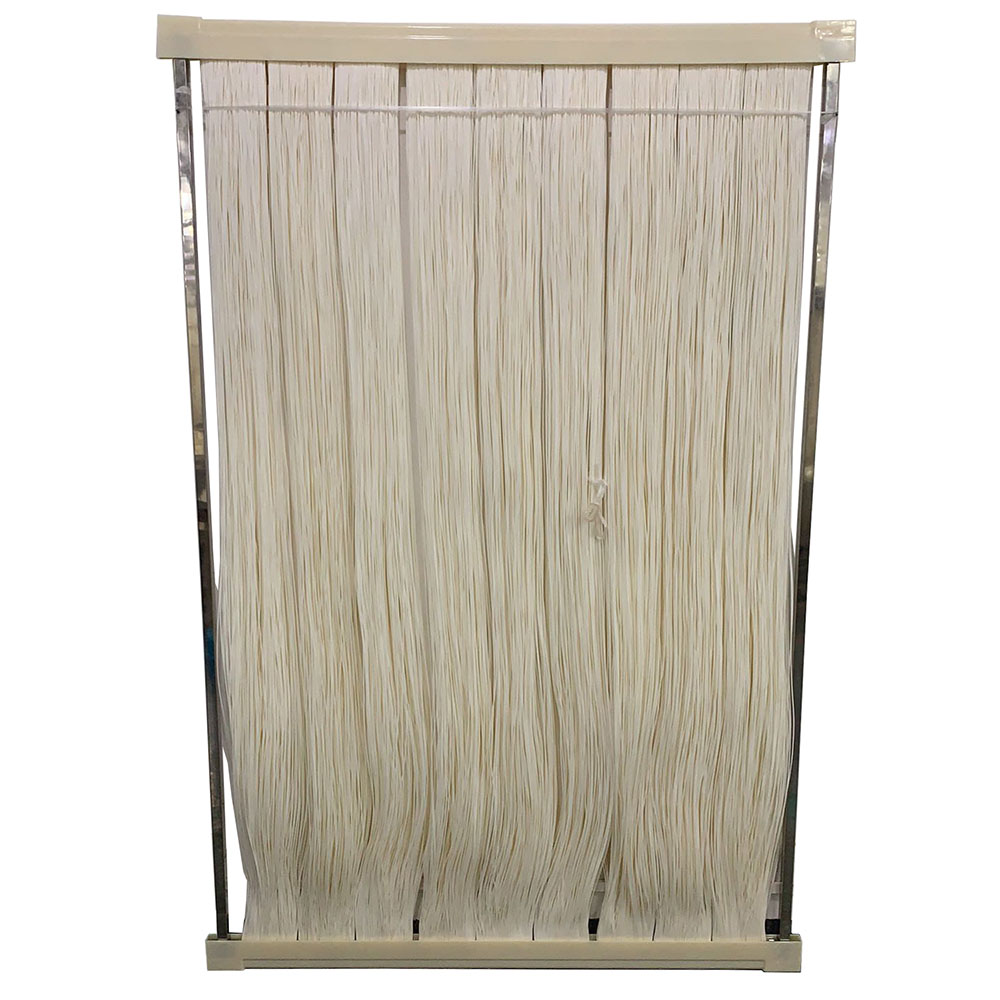
That dependence creates a chain of quality requirements. The membrane material must resist fouling, chemical cleaning, and mechanical stress. The hollow fibers must have consistent pore size and wall thickness. The potting resin must seal every fiber without blocking flow. The module housing must withstand pressure, vacuum, and long-term immersion. The aeration system must scour the membrane surface without damaging it. Every one of these elements is a potential failure point. A certified manufacturer controls them through documented procedures, calibrated equipment, and traceable records.
When quality is inconsistent, the consequences appear slowly and then suddenly. A module with weak fibers may develop broken strands after months of operation. A poorly potted module may leak mixed liquor into the permeate. A membrane with inconsistent pore size may pass particles that should have been retained. A module with inadequate chemical resistance may degrade after repeated cleaning. These failures increase energy consumption, chemical use, and maintenance labor. They also undermine the biological process because operators must reduce flux or isolate trains. In the worst case, the entire MBR plant loses its ability to meet discharge or reuse standards.
The Difference Between a Membrane and a Certified Membrane
All membranes are not created equal. Two modules may look identical from the outside, but their internal quality can differ dramatically. A certified MBR membrane bioreactor manufacturer maintains documentation for raw materials, production batches, and final tests. The certification is not a single certificate on a wall. It is a management system that ensures every module can be traced to its origin and every deviation is investigated and corrected.
Certification often includes ISO 9001 for quality management, ISO 14001 for environmental management, and product-specific approvals such as CE marking, NSF certification for drinking water applications, or local sanitation and discharge compliance. These standards require internal audits, corrective action systems, calibration schedules, and customer complaint handling. They force a manufacturer to prove that quality is not accidental. It is designed, measured, and improved.
In contrast, an uncertified manufacturer may assemble modules in a workshop without controlled temperature, humidity, or cleanliness. It may purchase fibers from multiple sources without verifying their specifications. It may skip leak testing or perform only visual inspections. The lower price reflects these omissions. The buyer pays later through replacement costs, downtime, and reputational damage.
Why Material Selection Is a Quality Decision
The two most common hollow fiber materials for MBR and UF membranes are polyvinylidene fluoride (PVDF) and polyvinyl chloride (PVC). PVDF is generally preferred for demanding industrial and municipal applications because of its chemical resistance, mechanical strength, and thermal stability. PVC is more economical and can be suitable for less aggressive wastewater, but it may have lower resistance to strong oxidants and solvents. The choice of material is not merely a cost decision. It determines the membrane lifespan, cleaning regime, and operating envelope.
HINADA manufactures both PVDF and PVC hollow fiber UF membranes and submerged MBR membrane modules. The company understands that material quality begins with the polymer resin. Certified manufacturers test incoming resin for molecular weight, purity, and additives. They verify that the resin meets the formulation for the intended membrane. They also control the dope preparation process, including solvent selection, polymer concentration, and temperature. Small variations in dope viscosity can change pore structure, strength, and permeability.
The spinning process is equally critical. A certified manufacturer controls the coagulation bath temperature, air gap, extrusion rate, and take-up speed. These parameters influence fiber dimensions and pore morphology. If the process drifts, the membrane may become too dense, reducing permeability, or too open, reducing rejection. Both outcomes harm plant performance. Documentation and statistical process control are essential to keep the process within specification.
Pore Size, Hydrophilicity, and Fouling Resistance
Membrane fouling is the most common operational challenge in MBR systems. Fouling occurs when suspended solids, extracellular polymeric substances, and organic matter accumulate on the membrane surface or within the pores. It increases transmembrane pressure, reduces permeate flow, and requires more frequent cleaning. A high-quality membrane resists fouling through consistent pore size, hydrophilic surface modification, and uniform fiber geometry.
Hydrophilicity is particularly important. A hydrophilic membrane attracts water and repels certain organic compounds, reducing the adhesion of foulants. Certified manufacturers modify the membrane surface during production and verify the modification through contact angle measurements. They also test the membrane with model foulants to confirm performance. Without certification, a manufacturer may claim hydrophilic properties without providing evidence. The plant owner discovers the truth after commissioning, when fouling rates exceed design assumptions.
Pore size distribution is another quality parameter. A membrane with a narrow pore size distribution provides reliable rejection and stable permeability. A membrane with a wide distribution may have preferential flow paths and weak spots. Certified manufacturers use techniques such as bubble point testing, mercury intrusion porosimetry, or scanning electron microscopy to characterize pore structure. These tests are not optional for high-quality production. They are part of the batch release process.
The Manufacturing Process: Where Quality Is Built or Lost
Membrane manufacturing is a precision process. It cannot be scaled up safely without rigorous quality control. A certified MBR membrane bioreactor manufacturer invests in cleanrooms, automated spinning lines, online monitoring, and trained technicians. Each stage of production has defined acceptance criteria and documented checks.
Raw material inspection is the first gate. Incoming polymers, solvents, additives, and potting resins are sampled and tested. Certificates of analysis are reviewed against specifications. Nonconforming materials are quarantined. This step prevents contamination and variability from entering the production line.
Dope preparation follows. The polymer is dissolved in a solvent under controlled temperature and mixing. The dope is filtered to remove particles and degassed to remove bubbles. Bubbles can create defects in the fiber wall. Particles can cause pinholes. A certified manufacturer monitors viscosity, temperature, and filtration pressure. The dope is used within a defined pot life to prevent aging.
Spinning and coagulation transform the dope into hollow fibers. The dope is extruded through a spinneret while a bore fluid forms the inner channel. The fiber enters a coagulation bath where phase inversion occurs. The fiber is then washed to remove residual solvent and dried or stored in a wet state. Each step affects the final membrane. A certified manufacturer records the parameters and retains samples for traceability.
Potting and Module Assembly
Potting is the process of sealing hollow fibers into a module housing with resin. It is one of the most common sources of module failure. If the resin does not penetrate the fiber bundle correctly, gaps can form. If the resin cures too quickly or too slowly, it can crack or soften. If the fibers are not evenly distributed, flow distribution becomes uneven and fouling accelerates.
Certified manufacturers use centrifuges, vacuum potting, or controlled dispensing systems to ensure complete encapsulation. They cure the resin under controlled temperature and humidity. After curing, they cut the potted ends to open the fiber lumens. The cutting process must be precise to avoid burrs or crushed fibers. The module is then assembled with end caps, permeate collection tubes, and aeration headers. Every connection is checked for leaks.
Leak testing is non-negotiable. A certified manufacturer performs pressure decay tests, bubble point tests, or vacuum tests on every module. These tests detect broken fibers, pinholes, and potting defects. Some manufacturers also perform dye penetration tests. If a module fails, it is rejected or repaired and retested. The test data is recorded and linked to the module serial number. This traceability allows the manufacturer to investigate field issues and improve the process.
Final Performance Testing
Before shipment, a certified manufacturer verifies membrane performance. Pure water permeability is measured to confirm flux. Rejection tests with model particles or macromolecules confirm retention. Mechanical strength tests measure tensile strength and elongation. Chemical compatibility tests expose samples to cleaning agents. These tests are performed on samples from each production batch. Some manufacturers also test every module for integrity and permeability.
The results are documented in a quality certificate or test report. The buyer can review the data and compare it with the specification. This transparency is a hallmark of a certified manufacturer. It allows engineers to verify that the modules meet the design basis. It also provides a baseline for future performance monitoring. If the plant experiences a problem, the manufacturer can compare field data with factory data to diagnose the cause.
Certification Standards and What They Mean for MBR Projects
Certification is often misunderstood. Some buyers treat it as a marketing label. In reality, certification is a structured demonstration of conformity. It shows that an independent body has audited the manufacturer against a recognized standard. The audit examines processes, records, training, and corrective actions. It is not a one-time event. Surveillance audits occur regularly, and nonconformities must be resolved.
ISO 9001 is the most widely recognized quality management standard. It requires a manufacturer to define its quality policy, identify processes, monitor performance, and improve continually. For an MBR manufacturer, ISO 9001 means that design, production, testing, and customer support follow documented procedures. It also means that complaints and field failures are investigated systematically. Without ISO 9001, quality depends on individual employees rather than the organization.
ISO 14001 addresses environmental management. It is relevant to membrane manufacturing because production uses solvents, polymers, and energy. A certified manufacturer manages waste, emissions, and resource use. This reduces environmental risk and can improve product consistency. It also signals to project owners that the manufacturer takes sustainability seriously.
Product certifications vary by region. CE marking indicates conformity with European health, safety, and environmental requirements. NSF certification is important for drinking water applications in North America. Local approvals may be required for municipal projects. A certified manufacturer maintains these approvals and provides test reports. It also tracks regulatory changes and updates its products accordingly.
Why Self-Declared Quality Is Not Enough
Some suppliers claim that their membranes meet international standards without providing third-party evidence. They may present internal test reports or refer to a partner factory. This approach creates risk. Internal reports can be selective. Partner factories may change processes without the supplier knowing. The buyer has no independent verification. If a failure occurs, accountability becomes unclear.
A certified manufacturer accepts accountability. It allows audits and provides traceability. It has a documented quality manual and records. It can show how a specific module was produced, tested, and shipped. This level of transparency is especially important for large municipal or industrial projects where downtime costs are high. It is also important for projects funded by international lenders or development agencies, which often require certified suppliers.
HINADA operates within a quality-focused framework and has built a complete ecosystem from membrane research and development and component manufacturing to equipment fabrication and turnkey solution delivery. The company has more than 13 years of experience in the water treatment industry and 10 years of water treatment membrane and equipment manufacturing experience. That experience is embedded in its production and quality systems. HINADA serves clients in over 75 countries, which means its modules must perform under diverse conditions, from high-temperature industrial wastewater to cold municipal sewage. Certification and quality control make that global performance possible.
The Two Core Technology Pillars of HINADA
From day one, HINADA focused on two core technology pillars. The first is hollow fiber ultrafiltration (UF/MBR) membranes, which provide precise physical separation of suspended solids, bacteria, colloids, and macromolecular organics. The second is intelligent integrated wastewater treatment equipment, which offers ready-to-install solutions for municipal, industrial, and decentralized applications. These pillars are not independent. They reinforce each other. The membrane quality determines the equipment performance. The equipment design determines how well the membrane is protected and operated.
HINADA manufactures PVDF and PVC hollow fiber UF membranes, submerged MBR membrane modules, containerized MBR systems, packaged wastewater treatment plants, dissolved air flotation (DAF) systems, ultrafiltration (UF) systems, and industrial reverse osmosis (RO) systems. Each product has its own quality requirements. A DAF system must remove fats, oils, and grease before membrane treatment. A UF system must produce consistent permeate for RO protection. An RO system must resist scaling and fouling. The common thread is disciplined manufacturing and application engineering.
Submerged MBR Membrane Modules
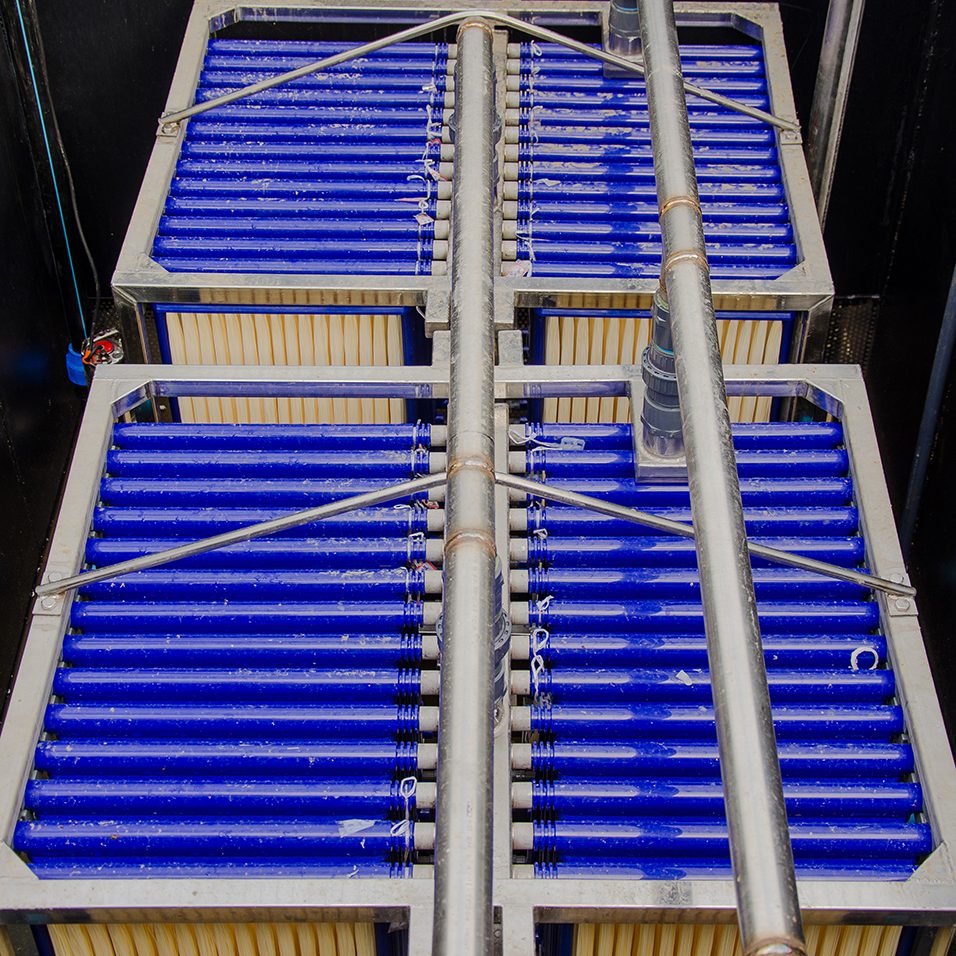
Submerged MBR membrane modules are designed for direct immersion in the biological tank. They operate under vacuum or low pressure and rely on aeration to scour the membrane surface. The module design must balance packing density, aeration efficiency, and maintenance access. A high-quality module uses robust fibers, a strong housing, and an optimized aeration header. It also uses a potting system that withstands constant immersion and chemical cleaning.
HINADA produces submerged MBR membrane modules for municipal sewage treatment, industrial wastewater treatment, and water recycling. The modules are tested for integrity and permeability before shipment. They are also designed for compatibility with common cleaning chemicals, such as sodium hypochlorite and citric acid. The company provides installation support and commissioning services, which helps ensure that the modules are installed correctly and operated within design parameters.
Containerized MBR Systems and Packaged Plants
Containerized MBR systems and packaged wastewater treatment plants are pre-engineered and factory-assembled. They are ideal for decentralized applications, remote communities, construction sites, resorts, and industrial facilities with limited space. The quality of these systems depends on the quality of their components. Pumps, blowers, valves, sensors, and membranes must all work together. A certified manufacturer controls the supply chain and tests the complete system before shipment.
HINADA provides integrated packaged wastewater treatment systems that are ready to install. The company offers a truly integrated solution to water and wastewater projects, from design, supplying, and installation support to commissioning and training. This end-to-end approach reduces interface risk. The buyer does not have to coordinate multiple suppliers. The manufacturer takes responsibility for the performance of the complete system. That responsibility is backed by quality control and certification.
Total Cost of Ownership: Why Cheap Membranes Become Expensive
Procurement decisions often focus on capital expenditure. The lowest bid may appear attractive. However, MBR membranes are consumables with a finite lifespan. The total cost of ownership includes membrane replacement, energy, chemicals, labor, and downtime. A low-quality membrane can increase all of these costs. It may require more frequent cleaning, consume more energy, and fail earlier than expected.
Energy consumption is a major operating cost in MBR plants. Aeration accounts for a large portion of that energy. Fouled membranes require higher air scouring rates and longer cleaning cycles. If the membrane surface is not hydrophilic or the pore structure is inconsistent, fouling occurs faster. The blowers run longer and consume more electricity. Over ten years, the energy penalty can exceed the initial savings from a cheaper membrane.
Chemical cleaning is another cost. High-quality membranes resist chemical degradation and can tolerate aggressive cleaning. Low-quality membranes may degrade after a few cleaning cycles. They may develop cracks, lose strength, or change pore size. Operators then face a choice between replacing the modules or accepting lower performance. Both options are expensive. Certified manufacturers test chemical compatibility and provide cleaning guidelines that protect the membrane.
Downtime is the most visible cost. When a membrane train is offline for cleaning or repair, the plant loses treatment capacity. If the plant cannot meet discharge limits, it may face fines or operational restrictions. In industrial settings, production may be curtailed. A certified manufacturer reduces downtime by providing reliable modules, spare parts, and technical support. It also offers troubleshooting and remote assistance. These services are part of the quality package.
Case Scenario: Industrial Wastewater Reuse
An industrial park in Southeast Asia operates a wastewater treatment plant that discharges to a sensitive river. The plant uses an MBR system followed by reverse osmosis for reuse. The original membranes were purchased from an uncertified supplier at a low price. Within eighteen months, the plant experienced frequent fiber breakage and rising transmembrane pressure. Effluent quality fluctuated, and the RO membranes fouled rapidly. The plant had to replace the MBR modules and install additional pretreatment. The total cost exceeded the original savings by a significant margin.
The plant then switched to certified MBR modules from HINADA. The modules were tested for integrity and permeability before shipment. HINADA provided installation support and commissioning services. The plant also received training on cleaning and maintenance. The new modules operated within design parameters, and the RO fouling rate decreased. The plant now enjoys stable reuse water quality and lower chemical consumption. This scenario illustrates why certified manufacturer quality matters. The membrane is not a commodity. It is a critical component of a complex treatment system.
Case Scenario: Municipal Sewage Treatment
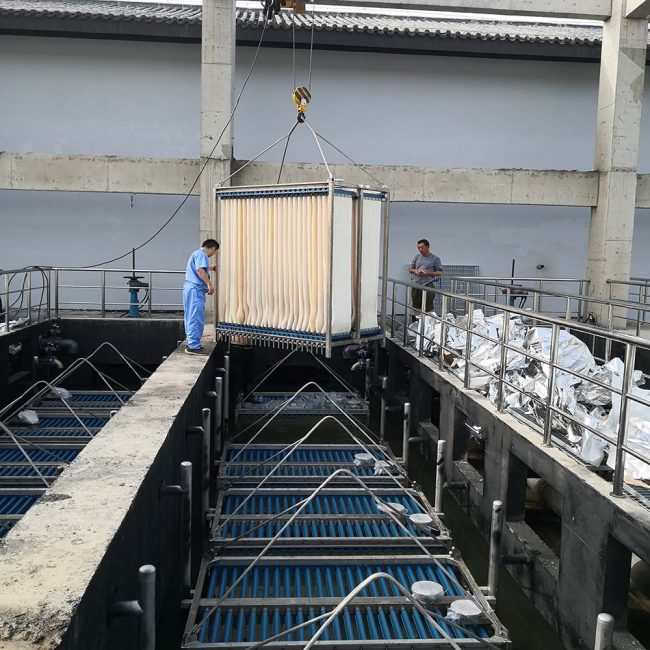
A municipality in Africa needed to expand its sewage treatment capacity without acquiring additional land. The city selected an MBR process with submerged membrane modules. The consulting engineer specified certified modules with documented PVDF material and ISO 9001 manufacturing. HINADA was selected as the manufacturer. The modules were delivered in containerized racks and installed in the existing aeration tank. HINADA provided commissioning support and operator training. The plant met its discharge standards within the commissioning period. The municipality valued the traceability and warranty support. It also appreciated that the manufacturer had experience in over 75 countries, including regions with similar climate and wastewater characteristics.
Application Fields and the Importance of Application-Specific Quality
HINADA actively participates in international water treatment exhibitions, bringing Chinese membrane technology to regions where clean water is most needed. The company focuses on key application fields, including industrial wastewater treatment and reuse, municipal sewage treatment and water recycling, rural decentralized water supply and sanitation, and drinking water purification from surface water and groundwater. Each application has unique quality requirements.
Industrial wastewater treatment and reuse often involves complex chemistry. The wastewater may contain solvents, heavy metals, oils, surfactants, or high salinity. The membrane must resist chemical attack and fouling. A certified manufacturer tests membrane compatibility with specific industrial streams. It may recommend PVDF membranes for aggressive wastewaters. It may also recommend pretreatment such as DAF or UF to protect the MBR. HINADA produces DAF systems, UF systems, and RO systems, which allows it to design an integrated treatment train.
Municipal sewage treatment and water recycling require reliable pathogen removal and consistent effluent quality. The membrane must retain bacteria and viruses. It must also handle variable flows and loads. A certified manufacturer provides modules with narrow pore size distribution and robust integrity testing. It also provides aeration design that matches the biological process. HINADA submerged MBR modules are used in municipal plants where space is limited and reuse is required.
Rural decentralized water supply and sanitation require simple, robust, and low-maintenance solutions. Containerized MBR systems and packaged plants are ideal for these applications. They can be shipped to remote locations and installed quickly. However, they must be reliable because technical support may be far away. A certified manufacturer builds redundancy into the design and uses high-quality components. It also provides training and documentation so local operators can manage the system.
Drinking water purification from surface water and groundwater requires strict material safety and regulatory compliance. Membranes used for drinking water must not leach harmful substances. They must meet NSF or equivalent standards. Certified manufacturers test for extractables and provide material safety data. HINADA UF membranes can be used for drinking water pretreatment, and the company supports projects with appropriate documentation and testing.
How to Evaluate a Certified MBR Membrane Bioreactor Manufacturer
Project owners and engineers can use a structured evaluation to separate certified manufacturers from suppliers that merely claim quality. The following checklist covers the most important factors.
Certification and audit history: Does the manufacturer hold ISO 9001, ISO 14001, or product-specific certifications? Can it provide audit reports and certificates? Are the certificates current?
Material traceability: Can the manufacturer trace a module serial number to the raw material batch, production line, and test records? Does it provide certificates of analysis for polymers and resins?
Manufacturing environment: Are fibers produced in a controlled cleanroom? Are temperature, humidity, and particle counts monitored? Is the production line automated and calibrated?
Testing capability: Does the manufacturer perform leak testing, bubble point testing, permeability testing, and mechanical strength testing? Are tests performed on every module or only on samples?
Documentation: Does the manufacturer provide quality certificates, test reports, installation manuals, and maintenance guidelines? Are documents available in the project language?
Field experience: How many years has the manufacturer been producing membranes? How many countries does it serve? Can it provide references from similar applications?
Technical support: Does the manufacturer offer design assistance, installation support, commissioning, and training? Does it provide remote troubleshooting and spare parts?
Warranty and accountability: What is the warranty period? What does it cover? How does the manufacturer handle claims and field failures?
HINADA meets these criteria through its experience, manufacturing base, and integrated service model. The company has been in the water treatment industry for more than 13 years and has 10 years of membrane and equipment manufacturing experience. It operates from Guangzhou and Chenzhou, China, and serves clients in over 75 countries. Its product range includes PVDF and PVC hollow fiber UF membranes, submerged MBR membrane modules, containerized MBR systems, packaged wastewater treatment plants, DAF systems, UF systems, and industrial RO systems. This breadth allows HINADA to provide a complete solution rather than isolated components.
Common Pitfalls to Avoid
Even experienced buyers can fall into traps when procuring MBR membranes. One common pitfall is the counterfeit or rebranded module. Some suppliers purchase low-cost modules, attach a new label, and claim they are from a certified factory. The buyer may not discover the truth until the modules fail. To avoid this, buyers should request factory audits, serial number verification, and direct communication with the manufacturer.
Another pitfall is inconsistent module dimensions. If the modules do not fit the existing rack or aeration system, installation becomes difficult. The plant may need custom adapters, which add cost and delay. A certified manufacturer provides detailed drawings and tolerances. It also offers engineering support to ensure compatibility.
A third pitfall is inadequate documentation. Without test reports and material certificates, the buyer cannot verify quality. The plant may also face problems during regulatory inspections. A certified manufacturer provides a complete documentation package. This package includes material safety data sheets, test certificates, operation and maintenance manuals, and spare parts lists.
A fourth pitfall is poor after-sales support. Membranes require periodic cleaning, integrity testing, and eventual replacement. If the manufacturer cannot provide timely support, the plant suffers. A certified manufacturer has a support network and spare parts inventory. It also offers training to build local capacity.
The Role of Research and Development in Quality
Certification is not static. Standards evolve, and membrane technology advances. A certified manufacturer invests in research and development to improve membrane performance and maintain compliance. HINADA has a complete ecosystem from membrane R&D and component manufacturing to equipment fabrication and turnkey solution delivery. This ecosystem allows the company to test new materials, optimize module designs, and validate performance in real applications.
Research and development focuses on several areas. One is fouling resistance. Researchers modify membrane surface chemistry to reduce the adhesion of organic and biological foulants. Another is mechanical strength. Stronger fibers can withstand higher aeration intensity and backwash pressure. A third is chemical tolerance. Membranes that resist a wider range of cleaning chemicals can operate longer between replacements. A fourth is energy efficiency. Lower pressure operation reduces electricity consumption.
HINADA also develops intelligent integrated wastewater treatment equipment. These systems use sensors and controls to optimize aeration, permeate flow, and cleaning cycles. The integration of membranes and equipment is a quality advantage. The manufacturer can tune the system to the membrane characteristics. It can also collect operating data to improve future designs. This feedback loop is difficult for a membrane-only supplier to achieve.
Quality in DAF, UF, and RO Systems
HINADA produces dissolved air flotation systems, ultrafiltration systems, and industrial reverse osmosis systems. These products complement MBR technology. DAF removes fats, oils, and grease before biological treatment. UF provides pretreatment for RO and can also be used for drinking water. RO removes dissolved salts and contaminants for high-purity applications. Each product has its own quality requirements.
DAF systems require precise air saturation, pressure control, and sludge removal. A poorly designed DAF unit can pass solids to the MBR, increasing fouling. HINADA designs DAF systems with quality components and testing. UF systems require membranes with consistent pore size and integrity. HINADA manufactures hollow fiber UF membranes, which gives it control over the critical component. RO systems require high-pressure pumps, membranes, and energy recovery devices. HINADA integrates these components into reliable systems.
The combination of MBR, DAF, UF, and RO allows HINADA to offer a complete treatment train. This integrated approach is valuable because it ensures compatibility between units. The buyer can work with one manufacturer for design, supply, installation support, commissioning, and training. This reduces risk and simplifies project management.
Global Reach and Local Support
HINADA serves clients in over 75 countries across Asia, Africa, Europe, and the Americas. This global reach is supported by a network of partners and representatives. The company participates in international water treatment exhibitions to share knowledge and understand local needs. These exhibitions are also opportunities to meet clients and demonstrate products. HINADA brings Chinese membrane technology to regions where clean water is most needed.
Local support is essential for MBR projects. A membrane module may last for years, but it needs proper operation and maintenance. HINADA provides installation support, commissioning, and training. The company also offers remote troubleshooting and spare parts. For decentralized projects, HINADA provides containerized MBR systems that are easy to install and operate. For large municipal projects, HINADA works with local contractors and consultants. This combination of global manufacturing and local support is a quality differentiator.
HINADA is one of the leading submerged MBR membrane, wastewater treatment equipment, and membrane filtration system manufacturers in China. The company specializes as a wastewater treatment solution provider and equipment supplier in Guangzhou since its founding in 2012. Its expansion to Chenzhou, Hunan Province, increased manufacturing capacity and improved supply chain resilience. The company continues to invest in quality systems and technology.
Training and Knowledge Transfer
Training is a critical part of quality. Even the best membrane will underperform if operators do not understand it. HINADA provides training on membrane operation, cleaning, integrity testing, and troubleshooting. The training covers both classroom theory and hands-on practice. Operators learn how to interpret transmembrane pressure, permeability, and turbidity trends. They also learn how to perform maintenance safely.
Knowledge transfer benefits the plant owner. It reduces dependence on external experts and improves response time. It also extends membrane life. When operators understand the reasons behind cleaning protocols and operating limits, they are more likely to follow them. HINADA includes training in its integrated solution package, along with design, supplying, installation support, and commissioning.
The Future of MBR Quality and Certification
The MBR market continues to grow as water scarcity and stricter discharge standards drive demand for reuse. This growth attracts new manufacturers, some of which prioritize volume over quality. Certification will become even more important as buyers seek reliable suppliers. Digital traceability, remote monitoring, and predictive maintenance will also shape the future. Certified manufacturers will use data to improve quality and reduce downtime.
HINADA is positioned to meet these trends. Its two core technology pillars, hollow fiber UF/MBR membranes and intelligent integrated wastewater treatment equipment, provide a strong foundation. Its complete ecosystem supports continuous improvement. Its global experience provides insights into diverse operating conditions. Its commitment to quality and certification protects clients from the hidden costs of low-quality membranes.
In the end, the question is not whether certification adds cost. It does. The question is whether the cost of certification is lower than the cost of failure. For MBR systems, the answer is clear. Membrane failure can disrupt treatment, violate permits, and damage reputations. Certified manufacturer quality is an investment in reliability. It is a decision that pays returns over the life of the plant.
Key Takeaways
MBR membrane quality determines effluent quality, energy use, chemical consumption, and total cost of ownership.
Certified manufacturers provide traceability, documented processes, and independent verification.
Material selection, spinning, potting, and final testing are critical quality control points.
ISO 9001, ISO 14001, CE, NSF, and local approvals demonstrate conformity and accountability.
Cheap membranes often become expensive through fouling, replacement, and downtime.
HINADA offers a complete ecosystem, from membrane R&D and manufacturing to turnkey solutions and training.
HINADA serves clients in over 75 countries and has more than 13 years of industry experience.
Application-specific quality is essential for industrial, municipal, rural, and drinking water projects.
Buyers should evaluate certification, traceability, testing, documentation, support, and warranty.
Certified quality is a long-term investment in reliable water treatment.
Certified MBR membrane bioreactor manufacturer quality matters because MBR systems are only as good as their membranes. The membrane is the barrier that protects public health and the environment. It is the component that determines operating cost and treatment reliability. When quality is compromised, the entire plant suffers. When quality is certified and controlled, the plant performs as designed.
HINADA Water Treatment Tech Co., Ltd. has built its reputation on quality, experience, and integration. Founded in 2012 in Guangzhou, China, and expanded to Chenzhou, Hunan Province, the company serves clients in over 75 countries. It manufactures PVDF and PVC hollow fiber UF membranes, submerged MBR membrane modules, containerized MBR systems, packaged wastewater treatment plants, DAF systems, UF systems, and industrial RO systems. It provides a truly integrated solution from design, supplying, installation support, and commissioning to training. Its two core technology pillars and complete ecosystem give it a unique ability to control quality from raw material to final system.
For project owners, consulting engineers, and operators, the choice of MBR membrane manufacturer is a strategic decision. It affects capital cost, operating cost, compliance, and reputation. Certified quality is not a luxury. It is a necessity. By selecting a certified manufacturer such as HINADA, stakeholders can reduce risk, improve performance, and protect their investment for years to come. The evidence is clear: in MBR technology, quality is not an option. It is the foundation of success.