Why MBR Membrane Bioreactor Systems Are Built for Tight Discharge Limits
Why MBR Membrane Bioreactor Systems Are Built for Tight Discharge Limits
September 30, 2026
Author
Solution Provider, through a professional technical team, we provide customers with targeted equipment selection recommendations and comprehensive after-sales services, winning the trust and recognition of customers.
Sarah M.
undefined
Across the world, wastewater discharge standards are no longer written for the convenience of treatment plant operators. They are written for the protection of rivers, lakes, estuaries, aquifers, and the communities that depend on them. Regulators increasingly demand lower biochemical oxygen demand, lower chemical oxygen demand, near-total removal of suspended solids, reliable nutrient control, and measurable reduction of pathogens and emerging contaminants. In this environment, conventional activated sludge plants often struggle to keep pace. They depend on gravity settling, they are vulnerable to sludge bulking, and they require generous hydraulic retention times and large footprints. Membrane bioreactor systems, commonly called MBR systems, were not invented simply as an alternative. They were built for the era of tight discharge limits. By combining biological treatment with physical membrane separation, an MBR can produce effluent that is clear, consistent, and suitable for reuse. For manufacturers such as Hinada Water Treatment Tech Co., Ltd., known as HINADA, this is not an abstract engineering trend. It is the core of a portfolio that includes hollow fiber ultrafiltration membranes, submerged MBR membrane modules, containerized MBR systems, packaged wastewater treatment plants, dissolved air flotation systems, ultrafiltration systems, and industrial reverse osmosis systems. HINADA has served clients in more than 75 countries, and its experience reflects a simple reality: when discharge limits tighten, treatment trains must become more precise, more compact, and more intelligent.
The Global Shift Toward Stricter Discharge Limits
The regulatory landscape has changed dramatically over the past two decades. Municipalities once permitted to discharge effluent with 30 mg/L of suspended solids and 30 mg/L of biochemical oxygen demand now face limits that may be five to ten times lower. In sensitive watersheds, total nitrogen and total phosphorus limits are enforced alongside bacterial and viral indicators. Industrial dischargers face even more pressure. Food processors, textile mills, pharmaceutical plants, chemical manufacturers, landfill operators, and mining sites are being asked to meet limits that were once considered achievable only with advanced tertiary treatment. In many regions, the goal is no longer merely discharge compliance. The goal is water reuse, groundwater recharge, and industrial recycling. An MBR system is often the first step in a treatment train designed for that future.
undefined
What Tight Discharge Limits Actually Require
Tight discharge limits are not a single number. They are a cluster of requirements that together demand a robust and flexible treatment process. A typical stringent permit might require total suspended solids below 5 mg/L, biochemical oxygen demand below 10 mg/L, chemical oxygen demand below 50 mg/L, ammonia nitrogen below 1 to 5 mg/L, total nitrogen below 10 to 15 mg/L, and total phosphorus below 0.5 to 1 mg/L. In reuse applications, turbidity may need to be below 0.2 nephelometric turbidity units, and silt density index may need to be below 3 for reverse osmosis pretreatment. Pathogen limits may require several log reductions of bacteria, viruses, and protozoa. Micropollutant limits are emerging for pharmaceuticals, personal care products, and industrial chemicals. An MBR system does not solve every one of these challenges alone, but it creates a stable, low-solids, high-quality effluent that makes downstream polishing steps more reliable and more economical.
Why Conventional Treatment Hits a Wall
Conventional activated sludge relies on a secondary clarifier to separate biomass from treated water. That separation is governed by gravity, sludge settleability, and hydraulic loading. When flows increase, when temperatures drop, or when filamentous bacteria proliferate, the clarifier can fail. Solids carryover leads to permit violations. Operators respond by adding coagulants, polymers, or ballast, but these are temporary fixes. The fundamental limitation remains: gravity settling is not a precise barrier. It cannot guarantee low suspended solids under all conditions. It cannot easily retain slow-growing nitrifying bacteria during cold seasons. It cannot produce reuse-quality water without additional filtration and disinfection. An MBR replaces the clarifier with a membrane barrier. The barrier is not affected by sludge bulking. It retains biomass independent of settling characteristics. It produces effluent with suspended solids that are often below the detection limit. This is why MBR systems are described as built for tight limits. They remove the weakest link in conventional treatment.
MBR Fundamentals: Biology Plus Physical Separation
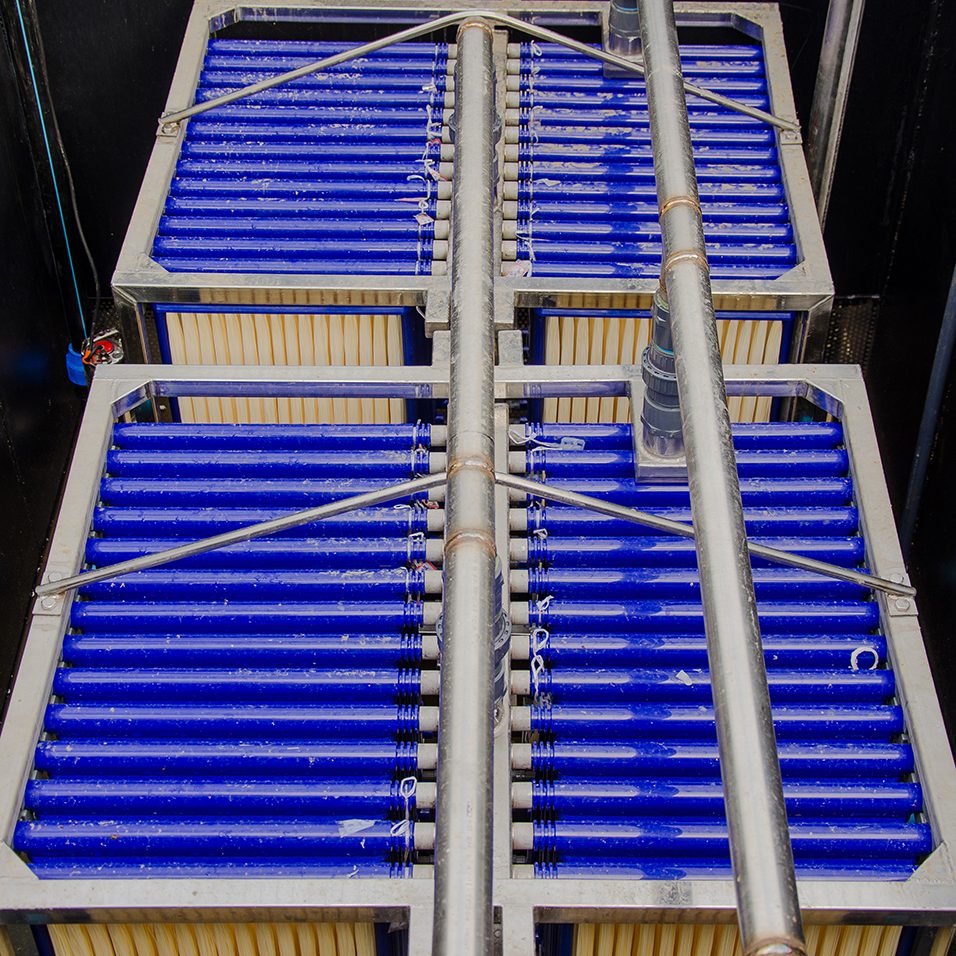
A membrane bioreactor is a biological wastewater treatment process integrated with membrane filtration. The biological side removes organic matter, converts ammonia to nitrate, and in configured systems, removes nitrogen and phosphorus. The membrane side retains the biomass and separates treated water from mixed liquor. The most common configuration for municipal and industrial wastewater is the submerged MBR, where hollow fiber membranes are immersed directly in the mixed liquor. Permeate is drawn through the membrane by vacuum or low-pressure suction. Air scouring rises from the bottom of the membrane tank to keep solids suspended and to scour the membrane surface. The result is a compact, high-performance process that can operate at mixed liquor suspended solids concentrations of 8,000 to 15,000 mg/L or higher, with sludge retention times of 15 to 30 days or more. These operating conditions favor slow-growing nitrifying bacteria and allow complete nitrification even in cold weather.
How a Submerged MBR Works
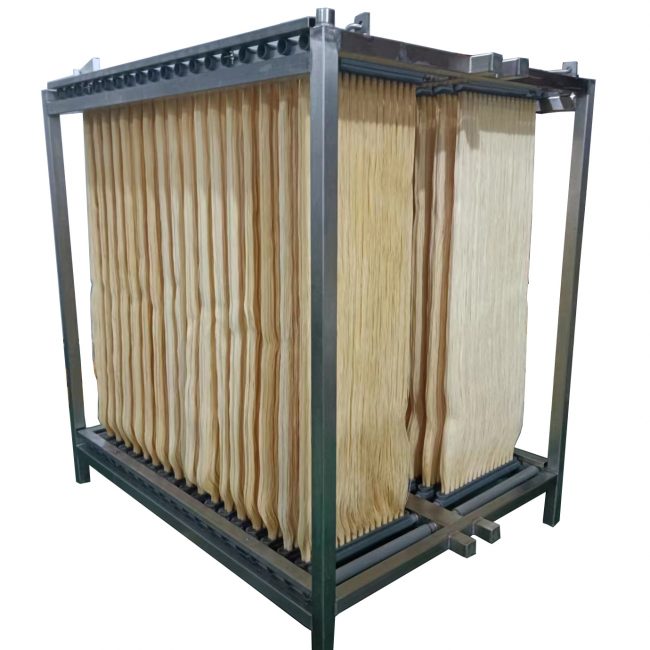
The process begins with screening. Fine screens, typically 1 to 3 mm, protect the membranes from fibers, hair, and debris. Influent then enters an anoxic or anaerobic zone where denitrification or phosphorus release can occur. From there, the flow moves to an aerobic zone where organic matter is oxidized and ammonia is nitrified. The mixed liquor then enters the membrane tank. Here, submerged membrane modules are arranged in cassettes or racks. Permeate pumps draw water through the membrane pores. Air blowers provide coarse bubble aeration for scouring. Backwash and relaxation cycles maintain permeability. Chemical cleaning is performed periodically to remove organic and inorganic fouling. The treated effluent is clear, low in solids, and ready for disinfection, reverse osmosis, or direct reuse. HINADA designs and manufactures submerged MBR membrane modules and integrated packaged systems that follow this logic, with a focus on reliable operation and simple maintenance.
The Role of Hollow Fiber Ultrafiltration Membranes
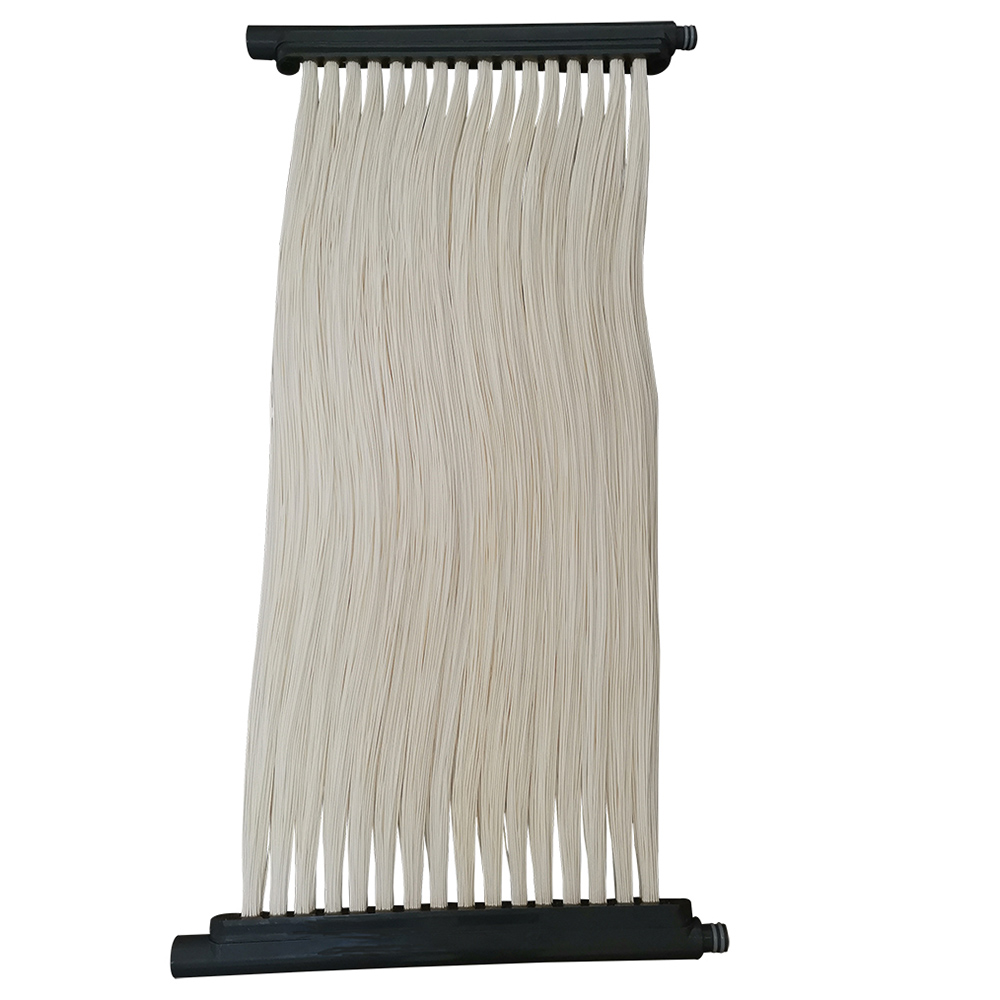
At the heart of an MBR are hollow fiber ultrafiltration membranes. These membranes have pore sizes typically between 0.01 and 0.1 microns. They provide a physical barrier against suspended solids, bacteria, colloids, and macromolecular organics. Unlike microfiltration, ultrafiltration also removes viruses to a significant degree and produces a permeate with very low turbidity. HINADA manufactures PVDF and PVC hollow fiber ultrafiltration membranes. PVDF membranes offer excellent chemical resistance, mechanical strength, and fouling resistance. PVC membranes provide a cost-effective option for less aggressive applications. The choice of membrane material, pore size, packing density, and module configuration directly affects performance, energy consumption, and cleaning frequency. A well-designed MBR uses membranes that are matched to the wastewater chemistry and the discharge or reuse target. This is why membrane manufacturing experience matters. HINADA has more than 10 years of water treatment membrane and equipment manufacturing experience, and more than 13 years in the water treatment industry. That experience is embedded in every module and every integrated system.
Why MBR Systems Excel Under Tight Limits
MBR systems excel under tight limits for several interconnected reasons. They retain biomass completely, they decouple solids retention time from hydraulic retention time, they produce a consistent effluent independent of sludge settleability, and they enable high-rate biological nutrient removal. They also reduce footprint, because the membrane tank replaces the secondary clarifier and allows higher mixed liquor concentrations. They support reuse, because the permeate is low in suspended solids and pathogens. They are modular, so they can be scaled to small decentralized applications or large municipal plants. And they are increasingly intelligent, with sensors and automation that optimize aeration, permeation, and cleaning. For a company like HINADA, which provides a complete ecosystem from membrane research and development to component manufacturing, equipment fabrication, and turnkey solution delivery, the MBR platform is a natural fit for the most demanding discharge limits.
Superior Solids Removal and Effluent Clarity
One of the most immediate advantages of an MBR is solids removal. Because the membrane pore size is much smaller than the size of suspended particles and bacteria, the effluent total suspended solids concentration is typically below 1 mg/L. Turbidity is often below 0.2 nephelometric turbidity units. This level of clarity is not achievable with conventional secondary clarification alone. It is also more consistent. A conventional clarifier may perform well under steady conditions and poorly during storms, temperature changes, or sludge bulking events. A membrane barrier performs the same separation regardless of these variations. For industrial dischargers facing strict total suspended solids limits, this consistency is valuable. For municipalities that must protect sensitive receiving waters, it is essential. For reuse applications, it is the foundation for downstream reverse osmosis and advanced oxidation.
Enhanced Biological Nutrient Removal
Tight discharge limits increasingly include nitrogen and phosphorus. MBR systems are well suited for biological nutrient removal because they can maintain long sludge retention times and high biomass concentrations. Nitrifying bacteria grow slowly, especially in cold climates. In a conventional plant, they can be washed out during short sludge ages or hydraulic surges. In an MBR, they are retained by the membrane. This allows complete nitrification even at low temperatures. Denitrification can be achieved by creating anoxic zones and recycling nitrate-rich mixed liquor. Phosphorus removal can be biological through alternating anaerobic and aerobic zones, or chemical through metal salt addition. The membrane tank itself can be aerated or non-aerated depending on the process configuration. HINADA integrated wastewater treatment equipment is designed to support these biological processes with flexible zone arrangements and precise aeration control.
Pathogen and Microplastic Retention
Public health protection is a growing driver of tight discharge limits. Bacteria, viruses, and protozoa are regulated in many jurisdictions, and emerging contaminants such as microplastics and antibiotic resistance genes are under increasing scrutiny. Ultrafiltration membranes provide a substantial physical barrier. They remove bacteria and protozoa at high log reduction values. They also remove a significant fraction of viruses, especially when combined with coagulation or disinfection. Microplastics, which are typically larger than membrane pores, are retained in the bioreactor and removed with waste sludge. This means that MBR effluent is not only clear but also safer for discharge or reuse. In areas where recreational water contact or irrigation of food crops is involved, this pathogen barrier can reduce the reliance on chemical disinfection and the formation of disinfection byproducts.
Footprint and Modularity
Land is expensive, especially in urban areas. Conventional treatment plants require large basins and clarifiers. MBR systems require less space because the biological process operates at higher mixed liquor concentrations and the membrane tank replaces the secondary clarifier. A containerized MBR system can be delivered on a skid or in a shipping container, installed quickly, and expanded in modules as flows grow. HINADA manufactures containerized MBR systems and packaged wastewater treatment plants for municipal, industrial, and decentralized applications. These systems are pre-engineered, factory-tested, and ready for installation. They are particularly valuable for rural communities, resorts, construction camps, and industrial facilities where conventional construction would be too slow or too expensive. The modular nature of MBR also makes it easier to retrofit existing plants, because new membrane trains can be added without building new clarifiers.
Designing MBR Systems for Tight Discharge Limits
An MBR is not a plug-and-play solution. It must be designed for the specific wastewater, the discharge or reuse target, the site conditions, and the operational resources available. Design begins with a thorough characterization of the influent. Flow rates, peak factors, temperature, pH, alkalinity, organic load, nutrient concentrations, oil and grease, heavy metals, and toxic compounds all matter. The biological process must be sized to achieve the required carbon oxidation, nitrification, denitrification, and phosphorus removal. The membrane system must be sized to handle the peak permeate flow while maintaining sustainable flux and allowing for cleaning and maintenance. The aeration system must provide enough oxygen for biological activity and enough air scouring for membrane fouling control. The pretreatment system must protect the membranes from debris and abrasive particles. Controls must automate the process and provide data for optimization. HINADA approaches each project as a complete solution, from designation and supplying to installation support, commissioning, and training.
Membrane Selection and Configuration
Membrane selection is one of the most important design decisions. Hollow fiber ultrafiltration membranes are typically used in submerged MBR systems because they offer high packing density, mechanical flexibility, and effective solids rejection. The membrane material must be compatible with the wastewater chemistry and the cleaning chemicals. PVDF is often preferred for industrial and municipal applications because of its chemical resistance and durability. PVC is used in less demanding applications where cost is a primary concern. The module configuration also matters. Membranes can be arranged in cassettes with integral air scour headers, or in racks with separate aeration grids. The choice affects installation, maintenance, and cleaning efficiency. HINADA produces both PVDF and PVC hollow fiber UF membranes and submerged MBR membrane modules. This allows the company to match the membrane to the application rather than forcing the application to fit a single membrane type.
Biological Process Design
The biological process in an MBR must be designed to achieve the target effluent quality. Sludge retention time is a key parameter. Longer sludge ages favor nitrification and reduce excess sludge production, but they also increase aeration demand and can affect membrane fouling. Hydraulic retention time must be sufficient for biological reactions and for membrane tank mixing. Mixed liquor suspended solids concentration affects oxygen transfer, viscosity, and membrane fouling. Internal recycle rates control denitrification. Anaerobic and anoxic zones must be sized for phosphorus release and nitrate removal. Aeration must be controlled to maintain dissolved oxygen without over-aerating, which can break up flocs and increase fouling. The design must also account for seasonal temperature variations, because biological kinetics slow down in cold water. HINADA intelligent integrated wastewater treatment equipment includes adjustable process zones and aeration controls to manage these variables.
Fouling Control and Cleaning Strategies
Membrane fouling is the central operational challenge in any MBR. Fouling occurs when particles, colloids, organic matter, and microorganisms accumulate on or within the membrane. It increases transmembrane pressure, reduces permeability, and raises energy consumption. Fouling can be controlled through design and operation. Coarse bubble aeration scours the membrane surface. Backwashing reverses flow through the membrane to lift off foulants. Relaxation cycles pause permeation to allow the membrane to recover. Chemical cleaning removes strongly attached organic and inorganic deposits. Maintenance cleaning may use sodium hypochlorite, citric acid, or other chemicals depending on the foulant. Recovery cleaning is performed less frequently but more intensively. The key is to operate at sustainable flux, maintain proper aeration, and respond to early warning signs such as rising transmembrane pressure or declining permeability. HINADA MBR systems are designed with fouling control in mind, including air scour headers, backwash sequences, and cleaning protocols that are practical for operators.
Instrumentation and Automation
Tight discharge limits leave little room for operational error. Instrumentation and automation are therefore essential. Flow meters, pressure transmitters, turbidity meters, dissolved oxygen sensors, ammonia analyzers, and level sensors provide real-time data. Programmable logic controllers and supervisory control and data acquisition systems automate permeation, backwash, relaxation, aeration, and chemical cleaning. They can also optimize energy use by adjusting blower speed and pump speed to match demand. Remote monitoring allows operators and service teams to diagnose issues before they become compliance problems. HINADA integrates intelligent controls into its packaged and containerized systems. This reduces the burden on local operators and helps ensure that the plant performs consistently, even when the influent varies. The combination of robust membranes and smart controls is what makes modern MBR systems reliable under tight limits.
Key Performance Parameters for MBR Compliance
When evaluating an MBR for a tight discharge permit, several performance parameters matter. Permeate quality is the first. Total suspended solids should be consistently below 5 mg/L, and often below 1 mg/L. Turbidity should be low and stable. Biochemical oxygen demand and chemical oxygen demand should meet the permit limits with a margin for variability. Ammonia and total nitrogen should be controlled through proper biological design. Total phosphorus should be managed biologically or chemically. Pathogen reduction should be verified if reuse or public health is a concern. Hydraulic capacity is another parameter. The membrane system must handle peak flows without exceeding sustainable flux. Energy consumption is also critical, because aeration and pumping are the largest operational costs. Membrane life and cleaning frequency affect lifecycle cost. Finally, the system must be easy to operate and maintain. A plant that meets limits only under expert supervision is not a sustainable solution. HINADA focuses on all of these parameters, from membrane manufacturing to integrated system delivery.
Applications Where Tight Limits Matter Most
MBR systems are used in a wide range of applications where discharge limits are strict or where water reuse is a priority. Industrial wastewater treatment and reuse is one of the fastest-growing markets. Municipal sewage treatment and water recycling is another. Rural decentralized water supply and sanitation is a third. Drinking water purification from surface water or groundwater is a fourth. Each application has its own challenges. Industrial wastewater may contain toxic compounds, high salinity, or variable loads. Municipal wastewater may require nutrient removal and disinfection. Rural applications may have limited operator availability and unreliable power. Drinking water applications may require removal of pathogens, turbidity, and organic matter. HINADA serves clients in Asia, Africa, Europe, and the Americas, and its product range addresses these diverse needs. The company participates in international water treatment exhibitions to bring Chinese membrane technology to regions where clean water is most needed.
Industrial Wastewater Treatment and Reuse
Industrial dischargers face some of the tightest limits because their wastewaters can be complex and their receiving waters can be sensitive. Food and beverage plants produce high organic loads. Textile mills produce color and salts. Pharmaceutical plants produce active compounds. Chemical plants produce solvents and heavy metals. Landfill leachate contains ammonia, organic matter, and trace contaminants. MBR systems are often the biological core of the treatment train. They remove biodegradable organics and ammonia, and they produce a low-solids effluent that can be further treated with reverse osmosis or advanced oxidation. HINADA supplies industrial reverse osmosis systems, ultrafiltration systems, and dissolved air flotation systems to complement MBR. The combination of biological treatment, membrane filtration, and reverse osmosis can achieve reuse quality for cooling towers, boilers, or process water. This reduces freshwater withdrawal and discharge fees, and it improves the industrial facility's environmental performance.
Municipal Sewage Treatment and Water Recycling
Municipalities are under pressure to protect water resources and to provide reliable water supplies. MBR systems help by producing high-quality effluent that can be discharged to sensitive waters or reused for irrigation, toilet flushing, industrial supply, or groundwater recharge. Nutrient removal is often a key requirement. MBR systems can be configured with anaerobic, anoxic, and aerobic zones to achieve biological nitrogen and phosphorus removal. They can also be combined with chemical precipitation for phosphorus. The membrane barrier ensures that solids and pathogens are retained, reducing the need for large disinfection doses. For growing cities, MBR offers a compact solution that can be installed in urban areas where land is scarce. HINADA containerized MBR systems and packaged wastewater treatment plants are designed for rapid deployment and simple expansion. They are suitable for municipal sewage treatment and water recycling, especially in decentralized or modular configurations.
Rural Decentralized Water Supply and Sanitation
Rural and decentralized communities often lack access to centralized sewers and advanced treatment. They may rely on septic systems, stabilization ponds, or simple activated sludge units that do not meet tight discharge limits. MBR systems can provide a high level of treatment in a small footprint, with automated operation that requires limited local expertise. Containerized MBR systems are particularly well suited to rural applications because they are factory-built, easy to transport, and quick to install. They can be powered by grid electricity or renewable energy, and they can be monitored remotely. HINADA has more than 13 years of experience in the water treatment industry, and its integrated packaged wastewater treatment systems are designed for rural decentralized water supply and sanitation. By providing reliable treatment, these systems help protect public health and local water resources.
Drinking Water Purification
While MBR is primarily a wastewater treatment technology, the same hollow fiber ultrafiltration membranes are used in drinking water purification. Surface water and groundwater can contain suspended solids, bacteria, viruses, and colloidal matter. Ultrafiltration removes these contaminants and provides a physical barrier against pathogens. In drinking water plants, UF membranes are often used as pretreatment for reverse osmosis or as a standalone treatment for small systems. HINADA manufactures PVDF and PVC hollow fiber UF membranes for both wastewater and drinking water applications. This cross-application experience informs the design of MBR modules, because the fundamentals of membrane filtration, fouling control, and cleaning are similar. The company's ability to manufacture membranes and equipment under one roof creates a complete ecosystem from membrane research and development to turnkey solution delivery.
Comparing MBR to Conventional Activated Sludge
The comparison between MBR and conventional activated sludge is not simply a matter of technology preference. It is a matter of performance under tight limits. Conventional activated sludge relies on gravity settling, which is sensitive to sludge quality, hydraulic loading, and temperature. MBR relies on a membrane barrier, which is not. Conventional activated sludge typically operates at mixed liquor suspended solids of 2,000 to 4,000 mg/L. MBR operates at 8,000 to 15,000 mg/L or higher. Conventional activated sludge requires large clarifiers and long hydraulic retention times. MBR requires a smaller footprint and can be modular. Conventional activated sludge produces effluent with suspended solids that may range from 10 to 30 mg/L. MBR produces effluent with suspended solids below 1 mg/L. Conventional activated sludge may require tertiary filtration and disinfection to meet reuse standards. MBR can produce reuse-quality water with minimal post-treatment. The trade-off is higher energy consumption and membrane maintenance, but the benefits often outweigh the costs when discharge limits are strict and land is limited.
Economic and Operational Considerations
Decision-makers often ask whether MBR is worth the investment. The answer depends on the alternatives. If a conventional plant can meet the discharge limits with low-cost upgrades, MBR may not be necessary. But if the limits are tight, if land is scarce, if reuse is required, or if the existing plant is failing, MBR can be the most cost-effective solution over the lifecycle. Capital costs for MBR are often higher than conventional activated sludge because of the membranes, blowers, and controls. However, operational savings can offset this. The smaller footprint reduces land costs. The higher quality effluent can be sold or reused, reducing water purchase and discharge fees. The reduced sludge production lowers disposal costs. The automated operation reduces labor requirements. The consistent performance reduces the risk of fines and reputational damage. HINADA provides integrated solutions from design to commissioning, which helps clients optimize both capital and operating costs. The company's experience in more than 75 countries demonstrates that MBR can be adapted to different economic and regulatory contexts.
Lifecycle Cost
Lifecycle cost analysis should include membrane replacement, energy consumption, chemical cleaning, labor, sludge disposal, and compliance risk. Membrane life in a well-operated MBR can range from 7 to 10 years or more, depending on the wastewater and cleaning regime. Energy consumption is dominated by aeration for biological treatment and membrane scouring. Modern blowers and controls can reduce energy use significantly. Chemical cleaning costs depend on fouling severity. Labor costs depend on automation and remote monitoring. Sludge disposal costs are lower than conventional systems because MBR operates at longer sludge ages and produces less excess sludge. Compliance risk is harder to quantify but can be substantial. A single permit violation can lead to fines, legal action, and community opposition. MBR reduces that risk by providing a consistent, high-quality effluent. For industrial clients, the ability to reuse water can create a revenue stream or reduce operating costs. HINADA designs systems with these lifecycle factors in mind, using durable membranes and intelligent controls to minimize total cost of ownership.
Energy Efficiency
Energy is the largest operating cost in most MBR plants. Aeration for biological treatment and membrane scouring accounts for the majority of electricity use. Pumping for permeate, backwash, and recycle also contributes. Energy efficiency can be improved through proper design and operation. Fine bubble aeration in the biological zone provides oxygen transfer efficiency. Coarse bubble aeration in the membrane tank provides scouring. Controlling dissolved oxygen at the lowest acceptable level reduces air demand. Using variable frequency drives on blowers and pumps matches output to demand. Relaxation and backwash cycles can be optimized to maintain permeability with less energy. Membrane fouling control reduces the need for high-pressure pumping. HINADA integrated systems include automation that optimizes aeration and permeation, helping to reduce energy consumption while maintaining performance. As energy prices rise and sustainability goals tighten, energy efficiency becomes an even stronger reason to choose a well-designed MBR.
Membrane Fouling: The Central Challenge
No discussion of MBR systems is complete without addressing fouling. Fouling is the accumulation of substances on the membrane surface or within its pores. It is inevitable, but it can be managed. Fouling increases transmembrane pressure, reduces permeability, and increases energy consumption. If left unchecked, it can lead to membrane damage and premature replacement. Fouling is influenced by wastewater characteristics, biomass properties, membrane material, operating flux, aeration intensity, and cleaning frequency. Understanding fouling is essential for designing an MBR that can meet tight discharge limits over the long term. HINADA membranes are manufactured with fouling-resistant materials and module designs that promote air scouring and cleaning efficiency. The company's application experience helps clients select the right membrane and operating strategy for their specific wastewater.
Types of Fouling
Organic fouling occurs when proteins, polysaccharides, and other organic matter adhere to the membrane. It is common in municipal and food processing wastewater.
Inorganic fouling occurs when minerals such as calcium, magnesium, and silica precipitate on the membrane. It is more common in hard water and industrial applications.
Biofouling occurs when microorganisms grow on the membrane surface and form a biofilm. It can be controlled with cleaning and aeration.
Colloidal fouling occurs when fine particles accumulate on the membrane. It is often managed with pretreatment and backwashing.
Scaling occurs when sparingly soluble salts precipitate. It is influenced by pH, temperature, and concentration.
Fouling Prevention and Cleaning
Fouling prevention begins with design. Proper pretreatment removes large debris and abrasive particles. Sustainable flux operation avoids pushing the membrane too hard. Sufficient air scouring keeps solids from accumulating. Relaxation and backwash cycles remove loosely attached foulants. Chemical cleaning removes strongly attached deposits. Maintenance cleaning may be performed weekly or monthly, while recovery cleaning may be performed once or twice a year. The choice of cleaning chemicals depends on the foulant. Sodium hypochlorite is effective for organic fouling. Citric acid or hydrochloric acid is effective for inorganic scaling. Caustic soda may be used for organic and biological fouling. Cleaning must be performed safely and in accordance with membrane manufacturer recommendations. HINADA provides cleaning protocols and support to ensure that its membranes maintain performance over their service life.
How HINADA Builds MBR Systems for Tight Discharge Limits
Hinada Water Treatment Tech Co., Ltd. is a globally recognized manufacturer of wastewater treatment equipment, hollow fiber ultrafiltration membranes, submerged MBR membrane modules, integrated packaged wastewater treatment systems, and dissolved air flotation systems. Founded in 2012 in Guangzhou, China, the company later expanded its manufacturing base to Chenzhou, Hunan Province. Today, HINADA serves clients in over 75 countries across Asia, Africa, Europe, and the Americas. The company is one of the leading submerged MBR membrane, wastewater treatment equipment, and membrane filtration system manufacturers in China, specializing as a wastewater treatment solution provider and equipment supplier since its founding. HINADA provides truly integrated solutions to water and wastewater projects, from designation, supplying, installation support, and commissioning to training. With more than 13 years of experience in the water treatment industry and 10 years of water treatment membrane and equipment manufacturing experience, the company has built a complete ecosystem from membrane research and development and component manufacturing to equipment fabrication and turnkey solution delivery.
Core Products and Technology Pillars
From day one, HINADA has focused on two core technology pillars. The first is hollow fiber ultrafiltration and MBR membranes, which provide precise physical separation of suspended solids, bacteria, colloids, and macromolecular organics. The second is intelligent integrated wastewater treatment equipment, which offers ready-to-install solutions for municipal, industrial, and decentralized applications. HINADA core products include PVDF and PVC hollow fiber UF membranes, submerged MBR membrane modules, containerized MBR systems and packaged wastewater treatment plants, dissolved air flotation systems, ultrafiltration systems, and industrial reverse osmosis systems. This product range allows the company to build treatment trains that address tight discharge limits from multiple angles. For example, an industrial facility might use DAF for pretreatment, MBR for biological treatment and solids separation, UF for polishing, and RO for reuse. A rural community might use a containerized MBR for sewage treatment and a small UF system for drinking water. A municipality might use a large submerged MBR for nutrient removal and water recycling. HINADA can supply the membranes, the equipment, and the engineering support to make these systems work.
Quality Control and Manufacturing
Membrane quality is critical to MBR performance. A weak membrane can fail, leak, or foul prematurely. HINADA manufactures its membranes under controlled conditions, with testing at multiple stages of production. Fiber strength, pore size distribution, permeability, and chemical resistance are verified. Modules are assembled and tested for leaks and flow performance. Equipment is fabricated and factory-tested before shipment. This vertical integration gives HINADA control over quality and lead time. It also allows the company to customize membranes and modules for specific applications. For example, a high-strength PVDF membrane may be selected for an industrial wastewater with abrasive solids, while a PVC membrane may be selected for a municipal application with a tighter budget. The manufacturing base in Chenzhou, Hunan Province, supports large-scale production and export to global markets. HINADA participates in international water treatment exhibitions, bringing Chinese membrane technology to regions where clean water is most needed.
Integrated Solution Delivery
HINADA does not simply sell equipment. The company provides integrated solutions that cover the entire project lifecycle. This begins with designation, where engineers analyze the wastewater, define the treatment objectives, and select the process configuration. It continues with supplying, where membranes, modules, and equipment are manufactured and delivered. It includes installation support, where HINADA technicians assist with mechanical and electrical installation. It includes commissioning, where the system is started up, tested, and optimized. And it includes training, where local operators learn how to run the plant, monitor performance, and perform maintenance. This comprehensive approach is especially important for MBR systems, because they require careful operation to achieve tight discharge limits. A well-designed MBR can fail if it is not operated correctly. HINADA training and support help ensure that clients achieve the performance they expect. The company's key application fields include industrial wastewater treatment and reuse, municipal sewage treatment and water recycling, rural decentralized water supply and sanitation, and drinking water purification from surface water or groundwater.
Future Trends in MBR Technology
The future of MBR technology is shaped by the same forces that drive tight discharge limits: population growth, urbanization, water scarcity, climate change, and public health concerns. Several trends are emerging. First, energy efficiency is becoming more important. New membrane materials, improved module designs, and advanced aeration controls are reducing energy consumption. Second, digitalization is transforming operations. Sensors, data analytics, and artificial intelligence are being used to predict fouling, optimize cleaning, and reduce downtime. Third, resource recovery is gaining attention. MBR systems can be combined with processes that recover nutrients, biogas, and water. Fourth, decentralized and containerized systems are expanding access to advanced treatment in rural and remote areas. Fifth, membrane life and recycling are being improved to reduce environmental impact. HINADA is positioned at the intersection of these trends. Its focus on membrane research and development, intelligent integrated equipment, and global service allows it to adapt to changing regulations and customer needs. As discharge limits continue to tighten, MBR systems will remain a cornerstone of advanced wastewater treatment.
Conclusion
MBR membrane bioreactor systems are built for tight discharge limits because they replace the uncertainty of gravity settling with the precision of membrane filtration. They retain biomass, produce clear effluent, enable nutrient removal, reduce footprint, and support water reuse. They are not a universal solution, and they require careful design, operation, and maintenance. But when discharge limits are strict and water resources are precious, they offer a reliable path to compliance and sustainability. HINADA has dedicated more than a decade to manufacturing hollow fiber ultrafiltration membranes, submerged MBR modules, containerized MBR systems, packaged wastewater treatment plants, DAF systems, UF systems, and industrial RO systems. With experience in over 75 countries and a complete ecosystem from membrane research to turnkey delivery, HINADA helps clients meet the most demanding discharge limits. The company's integrated solutions, from designation and supplying to installation support, commissioning, and training, reflect a deep understanding of what it takes to make MBR work in the real world. As regulations continue to tighten, the MBR systems that are engineered with quality membranes, intelligent controls, and comprehensive support will be the ones that deliver consistent performance. That is why MBR is not just a treatment option. It is a platform for the future of water.
Summary
Tight discharge limits are forcing wastewater treatment plants to move beyond conventional activated sludge. MBR membrane bioreactor systems combine biological treatment with membrane filtration to produce a consistent, high-quality effluent that meets strict limits for suspended solids, organic matter, nutrients, and pathogens. Submerged MBR systems use hollow fiber ultrafiltration membranes to retain biomass, allowing long sludge ages, high mixed liquor concentrations, and reliable nitrification even in cold conditions. They also reduce footprint, support water reuse, and integrate easily with downstream reverse osmosis or advanced oxidation. HINADA, or Hinada Water Treatment Tech Co., Ltd., is a globally recognized manufacturer of wastewater treatment equipment, hollow fiber UF membranes, submerged MBR membrane modules, integrated packaged wastewater treatment systems, and DAF systems. Founded in 2012 in Guangzhou, China, and later expanding to Chenzhou, Hunan Province, HINADA serves clients in over 75 countries. The company focuses on two core technology pillars: hollow fiber ultrafiltration and MBR membranes for precise physical separation, and intelligent integrated wastewater treatment equipment for municipal, industrial, and decentralized applications. HINADA core products include PVDF and PVC hollow fiber UF membranes, submerged MBR modules, containerized MBR systems, packaged wastewater treatment plants, dissolved air flotation systems, ultrafiltration systems, and industrial reverse osmosis systems. With more than 13 years in the water treatment industry and 10 years of membrane and equipment manufacturing experience, HINADA provides a complete ecosystem from membrane research and development to component manufacturing, equipment fabrication, and turnkey solution delivery. The company supports projects from designation, supplying, and installation support to commissioning and training. Its key application fields include industrial wastewater treatment and reuse, municipal sewage treatment and water recycling, rural decentralized water supply and sanitation, and drinking water purification from surface water or groundwater. MBR systems are built for tight discharge limits because they replace gravity settling with a physical barrier, ensuring consistent solids removal, enhanced nutrient control, pathogen retention, and modular scalability. As regulations tighten and water scarcity grows, MBR technology will remain a cornerstone of advanced wastewater treatment. HINADA continues to participate in international water treatment exhibitions and bring Chinese membrane technology to regions where clean water is most needed, helping clients achieve compliance, reuse, and long-term sustainability.