Why mbr wastewater treatment Is Gaining Ground in Smart Facilities
Why mbr wastewater treatment Is Gaining Ground in Smart Facilities
September 30, 2026
Author
Solution Provider, through a professional technical team, we provide customers with targeted equipment selection recommendations and comprehensive after-sales services, winning the trust and recognition of customers.
Sarah M.
Membrane bioreactor technology is moving from a niche alternative to a mainstream choice inside smart facilities, and the reasons are structural rather than fashionable. By replacing gravity settling with physical membrane separation, MBR allows biomass concentrations of 8,000 to 12,000 mg/L, cuts treatment footprints by half or more, and delivers effluent with turbidity typically below 0.5 NTU. That combination of compactness and consistent quality aligns closely with how modern facilities are built, operated, and regulated. Smart facilities depend on measurable, automatable processes, and MBR is unusually data-rich: transmembrane pressure, permeability, turbidity, dissolved oxygen, and flow can all be monitored continuously, enabling condition-based cleaning, optimised aeration, and predictive maintenance. The result is lower energy consumption than a poorly controlled MBR would achieve, extended membrane life, and reduced operator workload, which matters greatly for remote and decentralised sites. Reuse is another major driver. MBR permeate is an excellent feed for ultrafiltration and reverse osmosis, making water recovery for cooling towers, irrigation, toilet flushing, and industrial processes practical rather than aspirational. Containerised and packaged MBR systems have meanwhile lowered barriers to entry, bringing high-quality treatment to rural communities, construction camps, resorts, and expanding industrial plants without the cost and delay of concrete-intensive construction. Energy demand remains the honest caveat, since air scouring and permeate pumping add to consumption, but the gap narrows when tertiary filtration, disinfection, sludge handling, and reuse benefits are included in the comparison. Regulatory tightening on nutrients, pathogens, and emerging contaminants, alongside corporate water stewardship commitments, reinforces adoption. Suppliers with vertical integration, spanning membrane manufacturing, module assembly, equipment fabrication, and commissioning support, are best positioned to deliver reliable long-term performance. In short, MBR is gaining ground because it matches the priorities of smart facilities: small footprint, stable quality, digital compatibility, modular expansion, resilience, and a credible pathway to water reuse and circular resource management.
Why MBR Wastewater Treatment Is Gaining Ground in Smart Facilities
Across industrial parks, airports, hospitals, data centres, food and beverage plants, logistics hubs, and next-generation mixed-use developments, a quiet but decisive shift is taking place in the way wastewater is managed. The traditional model, built around a large and distant central plant connected by kilometres of gravity sewer, is being challenged by something smaller, cleaner, more controllable, and far more closely integrated with the buildings and processes it serves. At the centre of that shift sits membrane bioreactor technology, commonly known as MBR.
MBR is not a new idea. The combination of biological treatment with membrane separation has been studied since the 1960s and commercialised since the 1990s. What is new is the environment into which MBR is now being deployed. Modern facilities are instrumented, networked, and increasingly automated. They gather data continuously, they respond to changing conditions in real time, and they are evaluated not only on discharge compliance but on resource efficiency, carbon intensity, resilience, and the ability to recover value from what was once considered waste. In that context, MBR stops looking like an expensive alternative to conventional activated sludge and starts looking like the natural default.
This article examines why MBR wastewater treatment is gaining ground specifically inside smart facilities, and what that trend means for consulting engineers, facility managers, sustainability officers, developers, and the equipment manufacturers who serve them. It covers technical fundamentals, economics, the digital layer that surrounds modern membrane systems, questions of footprint and water reuse, and the criteria that should guide technology selection at a time when water is simultaneously a cost, a risk, and a strategic opportunity.
undefined
The Smart Facility, Defined
The phrase smart facility is used loosely, so it is worth being precise. A smart facility is not simply a building with a building management system and a few dashboards. It is an operating environment in which physical assets, sensors, control logic, and information systems are deliberately designed to work together. Data flows from the field to a supervisory layer, decisions are made automatically or with human confirmation, and the results are fed back into the system as continuous learning.
Three characteristics distinguish a genuinely smart facility from a merely modern one. The first is instrumentation density. Smart facilities measure far more variables than their predecessors, and they measure them more often. Instead of a daily grab sample of effluent, they may record turbidity, conductivity, dissolved oxygen, transmembrane pressure, and flow every few seconds. The second is integration. Utilities are no longer treated as isolated silos. Water, energy, HVAC, production scheduling, and security increasingly share a common data backbone. The third is autonomy. Setpoints adjust themselves, dosing rates are trimmed automatically, and alarms are prioritised by consequence rather than by simple threshold logic.
These three characteristics have a direct bearing on technology choice. A treatment process that cannot be instrumented well, that behaves unpredictably, or that requires constant manual intervention will struggle to fit into a smart facility architecture. A process that is inherently measurable, modular, and controllable will thrive. This is precisely where membrane bioreactors have an advantage that conventional processes find difficult to match.
It is also worth noting that the smart facility trend is not confined to wealthy markets or flagship projects. Distributed and containerised treatment plants are appearing in rural districts, remote mining camps, island resorts, and fast-growing peri-urban zones where centralised sewer networks have never reached. These installations often leapfrog older infrastructure generations, adopting remote monitoring and automated control from day one because it is cheaper than staffing every site with a full-time operator. The technology that makes this leap possible is, more often than not, a packaged MBR.
What Exactly Is an MBR
A membrane bioreactor is a biological wastewater treatment process in which the secondary clarifier is replaced by a membrane filtration step. In a conventional activated sludge system, biomass and treated water are separated by gravity settling in a large tank. In an MBR, they are separated physically by a membrane with a pore size typically in the range of 0.02 to 0.4 micrometres. The biology is broadly the same; the separation mechanism is fundamentally different, and that single change cascades into a long list of operational and design consequences.
The Biological Side
Inside the bioreactor, a mixed community of bacteria, protozoa, and other microorganisms consumes biodegradable organic matter, oxidises ammonia to nitrate, and under appropriate conditions converts nitrate to nitrogen gas. Because the membrane retains essentially all suspended solids, the biomass concentration in the tank can be maintained far higher than in a conventional system. Mixed liquor suspended solids concentrations of 8,000 to 12,000 milligrams per litre are routine in submerged MBR designs, compared with roughly 2,000 to 4,000 in a conventional plant.
Higher biomass concentration means more treatment capacity per unit of tank volume. It also means longer solids retention times, which encourages the growth of slow-growing organisms such as nitrifiers and, in some configurations, organisms capable of degrading complex industrial compounds. The result is a process that is both more compact and, in many cases, more robust against shock loads.
The Membrane Side
On the separation side, two broad configurations dominate the market. In a submerged or immersed MBR, the membranes are mounted directly in the aeration tank or in a dedicated membrane tank, and permeate is drawn through the membrane under a gentle vacuum while coarse bubbles scour the surface to control fouling. In a sidestream MBR, the mixed liquor is pumped through membrane modules at higher crossflow velocities. Submerged configurations have become the mainstream choice for municipal and most industrial applications because of their lower energy demand and simpler maintenance.
The membranes themselves are usually hollow fibre, though flat sheet formats remain in use. Hollow fibre membranes offer a very high surface area per unit volume, which translates into compact modules and efficient use of tank space. Most modern hollow fibre MBR membranes are made from polyvinylidene fluoride (PVDF) or polyvinyl chloride (PVC), materials chosen for their chemical resistance, mechanical strength, and tolerance of the aggressive cleaning regimes that keep membranes productive over years of service.
What the Membrane Actually Achieves
Because the pore size of an MBR membrane is smaller than the vast majority of bacteria and suspended particles, the effluent produced is essentially free of suspended solids. Turbidity is typically below 1 NTU and often below 0.2 NTU. Indicator organisms such as total coliforms and faecal coliforms are reduced by several orders of magnitude, and many viruses are rejected as well. The result is a permeate that is clear, disinfection-friendly, and highly suitable for downstream reuse processes such as reverse osmosis.
This is a crucial point for smart facilities. The value of an MBR is not only that it treats wastewater to a high standard, but that the quality it produces is stable and predictable. Stability is what allows automation to work. A process whose effluent quality swings widely with every change in influent composition demands conservative design and constant human attention. A process that produces consistent quality across a wide operating envelope can be trusted to a control system.
From Conventional Activated Sludge to MBR
To understand why MBR is gaining ground, it helps to compare it directly with the incumbent technology. Conventional activated sludge has served the world well for more than a century. It is well understood, widely permitted, and generally cheaper in capital terms for large flows. It also has well-known limitations that become increasingly awkward in the context of modern facility design.
The first limitation is space. Because separation depends on gravity settling, conventional systems require large aeration tanks and even larger clarifiers. Settling also imposes a hard ceiling on biomass concentration, because sludge that is too concentrated will not settle reliably and may be lost over the weir. The second limitation is sensitivity. Sludge bulking, filamentous growth, and poor settling are perennial operational headaches. The third limitation is effluent quality variability, which limits direct reuse without additional tertiary treatment.
MBR addresses all three. It replaces a gravity-driven separation with a physical barrier, which decouples treatment capacity from settleability. It allows biomass to be concentrated, which shrinks tanks. It produces a consistently high-quality effluent, which opens the door to reuse. In exchange, it introduces membrane fouling as a new operational consideration and raises the energy demand associated with air scouring and permeate pumping.
The trade-off is real, but the balance has shifted over the past decade. Membrane costs have fallen, membrane lifetimes have lengthened, energy efficiency has improved, and control systems have become far more capable of managing fouling through optimised backwashing, relaxation cycles, and chemical cleaning schedules. Meanwhile, the value of land, the cost of water, and the stringency of discharge limits have all moved in the opposite direction. The economics increasingly favour MBR.
A Structured Comparison
Parameter
Conventional Activated Sludge
Membrane Bioreactor
Footprint
Large, driven by clarifier area
Typically 50 to 70 percent smaller
Effluent suspended solids
10 to 30 mg/L, variable
Below 5 mg/L, usually below 1 mg/L
Turbidity
Variable, often 2 to 10 NTU
Usually below 0.5 NTU
Biomass concentration
2,000 to 4,000 mg/L
8,000 to 12,000 mg/L
Sensitivity to sludge bulking
High
Effectively eliminated
Disinfection requirement
Substantial
Reduced, sometimes eliminated
Reuse readiness
Requires tertiary treatment
Directly suitable for many reuse duties
Energy demand
Lower baseline
Higher, driven by scouring air
Automation potential
Moderate
High, with rich sensor data
Sludge production
Higher at short SRT
Lower at long SRT
The table above is deliberately simplified, and real projects always involve site-specific factors. Nevertheless, the pattern is clear. MBR trades a modest increase in energy and complexity for substantial gains in footprint, effluent quality, process stability, and reuse potential. In dense, expensive, regulated, and digitally enabled environments, that trade is increasingly attractive.
Why MBR Fits the Smart Facility Blueprint
The convergence of MBR with smart facility design is not a coincidence. It reflects a set of structural advantages that align almost perfectly with the priorities of modern developers, operators, and regulators. The following sections explore these advantages in detail.
Compact Footprint in Land-Constrained Settings
Land is the single most expensive input in many urban and industrial developments. An MBR can reduce the treatment footprint by half or more compared with conventional alternatives, and it can be installed below grade, inside a building envelope, or beneath a parking structure. In a high-rise mixed-use development, a hospital, or an urban data centre, that saving is not a marginal benefit but a decisive one. The ability to place treatment capacity directly beneath the load it serves also eliminates long sewer runs, reduces pumping energy, and removes the risk of overflow during storm events.
Compactness brings a second, less obvious benefit: proximity. When treatment happens close to the point of use, the treated water does not have to travel far to reach irrigation systems, cooling towers, toilet flushing circuits, or process feed lines. Proximity reduces pipework, pumping, and losses, and it makes water reuse a practical engineering proposition rather than an abstract sustainability goal.
Consistently High Effluent Quality
Smart facilities often have demanding water quality requirements, whether because they discharge to sensitive water bodies, because they operate under reuse permits, or because they feed downstream processes that are sensitive to suspended solids. MBR delivers a permeate that is clear, low in turbidity, and low in pathogens, which simplifies downstream treatment and reduces chemical consumption for disinfection.
For facilities pursuing water neutrality or zero liquid discharge ambitions, this consistency is essential. A reuse train built on an unstable primary effluent requires oversized downstream units and generous safety margins. A reuse train built on MBR permeate can be designed tighter, operated closer to its optimum, and monitored more simply.
Natural Compatibility with Automation
MBR is, at heart, a data-rich process. Transmembrane pressure, permeate flow, backwash frequency, turbidity, dissolved oxygen, oxidation-reduction potential, mixed liquor suspended solids, and temperature are all measurable with mature and affordable instrumentation. Fouling, the principal operational challenge, manifests as a gradual rise in transmembrane pressure at constant flux, which is precisely the kind of trend that a control system can detect, log, and respond to.
This measurability makes MBR an ideal candidate for advanced process control. Membrane relaxation and backwash intervals can be optimised automatically. Aeration can be modulated in response to biological demand rather than run at a fixed rate. Chemical cleaning can be scheduled conditionally, based on permeability trends, rather than on a rigid calendar. Each of these adjustments saves energy, extends membrane life, and reduces operator workload.
Modularity and Phased Expansion
Smart facilities are frequently built in phases, and their wastewater loads grow unpredictably as tenants, production lines, or occupancy patterns change. MBR lends itself to modular design in a way that conventional concrete-intensive plants do not. Membrane cassettes can be added to an existing tank as flows increase. Containerised treatment units can be deployed in parallel. Capacity can be added in increments that match demand rather than in large, lumpy capital commitments.
This modularity has financial as well as technical value. It reduces the risk of stranded assets, improves cash flow alignment, and allows operators to defer capital expenditure until it is genuinely required.
Water Reuse and Circularity
The most compelling argument for MBR in a smart facility is often reuse. Treated municipal or industrial effluent from an MBR is an excellent feed for ultrafiltration, reverse osmosis, and advanced oxidation, and in many non-potable applications it can be used directly after minimal disinfection. Cooling tower makeup, toilet flushing, landscape irrigation, vehicle washing, dust suppression, and process rinse water are all realistic destinations.
Reuse changes the economics of water management. Instead of paying twice, once for supply and once for discharge, a facility can substitute treated water for potable water and reduce both bills simultaneously. In water-stressed regions, it can also secure a supply that is not exposed to drought restrictions or municipal rationing.
Resilience and Decentralisation
Centralised systems are efficient at scale but vulnerable to single points of failure. A storm, a power outage, a pipeline failure, or a maintenance shutdown at the central plant can halt treatment for an entire district. Distributed MBR systems, by contrast, compartmentalise risk. A failure in one unit affects only the facility it serves, and because the units are modular, capacity can be restored quickly.
This resilience argument has become more persuasive as climate volatility increases. Facilities that once regarded on-site treatment as a redundancy are now treating it as core infrastructure.
Reduced Sludge Handling Burden
Because MBR operates at long solids retention times, excess sludge production per unit of organic load is typically lower than in conventional systems operating at short retention times. The sludge that is produced is well stabilised and can often be dewatered more easily. For facilities where sludge haulage is expensive or where space for sludge handling is limited, this is a meaningful operational benefit.
Odour and Aesthetic Control
MBR tanks are typically covered, and the process produces less aerosol and odour than open conventional basins. In urban and mixed-use settings, where a treatment plant may sit directly beneath offices or apartments, this matters a great deal. Enclosed MBR systems can be integrated into building services much like any other mechanical plant, subject to appropriate ventilation and acoustic design.
Regulatory Headroom
Discharge standards are tightening almost everywhere. Nutrients, pathogens, micropollutants, and emerging contaminants are all subject to increasing scrutiny. MBR provides a platform that meets many of these requirements with less additional treatment than conventional alternatives, giving operators headroom against future regulatory change rather than a constant struggle to remain compliant.
Lifecycle Cost Predictability
Finally, MBR offers a form of cost predictability that conventional systems struggle to match. Membrane replacement is a scheduled, forecastable expense. Energy consumption is measurable and controllable. Chemical use is optimised automatically. Chemical cleaning intervals are driven by data rather than by guesswork. For asset managers who must plan twenty-year budgets, that predictability has real value.
The Digital Backbone: Sensors, Control, and Intelligence
The smart facility trend would be far less relevant to MBR if membrane systems remained analogue and manually operated. They no longer are. Modern submerged MBR installations are built around a control architecture that includes field instruments, programmable logic controllers, supervisory software, and increasingly, cloud-based analytics.
Instrumentation
Pressure transmitters on permeate headers provide continuous transmembrane pressure readings. Flow meters track permeate production and backwash volumes. Turbidity meters confirm barrier integrity. Level sensors manage tank volumes and pump sequencing. Dissolved oxygen probes guide aeration. Temperature and pH sensors inform biological performance and cleaning decisions. Each of these instruments is mature, widely available, and inexpensive relative to the value of the data it produces.
Control Logic
The control logic in a well-designed MBR is more sophisticated than in a conventional plant. Filtration cycles alternate with relaxation periods. Backwash sequences are triggered by volume or pressure thresholds. Aeration is modulated to maintain both biological oxygen demand and membrane scouring requirements, which are not always the same. Chemical cleaning, whether maintenance cleaning or recovery cleaning, is scheduled according to permeability decline rather than a fixed interval.
This logic can be tuned remotely. A qualified engineer can review performance trends from a different continent and adjust setpoints without visiting the site, which is enormously valuable for facilities in remote locations or for operators managing a portfolio of plants.
Analytics and Predictive Maintenance
Once data is collected and stored, it can be analysed. Fouling rate, permeability decline, and cleaning effectiveness are all amenable to trend analysis. Anomalies such as sudden pressure spikes, unexpected turbidity excursions, or abnormal backwash volumes can be flagged automatically. Over time, historical data can be used to build predictive models that anticipate membrane cleaning or replacement before performance degrades.
This is where the smart facility concept delivers its most tangible return. The goal is not to collect data for its own sake but to reduce downtime, extend asset life, and lower the cost per cubic metre treated. MBR, because it is a filtration process with clear physical signatures, is unusually well suited to this kind of predictive approach.
Integration with Facility Systems
In a genuinely integrated facility, the wastewater treatment system is not an island. It exchanges information with building management, energy management, and production systems. Reclaimed water availability can be signalled to irrigation controllers. Energy demand can be shifted to off-peak hours where tariff structures allow. Sludge production data can inform waste logistics. The treatment plant becomes a node in the facility information network rather than a black box at the end of a pipe.
Membrane Materials and the Engineering Behind Reliability
The performance of an MBR depends heavily on the membrane at its core. Membrane chemistry, pore structure, fibre geometry, potting, and module design all influence how long a system will run, how much energy it will consume, and how often it will require cleaning.
PVDF and PVC Hollow Fibre Membranes
Polyvinylidene fluoride has become the dominant material for high-performance hollow fibre membranes. It offers excellent chemical resistance, which allows aggressive hypochlorite and acid cleaning without rapid degradation. It offers good mechanical strength, which matters because fibres are subjected to constant aeration-induced movement. It also tolerates a wide pH range, which is valuable in industrial applications where influent chemistry varies.
Polyvinyl chloride membranes provide a cost-effective alternative for less demanding duties. They are widely used in municipal and light industrial applications where the operating envelope is more predictable. Both materials are produced in hollow fibre formats with outside-in or inside-out flow configurations, and both can be engineered with hydrophilic surface treatments to reduce fouling propensity.
Module Design and Packing Density
The module is where membrane chemistry meets fluid mechanics. Fibre packing density, fibre length, potting integrity, and aeration nozzle design all determine how effectively air scouring removes accumulated solids from the membrane surface. Poorly designed modules foul quickly regardless of how good the membrane material is. Well-designed modules maintain stable permeability for years.
Manufacturing Discipline
Consistency in manufacturing is arguably as important as innovation in membrane chemistry. Fibre diameter variation, pinhole defects, and inconsistent potting can all cause premature failure. Manufacturers that control their own fibre production, module assembly, and quality testing are better positioned to deliver reliable long-term performance than those that assemble modules from purchased components.
This is one reason why vertically integrated suppliers have gained influence in the market. A manufacturer that develops its own membranes, fabricates its own modules, builds its own skids, and supports its own commissioning can trace any performance issue back to its source and correct it quickly. It is worth noting that Hinada Water Treatment Tech Co., Ltd., founded in Guangzhou in 2012 and now operating an expanded manufacturing base in Chenzhou, Hunan Province, has built its business around exactly this model. The company produces PVDF and PVC hollow fibre ultrafiltration and MBR membranes, submerged MBR modules, containerised MBR systems, packaged wastewater treatment plants, dissolved air flotation units, ultrafiltration systems, and industrial reverse osmosis systems, and it supports clients in more than seventy-five countries across Asia, Africa, Europe, and the Americas.
Energy and Operating Cost: The Honest Conversation
No credible discussion of MBR can avoid the energy question. Air scouring and permeate pumping add to the energy demand of a biological process, and in some comparisons MBR consumes noticeably more electricity than conventional activated sludge. Pretending otherwise does no one any favours.
That said, the comparison is frequently oversimplified. Several factors narrow the gap or reverse it entirely.
First, conventional systems require tertiary filtration and disinfection to approach MBR effluent quality. When those processes are included in the boundary of comparison, the energy difference shrinks considerably. Second, conventional systems often require longer pumping distances because they occupy more land and are therefore located further from the point of use. Third, MBR can operate at higher sludge concentrations, which reduces the volume that must be aerated for biological purposes, partially offsetting the scouring demand. Fourth, modern control strategies can reduce scouring air substantially during low-flow periods, which is precisely the kind of operational intelligence that smart facilities are built to exploit.
On the chemical side, MBR typically consumes less chlorine for disinfection because the membrane already removes the majority of pathogens and nearly all suspended solids. On the sludge side, longer solids retention times reduce excess sludge volume. On the water side, reuse displaces potable supply and reduces discharge fees. When all of these factors are included in a lifecycle assessment, the total cost of ownership picture is often far closer than a simple kilowatt-hour comparison suggests.
For facility managers, the practical conclusion is that MBR economics depend heavily on how well the system is operated. A well-controlled MBR with optimised aeration and condition-based cleaning will outperform a poorly controlled one by a wide margin. This is another reason the technology is gaining ground in smart facilities, where the control infrastructure required to achieve that optimisation already exists.
Containerised and Decentralised Systems
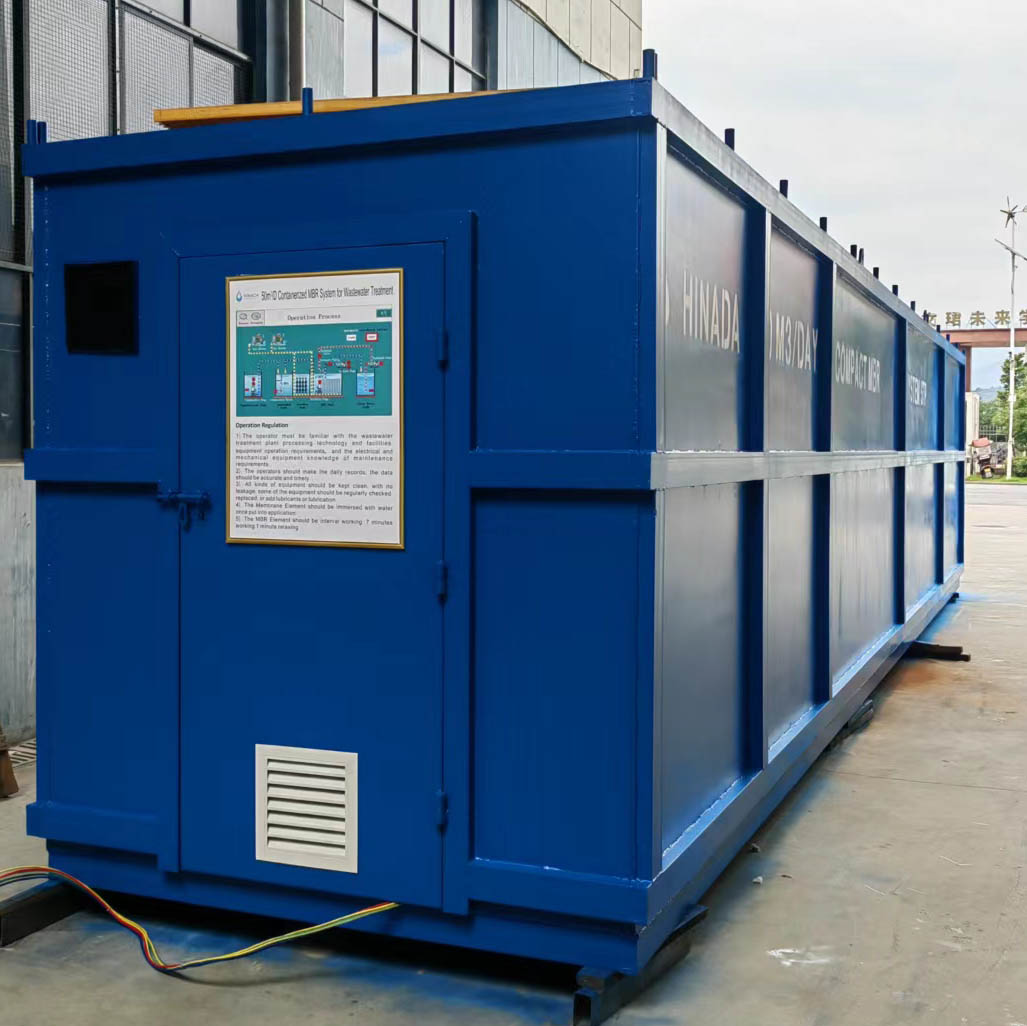
One of the most visible expressions of the MBR trend is the containerised treatment plant. These systems package membrane modules, biological tanks, blowers, pumps, and controls into standard shipping containers or modular skids. They arrive on site largely pre-assembled, are connected to influent, effluent, power, and communications, and can be commissioned in a fraction of the time required for a conventional concrete plant.
Containerised MBR units are particularly well suited to several situations. Construction sites and temporary camps need treatment capacity that can be relocated when the project ends. Rural communities need compact, low-maintenance systems that do not require a resident engineer. Industrial plants need the ability to add capacity quickly when production expands. Resorts and remote facilities need robust treatment that can be monitored remotely and serviced infrequently.
The modular nature of these systems also supports phased investment. A facility can begin with one container and add a second when flows justify it. Because the units are factory-built and factory-tested, quality control is generally better than for site-built plants, and the risk of construction delays is lower.
Industrial Applications
Industrial wastewater is where MBR often proves its worth most decisively. Industrial flows are frequently variable in composition, high in organic load, and subject to strict discharge or reuse requirements. Food and beverage processing, brewing, dairy, textile, pharmaceutical, chemical, and electronics manufacturing all generate streams that challenge conventional treatment.
MBR handles these challenges in several ways. Its high biomass concentration provides buffering against shock loads. Its long solids retention time supports the slow-growing microbial populations needed to degrade complex compounds. Its membrane barrier retains biomass that would otherwise be washed out, which is critical when dealing with inhibitory or slowly biodegradable constituents. And its high-quality permeate is well suited to downstream reverse osmosis, which is increasingly required for water reuse in industrial settings.
In many industrial projects, the objective is not merely compliance but reuse. A plant that can recover and reuse a significant fraction of its process water reduces both its intake and its discharge, which lowers costs and improves its environmental standing with regulators, customers, and investors.
Municipal and Rural Applications
On the municipal side, MBR has become a standard option for new plants and for upgrades of existing facilities that must meet stricter standards within a fixed site boundary. The ability to increase capacity without acquiring additional land is often the deciding factor. Nutrient removal, which is increasingly mandated, is more easily achieved in an MBR because the long solids retention time favours nitrifying organisms and provides flexibility in configuring anoxic and aerobic zones.
In rural and peri-urban areas, packaged MBR systems have become a practical route to sanitation where centralised sewers are uneconomic. A compact plant can serve a village, a cluster of households, a school, or a small commercial district, and it can be monitored remotely by a regional service team. This model, sometimes described as decentralised or distributed treatment, is expanding rapidly in regions where infrastructure investment is constrained but demand for sanitation is rising.
Pretreatment and the Wider Treatment Train
MBR does not operate in isolation. Its performance depends heavily on what happens upstream. Screening, grit removal, and in some cases dissolved air flotation are essential to protect membranes from debris, oil, grease, and fibrous material that can wrap around fibres or clog modules.
Dissolved air flotation systems are particularly valuable in industrial settings where the influent contains fats, oils, and suspended solids that would otherwise burden the biological process. By removing a significant fraction of these contaminants before they reach the bioreactor, DAF pretreatment improves biological stability, reduces fouling rates, and extends membrane life.
Downstream of the MBR, ultrafiltration and reverse osmosis are the usual next steps when high-purity reuse water is required. Ultrafiltration polishes the MBR permeate and provides a robust barrier against particulate matter, while reverse osmosis removes dissolved salts, which is essential for applications such as boiler feed, cooling tower makeup, and process water in electronics manufacturing. The combination of MBR, UF, and RO forms a complete treatment train that can convert municipal or industrial wastewater into water of a quality approaching that of demineralised supply.
The integration of these stages is where system design expertise matters most. Each unit operation imposes constraints on the others. Pretreatment quality determines membrane cleaning frequency. MBR permeate quality determines UF backwash requirements. UF filtrate quality determines RO cleaning intervals and membrane life. A supplier that understands the whole chain, rather than only one component, is better positioned to deliver a system that performs reliably over its full design life.
Selecting a Partner in a Crowded Market
The MBR market has matured to the point where dozens of suppliers offer superficially similar products. Distinguishing among them requires attention to factors that are not always obvious from a specification sheet.
Manufacturing depth is one such factor. A supplier that produces its own membranes has more control over quality, more ability to customise, and more capacity to troubleshoot. A supplier that assembles modules from third-party components may offer a lower price but has less visibility into the root cause of a performance problem.
Application experience is another. MBR performance varies significantly between municipal sewage and, for example, textile effluent or landfill leachate. A supplier with a broad installed base across multiple industries is more likely to have encountered the specific challenges a project will face.
Service capability matters as much as product quality. A membrane system is a long-term asset, and the supplier relationship typically lasts a decade or more. Support for design, installation, commissioning, and training is not a peripheral service but an integral part of the product. Suppliers that offer a genuinely integrated solution, from initial design through equipment supply, installation support, commissioning, and operator training, reduce the coordination burden on the project team and improve the likelihood of a smooth start-up.
Finally, transparency about performance is a useful signal. Suppliers that publish realistic flux rates, cleaning frequencies, and energy consumption figures are easier to work with than those that present optimistic headline numbers. Membrane systems are engineering products, and honest engineering data is the foundation of a successful project.
It is worth noting that the global market for MBR equipment includes a substantial Chinese manufacturing sector that has grown rapidly over the past decade. Companies such as Hinada Water Treatment Tech Co., Ltd. have accumulated more than thirteen years of experience in the water treatment industry and roughly a decade of dedicated membrane and equipment manufacturing experience, building a complete ecosystem that spans membrane research and development, component manufacturing, equipment fabrication, and turnkey solution delivery. This kind of vertical integration, combined with active participation in international water treatment exhibitions, has helped bring Chinese membrane technology into regions where clean water infrastructure is most urgently needed.
Common Misconceptions About MBR
Several persistent myths surround MBR technology, and addressing them helps clarify where the technology genuinely fits.
MBR is only for high-end projects. In reality, packaged and containerised MBR systems have made the technology accessible to small municipalities, rural communities, and mid-sized industrial plants. The cost premium over conventional treatment has narrowed considerably.
MBR membranes must be replaced frequently. Modern PVDF hollow fibre membranes routinely last seven to ten years or more when operated within design parameters and cleaned appropriately. Replacement is a scheduled maintenance item, not a chronic failure.
MBR is too complex for remote sites. With remote monitoring and automated control, MBR systems can operate reliably with periodic service visits rather than full-time staffing.
MBR eliminates the need for biological expertise. The biology still matters. Membrane separation changes the operating envelope but does not remove the need to manage nutrient ratios, dissolved oxygen, and sludge age.
MBR cannot handle industrial shock loads. The opposite is often true. Higher biomass concentration and longer solids retention time provide substantial buffering against transient loads.
Each of these misconceptions has its origins in the early years of MBR commercialisation, when membranes were more expensive, controls were less capable, and operating experience was limited. The technology has moved on.
Regulatory and Sustainability Drivers
Regulation is a powerful and predictable driver of technology adoption. Around the world, discharge standards for nutrients, pathogens, and emerging contaminants continue to tighten. In parallel, water scarcity is pushing municipalities and industries toward reuse targets that require high-quality effluent as a starting point.
MBR is well positioned against both trends. Its effluent quality meets or exceeds many of the most stringent discharge limits without extensive additional treatment, and its permeate is an excellent feed for reuse processes. Facilities that install MBR today are effectively buying regulatory headroom for the next decade.
Sustainability frameworks reinforce the same direction. Corporate water stewardship commitments, environmental, social, and governance reporting requirements, and green building certification schemes all reward reduced water intake, reduced discharge, and improved resource recovery. MBR supports each of these objectives directly, and the data-rich nature of the process makes it easy to document performance for reporting purposes.
The Road Ahead
Looking forward, several trends are likely to shape the next phase of MBR adoption in smart facilities.
Membrane materials will continue to improve. Fouling-resistant surface modifications, more uniform pore structures, and stronger fibres will extend service life and reduce cleaning demand. Some research is exploring membranes with embedded sensors or self-cleaning properties, though commercial deployment remains some years away.
Energy efficiency will remain a central focus. Innovations in aeration design, including more efficient blowers, intermittent scouring strategies, and air diffuser geometries tailored specifically to membrane tanks, are already delivering measurable savings. As renewable energy becomes more prevalent on facility sites, the energy profile of MBR becomes less of a concern and more of a manageable variable.
Digital integration will deepen. Machine learning models trained on historical operating data are beginning to predict fouling behaviour with useful accuracy. Digital twins of treatment systems allow operators to test control strategies before applying them to the physical plant. Remote operations centres allow a single team to manage a portfolio of distributed plants.
Modularisation will continue to lower barriers to entry. As containerised and packaged systems become more standardised, the cost and lead time of deploying treatment capacity will fall further, making decentralised treatment viable in an expanding range of contexts.
Finally, the boundary between water treatment and resource recovery will continue to blur. MBR is already a key component in systems that recover water, nutrients, and energy. As circular economy principles take deeper root in facility design, the treatment plant will increasingly be viewed as a resource facility rather than a disposal facility.
Conclusion
MBR wastewater treatment is gaining ground in smart facilities because it fits the way modern facilities are designed, built, and operated. It is compact in a world where land is expensive. It produces consistently high-quality effluent in a world where discharge standards are tightening and reuse is becoming mandatory. It is measurable and controllable in a world where automation and data analytics drive operational decisions. It is modular in a world where demand is uncertain and infrastructure must adapt. And it is resilient in a world where centralised systems are increasingly exposed to climate and infrastructure risk.
The technology is not without cost, and honest engineering requires acknowledging the energy and complexity it introduces. But the balance of advantages has shifted decisively over the past decade, driven by falling membrane costs, improved manufacturing quality, smarter control systems, and rising expectations for water stewardship. Facilities that once treated wastewater as an unavoidable compliance burden now see it as an opportunity to secure supply, reduce cost, and demonstrate environmental responsibility.
For engineers and facility managers evaluating options, the practical question is no longer whether MBR belongs in a smart facility, but how it should be configured, instrumented, and supported to deliver the greatest value over its service life. That question is best answered with a partner who understands the full treatment train, who manufactures the critical components, and who remains engaged through commissioning and beyond. As the global water industry continues to move toward decentralised, digital, and reuse-oriented solutions, membrane bioreactor technology will remain one of its most important building blocks.